Smoke & Mirrors

Robert Mondavi “invented” Fumé Blanc because he wanted to

Robert Mondavi Winery Fume Blanc

distinguish the high-quality Sauvignon Blanc he was making in the French-style from the other California Sauvignon Blanc that was widely viewed as ordinary “run of the mill” sweet wines. Mondavi realized that changing the name wouldn’t be enough to change people’s idea of California Sauvignon Blanc so he decided to age it in oak barrels. His bold move to rename his dry-fermented barrel-aged wine Fumé Blanc quickly paid off as demand for this “new” wine grew in California and across the United States. Mondavi’s decision not to trademark the name was a stroke of brilliance on his part because more people could use the name and by doing so increase its name recognition and acceptance worldwide. The name Fumé Blanc is commonly associated with oak-aged Sauvignon Blanc made in the United States since the late1960’s. Robert Mondavi never intended to imply that Fumé Blanc was a specific style or method of making wine but only a name for his wine. There is nothing that dictates Fumé Blanc must be oak-aged. You can find Fumé Blanc that is not aged in oak and that is perfectly acceptable because under current U.S. law the terms “Sauvignon Blanc” and “Fumé Blanc” are synonymous. 

If you are curious I suggest you try Fumé Blanc from the winery

Robert Mondavi Winery Fume Blanc

that started it all, the Robert Mondavi Winery. 2017 Fumé Blanc Napa Valley from Robert Mondavi Winery has aromas of peach, citrus and of course, smoke followed by crisp acidity and flavors of pear, citrus, and vanilla/buttery oak. 

The wine world is full of interesting stories like this and others where you may find yourself asking is it “Lemberger” or “Blaufränkisch”? Don’t even get me started with the marketing genius behind the “Syrah” or “Shiraz” campaign.LOL My advice is to ignore the marketing hype and drink what you like no matter what is printed on the label.  

Winemaker Interview: Jerry Pompa

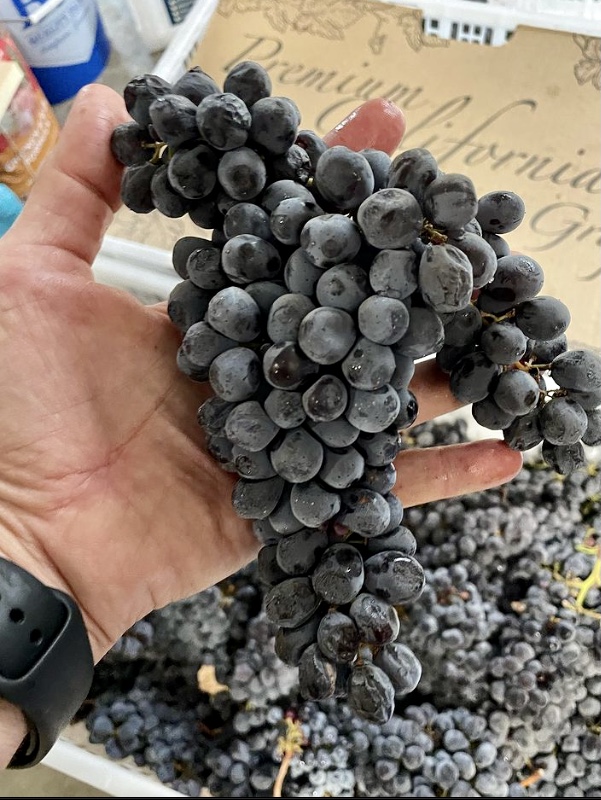
Pittsburgh born and raised winemaker Jerry Pompa started his wine journey at his childhood home in the close-knit neighborhood of Morningside. After earning multiple degrees including an MS in Comp. Sci. at the University of Pittsburgh Jerry made his home in the Pittsburgh area. While building a successful career and raising a loving and supportive family his passion for winemaking only grew stronger. Jerry’s path to becoming a winemaker is very similar in many respects not only to winemakers here in Western Pennsylvania but around the world. His first exposure to winemaking was when his father brought home a bucket of wine grape juice from a supplier in the “Strip District” of Pittsburgh. Today Jerry returns to that same part of the city to procure his supply of wine grapes with the same goal every year of making the best wine he can possibly make. After thirty years of making wine, countless events, seminars, and shows that saw Jerry become one of the co-founders of the American Wine Society’s Pittsburgh-East Chapter no one can tell Jerry Pompa’s story better than Jerry himself. The following is my interview with him in his own words.

How did you get started making wine?

The short version is that about 30 years ago, my Father who owned a small Italian groceria on Larimer Ave in East Liberty, would go to the Strip (we called it the Yards then) and one of his suppliers gave  him a bucket of juice and told him…” put it in your basement and in the spring it will be wine”…so he gave it to me and said the same. I figured there may be a bit more to it so I did some research, bought a kit (carboy, yeast, hoses, etc) and made my first Cabernet.  Really not knowing anything about it I joined the American Wine Society, entered that first wine in a competition, won a 2nd pace ribbon and was therefore encouraged to continue.
I have made wine since. The first 10 years or so from juice but now from grapes. Again, the rest continues as a long story.

How would you describe your wine making style?

Primarily “big” reds are what I make. I have made whites and in fact this year I am making a Rosé (like everyone else) using a saignee method from a red Sangiovese I am making. Other style comments would be dry, tannic, and intended to be good food wines.  Consistency drinkable wine is another goal, maybe not style but each year I am trying to make the best wine possible.

 Who and what influenced your style of wine making?

I suppose a lot of personal taste.  Doing it for so long and visiting so many wineries around the world I have learned a lot and still learning. But all of those experiences have certainly influenced my style. I have a strong Italian heritage, again growing up in an Italian Groceria started by my Grandfather in 1905 (which I worked in from – I claim – before I could stand on my own until the business was sold in 1990) I have been around food and wine all of my life. So again we make wines to go with food. That is the biggest influence.
Other people that have influenced me are Eric Miller, Rick, and Ron Lanza, Ron Casertano, “the Winemaker’s Podcast” and many more.

What are your favorite varietals to work with?

For the past 10 years or so I have a group of very close friends who help out with the winemaking. Together we decide on the varietals for the particular year but generally, my favorite to make are Cabernet blends.  We also make Petite Sirah, Sangiovese, Super Tuscans, and others.  Again all “big” reds. But my favorite is Cab because of its ability to show so much fruit, integrate the oak, age well, have a beautiful nose and taste, go well with food, etc.

What are your favorite wines, regions, and producers?

I wish I knew more about French wines but in life, there is only so much time. My focus has been on California, Italy, and Australia for the most part. I enjoy wines from everywhere, red, white, dry, sweet, etc. I really consider it food on its own and have taught my children (now all drinking age 😉 the same.  It is all about how it accompanies a meal.
It is so hard to specifically name producers since I try so many and tend not to just buy from the same.  Windy Oaks from Santa Cruz makes an amazing set of Pinot Noir, Wooden Valley (the Lanza brothers) from whom we recently buy our grapes does a fantastic job with Petite Sirah, Sangio, Cabernet, and really anything they grow. Gregg Hobbs (no relation to Paul in California) from Australia does a fantastic Shiraz.  Domain Huet makes an amazing Chenin Blanc, Antinori wines of any kind from Italy are excellent. Really there is not any one  or two from a producer or region.

Do you have any tips for someone just getting into wine making as a hobby or as a profession?

Wow, now that is a question. Those are 2 very different questions.  As a hobby, I have plenty to say.  As a profession, I would love to do it myself but without the large fortune, I would never be able to make a small fortune.
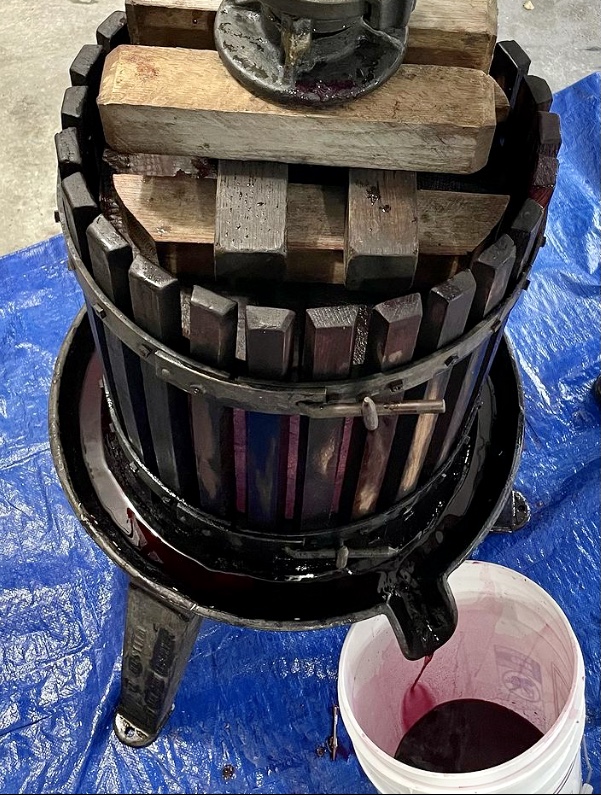
Actually, I don’t like to say that I make “homemade” wines. Yes, I make wines at home but really people have a preconceived notion that a “homemade” wine will taste “bad, strong, vin
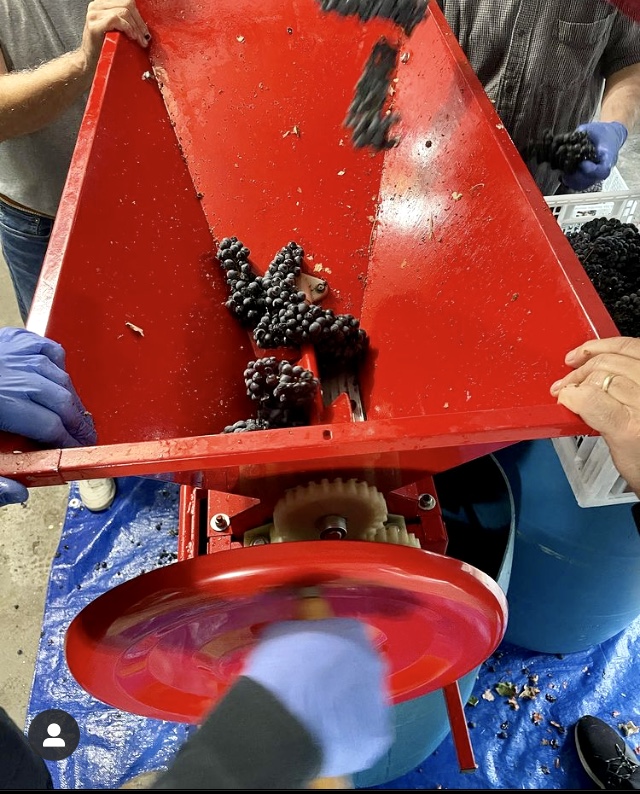
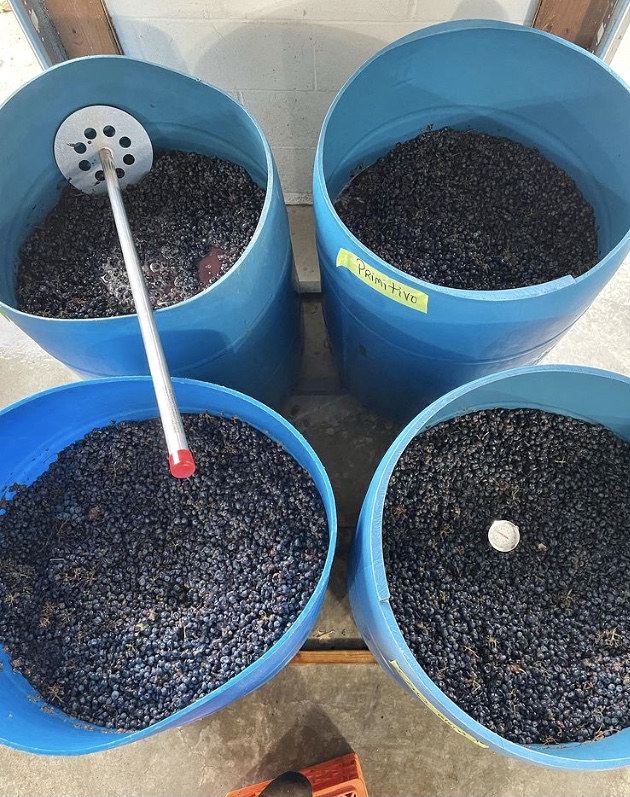
egary, etc” and often they are right. I instead prefer to say I make “Handmade” wines. I am doing exactly what a professional would do except on a smaller scale and I don’t sell it. But the tips are first to buy the best fruit you can afford (actually spend more than what you can afford) since wine is mostly made in the vineyards. Winemakers can stylistically change a few things, enhance some characteristics, but mostly they can either guide the grapes into a very nice wine or screw it up. Most of the work is in cleanliness, sterilization, good process control (e.g. with regards to yeast nutrition, oxygen management, temperatures, bacteria, etc). I have taken many classes (some at Penn State Enology), gone to both amateur and professional conferences, and read many many books to learn the proper process and techniques and am adjusting and learning more every vintage.

What wines are you working on now and what are your expectations for them?

Our 2019 wines are an 87% Sangiovese/13% Merlot (and a small experiment Rosé from the same) and an 80% Barbera/20% Primativo (Zinfandel).  The 2018 vintage, still aging, is a Cabernet blend and a Petite Sirah.  Expectations are high otherwise why do it ;-). Seriously so far they are coming along very well.


Can you share what you’re planning next as a winemaker?

Well, as far as what I plan next as a winemaker is not much different than now. So, for now, because of a very busy day job, I will continue to make wine as an amateur but one day I will work in “the industry”. Not sure if that will be making wine myself and selling it, or working as a winemaker for one of the urban wineries, or working for some company in the wine industry one way or another. This all very much depends on my day-job for now. As an amateur, my next step is to finish the 2019 vintage and start planning for the 2020 vintage.  The plan is to improve in some way each year.

What are some of your most memorable experiences as a winemaker?

Most memorable experiences… I have fond memories of the classes I have taken, the people I have met at conferences, the camaraderie in making wine with my close friends. As far as a single event, although I don’t spend much time competing in wine competitions, I did win best of show twice at a regional conference. If you are not familiar with best of show, they take all of the best wines (first place winners) and then judge them and select one over-all “best of show”.

 
You can follow Jerry on Instagram @jerrypompa 


Exploring Wine Podcasts

If you ever want to listen to some really interesting stories take some time to explore the great wealth of podcasts about wine and the people behind them that is available on the internet for free. What makes these broadcasts so special is that you get to hear the guest and host accounts of their wine journey in their own words. Many of the podcasts post on a current schedule and have a library of archived shows that you can access. Some of these podcasts have ceased production but you can still download their shows and surprisingly they hold up well when played today. You can listen to podcasts in a variety of ways but I use the podcast app on my iPhone simply due to the ease of use.

Here are a few that I find entertaining and informative. The Weekly Wine Show has gone on hiatus but you can still listen to past episodes of this interview and wine review podcast hosted by Tony and Betty Notto. Wine Enthusiast (Podcast) is just what you think it would be, an extension of the magazine’s format. If you are looking for in-depth interviews with winemakers then checkout The inside Winemaking Podcast with Jim Duane, The Stories Behind Wine or The Winemakers on the Radiomisfits podcast network.

These are only a few suggestions to get you started. Once you delve deeper into the podcast universe you will be amazed by the content being offered by an eclectic group of contributors. Since these shows are free to listen to you can treat podcasts like free wine tasting. If you don’t like it at first sip you can try another one until you find some that you enjoy. Happy Hunting!

Wine Me Dine Me

The Bogle family has farmed in the Clarksburg region of California’s Sacramento River Delta for six generations dating back to the late 1800s. Bogle has over 1800 acres of estate-grown grapes and sources grapes from some of the best-growing regions throughout the state of California. Their wines are often described as “Value wines” or “Everyday wines” but don’t be fooled because they are widely available and have a price point in the low teens if not lower. These wines are well made considering the size of Bogle’s production. Bogle Chardonnay is barrel fermented on the lees and hand-stirred once a month while the reds are aged in small oak barrels. These methods are rare in wineries the size of Bogle. If you are looking for quality wine at an affordable price that you can pair with your weeknight dinner and is always a reliable choice when you’re “out on the town” take a close look at the menu of Bogle wines. A good place to start is with Bogle Merlot. This is a very drinkable Merlot with notes of oak and slightly rounded edges because of its lower acidity and tannins, dry but not overly dry. Enjoyable flavor.