Review: Chateau Niagara Cabernet Franc Reserve 2022

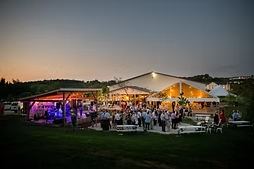
Jim Baker, owner, winemaker, and vigneron of Chateau Niagara Winery Newfane, New York http://chateauniagarawinery.com has a special touch when making high-quality Cabernet Franc. His Chateau Niagara Cabernet Franc Reserve 2020 is no exception. He uses Cabernet Franc grapes grown in his vineyard and a nearby vineyard to produce his award-winning Cab Franc year after year. Jim told me “These are some of the best wines I have made.”

Chateau Niagara Cabernet Franc Reserve 2022 is a plump and juicy full-bodied dry wine that dazzles with a medium ruby red color in your glass. Bright acidity, tart red cherry, and raspberry flavors are front and center with subtle pepper background notes. Smooth tannins carry through a long finish. This Cab Franc drinks well now and should age nicely. 

Review: Chateau Niagara Cabernet Franc Appassimento 2023

The following two posts will be my reviews of Chateau Niagara Cabernet Franc Appassimento 2023 and Chateau Niagara Cabernet Franc Reserve 2022. Jim Baker owner, winemaker, and vigneron of Chateau Niagara Winery Newfane, New York http://chateauniagarawinery.com told me “These are some of the best wines I have made.”

Chateau Niagara Cabernet Franc Appassimento 2023

A wine made in the Appassimento style is created by using partially dehydrated grapes. It is a technique used by Italian winemakers to give Amarone di Valpolicella its signature depth and complexity. Jim applied this process to his Cabernet Franc grapes to produce his outstanding Chateau Niagara Cabernet Franc Appassimento 2023. 

Beginning with a bewitching dark ruby red color in your glass this Cab Franc quickly opens with aromas of blueberries leading into flavors of cherry, dark berries, and plum. Supple tannins and balanced acidity carry through a long lingering finish. Consider purchasing several bottles with the intent of drinking some now and leaving some to age in your cellar. 

Harvest Report: Chateau Niagara Winery

I checked in recently with my friend Jim Baker, owner, winemaker, and vigneron of Chateau Niagara Winery Newfane, New York. http://chateauniagarawinery.com Jim’s avant-garde approach toward winemaking and the grapes in his vineyard can only be described as fascinating. Here are his candid insights into the year that was 2024 at his award-winning Chateau Niagara Winery.
“In classic cool climate viticulture, the only constant is change. We never know what the year will bring us and it creates a kind of resiliency in the vineyard managers and winemakers from these regions. It also creates some fantastic wines with incredible diversity. This year is no different. We escaped the late spring frost which hurt our neighbors in the Lake Erie region and our hearts went out to them as we got hit last year with that late frost and we lost two-thirds of our crop. We also did not have the wildfires from Quebec this year to contend with. It was a very early bud break with a wet spring and summer. This resulted in heavy downy and powdery mildew pressure. The latter half of the growing season heading to harvest was warm and dry, absolutely perfect for high-quality wine grapes. Longer hang time and good growing season with about 2800  growing degree days, which is measured by the temperatures degrees above 50 F. (A 70-degree day would therefore accumulate 70-50 or 20 growing-degree days.)  This is a measure of the total heat accumulation for the season. Harvest levels were a little under prediction and the berries were small and compact. This results in more intense aromas in whites and deeper colors and flavors in reds. We are very excited about the potential for the vintage!

In the fall we harvested our first crop of Fetească neagrǎ. We had hoped for barrels worth of wine, but the raccoons, deer, and turkey got to it first. We did harvest what we could and will likely do a very small bottling of about four cases. The grape showed me just a peek at what it can do this year. My initial tasting indicates that it falls between a Blaufrankisch and a Saperavi, with cherry, spice, black pepper, and smoke.”

Thank you, Jim, for taking the time out of your busy schedule to share your thoughts and observations about the intricate factors that influenced your vineyard and winemaking this year. We all look forward to enjoying the fruits of your labor. 

“Old World” or “New World” Why Not Both?

Wine is often divided into ones made in the “Old World” versus ones made in the “New World” but what does that mean? They are segregated along geographic lines. Old World wines are categorized as being made in Europe and the Middle East. New World wines are made anywhere else e.g. Australia, the Americas, Southern Africa, Asia, etc. The Old World relies mainly on traditional wine grape varieties (Vitis vinifera), time-honored wine-making methods, and labeling that emphasizes the location where the wine was made and, prioritizes a wine’s terroir. Old World wine regions tend to have cooler climates that yield wines with restrained tannins and are not as fruitful with less sugar. The lower sugar levels contribute to their lower alcohol content (ABV). 

New World wines also use traditional grape varieties but are heavily invested in non-traditional grape varieties and readily embrace modern wine-making techniques, ideas, and technology. Its wine bottles are labeled identifying the grape variety used to make the wine. The climates of New World wine regions tend to be warmer and that variable favors the production of wine with fuller fruit flavors, rounder tannins, and higher alcohol content. Lastly, New World wines display more oak which is achieved by using newer barrels that extract greater fruit flavors and tannins. 

It doesn’t matter whether a wine is an “Old World” or “New World” offering, the only thing that matters is that you enjoy drinking it. Snap a pic of the label just in case you can’t remember what to buy the next time you are wine shopping.

Changing Chile

When you hear wine lovers discussing wines from Chile your first thought might be of the value-priced bottles offered by a large discount retailer that piqued your curiosity. How wouldn’t anyone be intrigued by bottles of Chilean Cabernet Sauvignon selling for less than $10 and not be tempted to buy one? This type of mass-produced wine is easy to find because 90% of Chile’s wine production is still focused on that segment of the world wine market. In the last ten years, Chile has made great strides in producing higher quality wines from a growing number of small wineries offering a diverse selection of wines. These wines are made from an increasing number of newly cultivated wine grape varieties. The explosive rise in the number of small producers has generated a keen interest in Chilean boutique wineries. 

The expansion of vineyards and wineries is possible because there is a wide range of growing conditions, vineyard sites, compatible grape varieties, topography, and soil profiles just to mention a few of the factors involved. Another little-known but important variable in Chile’s success is that it has never been infected by Phylloxera, even with its close proximity to Argentina which has been.  

The country of Chile on a map appears as a long thin strip of land on the western edge of South America from 17 degrees south latitude to 56 degrees south latitude with the Andes Mountains running down its eastern side. Chile’s weather is influenced by the Pacific Ocean’s cold currents (Humboldt) the Chilean Coast Range and the Andes Mountains. As a result of all of these variables, it is no surprise the styles of wine made there are varied and evolving with every vintage. 

The wine grapes grown in Chile are dominated by five varieties: Cabernet Sauvignon, Chardonnay, Merlot, Sauvignon Blanc, and Carmemère with Cabernet Sauvignon being the most widely planted. Carmenère has an interesting story of how it was mistaken for Merlot for a long time, resulting in it being harvested too early and made as if it was Merlot. After DNA testing revealed its true identity Carmenère was left to ripen fully before harvesting and made using the proper methods for that grape. These changes resulted in an immense improvement in the quality of Chilean Carmenère wine. 

Discovering Chilean wines is a fascinating and personally satisfying venture. I recommend starting your exploration with Cabernet Sauvignon but don’t ignore the other varieties you will come across, especially that country’s signature grape Carmenère. Chile’s most recognizable wine region is the expansive Valle Central or “Central Valley” where many premiere appellations are located, most notably the Maipo Valley and Colchagua Valley. Here are a few suggestions to begin your winery search: Concha y Toro, Santa Rita, Viña Vik, and Viña Montes. 

Vince Anter does an excellent job explaining and showcasing the wine and wineries of Chile in an episode of his award-winning wine, food, and travel show V is for Vino http://visforvino.com You can view it and all of his shows for free on his website or YouTube. Here’s a link to his Chile episode https://www.youtube.com/watch?v=BfHBZM7tsIQ

Visiting Chile may not be very practical or economical but buying good wine made there is. What makes Chilean wine a sensible choice when purchasing wine is that it offers you the option to take home an enjoyable bottle at a bargain price or choose one of a higher quality for just a little more money. 

Tuscany Dreams

When you hear Tuscany thoughts immediately come to mind of rolling hills covered in geometrically precise rows of grape vines in vineyards bathed by the golden sunshine of an idyllic Tuscan afternoon. Travelogues and magazine articles of the mid-20th century created a mystic that cast Tuscany as the epicenter of the trendy Italian food and wine culture. Whether that was an accurate assessment either then or now is debatable but for many perception remains reality. 

In Tuscany (Toscana) one grape has always reigned supreme and that grape is Sangiovese. It is from this grape that three of this region’s most recognizable wines are made. Brunello di Montalcino, Chianti, and Chianti Classico are all made from the Sangiovese grape. While they are all made from the same grape variety they are all very different wines. It is safe to say that we have all dined in an Italian restaurant with a red and white checkboard tablecloth with a bottle of Chianti in a straw basket as a centerpiece. Those are not good examples of the quality of wine Sangiovese can produce. When the market for Chianti tanked in the 1970’s Italy changed its wine laws which is what sparked the dramatic resurgence of Chianti and Tuscany on the world stage. The wines got better, winemaking methods improved, and high-priced Super Tuscans gained global notoriety. Cabernet Sauvignon can now be considered Tuscany’s second most important grape because along with Sangiovese it is a prominent grape in the majority of Super Tuscan blends. 

Brunello di Montalcino is Tuscany’s most respected and celebrated wine. The area from which it is produced encompasses a mere 5,200 acres and is a UNESCO World Heritage Site. 

The Chianti zone covers an expansive area of Central Tuscany. This zone contains the districts or D.O.C.G. of Chianti and Chianti Classico. They each have their own D.O.C.G. and by law, you can only make wine of that classification in its designated district, they are not interchangeable. You can identify a Chianti Classico wine by the iconic black rooster symbol on its bottle’s labeling.

Tuscany is no different than any other wine region. You can find good wine, bad wine, average wine, and superior wine there. You can also choose a price point from economical to expensive. The search for your perfect wine begins with some research and understanding what you want and where to find it. 

Buona caccia e buona fortuna!

Review: E. Guigal Côte du Rhône Rouge 2020

This wine reminds me of a lyric from the Jimmy Buffett song “He went to Paris.” It goes “ But warm summer breezes. The French wines and cheeses. Put his ambitions at bay.” He Went To Paris (YouTube)

It is easy to imagine sitting in a bistro in the south of France savoring delicate French cheese and sipping E. Guigal Côte du Rhône Rouge 2020 while watching the world pass by. 

Even though, E. Guigal is known for making high-end offerings; they continue to produce this very well-made mass-market example of a Rhône GSM blend (Grenache, Syrah, Mourvèdre). 

This is a well-balanced wine with supple tannins and subdued but pleasant acidity. Blueberry and blackberry flavors are accented with a hint of cherry from the Grenache. It is all carried on a medium body that leads to a lush finish making this wine a great introduction to the wines of the southern Rhône Valley of France. It is a bargain at less than $20 a bottle for a wine of this quality.

Alluring Alsace

The Alsace wine region of France is situated along the French border east of Paris. The region’s wine production is almost entirely devoted to white wine, positioning it uniquely among wine-producing regions worldwide. The white wines in Alsace are rarely made in other parts of France. Alsace is French but has been part of Germany several times. The Vosges mountains and picturesque quaint villages make it more reminiscent of images from German folk tales than the wine provinces of southern France. It is easy to see why Riesling, Gewürztraminer, Pinot Gris, and Muscat dominate its winemaking identity. Pinot Noir is the only red grape of note there but is grown in limited quantities. Alsace differs in how it labels its wine from the rest of France by using the grape variety instead of the location where the grapes were grown.  

Don’t be misled into thinking the white wines of Alsace are sweet and mild. On the contrary, they have bold character and are almost always dry. The winemakers of this region believe in showcasing the attributes of the grape and not crafting a wine to conform to a predetermined taste profile. Because this conviction is so ingrained in their wine culture, blending is seldom, if ever, an option. 

Sparkling wine is also made in Alsace. It is all designated Crémant ď  Alsace and is made the same way as

Champagne. You might be wondering if they make Crémant ď Alsace in Alsace and use Chardonnay grapes why isn’t Chardonnay one of their signature white wines? The reason is that by law Chardonnay can only be used in Crémant ď Alsace and can not be used to make still wine. Crémant ď Alsace is a high-quality alternative to Champagne at a very affordable price. 

Alsatian Riesling is angular in structure and very dry with good minerality. German Rieslings are well balanced with bright acidity, low alcohol, and prominent fruit flavors. 

Alsace is said to rival Paris in the number of great restaurants, whether pretentious or grand. 

It is easy to have an excellent wine experience in Alsace because the quality of wine is exceedingly well-made and the pricing spread guarantees you will find bottles you will love at a price you can appreciate. 

Southern Rhone Rendezvous

The enchanting allure of the French countryside is never more captivating than it is in southern France, the Southern Rhône Valley to be precise. The Southern Rhône Valley is vastly different in many ways when compared to the Northern Rhône Valley. The Southern Rhône has a Mediterranean climate that is favorable for growing not only high-quality wine grapes but also olives, herbs, and picturesque fields of lavender. This region and the town of Avignon is a destination for savvy world travelers. The Rhône Valley is home to the legendary Le Mistral winds that blow out of the Alps and down the Rhône River Valley gaining speed as they travel south, impacting everything in their path. 

For most, the mention of French wine brings to mind images of expensive Grand Cru and opulent chateaus. In reality, French wine is very approachable, affordable, and accessible if you do some research. The winemakers of Southern Rhône have a reputation for producing well-made wines for every taste and budget.

The soils in Southern Rhône differ dramatically from those found in Northern Rhône where they are mostly of a granite-based composition. While in areas of the south many vineyards appear to be planted in fields of river rock. 

For those seeking to explore French wine, I suggest starting with the Southern Rhône. Wine made there tends to be of high quality with interesting complexity and is very food-friendly. This region produces a variety of wine styles, including white, red, rosé, and sparkling. The Southern Rhône is best known for its “GSM’ blend. A “GSM” blend is made up of “G” Grenache, “S” Syrah, and “M” Mourvèdre. The best thing about wines from this region is that they are easy to find and very fairly priced for the quality received. 

Vince Anter, wine travel show host/producer, sommelier, and friend, did an entertaining and informative show on the Rhône Valley that I highly recommend. In this episode, Vince talks with Philippe Guigal, a winemaker at his family’s winery, E. Guigal. They discuss Philippe’s winemaking philosophy, the history of E. Guigal, and its 2020 E. Guigal Côtes du Rhône Rouge. I will be doing my review of this wine in a future post. You can find it on YouTube by searching V is for Vino to see episodes from every season https://m.youtube.com/c/VisforVinoWineShow

or use this link to go directly to the Rhône episode https://m.youtube.com/watch?v=NLnqy3FPLdQ&pp=ygUFUmhvbmU%3D

The Southern Rhône Region of France is a special place that elevates the spirit and expectations of what life has to offer to anyone lucky enough to immerse themselves into its culture. A sojourn to the Southern Rhône is always time well spent. 

Dancing In The Dark

If you ever have the opportunity to get out into the vineyard and pick wine grapes during harvest I urge you to participate. My wife and I did just that several years ago and it is an experience we will never forget. We picked on a beautiful sunny morning but in reality, most wine grapes are harvested at night to take advantage of the cooler air lowering the temperature of the grapes. Most of the well-known wine-producing regions of the world are located in areas that not only have a climate favorable to viticulture but a phenomenon known as diurnal shifts. Diurnal shifts are when there is a significant change in the ambient air temperature between the day and night. A good example of this would be if you have been outside all day wearing only shorts and a tee shirt but need to wear a sweatshirt and long pants after dark, then you have experienced a diurnal shift. 

Sunshine allows a grape to increase its sugar content until harvest but in contrast, a grape’s acidity level decreases as it nears harvest. It can be argued that when grapes are cooled nightly sugar and acid levels are kept in balance creating a more complex wine. The diurnal shift phenomenon can be the result of different factors. In Napa Valley, it is the Pacific Ocean, the Rhone Valley has the mistral winds, and Duncan Savage proudly told me that his Cape Town, South Africa vineyards are “clapped” by winds off the Atlantic Ocean. 

Now that we know how grapes arrive at their peak to be harvested the obvious question is “What are the advantages of picking them in the cool of the night?” 

The first and foremost reason winemakers pick at night is to capitalize on the lower temperatures that are advantageous to producing superior wine by preserving the quality of the grapes that will be processed immediately after being taken to the winery. Grapes that have been cooled by the night air have more stable sugar levels, firmer texture, and less oxidation. This is very important when making white, Rosé, and sparkling wine but is also desirable when making red wine. Picking at night also enhances the grape’s fruit flavors and aromatics while giving the winemaker better control of the fermentation. The grapes are cooler when they come into the winery and don’t need to be cooled down before starting the winemaking process. 

I have included these two links on YouTube that give us a glimpse of what harvesting wine grapes at night looks like. One video is of grapes being picked by hand and the other with a mechanical method.

https://youtu.be/ujn8N6iBRng?feature=shared Hand harvesting

https://youtu.be/we5XNeuvn1c?feature=shared Machine harvesting

 You can find more videos on YouTube by searching “harvesting wine grapes at night.”

Since it is late summer and harvest is upon us, now is the time to call your local vineyards and ask if they could use help picking their grapes. For a wine lover, it is an experience you will not soon forget.