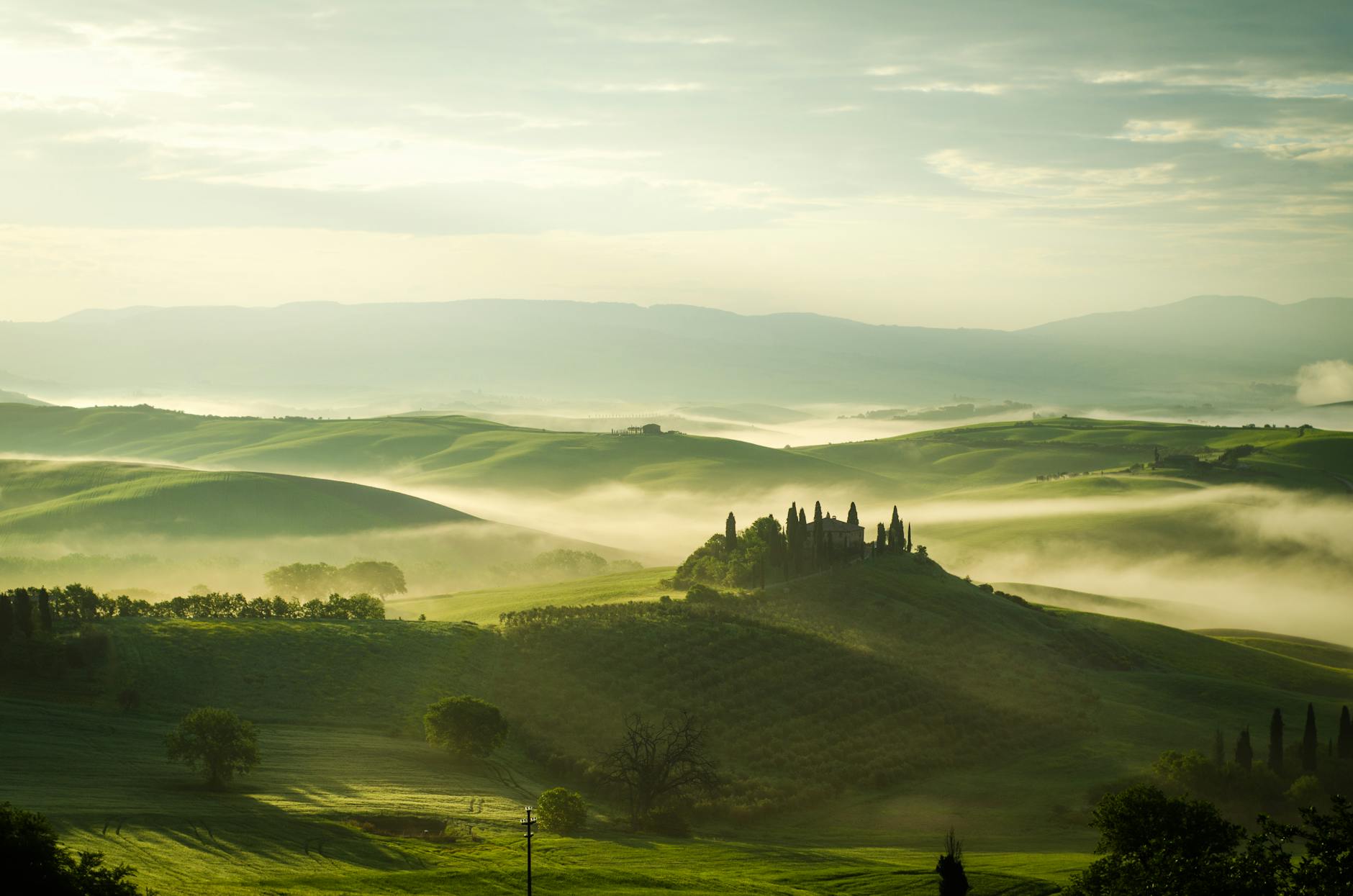
When you hear Tuscany thoughts immediately come to mind of rolling hills covered in geometrically precise rows of grape vines in vineyards bathed by the golden sunshine of an idyllic Tuscan afternoon. Travelogues and magazine articles of the mid-20th century created a mystic that cast Tuscany as the epicenter of the trendy Italian food and wine culture. Whether that was an accurate assessment either then or now is debatable but for many perception remains reality.
In Tuscany (Toscana) one grape has always reigned supreme and that grape is Sangiovese. It is from this grape that three of this region’s most recognizable wines are made. Brunello di Montalcino, Chianti, and Chianti Classico are all made from the Sangiovese grape. While they are all made from the same grape variety they are all very different wines. It is safe to say that we have all dined in an Italian restaurant with a red and white checkboard tablecloth with a bottle of Chianti in a straw basket as a centerpiece. Those are not good examples of the quality of wine Sangiovese can produce. When the market for Chianti tanked in the 1970’s Italy changed its wine laws which is what sparked the dramatic resurgence of Chianti and Tuscany on the world stage. The wines got better, winemaking methods improved, and high-priced Super Tuscans gained global notoriety. Cabernet Sauvignon can now be considered Tuscany’s second most important grape because along with Sangiovese it is a prominent grape in the majority of Super Tuscan blends.
Brunello di Montalcino is Tuscany’s most respected and celebrated wine. The area from which it is produced encompasses a mere 5,200 acres and is a UNESCO World Heritage Site.
The Chianti zone covers an expansive area of Central Tuscany. This zone contains the districts or D.O.C.G. of Chianti and Chianti Classico. They each have their own D.O.C.G. and by law, you can only make wine of that classification in its designated district, they are not interchangeable. You can identify a Chianti Classico wine by the iconic black rooster symbol on its bottle’s labeling.
Tuscany is no different than any other wine region. You can find good wine, bad wine, average wine, and superior wine there. You can also choose a price point from economical to expensive. The search for your perfect wine begins with some research and understanding what you want and where to find it.
Buona caccia e buona fortuna!

 wpawinepirate