How To Propagate Grapevines From Cuttings. Now Is The Time To Start!

The following article is a collaborative effort between myself and Stephen Casscles, a leading authority on the propagation and cultivation of cool climate and heritage grapevines. It is a detailed account of the procedures for propagating new grapevines from the cuttings of an existing vine. Thank you Steve for being so generous with your time and knowledge. All photos in this article are courtesy of Stephen Casscles. If you need more information about how to propagate vines, consult older books written by Philip Wagner, which are still available, or contact your local cooperative extension agent who can direct you to excellent brochures that have been produced by your local agricultural state university.

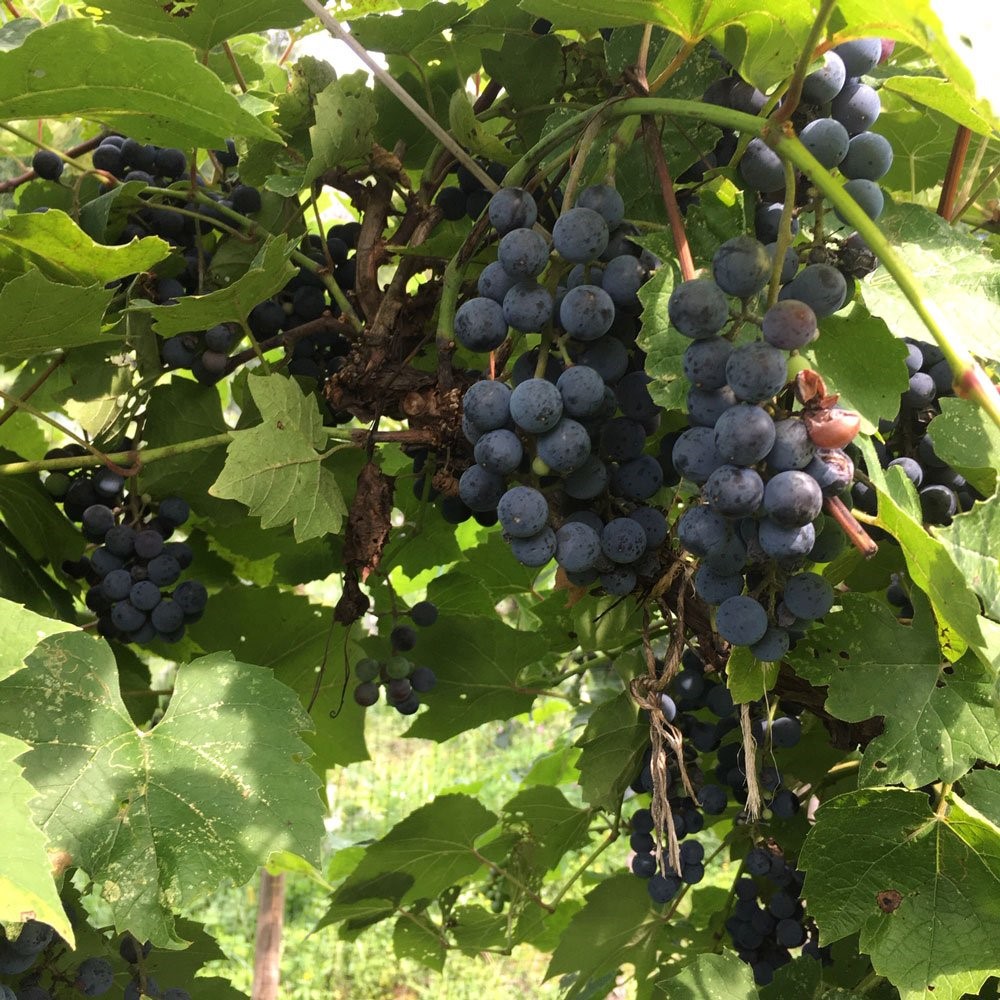
    If you have or can obtain clippings from a grapevine that produces excellent fruit, it is easy to reproduce as many vines/clones of that vine as you want. Starting new vines from the clippings of a mother vine ensures you will grow an exact copy of the vine and it will crop the same quality grapes as the original vine. Be sure that the mother vine that you select for your cuttings is strong, and exhibits no indications of viruses or diseases. Some vines, that have curled leaves, odd-looking clusters, or off-leaf colors have been contaminated with a virus. Do not use these vines as you are simply propagating diseased and virus-laden vines and not the strong virus-free vines that you want.

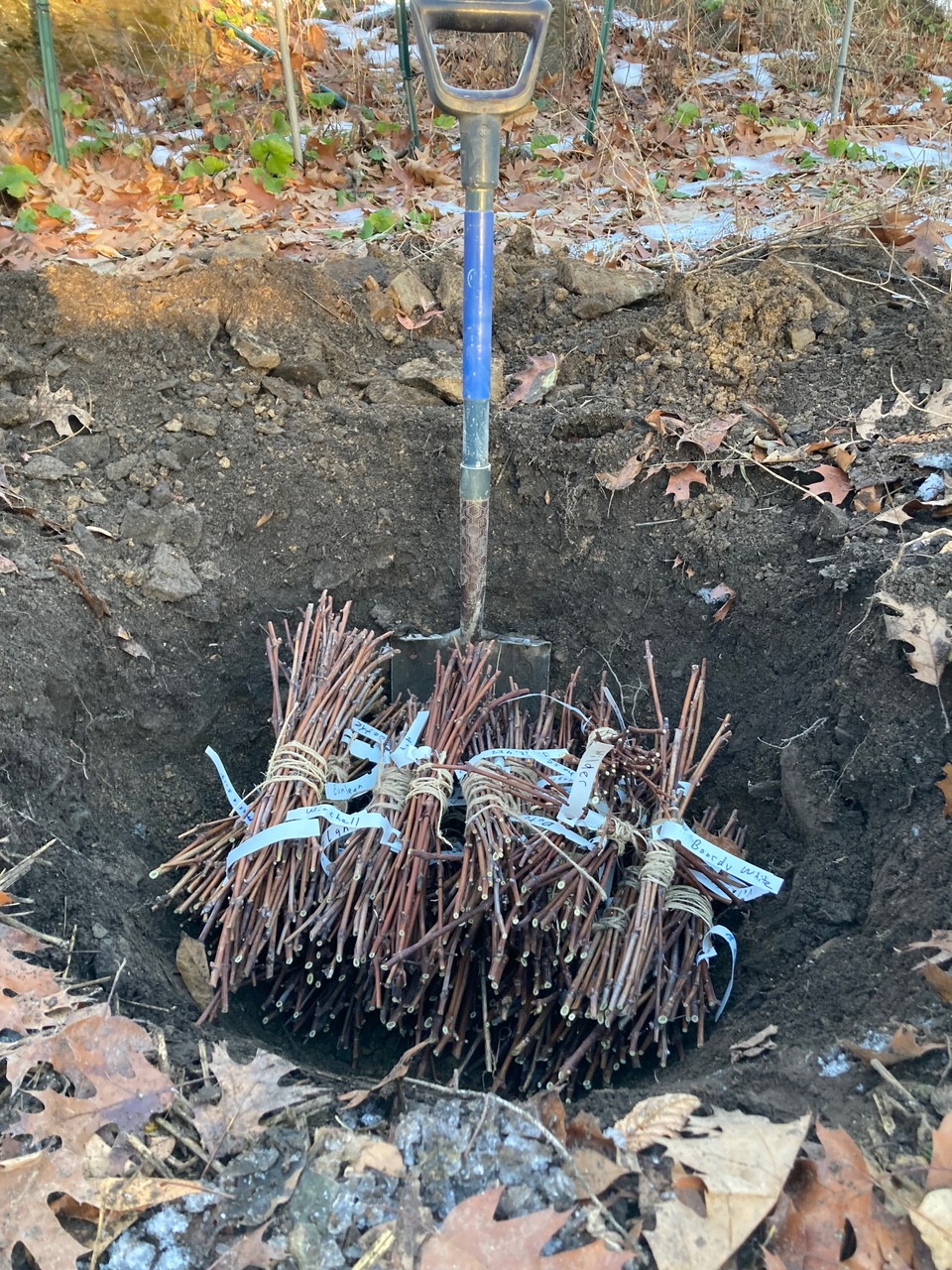
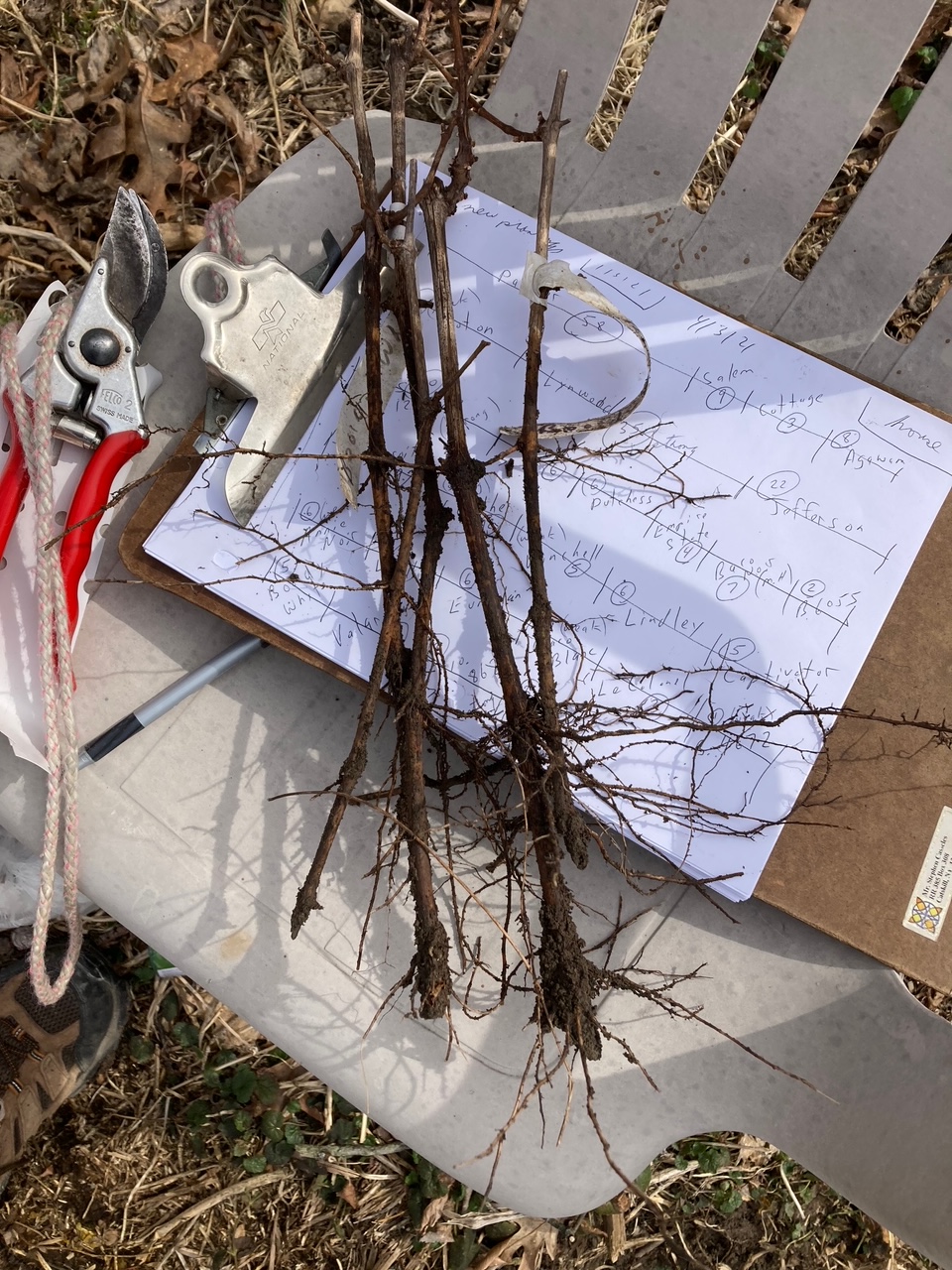
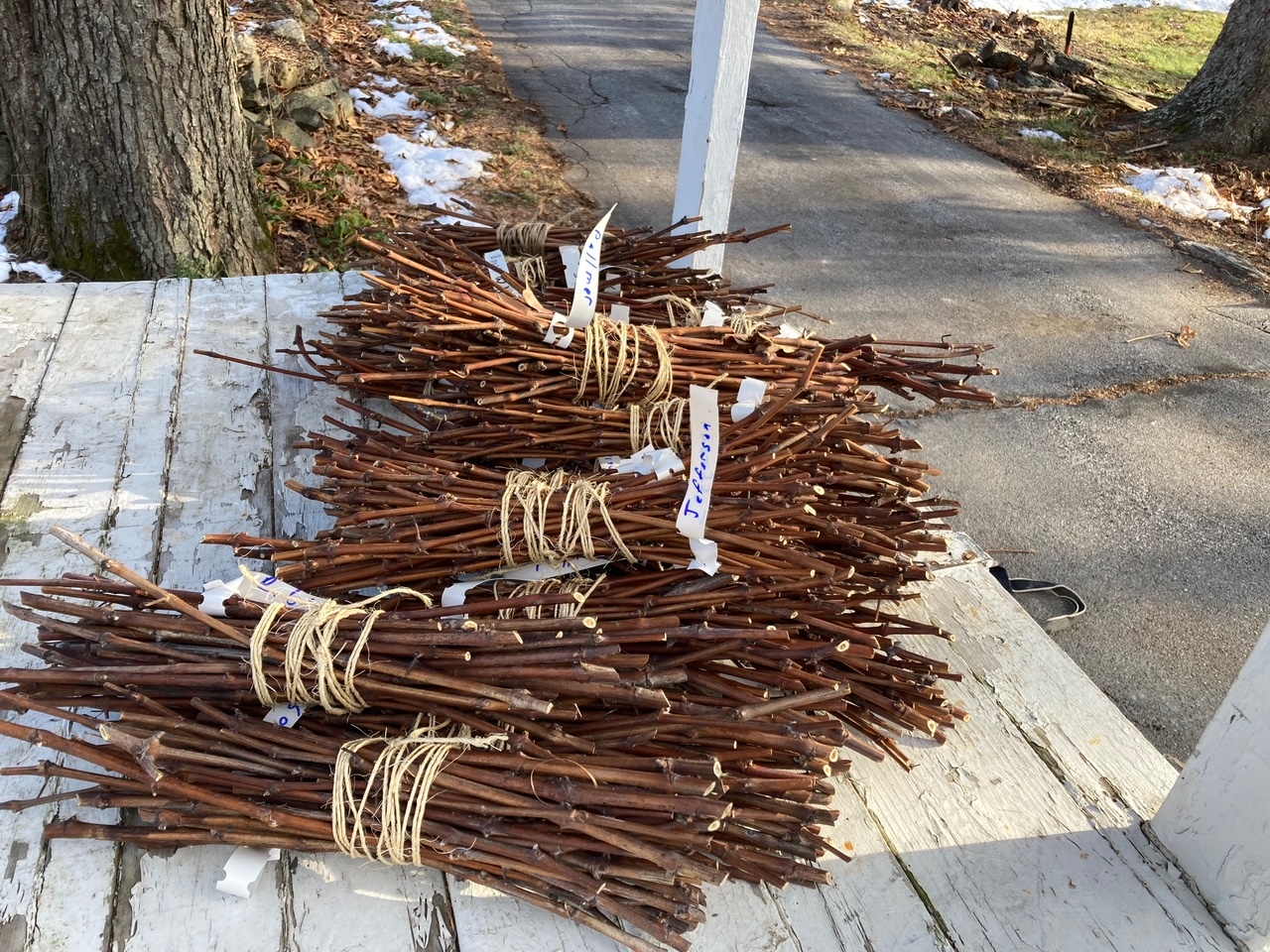
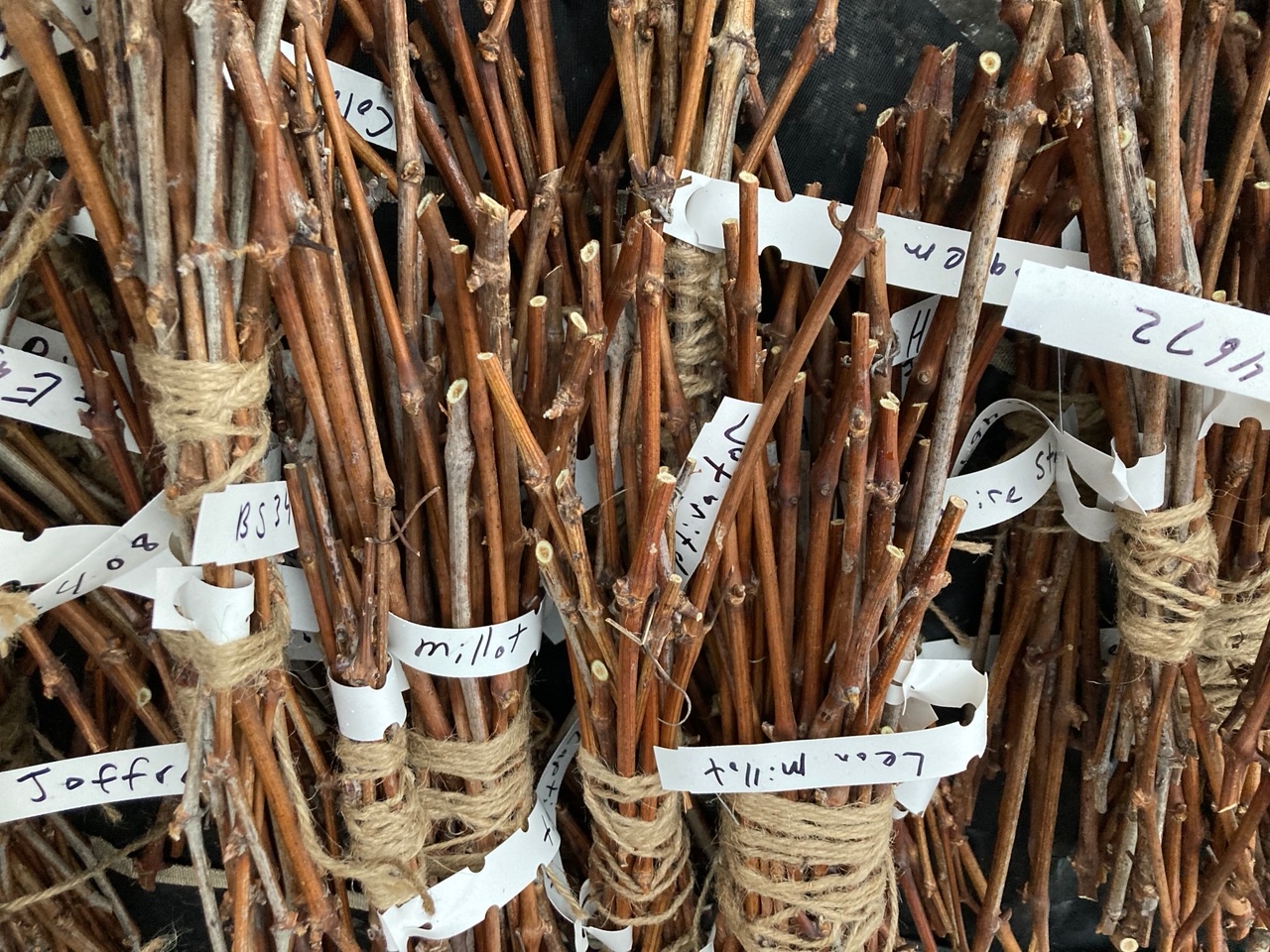
    The next step is up to the propagator, but Steve said he was taught to nip off a straight cut one inch above the top bud and make an angled cut at the bottom of the cane just below the bud node. Making your angled cut at the bottom of the stem easily shows where the top of the cutting is from the bottom which makes it easier when setting out your nursery cuttings, it also allows the cutting to be easily planted in the soil. No matter how you cut your ends, make sure you are consistent so that you will always plant your cuttings correctly, bottom side down in the soil. Dipping the bottom end of the stem into rooting hormones helps promote root growth, but is not necessary. You can find rooting hormones at your local garden center or nursery. If you are only rooting a few cuttings, fill a potting container with your local soil, if it is good well-drained loam soil, if it isn’t mix it with potting soil to improve its drainage.  Make sure your container is deep enough to accommodate your clippings, but if you are propagating a lot of material consider digging a shallow trench and reserving enough loose soil to fill in around your stems.

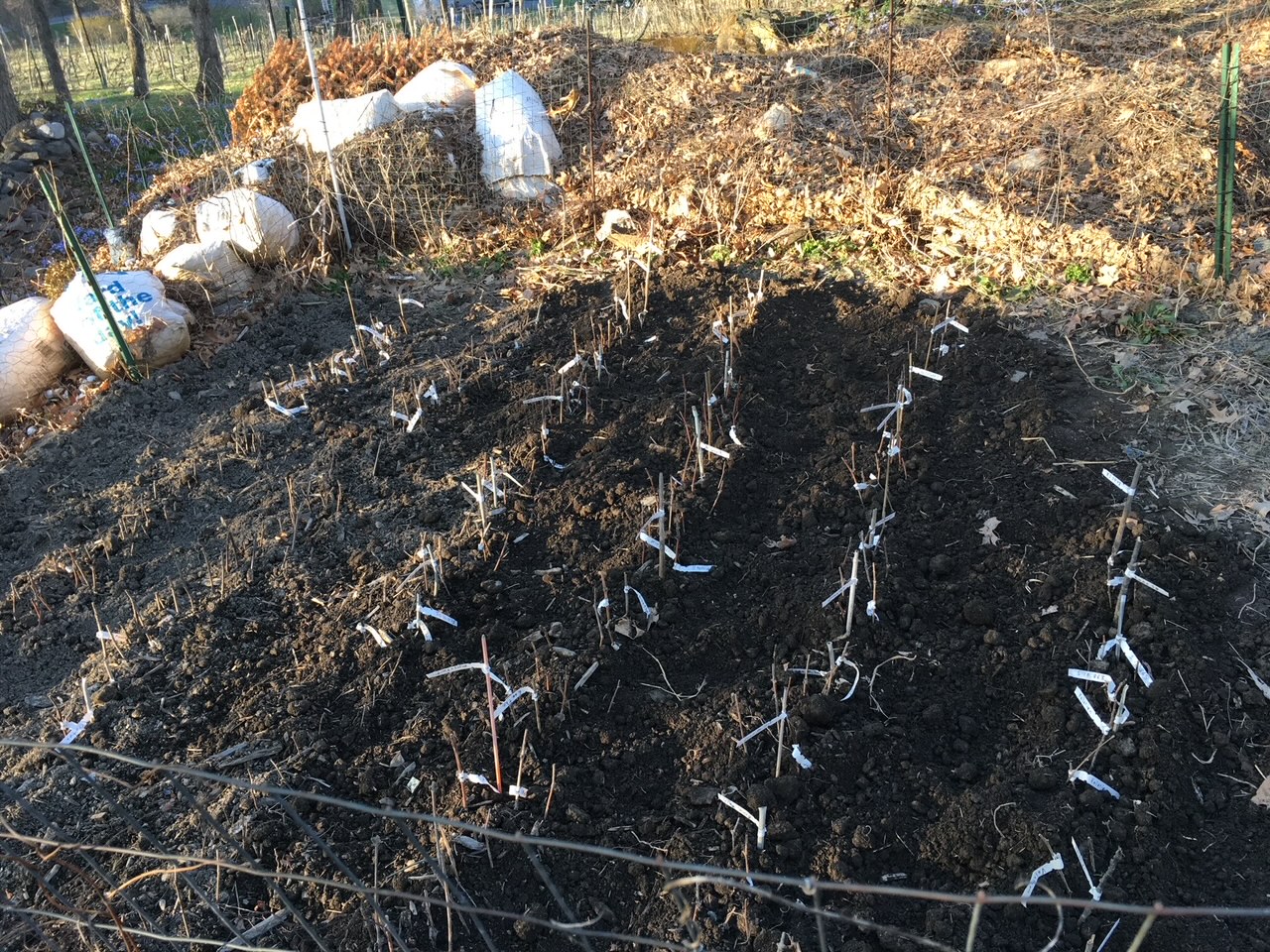
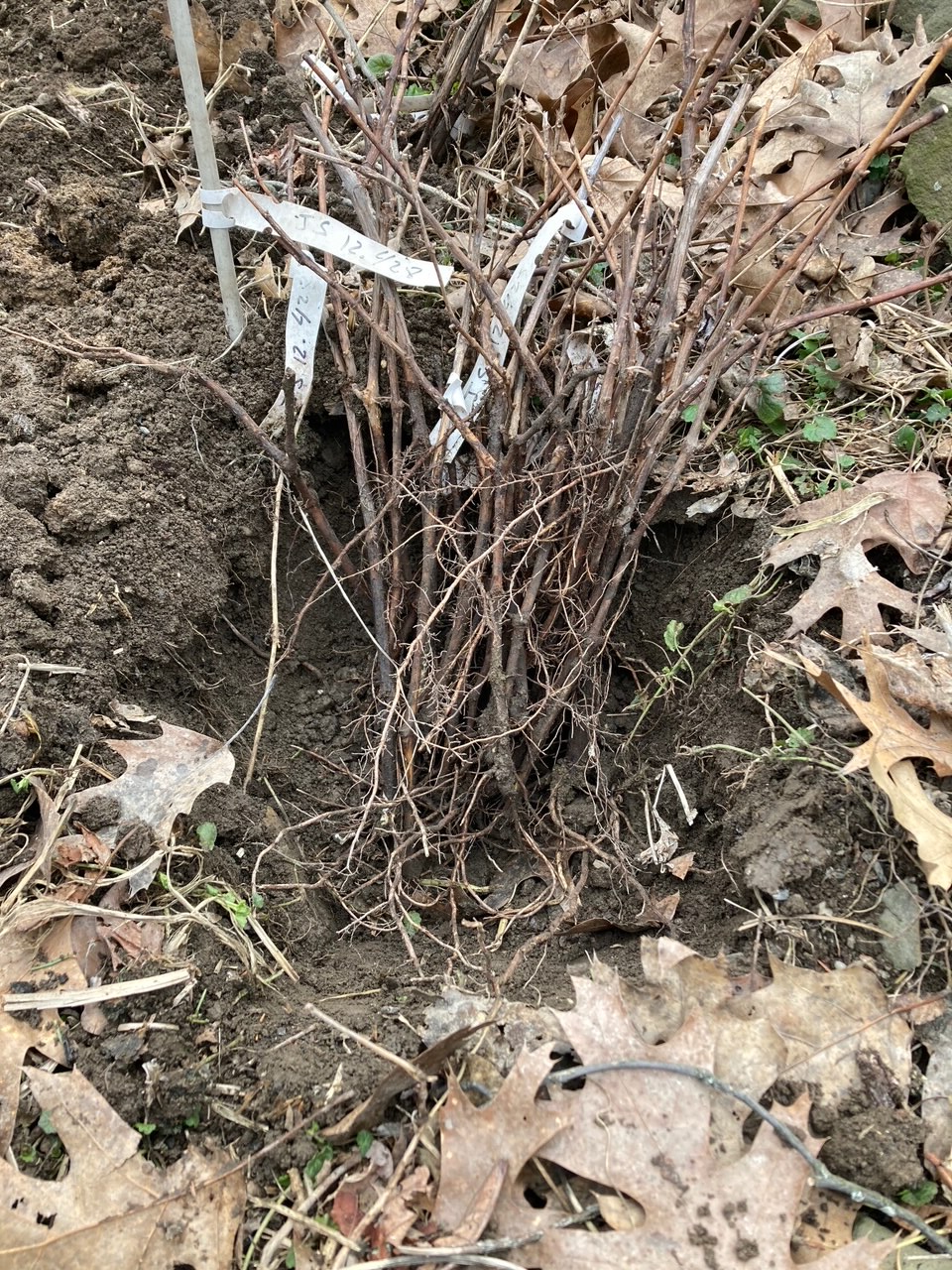
    These trenches can easily be located in your vegetable garden, since this soil has been worked up for many years, and often has a fence around it to keep out the wildlife that may like to browse on your newly installed cuttings. When planting your cuttings, bury them vertically three to four nodes deep with the bottom side down into the ground, leaving the remaining nodes exposed above the soil level. Remember to plant the bottom of the stem down with the straight-cut end above the ground.

    Keep the soil well watered, but not soggy throughout the first year when your cuttings are establishing themselves. For those in potted containers, the cuttings should be placed in a frost-free location with bright indirect sunlight. If you have more than one row of nursery cuttings in your nursery, it is recommended to mulch the cuttings with straw (not hay) to keep down the weeds and retain soil moisture.

    Steve explained the difference between taking cuttings from your vine and propagating them as a single project and cloning in which you separate individual canes that have a certain desirable mutation to create an entirely new variety of the original grapevine. Steve gave me an excellent example that was easy to understand. “My understanding is that cloning would be finding an abnormal sport of a vine that is different and you cut that unique cane off to propagate it. For example, Frontenac Gris is only a regular Frontenac when it was noticed that a separate cane had bronze-colored grapes and not red.  So cloning would be separating and propagating that “clone”, but if you are propagating wood, you just collect your wood and go at it.”

    You must plant more cuttings than you need to compensate for some not surviving. As a dear departed friend of Steve’s, Joel Fry of the Bartrams Garden in Philadelphia used to say, “Plant two of everything, and one will die”.  How many to plant is the question. Steve offered his advice based on years of experience in this area of viticulture. “I find that different varieties propagate at different rates. For example, Baco Noir, which is a part Riparia variety tends to have a higher success rate because it is a Riparia. Even with Riparia, I would plan for a 20% non-success rate for varieties such as Delaware, which is a part Bourquinian species hybrid, do not take as readily, so I would expect a 40% death rate.”  I would recommend propagating as many cuttings as possible using only the strongest ones to satisfy your needs and giving the extras away. Vines can also be rooted in water, but you will need to change the water regularly to prevent disease. Once you see the stems/cuttings rooting, you must transplant them into the soil.

    Whether you set out a nursery in your home garden or place them in pots in the spring, you need to wait an entire year to ensure that your cuttings have sufficient roots before they are set out in the field the following spring. After your cuttings have developed a strong root system they can be transplanted to their permanent location. 

    You probably have heard vintners say the clone number for a specific variety of grapes planted in their vineyard. An example of this would be the Pinot Noir Dijon clones 114, 115, 667, and 777 which are the most widely planted Pinot Noir clones because of their reliability and productivity. When you drink any mass-produced Pinot Noir you are likely drinking wine made from these clones. It is easy to go down a “rabbit hole” when looking for clones of just about any grape variety when researching which clones to plant in your vineyard. Don’t let the sheer number of options overwhelm you. The answer to this question is a simple one, treat a clone like a different variety. Pick a clone you like and propagate that clone.

    Growing your own vines from cuttings is a rewarding venture both financially and from the sense of personal accomplishment you will feel when you harvest your first grapes. With the adverse effects of climate change being documented in vineyards around the world and the increased number of adverse weather events plaguing vintners, the answer to a  consistent and economically sustainable fruit crop may lay in the past with heritage grape varieties, older cool climate hybrids, and new hybrids that are being developed. Growing heritage and cool climate hybrid grape vines that have adapted to survive many weather-related challenges over time could be a critical puzzle piece in the future viability of our vineyards, for both hobby and commercial grape growers. In addition, these varieties tend to be more productive and can be grown more sustainably with fewer pesticide/fungicide applications. They are direct producers that do not need to be planted on a rootstock. This means that if we witness a very cold winter or late spring frost, which kills that part of the vine above the ground, canes will come up from the ground to produce a crop in the same growing season.

    With that objective in mind, Stephen Casscles continues to labor on his long-term project, the Cedar Cliff Vineyards Heritage Grape\Wine Project, aimed at preserving heritage and lesser-known cool climate grape varieties in Northern America. If you have any questions about his work at Cedar Cliff Vineyards please contact Stephen Casscles cassclesjs@yahoo.com  To further his work, Stephen has established a set of three cooperating nurseries in Marlboro, NY, Fonda, NY, and Ipswich, MA where you can purchase already rooted vines and/or grape cuttings. If you are interested in obtaining cuttings of these unique vines, please feel free to contact Stephen Casscles cassclesjs@yahoo.com.  Sadly, most of these cuttings or vines are not available at commercial nurseries, hence we need to propagate them on our own to increase the availability of these unique virus-free/ disease-free grape varieties. For additional information on these heritage and cool climate grape hybrids, the 2nd edition of Steve’s book “Grapes of the Hudson Valley and Other Cool Climate Regions of the US and Canada”  is available at http://www.flintminepress.com .  
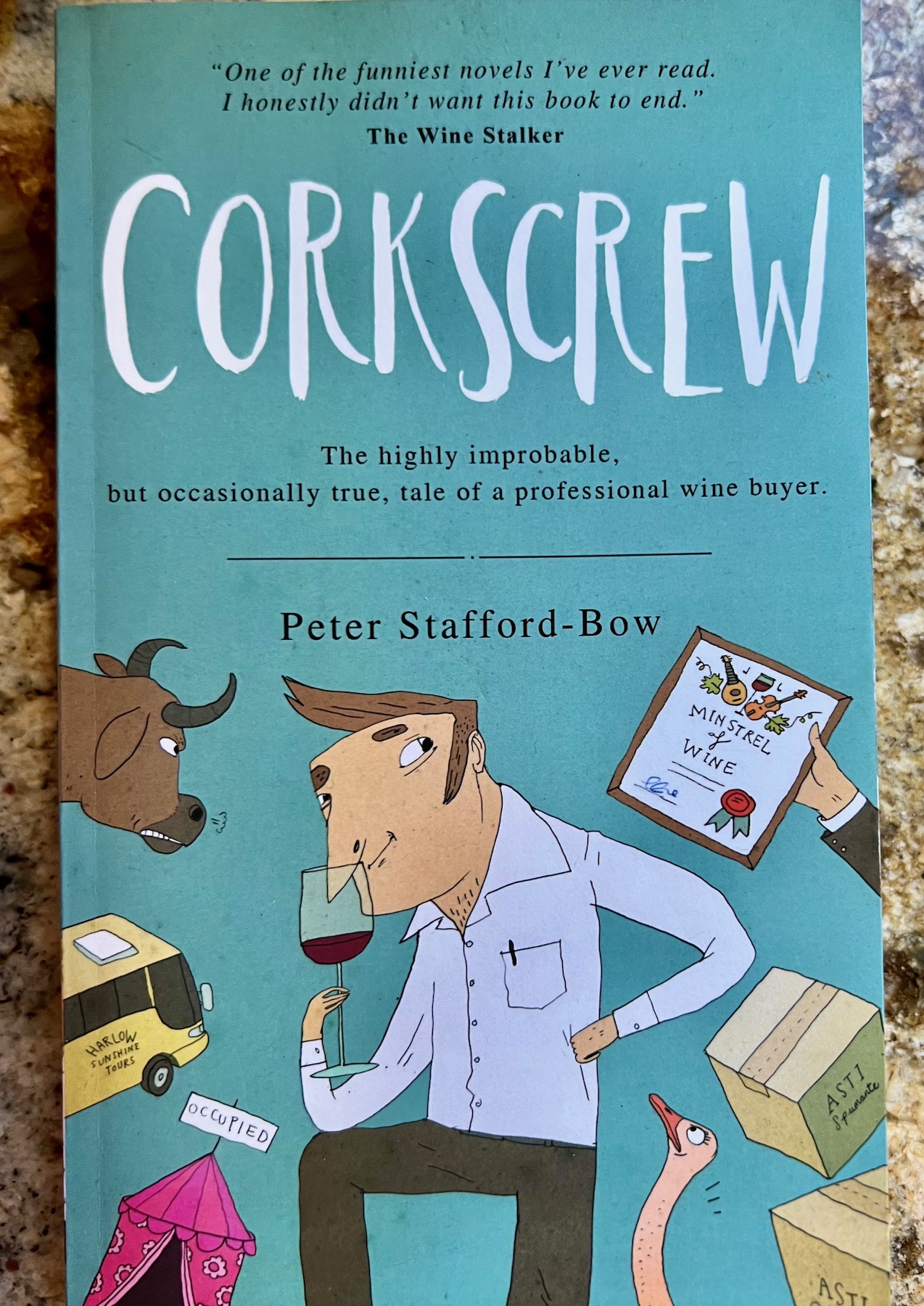
Book Review: Corkscrew by Peter Stratford-Bow

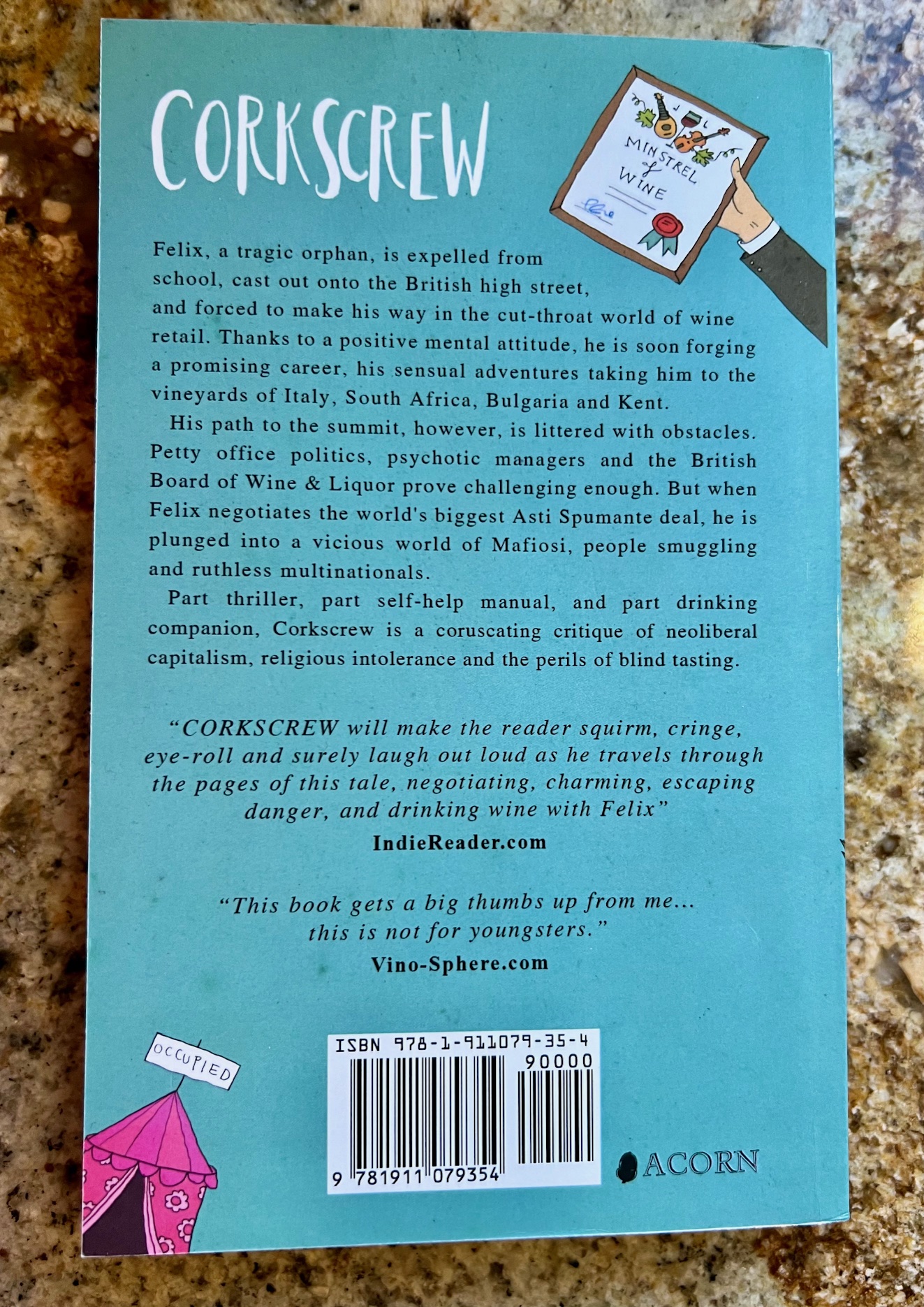
Corkscrew is the highly improbable but occasionally true, tale of a professional wine buyer by Peter Stratford-Bow

This humorous novel follows the exploits of a young English wine buyer as he navigates an unlikely journey around the world of wine while trying to advance his career by any means possible. The author claims there is some truth in his characters and their adventures but if it is even only a small grain of it he is lucky to have survived to pen this story. By reading between the lines you get a glimpse into how some of the wines you find on the shelves of your favorite wine shop get there. The absurd situations the ascending young wine buyer finds himself in are hilarious. The way he extricates himself from them for his benefit will have you shaking your head in disbelief and laughter. I also learned a lot of British slang by reading the book which would have taken me months to pick up working on the docks in the Port of Felixstowe. This book will make you howl and keep you interested from start to finish because there is nothing about the plot, if there is one, that is predictable. Buckle up and hold on because you are in for one wild ride. 


Winelikes App: A Free App With Something for Every Wine Lover

One thing wine lovers really enjoy doing is sharing a new wine they have discovered with friends and family or with anyone who will listen. One thing wine lovers really hate doing is trying new wines only to be disappointed and wasting money on a product that is a poor match for their tastes. After graduating college and obtaining his MBA Jeff Gillis had seen this problem many times during his years in the hospitality industry. Jeff honed his skills running some of the most prestigious hotels and restaurants in the country, including the Peninsula Beverly Hills, Koi Restaurant Group, and the Orange County fine dining restaurant Pinot Provence, continuing until he left his post as Food and Beverage Director at the Bardessono Hotel in Napa Valley and moved Los Angeles to pursue a career in biotech. 

Jeff’s love of wine only got stronger as he traveled a career path that closely paralleled and augmented his wine journey as he earned a WSET2 and Certified Sherry Wine Specialist certification. After leaving the industry Jeff relied on wine shops, supermarkets, and a few wine apps to purchase wine but soon realized there had to be a better way. With that goal in mind, Jeff enlisted the help of his sommelier friends and built a social media app suited for both wine enthusiasts and wine novices.

The Winelikes app has a lot to offer its users, so I asked Jeff to tell us more about Winelikes. 

Winelikes is a social media app for wine lovers and is available worldwide for mobile users. Download the free app and begin using it to connect with other wine enthusiasts. Winelikes uses a simple, modern, expansive interface that serves all; our target market is 25-45 years old, with features that ensure daily engagement. We want to make wine an everyday experience. Our tagline is Sip, socialize, share! 

Individuals can create a taste profile and be guided toward wines they are likely to love. Browse to interact with the community, find others to follow and connect with, see where to enjoy wine, post photos, write reviews, add wines to their “wine cellars/favorites,” learn more about wines with trivia, and find pairings for their meals.

Winelikes is a game-changer! With the food pairing feature community members can add their meals to the app in addition to the food choices that the Winelikes team is currently inputting daily. Other wine apps offer the user traditional pairings but the Winelikes app thinks outside the box when it comes to pairing wine with foods prepared in different ways and with unique flavor profiles. A restaurant can input all of their dishes and then pair them with their wine list and coming soon, the user can place an order using the app. Wineries can also submit their wines and be featured in the Winelikes app. Winelikes can then pair their wines specifically with the dishes that will allow them to shine. 

Sommeliers and influencers can use the platform to establish themselves, build a following, and promote classes/programs they’re involved in. 

To attract users who want to learn more about wine, Winelikes has a trivia feature where the Winelikes team posts a new quiz weekly. The quizzes cover a wide range of topics and skill levels ranging from beginner to advanced to challenge users while keeping them interested and engaged. To make the experience more entertaining and to reach out to a younger demographic, your quiz score is present on your feed allowing you to compete with friends and peers to post the highest score or post it for the community to see if you choose to. Businesses can also take advantage of this feature to do market research. 

Businesses have an optimal pathway to customers. When users create a profile, their dataset will include pertinent information. Companies can post in the app and create differently-styled ads to reach a target demographic (local, nationwide, worldwide). Winelikes offers convenience, accuracy, and personalization that help wineries build stronger customer relationships and increase their brand footprint. 

TikTok, one of the biggest social media apps, does not allow advertisements for wine or wine-related businesses. TikTok is also an all-age app and its algorithm will hide or delete posts associated with wine. Selling wine on Instagram or Facebook is technically illegal but there are workarounds. Winelikes has created an app rated 17 or older due to the different drinking rules around the world so wine-related businesses don’t need to waste their money trying to beat algorithms. Instead, they can now focus on marketing and selling products to prospective customers. 

For a more in-depth description of the features and thought process behind the Winelikes app you can listen to an interview with the Winelikes app creator, Jeff Gillis on The Wonder World of Wine podcast. Link below. 

iPhone:

https://apps.apple.com/us/app/winelikes/id1604508326

Android:

The Wonderful World of Wine podcast

https://soundcloud.com/user-492543397/episode-243-jeff-gillis-interview-wine-likes-app

Winelikes website

http://www.winelikes.com/

The Winelikes app looks like a promising tool for anyone looking to expand their knowledge of wine, market wine, interact with other like-minded wine lovers, build a social media following, or just immerse themselves in the wine community. Any app that helps me put better wine in my glass is worth exploring. 

Review: Chateau Ste. Michelle Columbia Valley Rosé 2021

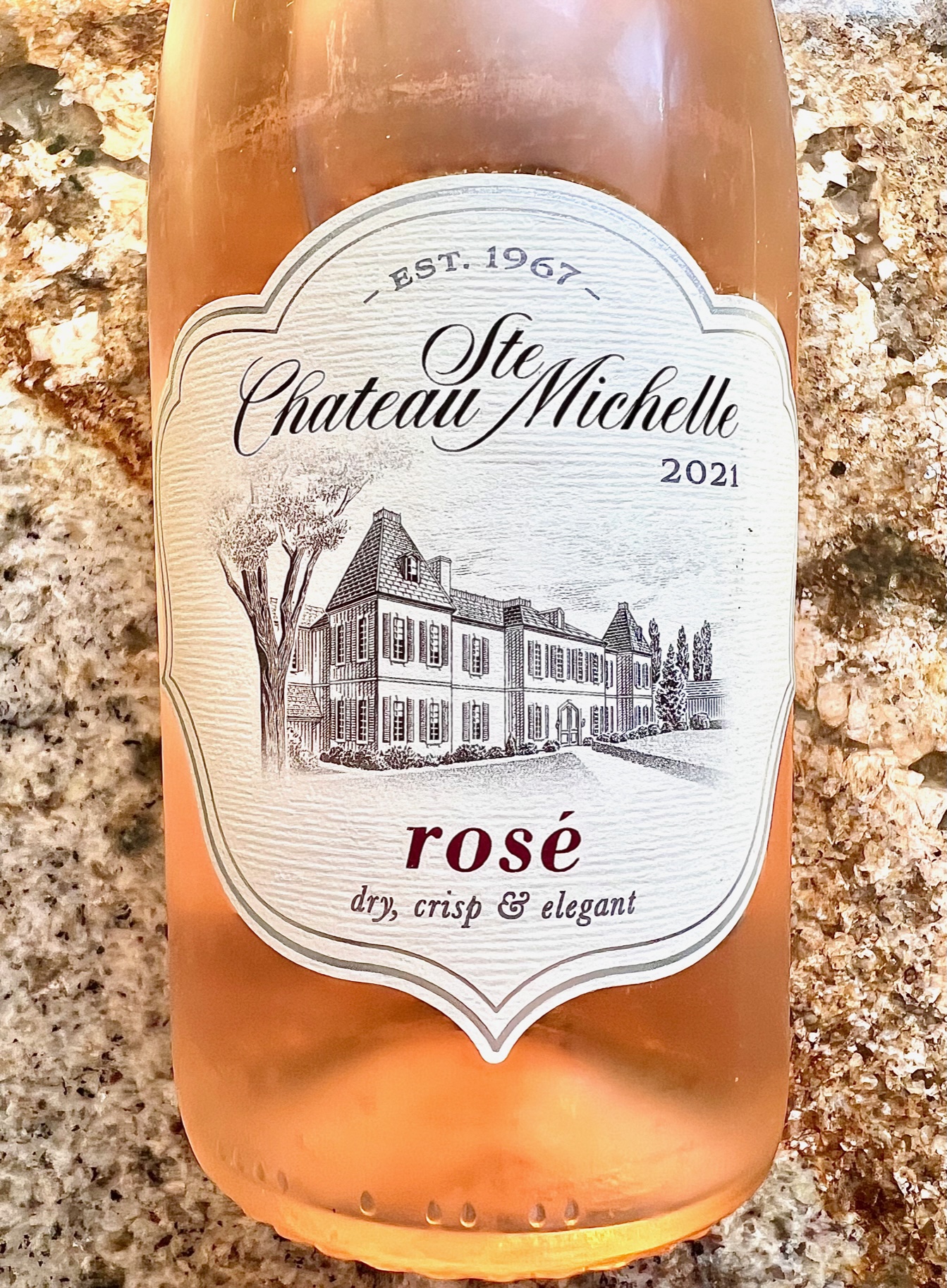
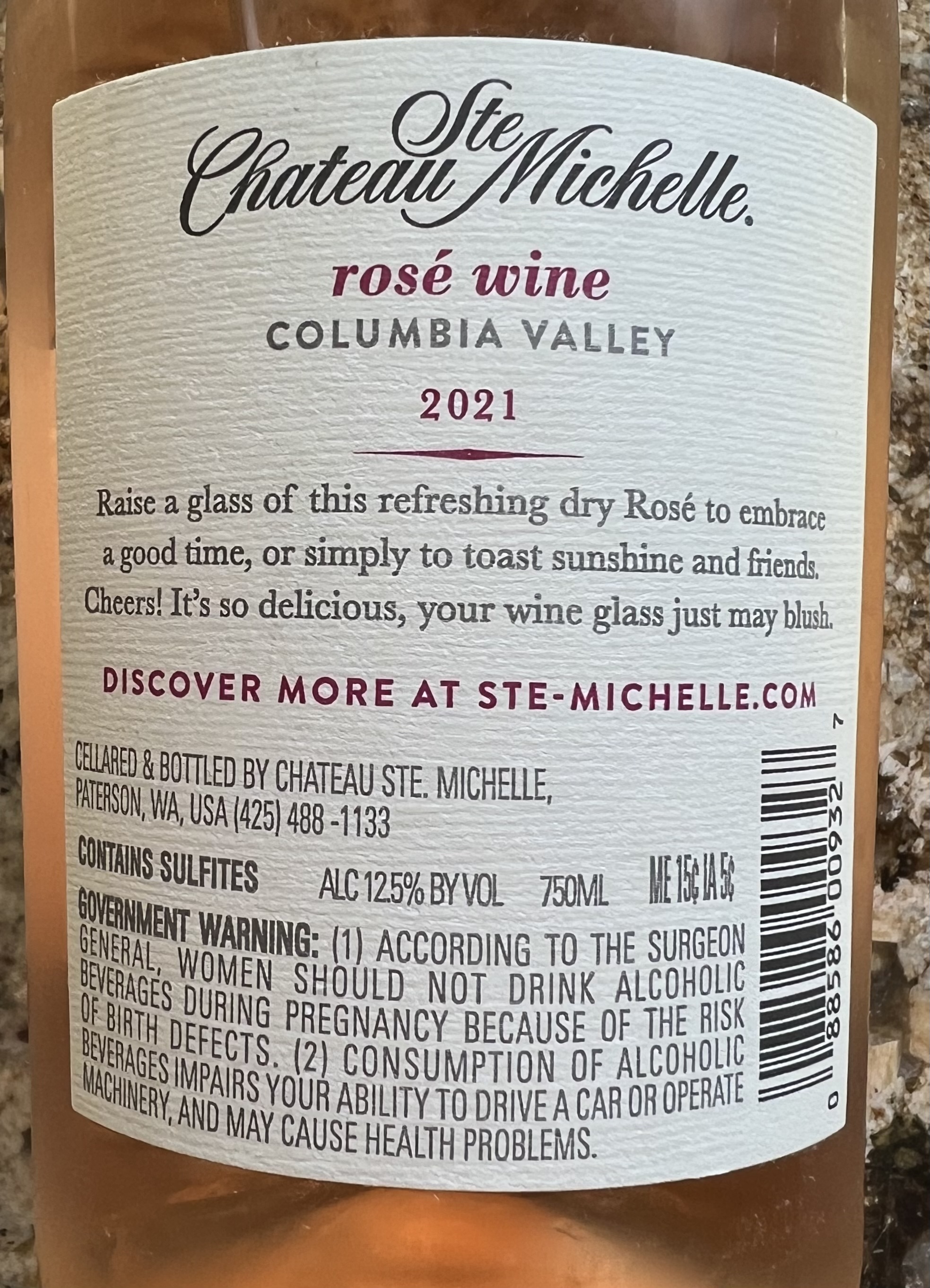
Next in my series featuring widely distributed wines that can be easily found in your area is one that doesn’t come to mind when you go looking for an inexpensive easy drinking wine for a relaxing evening on your deck or poolside. Chateau Ste. Michelle Columbia Valley Rosé 2021 is just one bottling in a long list of drinkable offerings that this Washington state winery group produces in large volume. This Rosé is 55% Syrah, 43% Cabernet Sauvignon, and 2% Grenache. Chateau Ste. Michelle Columbia Valley Rosé 2021 opens with notes of watermelon and strawberries followed by flavors of citrus on a light body. Priced at around $15 or less it is a good choice to pair with the lighter fare that is popular during the warmer weather. If you like to “Rosé all day” with your wine glass filled to the brim with ice then this Rosé is for you with its 12.5% ABV and crisp dry profile.

2nd Annual Saperavi Festival Trade & Media Event Finger Lakes Press Release

I wanted to share this press release I received from the co-founder of Saperica, Erika Frey. The 2nd Annual Saperavi Festival in the Finger Lakes will be held on May 12-13, 2023. For more details see the following press release.

March 23, 2023,

2nd Annual Saperavi Festival in the Finger Lakes Press Release

Saperica, Inc., Dr. Konstantin Frank Winery, Chama Mama Restaurant, and the National Wine Agency of Georgia presents the 2nd annual Saperavi Festival in the Finger Lakes region of New York.

Hammondsport, New York – Saperica, Inc., is pleased to announce that the 2nd annual Saperavi Festival will take place at Dr. Konstantin Frank Winery in Hammondsport, New York on Saturday, May 13, 2023. The festival will bring together producers of Saperavi and Rkatsiteli wines from the Finger Lakes region of New York along with their counterparts from the country of Georgia and throughout the USA. Authentic Georgian cuisine with a modern twist will be featured from New York City restaurant, Chama Mama. Sponsorship will be provided by the National Wine Agency of Georgia.

Saperavi Festival attendees will have the opportunity to taste a wide variety of wines crafted from the Saperavi and Rkatsiteli grape varieties which are native to the country of Georgia and have been grown in the Finger Lakes region for over 60 years. The wines will be paired with Georgian food specialties like Khachapuri, Khinkali, and Chakapuli. Cooking demonstrations will be presented throughout the afternoon.

The Saperavi Festival will take place on Saturday, May 13, 2023, from 12pm to 4pm, on the grounds of Dr. Konstantin Frank Winery located at 9683 Middle Rd, Hammondsport, NY 14840. More detail and tickets are available for purchase at Eventbrite via this link: http://eventbrite.com/e/2nd-annual-saperavi-festival-tickets-577274843597

The event can also be found on Eventbrite by using the search words “saperavi festival”.

Members of the trade and media are invited to participate in educational seminars and events which will occur on Friday, May 12, 2023, from 12pm to 4pm on the grounds of Dr. Konstantin Frank Winery located at 9683 Middle Rd, Hammondsport, NY 14840.  For more information about attending as a member of trade or media, please send an email to saperavi@saperica.org.

The 2nd annual Saperavi Festival is organized by Saperica Inc, a 501(c)(3) non-profit corporation. Saperica’s mission is to promote Saperavi and other Georgian grape varieties along with Georgian gastronomy and culture in the Finger Lakes, NY, and around the U.S., by organizing and facilitating educational seminars and exchange programs between the regions, for wine and culinary professionals and enthusiasts. Any proceeds from the festival will help to fund future Saperica programs.

For additional info, please visit www.saperica.org.

Email questions to http://saperavi@saperica.org.

We hope to see you at the festival!

Wine Review: Castel Sallegg Lagrein 2019

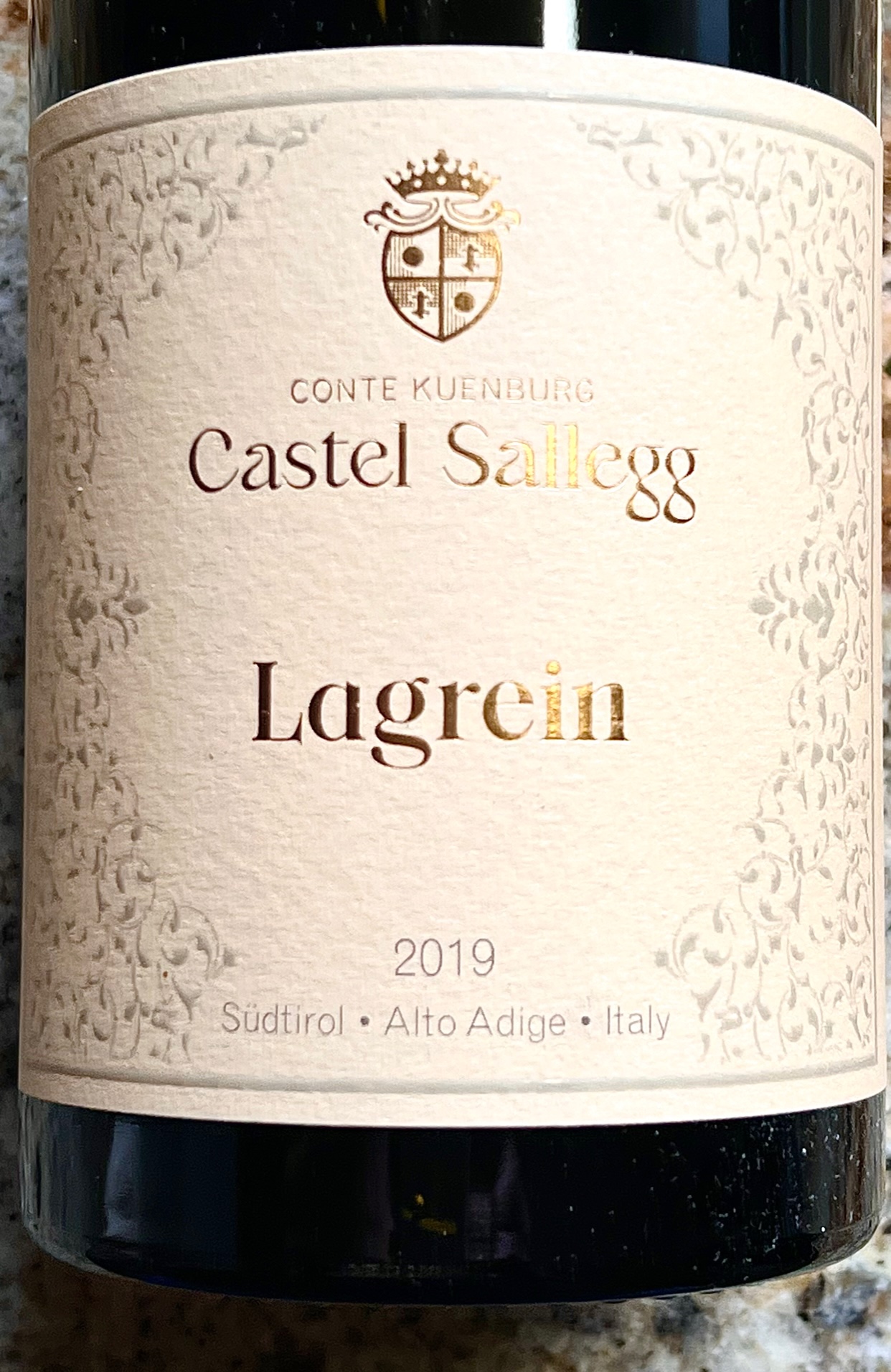
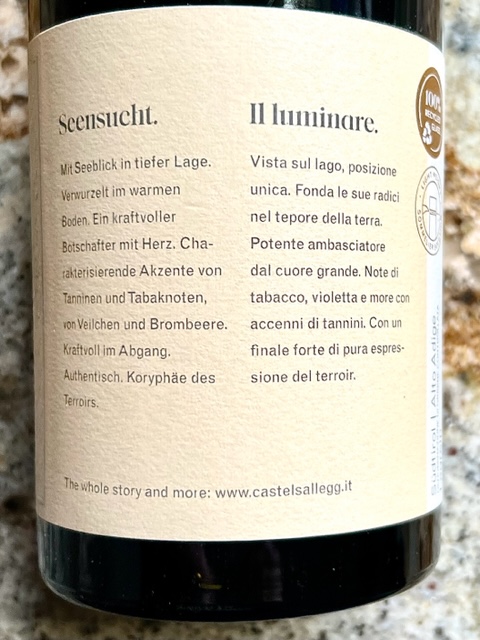
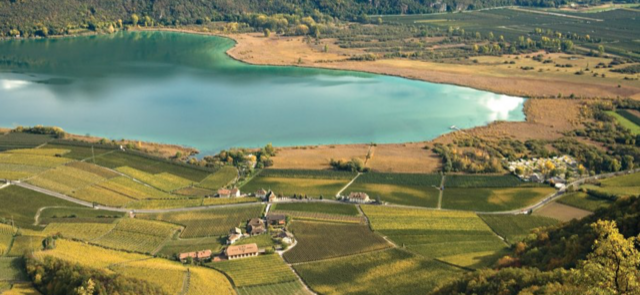
Here’s an opportunity to experience a little taste of the Alto Adige region of Northern Italy through their native grape Lagrein. Lagrein is the oldest indigenous grape variety of the Alto Adige region and a relative of Syrah and Teroldego. Alto Adige is Italian for South Tyrol (Südtriol in German). It is Italy’s northernmost district and is also one of its smallest. The landscape is punctuated by the peaks and valleys of the Dolomites and Italian Alps. The producers in this area focus on quality over quantity. Most, if not all, of their wine, is terroir-driven. Castel Sallegg Lagrein D.O.C. 2019 is one of those wines. Made with 100% Lagrein grapes manually harvested from their humus-rich clay soil vineyards in the vicinity of Lake Caldaro.The grapes are then selected, destemmed, mashed, and, malolactic fermented at a controlled temperature in stainless tanks. It is aged in stainless steel (80%) and French oak for twelve months. It is blended for two to three months and bottle aged for an additional six months.

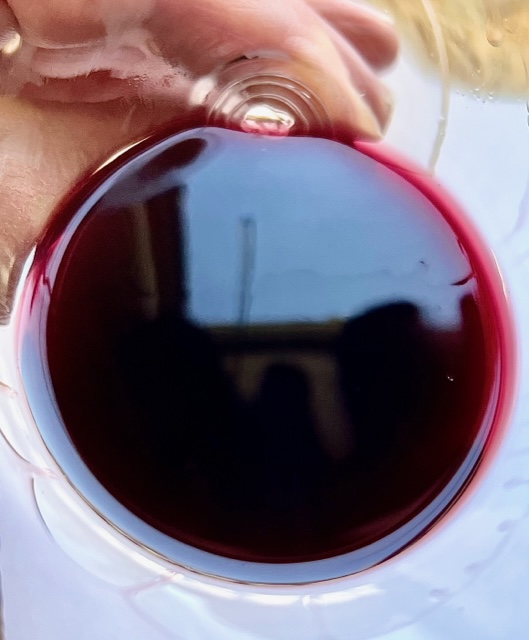
Castel Sallegg Lagrein 2019 has a very dark ruby color with faint floral aromas. Flavors of mixed black fruits are carried on a structured medium body with mild tannins appearing mid-palate. More than ample acidity throughout. Pairs well with any grilled or roasted red meat or pasta in a hearty red sauce.

Interview: Ulrike Platter, Director Castel Sallegg (Alto Adige, Italy)

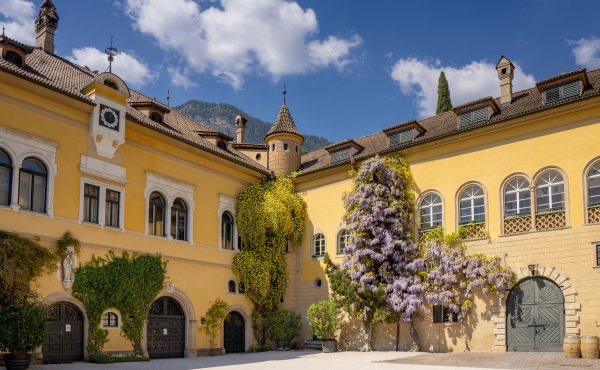
Castel Sallegg is a family-run firm of winegrowers located in Caldaro, Alto Adige (Italy) that is dedicated to maintaining and preserving the winemaking culture of the region. With a storied history and a tradition of commitment to excellence, the von Kuenburg family has ensured the production of quality wines from Castel Sallegg for over a century. While the winemaking team has great pride in its past they are focused on the future and the challenges that must be navigated to maintain its high standards in all phases of the operation. 

For answers about how they are addressing these problems and what we should know about Castel Sallegg, I asked its Director Ulrike Platter to share her thoughts with my readers and me.

1. The wines of Alto Adige are famous for being able to express their terroir. What methods and technologies does Castel Sallegg employ to ensure this “Sense of place” is preserved in your wines?

“Oltradige, the epitome of the wine-growing tradition in Alto Adige, lies at the foot of the Mendola Mountains in the hills of the western Adige Valley between Bolzano and Termeno. Vines have found ideal conditions in this delightful landscape for thousands of years. The winegrowing region of Alto Adige is one of the oldest in Central Europe and the entire German-speaking world.”Oltradige, the epitome of the wine-growing tradition in Alto Adige, lies at the foot of the Mendola Mountains in the hills of the western Adige Valley between Bolzano and Termeno. Vines have found ideal conditions in this delightful landscape for thousands of years. The winegrowing region of Alto Adige is one of the oldest in Central Europe and the entire German-speaking world.

The Alps form a protective barrier against cold winds from the north, while the southerly Ora wind from Lake Garda has a mild Mediterranean influence. Our wines benefit from the cool downslope winds coming off the Mendola Mountains. The vines flourish here thanks to an average of 1,800 hours of sunshine per year and average temperatures of almost 17 degrees Celsius during the vegetation period.

The family-owned vineyards are located in 3 historical vineyards in Caldaro:

✓ Preyhof / vineyard Prey: 550 m above sea level and situated in the Caldaro district of Paese di Mezzo.

✓ Leisenhof / vineyard Leisenpuiten: 500 m above sea level. Central location in the village of Caldaro.

✓ Seehof/vineyard VIGNA Bischofsleiten, vineyard Nussleiten: 230 – 280 m above sea level. San Giuseppe al Lago, Caldaro.

Due to the vineyards, which range from 230-550 m above sea level, Castel Sallegg identifies the best conditions for each grape variety and tries to make optimum use of this diversity.

Best practice: Our VIGNA Bischofsleiten Lago di Caldaro scelto classico superiore DOC: VIGNA (What is a Grand Cru for the French is a VIGNA for the Italians and for us South Tyroleans.) guarantees our customers that the grapes for this wine come 100% from this vineyard. In order to preserve these 50-year-old vines, the vines that fall out due to age, illness, etc., will be replanted with our own clones.

The goal is to produce top-quality wines in harmony with the terroir we have.”

2. With Alto Adige containing so many different microclimates and growing conditions in its vineyards, have the vineyard managers noticed any changes as a result of climate change? If they have, what can you tell us about them and how are you planning for your future vineyard management? 

“Our vineyard manager noticed the changes, especially this year, which was hot and dry. Since Castel Sallegg is more of a red wine winery (we produce 58% of red wines) and we often had difficulties in the past years, with the red grapes, such as Lagrein, Merlot, and Cabernet Sauvignon fully ripening, so 2022 was a great year for us.

In addition, 80% of our vines are 30-50 years old, which means that the roots are growing very deep to get enough water for themselves even in a very hot season. These vines are stable.

Problems can be seen in younger plants or new plants.

For this purpose, we invested in a project for the next few years, which will digitize needs-based irrigation. This means that the humidity of the soil is measured by soil sensors and the vines in different places were partially watered by a targeted system.

Since we have some vineyards on a slope and the vines get less water at the top by draining and the vines at the foot get more water we can irrigate more targeted and water-saving.

We have also noticed increased hail in recent years. For this reason, we will place our most important vineyards under hail nets in the next 2-3 years.”

Thank you to Ulrike for sharing her time and down-to-earth expertise in the mindset and operations at Castel Sallegg.

My review of the 2019 Castel Sallegg Lagrein will be posted soon.

All Images Photo Credit: Castel Sallegg

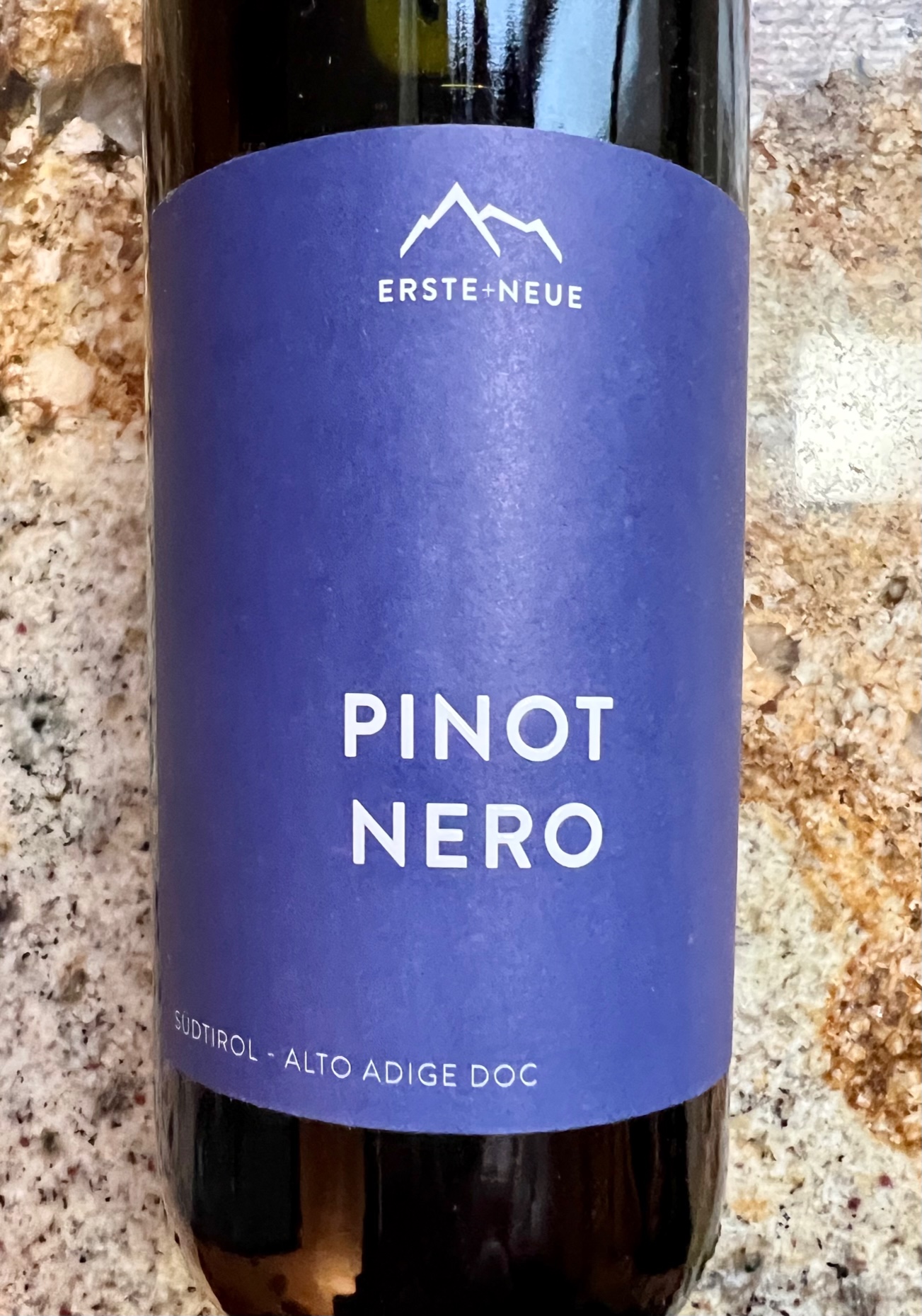
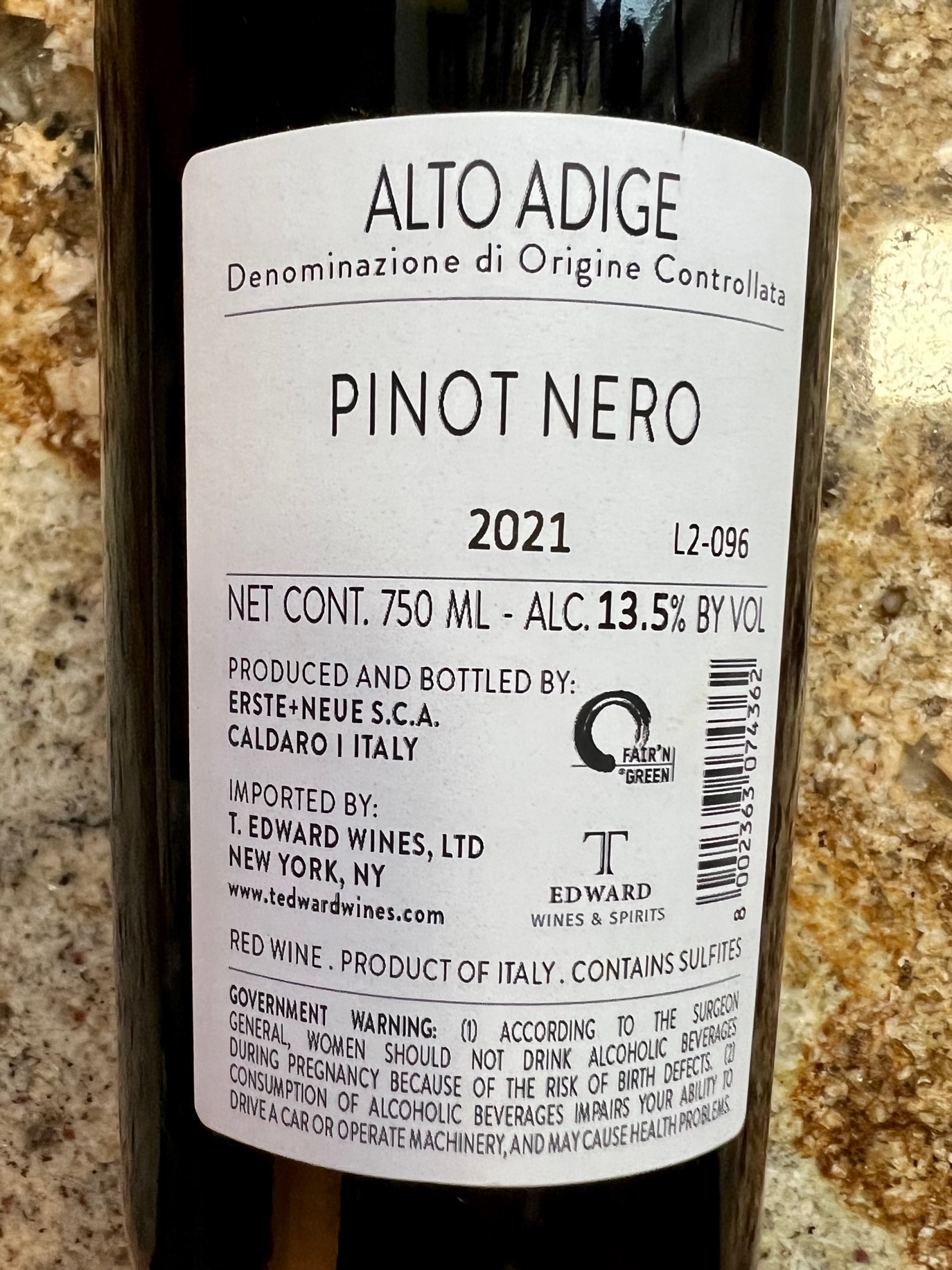
Interview: Andrea Moser, Chief Enologist Erste+Neue Alto Adige Region, Northern Italy & Review: E+N Pinot Nero 2021

Erste+Neue is the product of the 1986 merger of two wineries that began in the early part of the twentieth century. Erste Kellerei and Neue Kellerei combined to form Erste+Neue. The two wineries moved forward as one with a commitment and determination to stay on the cutting edge of alpine winemaking. 

In 2018, Erste+Neue was awarded the prestigious international seal for sustainable viticulture by FAIR’N GREEN. The goals and standards of FAIR’N GREEN mirror the same deeply ingrained beliefs that guide the winemaking culture at Erste+Neue. Sustainability, protecting the environment, biodiversity, natural viticulture, and the protection of natural resources are the guiding principles that drive all decisions made at Erste+Neue. 

The wines of the Alto Adige Region are famous for being terroir-driven and their bias to a specific area of the region. I was curious to hear how the vineyard managers and winemakers at Erste +Neue balance the demands of preserving and integrating the “terroir” factor into their wines while balancing the needs of the local ecosystem with the standards of producing world-class grapes and wine consistently. 

Seeking answers to these questions and others, I posed them directly to a leading viticulture professional and Chief Enologist at Erste+Neue, Andrea Moser. The following is our interview published in his own words.

How does Erste+Neue approach the unique challenges that making wine in the Alto Adige present while still being able to produce the highest quality wines that display a “sense of place?

“Facing the challenges of climate change is becoming increasingly important in every wine-growing region of the globe, and in South Tyrol, too, it is no different.”

However, Alto Adige and specifically our area are at a great benefit with respect to this issue, in fact, our orographic situation is very particular. The vineyards start in fact with the red varieties at about 230 m.a.s.l. and arrive in just a few kilometers to elevations of about 700 m.a.s.l. where the white varieties find excellent ripening conditions. This large elevation range, combined with a constant south-to-north wind “the Garda Hour” and strong temperature fluctuations between day and night due to the mountains surrounding us (Mendola range), allows us to consistently obtain high qualities on both red and white grape varieties.

Ripe but fresh and elegant reds and whites with low pH, good acidity, crisp and fresh that perfectly embody the spirit of our territory and our vineyards located in the middle of the Alps.”

How has being FAIR’N GREEN certified complemented your winemaking practices and philosophy in both the vineyard and cellar?

“For us, sustainability and especially respect for the environment has always been a key point to consider during our work from vineyard to bottle.

Since we have been working with Fair&Green we have made this commitment measurable and have strived to improve our efficiency and sustainability a little more each year.

In the first year of certification, we scored 68 percent while we are now at 82 percent on the scale that verifies, measures, and evaluates our degree of environmental commitment. Today, having reached the fifth year of certification, we have made many steps forward, such as completely eliminating some synthetic molecules for the phytosanitary defense of the vines, eliminating chemical weeding by 92%, increasing the areas under green manure thus increasing biodiversity in the field, and introducing sexual confusion in the vineyard to combat certain types of harmful insects. All our wines can be considered vegan since we have not used any clarifiers of animal origin for several years now, only yeast derivatives. By now, all the facilities for the production of cold, compressed air and nitrogen are equipped with energy recovery to produce hot water. We have equipped ourselves with photovoltaic panels that can provide us with about 40 percent of the energy we use.

In terms of packaging, the biggest step has been taken by eliminating bottles that are too heavy. In fact, we have gone from 700/750-gram bottles to 500-gram bottles, reducing our CO2 footprint by a third.

The road to true all-around sustainability is still a long one, but we are very committed and determined to get there as soon as possible.”

I would like to take this opportunity to thank Martin Klammer, Sales Director of Erste+Neue for his support because without it this article would not have been possible. I would also like to thank Andrea Moser, Chief Enologist of Erste+Neue for his time and candid insights into the ideology behind the winemaking mindset at E+N. I found his comments about how the culture at E+N and the environment are intertwined extremely informative because I hold a degree in nature conservation. The following is my review of Erste+Neue Classic Pinot Nero 2021.

Pinot Nero is known internationally as Pinot Noir. Pinot Nero is an early-ripening grape with a thick skin that has the reputation for being a “Heartbreak Grape” variety because it requires a great deal of care in the vineyard thus making it difficult to produce a successful harvest consistently. 

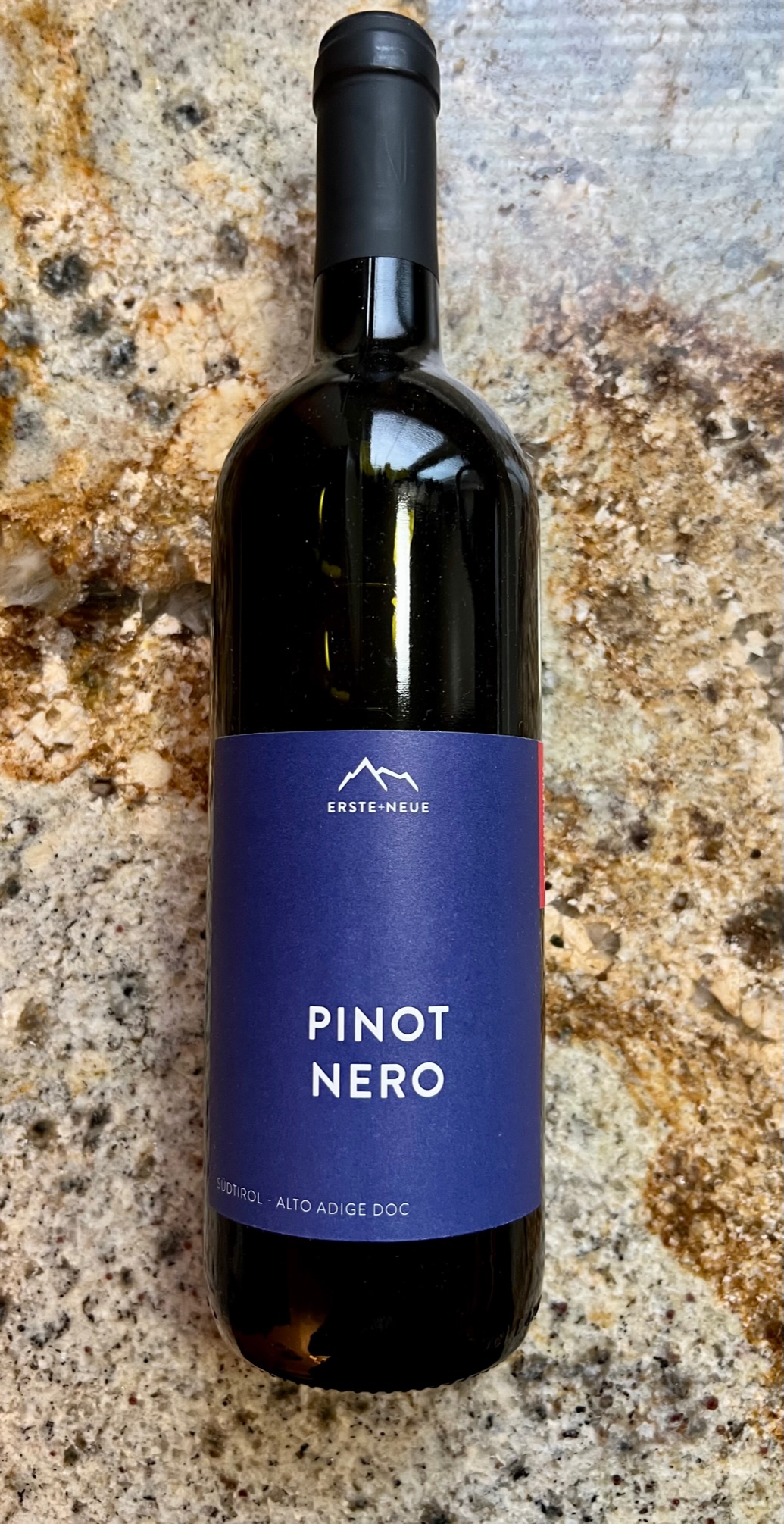
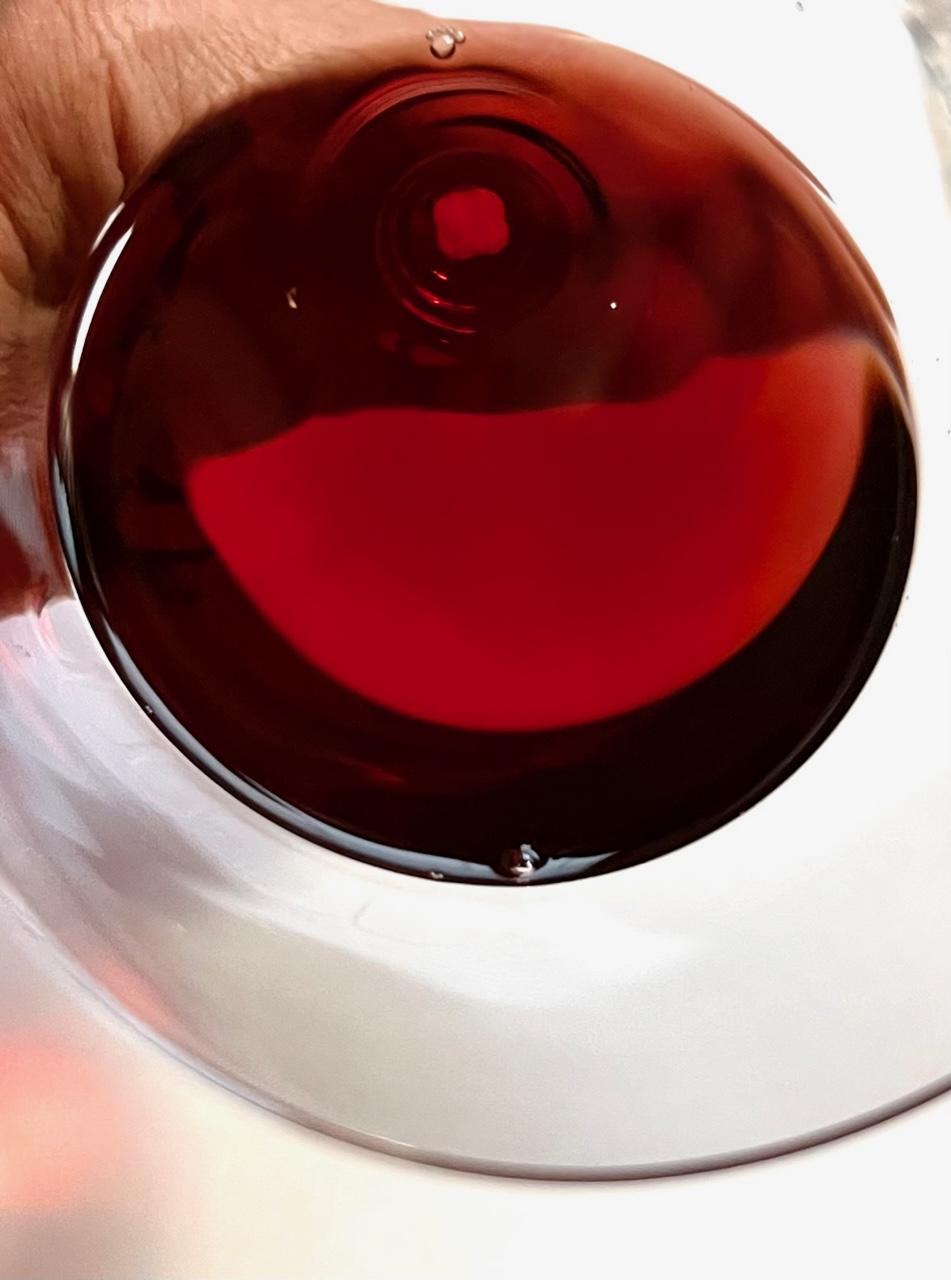
Erste+Neue Classic Pinot Nero 2021 is a sophisticated well-made wine that can be purchased at a very fair price. This Pinot Nero is ruby red in the glass and opens with the aromas of cherry & faint raspberry that is followed by the prominent flavor of cherries on the palate while smooth tannins and lively acidity are borne on the medium body of this wine. The finish is lengthy and agreeable.

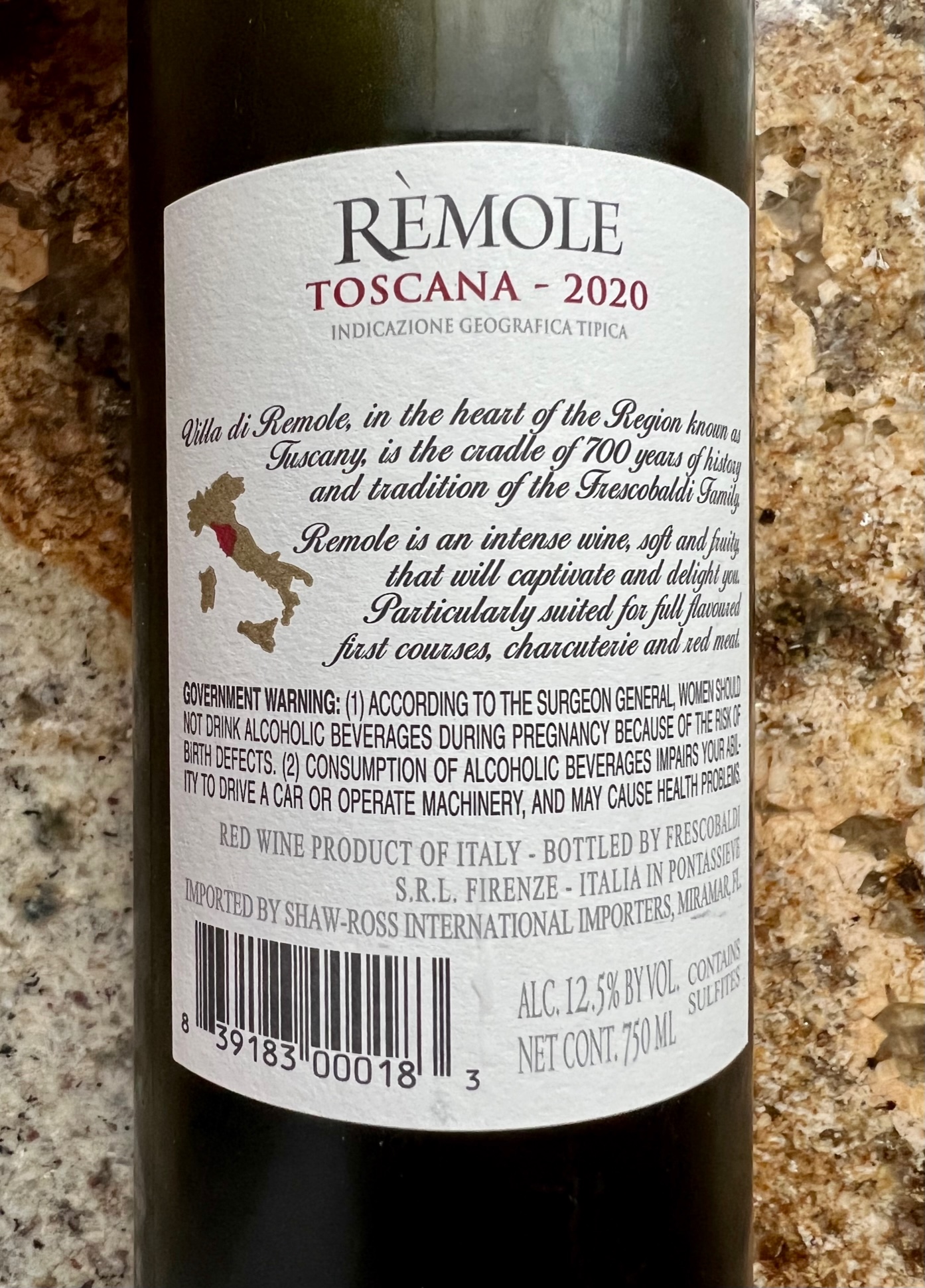
Frescobali Remole Toscana Rosso 2020

Frescobaldi Remole Toscana Rosso 2020

This Toscana is produced in Tuscany, Italy. It is a blend of 85% Sangiovese and 15% Cabernet Sauvignon. This is a lighter wine than many of the more complex and pricey Toscana bottlings from Tuscany.

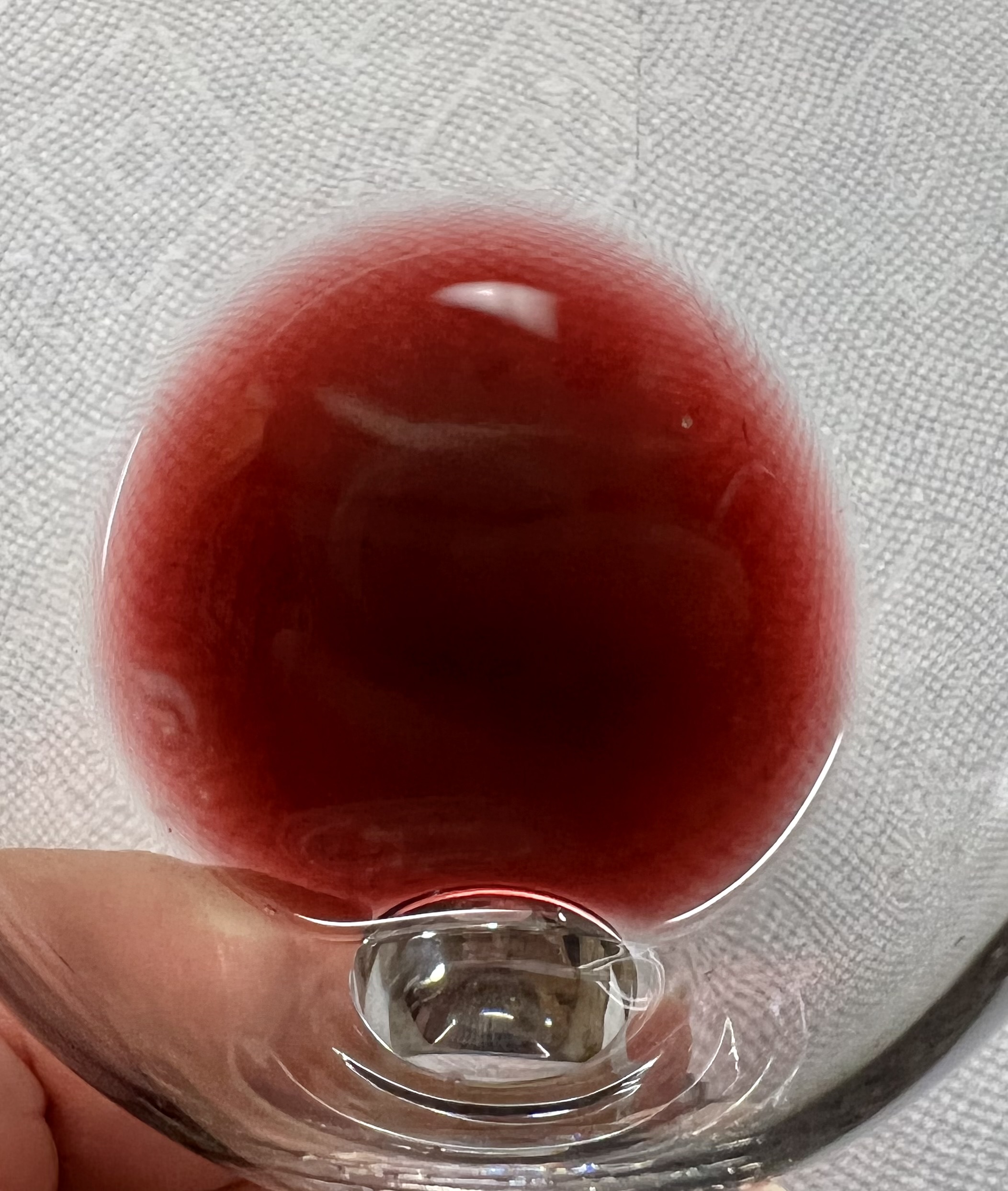
Frescobali Rèmole Toscana Rosso 2020 is a balanced wine with its “middle of the road” approach when it comes to body, acidity, and flavor profile. With an approachable 12.5% ABV and bewitching scarlet red color in the glass, the faint aroma of berries leads you into the muted flavors of cherry and raspberry on your palate. It pairs well with lean red meat and pasta dishes with red sauce. Priced at less than $10 it is an excellent choice for a “weekday wine”

Tips For Choosing Wine From A Wine List

If you lack confidence when ordering wine from a restaurant’s wine list you are not alone. You should never be intimidated by wine because wine should be fun and an opportunity to learn. Keep it simple and don’t get caught up in what you don’t know but have an open mind to any interesting suggestions that are offered. While many people fall back on the same old selections or point to a bottle and hope for the best, you can do better with a little preparation. Here are a few tips I learned from a sommelier that will help them find you the best wine for your dining experience.

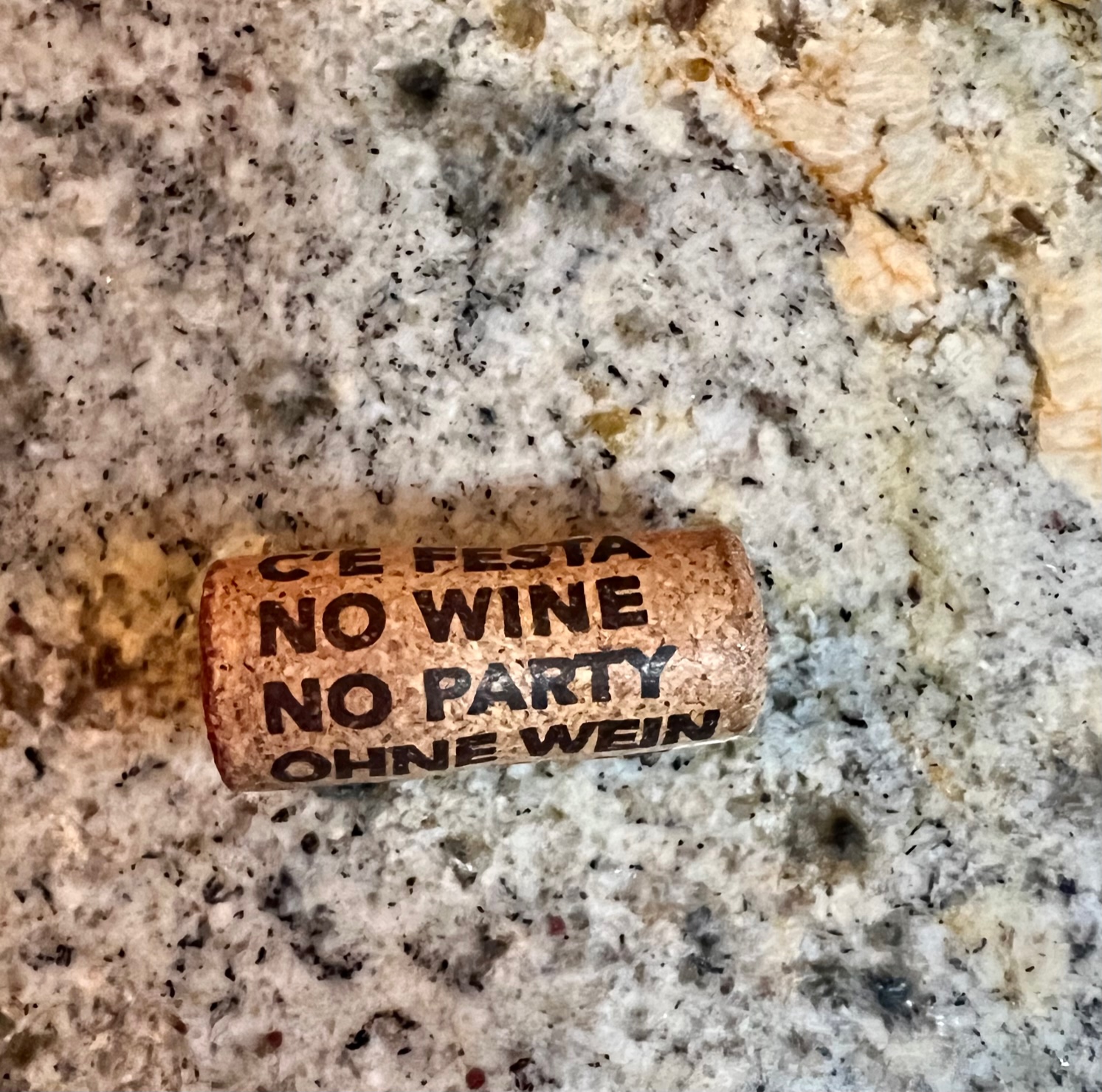
First and foremost, be honest and engaging when asked about your preferences. Tell them the body and style you like because a restaurant invests a lot of money to have a sommelier help you make the wine selection process more enjoyable so take advantage of their knowledge. Here’s a tip that will get the best wine available for the price you want to pay. Simply point to a bottle on the list with the price you are willing to pay and say “I have had (wine name) before but I would like to try something different”. This will let the somm know what you are willing to spend and they can guide you to a bottle in that price range. After you make your selection the somm will retrieve your bottle from the cellar and open it tableside. They will present the cork to you but this is purely ceremonial and there is no need for you to either touch or smell it. Next, they will pour a small sample for you to taste. This sample is for you to check for flaws not to see if you like the wine. If it is acceptable give them a small nod and they will begin serving your dining companions with you being served last. One last tip, during your initial exchange ask your sommelier if there are any wines they are excited about. This allows them to share hidden gems now that they know you share their love of wine.  

Photo by Ray Piedra on Pexels.com