If you loved Stanley Tucci’s food and travel show “Searching for Italy,” which became a phenomenon during the pandemic, you will be happy to hear that Stanley’s new show “Tucci in Italy” has just premiered. The five-part series began airing Sunday, May 18, 2025, on the National Geographic Channel and can also be viewed streaming on Disney+ and Hulu the next day. It may have taken a while, but we can once again traipse around five different regions of Italy with Stanley, enjoying their food and culture without leaving home. “Ciao di nuovo” Stanley!
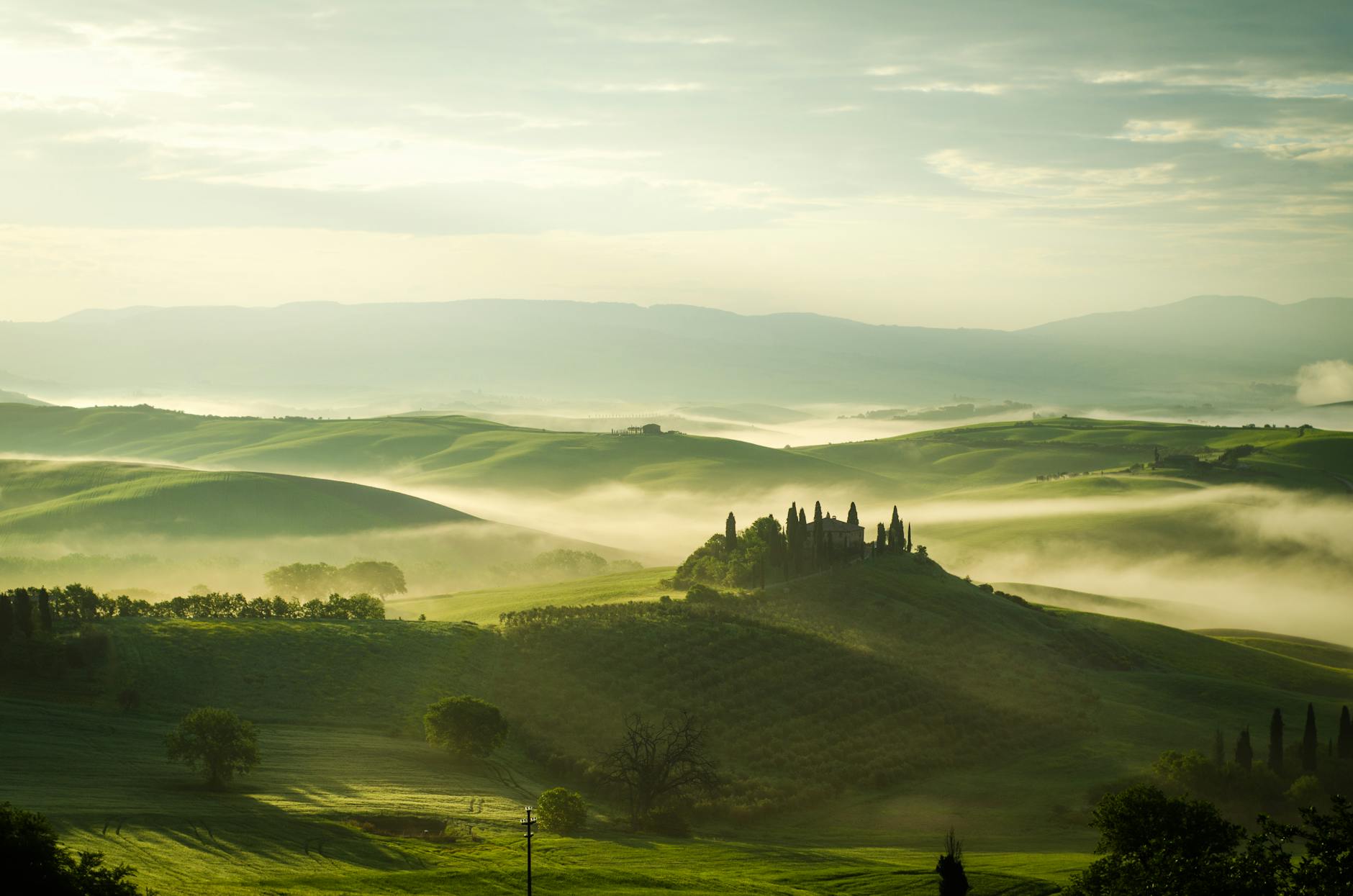
When you hear Tuscany thoughts immediately come to mind of rolling hills covered in geometrically precise rows of grape vines in vineyards bathed by the golden sunshine of an idyllic Tuscan afternoon. Travelogues and magazine articles of the mid-20th century created a mystic that cast Tuscany as the epicenter of the trendy Italian food and wine culture. Whether that was an accurate assessment either then or now is debatable but for many perception remains reality.
In Tuscany (Toscana) one grape has always reigned supreme and that grape is Sangiovese. It is from this grape that three of this region’s most recognizable wines are made. Brunello di Montalcino, Chianti, and Chianti Classico are all made from the Sangiovese grape. While they are all made from the same grape variety they are all very different wines. It is safe to say that we have all dined in an Italian restaurant with a red and white checkboard tablecloth with a bottle of Chianti in a straw basket as a centerpiece. Those are not good examples of the quality of wine Sangiovese can produce. When the market for Chianti tanked in the 1970’s Italy changed its wine laws which is what sparked the dramatic resurgence of Chianti and Tuscany on the world stage. The wines got better, winemaking methods improved, and high-priced Super Tuscans gained global notoriety. Cabernet Sauvignon can now be considered Tuscany’s second most important grape because along with Sangiovese it is a prominent grape in the majority of Super Tuscan blends.
Brunello di Montalcino is Tuscany’s most respected and celebrated wine. The area from which it is produced encompasses a mere 5,200 acres and is a UNESCO World Heritage Site.
The Chianti zone covers an expansive area of Central Tuscany. This zone contains the districts or D.O.C.G. of Chianti and Chianti Classico. They each have their own D.O.C.G. and by law, you can only make wine of that classification in its designated district, they are not interchangeable. You can identify a Chianti Classico wine by the iconic black rooster symbol on its bottle’s labeling.
Tuscany is no different than any other wine region. You can find good wine, bad wine, average wine, and superior wine there. You can also choose a price point from economical to expensive. The search for your perfect wine begins with some research and understanding what you want and where to find it.
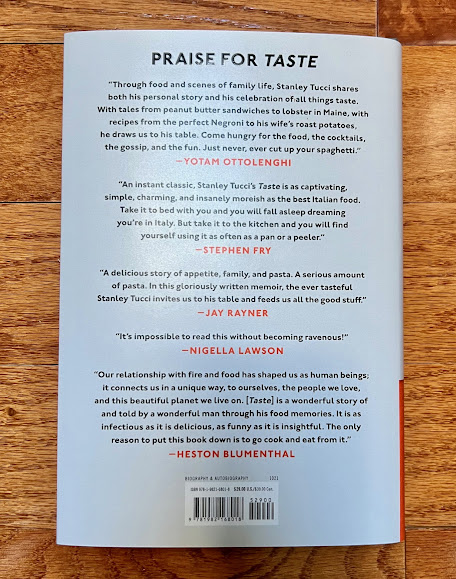
If you are as big a fan of Stanley Tucci as I am, you will love this book. Stanley takes us on his lifelong odyssey with food and family. He begins with anecdotes about his childhood in the peaceful New York town of Katonah. He is the oldest of three children in a middle-class Italian-American family where the day’s activities culminate around the dining room table and what is for supper. You can hear that distinctive wry wit and humor that he is known for hilariously shining in his recollections of family events, all of which centered around food. These interactions would ultimately shape his entire life going forward. Tucci marks the milestones of his life involving people, places, and events not with dates on a calendar but with specific meals or other food-centric references. Just as he savors his life through culinary pursuits you will savor each chapter wishing you can linger a bit longer at the table with your host. The last chapter recounts his battle with oral cancer in vivid detail. He shares his candid memories, private thoughts, and emotions as his ordeal stretched endlessly over months that turned into years before his victorious complete recovery. I highly recommend this book to anyone who loves and understands the impact that food and family play in how you experience your journey through life.
One final note for fans of Stanley Tucci: Searching for Italy. Stanley Tucci is returning to television. National Geographic has confirmed it plans to film a new show starring Stanley Tucci in Italy. It will be a ten-part unscripted docuseries exploring ten regions of Italy. The project will be called “Tucci-The Heart of Italy”. It will be produced by Tucci’s Salt Productions and BBC Studios’ Factual Productions.
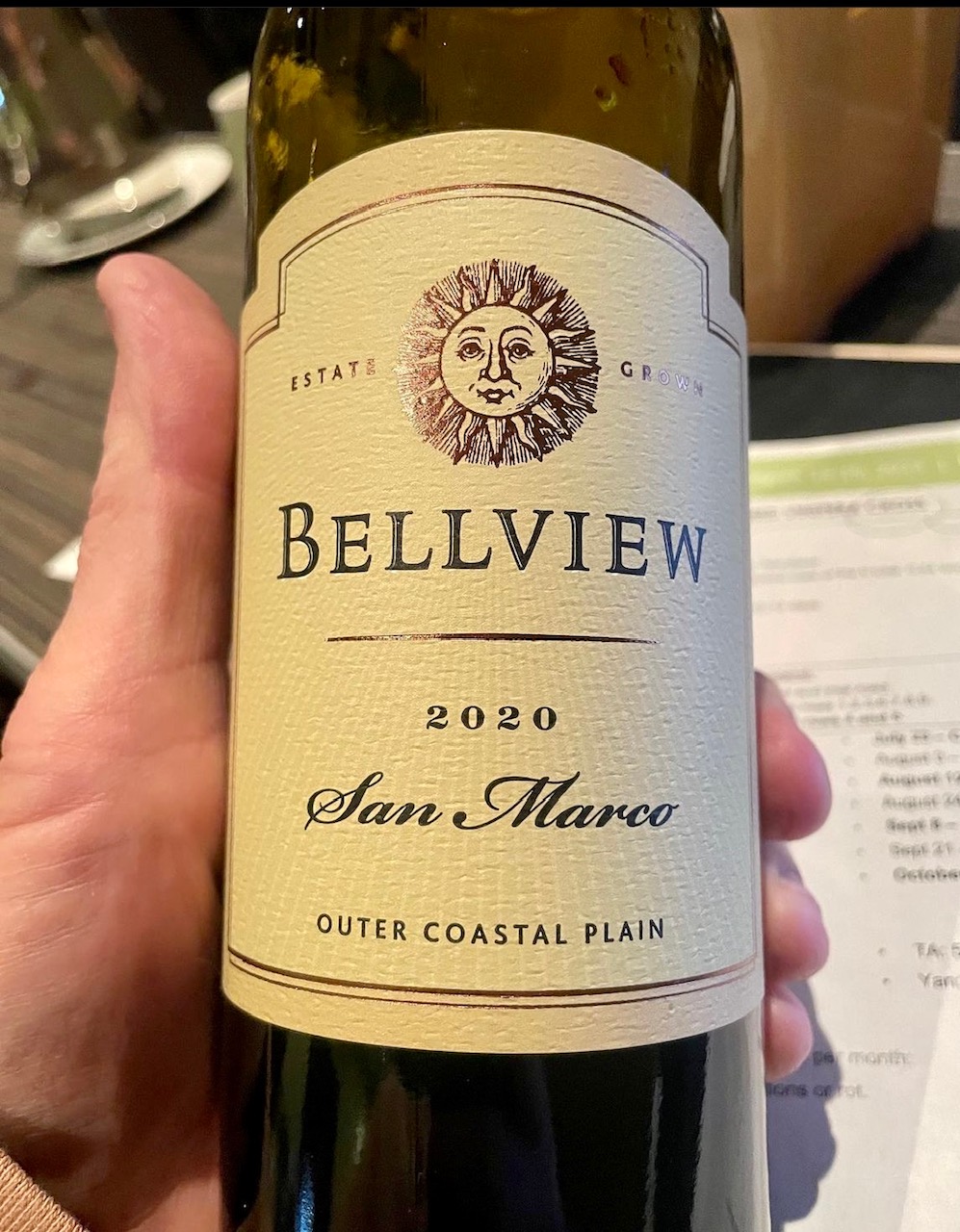
San Marco, a new vinifera wine grape cross variety has been generating plenty of buzz in the eastern United States since the Quarella family, owners of Bellview Winery imported vines from Italy and planted them in their Landisville, New Jersey vineyard more than ten years ago.
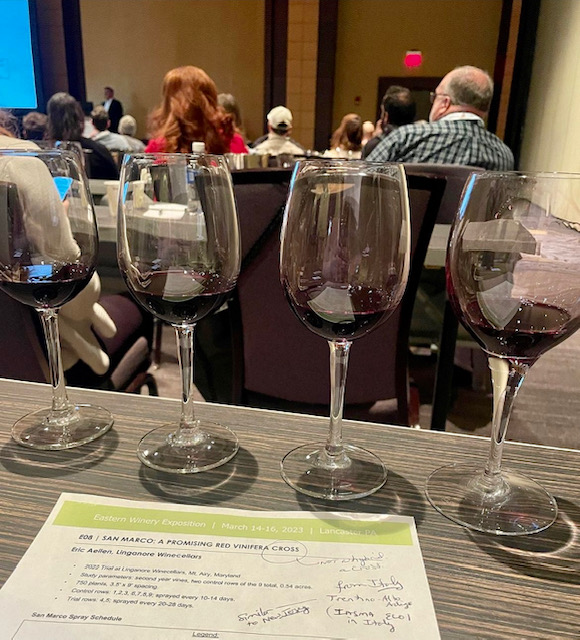
My friend and winemaker Jerry Pompa (Instagram: @jerrypompa) piqued my interest in this promising grape after he attended a Quarella family presentation at the Eastern Winery Expo 2023.
San Marco was created in 1993 by Marco Stefanini at Trentino’s Foundation Edmund Mach. Trentino-Alto Adige is Italy’s northernmost region. It has weather conditions similar to those found on the East Coast of the United States with its temperature extremes, both hot and cold.
San Marco is a cross between two grapes of the Alto Adige, Teroldego and Lagrien. You can find my review of Castel Sallegg Lagrein 2019 and my interview with Castel Sallegg Director, Ulrike Platter by scrolling down this blog page.
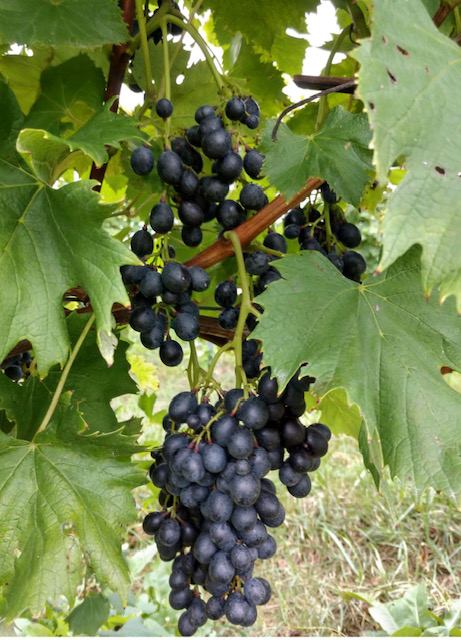
San Marco has loose, medium-sized oval berries with deep pigmentation of skin and flesh, like another teinturier favorite of mine, Saperavi. Cane pruning is required and training on a VSP (vertical shoot position) trellis provides the best results in the U.S., as opposed to the pergola method used in Italy. One thing holding this variety back in the U.S. is the discovery of Grapevine Pinot Gris Virus (GPGV) and Grapevine red blotch-associated Virus (GPBaV) on some vines. Growers in Italy have experienced this same issue but say it has yet to affect the quality of their fruit or spread to neighboring vines. Virus-free vines should be available from Double A Vineyards doubleavineyards.com for $13.50 but are currently sold out. Jerry’s tasting notes for Bellview San Marco Outer Coastal Plain 2020 mention a dense plum color, black fruit, spice, cherries, and chocolate.
It is exciting to see a new red wine grape emerge with the potential that San Marco has. The wine culture in America continues to evolve and improve, albeit slowly but the future of this grape and others look bright.
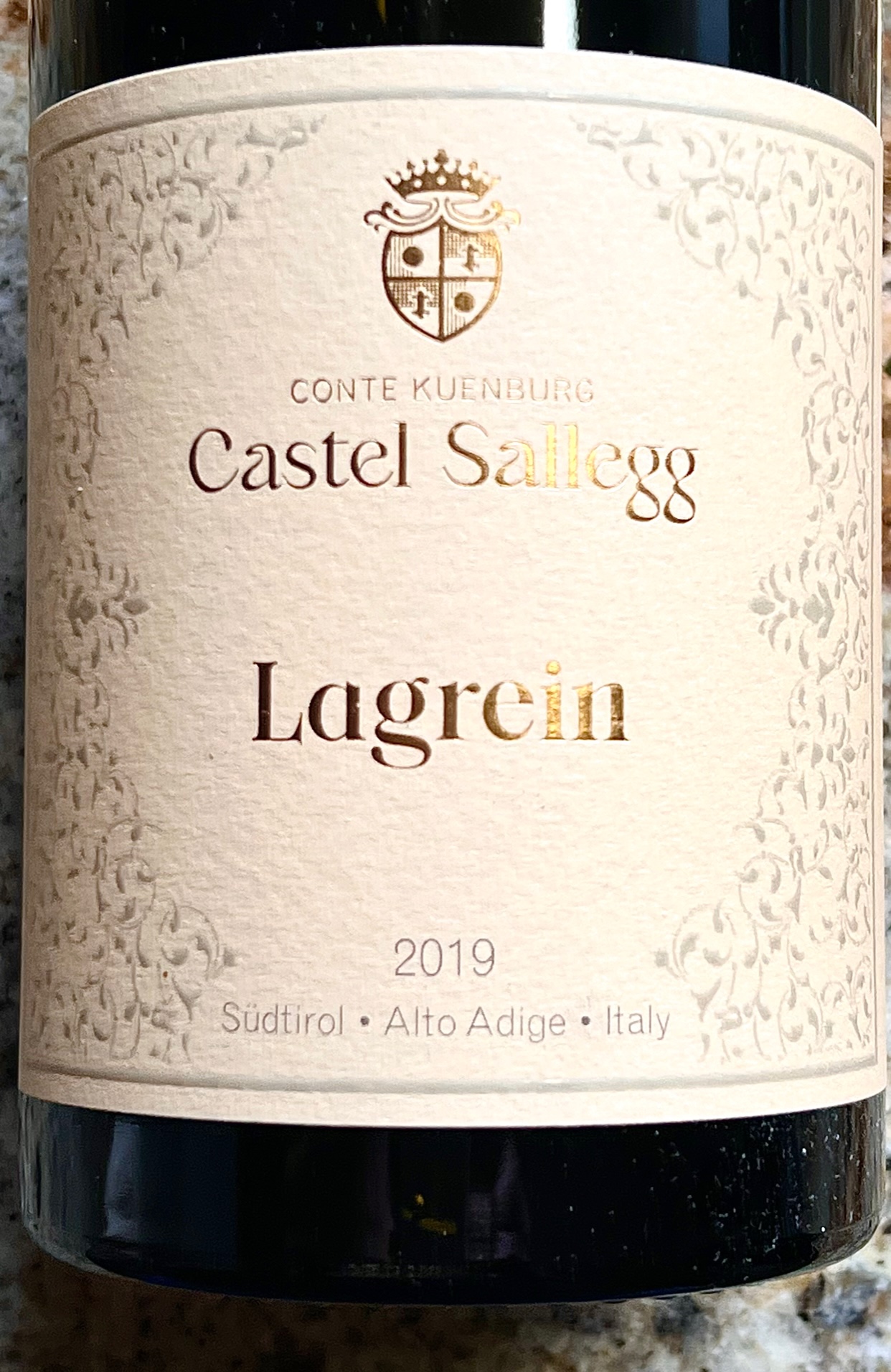
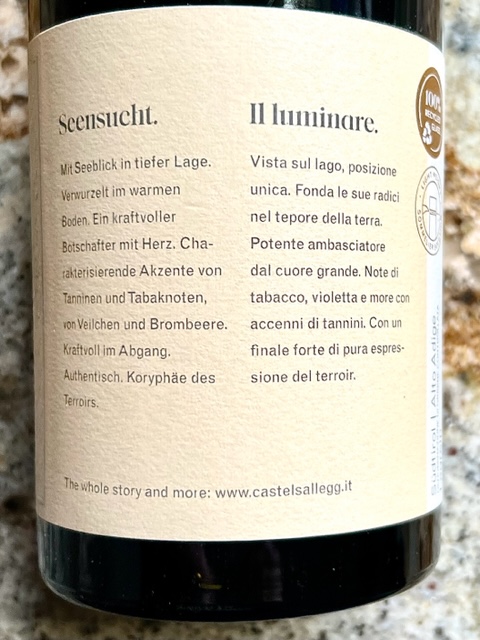
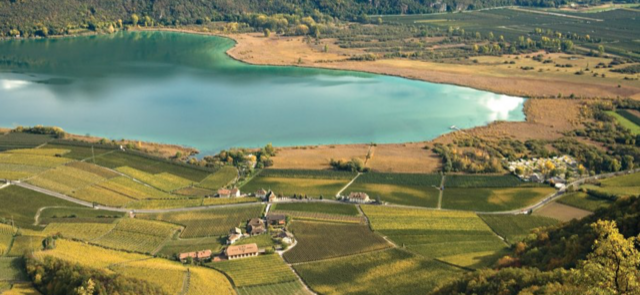
Here’s an opportunity to experience a little taste of the Alto Adige region of Northern Italy through their native grape Lagrein. Lagrein is the oldest indigenous grape variety of the Alto Adige region and a relative of Syrah and Teroldego. Alto Adige is Italian for South Tyrol (Südtriol in German). It is Italy’s northernmost district and is also one of its smallest. The landscape is punctuated by the peaks and valleys of the Dolomites and Italian Alps. The producers in this area focus on quality over quantity. Most, if not all, of their wine, is terroir-driven. Castel Sallegg Lagrein D.O.C. 2019 is one of those wines. Made with 100% Lagrein grapes manually harvested from their humus-rich clay soil vineyards in the vicinity of Lake Caldaro.The grapes are then selected, destemmed, mashed, and, malolactic fermented at a controlled temperature in stainless tanks. It is aged in stainless steel (80%) and French oak for twelve months. It is blended for two to three months and bottle aged for an additional six months.
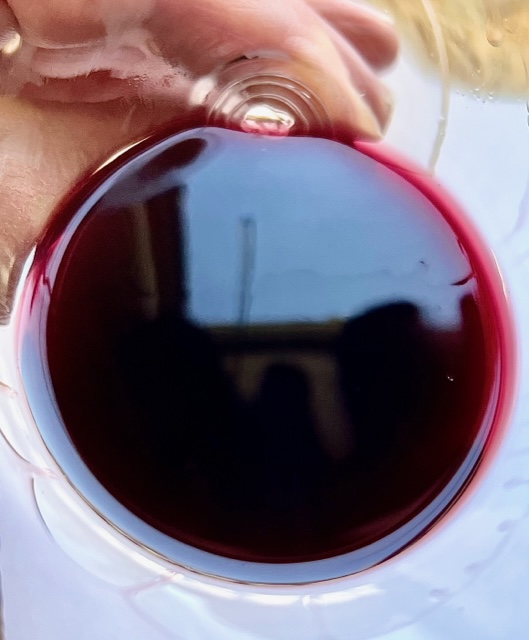
Castel Sallegg Lagrein 2019 has a very dark ruby color with faint floral aromas. Flavors of mixed black fruits are carried on a structured medium body with mild tannins appearing mid-palate. More than ample acidity throughout. Pairs well with any grilled or roasted red meat or pasta in a hearty red sauce.
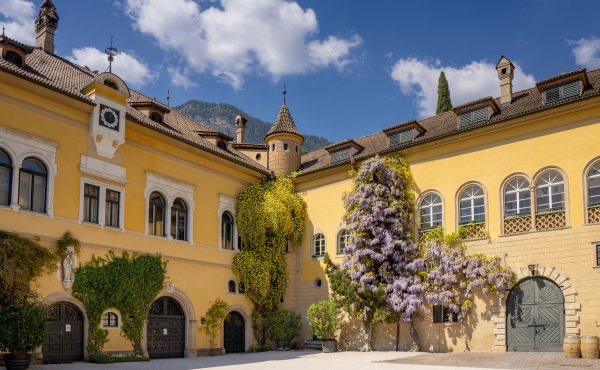
Castel Sallegg is a family-run firm of winegrowers located in Caldaro, Alto Adige (Italy) that is dedicated to maintaining and preserving the winemaking culture of the region. With a storied history and a tradition of commitment to excellence, the von Kuenburg family has ensured the production of quality wines from Castel Sallegg for over a century. While the winemaking team has great pride in its past they are focused on the future and the challenges that must be navigated to maintain its high standards in all phases of the operation.
For answers about how they are addressing these problems and what we should know about Castel Sallegg, I asked its Director Ulrike Platter to share her thoughts with my readers and me.
1. The wines of Alto Adige are famous for being able to express their terroir. What methods and technologies does Castel Sallegg employ to ensure this “Sense of place” is preserved in your wines?
“Oltradige, the epitome of the wine-growing tradition in Alto Adige, lies at the foot of the Mendola Mountains in the hills of the western Adige Valley between Bolzano and Termeno. Vines have found ideal conditions in this delightful landscape for thousands of years. The winegrowing region of Alto Adige is one of the oldest in Central Europe and the entire German-speaking world.”Oltradige, the epitome of the wine-growing tradition in Alto Adige, lies at the foot of the Mendola Mountains in the hills of the western Adige Valley between Bolzano and Termeno. Vines have found ideal conditions in this delightful landscape for thousands of years. The winegrowing region of Alto Adige is one of the oldest in Central Europe and the entire German-speaking world.
The Alps form a protective barrier against cold winds from the north, while the southerly Ora wind from Lake Garda has a mild Mediterranean influence. Our wines benefit from the cool downslope winds coming off the Mendola Mountains. The vines flourish here thanks to an average of 1,800 hours of sunshine per year and average temperatures of almost 17 degrees Celsius during the vegetation period.
The family-owned vineyards are located in 3 historical vineyards in Caldaro:
✓ Preyhof / vineyard Prey: 550 m above sea level and situated in the Caldaro district of Paese di Mezzo.
✓ Leisenhof / vineyard Leisenpuiten: 500 m above sea level. Central location in the village of Caldaro.
✓ Seehof/vineyard VIGNA Bischofsleiten, vineyard Nussleiten: 230 – 280 m above sea level. San Giuseppe al Lago, Caldaro.
Due to the vineyards, which range from 230-550 m above sea level, Castel Sallegg identifies the best conditions for each grape variety and tries to make optimum use of this diversity.
Best practice: Our VIGNA Bischofsleiten Lago di Caldaro scelto classico superiore DOC: VIGNA (What is a Grand Cru for the French is a VIGNA for the Italians and for us South Tyroleans.) guarantees our customers that the grapes for this wine come 100% from this vineyard. In order to preserve these 50-year-old vines, the vines that fall out due to age, illness, etc., will be replanted with our own clones.
The goal is to produce top-quality wines in harmony with the terroir we have.”
2. With Alto Adige containing so many different microclimates and growing conditions in its vineyards, have the vineyard managers noticed any changes as a result of climate change? If they have, what can you tell us about them and how are you planning for your future vineyard management?
“Our vineyard manager noticed the changes, especially this year, which was hot and dry. Since Castel Sallegg is more of a red wine winery (we produce 58% of red wines) and we often had difficulties in the past years, with the red grapes, such as Lagrein, Merlot, and Cabernet Sauvignon fully ripening, so 2022 was a great year for us.
In addition, 80% of our vines are 30-50 years old, which means that the roots are growing very deep to get enough water for themselves even in a very hot season. These vines are stable.
Problems can be seen in younger plants or new plants.
For this purpose, we invested in a project for the next few years, which will digitize needs-based irrigation. This means that the humidity of the soil is measured by soil sensors and the vines in different places were partially watered by a targeted system.
Since we have some vineyards on a slope and the vines get less water at the top by draining and the vines at the foot get more water we can irrigate more targeted and water-saving.
We have also noticed increased hail in recent years. For this reason, we will place our most important vineyards under hail nets in the next 2-3 years.”
Thank you to Ulrike for sharing her time and down-to-earth expertise in the mindset and operations at Castel Sallegg.
My review of the 2019 Castel Sallegg Lagrein will be posted soon.
Erste+Neue is the product of the 1986 merger of two wineries that began in the early part of the twentieth century. Erste Kellerei and Neue Kellerei combined to form Erste+Neue. The two wineries moved forward as one with a commitment and determination to stay on the cutting edge of alpine winemaking.
In 2018, Erste+Neue was awarded the prestigious international seal for sustainable viticulture by FAIR’N GREEN. The goals and standards of FAIR’N GREEN mirror the same deeply ingrained beliefs that guide the winemaking culture at Erste+Neue. Sustainability, protecting the environment, biodiversity, natural viticulture, and the protection of natural resources are the guiding principles that drive all decisions made at Erste+Neue.
The wines of the Alto Adige Region are famous for being terroir-driven and their bias to a specific area of the region. I was curious to hear how the vineyard managers and winemakers at Erste +Neue balance the demands of preserving and integrating the “terroir” factor into their wines while balancing the needs of the local ecosystem with the standards of producing world-class grapes and wine consistently.
Seeking answers to these questions and others, I posed them directly to a leading viticulture professional and Chief Enologist at Erste+Neue, Andrea Moser. The following is our interview published in his own words.
How does Erste+Neue approach the unique challenges that making wine in the Alto Adige present while still being able to produce the highest quality wines that display a “sense of place?
“Facing the challenges of climate change is becoming increasingly important in every wine-growing region of the globe, and in South Tyrol, too, it is no different.”
However, Alto Adige and specifically our area are at a great benefit with respect to this issue, in fact, our orographic situation is very particular. The vineyards start in fact with the red varieties at about 230 m.a.s.l. and arrive in just a few kilometers to elevations of about 700 m.a.s.l. where the white varieties find excellent ripening conditions. This large elevation range, combined with a constant south-to-north wind “the Garda Hour” and strong temperature fluctuations between day and night due to the mountains surrounding us (Mendola range), allows us to consistently obtain high qualities on both red and white grape varieties.
Ripe but fresh and elegant reds and whites with low pH, good acidity, crisp and fresh that perfectly embody the spirit of our territory and our vineyards located in the middle of the Alps.”
How has being FAIR’N GREEN certified complemented your winemaking practices and philosophy in both the vineyard and cellar?
“For us, sustainability and especially respect for the environment has always been a key point to consider during our work from vineyard to bottle.
Since we have been working with Fair&Green we have made this commitment measurable and have strived to improve our efficiency and sustainability a little more each year.
In the first year of certification, we scored 68 percent while we are now at 82 percent on the scale that verifies, measures, and evaluates our degree of environmental commitment. Today, having reached the fifth year of certification, we have made many steps forward, such as completely eliminating some synthetic molecules for the phytosanitary defense of the vines, eliminating chemical weeding by 92%, increasing the areas under green manure thus increasing biodiversity in the field, and introducing sexual confusion in the vineyard to combat certain types of harmful insects. All our wines can be considered vegan since we have not used any clarifiers of animal origin for several years now, only yeast derivatives. By now, all the facilities for the production of cold, compressed air and nitrogen are equipped with energy recovery to produce hot water. We have equipped ourselves with photovoltaic panels that can provide us with about 40 percent of the energy we use.
In terms of packaging, the biggest step has been taken by eliminating bottles that are too heavy. In fact, we have gone from 700/750-gram bottles to 500-gram bottles, reducing our CO2 footprint by a third.
The road to true all-around sustainability is still a long one, but we are very committed and determined to get there as soon as possible.”
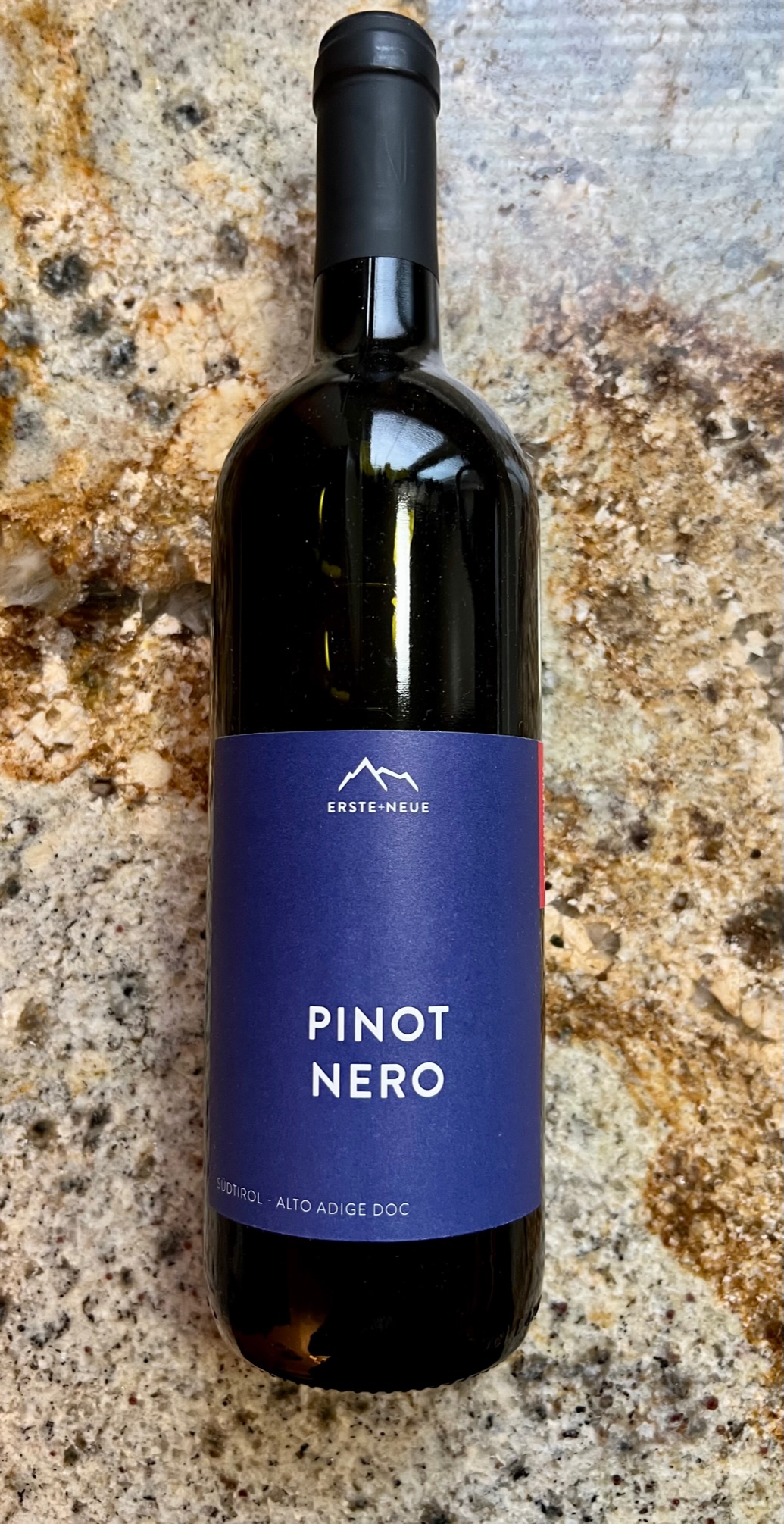
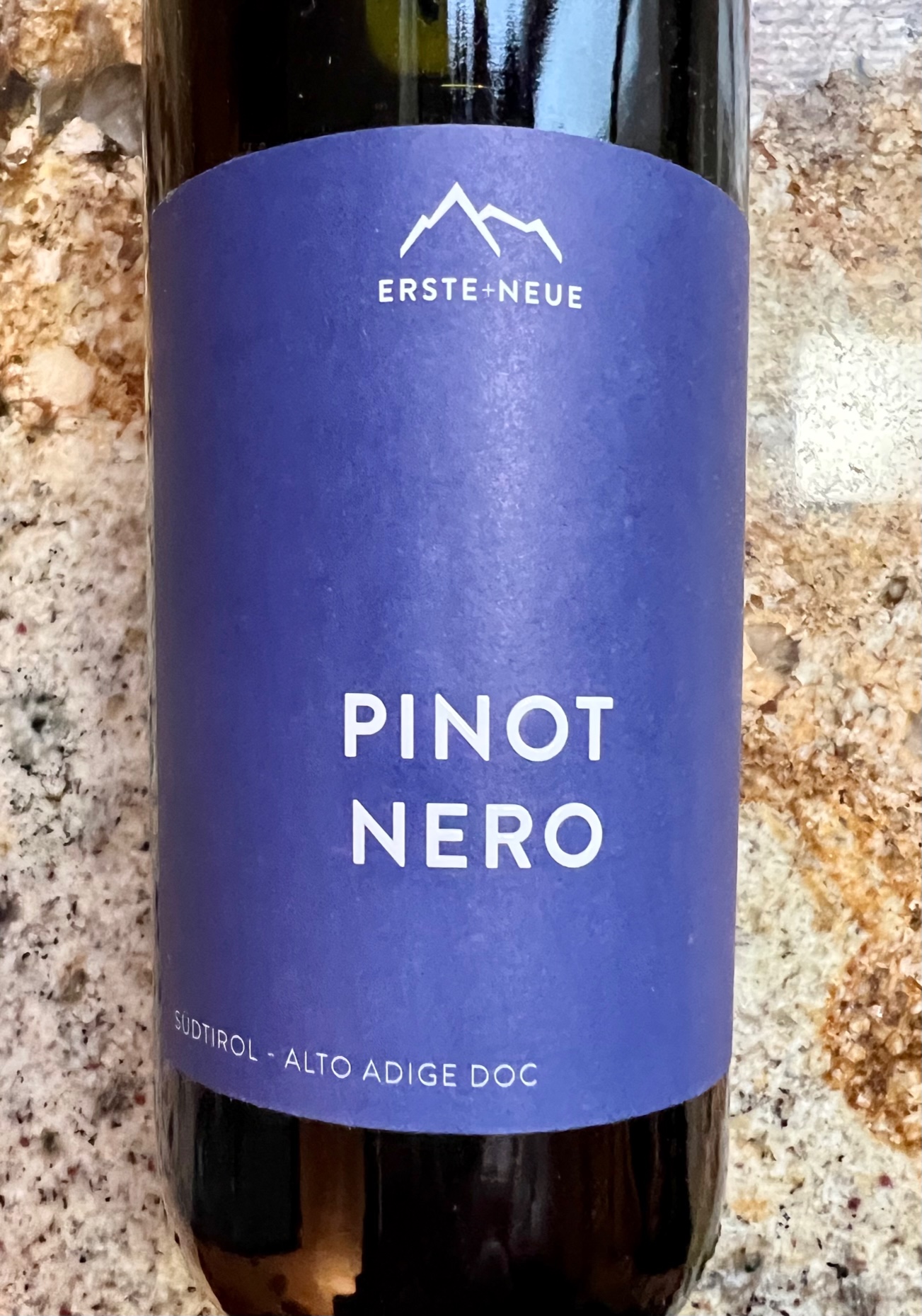
I would like to take this opportunity to thank Martin Klammer, Sales Director of Erste+Neue for his support because without it this article would not have been possible. I would also like to thank Andrea Moser, Chief Enologist of Erste+Neue for his time and candid insights into the ideology behind the winemaking mindset at E+N. I found his comments about how the culture at E+N and the environment are intertwined extremely informative because I hold a degree in nature conservation. The following is my review of Erste+Neue Classic Pinot Nero 2021.
Pinot Nero is known internationally as Pinot Noir. Pinot Nero is an early-ripening grape with a thick skin that has the reputation for being a “Heartbreak Grape” variety because it requires a great deal of care in the vineyard thus making it difficult to produce a successful harvest consistently.
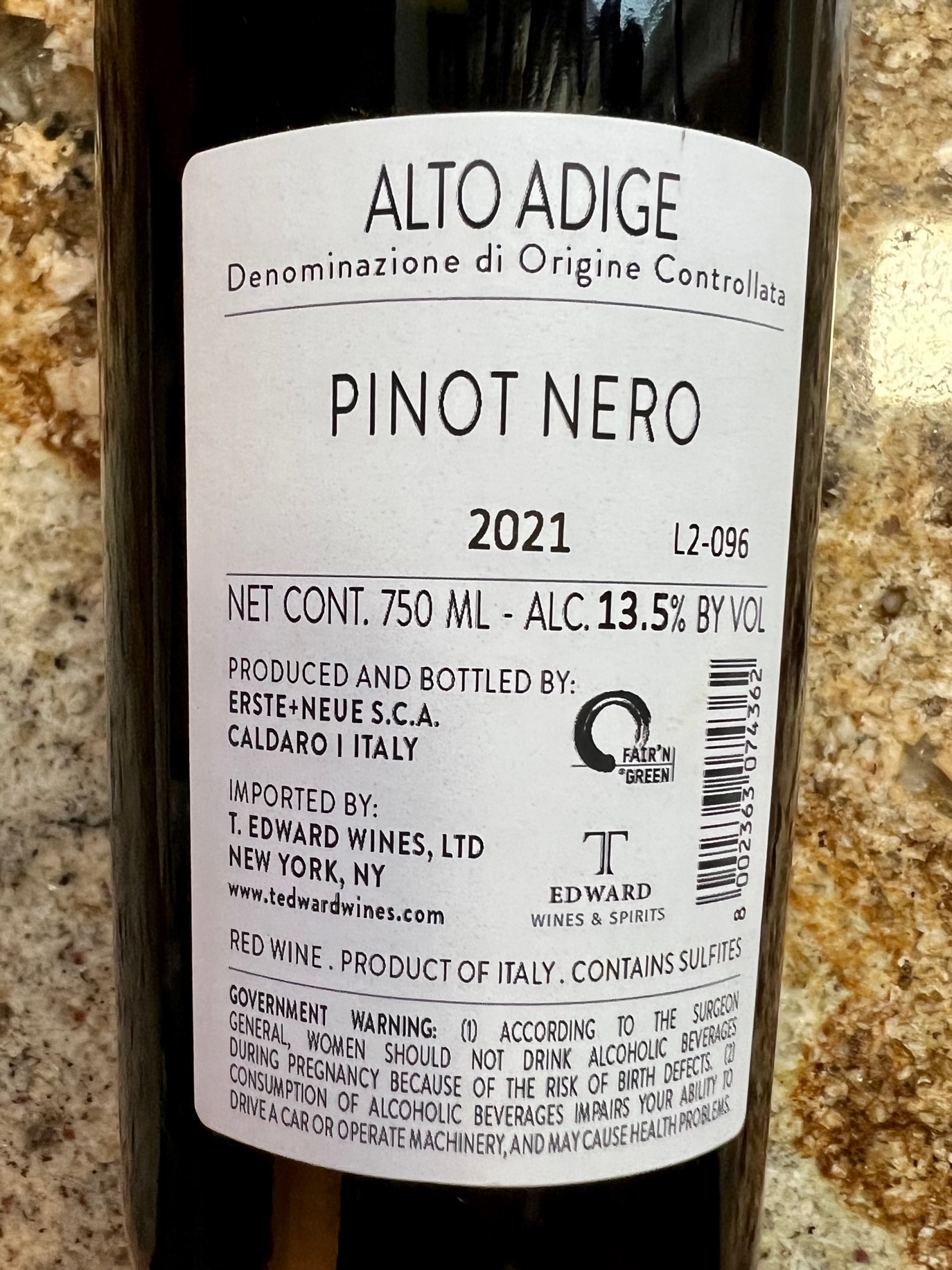
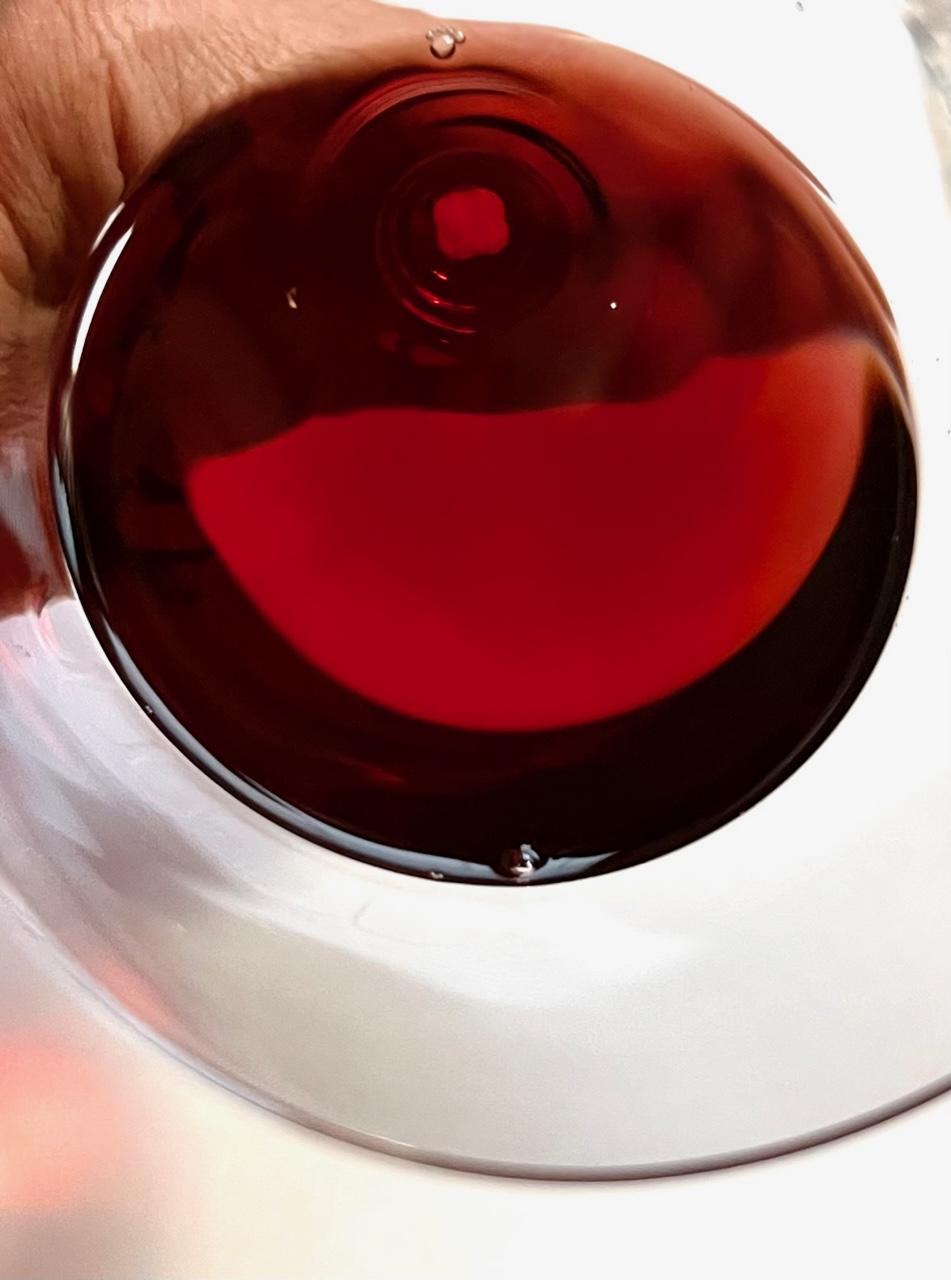
Erste+Neue Classic Pinot Nero 2021 is a sophisticated well-made wine that can be purchased at a very fair price. This Pinot Nero is ruby red in the glass and opens with the aromas of cherry & faint raspberry that is followed by the prominent flavor of cherries on the palate while smooth tannins and lively acidity are borne on the medium body of this wine. The finish is lengthy and agreeable.
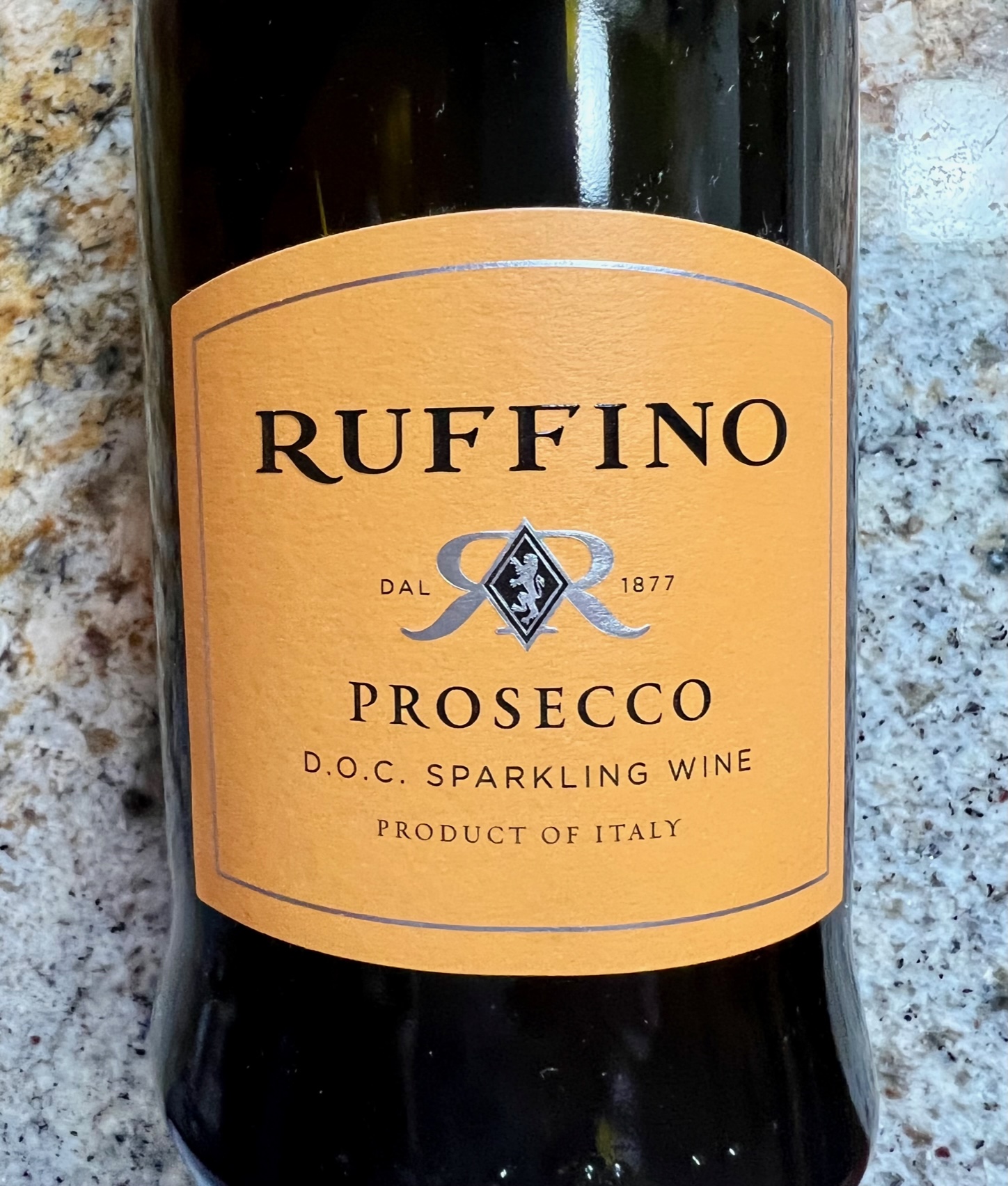
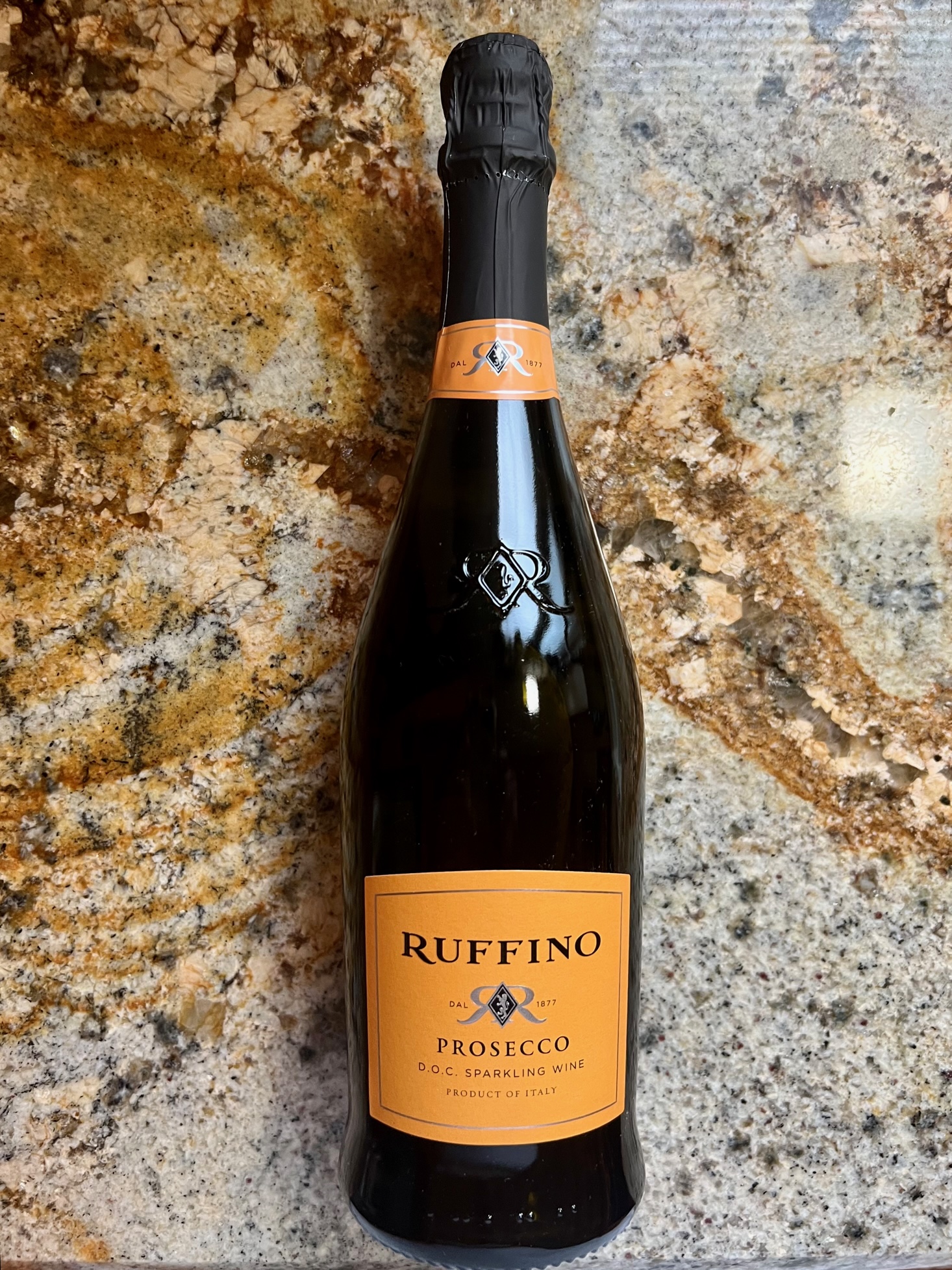
We rang in the New Year not with a French Champagne made in the Méthode Champenoise but an Italian Prosecco. The prosecco was the affordability priced (under $15) Ruffino Prosecco. Ruffino is best known for their hugely popular Chianti but they also make a very enjoyable prosecco.
Light yellow in the glass with more than adequate effervescent small bubbles and the flavor of fresh grapefruit. It is not overly dry and with an 11% ABV Ruffino Prosecco is a good option when planning any event from a brunch to a celebratory toast, as we did.
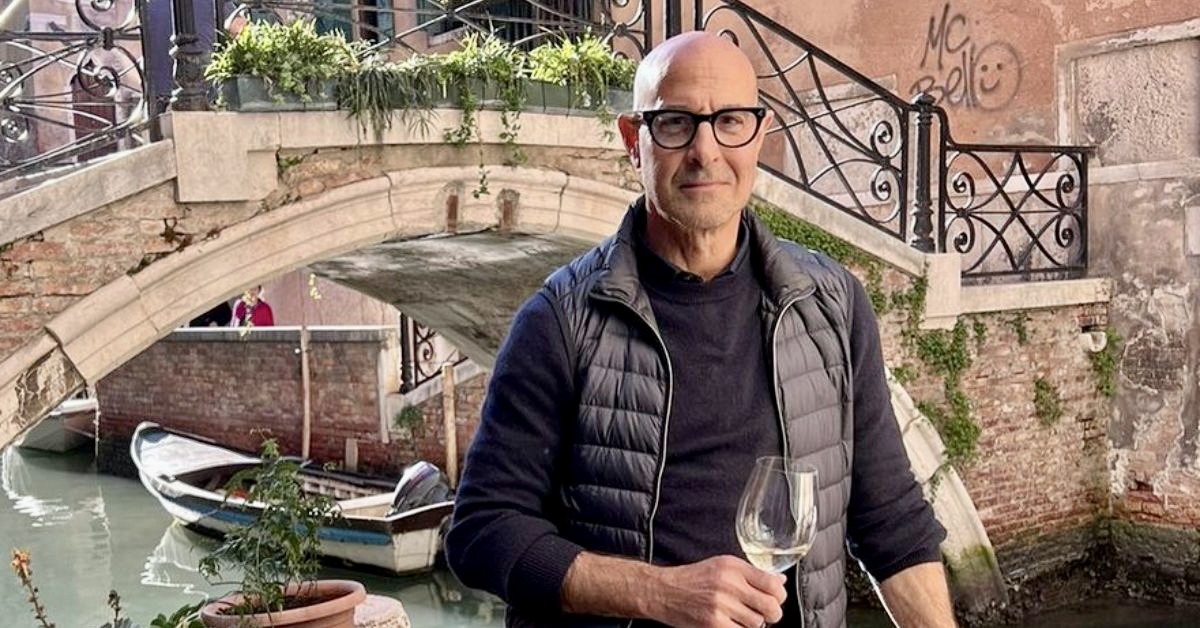
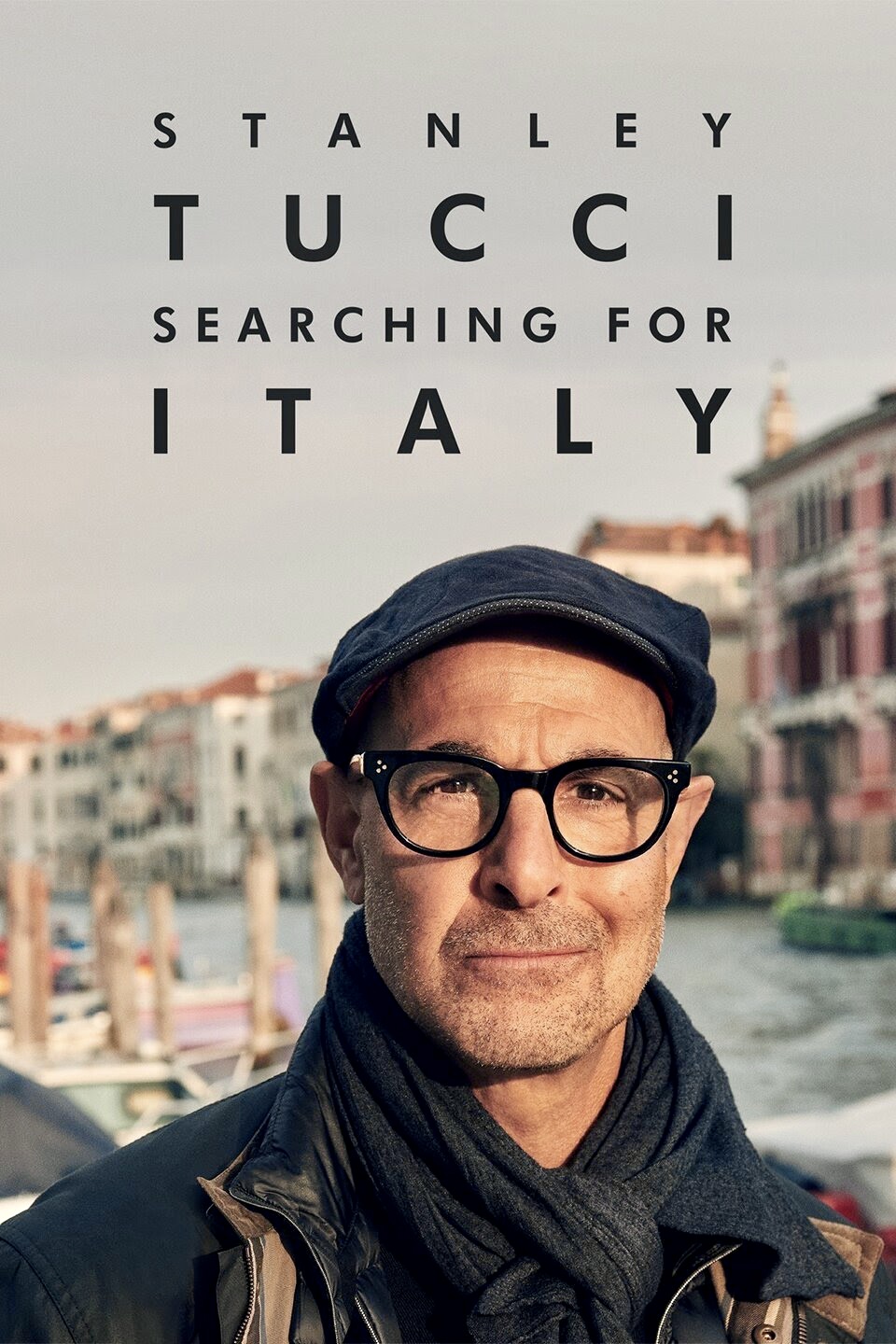
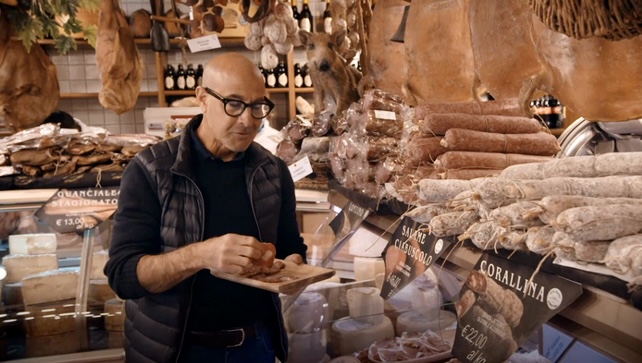
CNN has canceled Stanley Tucci: Searching for Italy and all of its original programming. But all is not lost because I heard Stanley tell Jimmy Fallon on The Tonight Show that he was exploring the possibility of reviving the show on another network, whether it be broadcast, cable, or streaming. This was more than just a travel show that featured the traditional tourist attractions, and scenic vistas of the Italian countryside and coastline. This production had that special feeling one gets when traveling with a friend who knows all the best spots and interesting locals that really allows you to immerse yourself into the culture of each region you visit. Tagging along with Stanley Tucci I experienced the Italy that only Stanley could show me with his adventurous palate, wry smile, and that all-knowing look of his.
When I heard CNN wouldn’t be renewing a new season of Stanley Tucci: Searching for Italy I got that same feeling you get when the plane lifts off the runway on your return home from a great vacation. You know that feeling of joy in the memories you made but a hint of sadness because there was more to see and do.
With that said, I am thankful to have had the opportunity to see Italy through Stanley’s eyes. If you are wondering where he went here’s a recap. Season One: Naples and the Amalfi Coast, Rome, Bologna, Tuscany, Milan, and Sicily. Season Two: Venice, Liguria, Piedmont, Puglia, Sardinia, Umbria, London, and Calabria.
Luckily for anyone who may have missed any or all of the episodes they are available through a number of media outlets that can be easily found with an internet search. If you have a cable subscription you can access all of the Stanley Tucci: Searching for Italy episodes from both seasons for free by going to go.CNN.com/vod (http://go.cnn.com/vod) and find Stanley Tucci: Searching for Italy, click on it, and log in using your cable provider when prompted. I have found the Microsoft Edge browser works better for this site than Mozilla does for streaming its content.
All that is left to say now is Grazie di tutto, Stanley!
Photos Credit: CNN Stanley Tucci: Searching for Italy
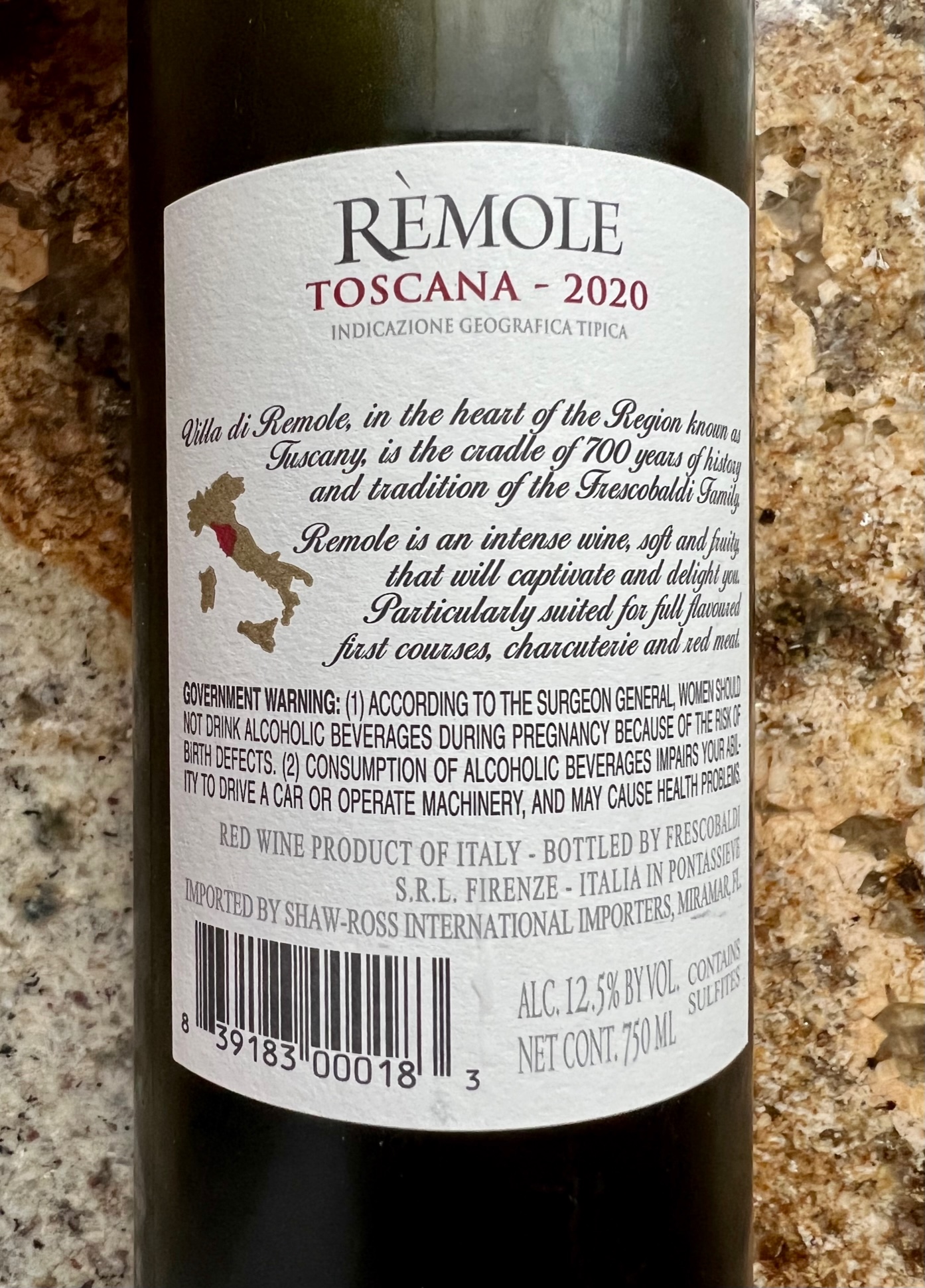
This Toscana is produced in Tuscany, Italy. It is a blend of 85% Sangiovese and 15% Cabernet Sauvignon. This is a lighter wine than many of the more complex and pricey Toscana bottlings from Tuscany.
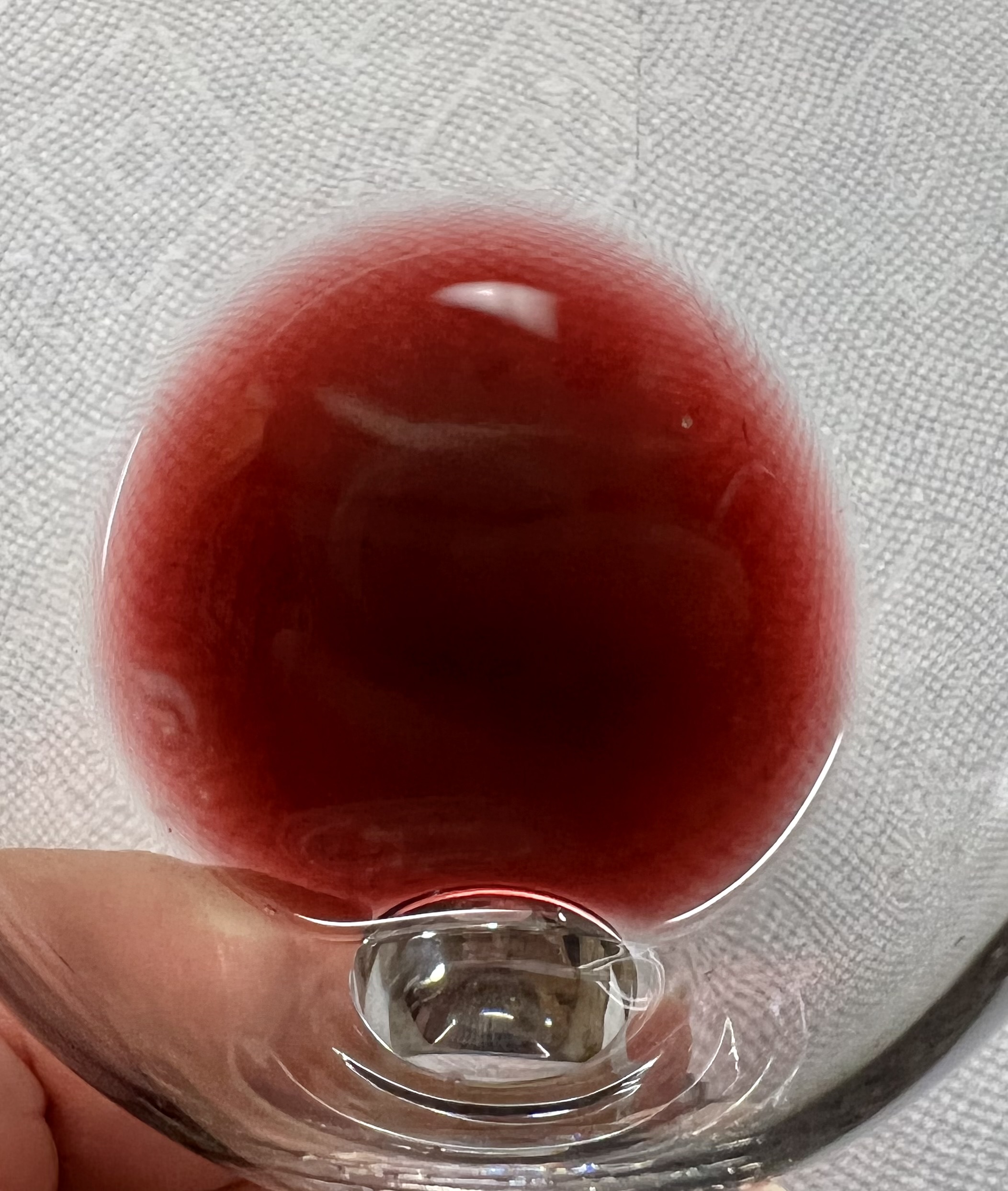
Frescobali Rèmole Toscana Rosso 2020 is a balanced wine with its “middle of the road” approach when it comes to body, acidity, and flavor profile. With an approachable 12.5% ABV and bewitching scarlet red color in the glass, the faint aroma of berries leads you into the muted flavors of cherry and raspberry on your palate. It pairs well with lean red meat and pasta dishes with red sauce. Priced at less than $10 it is an excellent choice for a “weekday wine”














 wpawinepirate