The Climate Times They Are A Changing

The debate over whether changes in our environment are the consequence of human activity or the product of natural forces that have been shaping the Earth’s weather since the dawn of time has thrust itself into the global conversation like never before. Scientists have documented the shrinking of the ice shields globally, an ever-increasing number of record-high temperatures, and the toll of prolonged droughts are inflicting on all life on this planet. Life on Earth is persistent and will adapt over time to long-term fluctuations that threaten its existence.

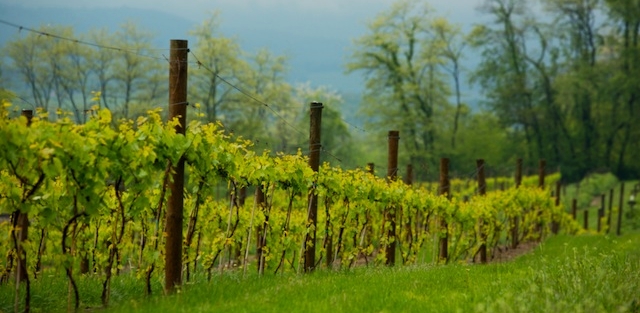
After hearing numerous reports of how vineyard managers are adjusting to preserve the production and quality of their vines I wanted to hear from the winemakers themselves why they are moving proactively to stay ahead of climate change related problems and exactly what measures they were implementing now in hopes of being successful in the long run. Vineyards are our proverbial “Canary in the coal mine” and they are signaling a warning of problems to come. 

For this article, I had the unique good fortune to draw on the expertise of individuals who are not only well-known winemakers, growers, and wine media authorities but also good friends whose opinions I trust. The following are their personal observations and first-hand accounts of how climate change is affecting winemaking operations in their area.

J.Stephen Casscles is a renowned vintner, horticulturist, and author that is currently working in partnership with the Milea Estate Vineyard in the Hudson Valley of New York to produce their Hudson Valley Heritage Wines. You can purchase the rare wines made with their estate-grown heirloom grapes from the Milea Estate website http://mileaestatevineyard.com. Here’s what Steve told me about how climate change is impacting vineyards in the Hudson Valley.

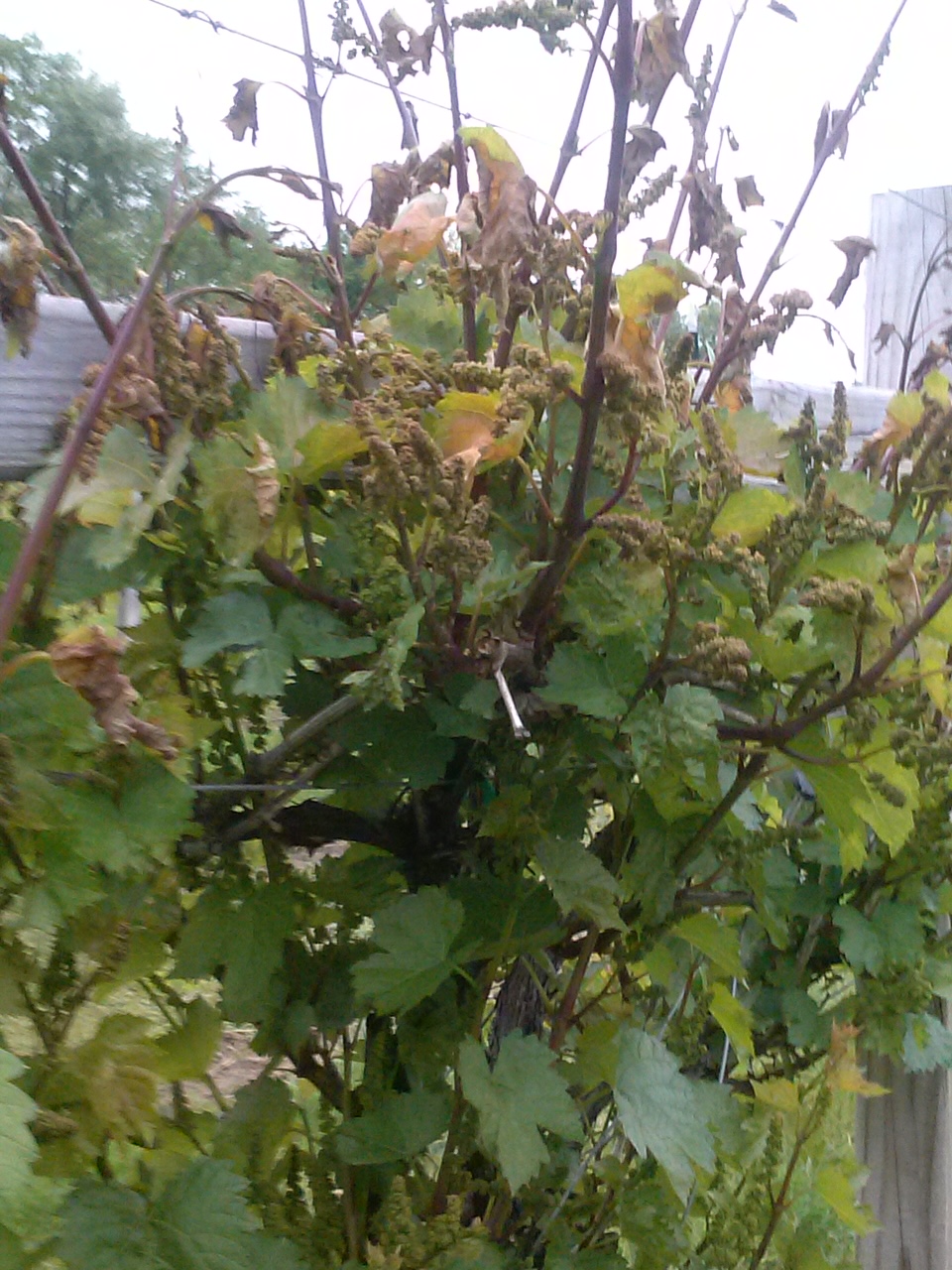
“The 2022 grape growing season was very difficult for the Hudson Valley and Eastern Massachusetts. In varying degrees, we had a drought that started in April and ended in late September in Eastern Massachusetts. For us in the Hudson Valley, our drought started in May and lasted until the middle of August.  Our temperatures were on average 3 to 4 degrees warmer than usual (and our norms in the summer have been going up for some time), In the Hudson Valley, we had a very wet September with 50 to 60 percent more rain as we were starting the earliest harvest season I have ever witnessed. With the ground so dry and sun-baked, all of the September rains (which can in 3 torrential downpours, so that much of the rain could not be absorbed in the soil, so we had flooding, which encouraged soil erosion.  Our Fall was warmer than average by 3 to 4 degrees so while my interspecific hybrids hardened off, many vinifera did not harden off as well. Hence, when we had our Christmas Eve Bomb Cyclone, where temperatures fell from 53 F to 9 F in about 12 hours, we had some vine damage.  After 3 days of fridge temperatures, we then experienced above-normal temperatures.  While, this seems to be a uniquely hard growing season, with climate change, this may be the “new norm”.  That is warmer Springs with sudden last Spring frosts, warmer and wetter summers, and falls, that end abruptly with our now fairly common Christmas time polar vortex or cyclone bomb (I see this in reverse too as a bomb cyclone).  Hence, I am expecting that the weather patterns that we saw in 2022 will become more common.  At my vineyard and at the Milea Estate Vineyard Heritage Grape/Wine Project, I have been shifting my work to not only find suitable interspecific hybrids that are cold hardy, fungus disease resistant, and make quality wine…. also include grapes that in addition to the above goals, also can produce a secondary crop with secondary buds when we get more commonly late spring frosts. In addition, because of our increasingly warmer falls, our grape wood is not hardening off to face our more commonly occurring Christmas-time polar vortex or cyclone bomb.  In association with the Milea Estate Vineyard Heritage Grape/Wine Program, we are now making wines out of these heritage varieties that can roll with the punches that Mother Nature is sending our way.   ***** Grape varieties that meet all 5 criteria listed above to better face our changing climate are Chelois, Pallmer, Burdin 6055 (reds), and Jefferson (a pink grape that makes a white wine).”

To get a glimpse into how climate change is altering the environment south of the equator in Australia I contacted Dan Traucki, acclaimed journalist, wine consultant, and Director of WineAssist http://wineassist.com.au. for his candid insights on this subject. 

“The biggest single thing that growers are doing to combat global warming in the vineyard, is experimenting with and planting new (emerging) varieties.

From the coolest areas through to the warmest they are looking at what they grow and moving towards more heat and drought-tolerant varieties.

Australia has gone from growing around 80-90 varieties prior to the turn of the century, to currently growing 156 varieties and rising.

The charge is being led by the growers in the warmest areas such as South Australia’s Riverland, due to its hot climate and from time to time the restrictions the government places on irrigation (due to drought). Many growers are experimenting or have adopted Mediterranean varieties that are much more suited to this climate than the traditional Chardonnay, Semillon, Cabernet Sauvignon, Shiraz, and Merlot. Sure they still make a Shiraz and Cabernet but their focus and emphasis is on the “new” warmer climate varieties.

When I was the CEO of a grape growing company (1,500 acres) up there in 2001-2004, the region was mainly a bulk wine-producing region producing no more than 15-25 varieties (the classics), whereas today there are a number of excellent small/ish producers producing an array of interesting and exciting varieties, for example, Bassham Wines produces 24 different varieties- having just recently launched Arinto, Fiano, Montepulciano and Nero d’Avola to mention but a few. Whilst out of the 13 wines that 919Wines produces only three are “traditional” or classic varieties.

The Barossa, the traditional home of mighty Aussie Shiraz, is now becoming well known for other big and interesting reds such as Durif & Zinfandel- in fact, in my opinion, Australia’s best Zin’s come from the Barossa.

Right across the country regions are exploring new more heat-tolerant varieties suitable for their particular region. Thus Australia now has over 400 Tempranillo growers amongst its 2,600 wineries, compared with 60 in 1990.

The other development is the rising number of vineyards that are converting to either Organic or Biodynamic. Whilst mainly done for environmental reasons, I have been told that there are climate change benefits in that these practices make for a more natural vineyard that requires slightly less irrigation, thereby helping with the upcoming and ongoing challenge of water availability. 

The Mighty Murray River upon which South Australia depends for almost all its water for humans and irrigation, which has been in drought for several years is currently flooding and is expected to peak at a new record- even higher than the devastating 1956 flood- many vineyards are underwater and I saw images of one where only the crowns of the vines were visible above the water!!

Meanwhile, within 50 kilometers of the flood zone, there are catastrophic bushfires raging.

Half the emergency services are battling floods and the other half raging bushfires all within the one county, for the first time in recorded history!!!”

Award-winning winemaker, grower, and owner of Chateau Niagara, Jim Baker gives us his take on how climate change has altered his winemaking operation on the Niagara Plain in Newfane, New York. http://Chateauniagarawinery.com

“We had a devastating cold snap in the third week of January 2022. As a result, our vineyard died back to the ground. As part of the farming culture in cool climates, we hilled up our vines, basically plowing a mound of soil up onto the plant. This allows us to use the soil as insulation from sudden, deep cold snaps. This protected the dormant buds at the graft union and when spring hit, after we de-hilled the vines, these buds sprang into action. We spent the summer regrowing them but alas, had no harvest. 

So one of the effects of climate change is more extremes. Our summers have been generally a bit longer, our winters shorter, and overall milder. I noticed the shoreline of lake Ontario had no ice built up this year. Another observation is that the high-humidity disease of downy and powdery mildew has been tougher to deal with. The effect has been subtle on the insect population as well, with more Japanese beetles overwintering as grubs and emerging to feed on the grapes. On a more positive note, the number of growing degree days is increased,  resulting in riper fruit with improvements in the Bordeaux reds in particular. Overall it seems positive for us, at least that is the view from Niagara.”

The following are excerpts from an interview I did recently with Ulrike Platter, Director of Castel Sallegg in the Alto Adige region of northern Italy. You can read the interview in its entirety in an earlier post on this blog. http://castelsallegg.it

In addition, 80% of our vines are 30-50 years old, which means that the roots are growing very deep to get enough water for themselves even in a very hot season. These vines are stable.

“Our vineyard manager noticed the changes, especially this year, which was hot and dry. Since Castel Sallegg is more of a red wine winery (we produce 58% of red wines) and we often had difficulties in the past years, with the red grapes, such as Lagrein, Merlot, and Cabernet Sauvignon fully ripening, so 2022 was a great year for us.

Problems can be seen in younger plants or new plants.

For this purpose, we invested in a project for the next few years, which will digitize needs-based irrigation. This means that the humidity of the soil is measured by soil sensors and the wines in different places were partially watered by a targeted system.

Since we have some vineyards on a slope and the vines get less water at the top by draining and the vines at the foot get more water we can irrigate more targeted and water-saving.

We have also noticed increased hail in recent years. For this reason, we will place our most important vineyards under hail nets in the next 2-3 years.”

The following is an excerpt from a recent interview I did with Andrea Moser, Chief Enologist at Erste+Neue a winery and vineyard located in the Alto Adige region of northern Italy. http://erste-neue.it

“Facing the challenges of climate change is becoming increasingly important in every wine-growing region of the globe, and in South Tyrol, too, it is no different.

However, Alto Adige and specifically our area benefits greatly with respect to this issue, in fact, our orographic situation is very particular. The vineyards start in fact with the red varieties at about 230 m.a.s.l. and arrive in just a few kilometers to elevations of about 700 m.a.s.l. where the white varieties find excellent ripening conditions. This large elevation range, combined with a constant south-to-north wind “the Garda Hour” and strong temperature fluctuations between day and night due to the mountains that surround us (Mendola range), allows us to consistently obtain high qualities on both red and white grape varieties.

Ripe but fresh and elegant reds and whites with low ph, good acidity, crisp and fresh that perfectly embody the spirit of our territory and our vineyards located in the middle of the Alps.”

It doesn’t matter which side of the climate change debate you favor, there is no denying that the environmental forces in the vineyards of the world have changed and continue to do so. The grapes in northern vineyards are ripening more fully as the growing degree days increase and the growing zone edges further north each year. The vineyard managers and winemakers whose vineyards are located in the traditionally ideal spots for growing wine grapes are being forced to adapt to earlier and earlier harvest dates. One of the options being explored is to seek higher ground and the advantages that come with planting at altitude now affords. The rise in air and ground temperatures aren’t the only danger we have to worry about. Historic droughts, huge storms, floods of biblical proportions, and freakish weather events have become the new normal that must be endured and prepared for as we enter an era of unprecedented climate uncertainty. 

These are immense problems that must be addressed universally but solved locally. In a world facing such extraordinary challenges, you might be wondering what you can do to help. The only thing any of us can do is to be thoughtful of how our actions affect the environment and all living in it because we can only control what we do and that is what really matters. You can help by sharing a link to this post http://wpawinepirate.com on your social media to raise awareness and sensitivity to our current situation.

Thank you for your time and attention.
Days of Wine and Cheeses: Finale

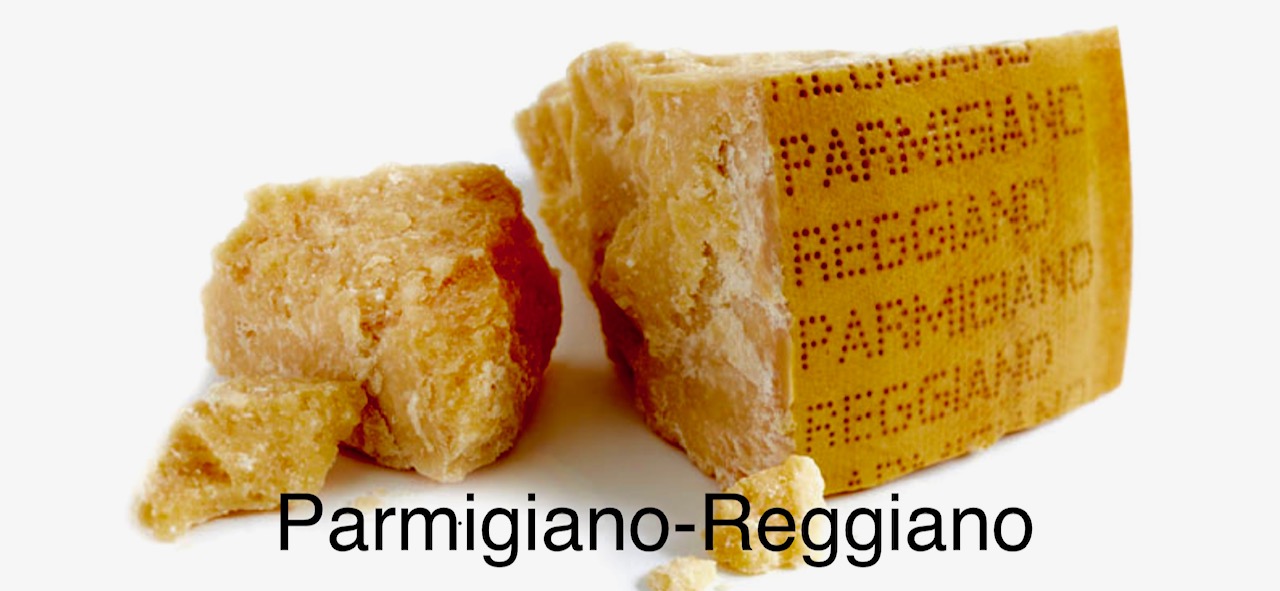
Parmigiano-Reggiano is called by some “The finest cheese in the world.” Parmigiano-Reggiano is made in Italy from raw cow milk under strict adherence to a prescribed procedure. To harden the young cheese’s rind, it is left in brine for three weeks or more before being allowed to age from twelve months to three years. A wheel of Parmigiano-Reggiano weighs eighty-five pounds and goes from an ivory paste color when young to an amber gold when mature. Don’t cut this cheese, use a blunt knife that will break it into chunks thus preserving its signature texture. You will need a medium to full-bodied red to pair with this cheese. Brunello di Montalcino, Cabernet Sauvignon, or Zinfandel would be a great pairing.

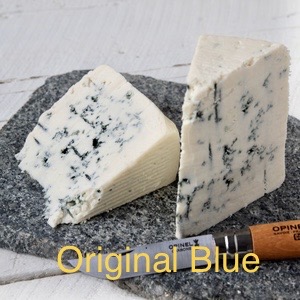
Original Blue is a raw cow milk aged blue cheese made by the Point Reyes Farmstead Cheese Company and is the only blue cheese made in California. The morning milk is taken directly from the milking parlor to the cheesemaker where it is cultured, coagulated with rennet, and inoculated with Penicillium roqueforti. As the cheese ages, it develops the characteristic blue-gray veins that give blue cheese its name and distinctive taste. Pair a French Pinot Gris or dry Riesling from the Finger Lakes of New York. I have also found Champagne is an excellent pairing because it cleanses your palate. 

Manchego is Spain’s most famous cheese. It is made from raw or pasteurized sheep milk but most of Manchego today is made on an industrial scale using pasteurized sheep milk. You can find year-old Manchego at cheese shops in the U.S.  This aged version of Manchego has a firm dry interior that is ivory to light yellow in color. It is best served with something sweet to contrast its tangy salty bite. Quince paste is usually served as the sweet accompaniment. Manchego pairs well with a Rioja from its homeland of Spain. Think tapas on a beautiful evening in Barcelona when selecting a wine.   

I hope you enjoyed my posts on pairing wine and cheese as much as I enjoyed writing them. Cheers!

Photo Credit: Gourmetfoodstore.com, PointReyesCheese.com, and almagourmet.com

Days of Wine And Cheeses Part 2

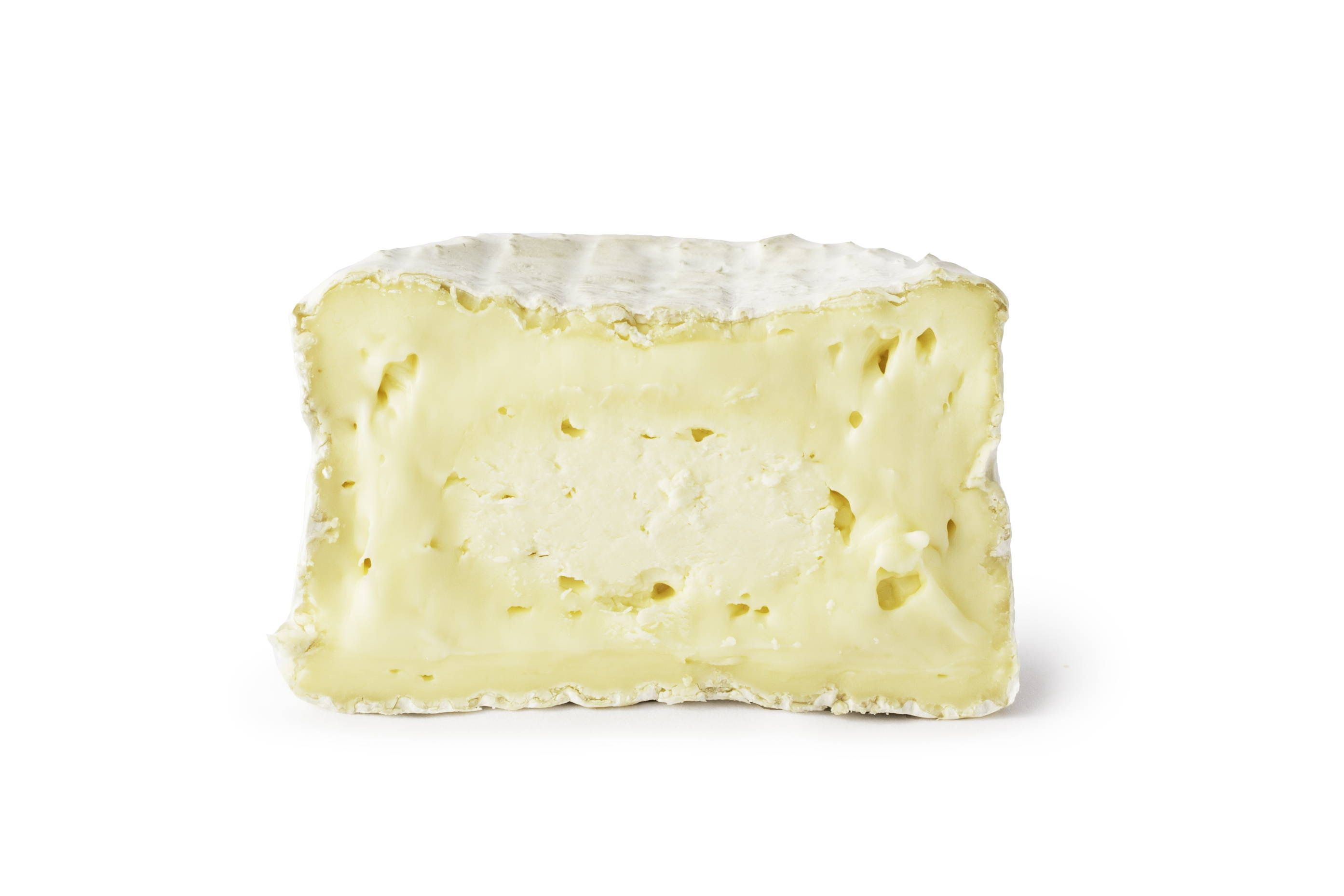
Miles and Lillian Cahn bought an abandoned dairy farm north of New York City in the early 1980’s. Two years later they sold Coach Leatherware and became full-time goat farmers. A curious turn of events for the Cahans but a blessing for the cheese world. Coach Farm makes several kinds of goat cheese, both fresh and aged but is best known for its Green Peppercorn Cone. Green Peppercorn Cone is a bloomy rind pasteurized goat milk cheese with a soft interior that is impregnated with fresh green peppercorns. Bloomy rind cheeses ripen from the outside in as the cheese develops. Coach Farm Green Peppercorn Cone is soft, off-white, and creamy with flavors of pepper and lemon curd. 

Since this is a delicate cheese it calls for a light, crisp and clean wine that won’t dominate your palate. A couple of good choices are a dry Rosé like Chateau ď Esclan Whispering Angel Rosé 2020 or a dry Traminette from the Hudson Valley of New York, as they say, “What grows together goes together”. I asked Russell Moss, General Manager at Milea Family Wines Staatsburg, New York if he thought their 2021 Milea Estate Traminette would pair well with this cheese. Russ said, “The 2021 Traminette will pair excellently with the cheese. The spicy character of the wine will compliment the peppercorn well and the fat in the cheese will harmonize with the structure of the wine.” www.mileaestatevineyard.com 

When you talk about cheese from the American Heartland you must feature a cheese from Wisconsin and that cheese is Pleasant Ridge Reserve from the Uplands Cheese Company. http://www.uplandscheese.com

Pleasant Ridge Reserve is made in a style of French alpine cheese. It is a rarity among American cheese because it is made with unpasteurized milk from a single herd of cows only during pasture season. Pleasant Ridge Reserve is made to very exacting standards so if the pasture conditions produce milk that doesn’t meet the cheesemakers’ expectations no cheese is made and the milk is sold. Pleasant Ridge Reserve has a hard thin rind over a smooth firm golden body with savory nutty flavors and light saltiness that lingers on your tongue.

Pleasant Valley Reserve has enough character to pair well with a Gruner Veltliner or Chateau Niagara DuMonde 2021, a Chardonnay/Riesling blend from the Niagara Plain near Lake Ontario in New York. http://www.chateauniagarawinery.com If you are looking to try a red any Cune (CVNE) Gran Reserva is an intriguing option.
My next post will be on a pair of popular types of cheese and the wine I serve with them.

Days of Wine and Cheeses

You may have surmised from the name of this blog and my social media handle (wpawinepirate) that I am a Jimmy Buffett fan, a Parrothead, if you will. I have been a member of the Phlock for a long time, making some good friends and beautiful memories along the way. Jimmy’s lyrics “Warm summer breezes and French wine and cheeses” from his song “He went to Paris” was the inspiration for a series of posts I will be writing about wine and cheese pairing

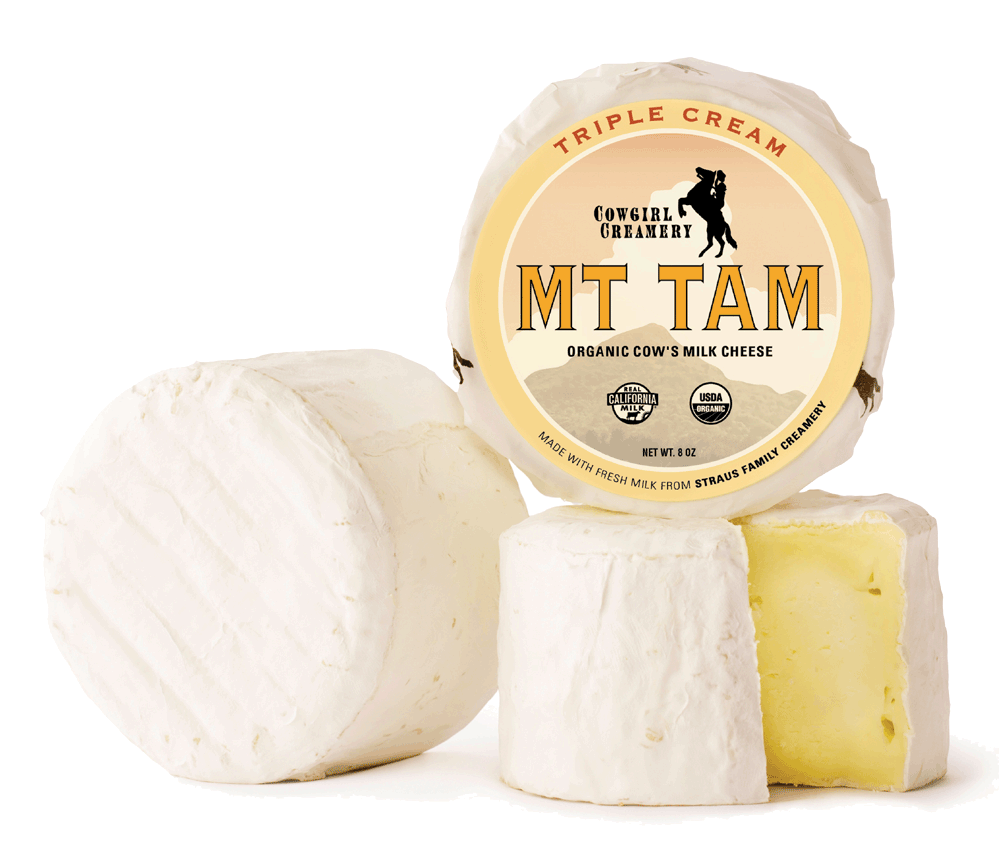
I will never forget the first time I tasted Cowgirl Creamery Mt. Tam. It was at their shop in the Ferry Building in San Francisco. Mt. Tam is a triple cream bloomy rind American recipe cheese made from pasteurized organic pasture-based cow milk that is produced by farm partners using sustainable farming practices. Mt. Tam is made in Marin County near San Francisco, as if you had any doubt it was a California product after that lead-in. Cowgirl Creamery describes their Mt. Tam as “At room temperature, features a dense fudgy core enveloped in an evolving pudgy creamline.” This cheese is both creamy and buttery but also displays earthy flavors. http://cowgirlcreamery.com Mt. Tam pairs well with sparklers like Prosecco and Cava or a California Chardonnay that will cleanse your palate. Freixenet Cordon Negro Cava Brut or Trefethen Family Vineyards 2018 Chardonnay Oak Hill District Napa Valley work nicely with Mt. Tam.

Staying on the coast of California, my next cheese is Humboldt Fog from Cypress Grove Chevre in rural Humboldt County. Humboldt Fog is a unique soft-ripened goat cheese. It is made from high-quality goat milk sourced from local farms. This is a pasteurized goat milk cheese. The quality of the milk used in the making of Humboldt Fog is reflected in its clean and balanced flavors while muted acidity and salt levels prevent the potent goaty taste that turns some people off to goat cheese. http://cypressgrovecheese.com Enjoy Humboldt Fog with the iconic New Zealand Sauvignon Blanc Cloudy Bay, or Sokol Blosser Redland Cuvee Estate Willamette Valley 2018, a medium-bodied Pinot Noir from Oregon.           

I will be exploring cheeses from America’s Heartland and the East Coast in my next post.                                  

Review: Saperica 1st Annual Saperavi Festival Finger Lakes

On May 14, 2022, an event took place in the Finger Lakes Wine Region of New York that was a landmark moment in the history of Saperavi, not only for the future direction of Saperavi in the northeastern U.S. but for all of North America. While Saperavi has been on a steadily ascending arc for several years this gathering of Saperavi winemakers, growers, and enthusiasts will prove to be the catalyst that fuels Saperavi’s meteoric rise into the conscience of the American wine lovers.

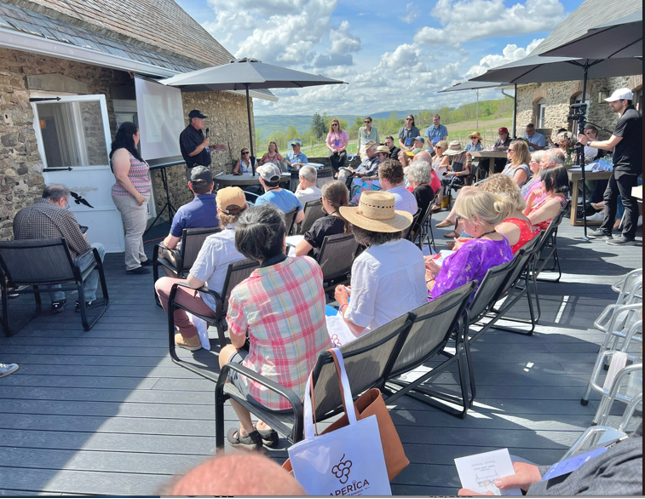
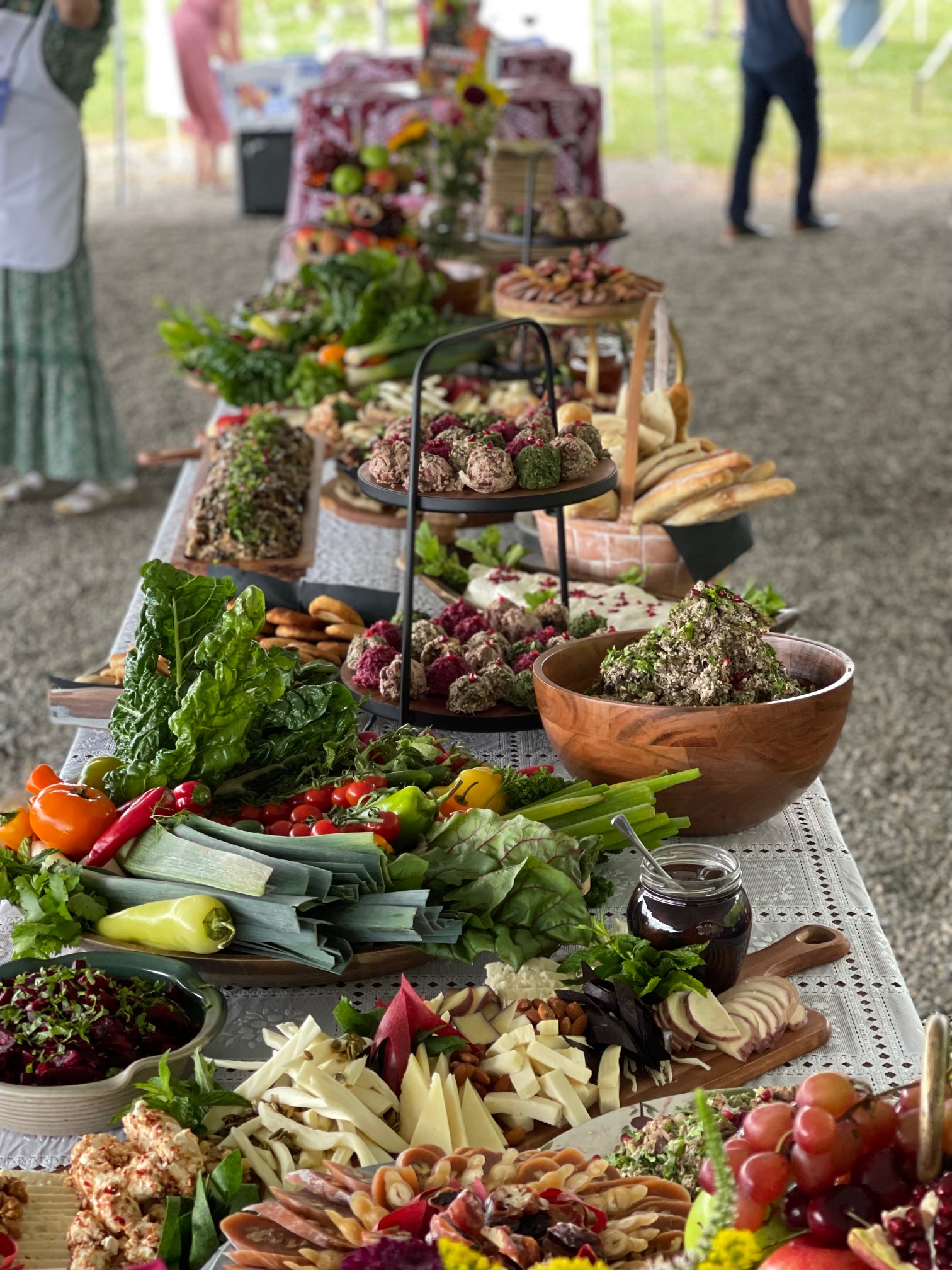
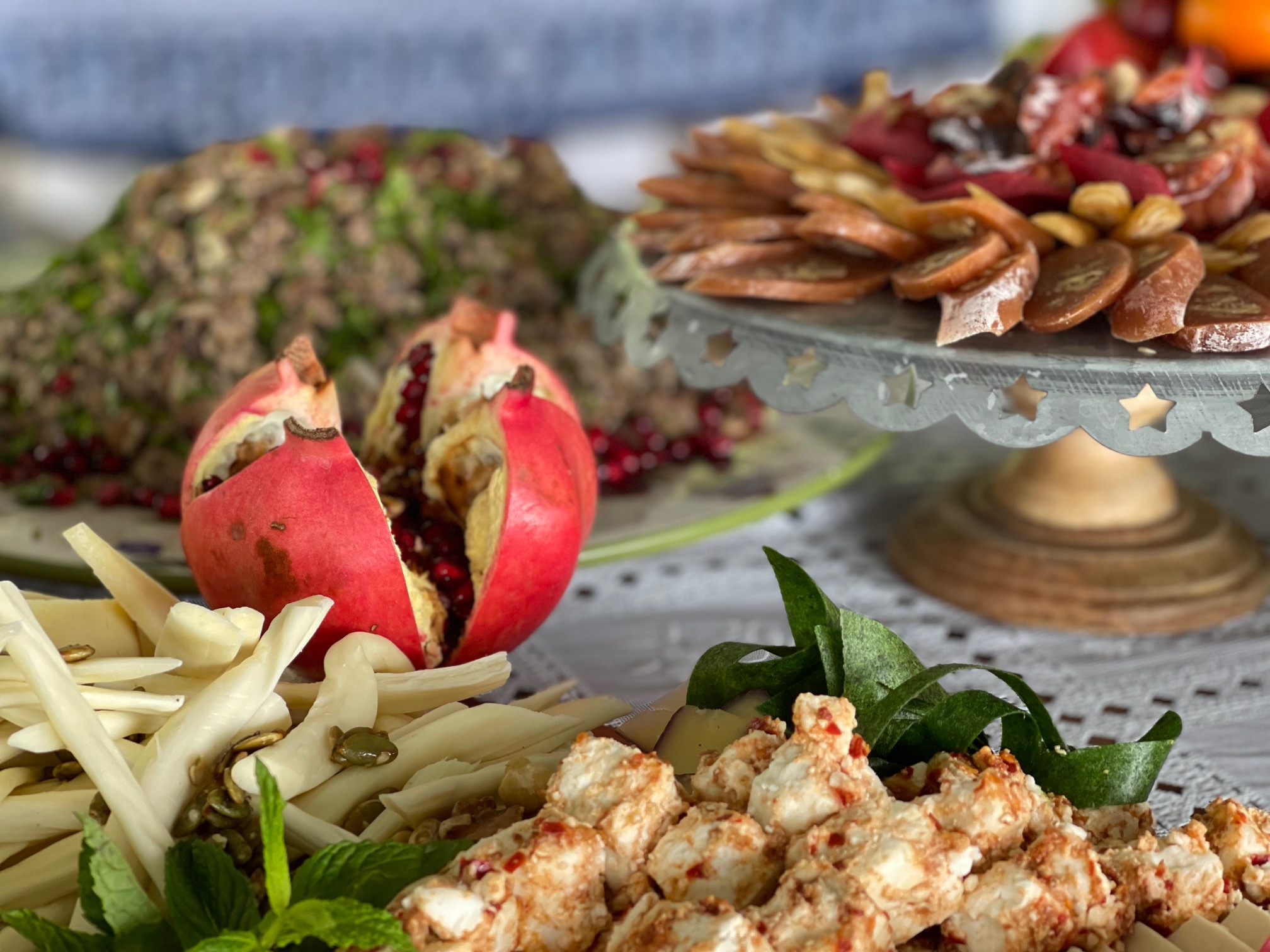
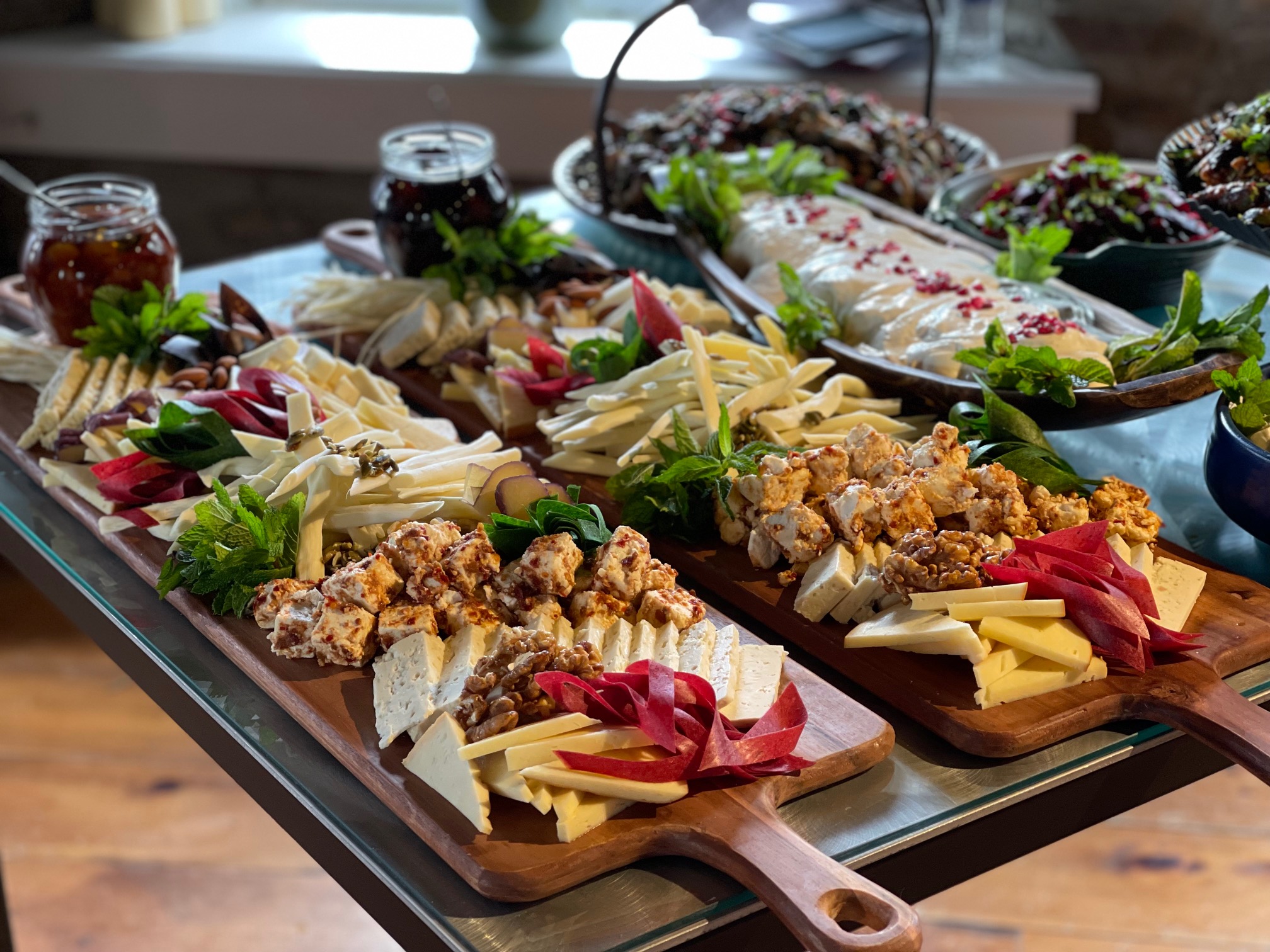
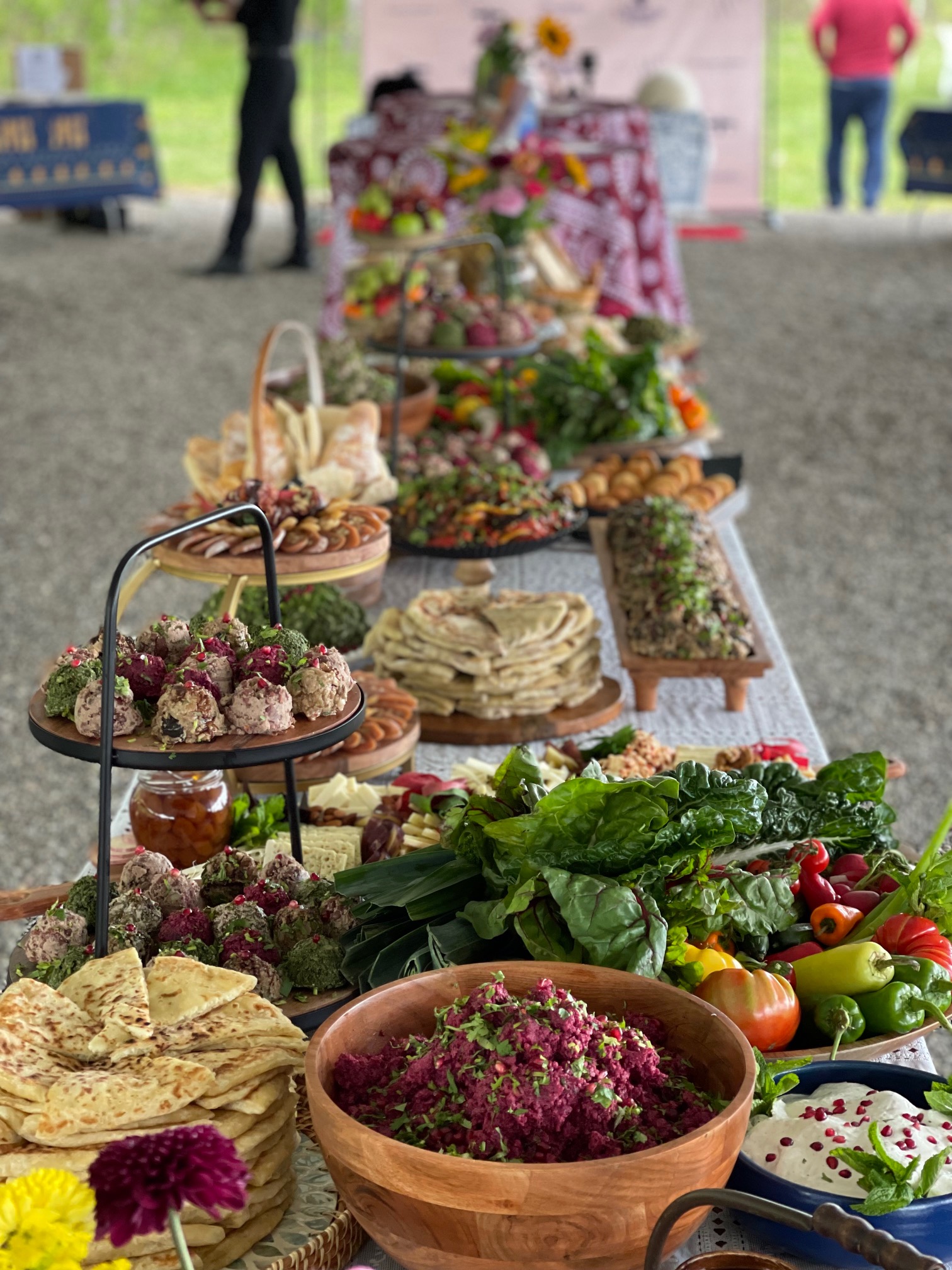
Saperica http://saperica.org, the nonprofit founded by Lasha Tsatava and Erika Frey, held its inaugural Saperavi Festival at the iconic Dr. Konstantin Frank Winery overlooking Keuka Lake in Hammondsport, New York. The one-day event was a sellout with more than three hundred guests enjoying winetastings and delicious traditional Georgian cuisine prepared by Chama Mama, a Georgian-themed restaurant from New York City. The trade and media portion of the festival drew over fifty participants that were greeted with opening remarks from Fred Frank and Saperica co-founder Erika Frey. Keynote speaker Lado Uzunashvili delivered a live virtual presentation on the importance of Saperavi that was followed by guest speaker Darra Goldstein (Flavors of Georgia). Both presentations can be viewed on Saperica’s YouTube channel https://www.youtube.com/watch?v=MUb_6pPRupQ Closing remarks were presented by Saperica co-founder Lasha Tsatava with a special thank you to Meaghan Frank for her tireless efforts to make the Festival a resounding success.

I ask some of the contributors to share thoughts and impressions about the festivities and their vision for Saperavi in North America.

Lasha Tsatava, Director @ Boston Sommelier Society and co-founder of Saperica Inc.

When we first started to tell the story of Saperavi and its connection to Georgian culture and the history of wine, we saw how people’s eyes lit up and we wanted to grow that feeling in FLX and beyond. At the Saperavi Festival’s Trade & Media event, I made it clear in the closing remarks, that our organization’s goals are, as a minimum, to make Saperavi a premier red grape variety in the Finger Lakes region and the ultimate goal is to build a Georgian Cultural Center with Marani (Georgian traditional cellar with qvevris) in Finger Lakes, NY. The 1st annual Saperavi Festival has reconfirmed the sensibility of these goals.

Fred Frank, President, and CEO of Dr. Frank’s Vinifera Wine Cellars, grandson of wine legend Dr. Konstantin Frank & Meaghan Frank’s father

We were honored to host this first Saperavi Festival at our historic winery. I am sure Konstantin was looking down from the heavens with pride to see all the attention and acceptance that his beloved Saperavi was receiving from the hundreds in attendance. Konstantin was the first to plant Saperavi in the United States in the late 1950s in his vineyard above Keuka Lake. He was a big fan of this variety for its historic pedigree originating in Georgia and believed it would have a great future in the Eastern United States. Saperavi vines are cold hardy and the wines are of high quality with deep color. We look forward to the next Saperavi Festival and continued acceptance of this historic grape variety.  

Jim Baker, owner/winemaker of Chateau Niagara Winery, located on the Niagara Lake Plain, Newfane New York

My thoughts on the festival are quite positive. The media section contained two presentations featuring my good friend Lado Uzunashvili, and Darra Goldstein. Lado is an old friend and did a great overview of Saperavi in Georgia and the world, including history and all sorts of technical information on the grape in several world locations. He did a comparison of our winery and a Georgian location. Darra Goldstein presented a history of Georgian food and culture. Food was served up from Chamma Mama, a Georgian restaurant in NYC. It was truly a Georgian feast. We got to taste wines from a number of American and Georgian producers. It was surprising how well we held our own against some stunning Georgian producers. The afternoon consisted of more Georgian feasting and public tastings of wine. All in all a great celebration of Saperavi and Georgian culture.
Phil Plummer, Head winemaker at all three Martin Family Wineries in the Finger Lakes.

I attended the festival, but mostly on the technical/trade end of the schedule. I can’t speak to marketing impact and the like, but the viticultural and enological information shared in the trade sessions was really compelling. Saperavi is a very exciting grape variety for us in the Finger Lakes, but I think winemakers should be excited about this one on a global level, too. Saperavi exists at the intersection of past, present, and future winemaking. As one of the earliest-cultivated grape varieties, working with Saperavi gives winemakers an opportunity to connect to the past–walking in the footsteps of the countless generations of winemakers who came before us. At present, Saperavi’s unique versatility allows winemakers to experiment, making wines in a widening array of styles. Looking forward, Saperavi’s resilience and versatility position it as a grape variety to embrace in the wake of a changing climate. As a blending component or varietal, Saperavi rarely disappoints. From a culinary standpoint, its rich phenolic profile, bright acid, and unmistakable aromatics present exciting opportunities for wine and food pairing, particularly with the Georgian cuisine available at the festival.

Erika Frye, co-founder of Saperica Inc., CS, CWE & Diploma WSET

When I started discovering Saperavi in the Finger Lakes several years ago, I could feel that there was something special about this grape variety in this region.  There is a buzz that surrounds Saperavi which started off whisper-like but has now grown into a conversation that cannot be ignored.  The 1st annual Saperavi Festival came at just the right time to give this grape variety a clear voice to tell the story of its past, present, and future.  It comes at a time when Saperavi plantings are increasing in the Finger Lakes region.  We hope that these new producers will be able to use the Saperica organization and the Saperavi Festival as resources to find information about the Saperavi grape variety, learn about its Georgian heritage and connect with other Saperavi producers.
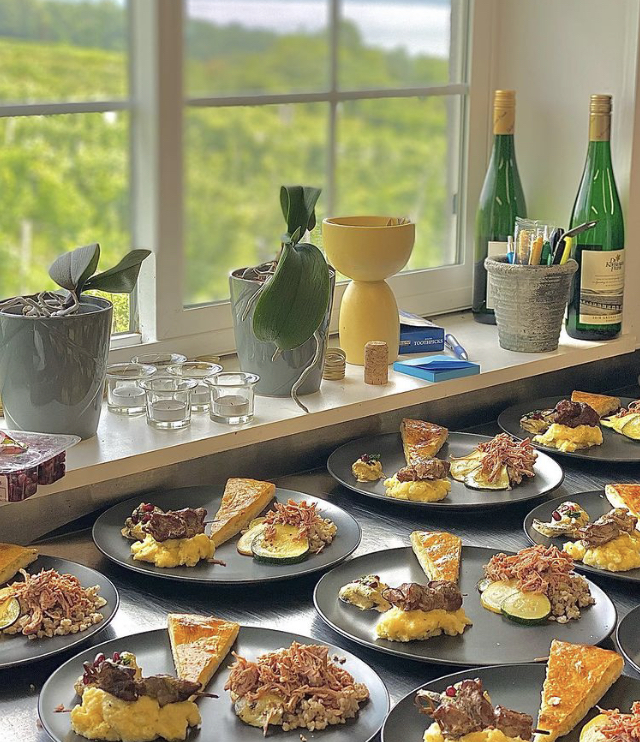
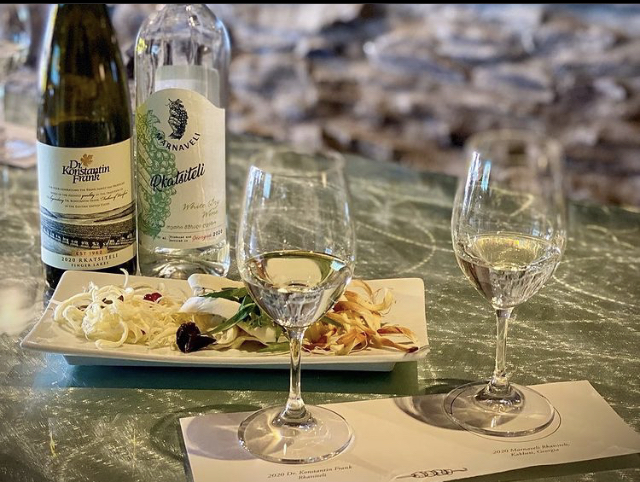
The most exciting thing about the festival for me was the ability to build connections.  We had a great partnership between the three festival hosts – Saperica, Dr. Konstantin Frank, and Chama Mama.  An impressive group of wine producers and wine importers were present from both the USA and Georgia.  Two experts in their fields shared their knowledge of Saperavi winemaking and Georgian cuisine.  Most importantly, there were about 250 festival attendees who were connecting with the wines, the food, the environment, and the people.  When I was able to stop for a moment and survey the amazing crowd of people who had come together to celebrate Saperavi, that is what made me feel truly proud – proud of the community that we are starting to build and what we will all be able to accomplish together in the future.

John McGregor, Vice President of McGregor Vineyard

The Saperavi Festival was a great introduction to Saperavi for many.  Its Georgian roots were presented wonderfully!  McGregor Vineyard was the sole producer of Saperavi in the United States for decades. Now the Finger Lakes is home to numerous Saperavi producers, and more are sure to come in the near future. This festival really felt like a validation of my late father, Bob McGregor’s steadfast belief that Saperavi was perfectly suited to grow in the Finger Lakes and could make some of the region’s finest and most respected wines.

Bryanna Cramer, Assistant Winemaker Standing Stone Vineyards

I felt like the event was a huge success for the region, seeing as it was the first annual and it sold out and had additional tickets added on. It felt like the overall vibe was excitement about the variety as well as a general curiosity about its potential here in the FLX. It was really beneficial to have vendors pouring various Saperavi from Georgia to have as a reference, as well as Georgians giving their genuine feedback on the wines being made here in the Finger Lakes. I think they were pleasantly surprised by the quality and authenticity that can be achieved. From the customer perspective, I think the majority are still discovering the variety, its characteristics, and its history but I see that as an opportunity to continue educating not only at events like this but also on-site at Standing Stone and the other wineries working with Saperavi. 

This event and those all involved proved that Saperavi has progressed from being viewed as a grape variety with the potential to make outstanding varietal wine here in North America to being acknowledged as a proven producer of high-quality wine in various styles. Saperavi will continue to evolve as new winemakers add their interpretations of how it can be made and the newly planted Saperavi vineyards come into production expressing the terroir of their increasingly diverse geographic locations.

Congratulations to everyone involved in Saperica’s Saperavi Festival in the Finger Lakes on its successful endeavor to gather Saperavi lovers and promote this ancient grape. A special thank you to Lasha, Erika, Fred, Phil, John, Bryanna, and Jim for taking the time to share their thoughts and insights about Saperavi.

Photos Courtesy: Saperica Inc.

Finger Lakes Saperavi Festival May 14, 2022

The wine made from Saperavi grapes being grown in the eastern United States has been a secret shared by a small but growing group of wine lovers. It isn’t a secret anymore as Saperavi plantings have aggressively expanded throughout the East Coast. As a varietal or in any of its unique blends Saperavi is gaining fans and increasing its vineyard acreage as forward-thinking winemakers join a movement to explore the possibilities this ancient grape from the “Far side of the world” has to offer.

I recently had the pleasure of talking with Lasha Tsatava the Georgian Gastronomy Ambassador, Director @ Boston Sommelier Society, and co-founder of the non-profit Saperica about its upcoming Saperavi Festival in the New York Finger Lakes on Saturday, May 14th, 2022 at the Dr. Konstantin Frank Winery 9683 Middle Rd Hammondsport, NY.

My first question to Lasha was concerning what activities and attractions would be available to festival guests? Lasha told me that the entertaining and educational slate of attractions focuses on the food, wine, and culture of Georgia including:

  • Walkaround tasting of Saperavi & Rkatsiteli wines from the country of Georgia, the Finger Lakes of New York and beyond
  • Authentic Georgian cuisine created by Chama Mama restaurant from New York City (food included in ticket price)
  • Cooking demonstrations and educational seminars
  • Saperavi festival swag

My next question was why he and Erika Frey decided to start their nonprofit SAPERICA and what their mission was? Their reason for starting: SAPERICA saperica.org

“Saperavi has been growing in Finger Lakes, NY for about 50 years now. 

It’s a traditional grape variety for the region but not many people know about it.

Since June 2021, Erika and I had several trips to FLX and we would visit Saperavi and Rkatsiteli producers to learn more about them and discover their stories and their future plans with these grape varieties. At the same time, we were introducing the idea that these grape varieties have tremendous history and culture behind them including Georgian gastronomy. Every time we discussed these ideas with producers, people’s eyes lit up with excitement and there was a feeling that we needed to take the next step. So we did!” Their reason for starting Saperica and their mission statement complement each other perfectly!

http://SAPERICA.org mission statement: To promote Saperavi and other Georgian grape varieties along with Georgian gastronomy and culture in the Finger Lakes, NY, and around the U.S., by organizing and facilitating educational seminars and exchange programs between the regions, for wine and culinary professionals, and enthusiasts.

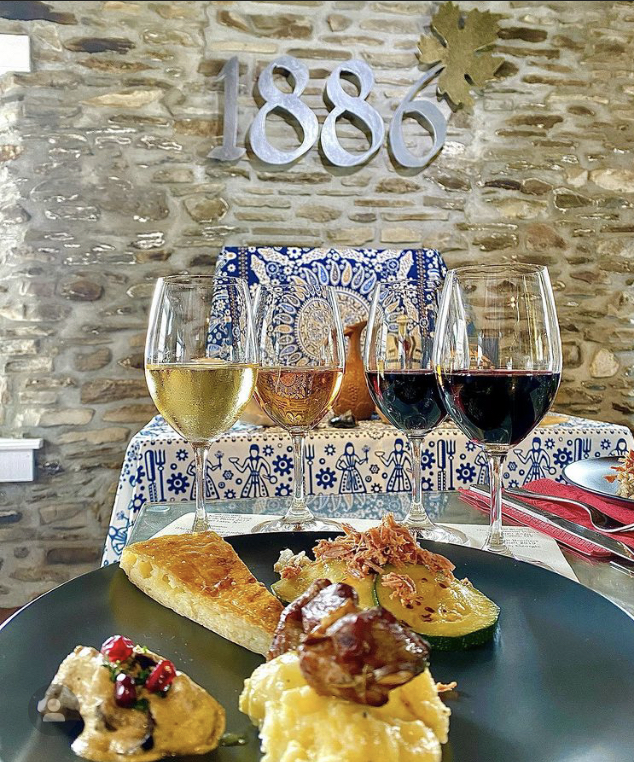
Lasha and Erika have worked closely with Meaghan Frank (Dr. Konstantin Frank’s great-granddaughter) of Dr. Konstantin Frank Winery and her team on this festival and prior events called “Finger Lakes Meet Georgia Experience”. These events were held conducted in a fully immersive environment where Erika, Lasha, and Meaghan educated, interacted, and guided their guests through the history and culture of Georgian wine before leading them back to the 1886 Reserve Tasting Room at the Frank Winery for a paired food and wine experience. One of the attendees told Lasha “This is why we fly to France and Italy to have experiences like this”

The first annual Saperavi Festival in the Finger Lakes will be held on Saturday, May 14th, 2022 from 2PM-5PM EDT at the Dr. Konstantin Frank Winery 9683 Middle Rd Hammondsport NY. Tickets can be purchased at http://eventbrite.com or click this link to go to the event page https://www.eventbrite.com/e/saperavi-festival-tickets-274172135237

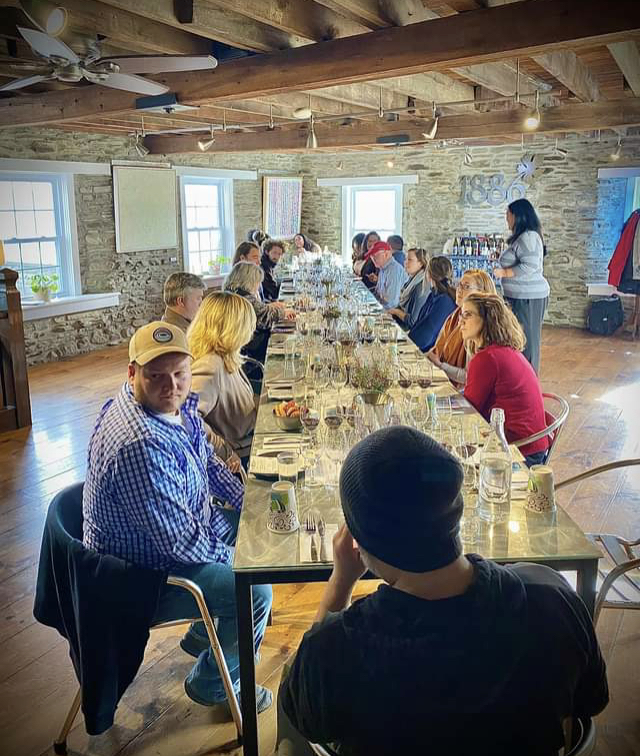
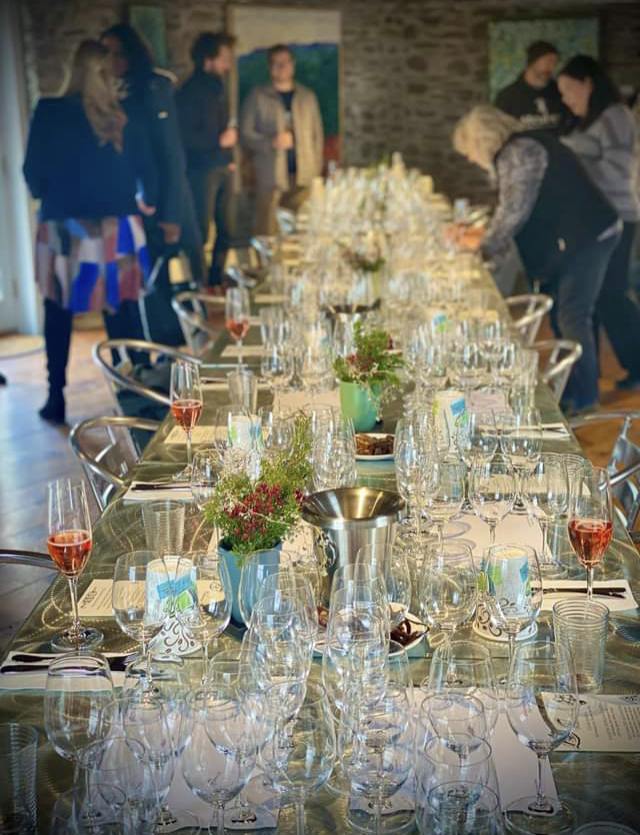
The following photos are of a previous “Finger Lakes Meet Georgia Experience” at the Dr. Konstantin Frank Winery when Lasha and Erika collaborated with Meaghan and her team to highlight and explore the food, wine, and culture of Georgia.

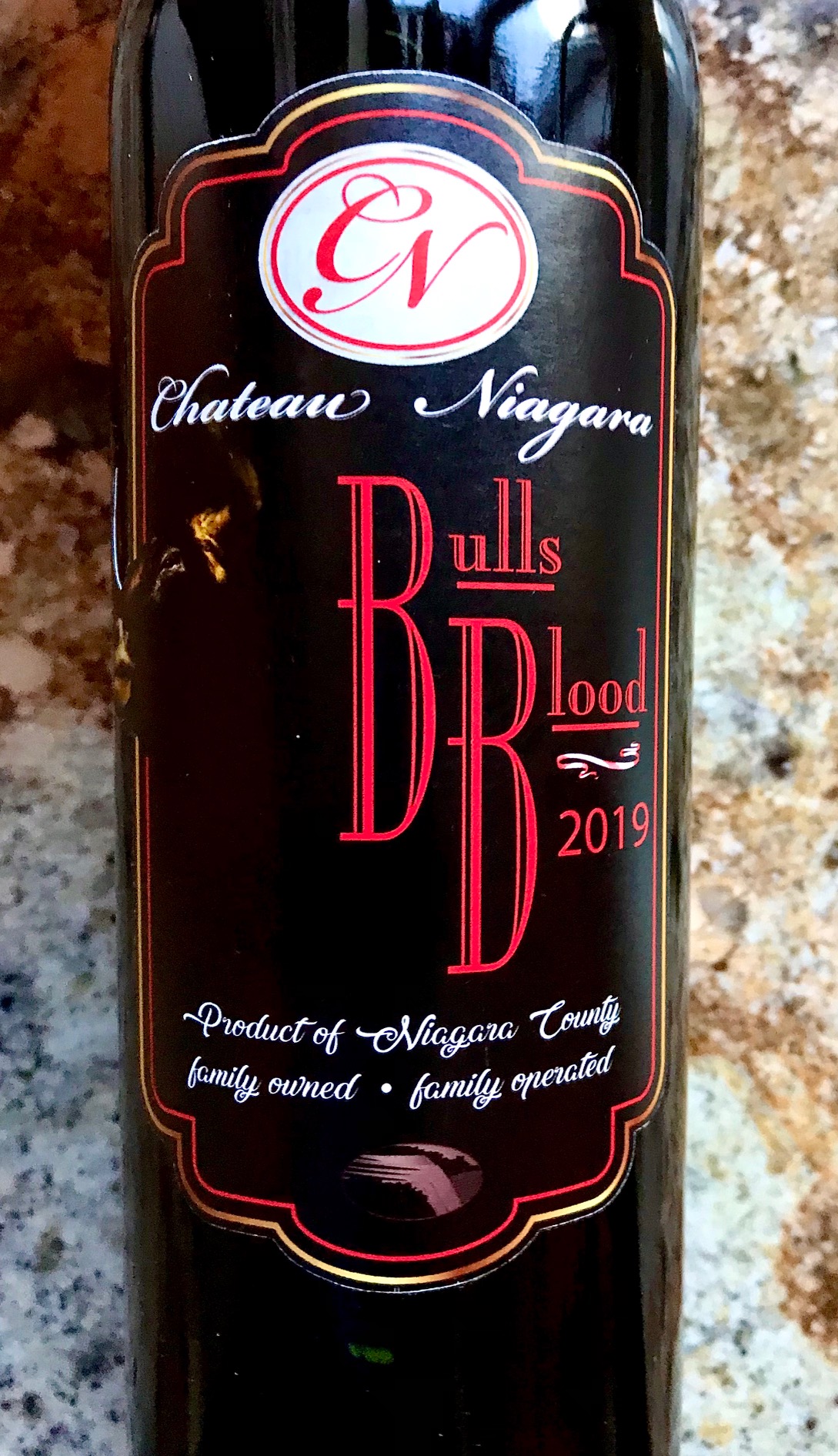
Chateau Niagara Bulls Blood 2019

Have you heard of Egri Bikavér? It is more commonly known as Bulls Blood. Egri Bikavér or Bulls Blood is the traditional dry red wine of the northern Hungary region of Eger. It is a controlled blend that must use at least three of the seventeen grape varieties that are permitted in the making of Bulls Blood. Bulls Blood is steeped in legend that dates back to a 16th century battle in which Hungarian forces were victorious over Ottoman forces.

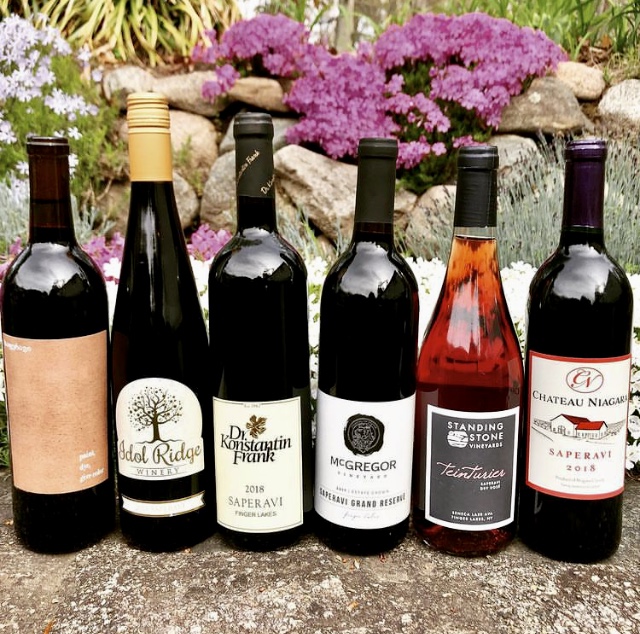
Bulls Blood being made in North America is not easily found but one exactly like the one-of-a-kind Chateau Niagara Bulls Blood would be impossible because, to my knowledge it is the only one made with a blend of Blaufrankish (Lemberger), Cabernet Franc, and the Hungarian red grape Turan (Agria). Turan is a teinturier grape, meaning like Saperavi and Chambourcin it has pigment in both its skin and pulp making for a richly colored juice when pressed. Jim Baker got his Turan as clippings for his vineyard in Newfane New York by chance when a West Coast vintner included them in a shipment of Saperavi clippings and as they say “The rest is history”.

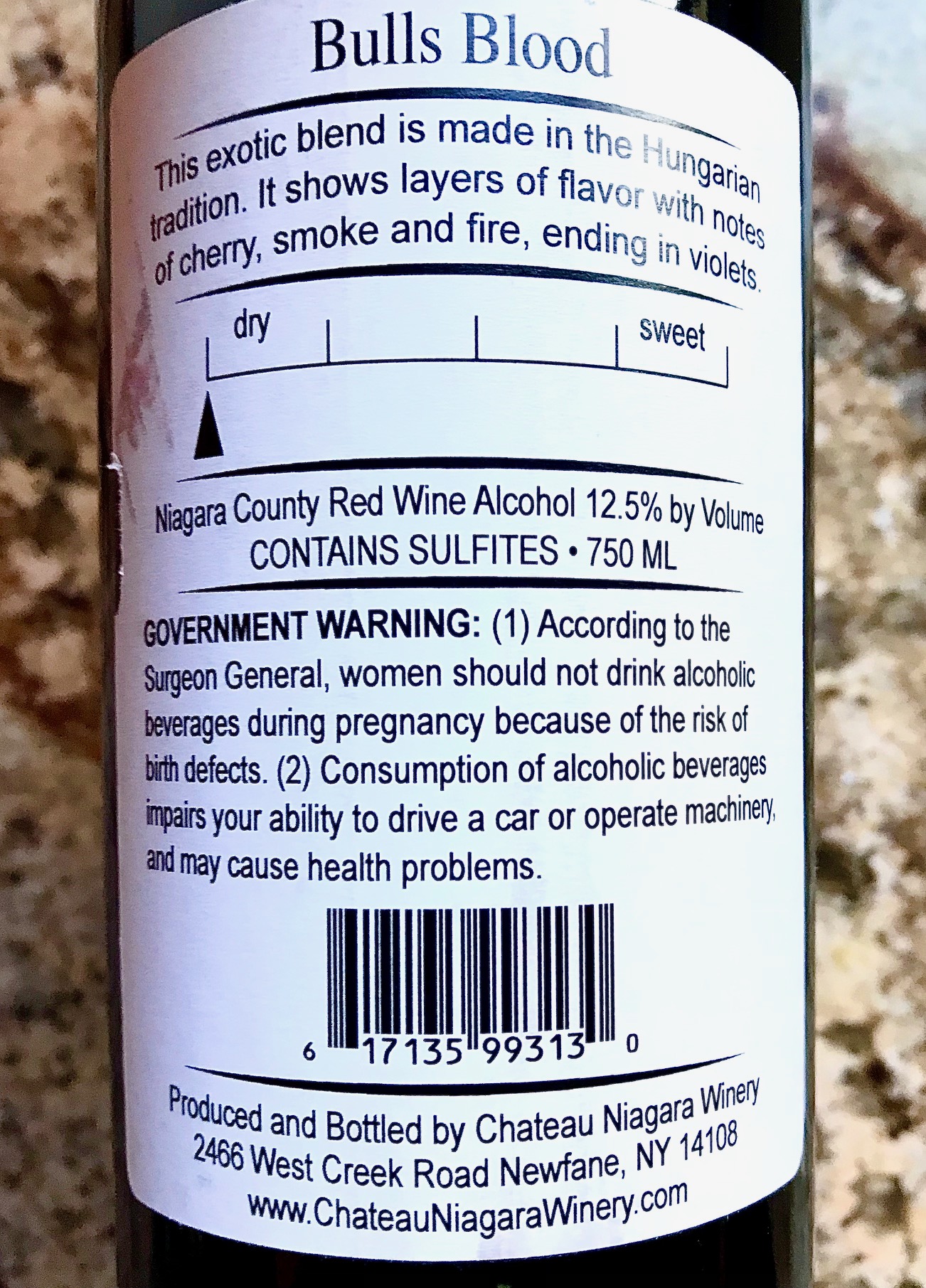
Chateau Niagara Bulls Blood 2019 is a deeply colored dry red wine blend that has a medium body with notes of smoke and flavors of dark berries. It has more than ample acidity to give it complexity. Each grape in the blend contributes something special to the finished wine. Cab Franc supplies the fruit while Lemberger adds the smoke then Turan provides the fire. I suggest decanting it and to consider adding some to your cellar to age for a few years.

This wine as well as others from Jim Baker’s award-winning Chateau Niagara Winery are are available online at http://www.chateauniagarawinery.com


Chateau Niagara Riesling Rosine 2019

When Jim Baker started his winery he didn’t set out to just make good wine but to make great wine in a traditional French style not only for New York but for anywhere.He has been doing just that since the beginning at his Chateau Niagara Winery with his award-winning wines featuring his signature Cabernet Franc. Sometimes you have to explore an avenue of innovation when it presents itself in the form of an interesting twist on a classic Italian wine making style. Jim developed an entirely new method of wine making that he uses to produce his Chateau Niagara Riesling Rosine. Riesling Rosine is a totally new take on Riesling that has to be tasted to be understood. Jim uses a modified appassimento method that he invented to dry his Riesling grapes to the point of them becoming raisins, hence the name Rosine. He chose the name with a tip of the hat because it sounded Italian but is the German word for raisin. 

Chateau Niagara Riesling Rosine 2019 is an off-dry Riesling with bright acidity and balanced sugar that produces a creamy mouthfeel that I found to be surprising for a Riesling. The flavors start with citrus but shift to tropical fruit as a result of botrytris doing its thing during the drying process. You can purchase Chateau Niagara Riesling Rosine and other Chateau Niagara wines online at http://www.chateauniagarawinery.com

The Milea Heritage Grape Project

I was pleasantly surprised recently to hear from my friend and mentor Steve Casscles. Steve is known for his encyclopedic knowledge of the Heritage and hybrid grapes of the eastern United States.He is well-known in the wine community for his articles, lectures, Grapes of the Hudson Valley and other Cool Climate Regions of the United States and Canada book, and his Cedar Cliff vineyard where he cultivates over 110 Heritage grape varieties along with his own hybrids. Steve has taken a new position at Milea Estate Vineyard where he and the winemakers there have just launched the Heritage Grape Project. Steve and his colleagues are taking on the important task of identifying and promoting the production of wine from Heritage wine grape varieties and those developed during the 19th century in the Hudson Valley and Boston’s North Shore.

At Milea, they are also consider, at least for the Hudson Valley, that certain French-American Hybrids should be considered as Heritage grape varieties for the Milea Heritage Grape Project. This is because their introduction to the Hudson Valley in the mid-1950s by grape pioneer Philip Wagner, and his local proteges such as Everett Crosby, Mark & Dene Miller, Ben Feder, William Wetmore, Richard Eldridge, Cesar Baeza, and others fostered an explosion in the number of wineries in the area that made quality wine from these Heritage French-American hybrids. These Heritage grapes include, Baco Noir, Chelois, Leon Millot, Foch, Burdin, Le Colonel, and Chambourcin (reds) and for the whites Seyval Blanc, Vidal, Vignoles, and Verdelet.

With the effects of climate change already being felt here on the East Coast and throughout the wine growing regions of the world, the time to begin implementing long range solutions has arrived. The key to the future success of countless vintners globally may lay in these forgotten grape varieties whose adaptability could provide the answer to the dilemma of climate change in our vineyards. 

After Steve’s foreword on the goals of the Milea Heritage Project on http://www.hudsonvalleyheritagewines.com. I asked Steve to tell us about his vision and objectives for the project.

The goals of this project are to re-introduce to a national and international audience the significant contributions that the Hudson Valley has made to American horticulture and to encourage the cultivation of these heritage varieties to produce superior wines. Coupled with this effort to bring back these heritage grape varieties is the desire to promote the cultivation of such grapes because they can be grown in an environmentally sustainable manner. Steve Casscles

First, I am honored by Rich’s comments and posting about our exciting new project at Milea Estate Vineyards. I think you will soon hear more of our work to identify and promote heritage grape varieties, be they French-American hybrids, Hudson Valley or North Shore bred grape varieties of the 19th century, or new chance seedling grape varieties that we are working with to make quality wine. These quality wines will be made in a manner that is acceptable to the marketplace and which are highly fungus disease resistant, winter and summer tolerant of cold and heat, can roll with the punches that Mother Nature seems to be throwing at our growers, and are consistently productive, even in the most challenging of years. We will be posting information on our Project’s progress, and very much relying on Richard and his wonderful blog to post this information as well.  Be well.  

Thank you Steve for the kind words and for sharing this timely information with us. The Milea Heritage Grape Project is beginning its mission at a pivotal time for viticulture. It is critical to the success of this undertaking that its important message be heard and understood by the people who are most affected by the issue it seeks to address. I am including this link to the Milea Heritage Grape Project’s email sign up form at the bottom of their contact page so you can to receive news and updates from the project http://www.hudsonvalleyheritagewines.com/contact-us Please sign up. Thank you.

Photo Credit: Hudson Valley Heritage Wines

Chateau Niagara Saperavi Express 2020

Chateau Niagara Saperavi Express 2020 checks all the boxes for what you would expect from a “New World” Saperavi and then some. Jim Baker extracts every bit of color and flavor from his estate grown Saperavi grapes by adding extra enzymes and processes in the making of his Chateau Niagara Saperavi Express. The first thing that catches your attention about Saperavi Express is it’s incredibly deep and dark color. Big in body, especially for a cool climate red wine, it displays Saperavi’s signature acidity along with flavors of plum, black currants, and black pepper complemented by supple tannins through a medium finish. I tasted it again the next day and it had opened up nicely. 

Saperavi can trace its origins back to 6000 B.C., so when you drink Saperavi you are joining a long line of wine lovers. If anyone doubts your rightful place in that line just show them your purple tongue. http://www.chateauniagarawinery.com