Interview: Jim Baker, Bio-Regenerative Agricultural Institute

I recently checked in with Jim Baker, owner, winemaker, and vintner of Chateau Niagara Winery on the Niagara Lake Plain in Newfane, New York, to find out what’s new.

Jim Baker:

Rebuilding Agriculture from the Soil Up

The Regenerative Vision of Chateau Niagara and the Bio-Regenerative Agricultural Institute

In February 2026, the Bio-Regenerative Agricultural Institute was formally incorporated in Western New York with a mission that is both ambitious and urgently needed: to help rebuild agricultural systems that work with biology instead of against it.

The Institute emerged from years of practical experimentation at Chateau Niagara Winery, where regenerative viticulture practices have been quietly evolving into a broader ecological framework for agriculture. What began as an effort to improve vineyard resilience has expanded into a research and demonstration initiative focused on soil biology, biodiversity, reduced chemical dependency, and the restoration of natural ecosystem function.

At the heart of this effort is a simple belief: healthy agriculture begins beneath our feet.

For decades, modern farming systems have largely treated soil as an inert growing medium requiring continual chemical intervention. Yet healthy soil is not dead matter. It is a living biological economy composed of fungi, bacteria, insects, roots, organic matter, and mineral cycles interacting continuously. A single teaspoon of healthy soil contains billions of microorganisms forming one of the most complex living systems on Earth.

The challenge facing agriculture today is that many of these biological systems have been degraded through repeated tillage, synthetic chemical dependency, erosion, and the simplification of agricultural landscapes. The result has been declining resilience, increased disease pressure, rising input costs, water pollution, and reduced ecosystem stability.

The Bio-Regenerative Agricultural Institute was created to pursue another path.

Rather than focusing solely on yield maximization through chemical inputs, the Institute seeks to develop farming systems that mimic natural ecological processes. These systems are intended to become increasingly self-sustaining over time — reducing dependence on synthetic inputs while improving soil health, biodiversity, water retention, and long-term agricultural resilience.

The organization combines practical field trials with open-source educational outreach. Its goal is not only to conduct research, but also to make regenerative systems accessible and economically realistic for growers.

Chateau Niagara: A Living Demonstration Site

The primary demonstration site for the Institute is Chateau Niagara Winery in Niagara County, New York.

The vineyard itself has become an experimental landscape where regenerative principles are tested under real-world commercial conditions. Unlike many research plots that exist only in controlled environments, Chateau Niagara operates as a functioning agricultural business. This allows regenerative methods to be evaluated not merely by theory, but by practical outcomes involving labor, economics, disease management, ecosystem stability, and crop quality.

Over recent years, the vineyard has transitioned toward practices designed to restore biological function within the soil ecosystem. Cover crops, perennial understory systems, compost integration, reduced herbicide dependency, fungal-supportive practices, and biodiversity enhancement have all become central elements of the evolving management philosophy.

One of the guiding concepts behind this work is that perennial crops such as grapevines and fruit trees evolved within highly biological forest-edge ecosystems. Their natural environment was never sterile; bare soil was maintained through repeated chemical suppression. Instead, these plants coexisted with fungal networks, decomposing organic matter, pollinators, insects, and diverse understory vegetation.

Modern agriculture often strips away these supporting ecological relationships. The Institute’s work seeks to restore them.

This restoration is not simply philosophical. It has practical implications for soil structure, nutrient cycling, water retention, disease resistance, and long-term sustainability.

The SMART System

A major component of the Institute’s current research involves what has become known as the SMART system, Systematic Management for Agricultural Regenerative Therapy. 

The SMART approach combines biologically informed spray strategies with biologically active mulch systems designed to support soil ecology rather than disrupt it.

The SMART spray component is intended to reduce reliance on conventional high-impact agricultural chemistry by using targeted biological and mineral-based approaches that work with natural plant and microbial processes. The system incorporates ecological timing models, biological stimulants, and materials selected to minimize disruption of beneficial organisms while still addressing disease pressure.

At the same time, the SMART mulch system focuses on rebuilding the soil environment itself.

Traditional orchard systems frequently maintain bare ground beneath trees through repeated herbicide applications or cultivation. While effective for weed suppression, these approaches also eliminate much of the living biological interface that naturally supports perennial plants.

The SMART mulch concept attempts to recreate something closer to the forest floor environment in which apple trees originally evolved.

In a forest ecosystem, the soil surface is protected by layers of decomposing organic matter rich in fungi, microbial life, minerals, and carbon compounds. This living layer moderates temperature fluctuations, conserves moisture, feeds microbial communities, and continuously cycles nutrients back into the ecosystem.

The Institute believes that restoring these conditions beneath orchard systems may significantly improve long-term tree health and resilience.

The Honeycrisp Demonstration Orchard

This year marks the beginning of the Institute’s first major orchard demonstration project: the planting of 238 Honeycrisp apple trees managed under the SMART spray and SMART mulch system.

Honeycrisp was selected intentionally.

Although one of the most commercially successful apple varieties in North America, Honeycrisp is also known to be highly sensitive to nutritional imbalance, stress, and physiological disorders such as bitter pit. These challenges make the variety an excellent test platform for regenerative orchard management systems.

The demonstration orchard is designed not simply as a production block, but as a long-term ecological experiment. The goal is to observe how biologically active soil systems influence tree establishment, nutrient balance, disease resistance, vigor regulation, water dynamics, and ultimately fruit quality.

Particular attention is being given to fungal ecology.

Research increasingly suggests that perennial crops may benefit substantially from fungal-dominant soil systems, especially in comparison to annual agricultural crops that often favor bacterial-dominant soils. Forest ecosystems naturally contain extensive fungal networks that facilitate nutrient exchange, carbon cycling, and communication between plants and microorganisms.

The Institute’s working hypothesis is that restoring fungal biological function beneath orchard systems may improve overall resilience while reducing external inputs over time.

Compost integration, organic surface residues, reduced soil disturbance, and biologically compatible management practices are all being used to encourage this transition.

The project also serves another important purpose: education.

Growers throughout the Northeast are facing increasing economic and environmental pressures. Input costs continue to rise while weather variability, disease pressure, and soil degradation create additional uncertainty. Many farmers are interested in regenerative methods but remain understandably cautious about adopting systems that appear risky or unproven.

The demonstration orchard is intended to provide a transparent, practical example of what regenerative perennial agriculture may look like under commercial conditions in Western New York.

Agriculture as Ecosystem Restoration

The Institute’s broader philosophy extends beyond individual crops.

Regenerative agriculture is increasingly being viewed not simply as a farming technique, but as a form of ecosystem restoration. Healthy agricultural systems have the potential to rebuild soil carbon, improve water quality, support pollinators, increase biodiversity, and strengthen rural resilience.

This is particularly important in perennial systems such as vineyards and orchards, where permanent root structures allow long-term biological relationships to develop within the soil.

The Institute views farms not as isolated industrial production units, but as living ecosystems connected to surrounding landscapes, watersheds, pollinator populations, and communities.

This perspective is influencing everything from cover crop selection to biodiversity planning and long-term soil management strategies.

The organization also places strong emphasis on accessibility and open-source knowledge sharing. Rather than treating regenerative methods as proprietary systems available only to large operations, the Institute hopes to make its findings widely available so that growers of varying scales can adapt and refine them within their own regions.

Looking Forward

The Bio-Regenerative Agricultural Institute is still in its infancy. Yet the urgency behind its mission continues to grow.

Agriculture stands at a crossroads. Rising environmental pressures, climate instability, declining soil health, and increasing input dependency are challenging the long-term sustainability of conventional systems. At the same time, farmers are searching for practical pathways that allow them to remain economically viable while restoring the ecological foundations upon which agriculture ultimately depends.

The work underway at Chateau Niagara represents one small but determined effort to explore those pathways.

The newly planted Honeycrisp orchard will require years of observation before definitive conclusions can be drawn. Regenerative systems operate on biological timeframes, not quarterly reporting cycles. Soil ecosystems develop gradually. Fungal networks mature slowly. Ecological resilience is built season by season.

But there is growing optimism that agriculture can move beyond extractive models toward systems that regenerate rather than deplete.

The Institute’s vision is not to return agriculture to the past, but to combine modern scientific understanding with ecological principles that nature has refined over millions of years.

In doing so, the Bio-Regenerative Agricultural Institute hopes to demonstrate that productive agriculture and ecosystem restoration do not have to be opposing goals.

They can become the same thing.

Bio Regenerative. Feel free to contact us at 716-778-7888.

Thank you, Jim, for providing us with this valuable information. Please feel free to distribute this information (post/article) to anyone or any group you think would benefit from this groundbreaking project.
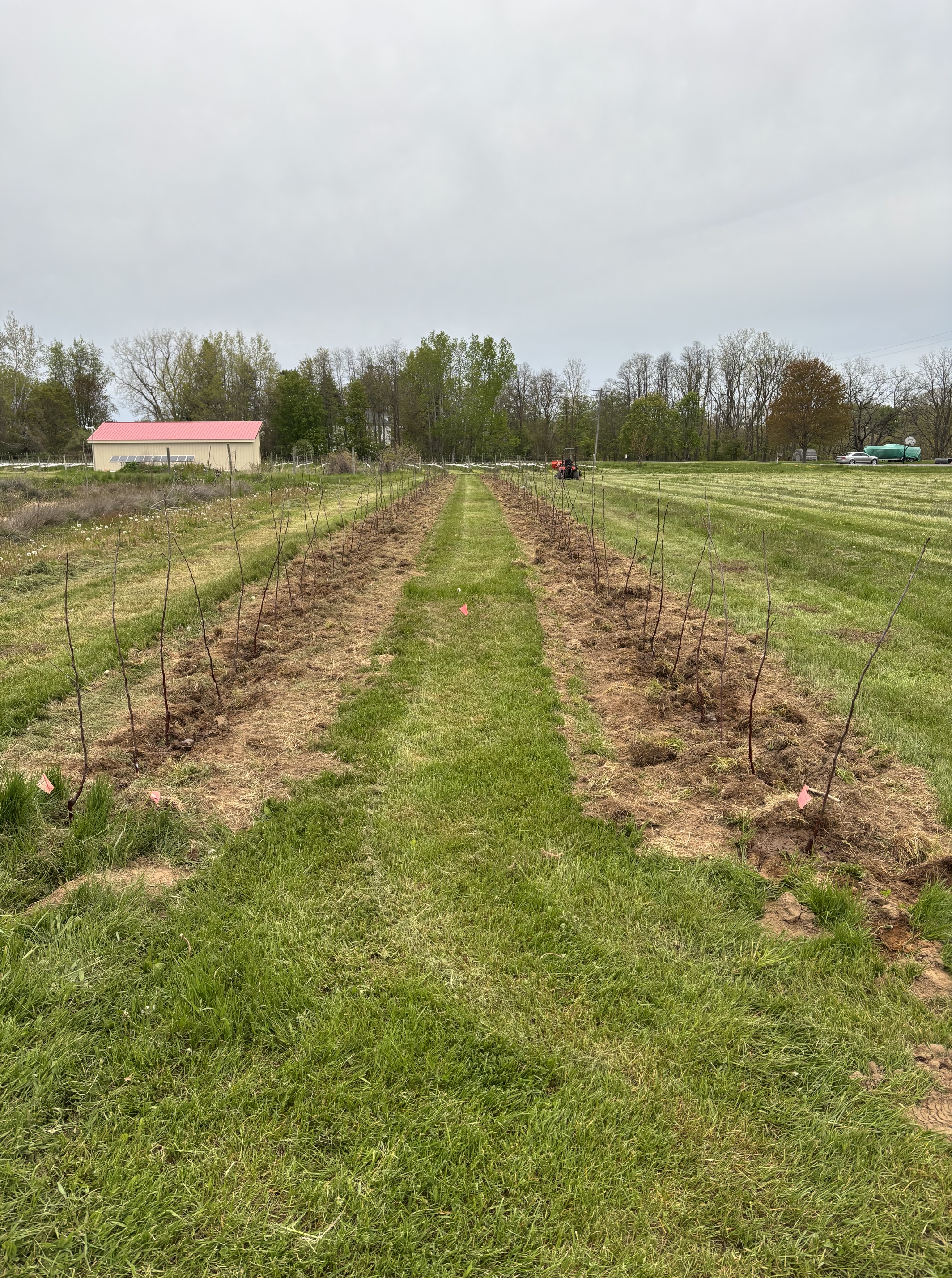
Newly planted Honeycrisp apple trees at Chateau Niagara Winery will be managed under the SMART spray and SMART mulch system.

How To Propagate New Grapevines From Cuttings

If you want to propagate new grapevines from cuttings of existing vines, now is the time to start planning. 

The following article is a collaborative effort between myself and Stephen Casscles, a leading authority on the propagation and cultivation of cool climate and heritage grapevines. It is a detailed account of the procedures for propagating new grapevines from the cuttings of an existing vine. Thank you Steve for being so generous with your time and knowledge. All photos in this article are courtesy of Stephen Casscles. If you need more information about how to propagate vines, consult older books written by Philip Wagner, which are still available, or contact your local cooperative extension agent who can direct you to excellent brochures produced by your local agricultural state university.

If you have or can obtain clippings from a grapevine that produces excellent fruit, it is easy to reproduce as many vines/clones of that vine as you want. Starting new vines from the clippings of a mother vine ensures you will grow an exact copy of the vine and it will crop the same quality grapes as the original vine. Be sure that the mother vine that you select for your cuttings is a strong vine, that exhibits no indications of viruses or diseases. Vines that have curled leaves, odd-looking clusters, or off-leaf colors could have been contaminated with a virus. Do not use these vines as you are simply propagating diseased and virus-laden vines and not the strong virus-free vines that you want.

Propagating new grapevines from cuttings is an easy project. First, you must gather your propagating wood in early Spring while the vines remain dormant. Cut 12-18 inch sections from one-year-old wood that is about the thickness of a pencil and has a minimum of at least four leaf bud nodes on it. Ideally, having five or six bud nodes per cutting offers the best chance of success. A leaf bud node will look like a small bump on the stem.

The next step is up to the propagator, but Steve said he was taught to nip off a straight cut one inch above the top bud and make an angled cut at the bottom of the cane just below the bud node. Making your angled cut at the bottom of the stem easily shows where the top of the cutting is from the bottom which makes it easier when setting out your nursery cuttings, it also allows the cutting to be easily planted in the soil. No matter how you cut your ends, make sure you are consistent so that you will always plant your cuttings correctly, bottom side down in the soil. Dipping the bottom end of the stem into rooting hormones is helpful in promoting root growth, but is not necessary. You can find rooting hormones at your local garden center or nursery. If you are only rooting a few cuttings, fill a potting container with your local soil, if it is good well-drained loam soil, if it isn’t mix it with potting soil to improve its drainage.  Make sure your container is deep enough to accommodate your clippings, but if you are propagating a lot of material consider digging a shallow trench and reserving enough loose soil to fill in around your stems.

  These trenches can be located in your vegetable garden, since this soil has been worked up for many years, and often has a fence around it to keep out the wildlife that may like to browse on your newly installed cuttings. When planting your cuttings, bury them vertically three to four nodes deep with the bottom side down into the ground, leaving the remaining nodes exposed above the soil level. Remember to plant the bottom of the stem down with the straight-cut end above the ground.

    Keep the soil well watered, but not soggy throughout the first year when your cuttings are establishing themselves. For those in potted containers, the cuttings should be placed in a frost-free location with bright indirect sunlight. If you have more than one row of nursery cuttings in your nursery, it is recommended to mulch the cuttings with straw (not hay) to keep down the weeds and retain soil moisture.

Steve explained the difference between taking cuttings from your vine and propagating them as a single project and cloning in which you separate individual canes that have a certain desirable mutation to create an entirely new variety of the original grapevine. Steve gave me an excellent example that was easy to understand. “My understanding is that cloning would be finding an abnormal sport of a vine that is different and you cut that unique cane off to propagate it. For example, Frontenac Gris is only a regular Frontenac when it was noticed that a separate cane had bronze-colored grapes and not red.  So cloning would be separating and propagating that “clone”, but if you are propagating wood, you just collect your wood and go at it.”

    It is essential that you plant more cuttings than you need to compensate for some not surviving. As a dear departed friend of Steve’s, Joel Fry of the Bartrams Garden in Philadelphia used to say, “Plant two of everything, and one will die”.  How many to plant is the question? Steve offered his advice based on years of experience in this area of viticulture. “I find that different varieties propagate at different rates. For example, Baco Noir, which is a part Riparia variety tends to have a higher success rate because it is a Riparia. Even with Riparia, I would plan for a 20% non-success rate for varieties such as Delaware, which is a part Bourquinian species hybrid, do not take as readily, so I would expect a 40% death rate.”  I would recommend propagating as many cuttings as possible using only the strongest ones to satisfy your needs and giving the extras away. Vines can also be rooted in water, but you will need to change the water regularly to prevent disease. Once you see the stems/cuttings rooting, you must transplant them into the soil.

    Whether you set out a nursery in your home garden or place them in pots in the spring, you need to wait an entire year to ensure that your cuttings have sufficient roots before they are set out in the field the following spring. After your cuttings have developed a strong root system they can be transplanted to their permanent location. 

    You probably have heard vintners say the clone number for a specific variety of grapes planted in their vineyard. An example of this would be the Pinot Noir Dijon clones 114, 115, 667, and 777 which are the most widely planted Pinot Noir clones because of their reliability and productivity. When you drink any mass-produced Pinot Noir you are likely drinking wine made from these clones. It is easy to go down a “rabbit hole” when looking for clones of just about any grape variety when researching which clones to plant in your vineyard. Don’t let the sheer number of options overwhelm you. The answer to this question is a simple one, treat a clone like a different variety. Pick a clone you like and propagate that clone.

    Growing your own vines from cuttings is a rewarding venture both financially and from the sense of personal accomplishment you will feel when you harvest your first grapes. With the adverse effects of climate change being documented in vineyards around the world and the increased number of adverse weather events plaguing vintners, the answer to a consistent and economically sustainable fruit crop may lie in the past with heritage grape varieties, older cool climate hybrids, and new hybrids that are being developed. Growing heritage and cool climate hybrid grape vines that have adapted to survive many weather-related challenges over time could be a critical puzzle piece in the future viability of our vineyards, for both hobby and commercial grape growers. In addition, these varieties tend to be more productive and can be grown more sustainably with fewer pesticide/fungicide applications. They are direct producers that do not need to be planted on a rootstock. This means that if we witness a very cold winter or late spring frost, which kills that part of the vine above the ground, canes will come up from the ground to produce a crop in the same growing season.

    With that objective in mind, Stephen Casscles continues to labor on his long-term project, the Cedar Cliff Vineyards Heritage Grape\Wine Project, aimed at preserving heritage and lesser-known cool climate grape varieties in Northern America. If you have any questions about his work at Cedar Cliff Vineyards please contact Stephen Casscles cassclesjs@yahoo.com  To further his work, Stephen has established a set of three cooperating nurseries in Marlboro, NY, Fonda, NY, and Ipswich, MA where you can purchase already rooted vines and/or grape cuttings. If you are interested in obtaining vines or cuttings of these unique varieties, please feel free to contact Stephen Casscles cassclesjs@yahoo.com.  Sadly, most of these cuttings or vines are not available at commercial nurseries, hence we need to propagate them on our own to increase the availability of these unique virus-free/ disease-free grape varieties. For additional information on these heritage and cool climate grape hybrids, the 2nd edition of Steve’s book “Grapes of the Hudson Valley and Other Cool Climate Regions of the US and Canada”  is available at http://www.flintminepress.com

Organic, Natural, or Biodynamic?

Confused by what the difference is between natural, organic, and biodynamic wine? Well, you are not alone. The growing trend toward natural, organic, and biodynamic wines has created a marketplace in which an informed consumer stands a much better chance of buying a product that fulfills their desire to live a “greener lifestyle”.

In my opinion, the best way to feel confident that you are purchasing a natural, organic, or biodynamically produced wine is to buy it from a producer you trust. Before you decide on which production practices best suit your needs let’s look at an overview of each method. You must keep in mind that there is no clear-cut distinction between practices and there is often an overlap between terms describing them; the qualities are not interchangeable between methods. 

Organic wines are separated into two categories in the U.S. The first is wine certified organic by the United States Department of Agriculture using strict regulations. The U.S.D.A. guidelines require the grapes to be grown without the use of synthetic fertilizers and all ingredients added to the wines must be certified organic. No sulfites may be added to these wines. Only wines that meet these strict rules may display the U.S.D.A. certified organic seal. The second category contains wines made from grapes that were grown using organic farming methods. Wines in this category were made using organically grown grapes and may or may not have been made following organic winemaking methods. 

Biodynamic wine is made using the principles of Austrian philosopher Rudolf Steiner. I think of biodynamic practices as embracing a holistic approach toward viticulture. It observes farming methods based on a specific astronomic calendar. An example of this would be only harvesting grapes on days designated as “Fruit” days or only pruning on “Root” days. Biodynamic farming isn’t only dependent upon the calendar but is similar to organic in that it only allows for the use of organic fertilizers and bans the use of any type of pesticides, fungicides, herbicides, or any synthetic chemical intervention in the vineyard. Biodynamic wines are, however, permitted to contain sulfites. It is these small differences that can cause confusion when comparing whether a wine is organic, biodynamic or both. A wine designated as organic doesn’t mean it is also biodynamic or a biodynamic is always organic.

Natural wine or low-intervention wine, as it is often called, is fermented spontaneously by its native yeasts. As the name implies they are, for the most part, unmanipulated and never filtered or fined. By not filtering these wines they appear cloudy because of the solids left suspended in them. Due to the minimal amount of intervention by the winemaker these wines have limited stability and should be treated accordingly. If a winemaker doesn’t want to go through the regulatory process of having their wine certified as organic they can just skip the process and label it as “Natural”.

This is why I strongly suggest when you are looking for a wine to purchase in this segment of the market it is always a good idea to buy from a producer you know and trust.

Times They are a Changing

Organic, biodynamic, natural, sustainable, and many other techniques of viticulture and winemaking are once again making their existence known in the wine world. Yes, I said again because these farming methods are being updated using current technology but the basic premise of all of them is nothing new. The idea behind all of these methods of producing wine using the least human intervention possible was once done by necessity rather than by a conscious choice. In the not too distant past, there were no chemical controls and spraying programs available to vintners. Winemakers had to rely on taste and experience to know how their grapes and wine were progressing without a lab to verify their assumptions. Even after chemical controls became available the poorer producers still had to rely on biological controls and manipulating the natural conditions to bring in a harvest.

Understanding the delicate interactions between nature and agriculture has always been a passion of mine. My preoccupation with keeping the ecosystem clean and free of dangerous residual chemical compounds is completely understandable once you know a little about me, my background, and my education. I grew up across the road from my mother’s family farm where I watched my uncle, aunt, and cousins farming and caring for the land. I would pursue my higher education at California University of Pennsylvania where I graduated cum laude with a Bachelor’s degree in Nature Conservation. I have since combined that education with my interest in writing and the love of wine into an exciting journey of discovery. My writing has allowed me to become friends with many winemakers and vintners, not only in the northeastern United States but around the world. I have leveraged my access to these remarkable men and women to further my understanding of the practicality of using less chemical intervention in the vineyard. After years of conversations with the people who know first hand which practices work and which don’t work for their particular circumstances, I have assembled a mosaic of the feasibility of organic viticulture across North America and the world. My findings are that success and failure is very location and climate-specific. Climatic factors have never been predictable but are in flux now more than ever before.

In my ongoing effort to gather opinions on growing grapes organically, I recently had the pleasure to discuss the subject with Greg Winslow, owner/winemaker/vintner of Winslow Winery concerning his efforts to keep his vineyard as organic as possible using the options available to him. The Winslow winery and vineyards are located in the picturesque southwestern Pennsylvania town of Perryopolis. Greg grows a diverse collection of wine grapes, including a recent planting of a favorite of mine, Saperavi. Greg quit using glyphosate in 2016 because of the uncertainty surrounding the effects it might have on the eco-balance of his vineyard. That same year he decided to take a chemical-free approach to weed control when be purchased a weed burner manufactured by Flame Engineering. A weed burner is basically a flame thrower that incinerates the vegetation in the vine rows. It’s easy to see how this method of weed control is environmentally friendly even if it can be visualized as a plot from a cartoon where the results can be

Greg Winslow’s weed burner Photo courtesy Winslow Winery

both hilarious and disastrous. Greg pointed out some nice positives of using his weed burner. On the positive side is that it’s organic, weeds can’t develop a resistance to it, all the weeds and grass in the target area are destroyed instantly, and it has the unexpected benefit of helping sterilize the ground under the vines of fungus and mold that might splash up onto the vines during a rain. He also noted on the negative side the extra cost when compared to chemical herbicides and it doesn’t have the duration of chemical controls. Greg included one unforeseen danger of using this device in the vineyard that I hadn’t thought of. “It is absolutely devastating to bird netting. We use side netting that we leave up all year round then roll it down to cover the fruit zone during version. Once you drop the nets, don’t even think about using this.” 

Not completely satisfied with the weed control the weed burner was providing Greg purchased an offset tiller, a Rineri EL170 to be exact, to complement his weed control program. In addition to using his offset tiller to work the floor of his vineyard, he added drainage tiles and annual ryegrass between his rows to improve the water flow out of the vineyard and lessen soil compaction. His efforts are proving to be effective but are labor-intensive and costly but sustainable by definition. I suggested

Rineri EL
170 offset tiller Photo courtesy: Winslow Winery

he consider the organic broad-spectrum herbicide Weed Slayer to enhance his other weed controls. I first heard of Weed Slayer from Mary Rocca at Rocca Vineyards in the Napa Valley of California. I saw photos of her vine rows completely clear of weeds after vineyard manager Sergio Melgoza had applied the product. Weed Slayer consists of two separate products that are mixed with water to produce an effective herbicide. Weed Slayer is the herbicide and Arg Gold is the biological adjuvant. These two products work together to kill weeds from the root up while leaving no toxicity in the soil. If you have used Weed Slayer in your vineyard or another agricultural application please let me know of your experience with this product.

Greg Winslow believes in the idea of growing organically in his vineyard and pursues it as best he can while having to battle the same problems all producers of agricultural products face in the northeastern United States. When asked about the viability of growing his grapes completely organic and chemical-free he answered honestly and realistically. “I think that growing organically is a noble cause and it would be nice to market wines that were grown that way”. “I think growing organically would be difficult at best, at least in the mid-Atlantic states”. ” I haven’t met anyone in southern Pa and points south that is doing totally organic”. I do however use some organic products in my spray program, I use copper, sulfur, and hydrogen peroxide in my spray rotation, especially as harvest nears”. “I am trying to use only what I need when I need it and not spray irresponsibly for everything”.

Greg Winslow’s candid answers are very similar to the sentiments expressed by all the growers that I have posed these questions to in the Northeast. They say going totally organic would be great but it isn’t feasible at this time. Growing grapes and making wine is no different than any other business in that you need a product to sell. Growers are challenged every year to produce a harvest whether it be organically or with the help of chemical controls or a combination of both. I am always amazed by the ingenuity of these tenacious individuals and their sheer will to succeed.  

Winslow vineyards Photo courtesy: Winslow Winery


Down in Roccaland

     If you have ever had the good fortune to see your family name on the label of a wine bottle you can understand my interest when I saw mine attached to a premium Napa Valley winery. I started to wonder if there might be some family connection. I contacted Mary Rocca, owner of Rocca Family Vineyards to explore the possibility of us being related. I found Mary to be very kind and welcoming as we exchanged information about our ancestry. I learned a great deal about my own heritage and also about Mary’s. We found some amazing coincidences that would have never been discovered had we not reached out to each out. Mary generously sent a gift of her wine to be shared at my family reunion as an introduction between our families. I would like to say “Thank You” to Mary for all the time and effort she has taken from her busy schedule to assist me in this project. Although we haven’t identified any recent common threads we continue to search. Even if we can’t find any blood relatives uniting our families I will always consider Mary not only a friend but family. Mary has generously offered to discount the wine purchases of all of my readers when they enter either of these codes at checkout on http://roccawines.com  WPASHIP ($1 SHIPPING ON ANY ORDER) or WPA25 ($25 OFF ANY ORDER OF 2 BOTTLES OR MORE) These codes expire on 10/16/19 so don’t miss out on your chance to buy extraordinary wine from an outstanding Napa Valley winery with an insider’s deal.

Anyone that has ever dreamed of owning a vineyard and winery in Napa, California can only imagine the excitement that Mary Rocca and her husband Eric Grigsby felt when they

Mary Rocca at Rocca Family Vineyards Napa, California

decided to pursue that very dream. They began their search for the ideal Napa vineyard in 1996 while Mary juggled her dental practice, Eric his medical practice and not to mention their four young children at home. Their three-year search for the perfect vineyard came to fruition when they found a 21-acre vineyard deep in the heart of the Napa Valley. They renamed it the Grigsby vineyard and planted new rows of vines between the existing ones to essentially double their grape production. This vineyard is located between the warmer climate of the upvalley and the cooler maritime influences of the San Francisco Bay. The Grigsby vineyard is mainly Cabernet Sauvignon but also has 1 acre of Merlot and roughly 2.5 acres of Syrah. In 2000 Mary purchased the 11-acre Collinetta vineyard in the Coombsville appellation. The Collinetta vineyard is mostly Cabernet Sauvignon (Clone 4 & Clone 337) but also has an acre of Cabernet Franc and an acre of Petit Verdot. Now with all the pieces in place Mary could focus on making her vision for Rocca Family Vineyards a reality.

     Many decisions had to be made when it came to what pillars the winery and vineyard

The Grigsby Vineyard

would be established on. For many of those choices Mary drew upon the deeply seated beliefs she had built her life and career on. First and foremost, Rocca wines had to be the best they could possibly be and show not only the most natural expression of the vines but also the environment in which they were grown. With that in mind, the choice to farm both vineyards with organic and sustainable viticulture was the only acceptable path forward. As conscientious stewards of the environment, everyone at

The Collinetta Vineyard

Rocca is acutely aware of the long-lasting and far-reaching effects that pesticides and herbicide can cause in the delicate balance of the ecosystem both locally and globally. The Grigsby and Collinetta vineyards have proven themselves by producing some of Napa Valley’s finest wine grapes and because they are organically farmed are U.S.D.A. organic and C.C.O.F. certified.

     In 1999 Mary hired Celia Welch Masyczek of Scarecrow fame as Rocca’s first winemaker and together they produced a long line of award winning and critically acclaimed wines. In 2008 Paul Colantuoni assumed the role of master winemaker at Rocca wines from Celia. With vineyard manager Sergio Melgoza nurturing the grapes and Paul’s skillful hand now making Rocca Family Vineyards wine the winery has continued on its accending arc vintage after vintage.

     If you would like to know more about the Rocca Family Vineyards story or are interesting in purchasing their wine please visit http://roccawines.com  Don’t forget to use the codes to receive a discount on your wine purchases. WPASHIP for $1 DOLLAR SHIPPING ON ANY ORDER or WPA25 for $25 OFF 2 BOTTLES OR MORE.

     Follow them on Instagram, Facebook and Twitter            

Vineyard Manager Sergio Melgoza, Mary Rocca and Winemaker Paul Colantuoni (left to right)


Sign of the Times

     In organic viticulture the use of chemicals is strictly controlled by law to the point where almost all the chemicals available to conventional growers are prohibited. Organic growers concentrate on growing healthy vines that are able to withstand pests, disease, fungus, rots and anything else they may encounter in the field while being able to sustain themselves with a robust root system. Conventional growers rely more on chemical solutions for prevention and problem resolution. A balanced ecosystem and healthy soil in the vineyard are essential for organic farming to succeed.

     Biodynamic viticulture takes the idea of growing grapes without the aid of chemical applications a step further. Biodynamic farming looks at a vineyard as an ecosystem unto itself with a system of checks and balances that maintains the system’s equilibrium and prevents any major disruptive events (diseases, insect infestation, animal intrusion, etc.) from affecting the health of the system. Biodynamic farmers incorporate lunar cycles and astrological influences into their decisions. In the U.S.A. wine labeled “organic” is regulated by law. These wines must be made from grapes that are certified to have been organically grown and made without any  sulfites added to them. Wine can be made from “certified organically grown grapes” and have sulfites added to them but the label can’t claim it as “organic wine” but as wine “made from organic grapes”. The difference in wording is subtle but there is a difference in how the wine is produced. Biodynamic wines are also produced from grapes grown in chemical-free biodynamic vineyards but the winemaker is limited to making wine without using any common manipulations, such as adjusting it’s acidity or adding yeasts. As with organic grapes you can find wine made from “biodynamically grown grapes” that have been made using different wine making manipulations but as with the “organically grown grapes” the label will read wine made from “biodynamically grown grapes” but not biodynamic wine. The U.S. Government does not certify biodynamic wine. Biodynamic wine is certified by the independent Demeter Association. Biodynamic and Demeter are trademarks used to assure consumers that the product has been certified to a uniform standard.

     I have had conversations with wine makers and vineyard owners from the Eastern United States that have seen just about everything that can happen in a vineyard first hand. The one point they were all emphatic about was that although it is possible to grow  organic and biodynamic vineyards here it is very difficult. Any grower wanting to pursue this method of viticulture must first be able to withstand the possibility that their harvest may be dramatically reduced in some years and non-existent in others because of factors they won’t be able to control with the tools they allowed to use. 

     The topic of organic vs. conventional farming has been debated with valid points being made and supported on both sides of the discussion. The one thing that everyone agrees on is that any practice that leads to better wine is always welcome. At the end of the day wine making is a business and like any other business you must be profitable to stay in business. It requires a business plan that is flexible and incorporates a vision that can be transformed into a financially viable enterprise in the real world.