Book Release: Grapes of the Hudson Valley 2nd Edition

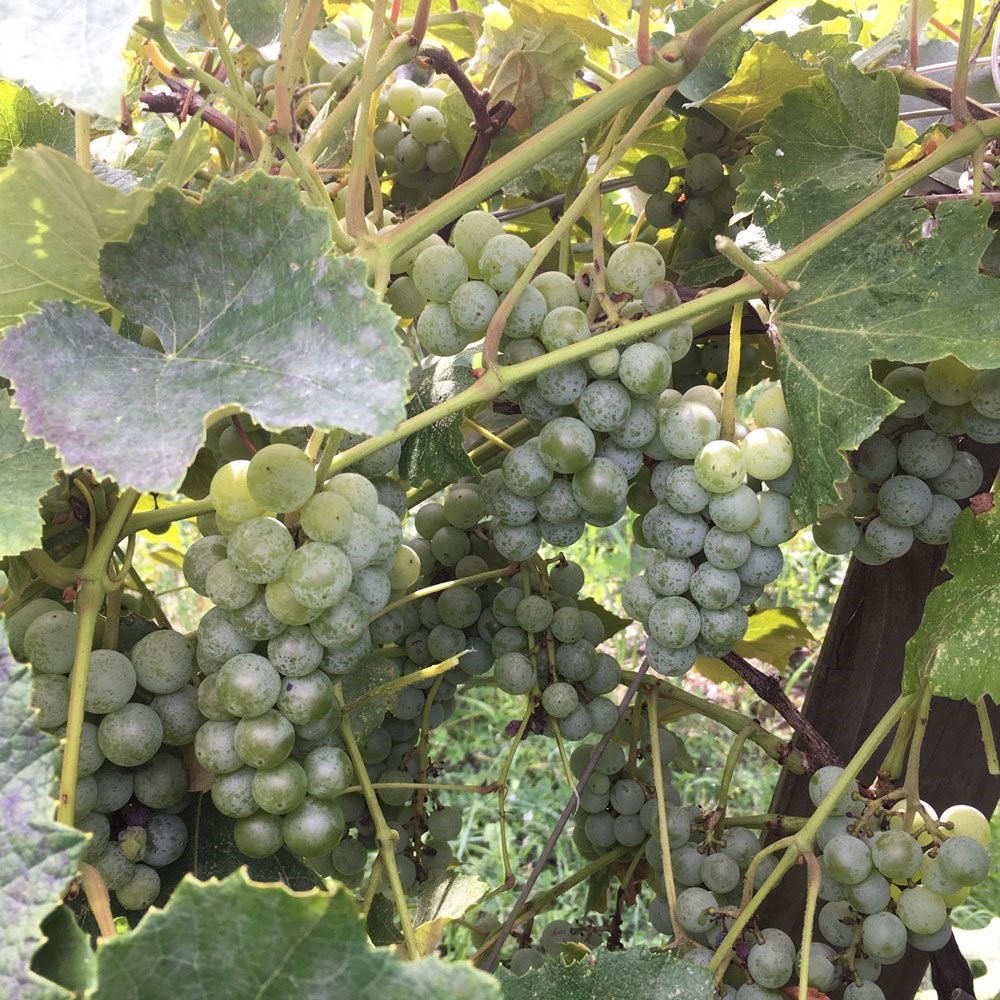
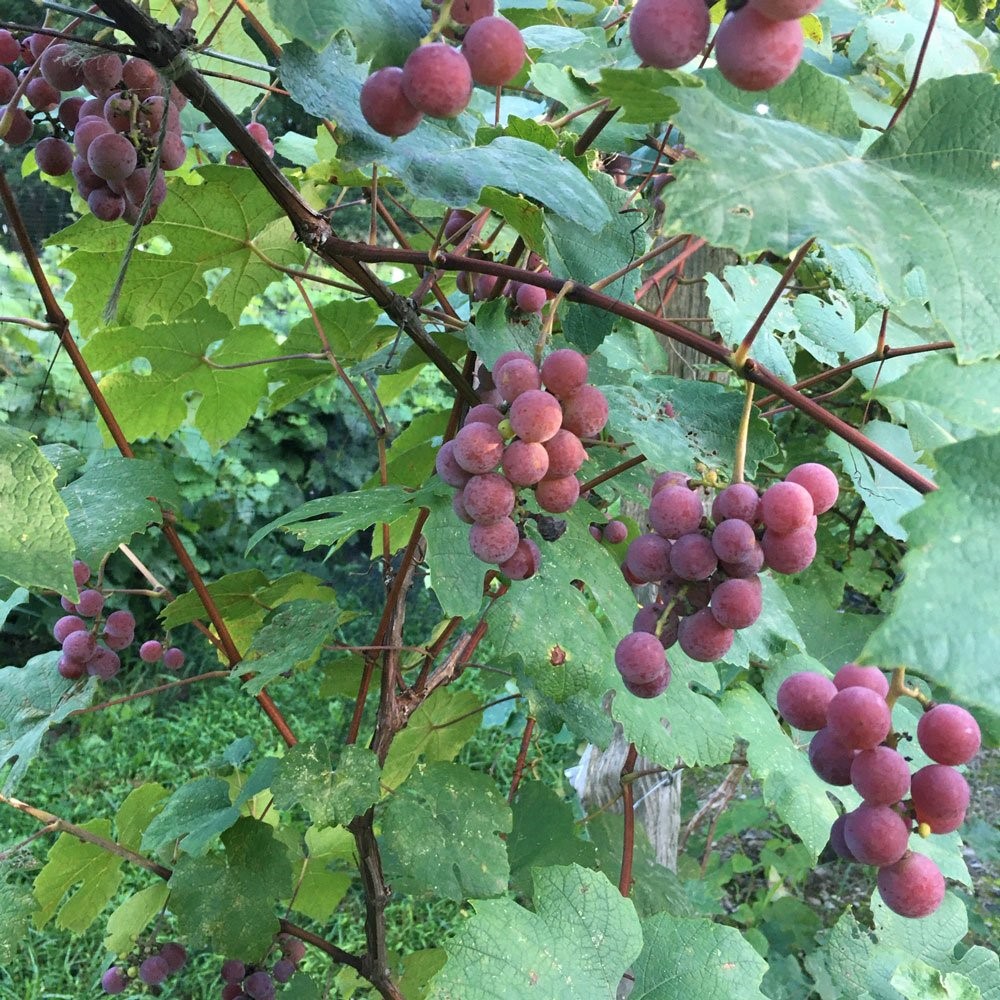
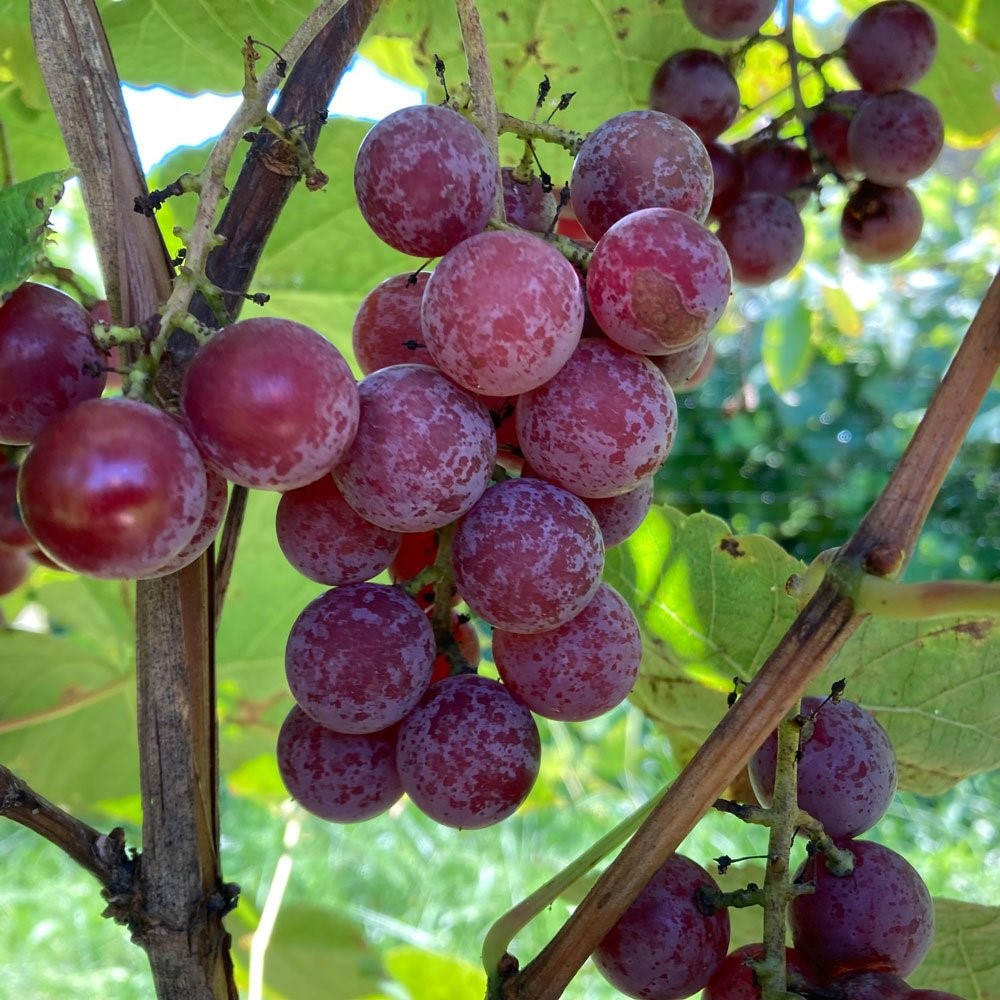
I heard from Steve Casscles the other day. He told me his authoritative book about cool climate grapes of the Hudson Valley and other regions of North America has been published in a revised and updated Second Edition that includes two new chapters on rarely covered 19th-century Heritage grape varieties developed in New England. Steve gave me a peek at a couple of interesting facts he uncovered in his extensive research.

Catawba is 1/2 vinifera, and Concord comes from Catawba and is 1/4 vinifera !! There are many Catawba and Concord hybrids so what we thought was all labrusca is really 1/4 or so vinifera.

Also that the ES Rogers hybrids have been forgotten and are really good grape varieties that were used by TV Munson for his many grape breeds, and Winchell, a chance seedling from VT is the basis of all the Cornell white wine grapes.

Steve also provided me with an in-depth look at what you can expect to find in his latest publication. 

I am very pleased to announce that the newly revised second edition of Grapes of the Hudson Valley and Other Cool Climate Regions of the United States and Canada, 2nd Edition, Revised & Updated to Include New England Grapes is NOW IN PRINT AND AVAILABLE at  http://www.flintminepress.com 

This second edition contains two new chapters on rarely-covered 19th-century Heritage grape varieties developed in New England. I grow many of these varieties, such as the E. S. Rogers hybrids, Agawam, Salem, Massasoit, and Lindley, and grapes bred by E. Bull, Captain Moore, Diane Crehore (one of the few women grape breeders in the US). These New England heritage varieties are hardy, fungus disease resistant, & productive in the field, and make quality wines in the cellar and co-ferments in the brewery.  These New England heritage grape varieties are now finding their way into co-ferment beer/wines.  Many of the Rogers’ hybrids found their way into the grape varieties bred by TV Munson.  

The book includes new revelations about the true genetic ancestry of grape varieties such as Catawba, Concord, Chambourcin, and Vignoles.  It updates the genetic history of Catawba and Concord now that it is clear that Catawba is one-half vinifera (Semillion) in its parentage and that Concord is an offspring of Catawba, which means it is one-quarter vinifera in its genetic ancestry. This is a significant revelation because there are many Concord and Catawba heritage hybrids such as Iona, Jefferson, Diamond, Diana, and Dutchess, which have now conclusively been determined to have significant European vinifera heritage. Further, it conclusively delineates the ancestry of the French-American winemaking grape varieties Chambourcin and Vignoles (thanks to Dr. Bruce Reisch for pointing out the new genetic information about Vignoles).

It evaluates over 200 cool climate grape varieties with an eye towards assisting fruit growers and winemakers across the United States, Canada, Northern Europe, and Northeast Asia to identify grape varieties that are hardy, fungus disease resistant, and productive so that they can be grown either in a sustainable manner with minimal pesticide applications, and in some cases organically.

This second edition will offer guidance to our struggling growers and wineries going forward as we jointly face our increasingly changing climate. The Cool Climate grape varieties that this book covers could help our local growers to identify and grow grape varieties that can be grown more sustainably, are productive and make quality wines, beer/wines, cider/wines, and distilled products.  

  Copies can be purchased at http://www.flintminepress.com.  

Thank you Steve for your tireless efforts to provide us with this important information. The answer to the threat of a changing climate poses to our vineyards may lay in these long-forgotten grape varieties.

Photos Courtesy: Steve Casscles

Times They are a Changing

Organic, biodynamic, natural, sustainable, and many other techniques of viticulture and winemaking are once again making their existence known in the wine world. Yes, I said again because these farming methods are being updated using current technology but the basic premise of all of them is nothing new. The idea behind all of these methods of producing wine using the least human intervention possible was once done by necessity rather than by a conscious choice. In the not too distant past, there were no chemical controls and spraying programs available to vintners. Winemakers had to rely on taste and experience to know how their grapes and wine were progressing without a lab to verify their assumptions. Even after chemical controls became available the poorer producers still had to rely on biological controls and manipulating the natural conditions to bring in a harvest.

Understanding the delicate interactions between nature and agriculture has always been a passion of mine. My preoccupation with keeping the ecosystem clean and free of dangerous residual chemical compounds is completely understandable once you know a little about me, my background, and my education. I grew up across the road from my mother’s family farm where I watched my uncle, aunt, and cousins farming and caring for the land. I would pursue my higher education at California University of Pennsylvania where I graduated cum laude with a Bachelor’s degree in Nature Conservation. I have since combined that education with my interest in writing and the love of wine into an exciting journey of discovery. My writing has allowed me to become friends with many winemakers and vintners, not only in the northeastern United States but around the world. I have leveraged my access to these remarkable men and women to further my understanding of the practicality of using less chemical intervention in the vineyard. After years of conversations with the people who know first hand which practices work and which don’t work for their particular circumstances, I have assembled a mosaic of the feasibility of organic viticulture across North America and the world. My findings are that success and failure is very location and climate-specific. Climatic factors have never been predictable but are in flux now more than ever before.

In my ongoing effort to gather opinions on growing grapes organically, I recently had the pleasure to discuss the subject with Greg Winslow, owner/winemaker/vintner of Winslow Winery concerning his efforts to keep his vineyard as organic as possible using the options available to him. The Winslow winery and vineyards are located in the picturesque southwestern Pennsylvania town of Perryopolis. Greg grows a diverse collection of wine grapes, including a recent planting of a favorite of mine, Saperavi. Greg quit using glyphosate in 2016 because of the uncertainty surrounding the effects it might have on the eco-balance of his vineyard. That same year he decided to take a chemical-free approach to weed control when be purchased a weed burner manufactured by Flame Engineering. A weed burner is basically a flame thrower that incinerates the vegetation in the vine rows. It’s easy to see how this method of weed control is environmentally friendly even if it can be visualized as a plot from a cartoon where the results can be

Greg Winslow’s weed burner Photo courtesy Winslow Winery

both hilarious and disastrous. Greg pointed out some nice positives of using his weed burner. On the positive side is that it’s organic, weeds can’t develop a resistance to it, all the weeds and grass in the target area are destroyed instantly, and it has the unexpected benefit of helping sterilize the ground under the vines of fungus and mold that might splash up onto the vines during a rain. He also noted on the negative side the extra cost when compared to chemical herbicides and it doesn’t have the duration of chemical controls. Greg included one unforeseen danger of using this device in the vineyard that I hadn’t thought of. “It is absolutely devastating to bird netting. We use side netting that we leave up all year round then roll it down to cover the fruit zone during version. Once you drop the nets, don’t even think about using this.” 

Not completely satisfied with the weed control the weed burner was providing Greg purchased an offset tiller, a Rineri EL170 to be exact, to complement his weed control program. In addition to using his offset tiller to work the floor of his vineyard, he added drainage tiles and annual ryegrass between his rows to improve the water flow out of the vineyard and lessen soil compaction. His efforts are proving to be effective but are labor-intensive and costly but sustainable by definition. I suggested

Rineri EL
170 offset tiller Photo courtesy: Winslow Winery

he consider the organic broad-spectrum herbicide Weed Slayer to enhance his other weed controls. I first heard of Weed Slayer from Mary Rocca at Rocca Vineyards in the Napa Valley of California. I saw photos of her vine rows completely clear of weeds after vineyard manager Sergio Melgoza had applied the product. Weed Slayer consists of two separate products that are mixed with water to produce an effective herbicide. Weed Slayer is the herbicide and Arg Gold is the biological adjuvant. These two products work together to kill weeds from the root up while leaving no toxicity in the soil. If you have used Weed Slayer in your vineyard or another agricultural application please let me know of your experience with this product.

Greg Winslow believes in the idea of growing organically in his vineyard and pursues it as best he can while having to battle the same problems all producers of agricultural products face in the northeastern United States. When asked about the viability of growing his grapes completely organic and chemical-free he answered honestly and realistically. “I think that growing organically is a noble cause and it would be nice to market wines that were grown that way”. “I think growing organically would be difficult at best, at least in the mid-Atlantic states”. ” I haven’t met anyone in southern Pa and points south that is doing totally organic”. I do however use some organic products in my spray program, I use copper, sulfur, and hydrogen peroxide in my spray rotation, especially as harvest nears”. “I am trying to use only what I need when I need it and not spray irresponsibly for everything”.

Greg Winslow’s candid answers are very similar to the sentiments expressed by all the growers that I have posed these questions to in the Northeast. They say going totally organic would be great but it isn’t feasible at this time. Growing grapes and making wine is no different than any other business in that you need a product to sell. Growers are challenged every year to produce a harvest whether it be organically or with the help of chemical controls or a combination of both. I am always amazed by the ingenuity of these tenacious individuals and their sheer will to succeed.  

Winslow vineyards Photo courtesy: Winslow Winery