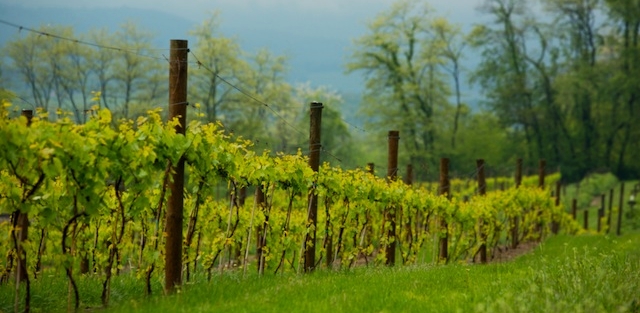
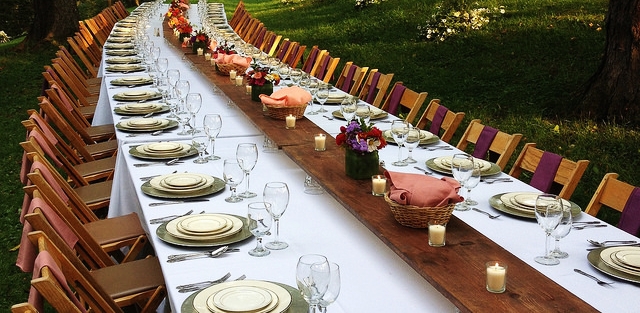
A Winelovers Guide to Lake Erie Wine Country Wineries Part 2

A big thank you to all my followers and readers for making my latest article “A Winelovers Guide to Lake Erie Wine Country” a resounding success. It garnered the most daily views of any post on the day it was published. I am following it up with a second installment that highlights five more exceptional wineries in Lake Erie Wine Country. 

As one of the newest wineries in Lake Erie Wine Country, Cellar54 is continuing to evolve and define its identity. Their table wines are made from grapes grown on the shores of Lake Erie and range from sweet to semi-sweet. 9368 W. Law Rd North East.  http://cellar54wines.com 814-572-9280

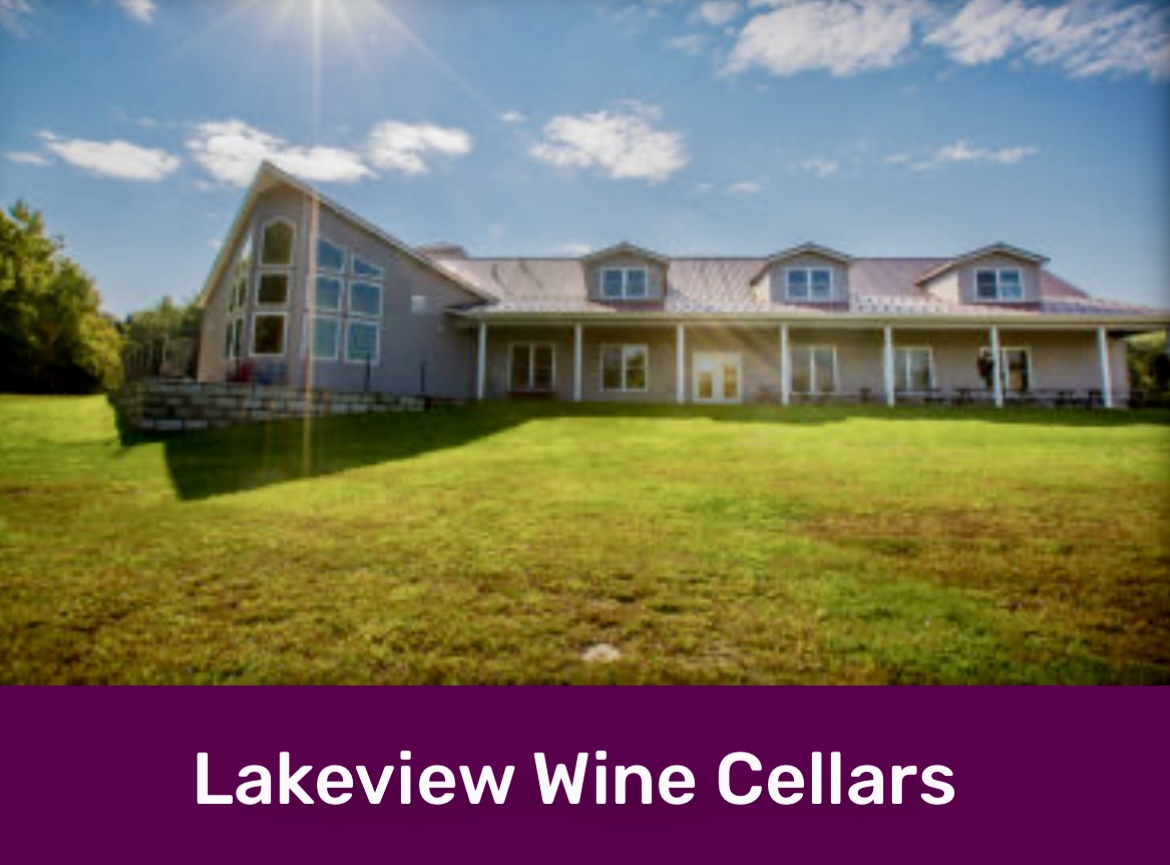
Lakeview Wine Cellars is a small boutique winery producing a limited number of premium wines made from locally sourced grapes. Check out their wine bottle-shaped pond while you sip wine on their covered patio.  http://lakeviewwinecellars.com 8440 Singer Rd North East  814-725-4440

For over fifty-four years Presque Wine Cellars has been producing award-winning wines from big bold reds to their famous ice wines. Visit their tasting room, The Isle House at 9440 West Main Rd North East. It offers a full menu of wine, wine slushies, spirits, and local craft beer. http://piwine.com 814-725-1314

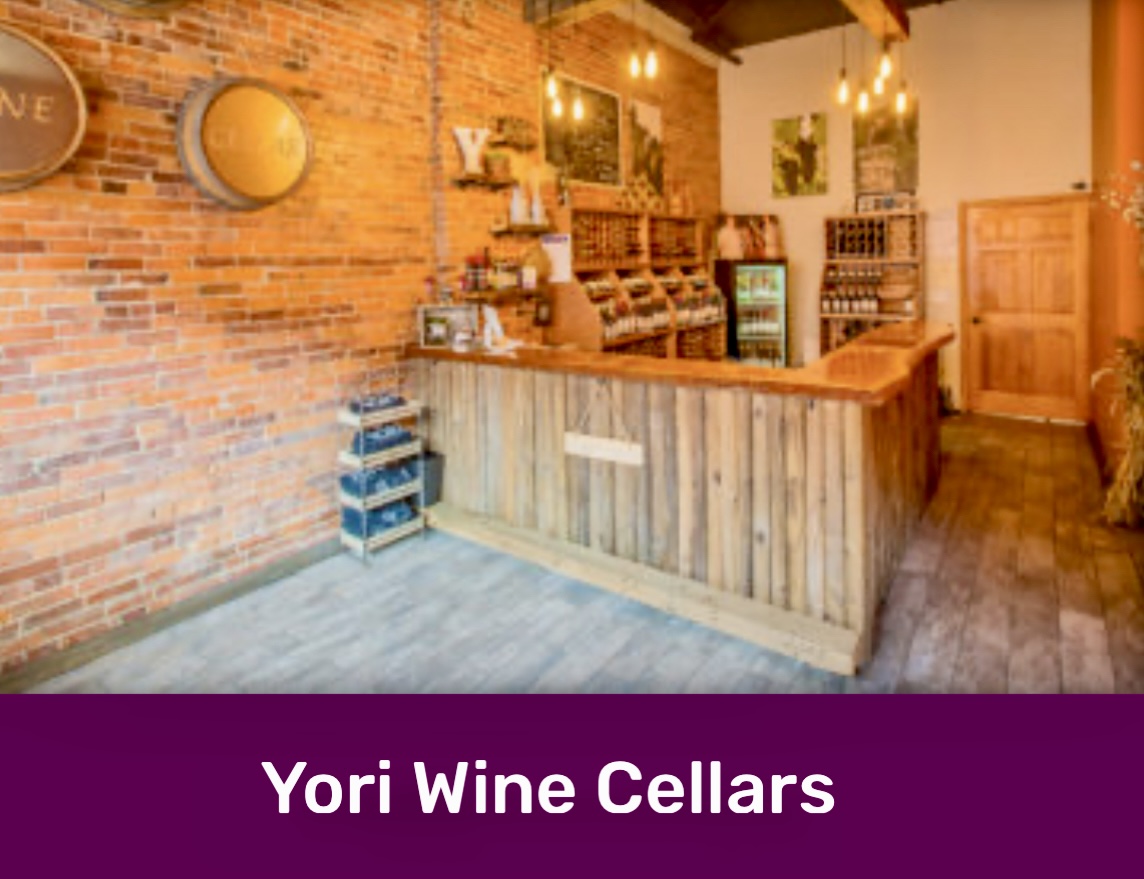
Yori Wine Cellars is a family-built winery that started as a hobby in their hundred-year-old cellar and grew into a winery that makes over 25 varieties of wine and vineyards growing 15 grape varieties. Their tasting room is located adjacent to their Micheal’s Italian Restaurant. http://yoriwinecellars.com 18 South Lake Street North East 814-725-8466

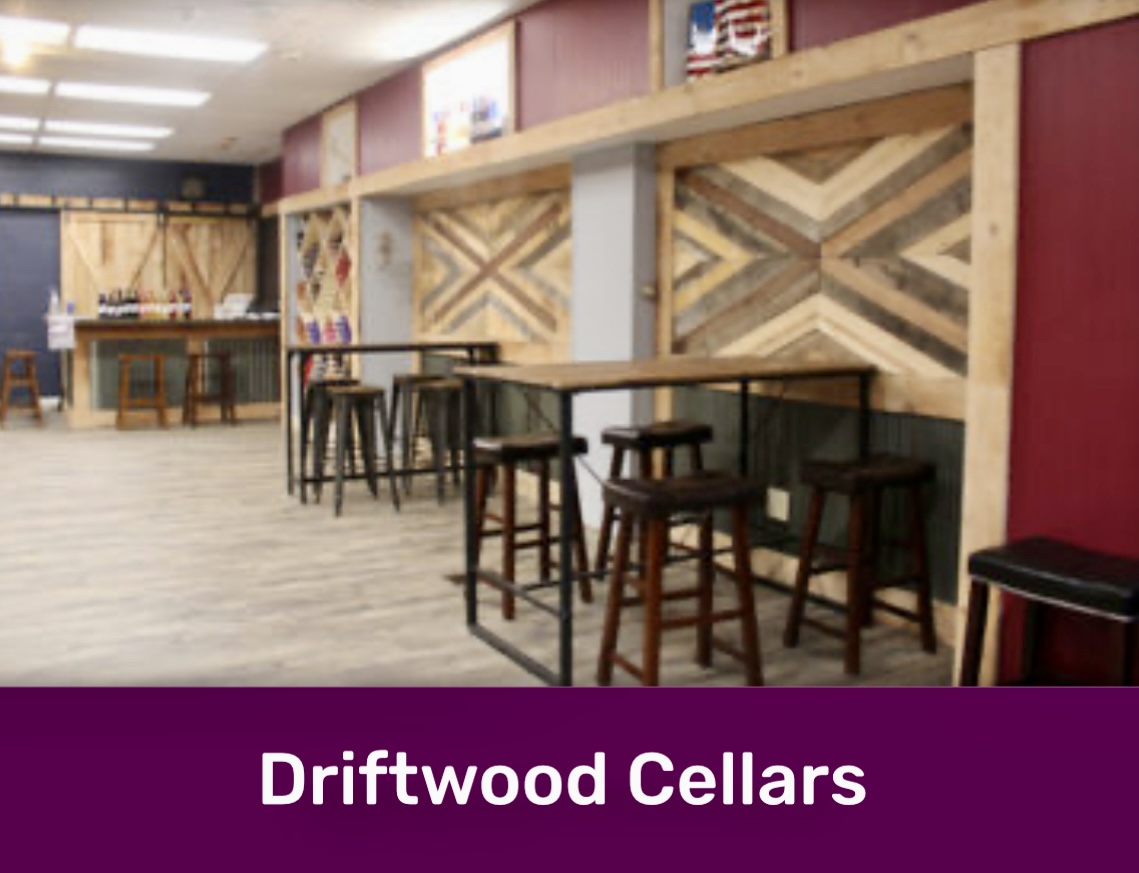
Driftwood Wine Cellars is a family-owned and operated winery near North East with a storefront/tasting room at 20 E. Main St North East provides guests a relaxed gathering place for family and friends. 814-347-5292 http://driftwoodwinecellars.com

The wineries I have highlighted in these posts are just ten of the twenty-one-member wineries in  Lake Erie Wine Country. There is always something happening because wine trail members participate in the many themed events that Lake Erie Wine Country hosts throughout the year and hold their own activities. Visit the L.E.W.C. website event page to see the roster of events https://www.lakeeriewinecountry.org/events/winery-events

With a little research and planning you can enjoy endless adventures in Lake Erie Wine Country.  Photo Credit: http://lakeeriewinecountry.com

How To Propagate Grapevines From Cuttings

The following article is a collaborative effort between myself and Stephen Casscles, a leading authority on the propagation and cultivation of cool climate and heritage grapevines. It is a detailed account of the procedures for propagating new grapevines from the cuttings of an existing vine. Thank you Steve for being so generous with your time and knowledge. All photos in this article are courtesy of Stephen Casscles. If you need more information about how to propagate vines, consult older books written by Philip Wagner, which are still available, or contact your local cooperative extension agent who can direct you to excellent brochures that have been produced by your local agricultural state university.

If you have or can obtain clippings from a grapevine that produces excellent fruit, it is easy to reproduce as many vines/clones of that vine as you want. Starting new vines from the clippings of a mother vine ensures you will grow an exact copy of the vine and it will crop the same quality grapes as the original vine. Be sure that the mother vine that you select for your cuttings is a strong vine, that exhibits no indications of viruses or diseases. Vines that have curled leaves, odd-looking clusters, or off-leaf colors could have been contaminated with a virus. Do not use these vines as you are simply propagating diseased and virus-laden vines and not the strong virus-free vines that you want.

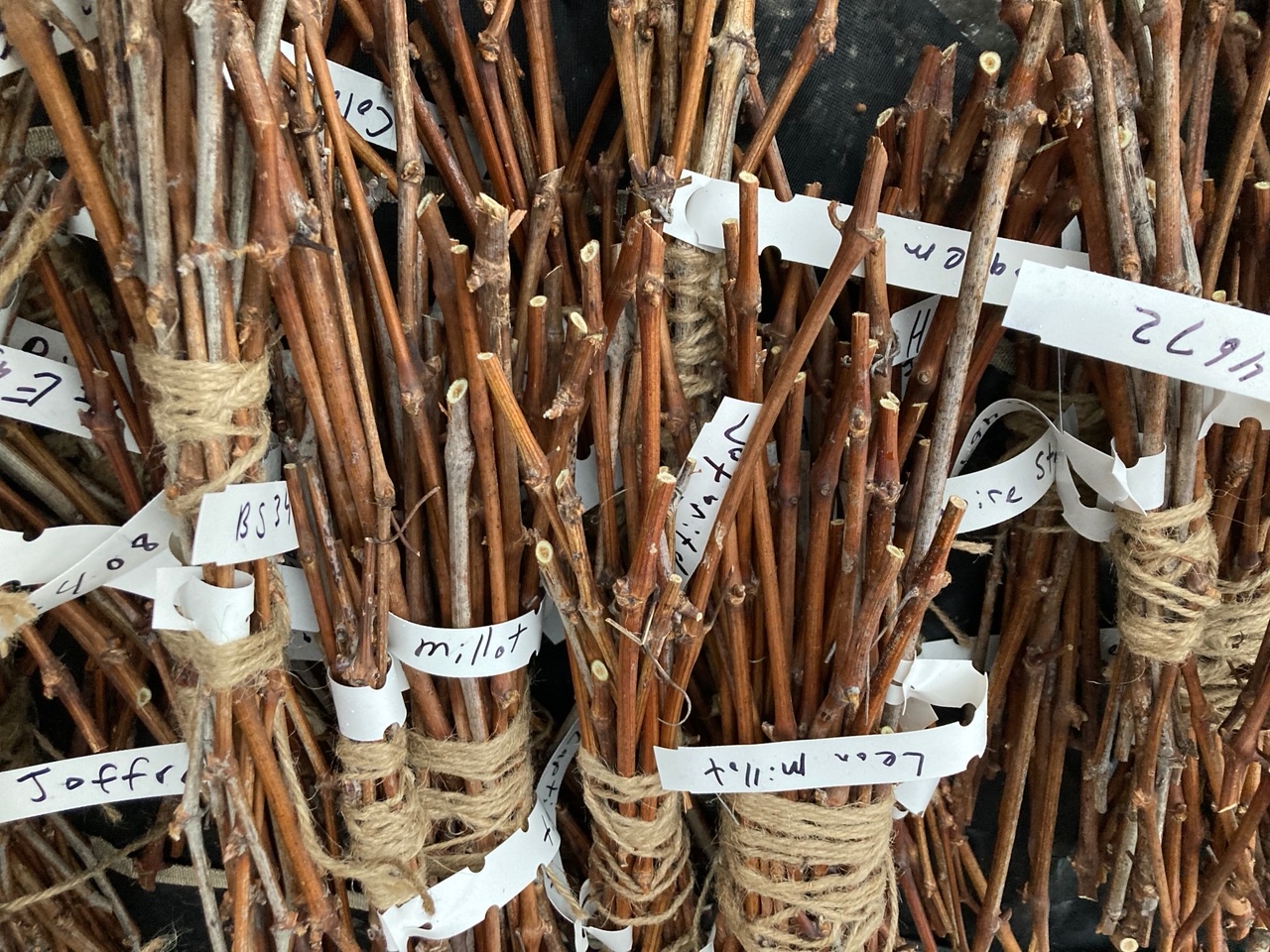
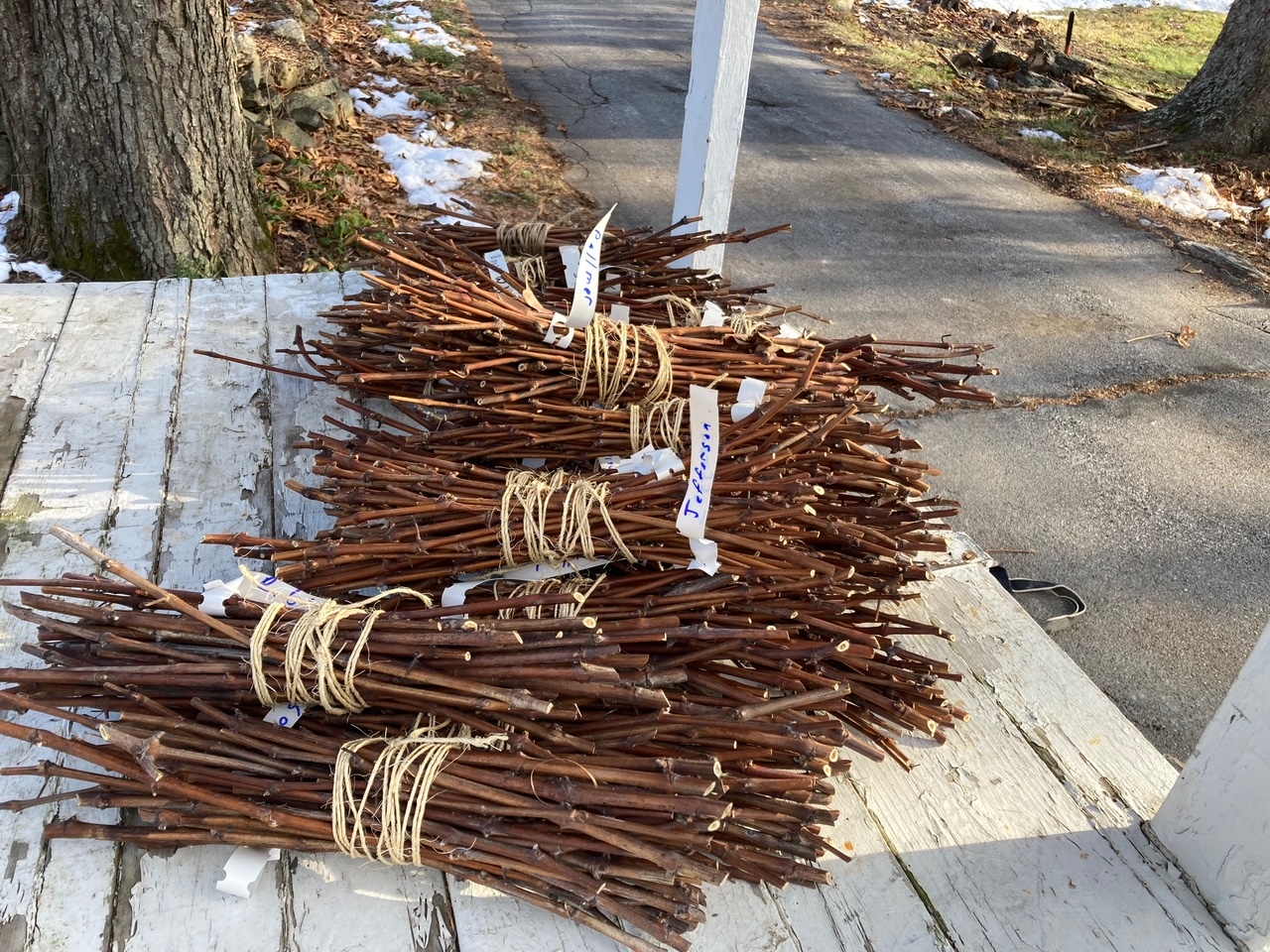
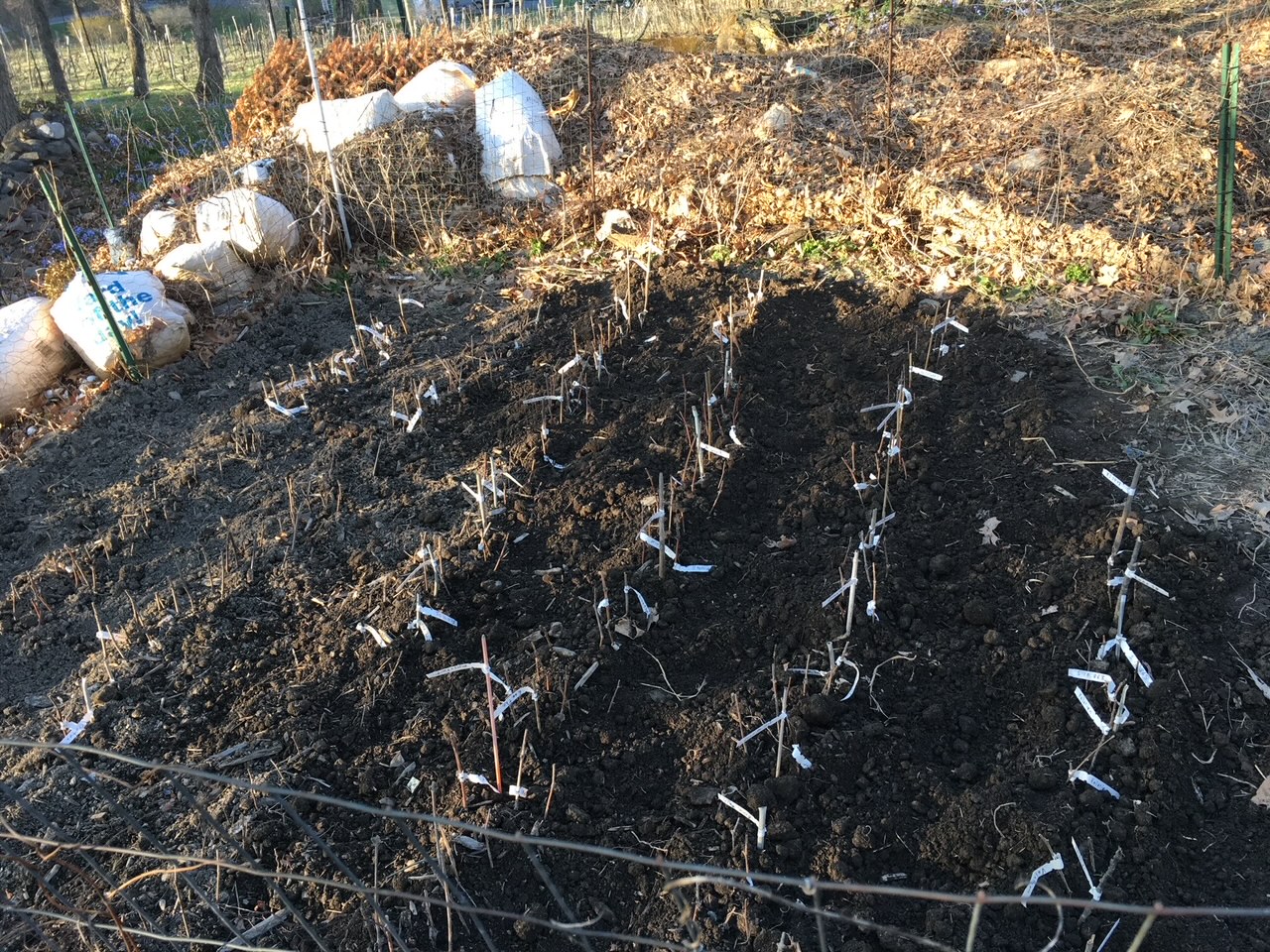
Propagating new grapevines from cuttings is an easy project. First, you must gather your propagating wood in early Spring while the vines remain dormant. Cut 12-18 inch sections from one-year-old wood that is about the thickness of a pencil and has a minimum of at least four leaf bud nodes on it. Ideally, having five or six bud nodes per cutting offers the best chance of success. A leaf bud node will look like a small bump on the stem.

The next step is up to the propagator, but Steve said he was taught to nip off a straight cut one inch above the top bud and make an angled cut at the bottom of the cane just below the bud node. Making your angled cut at the bottom of the stem easily shows where the top of the cutting is from the bottom which makes it easier when setting out your nursery cuttings, it also allows the cutting to be easily planted in the soil. No matter how you cut your ends, make sure you are consistent so that you will always plant your cuttings correctly, bottom side down in the soil. Dipping the bottom end of the stem into rooting hormones is helpful in promoting root growth, but is not necessary. You can find rooting hormones at your local garden center or nursery. If you are only rooting a few cuttings, fill a potting container with your local soil, if it is good well-drained loam soil, if it isn’t mix it with potting soil to improve its drainage.  Make sure your container is deep enough to accommodate your clippings, but if you are propagating a lot of material consider digging a shallow trench and reserving enough loose soil to fill in around your stems.

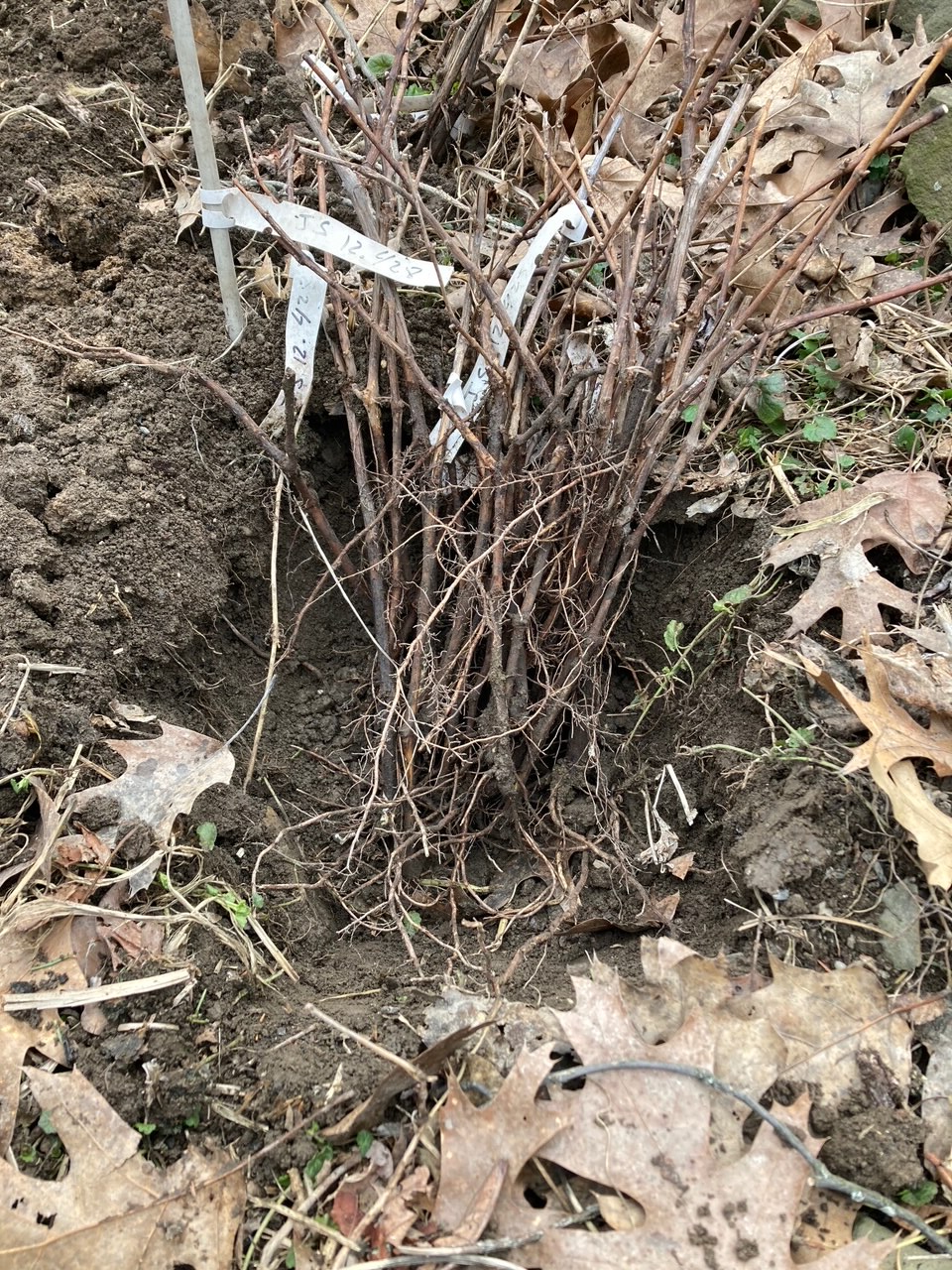
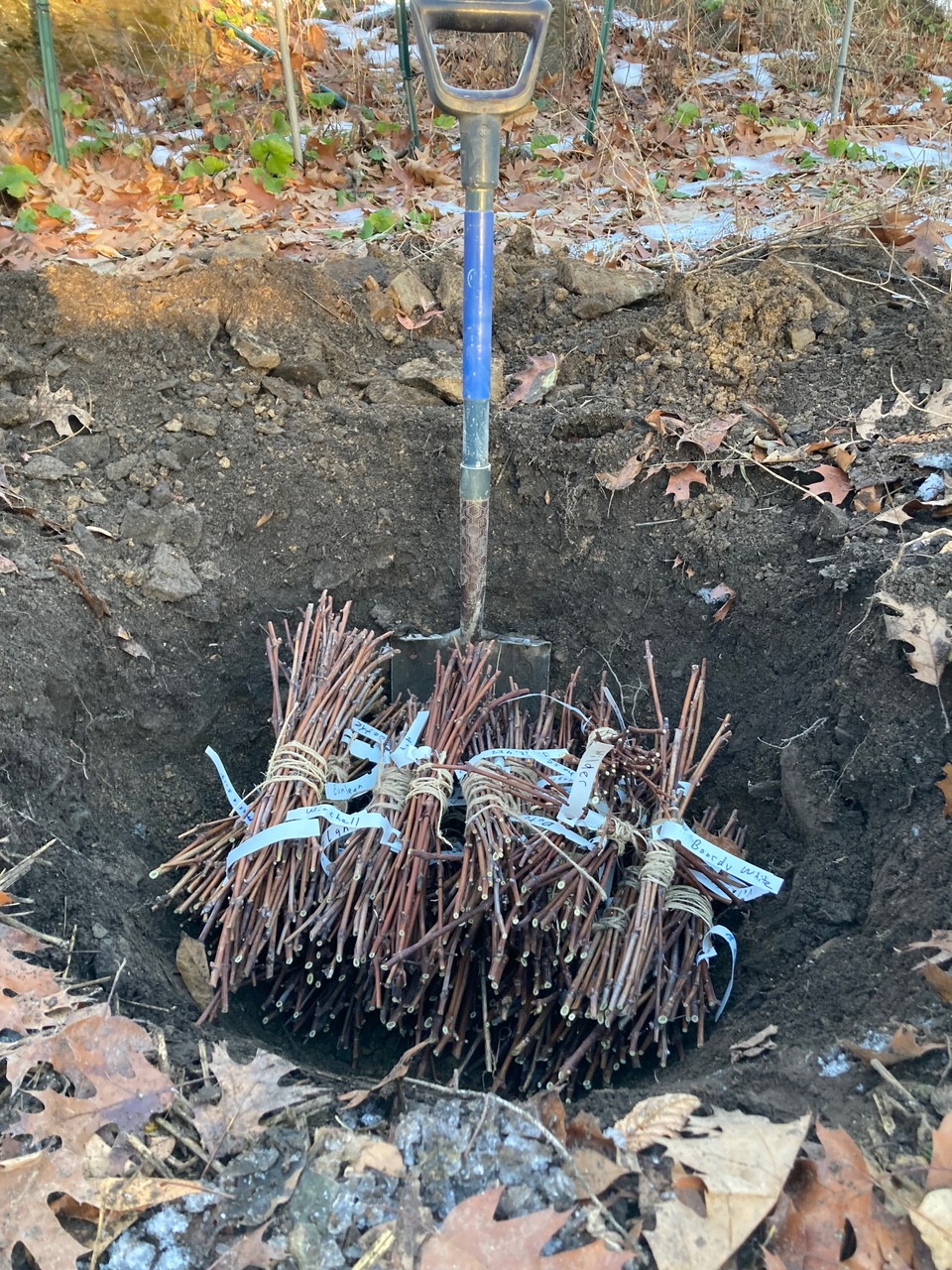
  These trenches can be located in your vegetable garden, since this soil has been worked up for many years, and often has a fence around it to keep out the wildlife that may like to browse on your newly installed cuttings. When planting your cuttings, bury them vertically three to four nodes deep with the bottom side down into the ground, leaving the remaining nodes exposed above the soil level. Remember to plant the bottom of the stem down with the straight-cut end above the ground.

    Keep the soil well watered, but not soggy throughout the first year when your cuttings are establishing themselves. For those in potted containers, the cuttings should be placed in a frost-free location with bright indirect sunlight. If you have more than one row of nursery cuttings in your nursery, it is recommended to mulch the cuttings with straw (not hay) to keep down the weeds and retain soil moisture.

Steve explained the difference between taking cuttings from your vine and propagating them as a single project and cloning in which you separate individual canes that have a certain desirable mutation to create an entirely new variety of the original grapevine. Steve gave me an excellent example that was easy to understand. “My understanding is that cloning would be finding an abnormal sport of a vine that is different and you cut that unique cane off to propagate it. For example, Frontenac Gris is only a regular Frontenac when it was noticed that a separate cane had bronze-colored grapes and not red.  So cloning would be separating and propagating that “clone”, but if you are propagating wood, you just collect your wood and go at it.”

    It is essential that you plant more cuttings than you need to compensate for some not surviving. As a dear departed friend of Steve’s, Joel Fry of the Bartrams Garden in Philadelphia used to say, “Plant two of everything, and one will die”.  How many to plant is the question? Steve offered his advice based on years of experience in this area of viticulture. “I find that different varieties propagate at different rates. For example, Baco Noir, which is a part Riparia variety tends to have a higher success rate because it is a Riparia. Even with Riparia, I would plan for a 20% non-success rate for varieties such as Delaware, which is a part Bourquinian species hybrid, do not take as readily, so I would expect a 40% death rate.”  I would recommend propagating as many cuttings as possible using only the strongest ones to satisfy your needs and giving the extras away. Vines can also be rooted in water, but you will need to change the water regularly to prevent disease. Once you see the stems/cuttings rooting, you must transplant them into the soil.

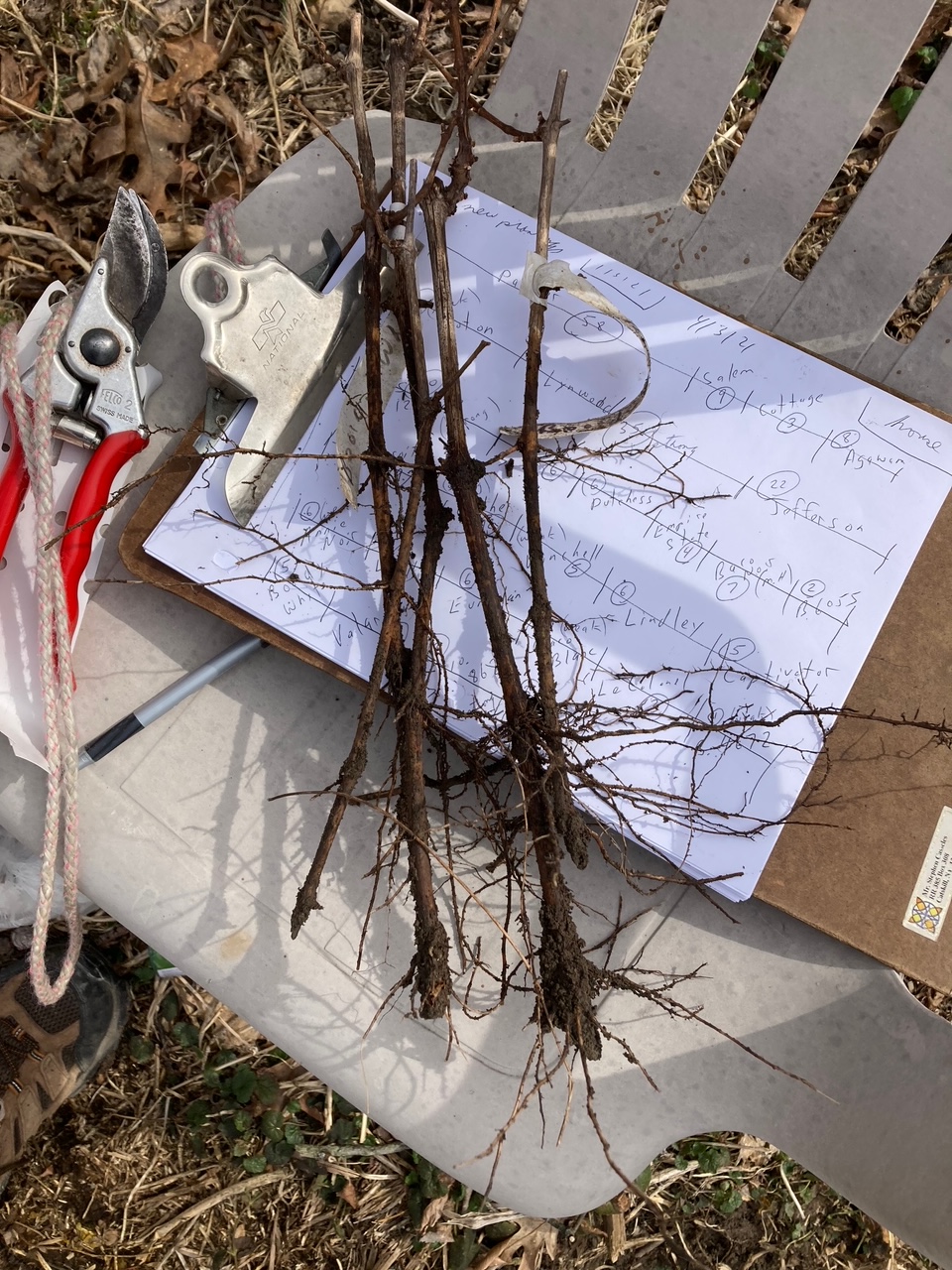
    Whether you set out a nursery in your home garden or place them in pots in the spring, you need to wait an entire year to ensure that your cuttings have sufficient roots before they are set out in the field the following spring. After your cuttings have developed a strong root system they can be transplanted to their permanent location. 

    You probably have heard vintners say the clone number for a specific variety of grapes planted in their vineyard. An example of this would be the Pinot Noir Dijon clones 114, 115, 667, and 777 which are the most widely planted Pinot Noir clones because of their reliability and productivity. When you drink any mass-produced Pinot Noir you are likely drinking wine made from these clones. It is easy to go down a “rabbit hole” when looking for clones of just about any grape variety when researching which clones to plant in your vineyard. Don’t let the sheer number of options overwhelm you. The answer to this question is a simple one, treat a clone like a different variety. Pick a clone you like and propagate that clone.

    Growing your own vines from cuttings is a rewarding venture both financially and from the sense of personal accomplishment you will feel when you harvest your first grapes. With the adverse effects of climate change being documented in vineyards around the world and the increased number of adverse weather events plaguing vintners, the answer to a  consistent and economically sustainable fruit crop may lie in the past with heritage grape varieties, older cool climate hybrids, and new hybrids that are being developed. Growing heritage and cool climate hybrid grape vines that have adapted to survive many weather-related challenges over time could be a critical puzzle piece in the future viability of our vineyards, for both hobby and commercial grape growers. In addition, these varieties tend to be more productive and can be grown more sustainably with fewer pesticide/fungicide applications. They are direct producers that do not need to be planted on a rootstock. This means that if we witness a very cold winter or late spring frost, which kills that part of the vine above the ground, canes will come up from the ground to produce a crop in the same growing season.

    With that objective in mind, Stephen Casscles continues to labor on his long-term project, the Cedar Cliff Vineyards Heritage Grape\Wine Project, aimed at preserving heritage and lesser-known cool climate grape varieties in Northern America. If you have any questions about his work at Cedar Cliff Vineyards please contact Stephen Casscles cassclesjs@yahoo.com  To further his work, Stephen has established a set of three cooperating nurseries in Marlboro, NY, Fonda, NY, and Ipswich, MA where you can purchase already rooted vines and/or grape cuttings. If you are interested in obtaining vines or cuttings of these unique varieties, please feel free to contact Stephen Casscles cassclesjs@yahoo.com.  Sadly, most of these cuttings or vines are not available at commercial nurseries, hence we need to propagate them on our own to increase the availability of these unique virus-free/ disease-free grape varieties. For additional information on these heritage and cool climate grape hybrids, the 2nd edition of Steve’s book “Grapes of the Hudson Valley and Other Cool Climate Regions of the US and Canada”  is available at http://www.flintminepress.com .  

Spotted Lanternfly: Vineyard Enemy

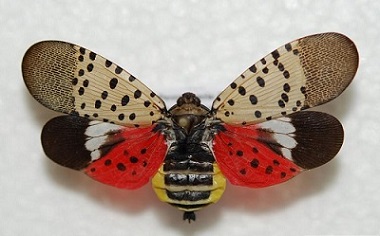
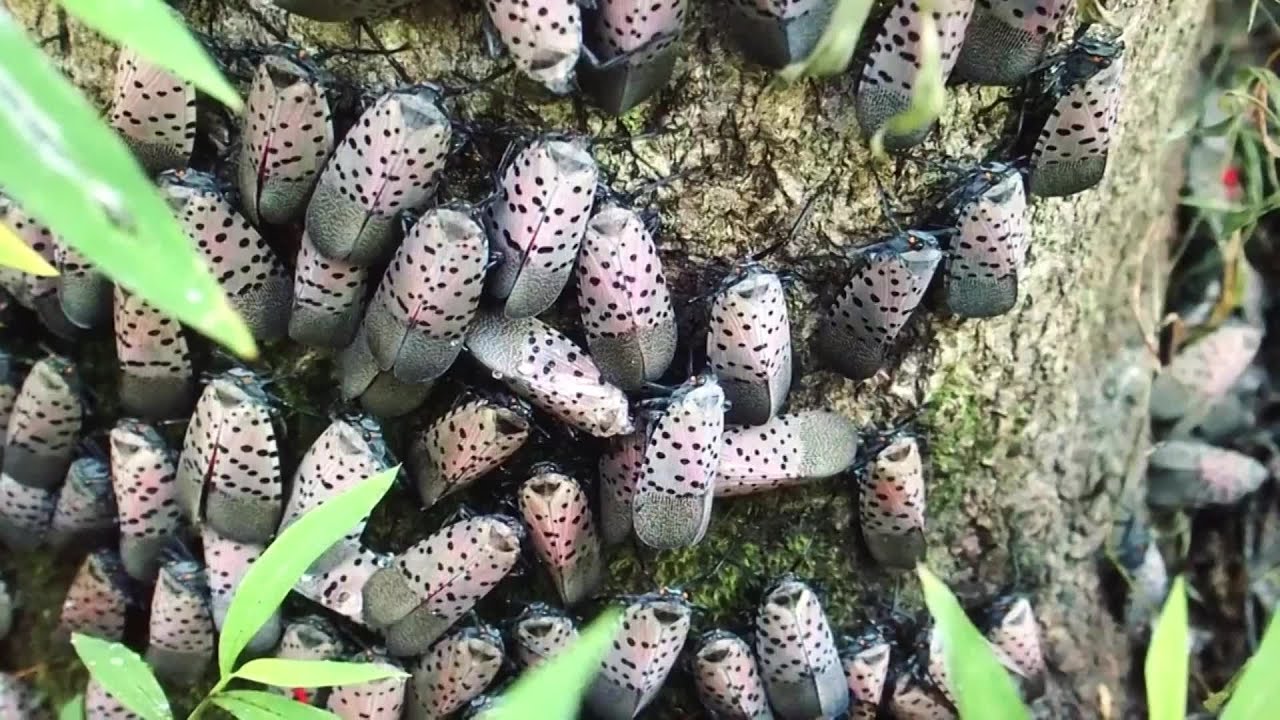
Everyone’s help is needed in controlling the latest threat to agriculture, not only in Pennsylvania but everywhere this pest is detected. The spotted lanternfly (Lycorma delicatula) is a destructive invasive species that is having a significant impact on Pennsylvania vineyards. Native to Southeast Asia, the lanternfly was first detected in Pennsylvania in 2014, and since then, it has rapidly spread to 51 counties throughout the state. The insect is known to feed on the sap of a wide variety of plants, including grapevines, and is considered a major threat to the agriculture industry. In this article, I will focus on the spotted lanternfly’s impact on Pennsylvania vineyards.

One of the most significant ways that spotted lanternfly affects Pennsylvania vineyards is by feeding on grapevines. The insect has piercing-sucking mouthparts that it uses to extract sap from the vines, which can weaken them and cause stunted growth, reduced yield, and even death. The sap that the insects feed on also attracts other pests and fungi, which can further damage the vines. The damage caused by spotted lanternflies can result in significant economic losses for vineyard owners, as well as reduced wine production.

In addition to the direct damage caused by the insect, spotted lanternfly also poses a threat to the indirect damage due to vineyard management practices. Vineyard owners and managers must take measures to control the spread of the insect, which can be costly and time-consuming. Some management strategies include removing host trees and plants, trapping and killing the insect, and using insecticides. However, many of these measures require specialized equipment and expertise and can have negative environmental impacts, not to mention the additional expense of labor and material to the grower.

The impact of spotted lanternflies on Pennsylvania vineyards also has broader implications for the state’s agriculture industry. The insect threatens other crops besides grapevines, including hops, apples, and hardwood trees. The cost of managing the insect and the economic losses associated with crop damage can have a significant impact on the state’s economy with an estimated loss of production well over 300 million dollars a year.

To mitigate the impact of spotted lanternflies on Pennsylvania vineyards, it is essential to develop effective management strategies. The Pennsylvania Department of Agriculture has provided broad recommendations for vineyard owners and managers, including monitoring for the presence of the insect, removing the tree of heaven (a common host plant for the spotted lanternfly), and using insecticides targeted at the insect’s life cycle. Other research initiatives aim to develop biological control methods, such as the use of natural predators to keep the insect population in check. Pennsylvania’s U.S  Senators John Fetterman and Bob Casey have co-introduced bipartisan legislation they say would stop the spread of the spotted lanternfly. The Spotted Lanternfly Research and Development Act would designate the spotted lanternfly as an invasive species and high-priority research target for the National Institute of Food and Agriculture. 

Until we get any help from the government with this problem it will be up to all of us to slow the spread of the spotted lanternfly. The best and most ecologically friendly way to destroy this insect is to smash, stomp, squish, swat, crush, and spray them with vinegar, or neem oil to name a few methods to kill this pest. If you find a spotted lanternfly please report it to the Pennsylvania Dept. of Agriculture by calling 888-4BADFLY  Thank You! 

Photo Credit: Pennsylvania Dept of Agriculture 

Greendance The Winery at Sand Hill Harvest Update

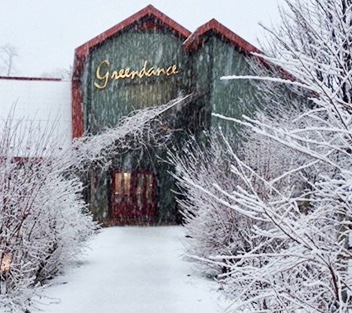
I recently checked in with Dr. Rick Lynn at Greendance The Winery at Sand Hill in Mount Pleasant Pennsylvania to see what was happening at his winery and vineyards. 

Greendance is home to one of the three young Saperavi plantings in Western Pa. and I was eager to hear how his young vines were progressing. Rick told me: 

“We had some early to mid-season powdery mildew on only the Saperavi and on none of others that included Kerner, Riesling, and Cab Franc, I personally used the same spray program on all and they were all in the same location.   This reduced the Saperavi crop but the plants recovered and ended the year appearing healthy. There was not a large enough quantity to make a reasonable sized batch. We had about 40# of Cab Franc with good ripening stats as were the Kerner numbers.”

I am patiently awaiting next year’s Saperavi harvest that will hopefully provide ample fruit to produce Greendance’s first vintage of Saperavi. I am also curious how Rick will be able to integrate Saperavi’s signature acidity and dark color into his wine making style to yield new and completely unique blends. 

Unlike the humans that tend to them, grape vines can’t contract Covid19 they only respond to the influences of their environment. I asked Rick to share his thoughts on this year’s harvest:

“Our overall hybrid harvest this year, as for everyone else, was exceptional and in the range of 15T. We had 2T+ of Petite Pearl and 3T+ of Frontenac Gris/Frontenac Blanc. Our farm red blend is Frontenac and Chambourcin and there were plenty of them.  Our wine for American grape lovers is Niagara softened with Louise Swensen and Aldamiina.

I addressed the recent stretch of sub-zero temperatures that had overspread the region and he had this assessment:

“Concerning of course but only for the trial vinifera planting and not the hybrids. This is a better test year for their graft and bud survival. The advantage this year is a gradual but full opportunity for deep dormancy and then steady cold to keep them there up to this point and probably at least for the next 2 weeks.” 

Every year has its own challenges and 2021 was no different but winemakers always find a way to meet those challenges and craft wines that express the very best each year has to offer. I look forward to tasting the 2021 releases from Rick and his team at Greendance Winery. For more information about Greendance The Winery at Sand Hill  please visit http://www.greendancewinery.com Photos Courtesy: Greendance The Winery at Sand Hill

Food Truck Wine Pairings


After reading an article recently about pairing wine with food truck fare I suddenly realized the perfect synergy that food trucks have with the wineries they visit. The eclectic menu items provided by the ever-changing food truck line up at wineries offer a unique opportunity to experiment with wine and food pairings that is simply impossible to achieve in a brick and mortar restaurant.

The following suggestions are only a starting point so I urge you to be creative when composing your pairings. The mind-boggling variety of food choices offered by these vendors provide winery goers an exciting range of dishes and cuisine to explore.

Every item will be accompanied by a Pennsylvania-made wine and one that is widely available and value-priced because remember you are being served your food through a window of a food truck.

BBQ & Grilled Meats: Without question these are the menu items on which the food truck industry was built. When you order from these trucks you need a wine with some backbone to stand up to the flavors of grilled meat, smoke, and sauce. These two bottles fit the bill nicely.

Fero Vineyards & Winery Estate Lemberger http://ferovineyards.com or Zuccardi Q Malbec

Pierogies: This Polish specialty is a comfort food favorite in Western Pennsylvania. Pierogies are most commonly filled with either potato, sauerkraut, or cheese but they can be filled with any number of unusual stuffings. A sweet option to the traditional savory ones is Prune Lekvar. A testament to how beloved pierogies are in the fabric of the community is that the Pittsburgh Pirates hold a pierogie race at every home game. I suggest pairing them with South Shore Wine Company Grűner Veltliner http://enjoymazza.com or Chateau Ste. Michelle Gewűrztraminer

Pizza: You can get anything from an authentic Neapolitan pie to the latest trendy gourmet creations seen on Instagram from a food truck these days. High temperature brick ovens have become the norm in food trucks so it calls for an equally impressive wine to complete your pizza adventure. Try Ripepi Winery & Vineyard Zinfandel http://ripepiwine.com or Menage-A-Trios Pinot Noir

Tacos: A mainstay of the food truck culture on the West Coast, taco trucks have developed a loyal following in Pennsylvania. When it comes to variety and originality you can always find something good at taco truck. I recommend selecting a Rosé or Blush. Consider these wines when doing your pairings. Greendance Isabella http://greendancewinery.com or Château ď Esclan Whispering Angel Rosé

Mac & Cheese: These trucks have filled a niche that has blossomed into one that provides choices not found in the mainstream trucks. When you have the chance please try some of what they are serving up because I think you will be happy you did. My wine picks here would be Narcisi Riesling http://narcisiwinery.com and Cloudy Bay Sauvignon Blanc.

Chicken: Chicken is a blank canvas for the chefs in a food truck. They paint masterpieces using broad strokes of flavor and style. To keep up with their always evolving flavor palates you must pair them with wines that can handle a broad spectrum of spices and preparation methods. These wines are well-suited for that challenge. Winslow Winery Vidal Blanc http://winslowwinery.com and Bogle Vineyards Merlot

Seafood: Seafood themed food trucks offer more than just fish sandwiches. They run the gambit from lobster rolls to sushi. While not as numerous as other cuisine focused trucks, when you find one it will likely be a memorable alternative to standard food truck grub. These two wines are sure to please. Bella Terra Chardonnay http://bellaterravineyards.com and Cantina Zaccagnini Pinot Grigio

My last word to you about pairing wine with any food, not just food truck food, is to trust your instincts because you just can’t make a mistake. So get out there and get the most out of what the wine world has to offer.

What I Learned at The Symposium for Professional Wine Writers

Photo Courtesy: The Symposium for Professional Wine Writers at Meadowood Napa Valley

I recently attended The Symposium for Professional Wine Writers at Meadowood Napa Valley 2021 via zoom. The three day event was very informative and enlightening on many levels. The speakers and panel discussions were all presented by very knowledgeable and prominent members of the wine media. If you have a chance to participate in an event like this I would encourage you to do so.

I would like to share a few points the speakers emphasized that are certain to increase the likelihood of your work getting noticed and ultimately being published.

1) Keep pitches about two paragraphs long and make your case why they should publish it and why you should be the person to write it.

2) Write about what you know and be an expert concerning the area where you live.

3) After the initial pitch do one or two follow-ups and if there is no reply, move on.

4) Pitch a story that isn’t in print and is new.

5) When describing wine use references that are familiar to your readers. Example: You wouldn’t refer to cherry and blackberry flavors if you were writing an article for publication in Asia because those flavors would be unfamiliar to most of the readers there, instead use recognizable flavors like lychee, guava, mango etc.

6) Email remains the most effective way to submit a pitch and never use a DM (direct message) via social media to contact an editor and never never ever contact an editor saying “Hey, I’m going to (Tuscany or anywhere else) do you need anything?” They said that goes directly into the trash.

These are just a few things I learned over the course of the symposium. I hope these insights into the thought process of editors will help you when you are pursuing a writing career.

Organic, Natural, or Biodynamic?

Confused by what the difference is between natural, organic, and biodynamic wine? Well, you are not alone. The growing trend toward natural, organic, and biodynamic wines has created a marketplace in which an informed consumer stands a much better chance of buying a product that fulfills their desire to live a “greener lifestyle”.

In my opinion, the best way to feel confident that you are purchasing a natural, organic, or biodynamically produced wine is to buy it from a producer you trust. Before you decide on which production practices best suit your needs let’s look at an overview of each method. You must keep in mind that there is no clear-cut distinction between practices and there is often an overlap between terms describing them; the qualities are not interchangeable between methods. 

Organic wines are separated into two categories in the U.S. The first is wine certified organic by the United States Department of Agriculture using strict regulations. The U.S.D.A. guidelines require the grapes to be grown without the use of synthetic fertilizers and all ingredients added to the wines must be certified organic. No sulfites may be added to these wines. Only wines that meet these strict rules may display the U.S.D.A. certified organic seal. The second category contains wines made from grapes that were grown using organic farming methods. Wines in this category were made using organically grown grapes and may or may not have been made following organic winemaking methods. 

Biodynamic wine is made using the principles of Austrian philosopher Rudolf Steiner. I think of biodynamic practices as embracing a holistic approach toward viticulture. It observes farming methods based on a specific astronomic calendar. An example of this would be only harvesting grapes on days designated as “Fruit” days or only pruning on “Root” days. Biodynamic farming isn’t only dependent upon the calendar but is similar to organic in that it only allows for the use of organic fertilizers and bans the use of any type of pesticides, fungicides, herbicides, or any synthetic chemical intervention in the vineyard. Biodynamic wines are, however, permitted to contain sulfites. It is these small differences that can cause confusion when comparing whether a wine is organic, biodynamic or both. A wine designated as organic doesn’t mean it is also biodynamic or a biodynamic is always organic.

Natural wine or low-intervention wine, as it is often called, is fermented spontaneously by its native yeasts. As the name implies they are, for the most part, unmanipulated and never filtered or fined. By not filtering these wines they appear cloudy because of the solids left suspended in them. Due to the minimal amount of intervention by the winemaker these wines have limited stability and should be treated accordingly. If a winemaker doesn’t want to go through the regulatory process of having their wine certified as organic they can just skip the process and label it as “Natural”.

This is why I strongly suggest when you are looking for a wine to purchase in this segment of the market it is always a good idea to buy from a producer you know and trust.

Homeward Bound

If you have followed this blog you know that I’m fascinated by uncommon wine grapes and where they are being grown by innovative vintners. I usually write about grapes that originated in other parts of the world but today I’m writing about a grape that was developed in the United States and is widely planted in my home state of Pennsylvania.

Traminette was created in 1965 at the University of Illinois by crossing the Vitis vinifera grape Gewürztraminer and the French-American hybrid grape Joannes Seyve 23.416. It was originally created as a white table grape but was then found to possess qualities that make it favorable for making wine. The result was a grape with a complex flavor profile, good productivity, resistance to cold temperatures, and versatility in the cellar. Traminette produces a straw-colored wine that has an enticing floral aroma and flavors of apricot, honey, and to a lesser extent, tropical fruit. I had the pleasure of tasting Traminette juice as it flowed from the press at Ripepi Wnery & Vineyard Monongahela, PA. It was bright and had a depth of sweetness with a flavor that is hard to describe. Traminette is most often made in a dry to off-dry style. I like both styles but prefer the off-dry wine when enjoying a day at the winery with my friends.

Traminette can be found throughout Pennsylvania but is most heavily concentrated in the southeastern and northcentral regions.

Invitation to my The Vintner Project Article

I am happy to announce that I am the newest contributor to The

Photo courtesy The Vintner Project

Vintner Project. http://vintnerproject.com The Vintner Project is an effort to make the sometimes confusing world of wine more approachable to consumers globally by offering a personal look at wineries, their wine, and the people that make them unique. It is a diversified collection of voices and points of view that bring all the wine regions and winemakers stories together so readers can explore and learn about segments of the winemaking community that might not be covered by the mainstream media.

Founded in 2018 by Nelson Gerena and Kiril Kirilow, The Vintner Project has developed into a dynamic cutting edge media outlet

The Vintner Project founders Nelson Gerena and Kiril Kirilow Photo courtesy vintnerproject.com

for news and insightful content for wine lovers worldwide.

Check out my article about the intriguing Austrian red wine grape Zweigelt and the versatile wine it makes. See why Zweigelt is often called the “Ultimate picnic wine”. Click here to go to my profile and my article vintnerproject.com/learn/zweigelt-austrias-little-known-signature-red-grape/


Goodbye Yellow Brick Road

Tod & Jean Manspeaker


On May 22, 2020, Jay and Joanna Bell, owners of Bella Terra Vineyards Hunker, Pa became the new owners of Briar Valley Vineyards and Winery Bedford, Pa

When Jean Manspeaker’s great-grandparents immigrated from Germany and settled on a hilly farm west of Bedford, Pa nearly 200 years ago they had no idea what a wonderful future lay ahead for their descendants. They planted a small vineyard and 170 years later that vineyard is still going. The seeds that would grow into Jean’s unlikely career were sown in her childhood as she watched her grandfather tending to the vines he loved all summer and then seeing him sell his prized grapes to his friends and neighbors for their jams, jellies, grape juice and of course homemade wine. Jean grew up on her family’s dairy farm and while her father worked the farm he also had a job outside the farm but somehow had time for a vineyard and made wine at home. Little did Jean know at the time, Tod her future husband was growing up on his family’s show and quarter horse farm in nearby Everett, Pa. Tod and his family are avid horseman and had numerous champion quarter horses.

Like Jean, Tod had never planned on getting involved in the very demanding business of growing vinifera wine grapes and making them into premium wines. Serendipity intervened and that’s when Tod and Jean’s future took an unexpected turn down a different path after visiting wineries on the East Coast. They fell in love with the vineyards and their fates as winemakers were sealed. After a great deal of research, numerous classes, and endless hours of reading everything related to winemaking they could get their hands on they hired a consultant to find out as much about growing vinifera grapes in Pennsylvania as they could. The die was cast and there was no turning back when Jean did an internship at a winery and Tod worked the vineyard. Their mission has always been to grow the best grapes possible and make them into exceptional wines. That passion to excel is palpable when you talk wine with them. 

From its inception in 2005 Briar Valley Vineyards and Winery has chosen to grow all it’s own vinifera grapes and make only dry wines. The B.V. vineyards are planted on a southeastern facing slope at an elevation of 1200 feet above sea level and consist of Riesling, Merlot, Cabernet Franc, and Lemberger. This determination to stay true to their vision and not to give in to making lesser quality wines to enhance the profitability of the operation is to be admired and applauded in an industry that often puts profits before quality. By following their dreams Tod and Jean have been able to pursue careers that they felt passionate about and that afforded the opportunity to see the results of their hard work at the end of the day. 

A tribute to those labors could be seen on display in the Briar Valley tasting room on E. Pitt Street in downtown Bedford, Pa. It was quite an achievement when B.V. won a Double Gold Medal and Best of Show for one of their Rieslings in the Finger Lakes International Wine Competition, home to the best Rieslings in the United States. Briar Valley has also won the Pennsylvania Governor’s Cup, as well as gold medals in the prestigious San Francisco Chronicle Wine Competition. Briar Valley wines have received high scores from world-renown wine critic James Suckling and the International Wine Review. Their wines were  served at the State Department for the 75th Anniversary of the Blair House.

It is the intangible things that have given the Manspeakers the most joy and satisfaction over the years at the winery. They love their small

Briar Valley Case Club members share good times at the winery

town of Bedford and the community it supports. It is a town where the residents take great pride in their small town culture and the people that make it all possible. The Manspeakers and their Briar Valley Winery have added greatly to the “terroir” of the area and will continue to do so far into the future. Of all the experiences and memories that they will take with them from their time at Briar Valley Winery, the one thing they cherish the most is the friendships they have made over the years and that will continue as they embark on their next great adventure wherever that journey might take them.

In the end, success is not judged by financial gain alone but by the lives, you have touched and were made better because of it. Thank you Tod and Jean for letting us share in your dreams, all the great wine and the wonderful memories you have given us. Wishing you both all the best life has to offer.

Scroll down for more photos of Tod & Jean Manspeaker and Briar Valley Vineyards & Winery

Tod & Jean at the State Dept.

The B.V. tasting bar

Briar Valley tasting room in Bedford, PA

B.V. tasting room

B.V. Cab Franc