Sign of the Times

     In organic viticulture the use of chemicals is strictly controlled by law to the point where almost all the chemicals available to conventional growers are prohibited. Organic growers concentrate on growing healthy vines that are able to withstand pests, disease, fungus, rots and anything else they may encounter in the field while being able to sustain themselves with a robust root system. Conventional growers rely more on chemical solutions for prevention and problem resolution. A balanced ecosystem and healthy soil in the vineyard are essential for organic farming to succeed.

     Biodynamic viticulture takes the idea of growing grapes without the aid of chemical applications a step further. Biodynamic farming looks at a vineyard as an ecosystem unto itself with a system of checks and balances that maintains the system’s equilibrium and prevents any major disruptive events (diseases, insect infestation, animal intrusion, etc.) from affecting the health of the system. Biodynamic farmers incorporate lunar cycles and astrological influences into their decisions. In the U.S.A. wine labeled “organic” is regulated by law. These wines must be made from grapes that are certified to have been organically grown and made without any  sulfites added to them. Wine can be made from “certified organically grown grapes” and have sulfites added to them but the label can’t claim it as “organic wine” but as wine “made from organic grapes”. The difference in wording is subtle but there is a difference in how the wine is produced. Biodynamic wines are also produced from grapes grown in chemical-free biodynamic vineyards but the winemaker is limited to making wine without using any common manipulations, such as adjusting it’s acidity or adding yeasts. As with organic grapes you can find wine made from “biodynamically grown grapes” that have been made using different wine making manipulations but as with the “organically grown grapes” the label will read wine made from “biodynamically grown grapes” but not biodynamic wine. The U.S. Government does not certify biodynamic wine. Biodynamic wine is certified by the independent Demeter Association. Biodynamic and Demeter are trademarks used to assure consumers that the product has been certified to a uniform standard.

     I have had conversations with wine makers and vineyard owners from the Eastern United States that have seen just about everything that can happen in a vineyard first hand. The one point they were all emphatic about was that although it is possible to grow  organic and biodynamic vineyards here it is very difficult. Any grower wanting to pursue this method of viticulture must first be able to withstand the possibility that their harvest may be dramatically reduced in some years and non-existent in others because of factors they won’t be able to control with the tools they allowed to use. 

     The topic of organic vs. conventional farming has been debated with valid points being made and supported on both sides of the discussion. The one thing that everyone agrees on is that any practice that leads to better wine is always welcome. At the end of the day wine making is a business and like any other business you must be profitable to stay in business. It requires a business plan that is flexible and incorporates a vision that can be transformed into a financially viable enterprise in the real world.


Rockin’ Down the Highway

     Just off Exit 146 of the Pennsylvania Turnpike at the foot of the Allegheny mountains lays the little town of Bedford. Nothing along the quaint business district in the center of town would give you any clue that something extraordinary is happening at 107 E. Pitt Street. That is the address of the tasting room for Briar Valley Vineyard & Winery, one of the best wineries in Pennsylvania. You might think that’s only my opinion of their classic European-style vinifera wines but I have a second opinion from someone with creditability greater than my own, Mr. James Suckling! Yes, you heard right, that James Suckling the world-famous wine critic.

     At a recent tasting of more than 800 non-West Coast wines Mr. Suckling gave Briar Valley Chardonnay 2016

Briar Valley Vineyard & Winery Chardonnay 2016

a score of 92 points calling it “Concentrated and fresh, this is an elegant cool-climate Chardonnay with bright lemon and herbal notes. Very long mineral finish.” Quite a coup for Tod & Jean Manspeaker owners/wine makers at B.V. Mr. Suckling went on to award B.V. Lemberger 2016 an 89 point score and B.V. Cabernet Franc 2016 87 points. These two Reds are among my favorite Pennsylvania wines. It is easy to see why Tod & Jean have recently expanded their winery with a new production facility because when you make wine this good you will need extra capacity.

You can find these wines and all the other quality wines that Briar Valley offers at their tasting room in Bedford, Pa, online at http://briarvalleywinery.com or at many fine dining restaurants around the state.

Tips For Buying a Wine Cooler/Fridge

28 Bottle Freestanding Wine Cooler

Wine coolers aren’t just for professionals anymore, even the causal wine lover can enjoy the benefits of owning a wine fridge/cooler. Beside the obvious function of keeping your wine chilled they also keep it fresh and aging at the optimal temperature. Another advantage is that the extra space you gain can be used to your expand your wine collection. Now you can keep your wine organized  and accessible while it is being displayed in a stylish temperature controlled environment. With your wine bottles always at the perfect temperature you will never have to scramble to cool a bottle when you get unexpected guests or just want to open a bottle on the spur of the moment. Wine coolers can also be a great place to keep your oils and vinegar fresh.

     There are wine coolers on the market that will satisfy the needs of any wine enthusiast. The only question now is what your needs are and how to match them to the perfect cooler for you. There are several categories of wine coolers to choose from but there are many options to consider and that can make the job of deciding what’s best for you a little confusing.

     First you should decide if you want a freestanding unit or one that is built into your home. Freestanding units make the most sense unless you are building or remodeling your home plus freestanding units can be moved around your house or taken with you if you move. You can also expand the size and number freestanding units without the cost of installation.

     Once you have settled on either a built-in or freestanding cooler you now need to calculate the size and space you will need to fit it into your room. With all the choices on the market you should have little problem finding one that will fit your requirements.

     The next thing to consider is price. The larger the cooler and the more advanced the technology the higher the price. Smaller freestanding models can be found on the internet from under $100 to $300 while small built-ins are a couple hundred dollars more plus

installation cost. Larger units with advanced features can easily cost well over $1000.

     There are two types of cooling systems to consider, thermoelectric or traditional compressor systems. Thermoelectric systems are quieter and more energy-efficient while compressors offer stronger cooling in hot surroundings or for high-capacity models. Thermoelectric is a good choice if you need a relatively small wine cooler that is quiet and your home stays at a fairly constant temperature. If you need a higher capacity model or your home’s temperature fluctuates then you should look at a compressor model. The two special features I have found to be useful and worth the added cost are the dual zone cooling option that keeps your Red and White wine a different temperatures and the

Built-In Double Door Wine Cooler

digital thermostat to monitor those temperatures. 

There are coolers to fulfill anyone’s wish list but first you must know what those wishes are. After you complete your list of required features you can start your search for the perfect wine cooler. Use the internet to search the vendors offering wine coolers and I strongly suggest shopping around. These appliances are heavy so finding sellers offering free shipping can mean big savings. Here are a few sites to get you started: http://winecoolerdirect.com  http://bestbuy.com and of course http://amazon.com 

Courtyard Winery 2015 Chambourcin

Courtyard Winery 2015 Chambourcin

     As we approached Northeast, Pa. during our recent visit to the Lake Erie Wine Region we were greeted by the obligatory downpour. Luckily, it was brief and by the time we pulled into the parking lot of Courtyard Winery the skies had already begun to clear. I had never been to Courtyard and was eager to taste their wines. The tasting room was very well designed with two bars, one for sweet and the other for dry. The classically styled wine library is decorated with wine barrels and the walls are covered by racks of archived wines. 

After tasting several of their dry Reds I decided on a wine that would be a perfect complement to picnic fare, Courtyard 2015 Chambourcin. This wine is barrel aged to help reduce the naturally high acidity of this grape. Courtyard 2015 Chambourcin is an easy drinking wine with red fruit flavors, light tannins and a smooth finish. Chambourcin pairs well with grilled meats or pasta with red sauce. The bright acidity and lighter body makes this Pa. Lake Erie wine similar to Pinot Noir in structure.

     Lake Erie Wine Country stretches almost 50 miles along the southern shore of Lake Erie between Harborcreek, Pennsylvania and Silver Creek, New York. On your drive you will pass through the largest grape-growing territory outside of California and the 23 wineries that call it home.        http://lakeeriewinecountry.org

Wine Library at Courtyard Winery

Wine Library at Courtyard Winery

Coastal Confessions

Quinta de Santiago Alvarinho 2016

     The Portuguese white wine grape Alvarinho is the same grape as Spanish Albarino but the terrior of Portugal’s Minho Region makes a profound difference in the wine that it producers.

     Silver Coast Imports offers the 100% Alvarinho Quinta de Santiago 2016 in Pennsylvania by S.L.O. for $17.99 from the P.L.C.B. store or online at http://www.finewineandgoodspirits.com This Alvarinho varietal displays bright acidity and crisp mineralality with a taste profile of tropical fruit, like pineapple and lychee. It is stainless steel aged on its lees and is stirred to create complexity, aroma. enhanced flavor compounds, palate weight and texture. Portuguese cuisine is closely tied to the sea and this wine is a perfect match for any seafood.


Time Traveler: Saperavi

     I wrote this article as a guest post for Anatoli Levine’s wine blog http://talk-a-vino.com under the title “Desperately  Seeking Saperavi”. I have updated it to keep my readers current with the evolving story of Saperavi.

The vintners of the Northeastern United States have long searched for a red wine grape that could be their signature grape. Over the years several have been on the cusp of becoming the iconic red wine grape that would be identified with the region for producing world-class red wine. Vintages of Lemberger and Cabernet Franc have produced stellar wines that can hold their own with other regions but just couldn’t elbow their way through a crowded field of reds to command the attention of the wine drinkers of the Eastern U.S. and beyond. The fact that you are reading this post proves that you are curious about something new in a world full of wine that can be overwhelming at times. The following is a summary of information I have gathered over the years about this intriguing grape from the wine makers and vineyard managers who know it best.

Saperavi is an ancient grape that can trace its origin to the Kakheti Region of Georgia and  surrounding regions as far back as 6000 B.C. Saperavi is a teinturier-type grape, which means it has a dark skin and a pink-tinted flesh. A teinturier variety of grape will produce an intensely colored juice when crushed because both the skin and flesh contain the water-soluble pigment anthrocyanin which is responsible for giving fruits and vegetables their red, blue and purple color. Saperavi is a very adaptable loose bunch, late ripening, cool climate grape variety that can produce large yields without sacrificing much fruit quality. These vines are able to thrive in cool climate regions even at high altitudes because they have above average resistance to cold temperatures. A more cold/frost tolerant hybrid called Saperavi Severny has been developed by incorporating genes from the hardy Severny grape. Traditionally Saperavi wine has been blended with lesser wines but recently it has gained popularity as a varietal bottling. A common translation of Saperavi is “dye” because it makes an extremely dark-colored wine. Saperavi wine is known for having good acidity and firm but not overwhelming tannins. It is these attributes that make it a wine that takes well to aging with some examples being found to have aged nicely for fifty years. Georgia recently has had political problems with its neighbors over the export of wine, notably Saperavi, but that is blessing because it is diverting more wine to the world market.

When talking about Saperavi I can’t contain my excitement and expectations for the wine being grown and made in the United States. I have coined the term “New World Saperavi” for the wine being grown and made by four wineries in the Finger Lakes Wine Region of New York, one on the Niagara Lake Plain in Northern New York and one in Central Pennsylvania. In the FLX Saperavi is being grown and made at Dr. Frank Vinifera Wine Cellars by Frederick (Fred) Frank, the son of Willy Frank and the grandson of Dr. Konstantin Frank, two legendary wine makers. Dr. Konstantin Frank was familiar with Saperavi from his research and work in the Ukraine before World War II. After the war he left Europe and brought his knowledge of growing vitis Vinifera grapes in a cold climate to the FLX where he revolutionized winemaking in the Eastern United States. Saperavi  winemaking is well established at Standing Stone Vineyards thanks to Martha (Marti) Macinski (owner/winemaker). She is one of the pioneers of Saperavi in the FLX and is making her wine using grapes from her ever-expanding Saperavi vineyard, arguably the largest in North America. In the Spring of 2017 Tom & Marti Macinski sold Standing Stone Vineyard to Fred Merwarth & Oskar Bynke, owners of Herman J. Wiemer Vineyard on the western shore of Seneca Lake in Dundee, NY. It is my understanding that the Standing Stone line of wine will be retained and that the Saperavi program will be continued. Anyone familiar with FLX Saperavi knows John McGregor at McGregor Vineyards, the maker of McGregor Black Russian Red. This wine is often refered to as “THE” cult wine of the FLX. McGregor Black Russian Red is a unique blend of Saperavi and Sereksiya Charni and is only produced at John’s Keuka Lake winery. Rob & Kate Thomas, owners of Shale Stone Winery produced their first vintage of Saperavi in 2014. They source their grapes from the Valois, NY vineyards of John Beckhorn. Shale Stone Winery will be planting a Saperavi vineyard in the Spring of 2018. The success of Rob & Kate’s Saperavi vineyard is assured because Shale Stone Winery is located right across the road from Standing Stone Vineyards. The old adage ” Location is everything” isn’t only true in real estate but also very important when growing wine grapes.

Jim & Kathy Baker planted 1/2 acre of Saperavi vines on their Niagara Lake Plain

Saperavi Grapes

property in New York five years ago. They used the grapes from that vineyard to produce Chateau Niagara’s newly released first vintage of Saperavi. This wine turned out so well that Jim is strongly considering adding substantially to his Saperavi vineyard. Jim also uses his Saperavi grapes to make a dessert wine called Kagor.  

The only Saperavi producer outside of New York state is Fero Vineyards and Winery in Lewisburg, Pennsylvania. Chuck Fero is the owner/winemaker at Fero and is experimenting with different wine making techniques and styles to capitalize on the distinct characteristics this grape exhibits. Fero’s Saperavi planting has grown to about an acre and is projected to yield about 4-5 tons of fruit. Chuck will turn that harvest into 300 cases of his award-winning Saperavi wine. 

Fero isn’t the only winery exploring the possible of Saperavi, all five of its counterparts in New York continue to hone in on their particular vision of what Saperavi can be and what styles it can be made into. Their success isn’t going unnoticed as more vineyard managers are planting Saperavi but the addition of newly planted acres is slow. There are several factors that have hindered the spread of Saperavi not the least of which is the scarcity of the vines themselves. White Barrel Winery (formerly Attimo) in Christianburg, Virginia has a young Saperavi vineyard that will be maturing in the next few years. Anyone considering adding Saperavi to their property can start their search at Grafted Grapevine Nursery Clifton Springs, New York a longtime supplier of Saperavi and other varieties to the wine industry.  http://graftedgrapevines.com 

The next stop on our search for “New World” Saperavi is Australia. South Australia to be more exact, home to Dan Traucki wine industry consultant, Director of Wine Assist Pty Ltd., freelance writer and my friend in the search for Saperavi wherever it may take me. Through his articles and our correspondences Dan has given me an insider’s perspective of the current state of Saperavi and other lesser known wines being made in Australia. Australian wine production from its nearly 4000 wineries is dominated by Shiraz and Chardonnay making completion for market share acutely competitive. Fourteen ground-breaking vineyard managers have taken the speculative position of planting Saperavi in their vineyards. The majority of these plantings are in the Barossa Valley and McLaren Vale Regions. Saperavi can also be found in the cool climate of the Alpine Valley region of Victoria. The cool climate Saperavi produces a slender wine with an angular taste profile while the warm climate renders a wine of muscular body and vivid taste. I helped  Dan with an international Saperavi tasting that he organized earlier this year. Dan collected 33+ samples of Saperavi from wine makers around the world and the results of the tasting confirmed that Saperavi is a rising star. The next big Saperavi competition is being held in Tbilisi, Republic of Georgia by the online publication Hvino News under the auspices of their publishing house Hvino News http://sapprize.hvino.com with the support of Georgia’s National Wine Agency. The “Saperavi World Prize” is open to non-Georgian producers worldwide and is free to enter. 

I am interested in how Saperavi’s innate ability to express its terroir plays out when it is being planted in a diverse assortment of locations around the globe. Even though these vineyards are planted in vastly different regions of the world there is a high probability that over the course of time the DNA of other wine grapes has found its way into the DNA of Saperavi as it has with all other “pure” strains of wine grapes. The vines for Australian Saperavi were sourced from the Archival Saperavi of Roseworthy Agricultural College. This note-worthy collection of vines has been amassed from vineyards worldwide over the past 100 years. With this thought in mind I am sure that Saperavi produced anywhere will display the unmistakable qualities that we associate with it but will also manifest certain site specific characteristics that will be inevitable because of its genetic tendency to adapt to the growing environment.
The story of “New World Saperavi” is in its early chapters but luckily for us it is being written by skilled wine makers that are fearless visionaries when it comes to the future they see for their wineries. The possibilities surrounding this wine are fascinating and evolving with each new harvest. I am a curious person and have always enjoyed exploring something new and exciting. I invite you to join me in this adventure. A journey in the pursuit of an ageless red wine grape reinvented in vineyards a world away from its ancestral home by dreamers and risk takers as full of life as Saperavi itself. I urge you to indulge your inquisitive side and try Saperavi from anywhere in the world. I think you will be surprised and glad you got to taste something a little different before any of your friends. 


It’s Wine Time at the Colony

wine time     It’s Wine Time at the Colony wine festival returns to 365 Saxonburg Blvd Saxonburg, Pa on June 21st and September 6th, 2014.  The event has expanded and will feature 13 Pennsylvania wineries spanning three of the states most popular wine-producing regions.  Food purveyors will provide you with a taste of Pennsylvania cuisine using fresh and wholesome ingredients to prepare creations not found on a typical festival menu.  A wide range of artisans will be on hand to display their creative wares.  The tasting admission is $20 gets you wine-tasting and a souvenir wine glass while the non-tasting admission is $10 and is good for admission only.  Check their website for ticket specials.  winetimeatthecolony.com

Winter Damage


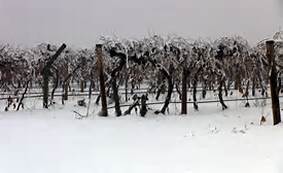
Much of my childhood was spent growing up on my mother’s family farm just across the road from our house. Many of my relatives live nearby in houses built on land that was carved out of the original tract of land that my Grandfather began farming in the very early 1900’s.  The number one lesson I learned about the agriculture business was that no

Winter in The Vineyard

Winter in The Vineyard

matter how well prepared and thought out your plans were you are always at the mercy of Mother Nature.  Whether it is corn, wheat or grapes you will always have to be able to cope with constant change and overwhelming problems or you will not succeed.  The vintners in Southwestern and Northwestern Pennsylvania along with their counterparts in the Finger Lakes Region of New York are dealing with the effects of one of the coldest winters in recent memory.  The real damage in Pennsylvania occurred in the Northwest , especially the area around Lake Erie, while the Southwest corner of the state received above average but manageable damage.  I have talked with several winemakers about how this winter effected their vineyards and the following is a summary of what they told me. 

Rich Ripepi of Ripepi Winery in Monongahela, Pa said that they were leaving on extra buds when they pruned to be safe but should have gotten through in “relatively” good shape.   Ray Matthews, the vineyard manager at Christian W. Klay Winery in Chalk Hill, Pa is still accessing his vines but signs are good that the damage isn’t too severe.  Ray told me of a study that he read that noted statistically a vineyard in the Northeast will be devastated on average once every ten years but he has been lucky to have been spared so far.  Tod Manspeaker of Briar Valley Vineyard & Winery in Bedford, Pa grows only vinifera vines in his vineyard.  Tod has observed that certain varieties have suffered more than others with the average bud loss in the 50% range.  To compensate for the loss Tod is leaving secondary and tertiary buds by pruning less and leaving four canes instead of two.  This makes more work this year and much more work next year to clean up but by doing this Tod is expecting a normal crop.  Paul Vezzetti from The Vineyard at Hershey in Middletown, Pa tells me that South Central Pennsylvania was on the border of the coldest weather this winter.  He attributes the many cultural practices implemented before their initial planting in 2009 for mitigating much of this years temperature issues.  By postponing pruning until after the worst winter weather had passed Paul was able to adjust his pruning plan to compensate for any winter damage found in the vineyard.  Paul also predicts that anyone that hasn’t been as fortunate as he was to experience only small losses can expect to face a substantial rise in cost when they have to buy grapes from another vineyard with whom they don’t already have an established relationship. 

Marti Macinski of Standing Stone Winery & Vineyard in Hector, NY tells me the Finger Lakes Region was hit very hard with many vineyards losing 100% of this years crop.  She is fortunate that her vineyard is on the southeastern shore of Seneca Lake and benefits from a temperature moderating effect that has led to the area being nicknamed the “Banana Belt”.  The Standing Stone Vineyard has received some damage but the damage can be offset by leaving extra buds to produce a nearly normal crop.  Marti has to wait until the growing season gets underway before she can tell if there is any vine damage. 

     Marti and all winemakers know that maintaining a vineyard can be a brutal and unforgiving undertaking but one that does come with great satisfaction and sense of accomplishment when everything goes right.  I wish all the producers my very best and want them to know that I have the utmost respect for their perseverance and passion with which they pursue their craft.  


3 Pennsylvania Wine Festivals

     May 8th thru May 10th will be the dates for three separate wine festivals presented by Fine Wine & Good Spirits, which is the retail arm of the Pennsylvania Liquor Control Board (P.L.C.B.) who control and regulate all alcohol sales in Pennsylvania. 

Wine Festival in Hershey will be held Wednesday May 8th on the Concourse at the Giant Center in Hershey Pa.  V.I.P. Tasting is 5:00-6:30 P.M. with tickets $95 per person and Grand Tasting 6:30-8:30 P.M. with tickets $45 per person.  Parking for the event will be free and festivities benefit Penn State Hershey Children’s Hospital.  For more information, including a list of vintners go to http://www.winefestivalinhershey.com

Pittsburgh Wine Festival will be held Thursday May 9th at Heinz Field East & West Club Lounges with V.I.P. Tasting 5:00-7:00 P.M. and Grand Tasting 7:00-9:00 P.M..  Ticket prices for the V.I.P. Tasting are $250 per person and $125 per person for the Grand Tasting with the V.I.P. guests welcome to stay and enjoy the entire evening.  This is the eleventh year for this event and will feature 165 vendors showcasing 500 different wines while benefiting innovation and discovery at U.P.M.C..  Pittsburgh Wine Festival is running a special limited time price offer of two Grand Tasting tickets for the price of one and can be accessed at http://www.pittsburghwinefestival.com.

The New Philadelphia Wine & Food Festival is Friday May 10th at Lincoln Financial Field SCA Club from 5:30-9:30P.M..  This year’s expanded program combines food, 600 different wines, access to wine makers and chefs coupled with demonstrations, educational sessions and intimate tastings.  A silent auction will be held throughout the evening with the proceeds benefiting the Children’s Hospital of Philadelphia.  V.I.P. Tasting with early entry 5:30-9:30 P.M. is $250 and Grand Tasting with general admission 7:00-9:30P.M. $125 per person.  To purchase tickets and get more information go to www.phillymag.com/wineandfoodfest/index.hmtl

The Pennsylvania Winery Association

Photo Courtesy: Pennsylvania Winery Association

Photo Courtesy: Pennsylvania Winery Association

      The Pennsylvania Winery Association has a very useful and informative website and you can get access to it by going to http://www.pennsylvaniawine.com..  Starting on the homepage you can explore many interesting features including an extensive list of winery events for the upcoming year plus trip planning info coupled with downloadable winery maps available under the Trip Planner tab.  Pennsylvania is divided into seven wine growing regions with my favorite designation being the “Groundhog Region”.  Let France have Bordeaux and Italy have Tuscany, give me that Groundhog A.V.A..  Pennsylvania is home to eleven wine trails and P.W.A. reports that there are one hundred twenty-three wineries in the Commonwealth.  While you are visiting the site take the opportunity to add your e-mail address to their e-mail list or consider following them on Twitter.  The Pennsylvania Winery Association has done an excellent job with their website and it will certainly offer anyone researching it with an insight into the state’s wineries that isn’t available anywhere else.  http://www.pennsylvaniawine.com