Winemaker Interview: Jerry Pompa

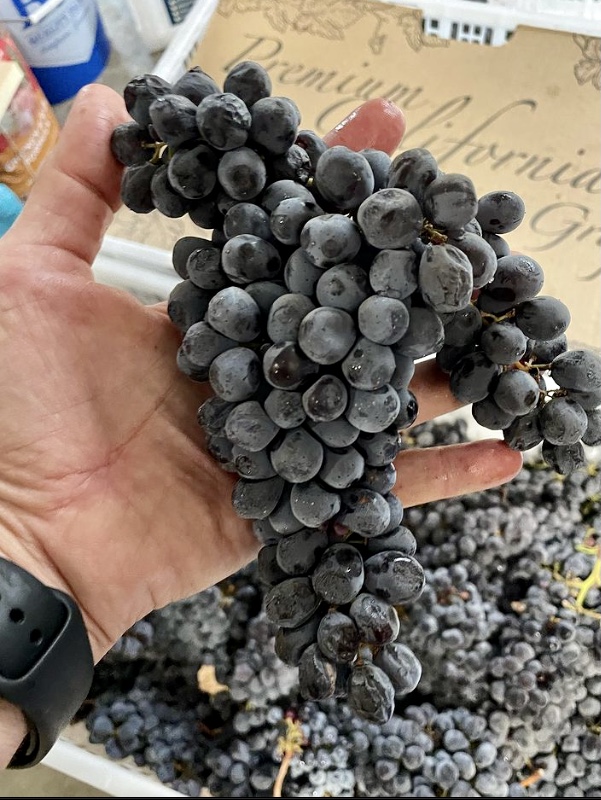
Pittsburgh born and raised winemaker Jerry Pompa started his wine journey at his childhood home in the close-knit neighborhood of Morningside. After earning multiple degrees including an MS in Comp. Sci. at the University of Pittsburgh Jerry made his home in the Pittsburgh area. While building a successful career and raising a loving and supportive family his passion for winemaking only grew stronger. Jerry’s path to becoming a winemaker is very similar in many respects not only to winemakers here in Western Pennsylvania but around the world. His first exposure to winemaking was when his father brought home a bucket of wine grape juice from a supplier in the “Strip District” of Pittsburgh. Today Jerry returns to that same part of the city to procure his supply of wine grapes with the same goal every year of making the best wine he can possibly make. After thirty years of making wine, countless events, seminars, and shows that saw Jerry become one of the co-founders of the American Wine Society’s Pittsburgh-East Chapter no one can tell Jerry Pompa’s story better than Jerry himself. The following is my interview with him in his own words.

How did you get started making wine?

The short version is that about 30 years ago, my Father who owned a small Italian groceria on Larimer Ave in East Liberty, would go to the Strip (we called it the Yards then) and one of his suppliers gave  him a bucket of juice and told him…” put it in your basement and in the spring it will be wine”…so he gave it to me and said the same. I figured there may be a bit more to it so I did some research, bought a kit (carboy, yeast, hoses, etc) and made my first Cabernet.  Really not knowing anything about it I joined the American Wine Society, entered that first wine in a competition, won a 2nd pace ribbon and was therefore encouraged to continue.
I have made wine since. The first 10 years or so from juice but now from grapes. Again, the rest continues as a long story.

How would you describe your wine making style?

Primarily “big” reds are what I make. I have made whites and in fact this year I am making a Rosé (like everyone else) using a saignee method from a red Sangiovese I am making. Other style comments would be dry, tannic, and intended to be good food wines.  Consistency drinkable wine is another goal, maybe not style but each year I am trying to make the best wine possible.

 Who and what influenced your style of wine making?

I suppose a lot of personal taste.  Doing it for so long and visiting so many wineries around the world I have learned a lot and still learning. But all of those experiences have certainly influenced my style. I have a strong Italian heritage, again growing up in an Italian Groceria started by my Grandfather in 1905 (which I worked in from – I claim – before I could stand on my own until the business was sold in 1990) I have been around food and wine all of my life. So again we make wines to go with food. That is the biggest influence.
Other people that have influenced me are Eric Miller, Rick, and Ron Lanza, Ron Casertano, “the Winemaker’s Podcast” and many more.

What are your favorite varietals to work with?

For the past 10 years or so I have a group of very close friends who help out with the winemaking. Together we decide on the varietals for the particular year but generally, my favorite to make are Cabernet blends.  We also make Petite Sirah, Sangiovese, Super Tuscans, and others.  Again all “big” reds. But my favorite is Cab because of its ability to show so much fruit, integrate the oak, age well, have a beautiful nose and taste, go well with food, etc.

What are your favorite wines, regions, and producers?

I wish I knew more about French wines but in life, there is only so much time. My focus has been on California, Italy, and Australia for the most part. I enjoy wines from everywhere, red, white, dry, sweet, etc. I really consider it food on its own and have taught my children (now all drinking age 😉 the same.  It is all about how it accompanies a meal.
It is so hard to specifically name producers since I try so many and tend not to just buy from the same.  Windy Oaks from Santa Cruz makes an amazing set of Pinot Noir, Wooden Valley (the Lanza brothers) from whom we recently buy our grapes does a fantastic job with Petite Sirah, Sangio, Cabernet, and really anything they grow. Gregg Hobbs (no relation to Paul in California) from Australia does a fantastic Shiraz.  Domain Huet makes an amazing Chenin Blanc, Antinori wines of any kind from Italy are excellent. Really there is not any one  or two from a producer or region.

Do you have any tips for someone just getting into wine making as a hobby or as a profession?

Wow, now that is a question. Those are 2 very different questions.  As a hobby, I have plenty to say.  As a profession, I would love to do it myself but without the large fortune, I would never be able to make a small fortune.
Actually, I don’t like to say that I make “homemade” wines. Yes, I make wines at home but really people have a preconceived notion that a “homemade” wine will taste “bad, strong, vin
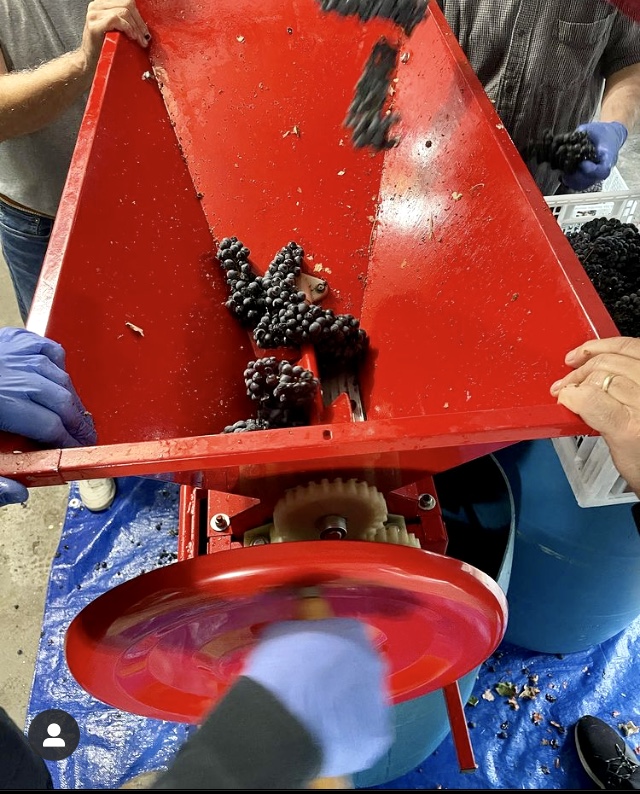
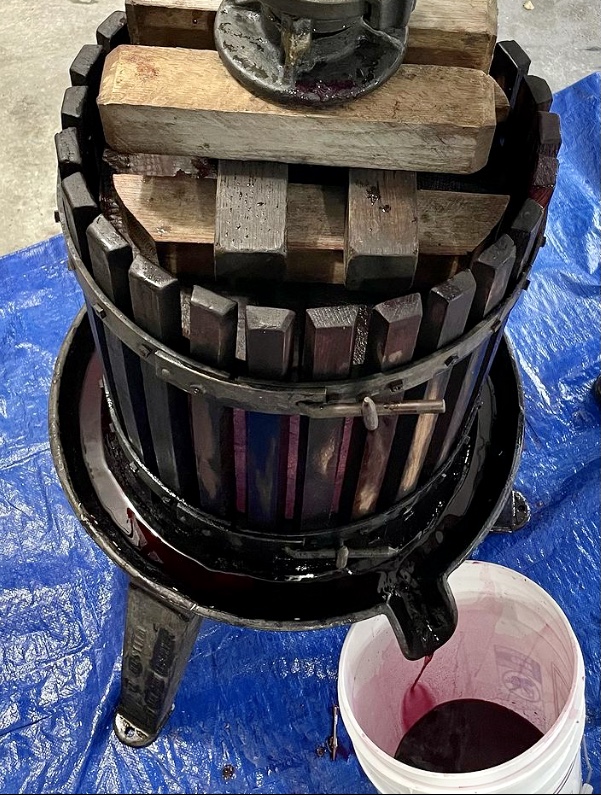
egary, etc” and often they are right. I instead prefer to say I make “Handmade” wines. I am doing exactly what a professional would do except on a smaller scale and I don’t sell it. But the tips are first to buy the best fruit you can afford (actually spend more than what you can afford) since wine is mostly made in the vineyards. Winemakers can stylistically change a few things, enhance some characteristics, but mostly they can either guide the grapes into a very nice wine or screw it up. Most of the work is in cleanliness, sterilization, good process control (e.g. with regards to yeast nutrition, oxygen management, temperatures, bacteria, etc). I have taken many classes (some at Penn State Enology), gone to both amateur and professional conferences, and read many many books to learn the proper process and techniques and am adjusting and learning more every vintage.

What wines are you working on now and what are your expectations for them?

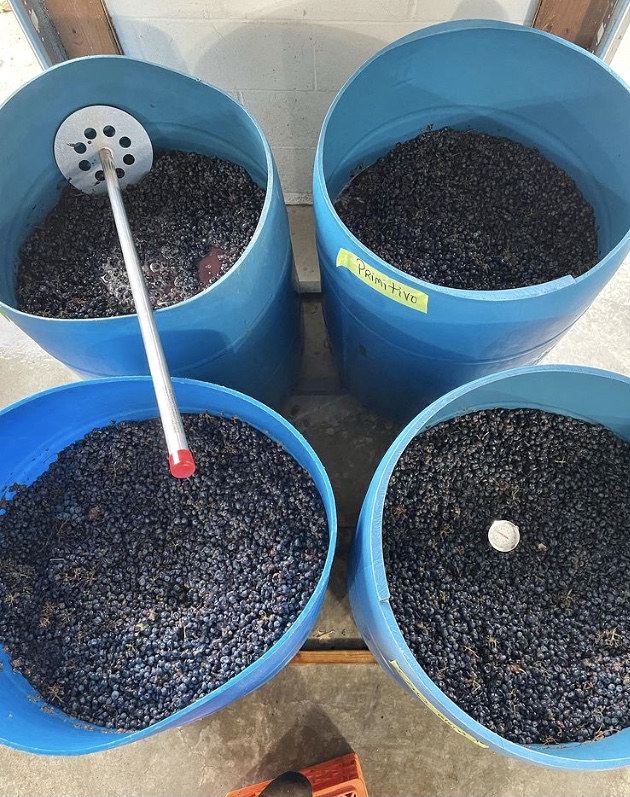
Our 2019 wines are an 87% Sangiovese/13% Merlot (and a small experiment Rosé from the same) and an 80% Barbera/20% Primativo (Zinfandel).  The 2018 vintage, still aging, is a Cabernet blend and a Petite Sirah.  Expectations are high otherwise why do it ;-). Seriously so far they are coming along very well.


Can you share what you’re planning next as a winemaker?

Well, as far as what I plan next as a winemaker is not much different than now. So, for now, because of a very busy day job, I will continue to make wine as an amateur but one day I will work in “the industry”. Not sure if that will be making wine myself and selling it, or working as a winemaker for one of the urban wineries, or working for some company in the wine industry one way or another. This all very much depends on my day-job for now. As an amateur, my next step is to finish the 2019 vintage and start planning for the 2020 vintage.  The plan is to improve in some way each year.

What are some of your most memorable experiences as a winemaker?

Most memorable experiences… I have fond memories of the classes I have taken, the people I have met at conferences, the camaraderie in making wine with my close friends. As far as a single event, although I don’t spend much time competing in wine competitions, I did win best of show twice at a regional conference. If you are not familiar with best of show, they take all of the best wines (first place winners) and then judge them and select one over-all “best of show”.

 
You can follow Jerry on Instagram @jerrypompa 


Award-Winning Winery For Sale

If you have ever dreamed of owning a winery and leading the exciting life of a winemaker, well here’s your chance. Tod and Jean Manspeaker have made the decision to sell their Briar Valley Winery in Bedford, Pennsylvania and embark on the next great adventure of their lives.

Here’s a little background on the winery. The latest Suckling Review gave their Brair Valley Proprietor’s Red and Merlot 91pts and the new Chardonnay 90pts. The International Wine Review scored their Lemberger and Merlot 91pts and Chardonnay 90pts. Briar Valley continues to produce highly rated wines year after year fulfilling a legacy of excellence without fail.

COMMENTS: Rare and unique opportunity to own a family-owned and operated winery! This is an award-winning and turn-key business! Some of their prestigious awards include the Governor’s Cup, a gold medal in the San Francisco’s Chronicle for the Riesling, double gold and best of show in Riesling in the Finger Lakes International Wine Competition and many others. Included in this offering is 7,200 square foot building currently producing 1,000-2,000 cases of wine annually with space to easily produce 5,000-10,000 cases; all production equipment; all inventory; goodwill; and all licenses. The license allows the production of still and sparkling wines, distilled spirits, and hard cider. The tasting room is leased space located in the heart of downtown Bedford, beer sales are also permitted here.

MLS 51709    Click here:   Click here for link to listing

For more information please contact Sean Bardell at Howard Hanna Bardell Realty     814-623-8622  email: STBardell@yahoo.com

Saperavi Expands South & West

As this years’ harvest nears its end I thought it would be a good time to report on the new

Greendance Winery Saperavi vines grow out of tubes Photo Courtesy: Greendance Winery

Saperavi plantings that have come to my attention. The Spring of 2019 was undoubtedly the most prolific planting season for Saperavi in its relatively short history in North America. 

Saperavi’s first stop on its trek south from the Finger Lakes Wine Region of New York is at the Ripepi Winery & Vineyard in Monongahela, Pennsylvania. Rich Ripepi added one half-acre of Saperavi to his vineyard that is located approximately twenty miles south of Pittsburgh on the Monongahela River. Just east of Monongahela, Dr. Rick Lynn at Greendance Winery Mount Pleasant, Pennsylvania added one hundred Saperavi vines to his already diverse vineyard that includes the intriguing cold-hardy Petite Pearl grape and PA’s largest planting of Marquette.

Continuing south our next stop is the Shenandoah Valley of Virginia where Dr. Tim Jordan has planted an acre of Saperavi in his Fort Defiance vineyard. While to the east in nearby Ruckersville, Justin Falco has added two thousand Saperavi vines with plans for more at his Montifalco Vineyards. The four-year-old Saperavi vineyard at Whitebarrel Winery in Christiansburg will yield Virginia’s first substantial harvest of Saperavi grapes this fall (2019). Dr. Rik Obiso has been anticipating this day for years and has submitted two research grants for funding with the intent to bring Saperavi vines to his vineyards from Armenia and Georgia. In the same area of Virginia that these three growers call home, John Kiers III of Ox-Eye Vineyards in Staunton has planted “a couple of hundred vines” and is in the early stages of evaluating them.

You will probably be as surprised as I was when Rich Nunamaker at Grand Mesa Vineyards Cedaredge, Colorado contacted me to ask my opinion on the viability of planting Saperavi on his property in Spring 2020. Rich successfully grows Rkatsiteli in his vineyard on the western slope of the Rocky Mountains so he logically assumed Saperavi would also be a good fit for his conditions. I told him I believed he would be able to grow Saperavi in his environment and altitude based on his success with Rkatsiteli and referred him to Jim Baker, Chateau Niagara Winery, for the technical side of the project. It will be extremely interesting to watch the development of Rich’s vines as he writes a new chapter in the story of Saperavi.

After a long trip around America Saperavi always finds it’s way back home to New York. When Jeff Sawyer, owner/winemaker Wellsprings Vineyards Sterling, New York, ordered six hundred Saperavi vines and only received two hundred seventy-five he changed his plans and planted three hundred Dornfelder vines the next year. Now he has the enviable problem of deciding which one he likes the best in his vineyard on the southeastern shore of Lake Ontario.

In other Saperavi news of note, August Diemel, Keuka Springs Vineyard (Finger Lakes New York) made a 2018 Saperavi from grapes grown by Harry Humphrey on Seneca Lake. He made one hundred twenty cases that quickly sold out. Also on Keuka Lake, Weis Vineyards has recently released its 2017 Saperavi after twenty months in the barrel.

2019 has been a banner year for Saperavi in the U.S. It continues to expand its footprint and attract the attention of wine drinkers as more producers recognize the potential of this versatile grape. If you know of any growers or producers please contact me at wpawinepirate@gmail.com 

Wow! Here’s a discount code for Rocca Wines

     It isn’t often that a premier Napa Valley vineyard and winery offers a discount on their award-winning wines. Mary Rocca, owner of Rocca Family Vineyards in Napa has generously offered a discount on her wines to all of my readers. Deals like this rarely happen with world-class wineries so don’t hesitate because it expires on 10/16/19 and I know you will regret missing this one. Go to http://roccawines.com  and enter either discount code at checkout. WPASHIP (one dollar shipping on any order) or WPA25 ( $25 off any order of 2 bottles or more).

L to R Vineyard Manager Sergio Melgoza, Mary Rocca Owner Rocca Family Vineyards, Winemaker Paul Colantuoni and Banner a Lagotto Romanolo (Italian truffle hunting dog)


Down in Roccaland

     If you have ever had the good fortune to see your family name on the label of a wine bottle you can understand my interest when I saw mine attached to a premium Napa Valley winery. I started to wonder if there might be some family connection. I contacted Mary Rocca, owner of Rocca Family Vineyards to explore the possibility of us being related. I found Mary to be very kind and welcoming as we exchanged information about our ancestry. I learned a great deal about my own heritage and also about Mary’s. We found some amazing coincidences that would have never been discovered had we not reached out to each out. Mary generously sent a gift of her wine to be shared at my family reunion as an introduction between our families. I would like to say “Thank You” to Mary for all the time and effort she has taken from her busy schedule to assist me in this project. Although we haven’t identified any recent common threads we continue to search. Even if we can’t find any blood relatives uniting our families I will always consider Mary not only a friend but family. Mary has generously offered to discount the wine purchases of all of my readers when they enter either of these codes at checkout on http://roccawines.com  WPASHIP ($1 SHIPPING ON ANY ORDER) or WPA25 ($25 OFF ANY ORDER OF 2 BOTTLES OR MORE) These codes expire on 10/16/19 so don’t miss out on your chance to buy extraordinary wine from an outstanding Napa Valley winery with an insider’s deal.

Anyone that has ever dreamed of owning a vineyard and winery in Napa, California can only imagine the excitement that Mary Rocca and her husband Eric Grigsby felt when they

Mary Rocca at Rocca Family Vineyards Napa, California

decided to pursue that very dream. They began their search for the ideal Napa vineyard in 1996 while Mary juggled her dental practice, Eric his medical practice and not to mention their four young children at home. Their three-year search for the perfect vineyard came to fruition when they found a 21-acre vineyard deep in the heart of the Napa Valley. They renamed it the Grigsby vineyard and planted new rows of vines between the existing ones to essentially double their grape production. This vineyard is located between the warmer climate of the upvalley and the cooler maritime influences of the San Francisco Bay. The Grigsby vineyard is mainly Cabernet Sauvignon but also has 1 acre of Merlot and roughly 2.5 acres of Syrah. In 2000 Mary purchased the 11-acre Collinetta vineyard in the Coombsville appellation. The Collinetta vineyard is mostly Cabernet Sauvignon (Clone 4 & Clone 337) but also has an acre of Cabernet Franc and an acre of Petit Verdot. Now with all the pieces in place Mary could focus on making her vision for Rocca Family Vineyards a reality.

     Many decisions had to be made when it came to what pillars the winery and vineyard

The Grigsby Vineyard

would be established on. For many of those choices Mary drew upon the deeply seated beliefs she had built her life and career on. First and foremost, Rocca wines had to be the best they could possibly be and show not only the most natural expression of the vines but also the environment in which they were grown. With that in mind, the choice to farm both vineyards with organic and sustainable viticulture was the only acceptable path forward. As conscientious stewards of the environment, everyone at

The Collinetta Vineyard

Rocca is acutely aware of the long-lasting and far-reaching effects that pesticides and herbicide can cause in the delicate balance of the ecosystem both locally and globally. The Grigsby and Collinetta vineyards have proven themselves by producing some of Napa Valley’s finest wine grapes and because they are organically farmed are U.S.D.A. organic and C.C.O.F. certified.

     In 1999 Mary hired Celia Welch Masyczek of Scarecrow fame as Rocca’s first winemaker and together they produced a long line of award winning and critically acclaimed wines. In 2008 Paul Colantuoni assumed the role of master winemaker at Rocca wines from Celia. With vineyard manager Sergio Melgoza nurturing the grapes and Paul’s skillful hand now making Rocca Family Vineyards wine the winery has continued on its accending arc vintage after vintage.

     If you would like to know more about the Rocca Family Vineyards story or are interesting in purchasing their wine please visit http://roccawines.com  Don’t forget to use the codes to receive a discount on your wine purchases. WPASHIP for $1 DOLLAR SHIPPING ON ANY ORDER or WPA25 for $25 OFF 2 BOTTLES OR MORE.

     Follow them on Instagram, Facebook and Twitter            

Vineyard Manager Sergio Melgoza, Mary Rocca and Winemaker Paul Colantuoni (left to right)


Three Little “Pink” Birds

     To be honest, the reasoning behind making a single vineyard Rosé is completly lost on me. The beauty of making a Rosé is the artistic license winemakers can excercise in the way they meld the distinct characteristics of grapes to create a finely nuanced wine. Blending affords a winemaker the luxury to be able to “paint” their wines with fine strokes of flavor and delicate aromas not possible with a single vineyard Rosé. With the ever increasing popularity of Rosé around the world I understand the pressure producers feel to gain attention for their wine and themselves in a crowded market. 

The first wines ever made were probaly Rosé-type wines. It makes sense that when ancient civilations harvested their grapes they all were combined and crushed to render a mixture of every grape they could get their hands on. Have we really evolved so much over the millennia that we now feel the need to taste the terrior in our Rosé? The fact I am writing this post about single vineyard Rosé proves that it is an effective tool to get your wine noticed. 

Here are a few single vineyard Rosés that you might find interesting if you are curious and want to see for yourself if they have any merit or are just a marketing ploy. 

Single Vineyard 2017 Rose Languedoc Languedoc-Roussillon, France $11 Fruity with flavors of red berries and herbs but on the dry side.

2017 Jules Taylor OTQ Single Vineyard Rose Pinot Noir Branken Hill Vineyard Marlborough, Australia 92pts James Suckling 90pts Wine Advocate $20 Loads of raspberries and cherry flavors on fine tannins lead to a dry finish.

Aluvion 2017 Malbec Rose Single Vineyard $30 Medium-bodied with balanced ripe red fruit flavors and lively acidity.

Gervasi Vineyard = Tuscany in Ohio

Recently my wife and I had the pleasure of enjoying an overnight visit to Gervasi Vineyard in Canton, Ohio. If you are looking to escape to a little piece of Italy for a day or two this is an excellent “No passport required” option. All the buildings and amenities at Gervasi fit

The Crush House

effortlessly into the 55-acre Tuscan-themed property. This premier destination winery

resort boasts fine Italian dining ranging from the “The Bistro” located in the meticulously restored original barn to the trendy “Crush House” with its casual dining choices and views of the winemaking operations. We did our wine tasting at the Crush House where we sat at the bar which afforded us the added entertainment of watching the chefs in the open kitchen work their magic. The small plates we ordered to accompany our flights were excellent.

Gervasi Vineyard makes three very good estate wines from the grapes harvested from the

Tanks in the Crush House

five acres of vineyards located on the property. The other wines they offer are made from grapes sourced mainly from California and the Finger Lakes of New York. We found these wines to be very well-made and enjoyable to drink. The menu also includes craft beer, select imported wines and distilled spirits made on site in “The Still House”. The Still House is a café  with a coffee bar by day then transforms into a cocktail lounge by night with live music, Gervasi signature spirits, draft beer, wine and snack food.

“The Piazza” delivers an alfresco dining venue where guests can savor the relaxing view of the lake. We chose to dine at “The Bistro” which offers patrons a rustic upscale Italian

North Vineyard

dining experience. We ordered Chef Jerry’s Famous Tuscan Beef Short Ribs and paired them with a Barolo from the Italian Piedmont. Everything at The Bistro was upscale, plentiful and presented in a friendly and helpful atmosphere. I found this attention to detail and customer service a constant in all of my interactions at Gervasi. 

We stayed in the newly opened boutique hotel appropriately named “The Casa”. The Casa has 24 individual suites with king-sized beds, gas fireplaces that light with the press of a button, heated floors and a covered patio overlooking the pond and courtyard. A complimentary Italian-style continental breakfast is available each morning and will be delivered to your room. 

“The Villas at Gervasi Vineyard” has been named “Best Wine Country Hotel” by USAToday

The Lake at Gervasi Vineyard

two years running and is a Four Diamond hotel. Each villa has four suites with fireplaces. A complimentary breakfast is also included at the villas. The villas can be reserved as an individual suite or as an entire villa. These accommodations are just a short walk from all that Gervasi has to offer. 

“The Farmhouse” is the property’s original 1830 farmhouse that has been completely restored and modernized. The Farmhouse sleeps 7-8 guests with four bedrooms, two bathrooms, and a large wrap-around porch. 

Gervasi Vineyard is the perfect option for someone looking for a break from the daily routine of life. Whether it is a romantic getaway, girl’s weekend or even a business meeting Gervasi will leave you with “bei ricordi”.  The NFL Football Hall of Fame is only a short 15-minute drive from, Gervasi. One last thing, be sure to pick up a bottle of Gervasi’s very

Gervasi”s Courtyard Fire Pit

own imported Italian olive oil. “Delizios”

Gervasi Vineyard 1700 55th St NE Canton, OH 44721  (330) 497-1000  http://Gervasivineyard.com

First Cut is the Deepest

When I arrived at the farm on Deer Field Road in Mount Pleasant, PA

Beautiful & productive vines like these are the result of careful pruning. Photo courtesy of Greendance Winery

that Sand Hill Berries and Greendance – The Winery at Sand Hill both call home, the windchill was hovering near O° and a thin layer of snow covered the ground. Rick Lynn had invited me to his vineyard to show me how he uses the VPS (Vertical Shoot Pruning) technique to prune his Marquette vines. Vintners prune their grape vines every year to make them more productive and to control how the vine develops during the growing season. The trimming is done during the winter when the vines are dormant. Pruning is a cold and labor intensive job that is essential to the success of the current year’s crop but is also necessary for the training and development of the vines for the future. Rick demonstrated how last year’s growth is removed and two of the best canes are left to be bent and attached to the trellis wire. The vine shoots that grow from the cane that was tied to the lower trellis wire are then trained to grow upward by having them attach themselves to catch wires above the cordon wire (lowest wire). The vines proceed to grow upward in a vertical curtain with the fruiting zone below the canopy. On the day we were pruning a lot of old growth had to be removed because Marquette vines are known for their vigorous growth. Greendance uses the VSP method on all of their vines except the American varieties (Vitis labrusca).

VSP pruning is the most common pruning method for cool-climate wine grapes but it is by no means the only one. Rick and I discussed some new ideas for managing vines in the field. I found the practice of planting vines very close together, about two feet apart, then pruning every vine back to one cane and tying down that cane to the right one year then doing the same the next year but tying the one cane to the left and continuing to alternate direction every year.

Another intriguing idea is “Wild Tail” pruning. Wild tail pruning leaves all the buds on the lateral cane that is tied to the cordon wire so the end buds develop first and delays the budding of the lower buds to protect them from a late frost. After all danger of frost has pasted you walk the vineyard and clip off all the “Wild Tails” back to the number of buds you want on each lateral. I am extremely curious to see if these methods would be successful in a cool-climate vineyard.

The goal of my visit was two-fold and with the first part completed we now turn our attention to the second part, Greendance’s planting of Petite Pearl. If you haven’t heard of the Petite Pearl wine grape you’re not alone. This hybrid grape from renowned Minnesota grape breeder Tom Plocher is just beginning to take root in Minnesota, Wisconsin and across the Midwest where it’s cold tolerance is greatly appreciated. I will be posting about my barrel tasting of Greendance Petite Pearl soon.


Just Saying!!!

Here are a few of my views on recent trends.

I am not a big fan of bottle caps on wine bottles. I have no problem with screw tops or wine in cans but when I see a wine bottle with a cap on top I think back to my childhood and remember bottles of my favorite “Pop” Regent Cherry soda. In Western Pennsylvania carbonated soft drinks, like Coke and Pepsi, were and still are to a certain extent referred to as “Pop”. Maybe it was a shortening of soda pop that led to this regional slang.

Rosé has been riding a steadily ascending arc of popularity over the past several years. I have heard reports that Rosé sales hit their crescendo in the Summer of 2017 and have consolidated over the last 18 months. Although Rosé is thought of as just a summer wine by many it is a category that has proven itself and is here to stay. Traditionally Rosé sales peak during the warm months but year round sales are starting to rise as people realize that this wine pairs well with food in any season.

Orange wine is a curiosity to me because I like to try new things. It has received plenty of attention but I don’t know where it fits into the big picture when it comes to wine in general. We will have to wait and see if it will be taking a place in your wine collection or in the closet next to your Beanie Babies and Cabbage Patch Dolls.

My prediction for Chinese wine is that it is too early to tell if all the money China has invested in its domestic wine industry will pay off. There is certainly enough demand for better wine in China now that its middle class is expanding exponentially. In time I believe China will become a major player in the world wine market simply because it has a diverse collection of growing regions, climates, terroirs and affordable labor that can be developed. Will their wines taste like traditional European or New World wines? No, they will taste like those traditional wines made from grapes grown in Chinese soils and expressing a terroir unique to China.

Everyone has an opinion when it comes to sweet wine, French-American hybrid wine and Vitis vinifera wine. Every winemaker that I have visited in Western Pennsylvania is always eager to have me taste their dry wines but are quick to admit that it is the sweet wines that “Keep the lights on”. While it is true the sweeter wines make up the largest segment of wines sold in local wineries it is also true that interest in dry wine is increasing as tastes evolve and wine drinkers look for something new. I have always said that a “Good” wine is one you enjoy drinking. My theory is that many of the people who start going to wineries with friends will enjoy the easy to drink sweet wines and will be content with these wines. Some will become curious and explore the French-American hybrid wines, of which there are many and can be found in both dry and sweet styles. The wines made from French-American hybrid grapes can provide a bridge from sweet wines to Vitis vinifera wines. It is easier for a wine drinker to transition from the sweeter offerings to the drier Vitis vinifera wines by learning to appreciate the differences in wine grapes and the different styles that they can be made into by experiencing these approachable hybrid wines.

I believe wine is at it’s best when enjoyed while making lasting memories with friends and family. If you are doing it right you will always remember the good times and the people but you probably won’t recall what wine you were drinking.  Just Saying!


Sign of the Times

     In organic viticulture the use of chemicals is strictly controlled by law to the point where almost all the chemicals available to conventional growers are prohibited. Organic growers concentrate on growing healthy vines that are able to withstand pests, disease, fungus, rots and anything else they may encounter in the field while being able to sustain themselves with a robust root system. Conventional growers rely more on chemical solutions for prevention and problem resolution. A balanced ecosystem and healthy soil in the vineyard are essential for organic farming to succeed.

     Biodynamic viticulture takes the idea of growing grapes without the aid of chemical applications a step further. Biodynamic farming looks at a vineyard as an ecosystem unto itself with a system of checks and balances that maintains the system’s equilibrium and prevents any major disruptive events (diseases, insect infestation, animal intrusion, etc.) from affecting the health of the system. Biodynamic farmers incorporate lunar cycles and astrological influences into their decisions. In the U.S.A. wine labeled “organic” is regulated by law. These wines must be made from grapes that are certified to have been organically grown and made without any  sulfites added to them. Wine can be made from “certified organically grown grapes” and have sulfites added to them but the label can’t claim it as “organic wine” but as wine “made from organic grapes”. The difference in wording is subtle but there is a difference in how the wine is produced. Biodynamic wines are also produced from grapes grown in chemical-free biodynamic vineyards but the winemaker is limited to making wine without using any common manipulations, such as adjusting it’s acidity or adding yeasts. As with organic grapes you can find wine made from “biodynamically grown grapes” that have been made using different wine making manipulations but as with the “organically grown grapes” the label will read wine made from “biodynamically grown grapes” but not biodynamic wine. The U.S. Government does not certify biodynamic wine. Biodynamic wine is certified by the independent Demeter Association. Biodynamic and Demeter are trademarks used to assure consumers that the product has been certified to a uniform standard.

     I have had conversations with wine makers and vineyard owners from the Eastern United States that have seen just about everything that can happen in a vineyard first hand. The one point they were all emphatic about was that although it is possible to grow  organic and biodynamic vineyards here it is very difficult. Any grower wanting to pursue this method of viticulture must first be able to withstand the possibility that their harvest may be dramatically reduced in some years and non-existent in others because of factors they won’t be able to control with the tools they allowed to use. 

     The topic of organic vs. conventional farming has been debated with valid points being made and supported on both sides of the discussion. The one thing that everyone agrees on is that any practice that leads to better wine is always welcome. At the end of the day wine making is a business and like any other business you must be profitable to stay in business. It requires a business plan that is flexible and incorporates a vision that can be transformed into a financially viable enterprise in the real world.