Let’s play a game. Close your eyes and imagine your favorite Italian winemaking region. Next, conjure up images of its beautiful landscapes, vineyards, and signature architecture. Finally, remember how wonderfully the wine reflects its terroir and expresses the true characteristics of the land. Now, open your eyes and tell me was it Alto Adige? No, then let me tell you about this spectacularly grand alpine province which includes parts of the Dolomites and is also known as South Tyrol. This enchanting Italian wine region is nestled between Switzerland to the west, Germany to the north, and Austria to the east.
Alto Adige is home to Elena Walch wine estate. The Elena Walch wine estate is among the elite of Italian
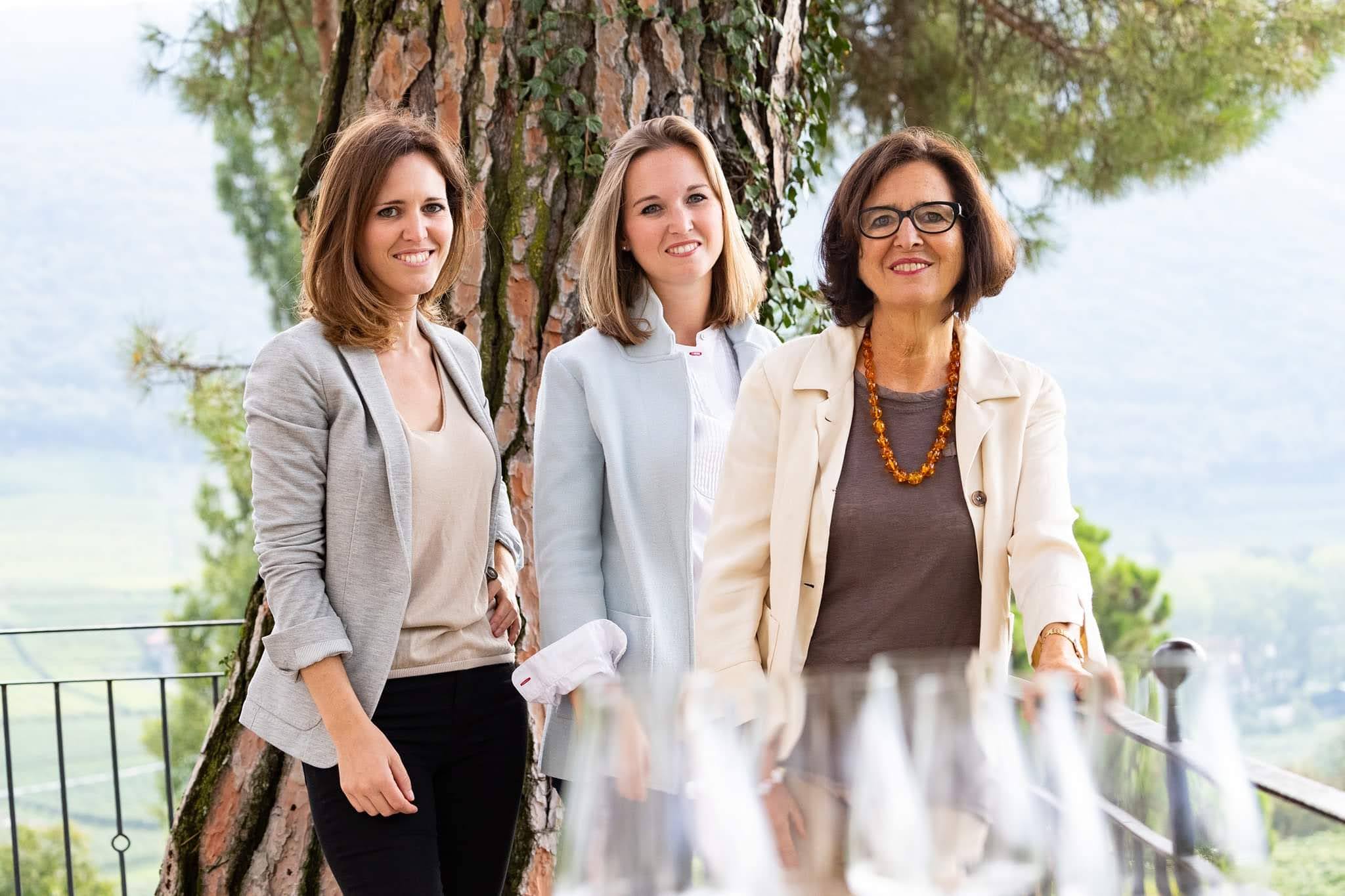
wine producers and has been the standard-bearer for quality and innovation under the guidance of Elena Walch and now her daughters Julia and Karoline. The estate’s philosophy toward winemaking has always been defined by its dedication to the land and terroir. Elena Walch wines are a direct expression of their soil, climate, and care in the vineyard. The disciplines of sustainability and care for the land are strictly adhered to and passed down to future generations. Julia and Karoline Walch have steadily advanced and evolved the viewpoint of their mother since taking over as General Managers of the estate in 2015.
I recently had the opportunity to ask Karoline Walch about how they are carrying on that commitment to excellence and how you can taste it in their wines.
Elena Walch wines have always been faithful to the ideology of respecting the land and the environment so your wines are a direct reflection of the terroir. How do you see your commitment to that principle manifest itself in your wines?
Since the beginning, my mother wanted to produce wines that are a true reflection of a single site. Our two most important single vineyards are the Vigna Castel Ringberg and the Vigna Kastelaz, both very distinct and unique sites. With a combination of limestone soils and its microclimate given the lake influence, the vineyard Vigna Castel Ringberg is farmed sustainably to best adapt to the characteristics of the site. It is finally the salinity and depth that distinguishes it from many other wines within that category. The Vigna Kastelaz, on the other hand, is one of the very few vineyards facing completely South, and hence, benefitting from very sunny and dry growing conditions. Not only, it is extremely steep and due to its proximity to the Mendola mountain ridge, the temperature fluctuations are huge. This allows us to develop the primary aromas to the full spectrum, yet retaining the acidity. Not surprisingly, this is our icon site for Gewürztraminer. Finally, to further highlight the importance of those two vineyards, since 2014 our wines that grow on those two sites, carry the prestigious denomination of Vigna – It is an additional mention of a smaller geographical origin and designs the smallest historical/geographical unit of a vineyard. Every single Vigna must be officially admitted and registered within the regional government. It expresses the ultimate thought of terroir philosophy with the idea of a parcel wine from an exact plot and hence having a historical or traditional name.
How does your state-of-the-art fermentation cellar help you in accentuating all the unique terroirs of your diverse vineyard sites?
Our estate’s philosophy is inherently connected to terroir – the idea that the wines are an individual expression of the vineyard’s soil, climate, and cultivation. We start with quality in the vineyard, but the way the grapes are handled at the winery is an important step in how the finished wine expresses its sense of place. Our new, high-tech cellar allows us to be flexible and adjust to the requirements of both single vineyards and individual varieties.
With the new cellar, there are three important changes: the option between whole-berry or whole-bunch fermentation; the strict use of gravity to process the grapes as gently as possible; and four different points of quality control before the grapes reach the fermentation tanks. The aim is to create wines that have more structure, more fruit, and soft, supple tannins with great aging potential while being more elegant and refined at the same time. KW
Elena Walch set sail into uncharted waters when she built her winery on the idea of producing the highest quality wines that are terroir-driven and sustainably grown. Her daughters, Julia and Karoline, are continuing the journey she started but are always adding their own contemporary interpretation to their winemaking.
We can talk about how Elena Walch wines express their terroir and how producing wine sustainably can be tasted and experienced in a tangible way but it is impossible to truly understand what Elena Walch wines are like without tasting them for yourself. I feel quite confident that after reading Karoline Walch’s perspective on how she approaches making wine that you have a desire to taste her wine just to see for yourself why it is so special. The only question that remains is which one to try first. Luckily for us, Elena Walch wines are superior wines so you can’t make a mistake. Since Alto Adige is the northernmost region in Italy the Germanic grape varieties tend to be prevalent but that is to be expected since it is so close to Germany that 70% of its population speak German while only 25% speak Italian. Elena Walch is known for its white wine, which includes their popular Gewürztraminer and “Beyond The Clouds” but their reds are also top-notch.
When I explore a wine region I am always curious about the wine made from its indigenous grape  varieties. When I looked at Alto Adige, Schiava caught my eye. Schiava is an indigenous grape varietal often associated with the region. Schiava typically produces an aromatic light but acidic red wine that is highly versatile when it comes to food pairings. Elena Walch Schiava is a solid choice because it ranks high in quality and taste for this varietal. Elena Walch Schiava 2019 has a cranberry color, mild tannins, and bright acidity with flavors of red fruit and Schiava’s signature tinge of bitter almond on the finish. It is best when served between 60-65ͦ F/16-18ͦ C. This wine pairs well with Mediterranean fare and pasta.
Elena Walch wine estate is only one of the extraordinary wineries in the Alto Adige region of Italy that are
eager to share their enchanting culture and remarkable wines with you. 

Photo Credit: Elena Walch


 with China in which China has halted the purchase of Australian barley, most beef, seafood, coal, and yes,


