When Anatoli Levine invited me to write a guest post about Saperavi for his blog talk-a-vino.com I thought it would be a great opportunity to introduce this fascinating red grape to wine lovers that probably never have of it. With that in mind I happily accepted Anatoli’s generous offer and started organizing years of information that I had acquired from the winemakers and vintners that are the vanguard for this grapes accent in the wine community. The finished product was published two days ago and I have been very pleased on how well it has been received. I invite you to read the article and have included a link to the http://talk-a-vino.com/2016/11/02/desperately-seeking-saperavi blog where it is being featured. While you are on the site please take advantage of the opportunity to browse the other posts that you will find there. I think you will be glad you did. Thanks!
Tag RED Wine

DeChaunac Anyone?
If you have ever tasted or even heard of DeChaunac you probably have been to the Northeastern U.S., Nova Scotia or Ontario, Canada. DeChaunac is a French-American hybrid red wine grape developed by legendary French hybridizer Albert Seibel (1844-1935). This grape is also known as Seibel 9549 and is believed to be a cross between Seibel 5163 and Siebel 793. It was named after Ontario, Canada wine industry pioneer Adhemar de Chaunac, but in a strange twist of fate, may not be bottled as a varietal under Canada’s VQA system.
When you first see DeChaunac your eyes will deceive you. After seeing this wines very dark and inky color in your glass you will be surprised by the light to medium body of such a dark wine. In my opinion a well-made DeChaunac will have a solid structure to carry complex flavors of black and red cherries, blackberry and prune with a bit of a musty nose.
This wine can be blended with other wine to impart an “aged” characteristic but the blend must be kept at or below 7% or it can through the wine off according to J. Stephen Casscels, author of “Wine Grapes of the Hudson Valley and Other Cool Climate Regions of the United States and Canada”http://flintminepress.com
Now that we have explored the heritage of the DeChaunac wine grape and discussed the wines made from it you might be curious about how it tastes. DeChaunac is not produced as widely as it once was but with a little research you can still find some excellent product. Here are two examples of how a wine made from the same variety of grapes in different styles can yield wines with similar but unique characteristics. The following are two fine Pennsylvania grown and made DeChaunac.
Ripepi DeChaunac: Dry oak-aged red wine made in a Chianti-style with medium body displaying flavors of black fruit complemented by velvety tannins and a lingering finish.
Ripepi Winery 93 Van Voorhis Lane Monongahela, Pa http://ripepiwine.com
Narcisi 2015 DeChaunac: Slightly sweet medium-bodied wine with flavors of oranges, plum and cherries. Balanced acidity and a tart finish
Narcisi Winery 4578 Gibsonia Road Gibsonia, Pa http://narcisiwinery.com
Share this:
Fero Vineyards & Winery: Saperavi 2013

Fero Vineyards &Winery Saperavi 2013
I had the pleasure of drinking my first Pennsylvania grown and made Saperavi recently. It strengthened my belief that the Saperavi grape has the potential to be developed into the signature red grape grown in the cool climate of the Eastern United States. Fero Vineyards & Winery 2013 Saperavi starts by revealing its beautiful dark purple color, a trademark of this wine. After admiring the deep color, aromas of red fruit with a hint of oak fills your nose. Saperavi grapes are known for producing a full-bodied wine with good structure, Fero Saperavi 2013 fulfills those expectations on both counts with style and accuracy. This East Coast Red has good acidity which complements a subtle note of oak that is carried well into a long finish. I recommend buying three bottles of this vintage, drink one now and cellar the other two. Open those bottles after aging them two years and five years, compare your tasting notes, I am sure you will be impressed by how well this wine will develop over time.
Thanks to Chuck Zaleski the owner and winemaker of Fero Winery for pursuing a progressive strategy that is not only designed to grow his business but the quality of wine produced in Pennsylvania. Fero Vineyards & Winery 965 Jpm Rd Lewisburg, Pa. www.ferovineyards.com 570-568-0846 Fero Saperavi 2013 will be judged at the Pa Farm Show this weekend 1/9/15 Update: Fero Saperavi 2013 has won a Gold medal at the 2015 Finger Lakes International Wine Competition (FLIWC).
Share this:

Saperavi: The Next Big Thing?

Saperavi Grapes Photo Courtesy Wikipedia
The Red Wines of the East Coast have never gotten the love that their White Wine counterparts have received over the years and in most cases for good reason. But that may change if an old Eastern European grape can live up to its promise of becoming the foundation on which the future of eastern Red Wine is built. The wine grape that I am talking about is Saperavi. This grape variety originated in the Georgian Republic of Russia and features a dark skin with

Chuck & Daneen Zaleski Owners Fero Vineyards & Winery
pink flesh. It is a teinturier variety of grape, meaning unlike most grapes that have uncolored flesh and produce clear juice a teinturier has red-tinted flesh that makes a vibrant richly colored wine. Saperavi vines are grown throughout the area connecting Asia and Europe know as the Caucasus and in various regions of the former Soviet Republic. Sapervai has long been viewed as an ideal ingredient for cheaper blended wines but in recent decades it has been proven to be capable of producing a varietal of high quality. The best Georgian-produced Saperavi comes from the Kakheti Region that is near its eastern border with Azerbaijan. These Georgian-made wines are available in the U.S. but you will have to do some searching to find them. The fact that this grape is late-ripening and thrives in a cooler climate while producing generous yields without sacrificing much in quality is the reason that vintners in the Finger Lakes and Central Pennsylvania are exploring its potential within their vineyards. I have mentioned in earlier posts the pioneering work done by the Standing Stone Vineyards and Winery with Saperavi but I have recently learned of a producing vineyard in Lewisburg, Pa. Chuck and Daneen Zaleski owners of Fero Vineyards and Winery have produced a varietal from Saperavi grapes grown in their Central Pennsylvania vineyard and made exclusively in their Lewisburg winery. Chuck Zaleski at Fero and Marti Macinski at Standing Stone are on the cutting edge of this exciting reinvention of an Old World stalwart. I am excited to have the chance to follow the evolution of the Saperavi wine grape in the Eastern United States from the persceptive of the wine makers themselves. For more information about these two fine wineries visit their websites at: www.standingstonewines.com and www.ferovineyards.com
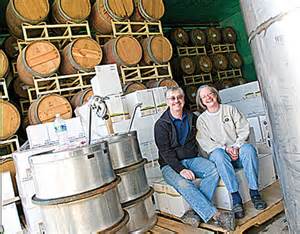
Tom & Marti Macinski Owners Standing Stone Winery Photo Courtsey:Examiner.com

 wpawinepirate