How To Propagate Grapevines From Cuttings. Now Is The Time To Start!

The following article is a collaborative effort between myself and Stephen Casscles, a leading authority on the propagation and cultivation of cool climate and heritage grapevines. It is a detailed account of the procedures for propagating new grapevines from the cuttings of an existing vine. Thank you Steve for being so generous with your time and knowledge. All photos in this article are courtesy of Stephen Casscles. If you need more information about how to propagate vines, consult older books written by Philip Wagner, which are still available, or contact your local cooperative extension agent who can direct you to excellent brochures that have been produced by your local agricultural state university.

    If you have or can obtain clippings from a grapevine that produces excellent fruit, it is easy to reproduce as many vines/clones of that vine as you want. Starting new vines from the clippings of a mother vine ensures you will grow an exact copy of the vine and it will crop the same quality grapes as the original vine. Be sure that the mother vine that you select for your cuttings is strong, and exhibits no indications of viruses or diseases. Some vines, that have curled leaves, odd-looking clusters, or off-leaf colors have been contaminated with a virus. Do not use these vines as you are simply propagating diseased and virus-laden vines and not the strong virus-free vines that you want.

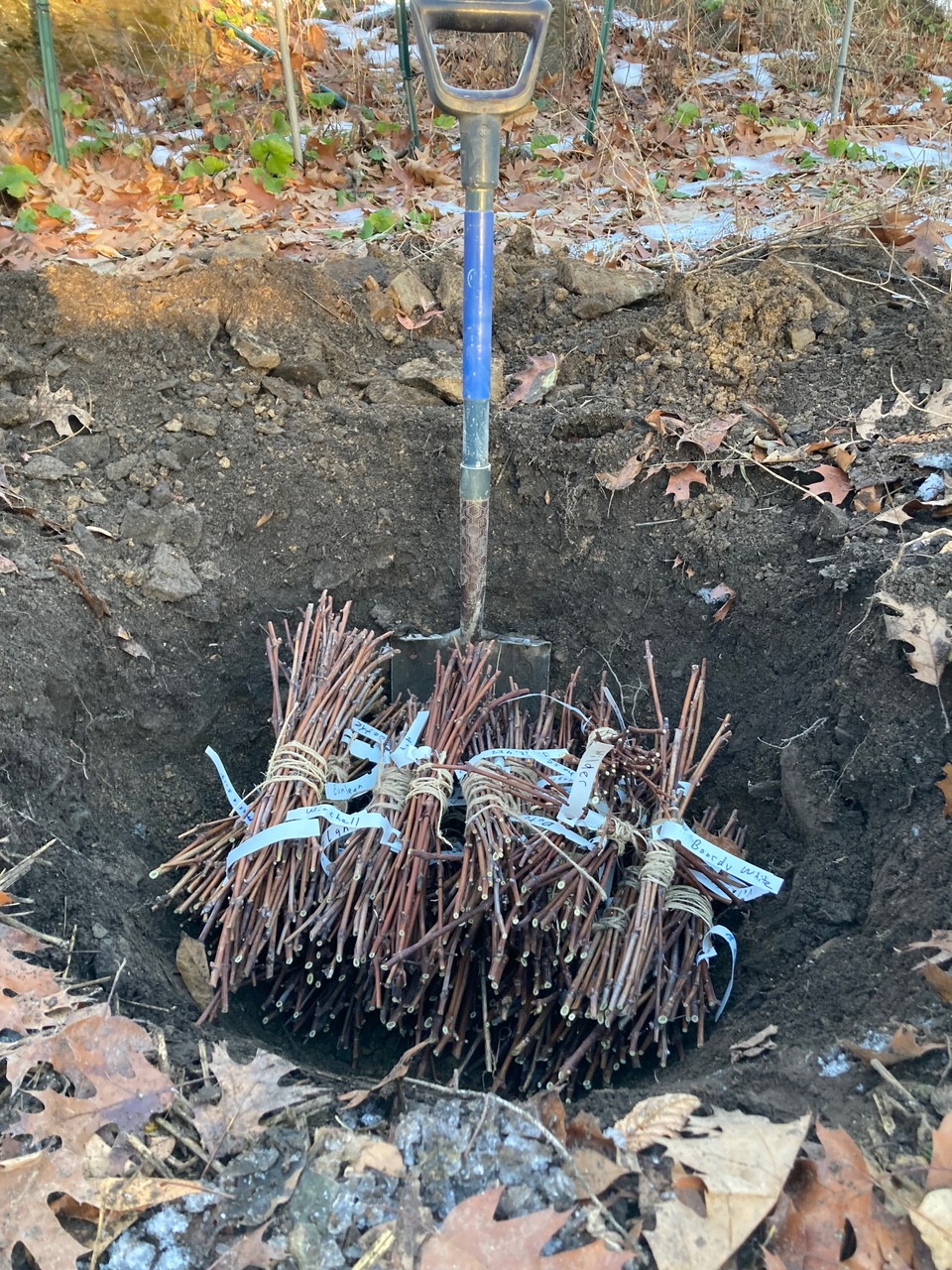
    The next step is up to the propagator, but Steve said he was taught to nip off a straight cut one inch above the top bud and make an angled cut at the bottom of the cane just below the bud node. Making your angled cut at the bottom of the stem easily shows where the top of the cutting is from the bottom which makes it easier when setting out your nursery cuttings, it also allows the cutting to be easily planted in the soil. No matter how you cut your ends, make sure you are consistent so that you will always plant your cuttings correctly, bottom side down in the soil. Dipping the bottom end of the stem into rooting hormones helps promote root growth, but is not necessary. You can find rooting hormones at your local garden center or nursery. If you are only rooting a few cuttings, fill a potting container with your local soil, if it is good well-drained loam soil, if it isn’t mix it with potting soil to improve its drainage.  Make sure your container is deep enough to accommodate your clippings, but if you are propagating a lot of material consider digging a shallow trench and reserving enough loose soil to fill in around your stems.

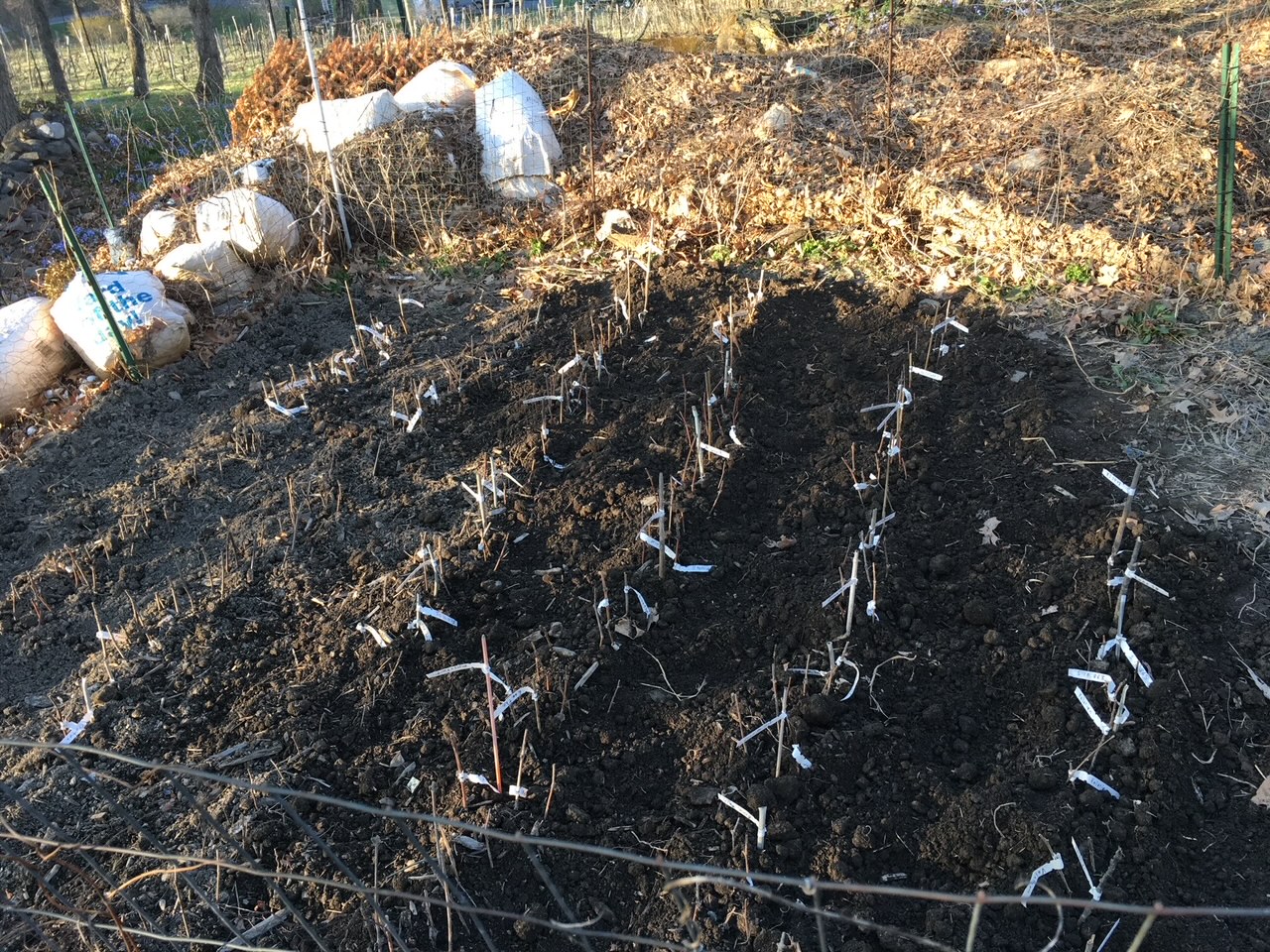
    These trenches can easily be located in your vegetable garden, since this soil has been worked up for many years, and often has a fence around it to keep out the wildlife that may like to browse on your newly installed cuttings. When planting your cuttings, bury them vertically three to four nodes deep with the bottom side down into the ground, leaving the remaining nodes exposed above the soil level. Remember to plant the bottom of the stem down with the straight-cut end above the ground.

    Keep the soil well watered, but not soggy throughout the first year when your cuttings are establishing themselves. For those in potted containers, the cuttings should be placed in a frost-free location with bright indirect sunlight. If you have more than one row of nursery cuttings in your nursery, it is recommended to mulch the cuttings with straw (not hay) to keep down the weeds and retain soil moisture.

    Steve explained the difference between taking cuttings from your vine and propagating them as a single project and cloning in which you separate individual canes that have a certain desirable mutation to create an entirely new variety of the original grapevine. Steve gave me an excellent example that was easy to understand. “My understanding is that cloning would be finding an abnormal sport of a vine that is different and you cut that unique cane off to propagate it. For example, Frontenac Gris is only a regular Frontenac when it was noticed that a separate cane had bronze-colored grapes and not red.  So cloning would be separating and propagating that “clone”, but if you are propagating wood, you just collect your wood and go at it.”

    You must plant more cuttings than you need to compensate for some not surviving. As a dear departed friend of Steve’s, Joel Fry of the Bartrams Garden in Philadelphia used to say, “Plant two of everything, and one will die”.  How many to plant is the question. Steve offered his advice based on years of experience in this area of viticulture. “I find that different varieties propagate at different rates. For example, Baco Noir, which is a part Riparia variety tends to have a higher success rate because it is a Riparia. Even with Riparia, I would plan for a 20% non-success rate for varieties such as Delaware, which is a part Bourquinian species hybrid, do not take as readily, so I would expect a 40% death rate.”  I would recommend propagating as many cuttings as possible using only the strongest ones to satisfy your needs and giving the extras away. Vines can also be rooted in water, but you will need to change the water regularly to prevent disease. Once you see the stems/cuttings rooting, you must transplant them into the soil.

    Whether you set out a nursery in your home garden or place them in pots in the spring, you need to wait an entire year to ensure that your cuttings have sufficient roots before they are set out in the field the following spring. After your cuttings have developed a strong root system they can be transplanted to their permanent location. 

    You probably have heard vintners say the clone number for a specific variety of grapes planted in their vineyard. An example of this would be the Pinot Noir Dijon clones 114, 115, 667, and 777 which are the most widely planted Pinot Noir clones because of their reliability and productivity. When you drink any mass-produced Pinot Noir you are likely drinking wine made from these clones. It is easy to go down a “rabbit hole” when looking for clones of just about any grape variety when researching which clones to plant in your vineyard. Don’t let the sheer number of options overwhelm you. The answer to this question is a simple one, treat a clone like a different variety. Pick a clone you like and propagate that clone.

    Growing your own vines from cuttings is a rewarding venture both financially and from the sense of personal accomplishment you will feel when you harvest your first grapes. With the adverse effects of climate change being documented in vineyards around the world and the increased number of adverse weather events plaguing vintners, the answer to a  consistent and economically sustainable fruit crop may lay in the past with heritage grape varieties, older cool climate hybrids, and new hybrids that are being developed. Growing heritage and cool climate hybrid grape vines that have adapted to survive many weather-related challenges over time could be a critical puzzle piece in the future viability of our vineyards, for both hobby and commercial grape growers. In addition, these varieties tend to be more productive and can be grown more sustainably with fewer pesticide/fungicide applications. They are direct producers that do not need to be planted on a rootstock. This means that if we witness a very cold winter or late spring frost, which kills that part of the vine above the ground, canes will come up from the ground to produce a crop in the same growing season.

    With that objective in mind, Stephen Casscles continues to labor on his long-term project, the Cedar Cliff Vineyards Heritage Grape\Wine Project, aimed at preserving heritage and lesser-known cool climate grape varieties in Northern America. If you have any questions about his work at Cedar Cliff Vineyards please contact Stephen Casscles cassclesjs@yahoo.com  To further his work, Stephen has established a set of three cooperating nurseries in Marlboro, NY, Fonda, NY, and Ipswich, MA where you can purchase already rooted vines and/or grape cuttings. If you are interested in obtaining cuttings of these unique vines, please feel free to contact Stephen Casscles cassclesjs@yahoo.com.  Sadly, most of these cuttings or vines are not available at commercial nurseries, hence we need to propagate them on our own to increase the availability of these unique virus-free/ disease-free grape varieties. For additional information on these heritage and cool climate grape hybrids, the 2nd edition of Steve’s book “Grapes of the Hudson Valley and Other Cool Climate Regions of the US and Canada”  is available at http://www.flintminepress.com .  
How To Propagate Grapevines From Cuttings

The following article is a collaborative effort between myself and Stephen Casscles, a leading authority on the propagation and cultivation of cool climate and heritage grapevines. It is a detailed account of the procedures for propagating new grapevines from the cuttings of an existing vine. Thank you Steve for being so generous with your time and knowledge. All photos in this article are courtesy of Stephen Casscles. If you need more information about how to propagate vines, consult older books written by Philip Wagner, which are still available, or contact your local cooperative extension agent who can direct you to excellent brochures that have been produced by your local agricultural state university.

If you have or can obtain clippings from a grapevine that produces excellent fruit, it is easy to reproduce as many vines/clones of that vine as you want. Starting new vines from the clippings of a mother vine ensures you will grow an exact copy of the vine and it will crop the same quality grapes as the original vine. Be sure that the mother vine that you select for your cuttings is a strong vine, that exhibits no indications of viruses or diseases. Vines that have curled leaves, odd-looking clusters, or off-leaf colors could have been contaminated with a virus. Do not use these vines as you are simply propagating diseased and virus-laden vines and not the strong virus-free vines that you want.

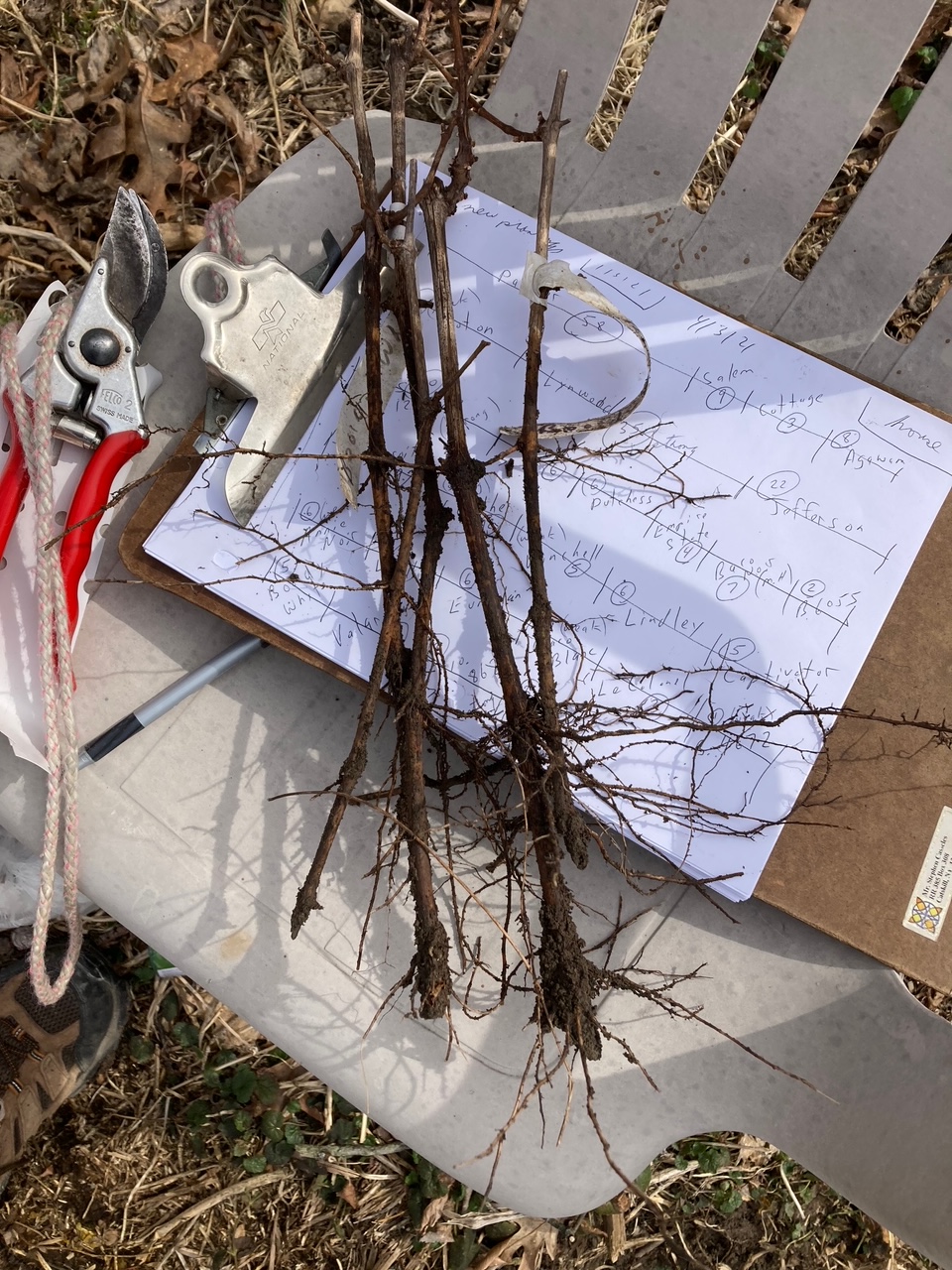
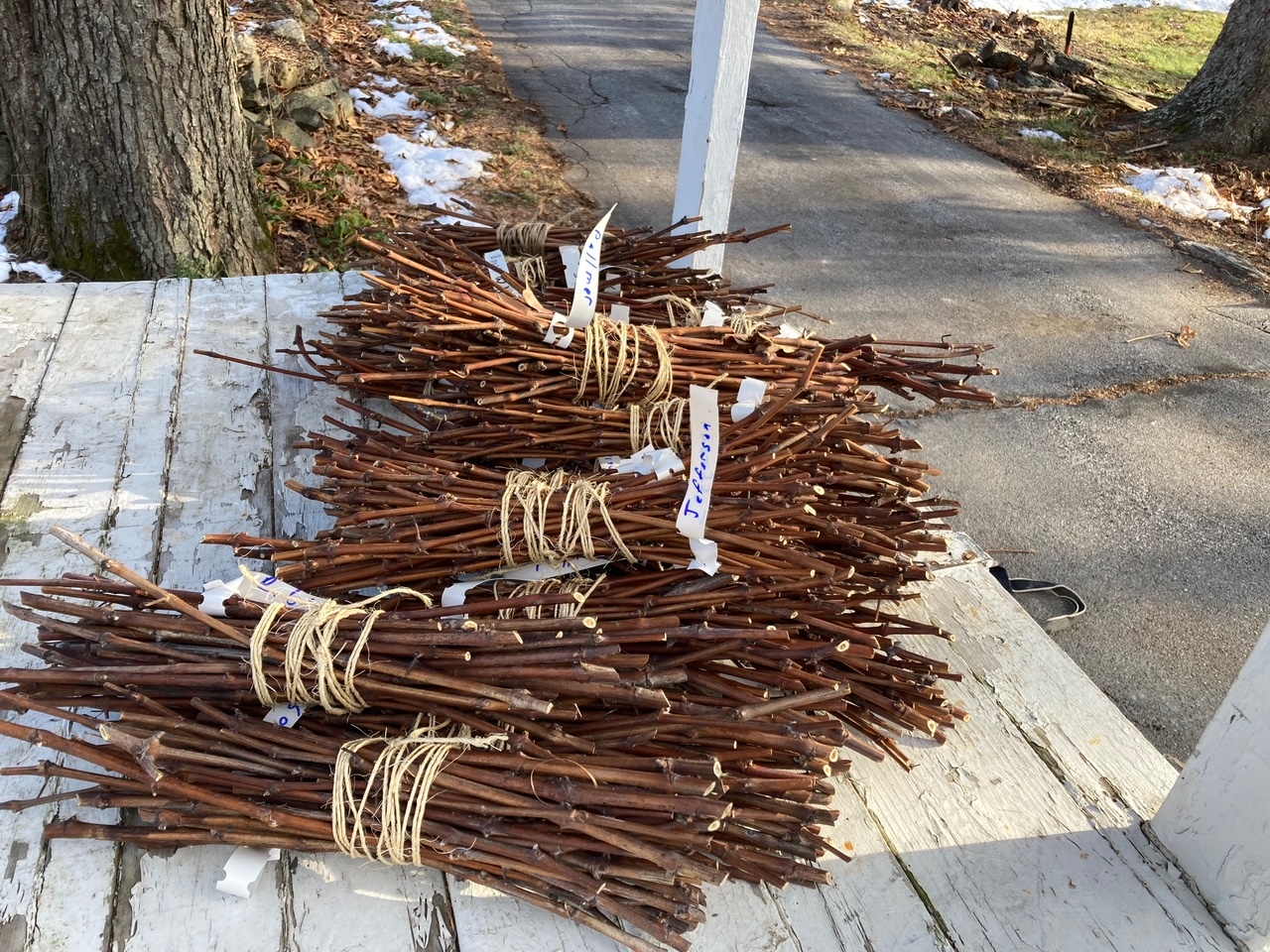
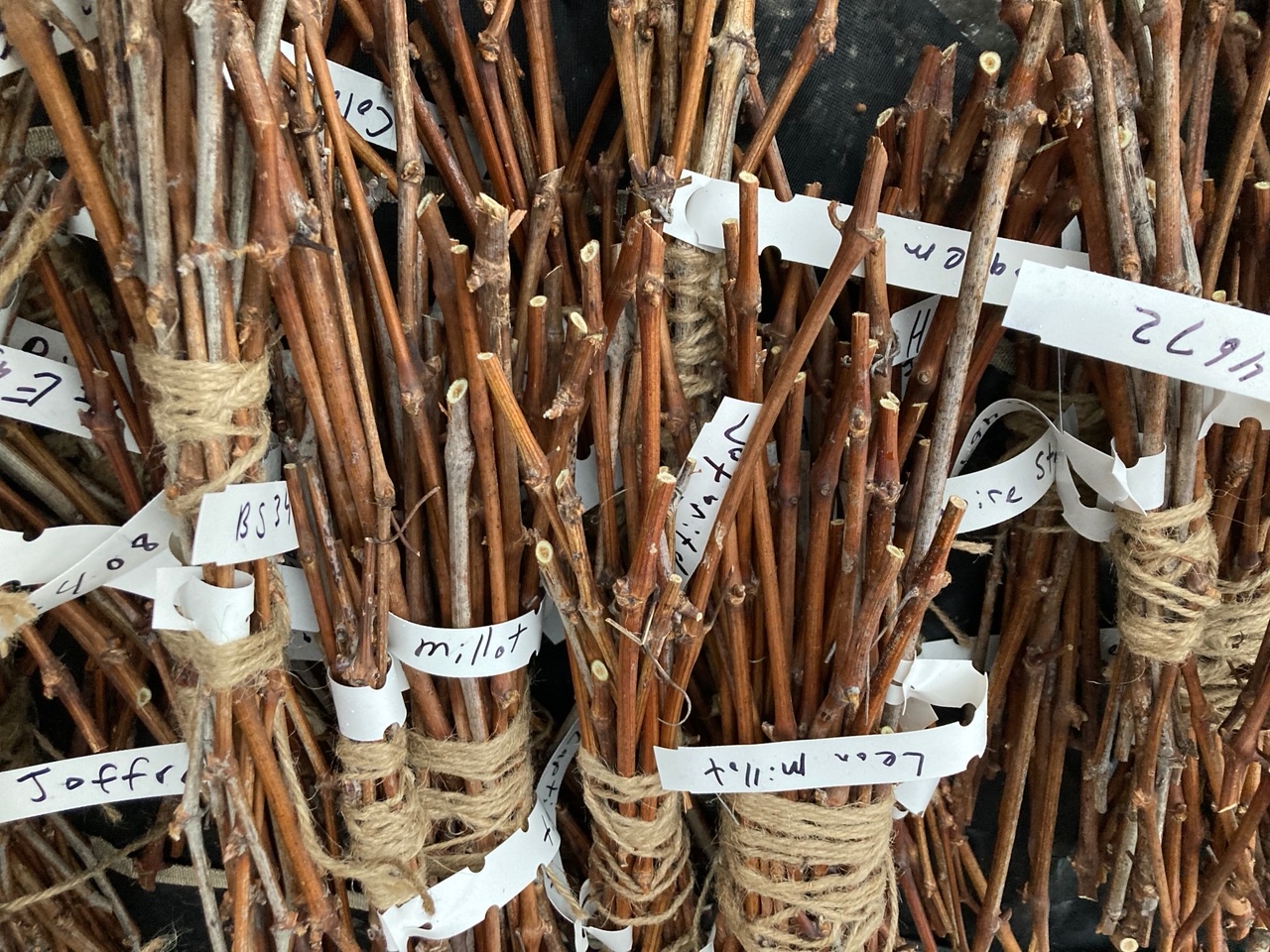
Propagating new grapevines from cuttings is an easy project. First, you must gather your propagating wood in early Spring while the vines remain dormant. Cut 12-18 inch sections from one-year-old wood that is about the thickness of a pencil and has a minimum of at least four leaf bud nodes on it. Ideally, having five or six bud nodes per cutting offers the best chance of success. A leaf bud node will look like a small bump on the stem.

The next step is up to the propagator, but Steve said he was taught to nip off a straight cut one inch above the top bud and make an angled cut at the bottom of the cane just below the bud node. Making your angled cut at the bottom of the stem easily shows where the top of the cutting is from the bottom which makes it easier when setting out your nursery cuttings, it also allows the cutting to be easily planted in the soil. No matter how you cut your ends, make sure you are consistent so that you will always plant your cuttings correctly, bottom side down in the soil. Dipping the bottom end of the stem into rooting hormones is helpful in promoting root growth, but is not necessary. You can find rooting hormones at your local garden center or nursery. If you are only rooting a few cuttings, fill a potting container with your local soil, if it is good well-drained loam soil, if it isn’t mix it with potting soil to improve its drainage.  Make sure your container is deep enough to accommodate your clippings, but if you are propagating a lot of material consider digging a shallow trench and reserving enough loose soil to fill in around your stems.

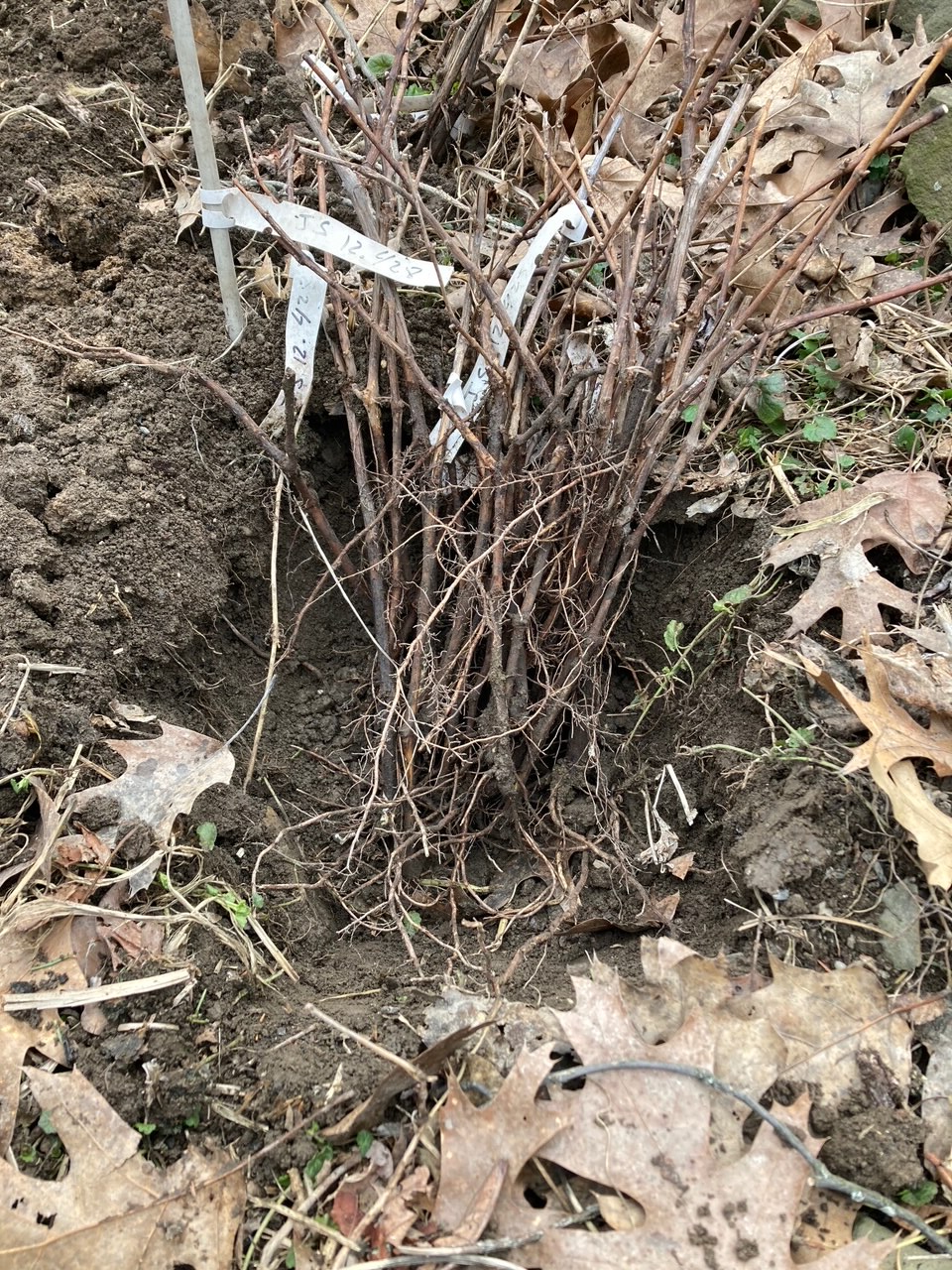
  These trenches can be located in your vegetable garden, since this soil has been worked up for many years, and often has a fence around it to keep out the wildlife that may like to browse on your newly installed cuttings. When planting your cuttings, bury them vertically three to four nodes deep with the bottom side down into the ground, leaving the remaining nodes exposed above the soil level. Remember to plant the bottom of the stem down with the straight-cut end above the ground.

    Keep the soil well watered, but not soggy throughout the first year when your cuttings are establishing themselves. For those in potted containers, the cuttings should be placed in a frost-free location with bright indirect sunlight. If you have more than one row of nursery cuttings in your nursery, it is recommended to mulch the cuttings with straw (not hay) to keep down the weeds and retain soil moisture.

Steve explained the difference between taking cuttings from your vine and propagating them as a single project and cloning in which you separate individual canes that have a certain desirable mutation to create an entirely new variety of the original grapevine. Steve gave me an excellent example that was easy to understand. “My understanding is that cloning would be finding an abnormal sport of a vine that is different and you cut that unique cane off to propagate it. For example, Frontenac Gris is only a regular Frontenac when it was noticed that a separate cane had bronze-colored grapes and not red.  So cloning would be separating and propagating that “clone”, but if you are propagating wood, you just collect your wood and go at it.”

    It is essential that you plant more cuttings than you need to compensate for some not surviving. As a dear departed friend of Steve’s, Joel Fry of the Bartrams Garden in Philadelphia used to say, “Plant two of everything, and one will die”.  How many to plant is the question? Steve offered his advice based on years of experience in this area of viticulture. “I find that different varieties propagate at different rates. For example, Baco Noir, which is a part Riparia variety tends to have a higher success rate because it is a Riparia. Even with Riparia, I would plan for a 20% non-success rate for varieties such as Delaware, which is a part Bourquinian species hybrid, do not take as readily, so I would expect a 40% death rate.”  I would recommend propagating as many cuttings as possible using only the strongest ones to satisfy your needs and giving the extras away. Vines can also be rooted in water, but you will need to change the water regularly to prevent disease. Once you see the stems/cuttings rooting, you must transplant them into the soil.

    Whether you set out a nursery in your home garden or place them in pots in the spring, you need to wait an entire year to ensure that your cuttings have sufficient roots before they are set out in the field the following spring. After your cuttings have developed a strong root system they can be transplanted to their permanent location. 

    You probably have heard vintners say the clone number for a specific variety of grapes planted in their vineyard. An example of this would be the Pinot Noir Dijon clones 114, 115, 667, and 777 which are the most widely planted Pinot Noir clones because of their reliability and productivity. When you drink any mass-produced Pinot Noir you are likely drinking wine made from these clones. It is easy to go down a “rabbit hole” when looking for clones of just about any grape variety when researching which clones to plant in your vineyard. Don’t let the sheer number of options overwhelm you. The answer to this question is a simple one, treat a clone like a different variety. Pick a clone you like and propagate that clone.

    Growing your own vines from cuttings is a rewarding venture both financially and from the sense of personal accomplishment you will feel when you harvest your first grapes. With the adverse effects of climate change being documented in vineyards around the world and the increased number of adverse weather events plaguing vintners, the answer to a  consistent and economically sustainable fruit crop may lie in the past with heritage grape varieties, older cool climate hybrids, and new hybrids that are being developed. Growing heritage and cool climate hybrid grape vines that have adapted to survive many weather-related challenges over time could be a critical puzzle piece in the future viability of our vineyards, for both hobby and commercial grape growers. In addition, these varieties tend to be more productive and can be grown more sustainably with fewer pesticide/fungicide applications. They are direct producers that do not need to be planted on a rootstock. This means that if we witness a very cold winter or late spring frost, which kills that part of the vine above the ground, canes will come up from the ground to produce a crop in the same growing season.

    With that objective in mind, Stephen Casscles continues to labor on his long-term project, the Cedar Cliff Vineyards Heritage Grape\Wine Project, aimed at preserving heritage and lesser-known cool climate grape varieties in Northern America. If you have any questions about his work at Cedar Cliff Vineyards please contact Stephen Casscles cassclesjs@yahoo.com  To further his work, Stephen has established a set of three cooperating nurseries in Marlboro, NY, Fonda, NY, and Ipswich, MA where you can purchase already rooted vines and/or grape cuttings. If you are interested in obtaining vines or cuttings of these unique varieties, please feel free to contact Stephen Casscles cassclesjs@yahoo.com.  Sadly, most of these cuttings or vines are not available at commercial nurseries, hence we need to propagate them on our own to increase the availability of these unique virus-free/ disease-free grape varieties. For additional information on these heritage and cool climate grape hybrids, the 2nd edition of Steve’s book “Grapes of the Hudson Valley and Other Cool Climate Regions of the US and Canada”  is available at http://www.flintminepress.com .  
First Cut is the Deepest

When I arrived at the farm on Deer Field Road in Mount Pleasant, PA

Beautiful & productive vines like these are the result of careful pruning. Photo courtesy of Greendance Winery

that Sand Hill Berries and Greendance – The Winery at Sand Hill both call home, the windchill was hovering near O° and a thin layer of snow covered the ground. Rick Lynn had invited me to his vineyard to show me how he uses the VPS (Vertical Shoot Pruning) technique to prune his Marquette vines. Vintners prune their grape vines every year to make them more productive and to control how the vine develops during the growing season. The trimming is done during the winter when the vines are dormant. Pruning is a cold and labor intensive job that is essential to the success of the current year’s crop but is also necessary for the training and development of the vines for the future. Rick demonstrated how last year’s growth is removed and two of the best canes are left to be bent and attached to the trellis wire. The vine shoots that grow from the cane that was tied to the lower trellis wire are then trained to grow upward by having them attach themselves to catch wires above the cordon wire (lowest wire). The vines proceed to grow upward in a vertical curtain with the fruiting zone below the canopy. On the day we were pruning a lot of old growth had to be removed because Marquette vines are known for their vigorous growth. Greendance uses the VSP method on all of their vines except the American varieties (Vitis labrusca).

VSP pruning is the most common pruning method for cool-climate wine grapes but it is by no means the only one. Rick and I discussed some new ideas for managing vines in the field. I found the practice of planting vines very close together, about two feet apart, then pruning every vine back to one cane and tying down that cane to the right one year then doing the same the next year but tying the one cane to the left and continuing to alternate direction every year.

Another intriguing idea is “Wild Tail” pruning. Wild tail pruning leaves all the buds on the lateral cane that is tied to the cordon wire so the end buds develop first and delays the budding of the lower buds to protect them from a late frost. After all danger of frost has pasted you walk the vineyard and clip off all the “Wild Tails” back to the number of buds you want on each lateral. I am extremely curious to see if these methods would be successful in a cool-climate vineyard.

The goal of my visit was two-fold and with the first part completed we now turn our attention to the second part, Greendance’s planting of Petite Pearl. If you haven’t heard of the Petite Pearl wine grape you’re not alone. This hybrid grape from renowned Minnesota grape breeder Tom Plocher is just beginning to take root in Minnesota, Wisconsin and across the Midwest where it’s cold tolerance is greatly appreciated. I will be posting about my barrel tasting of Greendance Petite Pearl soon.


Just Saying!!!

Here are a few of my views on recent trends.

I am not a big fan of bottle caps on wine bottles. I have no problem with screw tops or wine in cans but when I see a wine bottle with a cap on top I think back to my childhood and remember bottles of my favorite “Pop” Regent Cherry soda. In Western Pennsylvania carbonated soft drinks, like Coke and Pepsi, were and still are to a certain extent referred to as “Pop”. Maybe it was a shortening of soda pop that led to this regional slang.

Rosé has been riding a steadily ascending arc of popularity over the past several years. I have heard reports that Rosé sales hit their crescendo in the Summer of 2017 and have consolidated over the last 18 months. Although Rosé is thought of as just a summer wine by many it is a category that has proven itself and is here to stay. Traditionally Rosé sales peak during the warm months but year round sales are starting to rise as people realize that this wine pairs well with food in any season.

Orange wine is a curiosity to me because I like to try new things. It has received plenty of attention but I don’t know where it fits into the big picture when it comes to wine in general. We will have to wait and see if it will be taking a place in your wine collection or in the closet next to your Beanie Babies and Cabbage Patch Dolls.

My prediction for Chinese wine is that it is too early to tell if all the money China has invested in its domestic wine industry will pay off. There is certainly enough demand for better wine in China now that its middle class is expanding exponentially. In time I believe China will become a major player in the world wine market simply because it has a diverse collection of growing regions, climates, terroirs and affordable labor that can be developed. Will their wines taste like traditional European or New World wines? No, they will taste like those traditional wines made from grapes grown in Chinese soils and expressing a terroir unique to China.

Everyone has an opinion when it comes to sweet wine, French-American hybrid wine and Vitis vinifera wine. Every winemaker that I have visited in Western Pennsylvania is always eager to have me taste their dry wines but are quick to admit that it is the sweet wines that “Keep the lights on”. While it is true the sweeter wines make up the largest segment of wines sold in local wineries it is also true that interest in dry wine is increasing as tastes evolve and wine drinkers look for something new. I have always said that a “Good” wine is one you enjoy drinking. My theory is that many of the people who start going to wineries with friends will enjoy the easy to drink sweet wines and will be content with these wines. Some will become curious and explore the French-American hybrid wines, of which there are many and can be found in both dry and sweet styles. The wines made from French-American hybrid grapes can provide a bridge from sweet wines to Vitis vinifera wines. It is easier for a wine drinker to transition from the sweeter offerings to the drier Vitis vinifera wines by learning to appreciate the differences in wine grapes and the different styles that they can be made into by experiencing these approachable hybrid wines.

I believe wine is at it’s best when enjoyed while making lasting memories with friends and family. If you are doing it right you will always remember the good times and the people but you probably won’t recall what wine you were drinking.  Just Saying!