It’s Sauvignon Blanc Season!

Warm weather has arrived, and with it the tradition of drinking lighter wines, like Sauvignon Blanc and Rosé. The reason this long-standing annual tradition continues is that it is enjoyable and satisfying on so many levels. 

For many, the mere mention of Sauvignon Blanc brings images of New Zealand and France to mind. While it is hard to go wrong when selecting a Sauvignon Blanc from either the North or South Island of New Zealand or the Loire Valley and Bordeaux in France, there are also outstanding examples of this wine being produced in other regions. California, Chile, Argentina, and Australia also make great Sauvignon Blanc. 

Sauvignon Blanc offers a diverse variety of taste profiles that vary widely from mouth-watering fruit-driven wines laden with citrus aromas to ones exhibiting a savory character filled with vegetal undertones that drift in the direction of green bell peppers and freshly mown grass. 

Depending on your personal preferences, you can find a Sauvignon Blanc that is made in a style and at a price point that meets your tastes and budget. 

It is no coincidence that SB shows up on dining tables as the seasons change. This versatile white wine boasts citrus notes that enliven seasonal fare while its bright acidity cuts through creamy sauces and buttery dishes. The perfect complement to seafood, shellfish, and any lightly prepared fish. Sauvignon Blanc really shines when paired with charcuterie boards. 

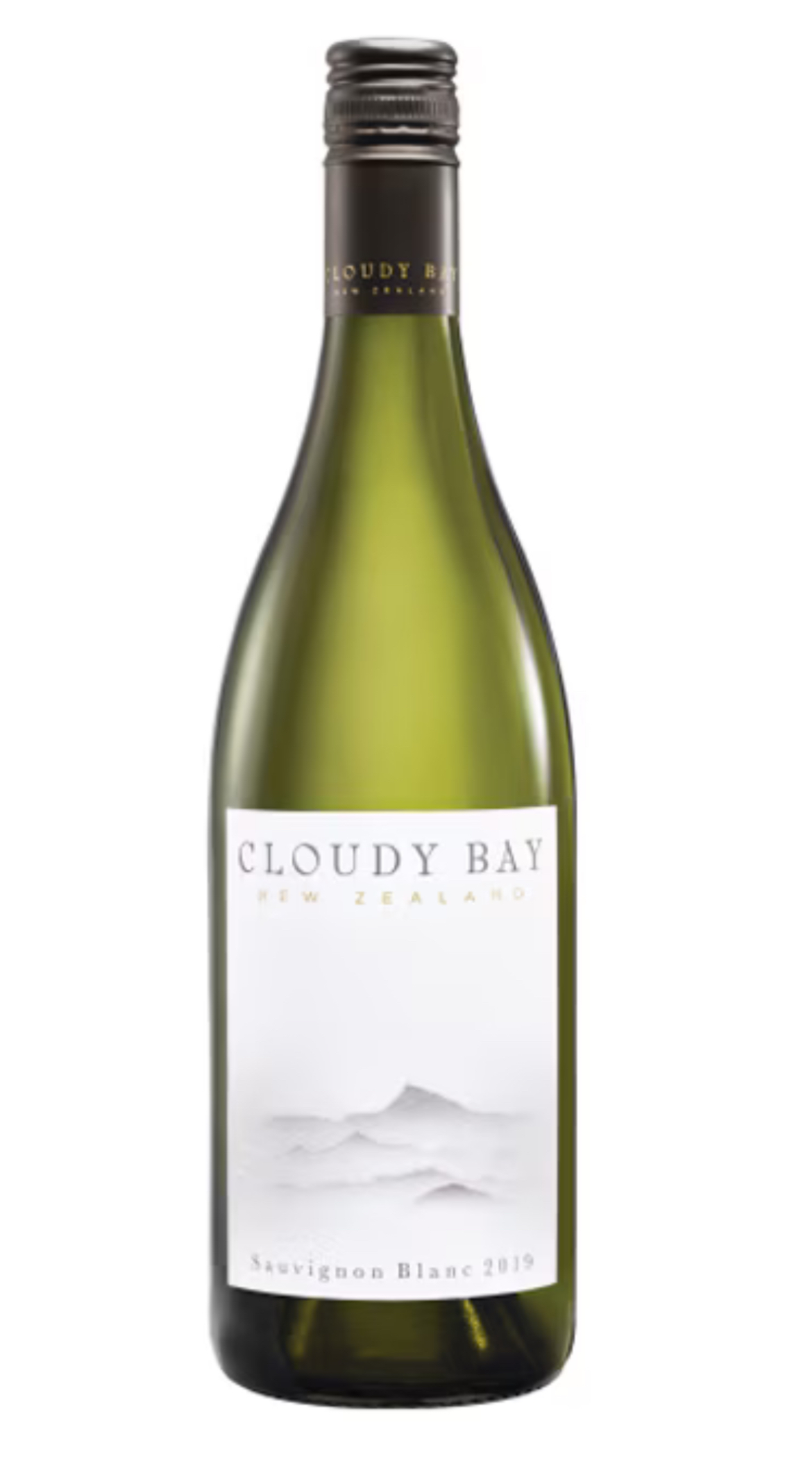
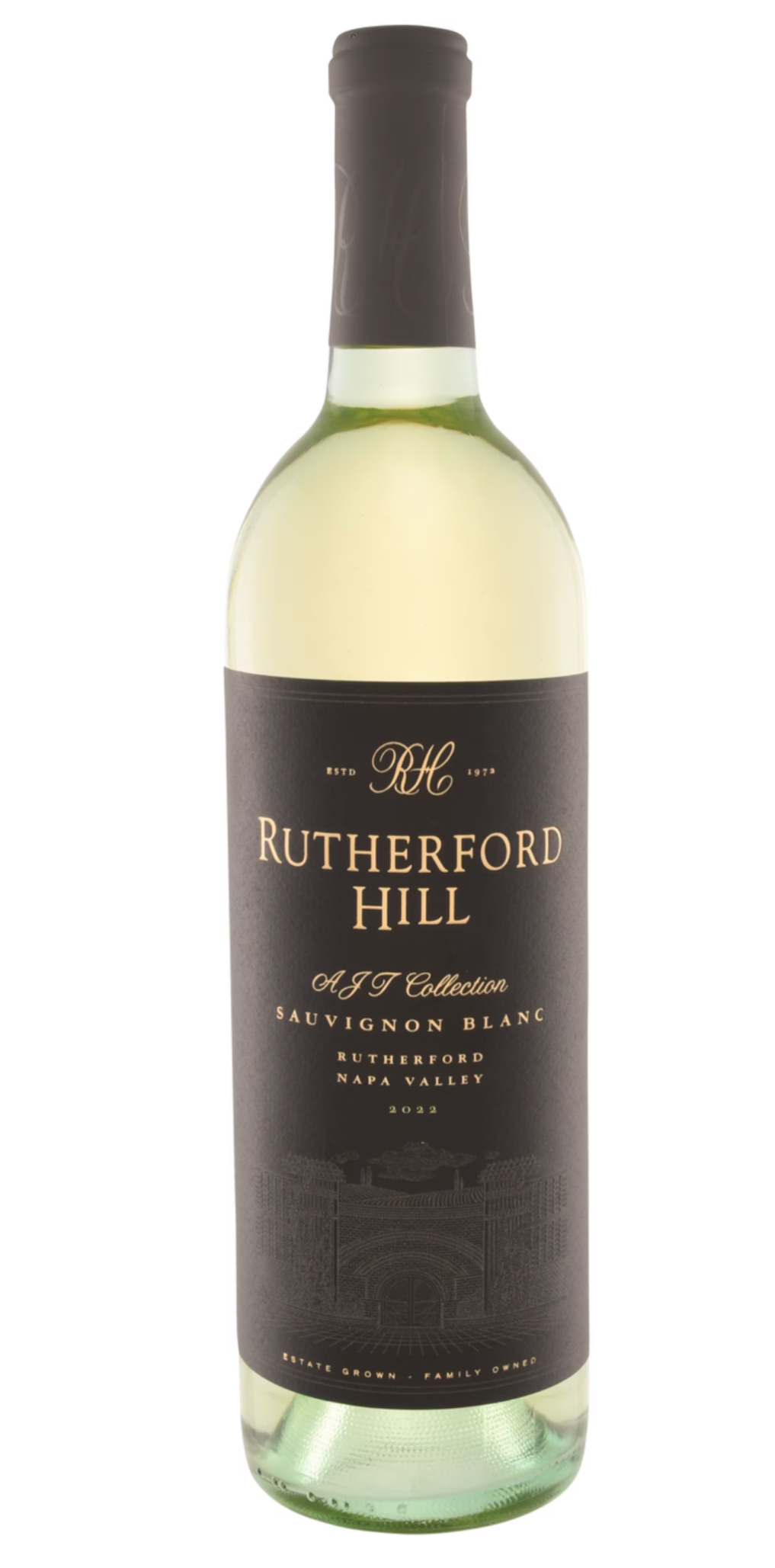
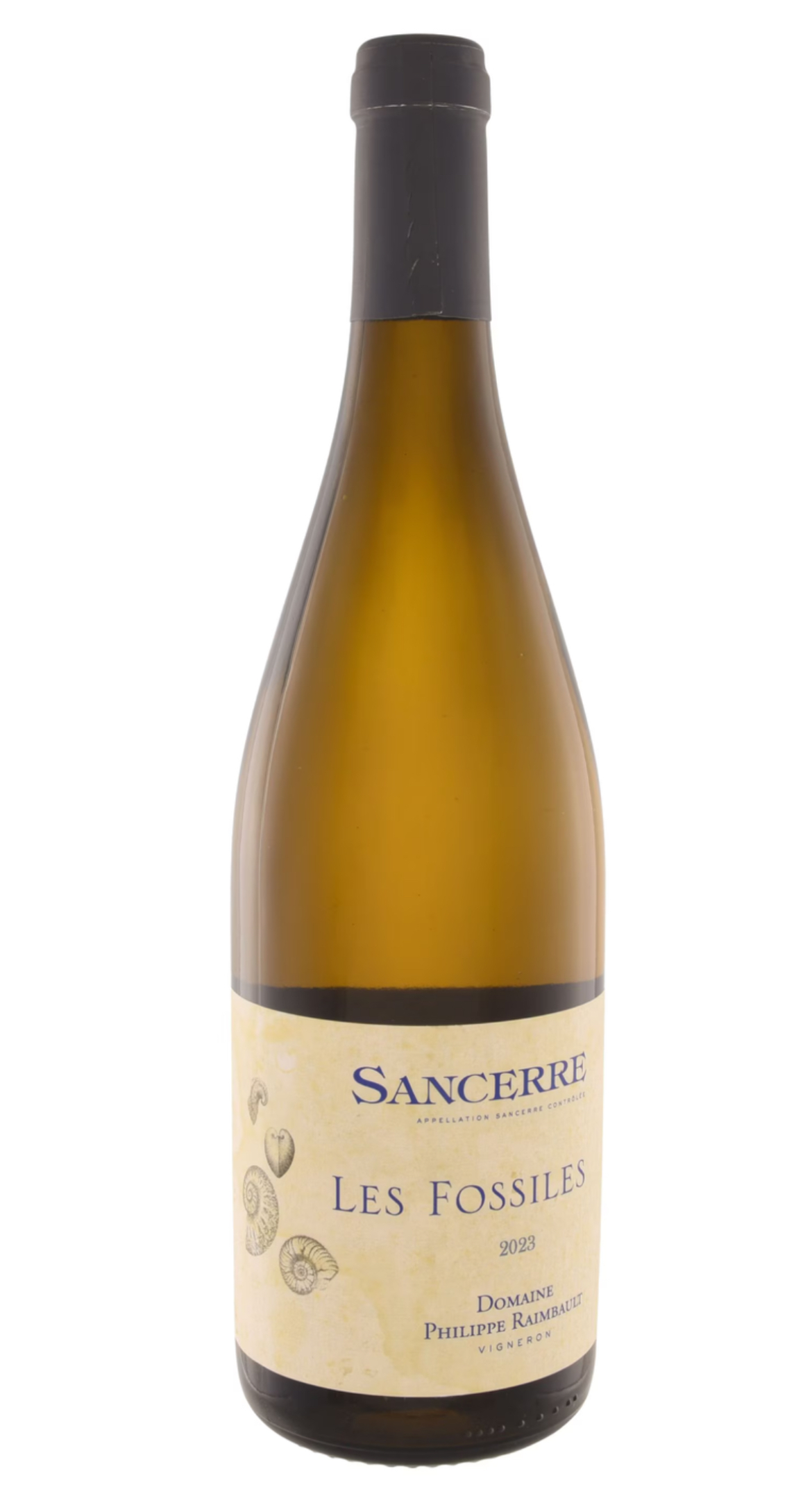
Consider these four well-made Sauvignon Blancs from California, New Zealand, and France. All are moderately priced, at around $30, and widely available. 

Rutherford Hill AJT Sauvignon Blanc 2022 (USA) Wine Spectator 94 pts James Suckling 91 pts Jeb Dunnuck 90 pts

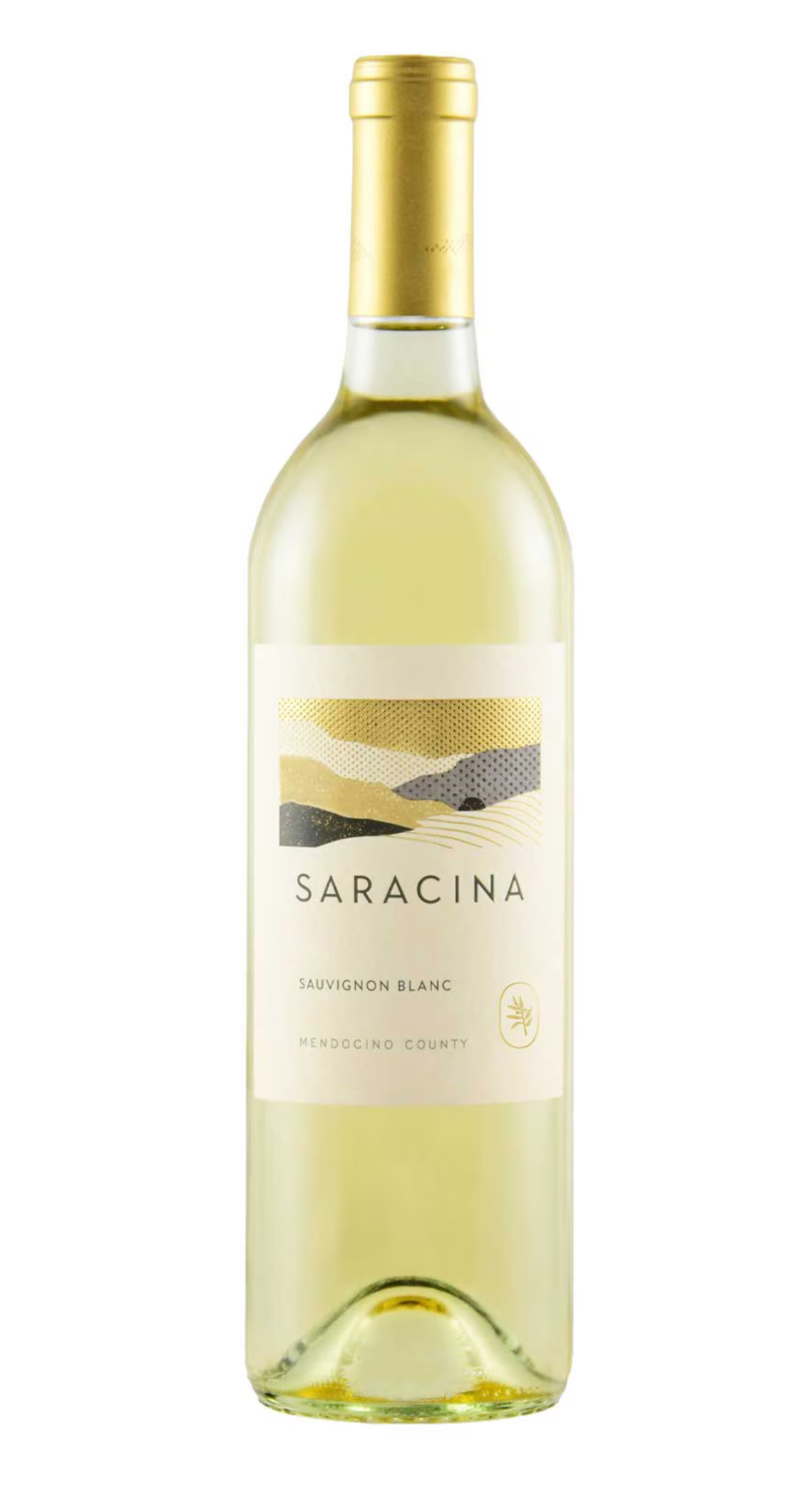
Saracina Sauvignon Blanc Mendocino County 2023 (USA) Wine Enthusiast 95 pts

Cloudy Bay Sauvignon Blanc  Marlborough 2023 (New Zealand) Wine Spectator 93 pts

Domaine Philippe Raimbault Les Fossiles Sancerre Blanc 2023   (Loire Valley, France)

Photo Credit: finewineandgoodspirits.com
Albarino From Galicia, Spain

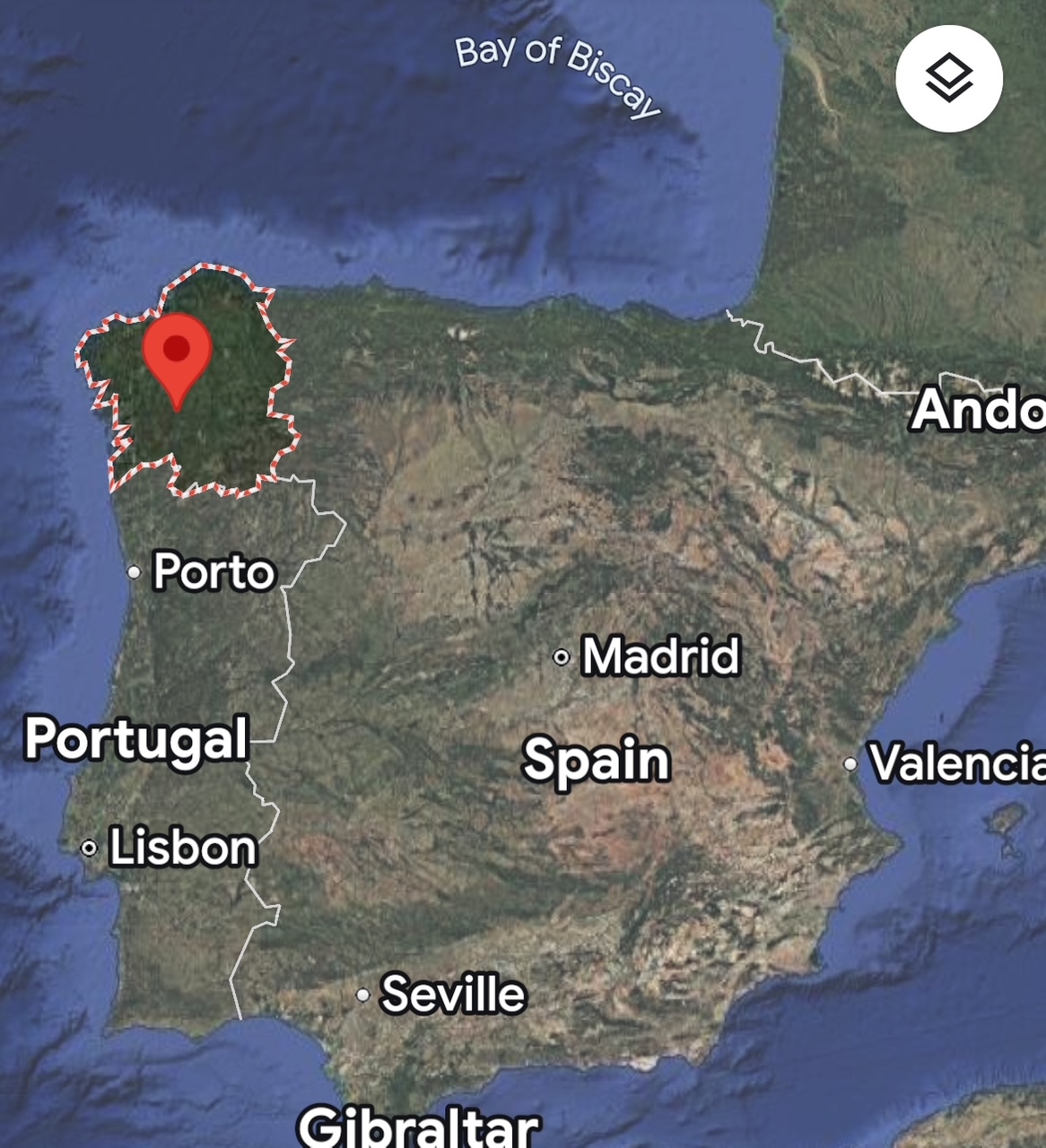
The Spanish region of Galicia is located on the northwestern corner of the Iberian Peninsula, north of Portugal. It is a verdant territory bordered by the Atlantic Ocean to the west and mountains to the east. The capital Santiago de Compostela is home to the cathedral where the remains of the apostle Saint James are believed to be buried. 

The rugged coastline and cold waters of the Atlantic are the source of the region’s bountiful seafood while the diverse inland areas provide unmatched agricultural products. Galicia is a rising star among food lovers and boasts thirty seven Michelin-starred restaurants. 

The wine producing district within Galicia is Rías Baixas. Rías Baixas is a Spanish Denominación de Origen (D.O.) wine region. It has a cool maritime climate with granite soils that contribute to its crisp dry aromatic white wine having high acidity, notes of citrus, and subtle salty character. Galician Albariño has long been the preferred white wine to pair with any of the seafood harvested from its abundance offshore waters and dramatic coastlines. 

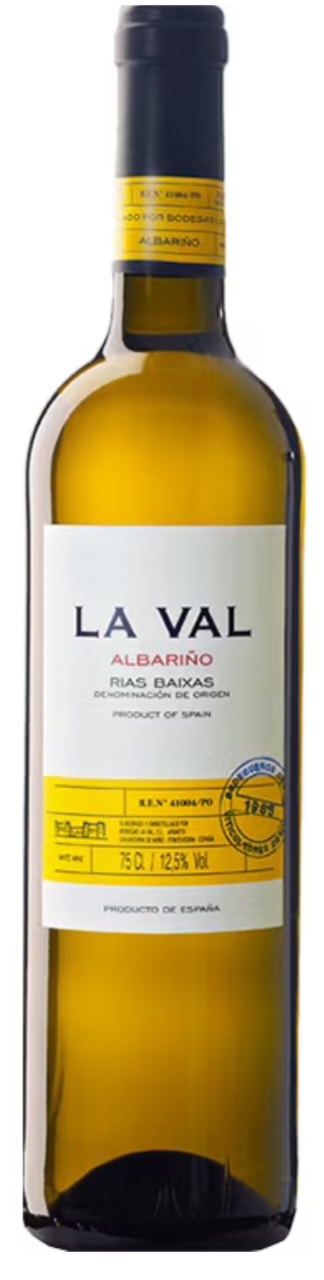
If you are interested in trying a well-made Rías Baixas Albariño in the $20 range I recommend La Val Albariño 2022. It is bright with lively acidity, tangy citrus flavors, a lingering finish, and Albariño’s signature salinity. James Suckling rated this wine 91 pts. 

To learn more about this region you can watch two excellent food and travel hosts that have visited it recently. Award-winning travel show V is for Vino founder and host Vince Anter explores the wines and winemakers of Rías Baixas in Season 4 Episode 2. This episode and all his shows are available to view free on YouTube, as well as, other outlets. CNN presents Eva Longoria: Searching for Spain. She journeyed to Galicia in Season 1 Episode 5. Eva focuses more on the Michelin-starred restaurants of Galicia and local culture. 

Galicia is a fascinating part of Spain, totally unlike the traditional preconceptions of Spain we have grown accustomed to. The world is rediscovering what “Green Spain”, as Galicia, Asturias, Cantabria, and the Basque Country are often called, has to offer in terms of food, wine, beautiful landscapes, and lifestyle. 

Photo Credit: Google, finewineandgoodspirits.com, V is for Vino, CNN

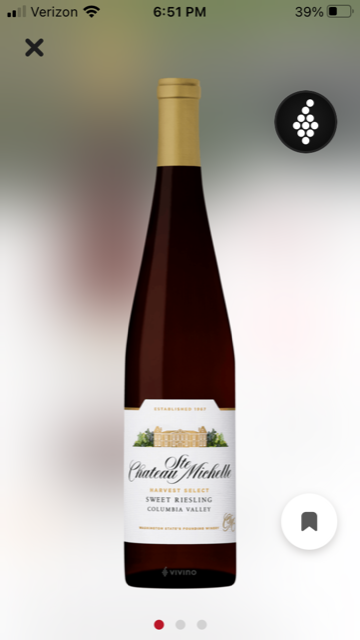
Wine Review: Chateau Ste Michelle Gewürztraminer Columbia Valley 2022

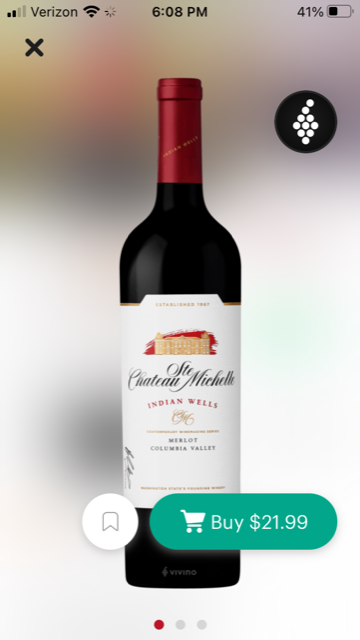
My posts featuring reviews of mass-produced and widely distributed wines have been very popular. The wines I taste for these articles can be easily found in your area. They are made to provide customers with a consistently reliable product in every bottle. 

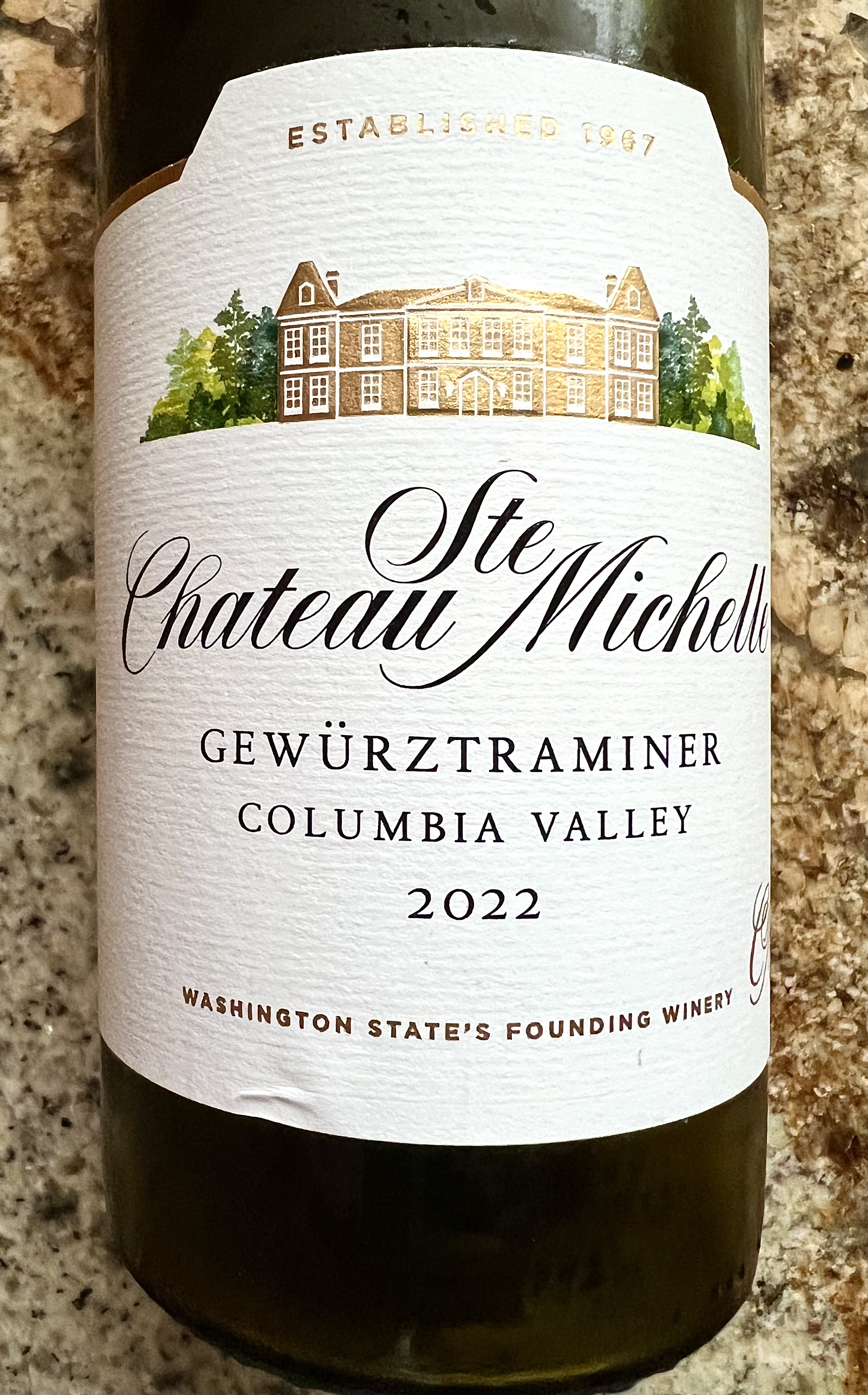
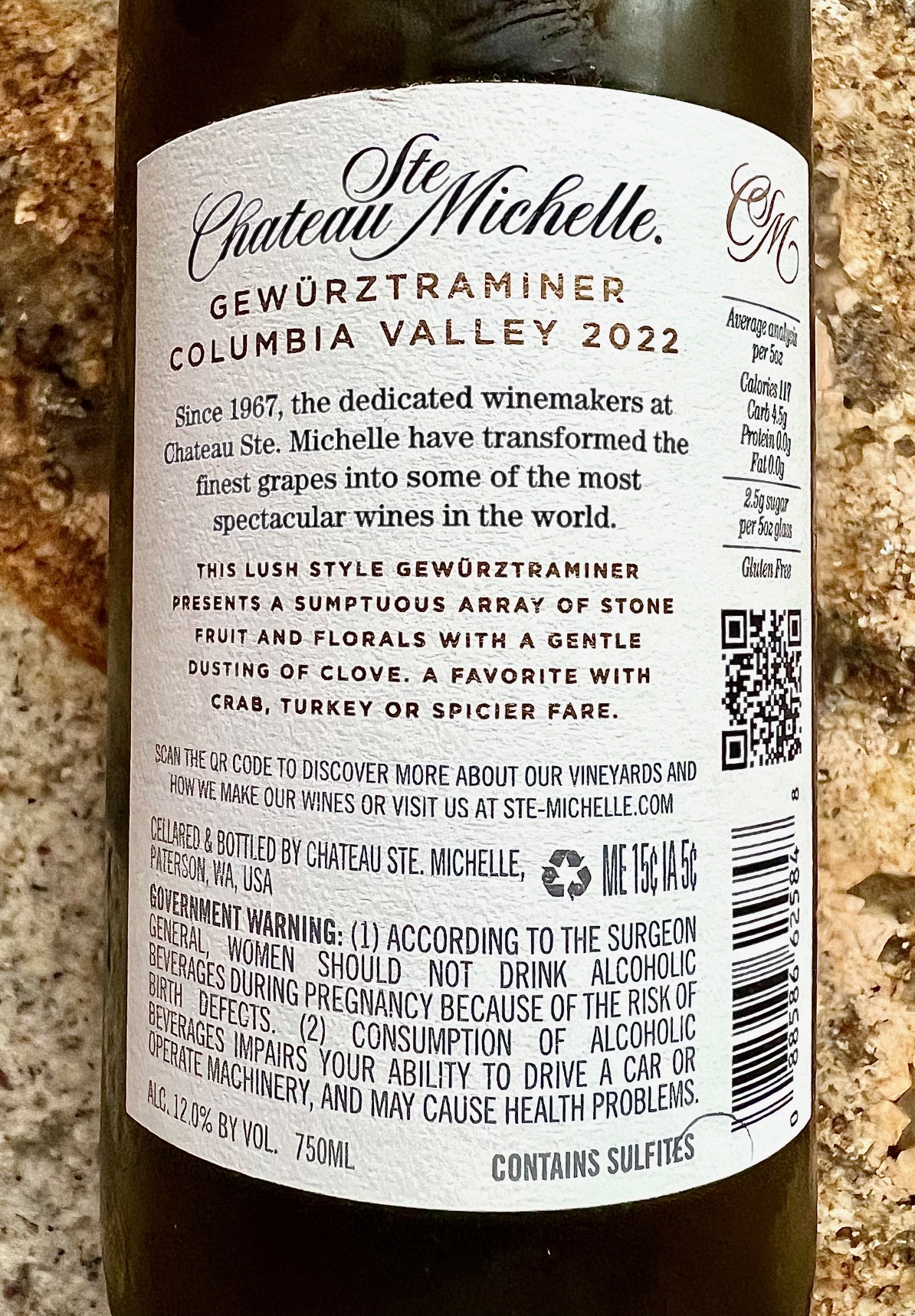
Today’s wine is Chateau Ste Michelle Gewürztraminer Columbia Valley 2022. Chateau Ste Michelle is a mega-winery with an extensive portfolio of wines produced under several labels. Chateau Ste Michelle is again an independent entity after being a subsidiary of tobacco companies for almost forty years.

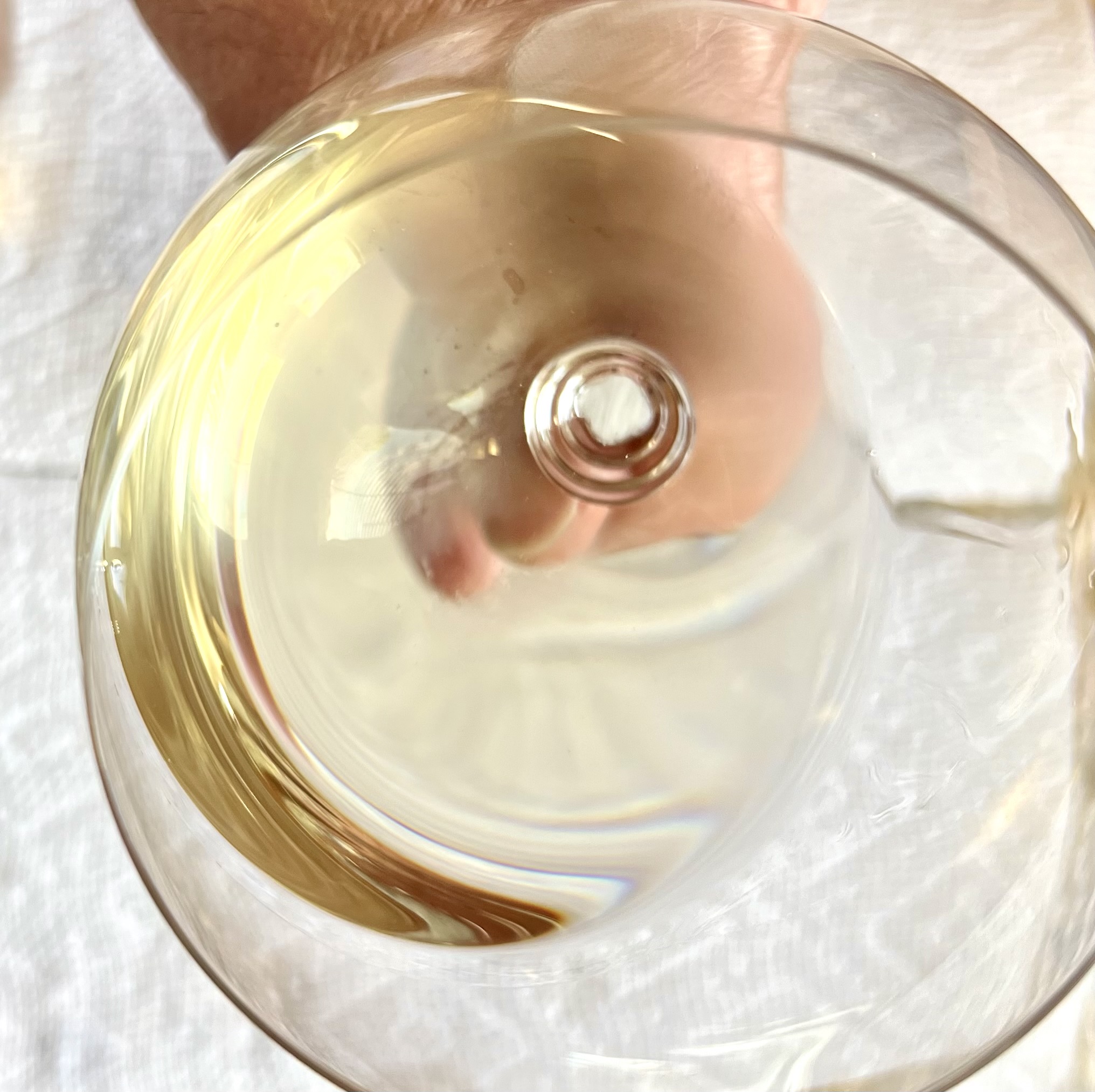
Chateau Ste Michelle Gewürztraminer Columbia Valley 2022 blends 98% Gewürztraminer and 2% Muscat Canelli. Wine Spectator gave it a rating of 88 points. It has a lush mouthfeel with a sweetness just below semi-sweet. Flavors of stone fruit dominate throughout, especially the flavors of apricots and cloves. I found it benefited from aeration. It is a perfect match for spicy Thai cuisine or similar dishes. It is a suitable companion for enjoying a quiet evening under the stars. A 750 ml bottle is usually priced at or below $13 but can be found under $10, making it a solid value choice for a weeknight wine.

More Wine For Less $$$

When I’m asked what is a good wine to buy I always ask what wine they like to drink? When they tell me their favorite wine I say “Then that’s a good wine for you.” This sounds very non-committal but I tell them this because a wine is only a good wine if you enjoy drinking it not because someone tells you it is a good wine but you don’t like it. Not enjoying a wine deemed a shining example of winemaking is not a judgment of your wine quality preferences but a measure of personal taste. The idea that a “processed” wine, you may remember as an “industrial” wine, can actually be enjoyed by millions of wine drinkers has sparked spirited discussions among wine lovers.

These widely distributed wines have to be mass-produced to accommodate the logistics of supplying every retail outlet that offers them for sale. Benefitting from the economy of scale wine conglomerates are able to make these wines readily available at affordable prices and in a mindboggling array of choices. This type of wine is produced in facilities that resemble an oil refinery more often than the small family-run wineries we are accustomed to visiting.

Marketing of wine is a complex procedure that relays on what a consumer is willing to pay for a product as opposed to its quality and production cost, take note that we are back to the perception of what is a good wine and who determines it. Most of the brands I am referring to fall into the $8-$25 range where the completion for sales is fierce. When you look at the bottles in this price range at the store it is easy to be fooled into thinking each is from an individually owned winery but the truth is that they are divisions of a handful of large corporations. E & J Gallo Winery has over 100 unique brands, you will be surprised to see just how many of their brands you recognize but didn’t associate with it. It is virtually impossible for a small winery to compete in this area of the wine market.

The corporations make the decisions on which of their brands are marketed to each consumer demographic and it is carefully produced to satisfy as many of the qualities that group of wine drinkers is looking for in their wine purchase. Depending on how and to whom the wine will be sold ultimately determines its ad campaign and if it gets put in a bottle, jug, box, can, or keg, well you get the picture. Due to certain unknown factors in these decisions, it is possible to find some very drinkable wines at bargain prices. The reason may be the vintages are better than expected and there are limited distribution channels to handle the excess wine. Just like those late-night TV commercials for warehouse furniture stores that tout the “Everything must go” pitch, winemakers often end up with more wine than they can sell. That is why you often find name-brand wines on the shelves of deep-discount retailers.

Just as the economy of scale can have a huge influence on the way wine is produced the clout of buying power has an enormous effect on how wine is sold. I live in Pennsylvania where the government controls all alcohol sales. The Pennsylvania Liquor Control Board (P.L.C.B.) maintains a network of retail stores statewide and offers online sales through its website. The P.L.C.B. is the largest purchaser of wine in the United States and this gives them immense leverage when negotiating deals. The P.L.C.B. uses its Chairman’s Selection program to offer customers an ever-changing lineup of interesting wines at a discounted price. Wine is like any other product, in that getting it on sale is no bargain unless the quality is there. Doing your homework before you go wine shopping can be very helpful when you are cruising the aisles looking for a “GOOD” wine. Happy Hunting!

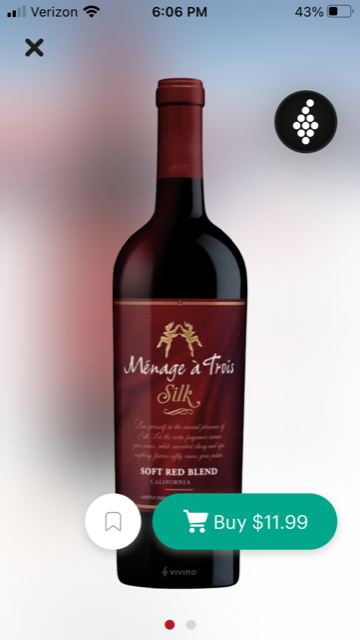
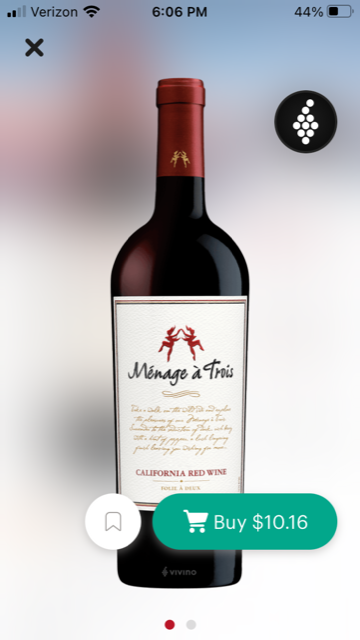
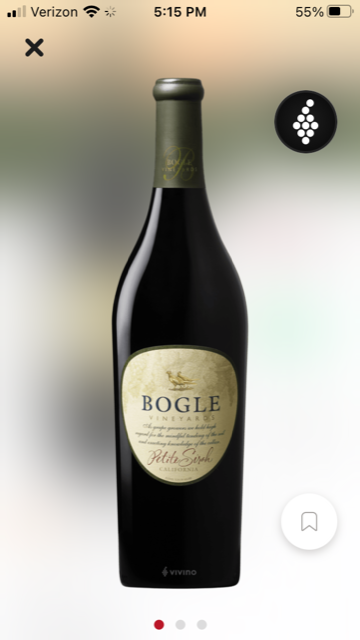
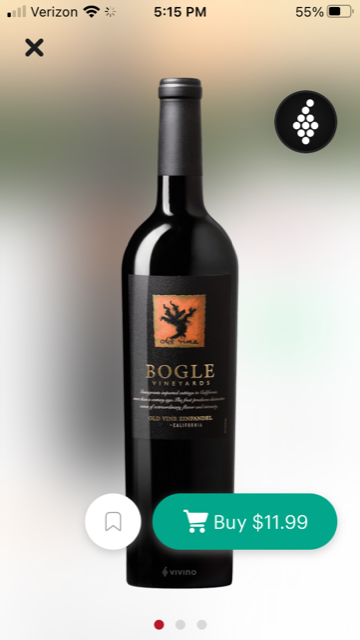
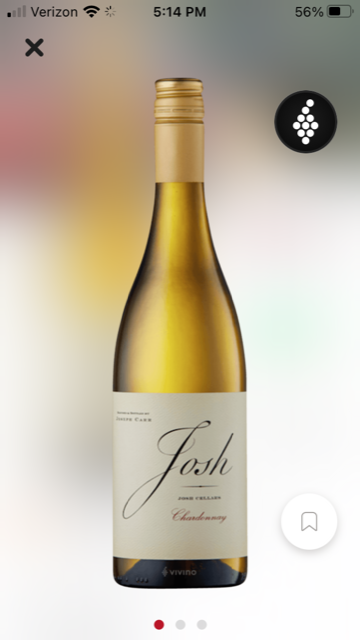
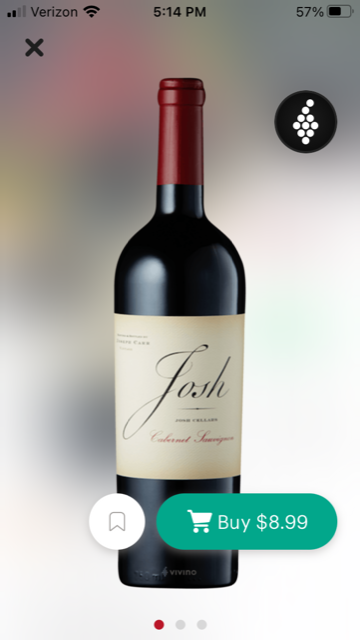
Photos Courtesy: Vivino.com
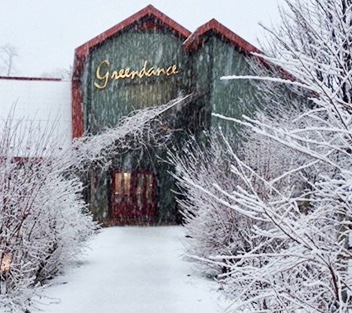
Greendance The Winery at Sand Hill Harvest Update

I recently checked in with Dr. Rick Lynn at Greendance The Winery at Sand Hill in Mount Pleasant Pennsylvania to see what was happening at his winery and vineyards. 

Greendance is home to one of the three young Saperavi plantings in Western Pa. and I was eager to hear how his young vines were progressing. Rick told me: 

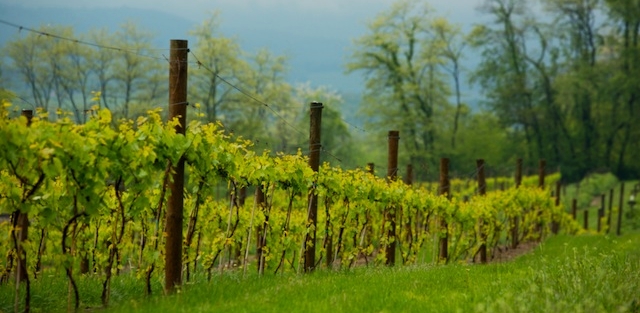
“We had some early to mid-season powdery mildew on only the Saperavi and on none of others that included Kerner, Riesling, and Cab Franc, I personally used the same spray program on all and they were all in the same location.   This reduced the Saperavi crop but the plants recovered and ended the year appearing healthy. There was not a large enough quantity to make a reasonable sized batch. We had about 40# of Cab Franc with good ripening stats as were the Kerner numbers.”

I am patiently awaiting next year’s Saperavi harvest that will hopefully provide ample fruit to produce Greendance’s first vintage of Saperavi. I am also curious how Rick will be able to integrate Saperavi’s signature acidity and dark color into his wine making style to yield new and completely unique blends. 

Unlike the humans that tend to them, grape vines can’t contract Covid19 they only respond to the influences of their environment. I asked Rick to share his thoughts on this year’s harvest:

“Our overall hybrid harvest this year, as for everyone else, was exceptional and in the range of 15T. We had 2T+ of Petite Pearl and 3T+ of Frontenac Gris/Frontenac Blanc. Our farm red blend is Frontenac and Chambourcin and there were plenty of them.  Our wine for American grape lovers is Niagara softened with Louise Swensen and Aldamiina.

I addressed the recent stretch of sub-zero temperatures that had overspread the region and he had this assessment:

“Concerning of course but only for the trial vinifera planting and not the hybrids. This is a better test year for their graft and bud survival. The advantage this year is a gradual but full opportunity for deep dormancy and then steady cold to keep them there up to this point and probably at least for the next 2 weeks.” 

Every year has its own challenges and 2021 was no different but winemakers always find a way to meet those challenges and craft wines that express the very best each year has to offer. I look forward to tasting the 2021 releases from Rick and his team at Greendance Winery. For more information about Greendance The Winery at Sand Hill  please visit http://www.greendancewinery.com Photos Courtesy: Greendance The Winery at Sand Hill
Chateau Niagara Riesling Rosine 2019

When Jim Baker started his winery he didn’t set out to just make good wine but to make great wine in a traditional French style not only for New York but for anywhere.He has been doing just that since the beginning at his Chateau Niagara Winery with his award-winning wines featuring his signature Cabernet Franc. Sometimes you have to explore an avenue of innovation when it presents itself in the form of an interesting twist on a classic Italian wine making style. Jim developed an entirely new method of wine making that he uses to produce his Chateau Niagara Riesling Rosine. Riesling Rosine is a totally new take on Riesling that has to be tasted to be understood. Jim uses a modified appassimento method that he invented to dry his Riesling grapes to the point of them becoming raisins, hence the name Rosine. He chose the name with a tip of the hat because it sounded Italian but is the German word for raisin. 

Chateau Niagara Riesling Rosine 2019 is an off-dry Riesling with bright acidity and balanced sugar that produces a creamy mouthfeel that I found to be surprising for a Riesling. The flavors start with citrus but shift to tropical fruit as a result of botrytris doing its thing during the drying process. You can purchase Chateau Niagara Riesling Rosine and other Chateau Niagara wines online at http://www.chateauniagarawinery.com

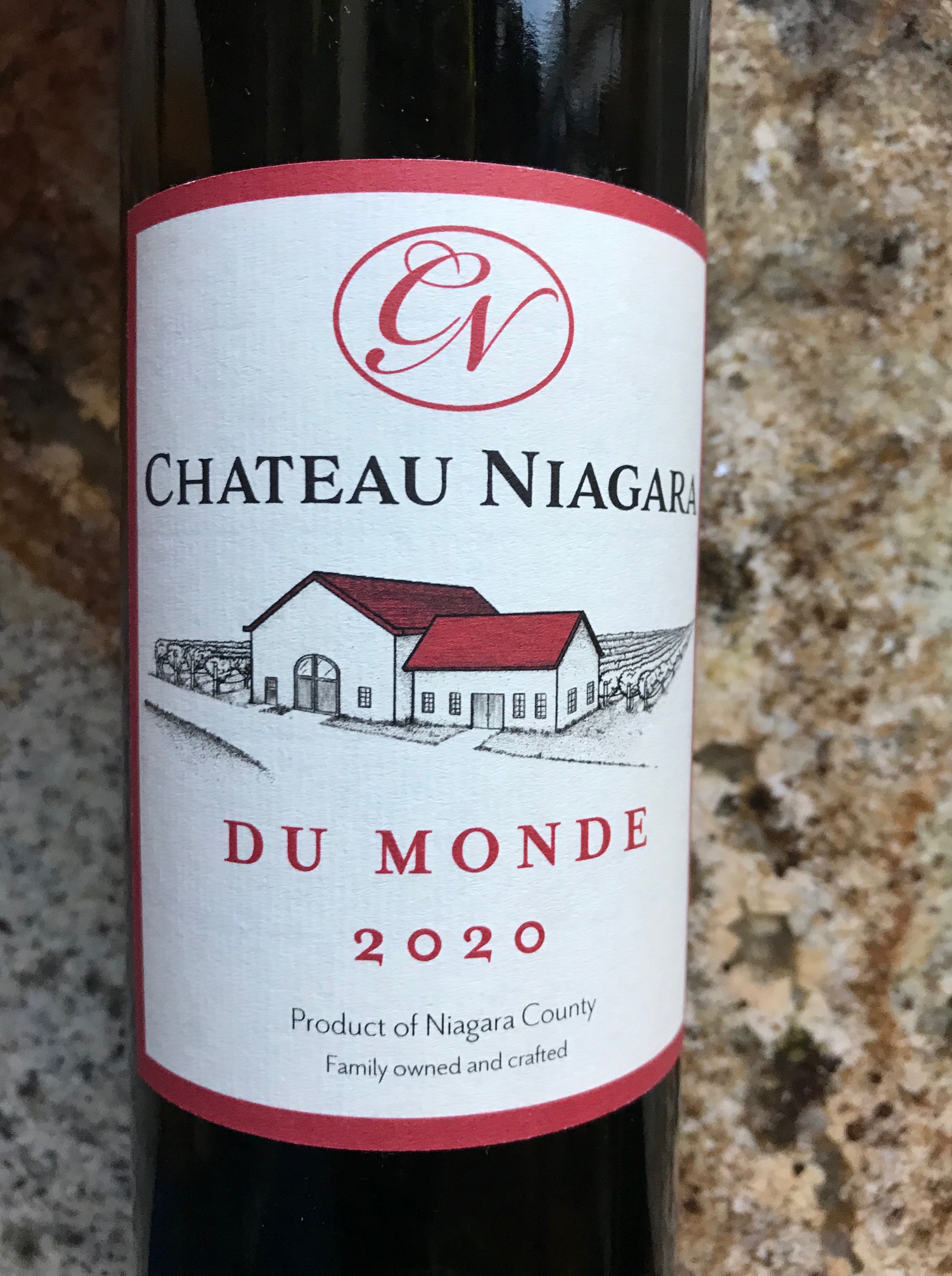
Chateau Niagara Du Monde 2020

Jim Baker is a visionary when it comes to the wine he makes at his Chateau Niagara Winery located on the Niagara Plain near Lake Ontario in Newfane New York. Jim isn’t afraid to think outside the box or even outside of North America when it comes to the grapes he grows, styles of wine he makes or even the techniques he uses in the cellar. Chateau Niagara Du Monde 2020 is a perfect example of a blend of two well-known white grape varieties that yield a surprising unique wine when they are made using centuries-old methods from the fabled cradle of wine making. 
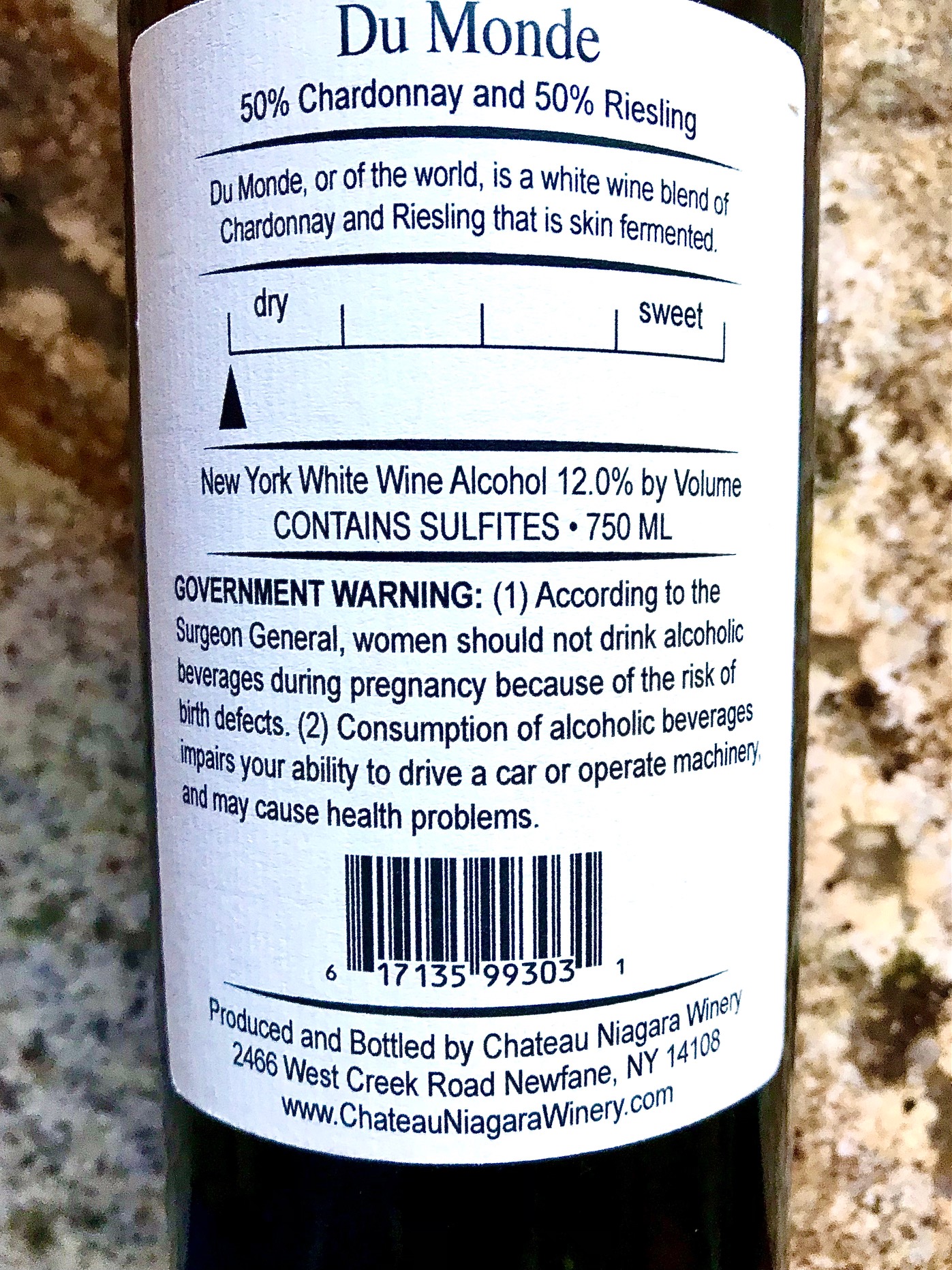
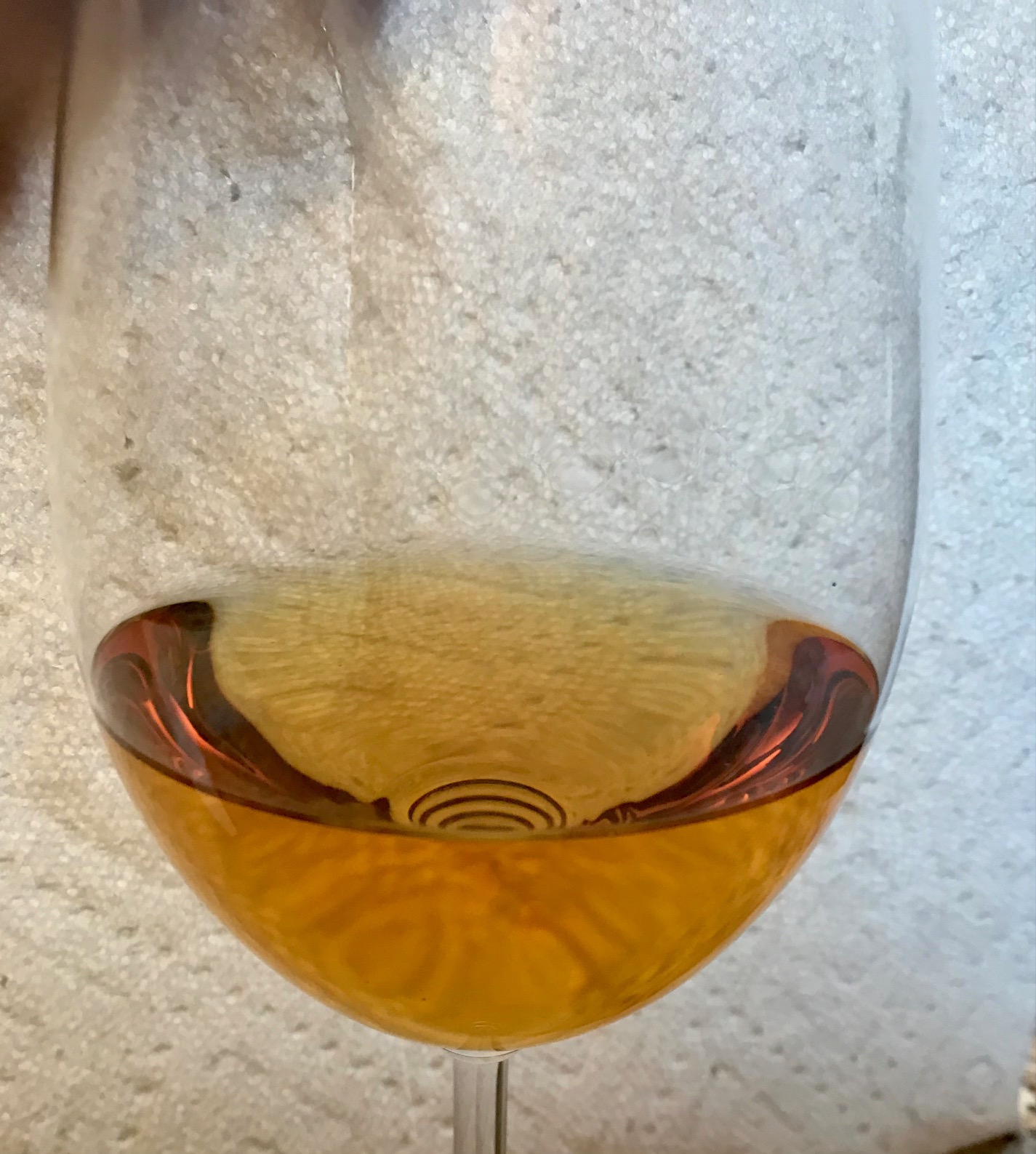
Chateau Niagara Du Monde 2020 is a blend of 50% Chardonnay and 50% Riesling with a R.S. of nominally 0 and an A.B.V. of 12%. Everything from how this wine is made, to the fascinating character these two highly stylized grapes yield when blended together using a process almost exclusively reserved for red grapes is far from the common place. Du Monde 2020 must be tasted to be understood but don’t wait because only twenty three cases were made. I asked Jim to explain how he makes Du Monde so we can appreciate the nuances of his wine.

“Du Monde is a wine made as a Georgian style white. These wines are traditionally skin fermented in clay amphora called qvervi for long periods of time. We did not use a qvervi, but we did a long skin maceration of eight weeks. This is similar to red wine making technique and results in a wine with many red wine characteristics such as deep color of amber rather than red. The skin tannins and phenols that give a sense of drinking a red wine, with a white wine finish. Our Du Monde is a 50/50 blend of Riesling and Chardonnay making a unique and promising blend. The combination yields a certain spiciness that is not apparent in either grape variety. This results in Du Monde pairing fantastic with all sorts of Mexican food.”

It would be correct to say this wine is a simple 50/50 blend of Chardonnay and Riesling but that is a much too simple description. It would be better to use the analogy of two perfectly matched dance partners where neither one outshines the other so you can enjoy their performance in its entirety. Chateau Niagara Du Monde 2020 opens with notes of candied fruit leading into flavors of melon and tropical fruit followed by a medium finish with a tinge of lemon peel. This wine is perfectly balanced and displays a deep amber color in the glass. 

All of Jim Baker’s wines can be purchased online at http://chateauniagarawinery.com and by visiting or calling the winery at 2466 West Creek Road Newfane NY 716-778-7888

Time After Time

You might be familiar with the name Meiomi from its immensely popular Pinot Noir, That Pinot has the dubious honor of being deemed “drinkable” in the controversial 2/4/2019 New York Times article by Eric Asimov titled “Supermarket wines are poured, and worlds collide.”https://www.nytimes.com/2019/02/04/dining/drinks/wine-school-grocery-store-wines.amp.html In his article Mr. Asimov named three “processed” wines, as he called them, to show the divide between how the consumption of wine is viewed between two distinctly different groups of consumers. He used Apothic Red Blend, Meiomi Pinot Noir, and The Prisoner as examples of wine manufactured and marketed to the masses as an industrial product while another smaller group of wine consumers are targeted by the producers of wine that is made in small batches and is an artisanal agricultural product. He also mentions a third even smaller group of wine drinkers who can appreciate and move between both groups. I am a member of that group. While I can enjoy wine from both of Eric Asimov’s groups, I must be careful when recommending a bottle that is in limited distribution making sure it can be found in traditional distribution channels. 

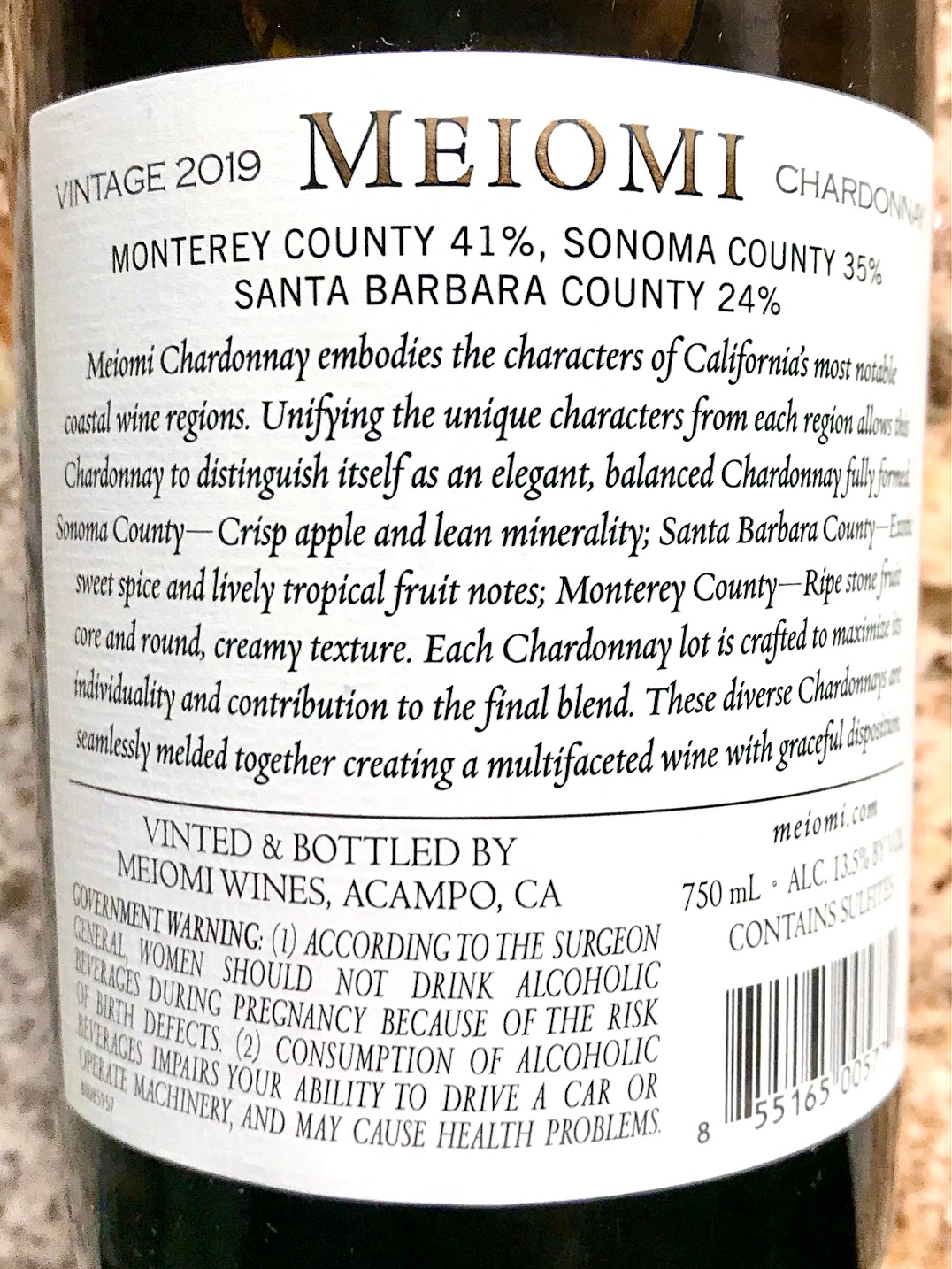
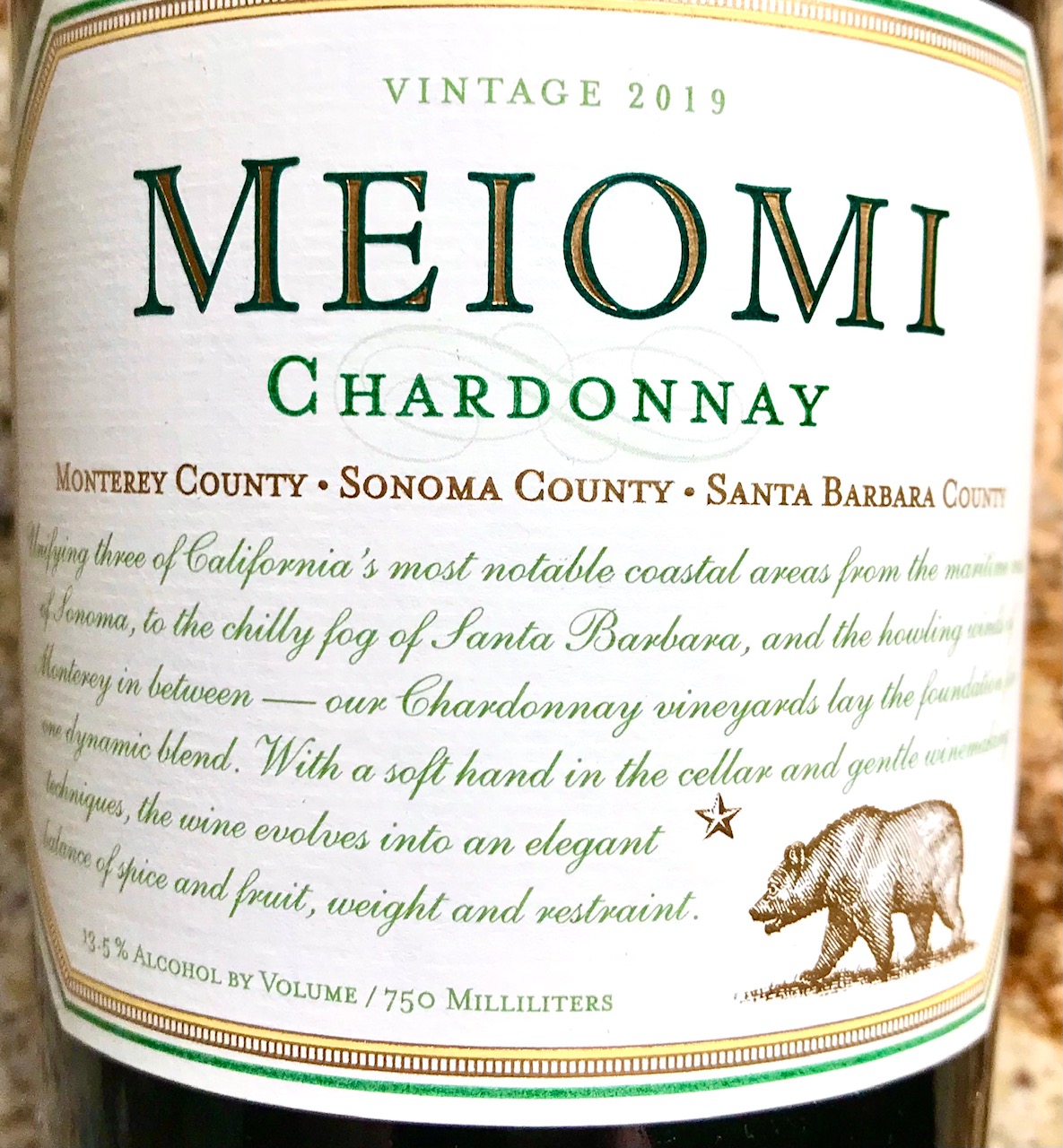
Meiomi Chardonnay 2019 is widely distributed and is very affordable with a price tag under $20. This California Chardonnay is made to check as many of the boxes that Chardonnay drinkers are looking for as possible. It is a blend of grapes from Santa Barbara County, Sonoma County, and Monterey County. Meiomi Chardonnay 2019 was fermented entirely in stainless steel tanks and underwent 100% malolactic fermentation before being aged with French oak. This is not a bone-dry California Chardonnay but has a little sweetness to it, along with flavors of apple, pear, and vanilla followed by a buttery finish.

Meiomi Chardonnay is a crowd-pleaser because it is made to appeal to the broadest range of tastes while maintaining consistency from year to year. If you are planning a gathering where the majority of your guests are casual wine drinkers, I think serving a popular mass produced wine is a wise choice. It is better to be throwing out empty wine bottles than to be pouring half-full glasses of wine down the drain. 

Savage Wines Release 2021

Savage Wines of Salt River, Cape Town South Africa has just announced the 2021 Release of their premium wines. South Africa has a diverse and intriguing offering of wine that cannot be duplicated anywhere else in the world. The legendary Duncan Savage is one of the elite winemakers that are writing a new chapter of winemaking in South Africa with bold and refreshing interpretations of classic South African grape varieties. I am truly appreciative and humbled by this personal note Duncan included as a foreword for me and my readers. Thank you, Duncan.🙏. 

“My path and that of Savage Wines has been shaped by all the incredible people I’ve met along the way. Richard Rocca is one of those people. Rich took an interest in what we were up to long before many others noticed and we’ve had contact every year since. Thanks for all the encouragement and feedback Rich!”

This year’s release is made up of wines from the 2020 vintage with one 2019 in the form of the Savage Red.

2020 offered a fairly moderate growing season with many of the vineyard parcels returning to almost normal crop levels with the exception of Savage White. We see a welcome return of ‘Never Been Asked To Dance’ and ‘Not Tonight Josephine’ to the range, two great examples of Chenin across a spectrum of styles.

The harvest ran pretty smoothly with good ferments and beautiful fruit-forward aromas, all was on track for a pretty normal end to the season. Covid unfortunately arrived and a lot of uncertainty lay ahead for all of us in the wine industry due to the lockdown restrictions. As a result, many of the 2020s spent more time on skins than usual.

The irony is that adversity often brings out the best. We have planned longer skin contact for years and it was Covid that forced our hand. The Reds offer all the perfume one expects from the varieties with a touch more grip and precision. Elegance and purity however remain the cornerstone of our wine philosophy and this year’s release is no exception. While accessible now, the range will deliver for many years to come, ‘Not Tonight Josephine’ in particular is in no hurry.

Thanks very much for your continued support, wherever you are in the world!

All releases are listed below. Please scroll down to view.

Scroll down to see all of this year’s releases

United States – Broadbent Selections broadbent.com United Kingdom- swig.co.uk Japan- raffinewine.com Australia- paramountliquor.com.au Canada- (Ontario) lcbo.com (Quebec) saq.com Hong Kong wineimpala.com

Winemaker Duncan Savage

All Photos Courtesy: Savage Wines

Tips For Choosing Wine From A Wine List

If you lack confidence when ordering wine from a restaurant’s wine list you are not alone. You should never be intimidated by wine because wine should be fun and an opportunity to learn. Keep it simple and don’t get caught up in what you don’t know but have an open mind to any interesting suggestions that are offered. While many people fall back on the same old selections or point to a bottle and hope for the best, you can do better with a little preparation. Here are a few tips I learned from a sommelier that will help them find you the best wine for your dining experience.

First and foremost, be honest and engaging when asked about your preferences. Tell them the body and style you like because a restaurant invests a lot of money to have a sommelier help you make the wine selection process more enjoyable so take advantage of their knowledge. Here’s a tip that will get the best wine available for the price you want to pay. Simply point to a bottle on the list with the price you are willing to pay and say “I have had (wine name) before but I would like to try something different”. This will let the somm know what you are willing to spend and they can guide you to a bottle in that price range. After you make your selection the somm will retrieve your bottle from the cellar and open it tableside. They will present the cork to you but this is purely ceremonial and there is no need for you to either touch or smell it. Next, they will pour a small sample for you to taste. This sample is for you to check for flaws not to see if you like the wine. If it is acceptable give them a small nod and they will begin serving your dining companions with you being served last. One last tip, during your initial exchange ask your sommelier if there are any wines they are excited about. This allows them to share hidden gems now that they know you share their love of wine.  

Photo by Ray Piedra on Pexels.com