Review: Zaccardi Q Cabernet Franc Valle De Uco-Mendoza 2021

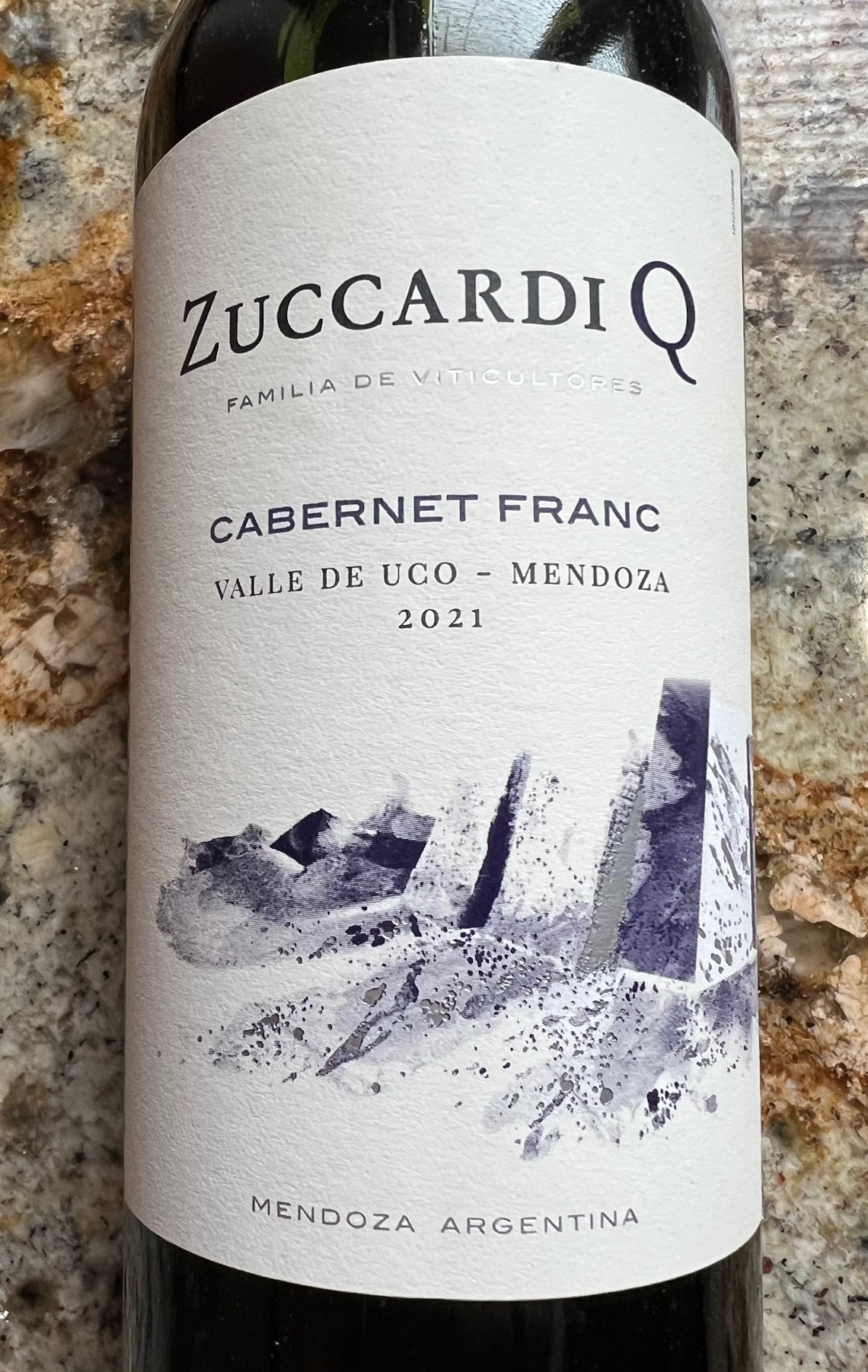
Zuccardi Q Cabernet Franc Valle De Uco – Mendoza 2021 

Zuccardi is my go-to Argentina winery for dependable high-quality wines at a fair price. They are a multi-generational producer located in the Mendoza Region. This was the first time I tried a Zuccardi Q Cabernet Franc but it won’t be the last. I plan on having a few bottles on hand for when I want a solid food-friendly weeknight wine. 

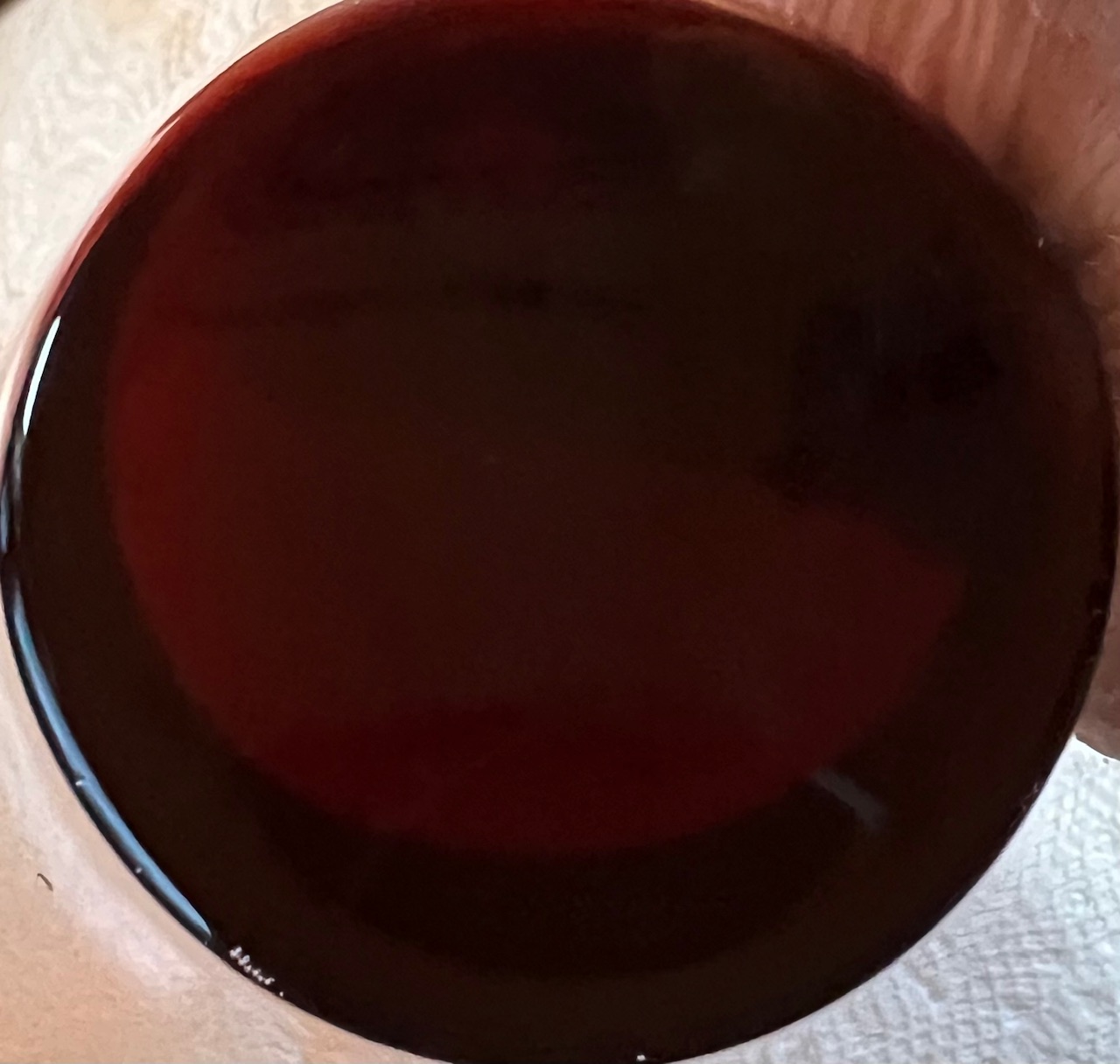
Everything about this wine is in balance, from its understated acidity, smooth tannins, and restrained red fruit flavors that are carried on a medium dry body and then showcased in a dark purple/red colored wine in your glass. 

Grapes for this Cab Franc were harvested from two unique vineyards in the Andes Uco Valley. The Paraje Altamira vineyard is 3600 feet above sea level (F.A.S.L.), and the San Pablo vineyard is 4500 F.A.S.L. I purchased my bottle at a Pennsylvania Fine Wine & Good Spirits store as a “Chairman’s Selection” offering for the bargain price of $12.99, but it can be readily found in the $20 range. 

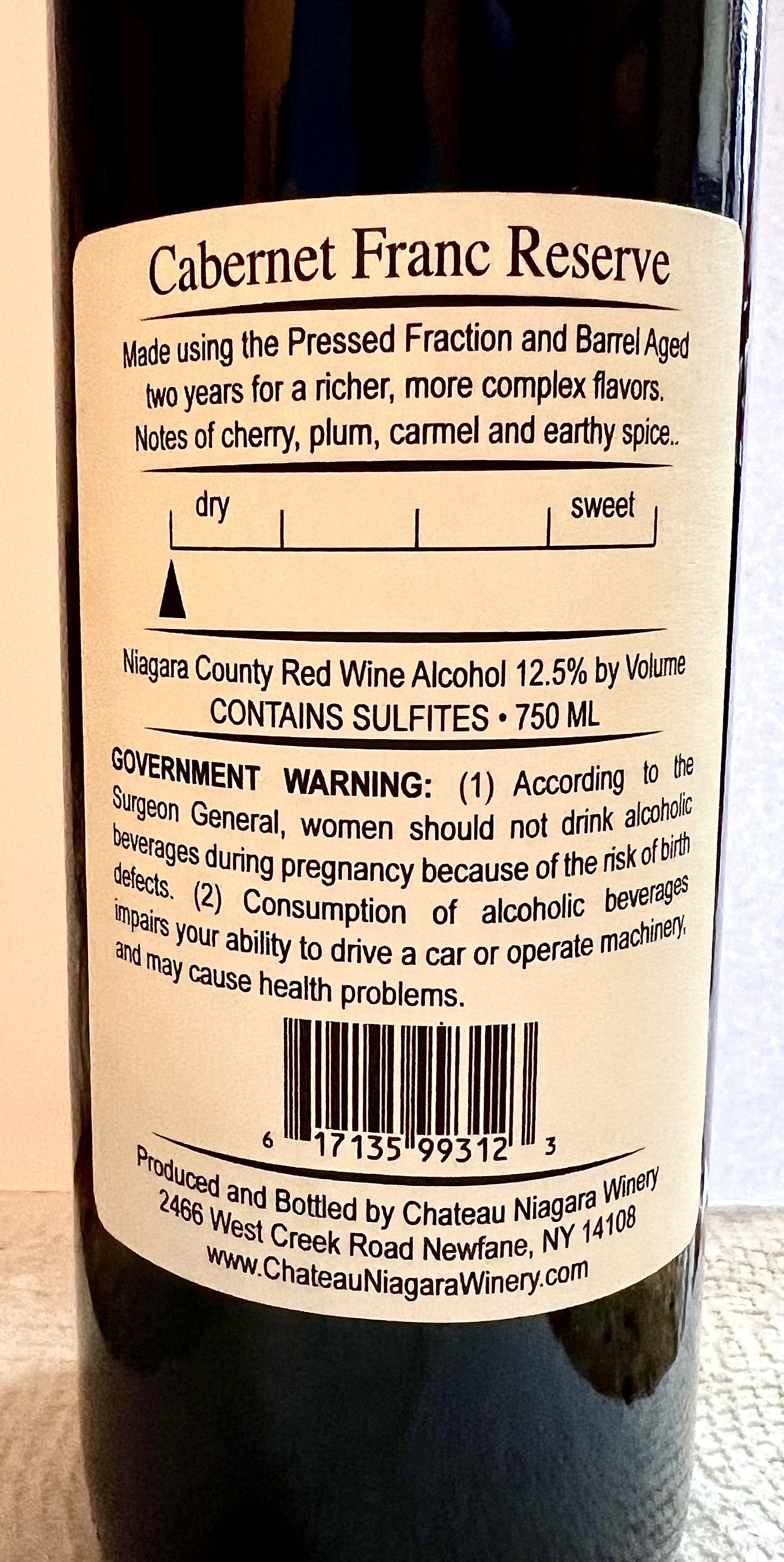
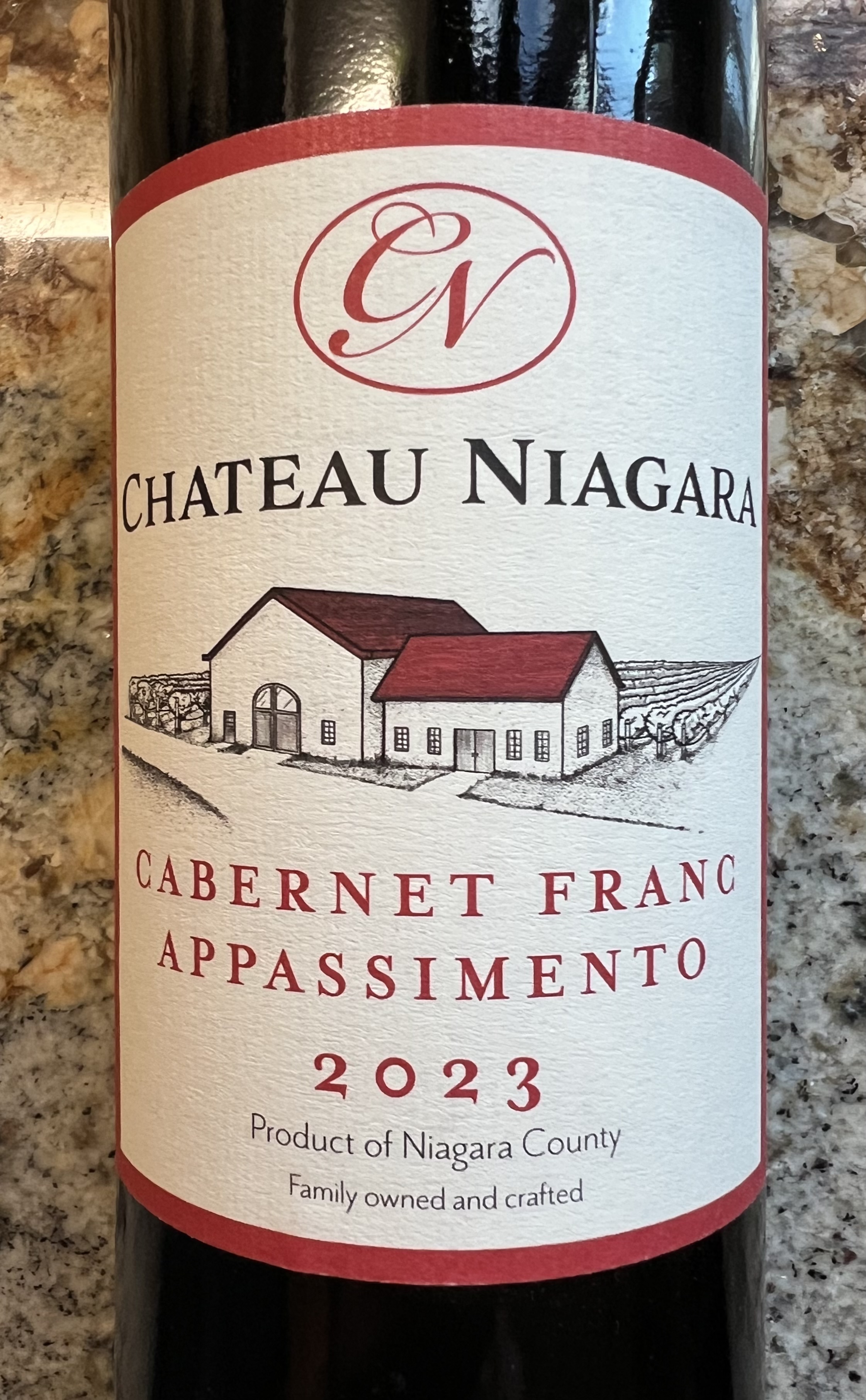
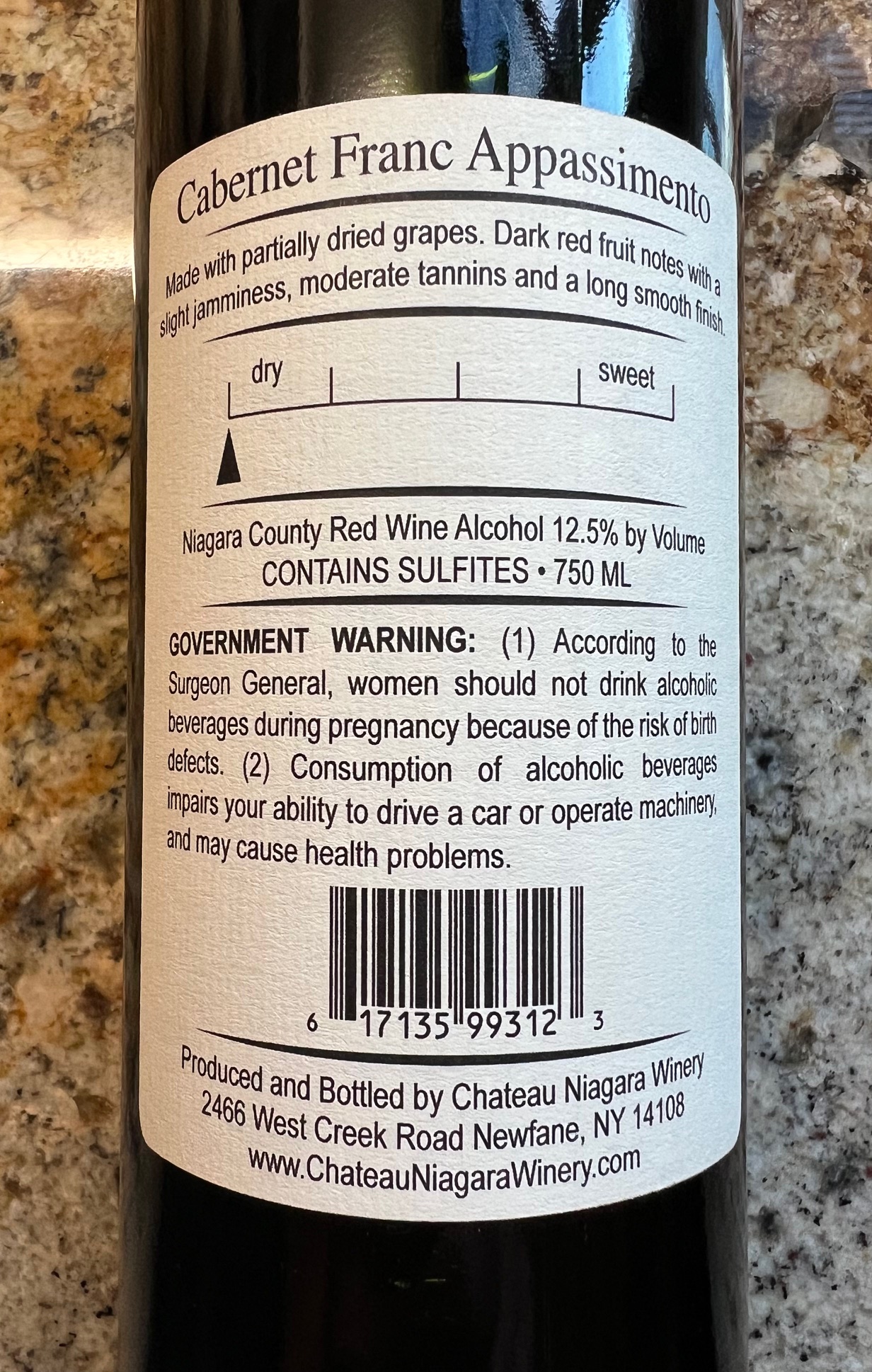
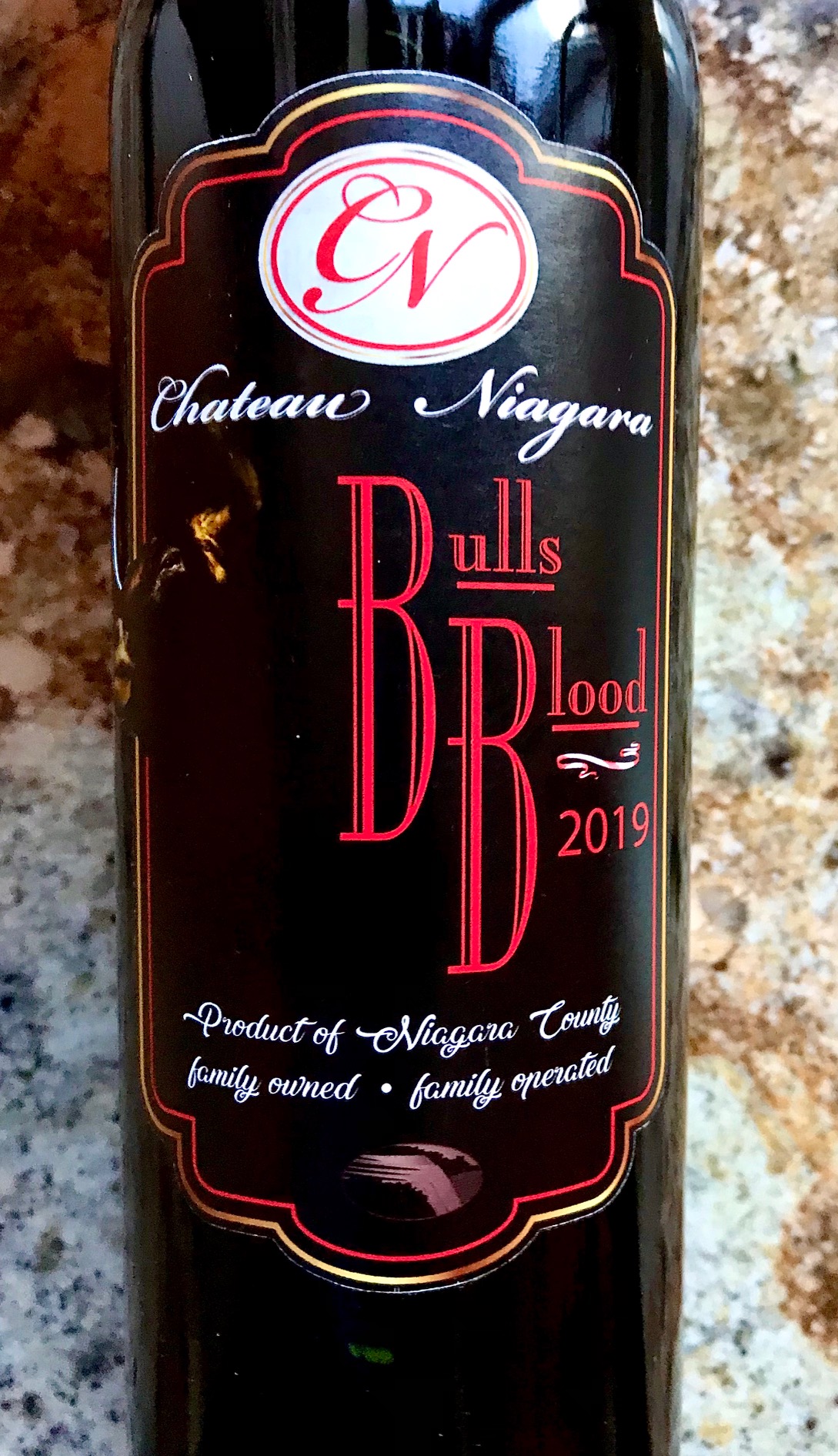
I recently reviewed two Cab Francs from Chateau Niagara in New York. Although this Zaccardi Q wasn’t as big or as complex as the Chateau Niagara Cabernet Franc Reserve Review: Chateau Niagara Cabernet Franc Reserve 2022 or Cabernet Franc Appassimento Review: Chateau Niagara Cabernet Franc Appassimento 2023 it certainly deserves a place on your dinner table.

A Winelovers Guide to Western Pennsvlvania Wineries Part 1

If you have ever found yourself staring out the window and daydreaming about relaxing at a little bistro table sipping a glass of wine while overlooking a serene vineyard, you are not alone. Wine lovers in Western Pennsylvania need not lament the false notion that they must pack their bags and travel hundreds or thousands of miles to live that dream. 

Pennsylvania is home to more than four hundred wineries and over fourteen thousand acres of vineyards. Some of the very best are located on the western side of the state. The wineries are as unique as the wines they make. The following suggestions are just a starting point. The real fun comes in exploring all this region has to see and do. 

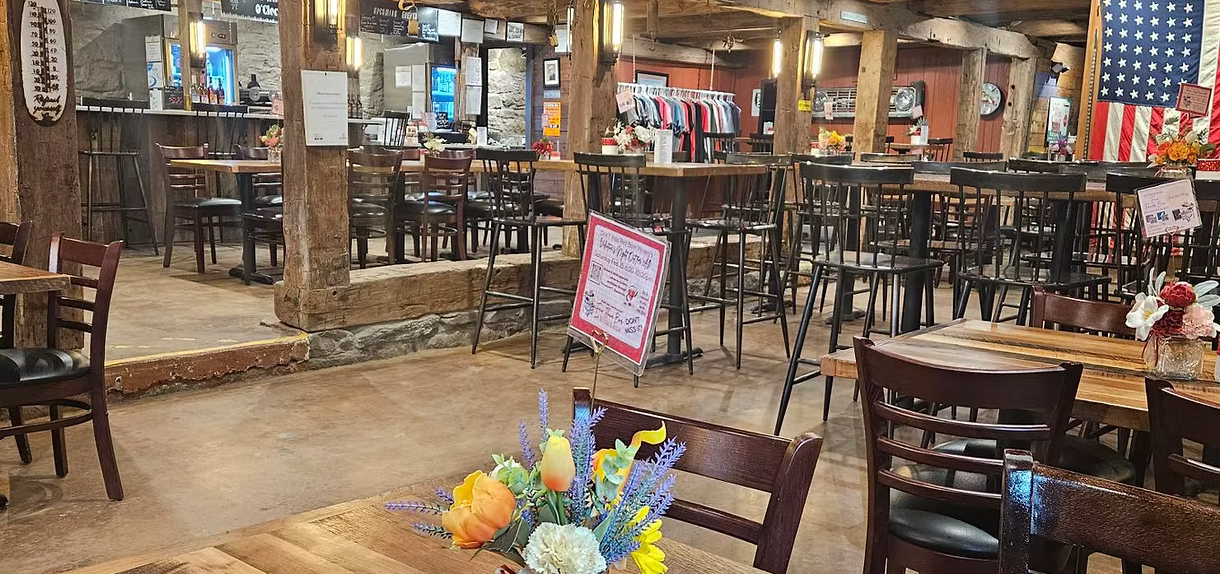
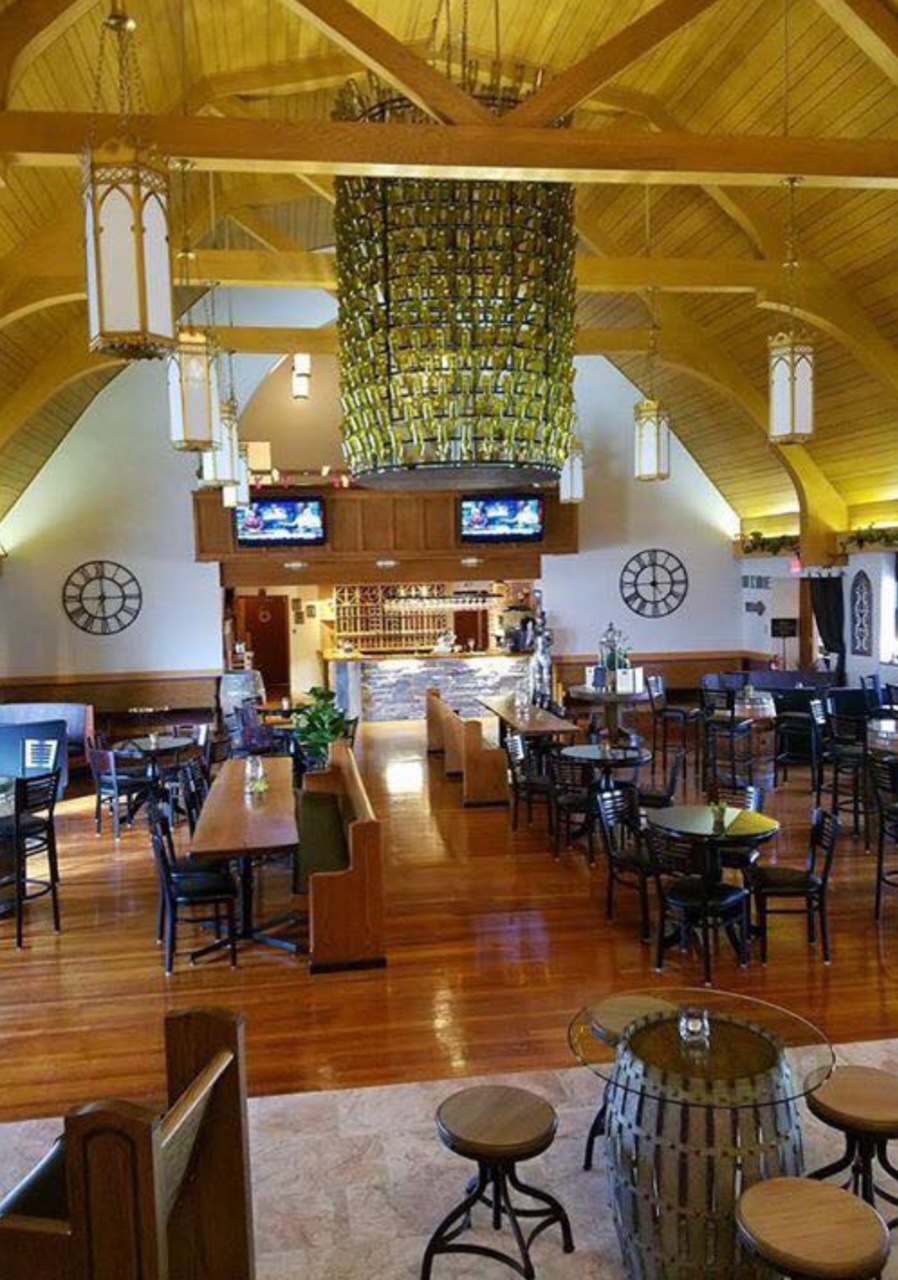
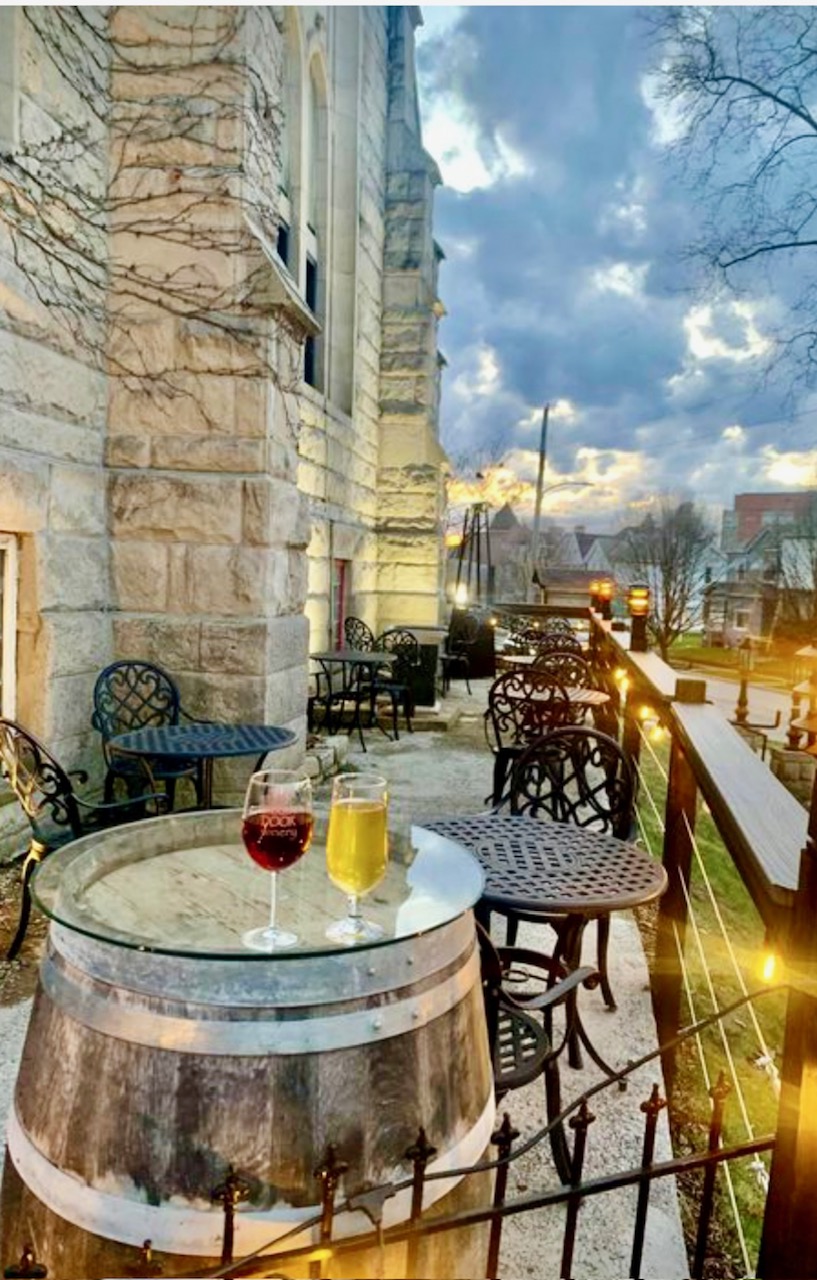
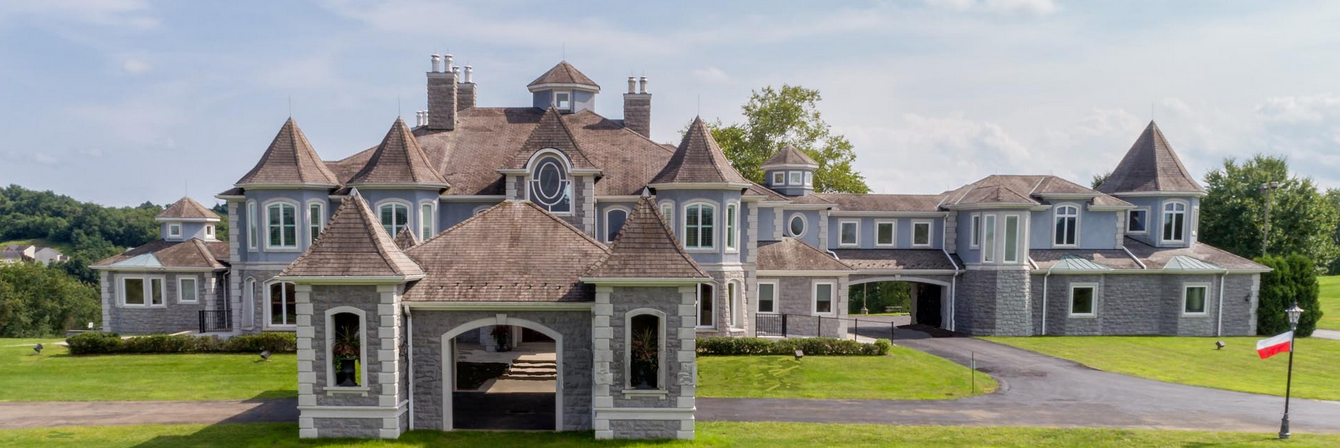
Guests at Ripepi Winery & Vineyard in Monongahela can enjoy the tranquil ten-acre vineyard from a Tuscan-inspired winery as they savor a glass of their estate-made wine.  Owner/winemaker Rich Ripepi founded his landmark winery in 1987. Today, it is a family legacy he shares with his winemaker/sommelier daughter Janelle Ripepi D’Eramo, and winemaker son Dr. Daniel Ripepi. They host a fun “Happy Hour” event every second Friday of the month. http://ripepiwine.com 724-292-8351

Traveling to Mount Pleasant you will find Greendance The Winery at Sand Hill. Greendance Winery is part of Sand Hill Berries, a small family-owned farm that specializes in berries, especially raspberries. You might recognize them from their raspberry specialty desserts booth at festivals. The winery and its grounds are set in the idyllic Laurel Highlands countryside. Stop by anytime to enjoy the rural ambiance but if you visit on a summer weekend you will be treated to live music as you unwind with a bottle of their wine. http://greendancewinery.com 724-547-6500

Up we go into the Allegheny Mountains to Chalk Hill where we arrive at Christian K. Klay Winery. A visit to Christian K. Klay Winery and its adjacent Ridge Runner Distillery will surely include wine, spirits, and beautiful vistas. http://christianklaywinery.com 724-439-3424

Bella Terra Vineyards in Hunker is easily accessible and has ample parking plus plenty of inside and outside areas making it a favorite meeting place for friends and family. Check their website for the many special events on the calendar. http://bellaterravineyards.com 724-635-3658

If you are looking for a twist on your usual night out then the City Winery is the place for you. Unlike the other wineries mentioned, City Winery is on Smallman St in Pittsburgh’s “Strip District”. It is a winery, restaurant, and event center that promotes live music, comedy shows, and wine events. http://citywinery.com/pittsburgh 412-246-1000

These are only a few suggestions to pique your interest. I will add new wineries for you to try in future posts. I urge you to do a little research on the Internet, and I’m sure you will be surprised by the number of interesting options you will discover in your area. Have fun, and always drink responsibly. Cheers!

Photo Credit: (Left To Right) Ripepi Winery & Vineyard, Bella Terra Vineyards, Greendance Winery

Review: Chateau Niagara Cabernet Franc Reserve 2022

Jim Baker, owner, winemaker, and vigneron of Chateau Niagara Winery Newfane, New York http://chateauniagarawinery.com has a special touch when making high-quality Cabernet Franc. His Chateau Niagara Cabernet Franc Reserve 2020 is no exception. He uses Cabernet Franc grapes grown in his vineyard and a nearby vineyard to produce his award-winning Cab Franc year after year. Jim told me “These are some of the best wines I have made.”

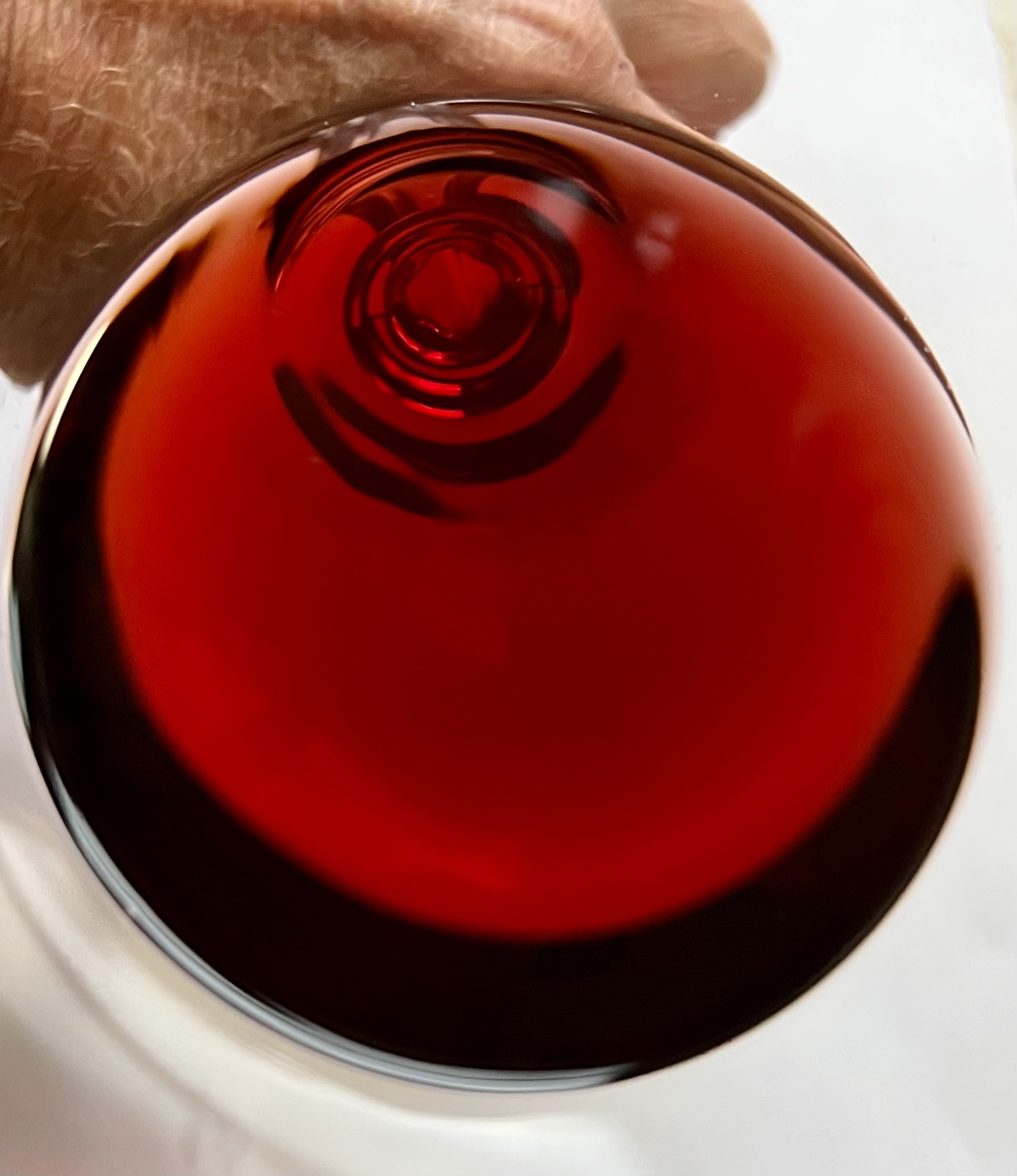
Chateau Niagara Cabernet Franc Reserve 2022 is a plump and juicy full-bodied dry wine that dazzles with a medium ruby red color in your glass. Bright acidity, tart red cherry, and raspberry flavors are front and center with subtle pepper background notes. Smooth tannins carry through a long finish. This Cab Franc drinks well now and should age nicely. 

Review: Chateau Niagara Cabernet Franc Appassimento 2023

The following two posts will be my reviews of Chateau Niagara Cabernet Franc Appassimento 2023 and Chateau Niagara Cabernet Franc Reserve 2022. Jim Baker owner, winemaker, and vigneron of Chateau Niagara Winery Newfane, New York http://chateauniagarawinery.com told me “These are some of the best wines I have made.”

Chateau Niagara Cabernet Franc Appassimento 2023

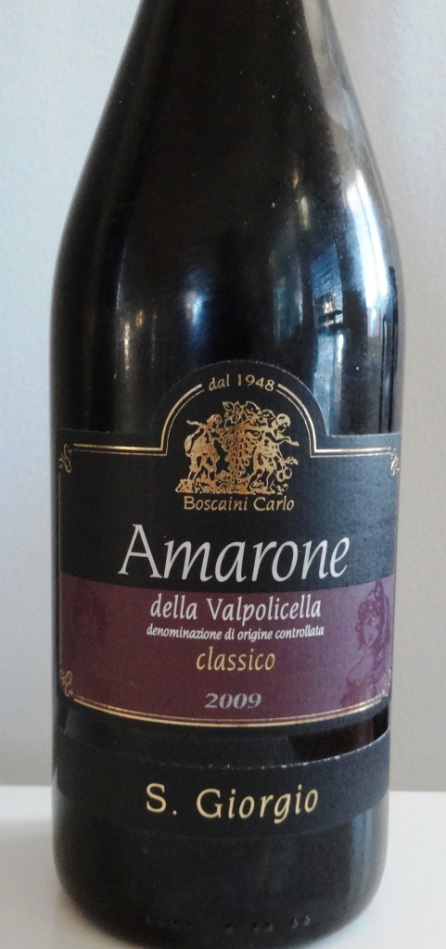
A wine made in the Appassimento style is created by using partially dehydrated grapes. It is a technique used by Italian winemakers to give Amarone di Valpolicella its signature depth and complexity. Jim applied this process to his Cabernet Franc grapes to produce his outstanding Chateau Niagara Cabernet Franc Appassimento 2023. 

Beginning with a bewitching dark ruby red color in your glass this Cab Franc quickly opens with aromas of blueberries leading into flavors of cherry, dark berries, and plum. Supple tannins and balanced acidity carry through a long lingering finish. Consider purchasing several bottles with the intent of drinking some now and leaving some to age in your cellar. 

“Old World” or “New World” Why Not Both?

Wine is often divided into ones made in the “Old World” versus ones made in the “New World” but what does that mean? They are segregated along geographic lines. Old World wines are categorized as being made in Europe and the Middle East. New World wines are made anywhere else e.g. Australia, the Americas, Southern Africa, Asia, etc. The Old World relies mainly on traditional wine grape varieties (Vitis vinifera), time-honored wine-making methods, and labeling that emphasizes the location where the wine was made and, prioritizes a wine’s terroir. Old World wine regions tend to have cooler climates that yield wines with restrained tannins and are not as fruitful with less sugar. The lower sugar levels contribute to their lower alcohol content (ABV). 

New World wines also use traditional grape varieties but are heavily invested in non-traditional grape varieties and readily embrace modern wine-making techniques, ideas, and technology. Its wine bottles are labeled identifying the grape variety used to make the wine. The climates of New World wine regions tend to be warmer and that variable favors the production of wine with fuller fruit flavors, rounder tannins, and higher alcohol content. Lastly, New World wines display more oak which is achieved by using newer barrels that extract greater fruit flavors and tannins. 

It doesn’t matter whether a wine is an “Old World” or “New World” offering, the only thing that matters is that you enjoy drinking it. Snap a pic of the label just in case you can’t remember what to buy the next time you are wine shopping.

Tuscany Dreams

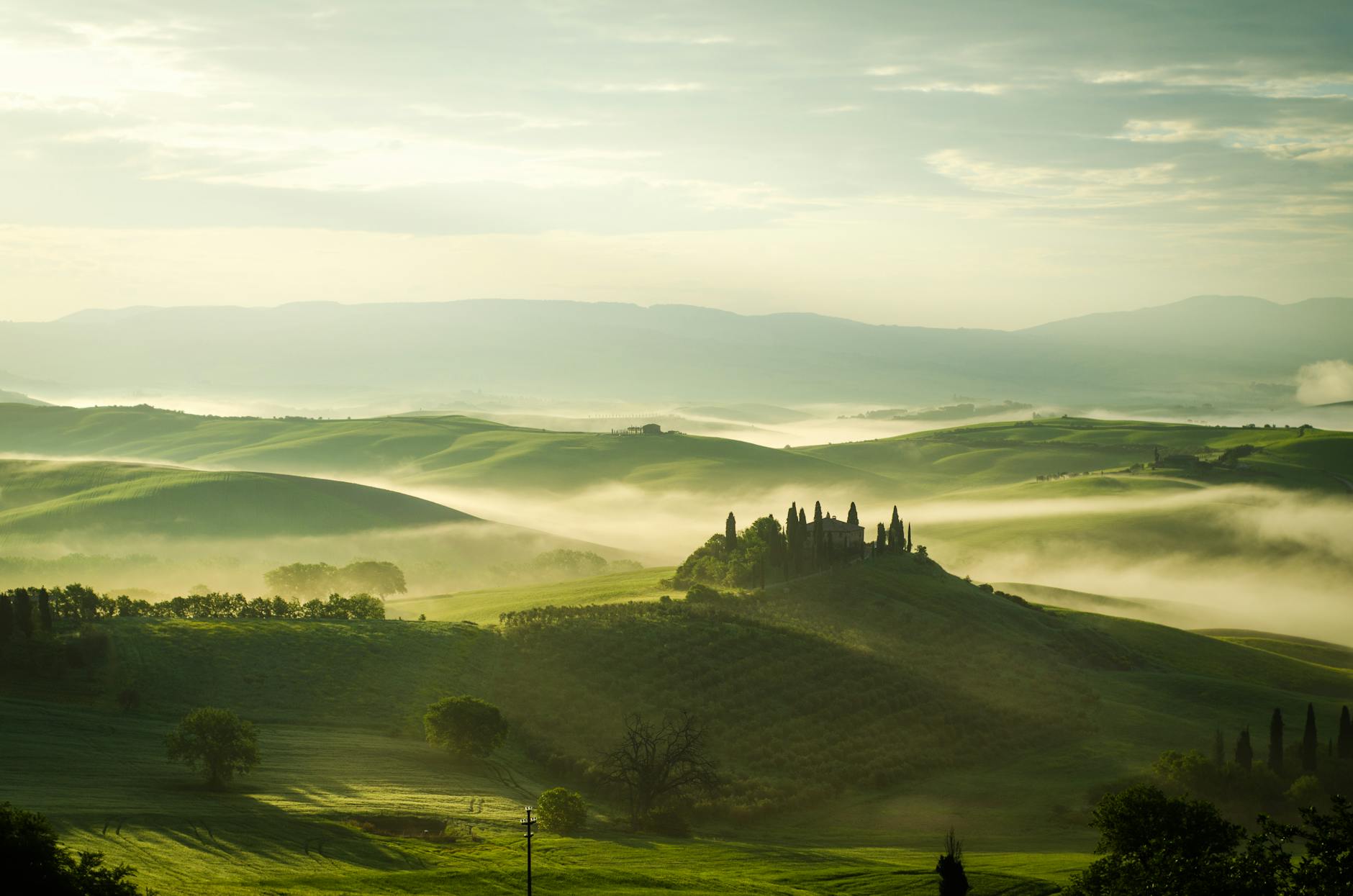
When you hear Tuscany thoughts immediately come to mind of rolling hills covered in geometrically precise rows of grape vines in vineyards bathed by the golden sunshine of an idyllic Tuscan afternoon. Travelogues and magazine articles of the mid-20th century created a mystic that cast Tuscany as the epicenter of the trendy Italian food and wine culture. Whether that was an accurate assessment either then or now is debatable but for many perception remains reality. 

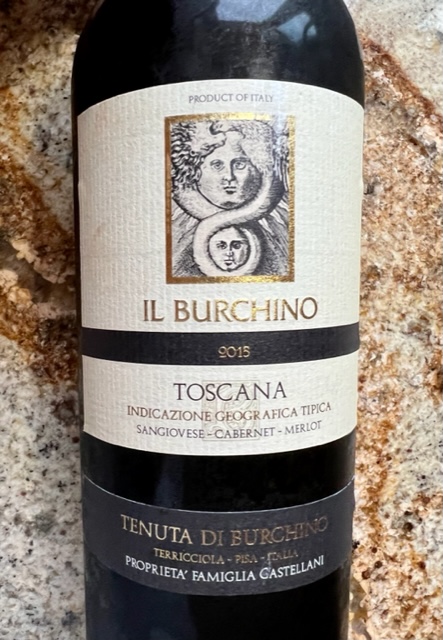
In Tuscany (Toscana) one grape has always reigned supreme and that grape is Sangiovese. It is from this grape that three of this region’s most recognizable wines are made. Brunello di Montalcino, Chianti, and Chianti Classico are all made from the Sangiovese grape. While they are all made from the same grape variety they are all very different wines. It is safe to say that we have all dined in an Italian restaurant with a red and white checkboard tablecloth with a bottle of Chianti in a straw basket as a centerpiece. Those are not good examples of the quality of wine Sangiovese can produce. When the market for Chianti tanked in the 1970’s Italy changed its wine laws which is what sparked the dramatic resurgence of Chianti and Tuscany on the world stage. The wines got better, winemaking methods improved, and high-priced Super Tuscans gained global notoriety. Cabernet Sauvignon can now be considered Tuscany’s second most important grape because along with Sangiovese it is a prominent grape in the majority of Super Tuscan blends. 

Brunello di Montalcino is Tuscany’s most respected and celebrated wine. The area from which it is produced encompasses a mere 5,200 acres and is a UNESCO World Heritage Site. 

The Chianti zone covers an expansive area of Central Tuscany. This zone contains the districts or D.O.C.G. of Chianti and Chianti Classico. They each have their own D.O.C.G. and by law, you can only make wine of that classification in its designated district, they are not interchangeable. You can identify a Chianti Classico wine by the iconic black rooster symbol on its bottle’s labeling.

Tuscany is no different than any other wine region. You can find good wine, bad wine, average wine, and superior wine there. You can also choose a price point from economical to expensive. The search for your perfect wine begins with some research and understanding what you want and where to find it. 

Buona caccia e buona fortuna!

Alluring Alsace

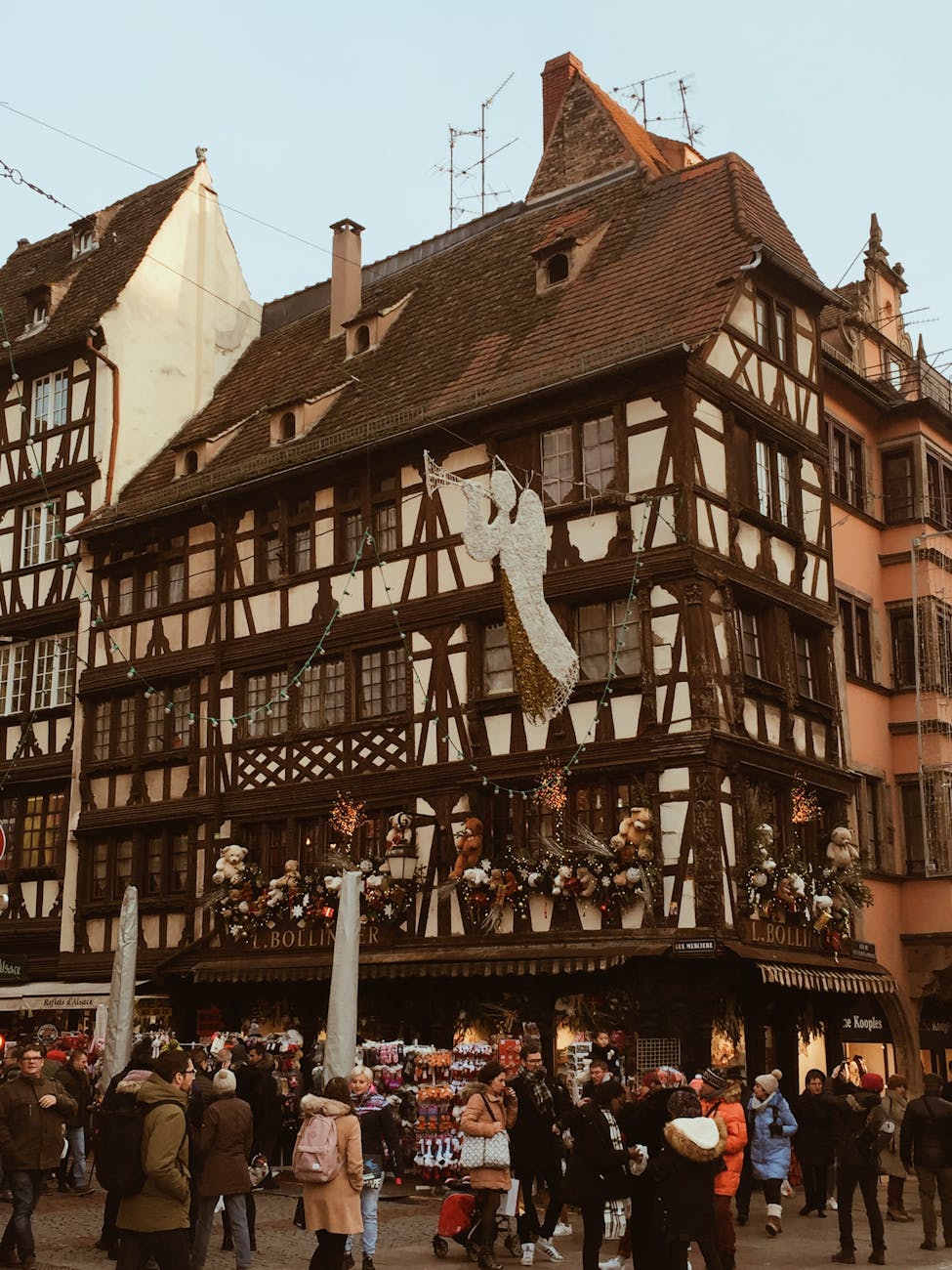
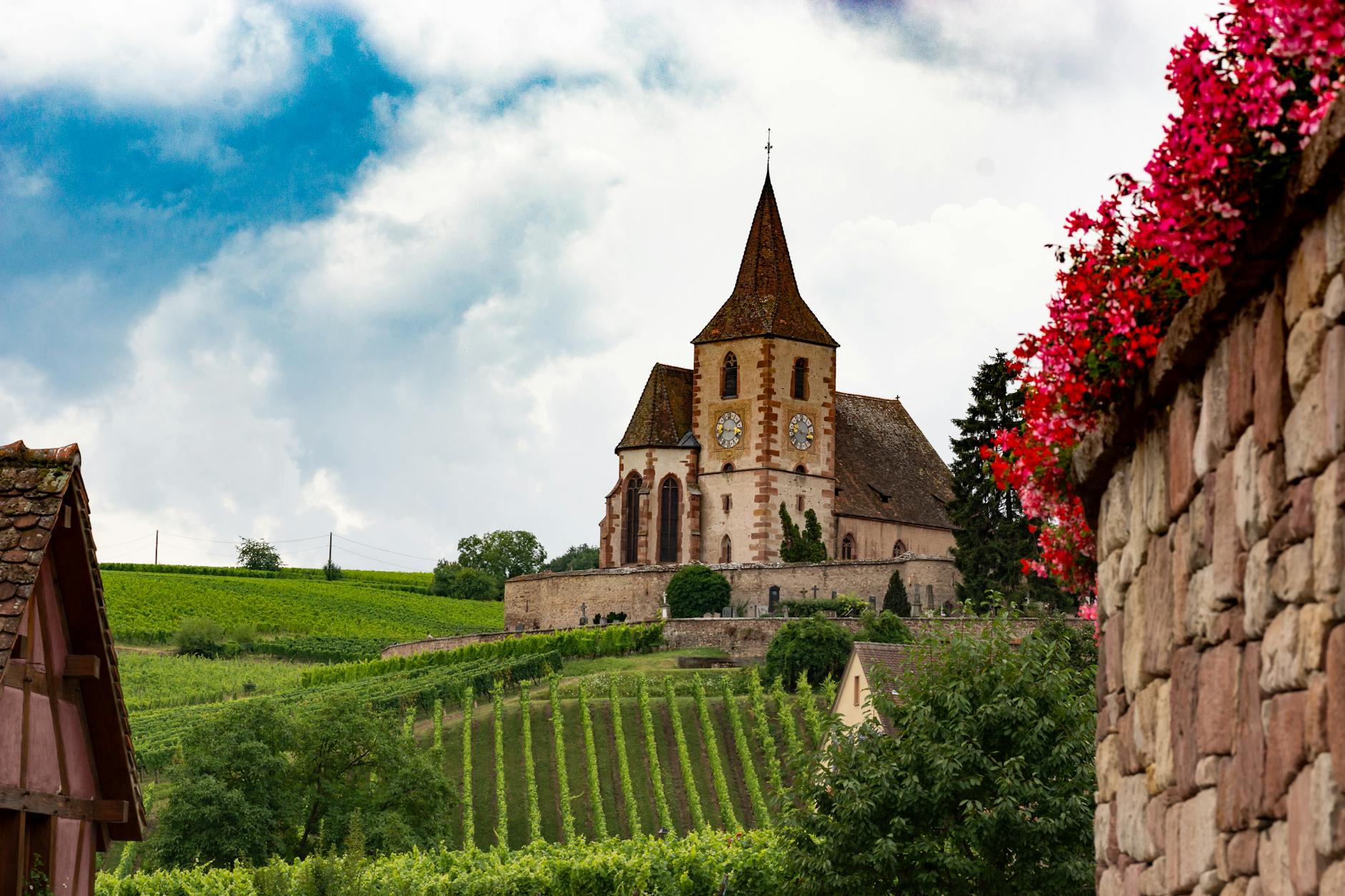
The Alsace wine region of France is situated along the French border east of Paris. The region’s wine production is almost entirely devoted to white wine, positioning it uniquely among wine-producing regions worldwide. The white wines in Alsace are rarely made in other parts of France. Alsace is French but has been part of Germany several times. The Vosges mountains and picturesque quaint villages make it more reminiscent of images from German folk tales than the wine provinces of southern France. It is easy to see why Riesling, Gewürztraminer, Pinot Gris, and Muscat dominate its winemaking identity. Pinot Noir is the only red grape of note there but is grown in limited quantities. Alsace differs in how it labels its wine from the rest of France by using the grape variety instead of the location where the grapes were grown.  

Don’t be misled into thinking the white wines of Alsace are sweet and mild. On the contrary, they have bold character and are almost always dry. The winemakers of this region believe in showcasing the attributes of the grape and not crafting a wine to conform to a predetermined taste profile. Because this conviction is so ingrained in their wine culture, blending is seldom, if ever, an option. 

Sparkling wine is also made in Alsace. It is all designated Crémant ď  Alsace and is made the same way as

Champagne. You might be wondering if they make Crémant ď Alsace in Alsace and use Chardonnay grapes why isn’t Chardonnay one of their signature white wines? The reason is that by law Chardonnay can only be used in Crémant ď Alsace and can not be used to make still wine. Crémant ď Alsace is a high-quality alternative to Champagne at a very affordable price. 

Alsatian Riesling is angular in structure and very dry with good minerality. German Rieslings are well balanced with bright acidity, low alcohol, and prominent fruit flavors. 

Alsace is said to rival Paris in the number of great restaurants, whether pretentious or grand. 

It is easy to have an excellent wine experience in Alsace because the quality of wine is exceedingly well-made and the pricing spread guarantees you will find bottles you will love at a price you can appreciate. 

The Finger Lakes Wine Region of New York: The Inns of Aurora Getaway

Recently my wife and I visited one of our favorite wine destinations, The Finger Lakes Wine Region of New York. We decided to stay in and explore an area new to us. Aurora, New York is on the shore of Cayuga Lake, about halfway up the lake on the eastern side. This idyllic small town is home to the now-closed Wells College and MacKenzie-Childs studio. When I am asked to describe Aurora I tell people to imagine a real-life “Hallmark Movie Channel” town. 

We stayed at the Zabriskie House. It is one of the Inns of Aurora’s (http://innsofaurora.com) spectacularly restored mansions and is located in the center of town across Main Street from the lake. The eastern shore of Cayuga Lake has only a few wineries with the majority of the Cayuga Lake Wine Trail member wineries dotting the entire length of the western side of the lake. On this trip, I used the Waze app through my car’s Apple CarPlay to navigate flawlessly to and from the region. While there, we relied on it to travel between wineries and find gas, points of interest, and dining options. You can find casual tavern food in Aurora at the Fargo Bar & Grill on Main Street or go just across the street for more upscale fare at the award-winning 1833 Kitchen & Bar at the Aurora Inn. When around Ithaca, home to Cornell University, and looking for a quick breakfast or light lunch then you should consider the Ithaca Bakery (http://ithacabakery.com) at their 400 N. Meadow location. We also enjoyed a relaxing lunch while overlooking the vineyards and Seneca Lake from the deck of the Ginny Lee Cafe at Wagner Vineyards. 

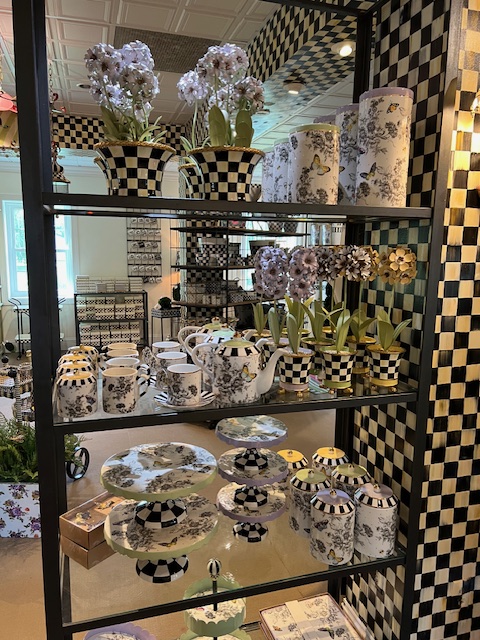
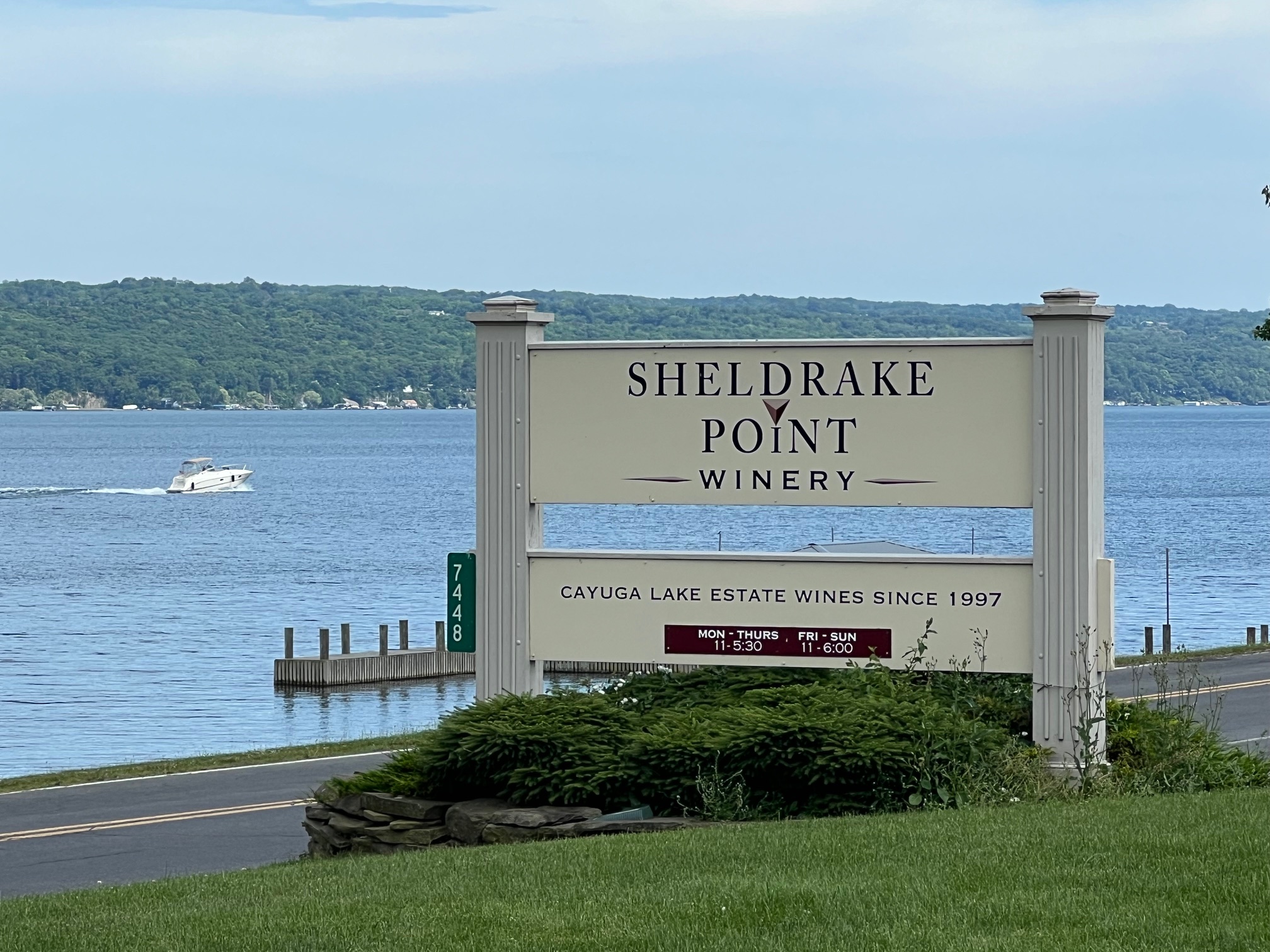
A stop at the studios and shop of world-famous designer MacKenzie-Childs is certain to be an unforgettable experience. During our three-night stay in the Finger Lakes, we stopped at several wineries that included Montezuma, Swedish Hill, Hosmer, Knapp, Buttonwood, Sheldrake Point, Standing Stone, Wagner, and Hermann J. Wiemer. 

Since we were there during the week we didn’t need to reserve a tasting time. Still, I would strongly recommend going to the website of the wineries you intend to taste at to see their protocol and make plans by booking your tasting itinerary first. This is an excellent idea on busy weekends, holidays, and during events.  

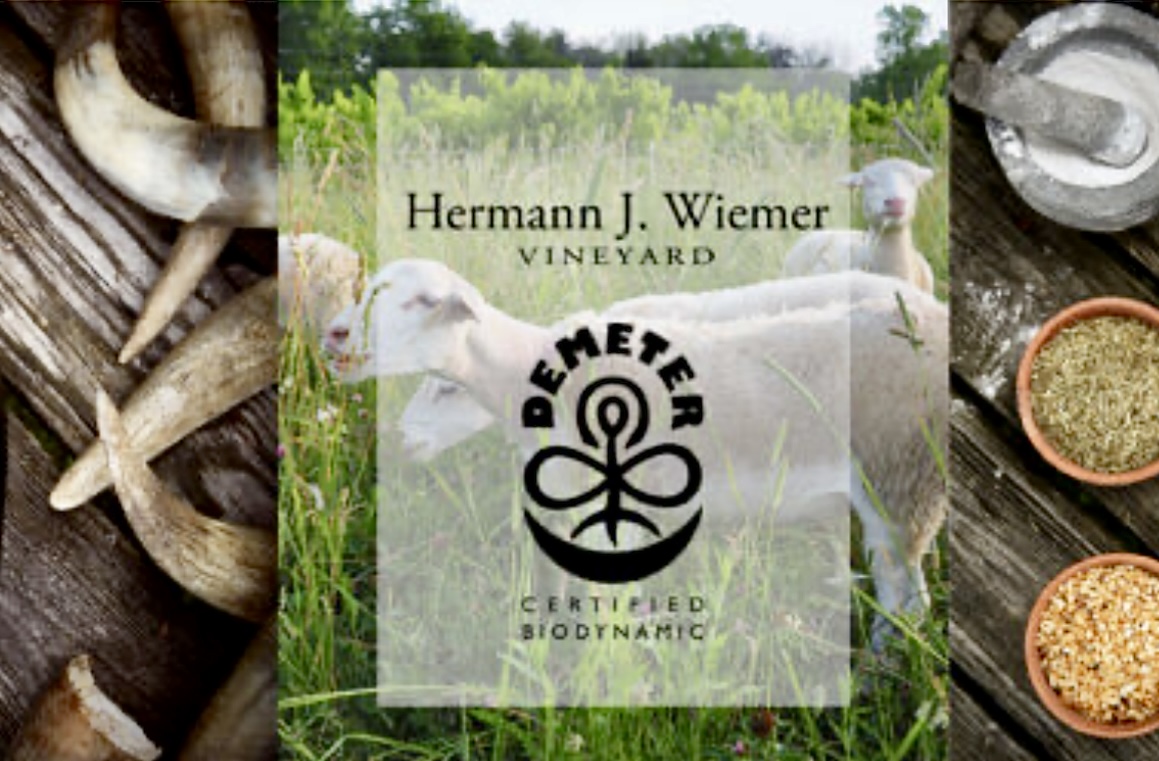
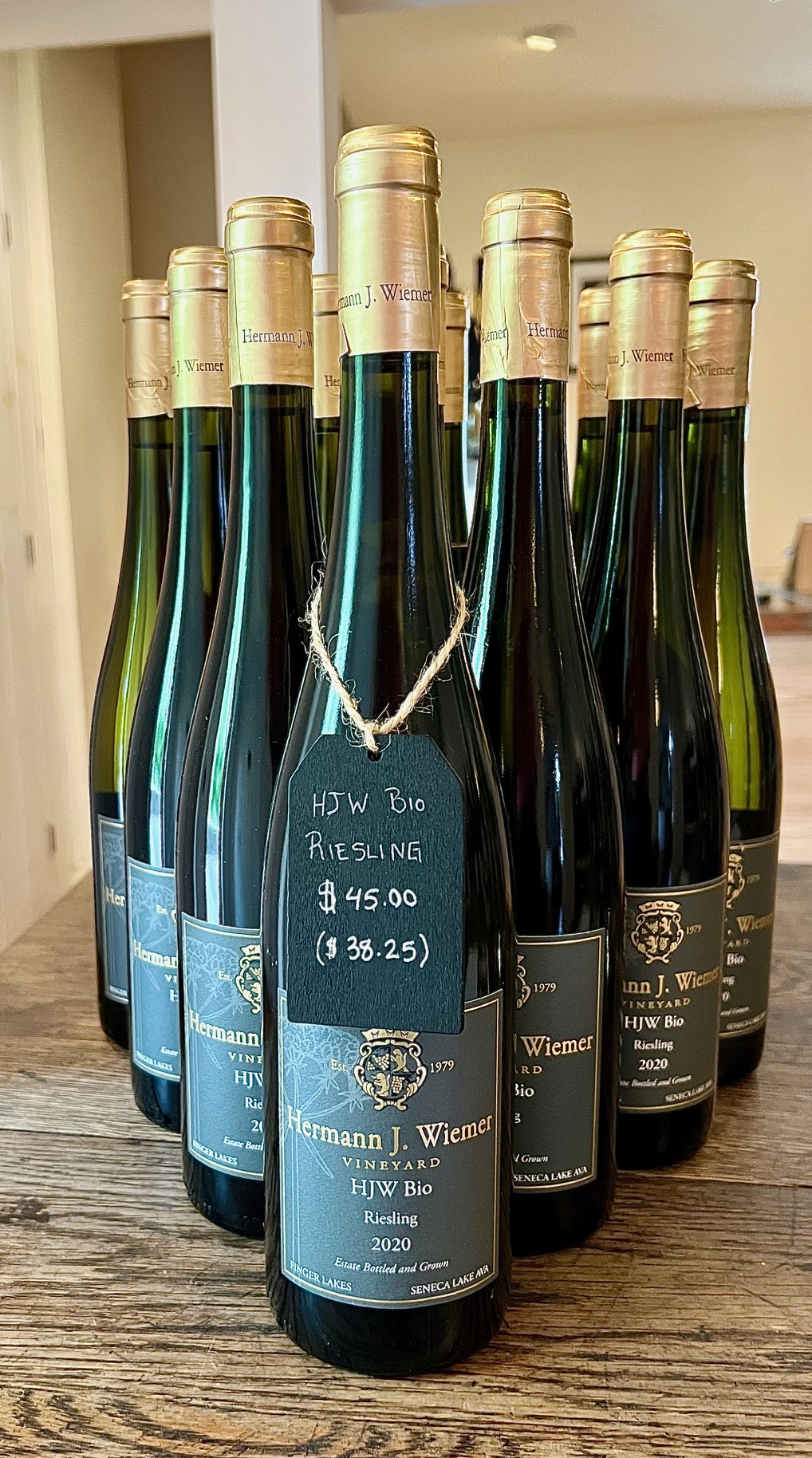
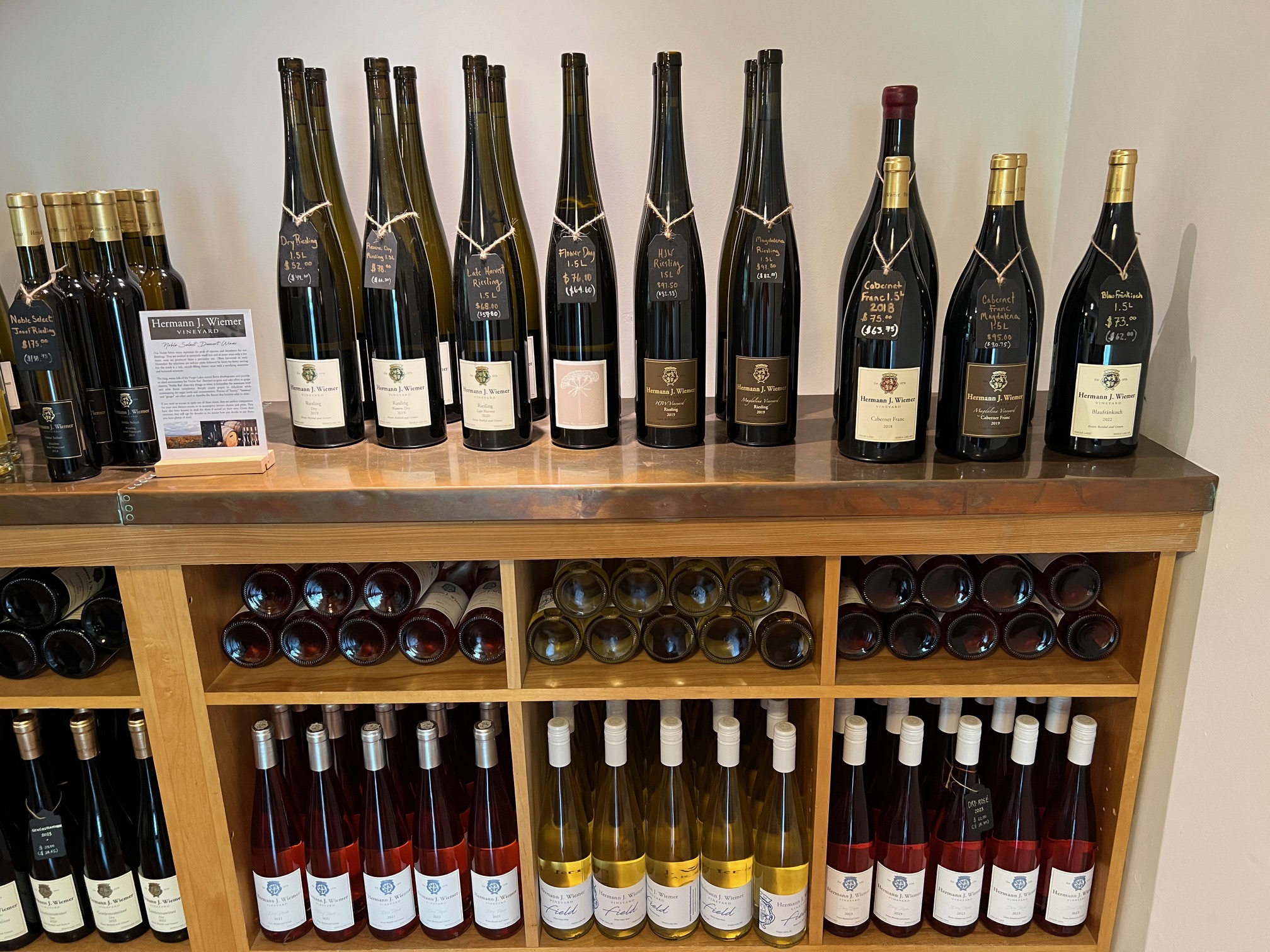
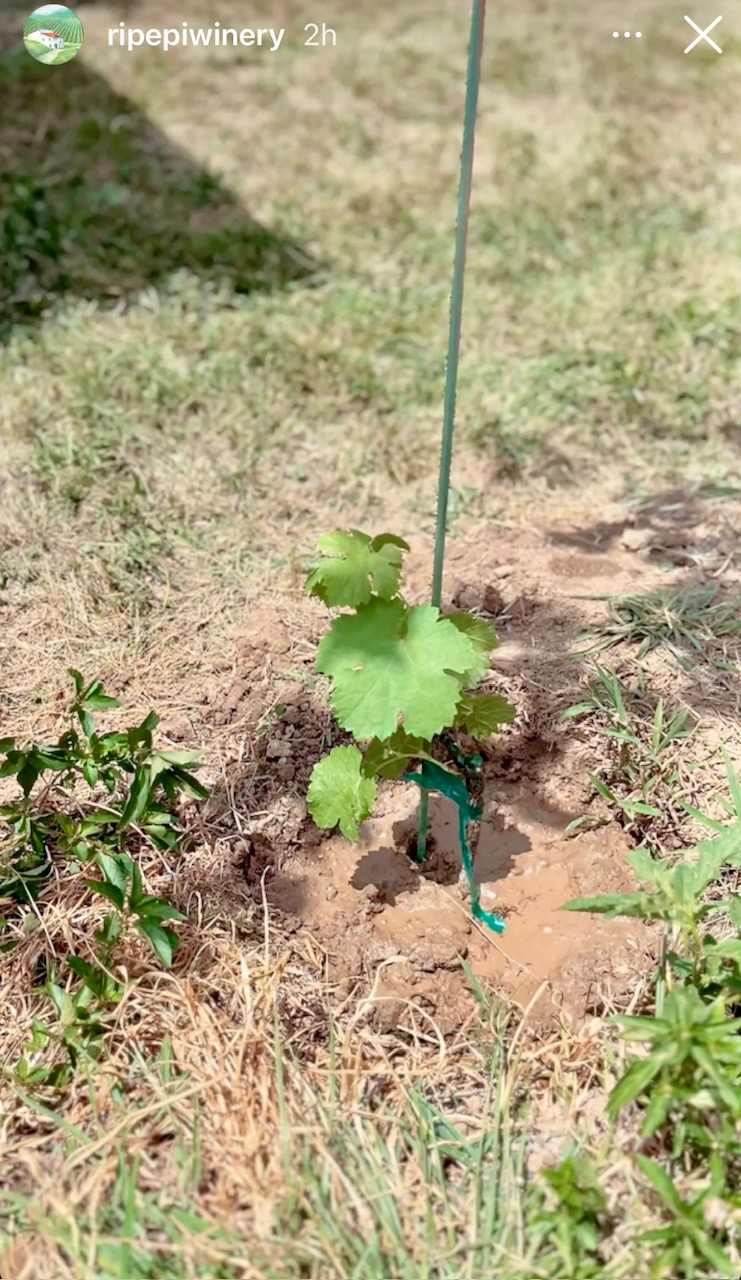
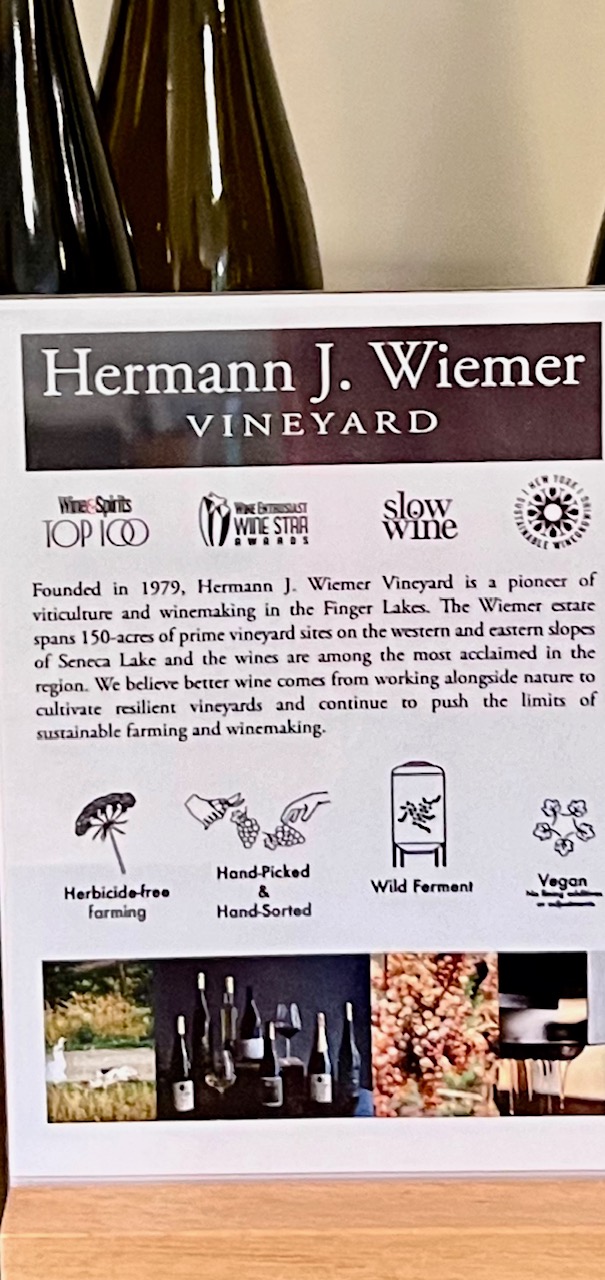
We enjoyed our tasting at Hermann J. Wiemer Vineyard. They have a well-deserved reputation for being a producer of world-class Riesling but their other wines are also very good. The tastings are à la carte and are served in small carafes that are enough for two. You choose the wines you want from a menu with each sample priced accordingly. You are seated at your own table, not standing at a tasting bar. Each table is assigned a knowledgeable attendant to provide guidance if needed and answer any questions you may have. We are big fans of Riesling and concentrated on those wines but we did sample a very well-made Blaufrankisch. Outside their tasting room, Wiemer offers their own nursery-grown grape vines for sale. As a gift for our winemaker friend, Rich Ripepi, we brought back a Riesling vine (clone 110(9) rootstock 3309) that has now found a new home in his vineyard at Ripepi Winery & Vineyard Monongahela, Pennsylvania. 

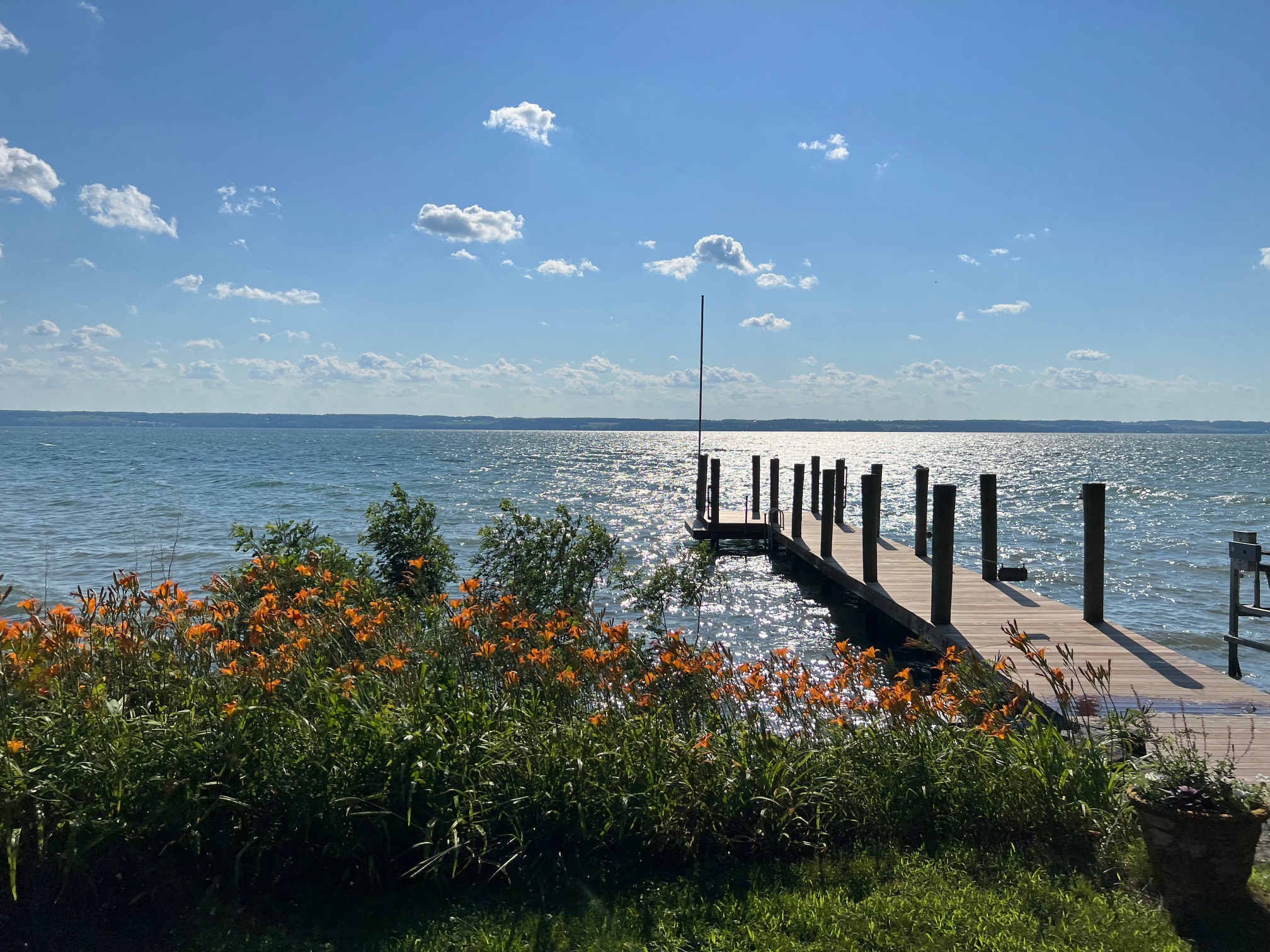
We had a wonderful time on our trip. The glacial lakes are spectacularly beautiful, the rural landscape is serene, and the residents are welcoming. If you want to take a short getaway that will leave you rested and refreshed, consider visiting The Finger Lakes Wine Region of New York. Photo Credit: wpawinepirate.com, Ripepi Winery & Vineyard, and Hermann J.Wiemer Vineyard

My Latest AWS Wine Journal Article

I am happy to announce my latest article to be published in the American Wine Society Wine Journal is now available to be viewed on the emagazine website https://anyflip.com/wnfp/urfm/as a flip page publication free of charge. Simply go to https://anyflip.com/wnfp/urfm/, tap on the cover of the Summer edition, and swipe left to turn the pages like a print magazine. It is easier to read using an iPad, tablet, or laptop. My article appears on page 23 and is about the only vintner in North America growing the Romanian wine grape Fetească Neagră or “Black Maiden ” as it is commonly referred to in Romania. There are a lot of interesting stories in this edition. The cover story is part 2 of a three-part series by Simone FM Spinner, in which the AVAs and wine trails of North Carolina are discussed. M. Marshal reviews the J. Stephen Casscles book “Grapes of the Hudson Valley and Other Cool Climate Regions of the United States and Canada” 2nd Edition. J. Stephen Casscles provides an in-depth look at the ancient but increasingly popular process of co-fermenting in the Northeast. These are just a few of the entertaining and informative articles that can be found in this edition. You can find all the back issues including my Saperavi story in the 2020 Spring edition by clicking on the AWS logo to the left of the https://anyflip.com/wnfp/urfm/ homepage. Enjoy!

New Book Release: The Wine Grapes Of Chungcheongbuk-Do, Korea

A groundbreaking new book on Korean and North American Cool Climate grape varieties is now out! It is the first winemaking grape book devoted to Korean and American Native grape varieties published in Korea. What is truly unique and unexpected is that the book is printed with one half in Korean and the identical other half in English. 

J. Stephen Casscles Esq. and his coauthor Young Kim have just released an authoritative first-of-its-kind winemaking grape book focused on Korean and North American Native grape varieties to be published in Korea. This text will be an influential source in the selection of grape varieties for Korean winemakers and vintners seeking guidance with their decisions on which grapes are the most compatible with their terroir and the wines they can successfully craft from them. I asked Steve to tell us about his latest book  The Wine Grapes of Chungcheongbuk-Do, Korea.

​ “I have been working, for the past two years, with my very talented co-author Young Kim of Sanmac Winery in Yeongdong, Korea, to write and publish our book: The Wine Grapes of Chungcheongbuk-do, Korea. The Korean province of Chungcheongbuk-do is a centrally located area in the Republic of Korea that specializes in fruit growing and wine production. While this book concentrates on the grape and wine industry of Korea, it has many applications for cool-climate grape growers and winemakers in North America. This is because the weather in our cool climate regions of North America is very similar to the climate and growing conditions in South Korea. Hence, these quality Korean hybrids can thrive in North America as well. Many of these Korean inter-specific hybrids are dual-purpose grapes that are not only seedless table grapes, but are very fungus disease resistant, monsoon season resistant, hardy, productive, and make quality wine.

Two years ago, I was truly blessed to have spent over two weeks in Yeongdong-gun and Seoul, Korea. Here, I met many talented grape growers and winemakers (including our book’s co-author Kim Young), visited cultural sites, and tasted wonderful Korean wines. In Korea, in addition to enjoying a wide variety of Korean cuisine, I had many fine French meals as there is an affinity for French cooking and wine in Korea. For example, in the smallish city of Yeongdong, it boasts not just one, but two quality French bakeries. The purpose of writing our book, The Wine Grapes of Chungcheongbuk-do, Korea was to put in print, for the first time, a book on Korean-developed interspecific hybrids and those grapes, many of which are grown in North America, that are currently being grown in Korea. Our book was published by the Chungbuk Grape Institute and the Wine Research Institute under the umbrella of the Chungbuk Agricultural Research and Extension Services, and the government of Yeongdong-gun, Korea, with support from the Rural Development Administration and the Ministry of Agriculture, Food and Rural Affairs.

What especially attracted me to these Korean-developed hybrid grapes (that were developed by the Korean National government starting in 1963 to the present) was that many of these hybrids had “parents” that were my favorite cool climate grapes that are grown on the East Coast; grapes such as Delaware, Verdelet, Campbell Early, Himrod Seedless, and a few others. Korean grape hybrids to watch for include Cheongsoo, Cheongporang, Cheonghyang (whites) Chung Rang, and Saemaru for the reds. In addition to the Korean hybrid grapes, the book covers all of the other grape varieties used by the Korean wine industry, which are primarily American Native hybrid grape varieties such as Campbell Early, Delaware, Frontenac Gris, the NYS Geneva Experimental Station grape varieties Seneca and Sheridan, and the French-American hybrid Verdelet. In addition, the Korean industry grows several Japanese-developed hybrids, such as Kyoho, Muscat Bailey A, and Shine Muscat, which also have a preponderance of American genetic material in them, such as Campbell Early, Centennial, Eumelan, and Steuben.

If you have not been to the grape/wine regions of Korea, you should put this destination on your travel list. If you do so, I would be happy to point you in the right direction on where to go and what to see. Korea is a beautiful country with beautiful and welcoming people.

​It is our hope that this book will help Korean grape growers and winemakers understand the genetic makeup, growing characteristics, and winemaking ability of the grape varieties that are currently being grown in Korea, especially in Chungcheongbuk-do. Kim Young and I hope that our collective research and knowledge gleaned from my visit to Korea and research on these grape varieties will translate into advances not only for the Korean wine industry but also for our East Coast growers of cool climate inter-specific grape hybrids. These Korean hybrids are great in the field because they are fungus disease resistant, cold/heat tolerant, monsoon rain resistant, productive, can be grown sustainably AND they make beautiful wines, especially the whites. 

​The book is in both the Korean and English languages. Most of these books will remain in Korea to help grape growers and winemakers there. To increase access to the North American cool climate grape/wine industry, I have been distributing our books to opinion leaders in the United States, including wine writers, university and private grape breeders, agricultural colleges, university libraries, grape growers, and winemakers. The point of publicizing and distributing this book in the United States is to tell our growers and winemakers of the existence of these wonderful cool climate grape varieties that were bred in Korea. Hopefully, we will soon be able to bring these hybrid cultivars to North America after they have gone through the importation quarantine process. This book should increase the readers’ devotion to cool-climate grape hybrids because they are productive, can be grown sustainably, and make beautiful wines. Further, it sparks more interest in cool-climate grape varieties in general, be they from Korea, the United States, or Europe.

The Wine Grapes of Chungcheongbuk-do, Korea was highlighted by the Chungbuk Grape Institute and the Wine Research Institute at the Institute’s recent tenth anniversary meeting. The book was the basis of this year’s growers’ and winemakers’ seminar. It was announced at this seminar that the book was the first winemaking grape book devoted to Korean and American Native grape varieties to be published in Korea. Because of its high demand, our book is now almost sold out, hence, we plan to go to a second printing for the United States and Canadian market. Further, this book will become available as an e-book to increase its circulation for the benefit of our cool-climate grape growers in the United States and Canada, in addition to those in Korea, Japan, and Taiwan.​

​Both Kim Young and I hope that this book will increase the reader’s devotion to cool climate grape hybrids, wherever they are grown because they can be grown sustainably and make beautiful wines. Or that it sparks an interest in cool climate inter-specific grape hybrids be they from Korea, the United States, or Europe. We will announce when the e-book is to be made available in the next few months. In addition, there is now an effort to import these sustainably grown Korean wines into the United States so that they can be enjoyed by all.” 

J. Stephen Casscles, Esq. (cassclesjs@yahoo.com) has been a grape grower for over 45 years in the Hudson Valley and worked at leading wineries on the East Coast. Currently, he is a winemaker at Dear Native Grapes Winery in Walton, New York http://dearnativegrapes.com. Stephen wrote Grapes of the Hudson Valley and Other Cool Climate Regions of the United States and Canada: 2nd Ed. Revised and Updated to Include New England Grapes (2023), which details how to make wine, establish & maintain a vineyard, and the growing and winemaking characteristics of over 200 cool climate grape varieties. See https://www.flintminepress.com. His latest book is The Wine Grapes of Chungcheongbuk-do Korea. (2024). At his farm Cedar Cliff Vineyards & Nursery, in Athens, NY, he grows 88 rare French-American hybrids and 19th Century heritage grape varieties from the Hudson Valley & Massachusetts which he evaluates, makes wine from, and lectures about. He also lectures on wine, grape cultivation, 19th-century American horticulture, and landscape architecture at botanical gardens and historical societies throughout the Northeast. He is working on a new book, Grown in Queens: The Prince Nurseries of Flushing, NY, and the Birth of American Horticulture and Viticulture.

Kim Young is the owner of Sanmac Winery in Yeongdong, Korea. sanmacwinery.com She, along with her husband Youn Young-June, grows the grapes, makes and sells the wine, and is active in the Yeongdong wine industry community. She is an educator of the history of Korean wine and a certified WSET 3 Advanced Sommelier.

Thank you Steve and Kim Young for your tireless work on this book. It will be a valuable resource for winemakers everywhere.

Photo Credit: J. Stephen Casscles Esq. and wpawinepirate.com