My Latest AWS Wine Journal Article

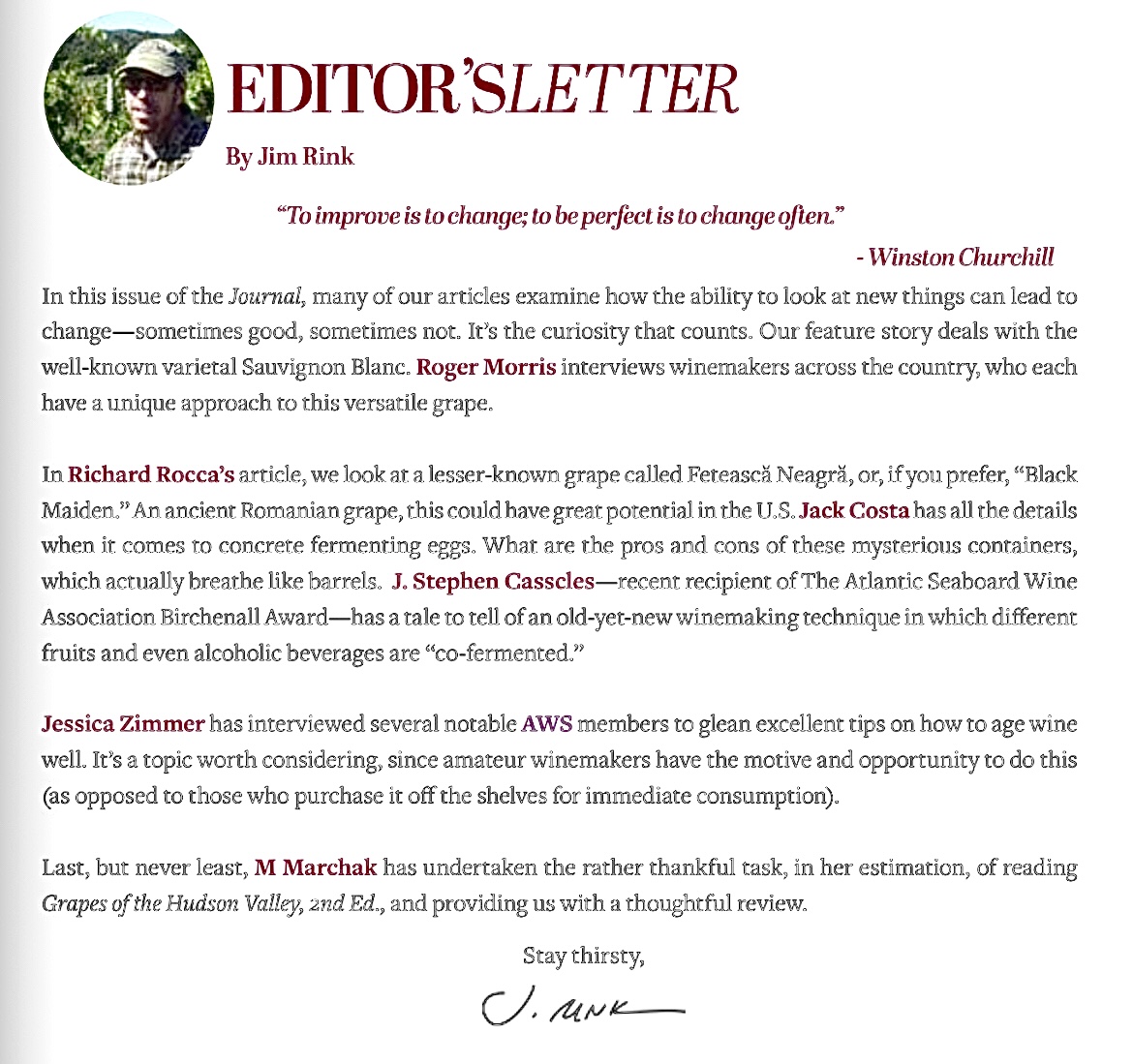
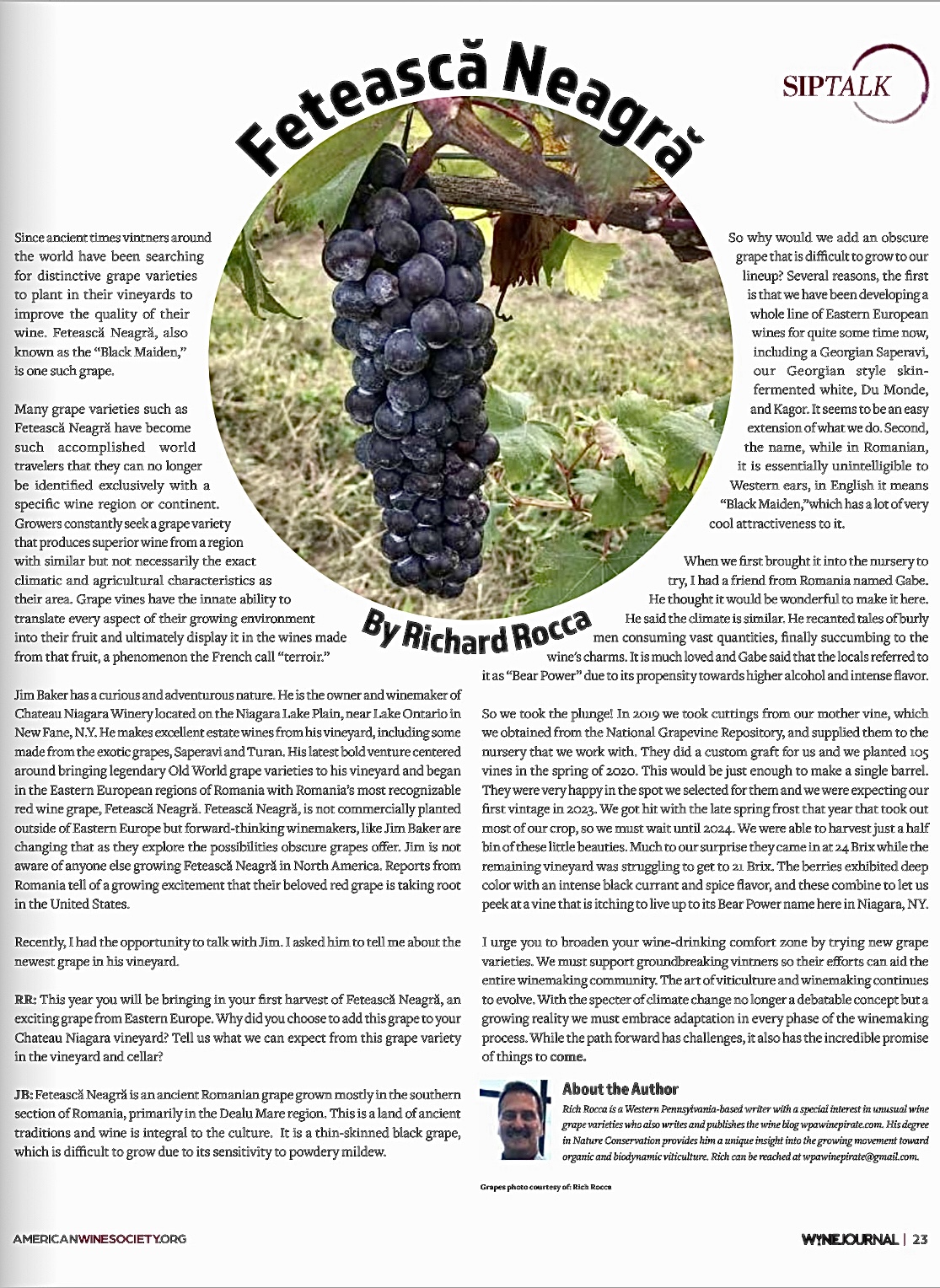
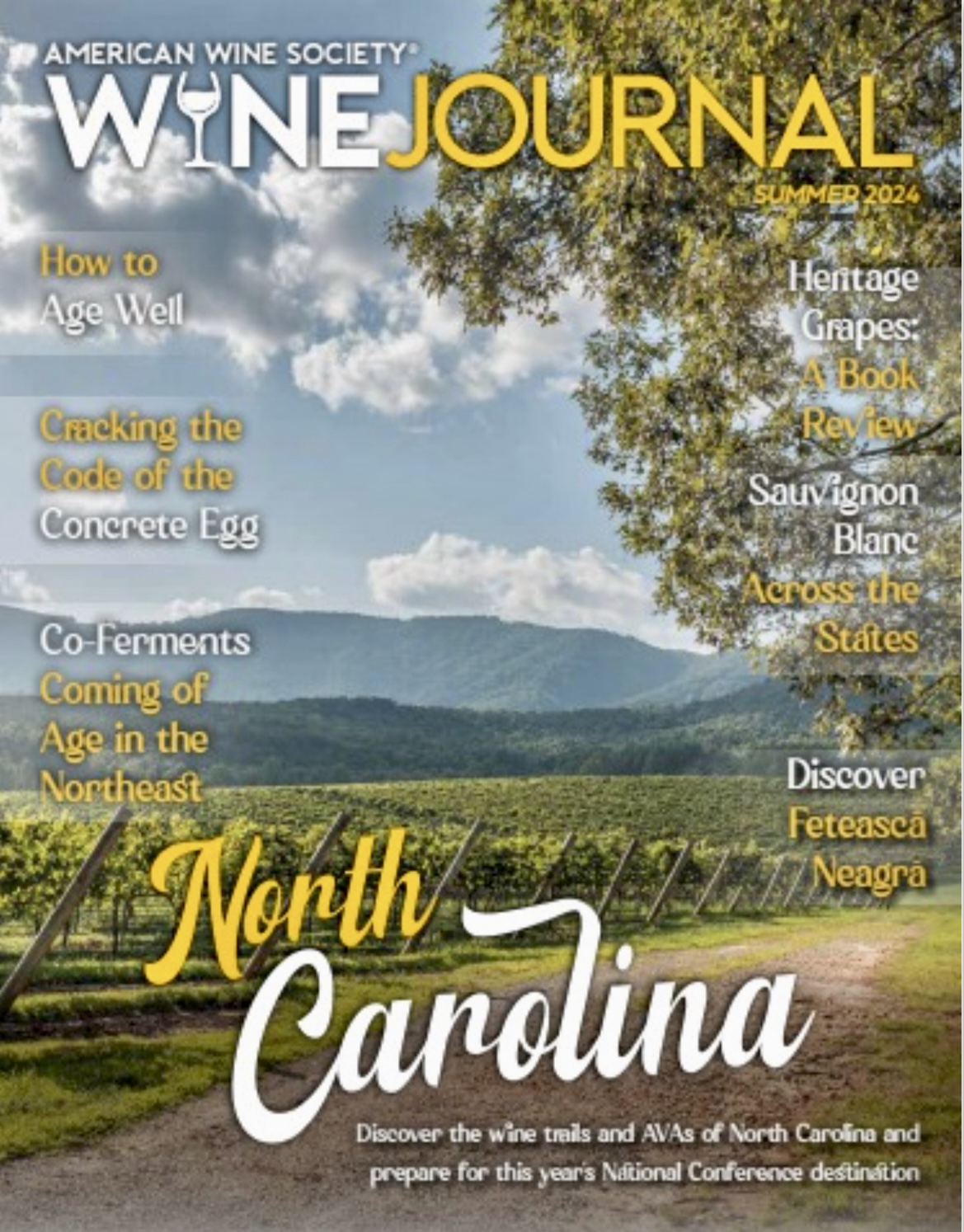
I am happy to announce my latest article to be published in the American Wine Society Wine Journal is now available to be viewed on the emagazine website https://anyflip.com/wnfp/urfm/as a flip page publication free of charge. Simply go to https://anyflip.com/wnfp/urfm/, tap on the cover of the Summer edition, and swipe left to turn the pages like a print magazine. It is easier to read using an iPad, tablet, or laptop. My article appears on page 23 and is about the only vintner in North America growing the Romanian wine grape Fetească Neagră or “Black Maiden ” as it is commonly referred to in Romania. There are a lot of interesting stories in this edition. The cover story is part 2 of a three-part series by Simone FM Spinner, in which the AVAs and wine trails of North Carolina are discussed. M. Marshal reviews the J. Stephen Casscles book “Grapes of the Hudson Valley and Other Cool Climate Regions of the United States and Canada” 2nd Edition. J. Stephen Casscles provides an in-depth look at the ancient but increasingly popular process of co-fermenting in the Northeast. These are just a few of the entertaining and informative articles that can be found in this edition. You can find all the back issues including my Saperavi story in the 2020 Spring edition by clicking on the AWS logo to the left of the https://anyflip.com/wnfp/urfm/ homepage. Enjoy!

New Book Release: The Wine Grapes Of Chungcheongbuk-Do, Korea

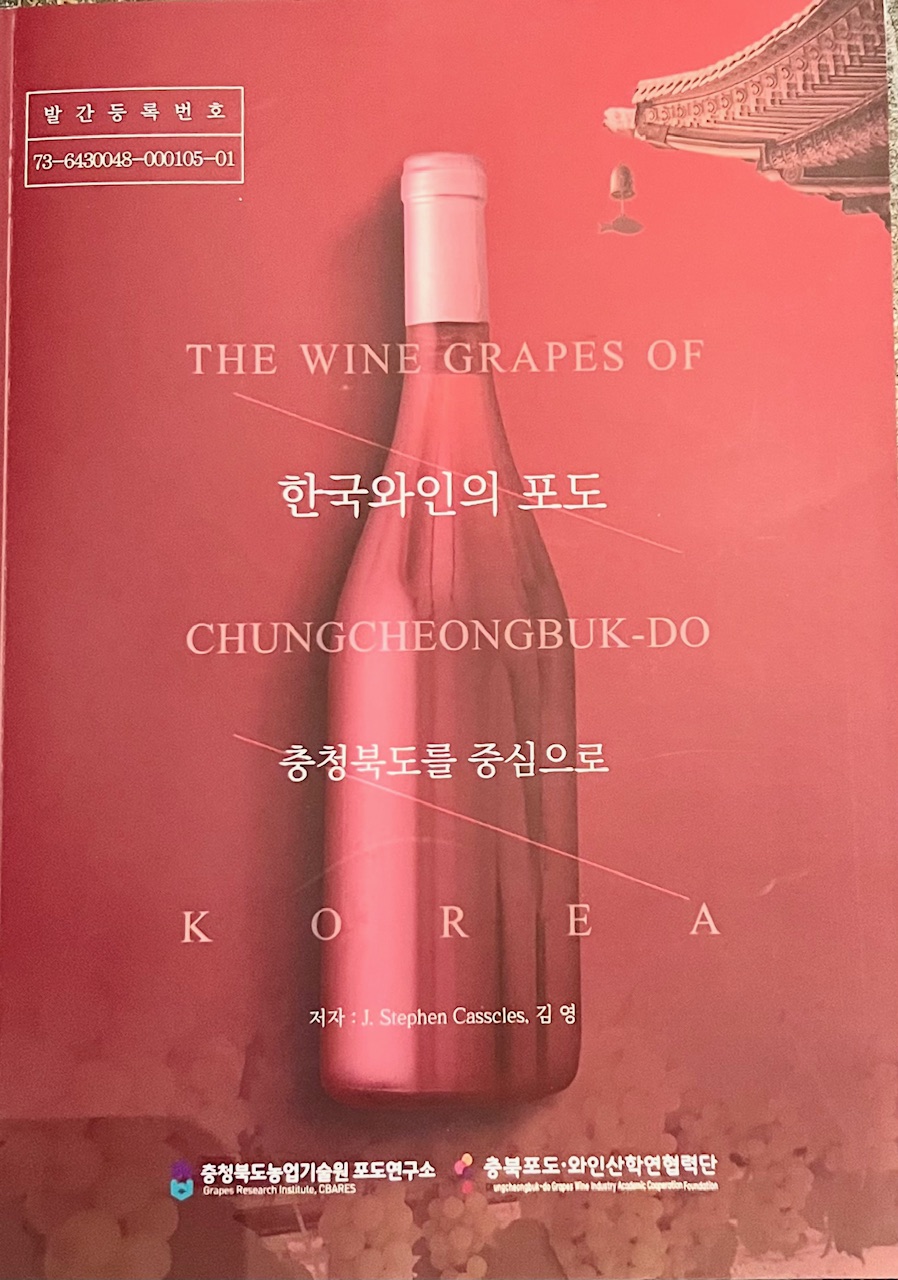
A groundbreaking new book on Korean and North American Cool Climate grape varieties is now out! It is the first winemaking grape book devoted to Korean and American Native grape varieties published in Korea. What is truly unique and unexpected is that the book is printed with one half in Korean and the identical other half in English. 

J. Stephen Casscles Esq. and his coauthor Young Kim have just released an authoritative first-of-its-kind winemaking grape book focused on Korean and North American Native grape varieties to be published in Korea. This text will be an influential source in the selection of grape varieties for Korean winemakers and vintners seeking guidance with their decisions on which grapes are the most compatible with their terroir and the wines they can successfully craft from them. I asked Steve to tell us about his latest book  The Wine Grapes of Chungcheongbuk-Do, Korea.

​ “I have been working, for the past two years, with my very talented co-author Young Kim of Sanmac Winery in Yeongdong, Korea, to write and publish our book: The Wine Grapes of Chungcheongbuk-do, Korea. The Korean province of Chungcheongbuk-do is a centrally located area in the Republic of Korea that specializes in fruit growing and wine production. While this book concentrates on the grape and wine industry of Korea, it has many applications for cool-climate grape growers and winemakers in North America. This is because the weather in our cool climate regions of North America is very similar to the climate and growing conditions in South Korea. Hence, these quality Korean hybrids can thrive in North America as well. Many of these Korean inter-specific hybrids are dual-purpose grapes that are not only seedless table grapes, but are very fungus disease resistant, monsoon season resistant, hardy, productive, and make quality wine.

Two years ago, I was truly blessed to have spent over two weeks in Yeongdong-gun and Seoul, Korea. Here, I met many talented grape growers and winemakers (including our book’s co-author Kim Young), visited cultural sites, and tasted wonderful Korean wines. In Korea, in addition to enjoying a wide variety of Korean cuisine, I had many fine French meals as there is an affinity for French cooking and wine in Korea. For example, in the smallish city of Yeongdong, it boasts not just one, but two quality French bakeries. The purpose of writing our book, The Wine Grapes of Chungcheongbuk-do, Korea was to put in print, for the first time, a book on Korean-developed interspecific hybrids and those grapes, many of which are grown in North America, that are currently being grown in Korea. Our book was published by the Chungbuk Grape Institute and the Wine Research Institute under the umbrella of the Chungbuk Agricultural Research and Extension Services, and the government of Yeongdong-gun, Korea, with support from the Rural Development Administration and the Ministry of Agriculture, Food and Rural Affairs.

What especially attracted me to these Korean-developed hybrid grapes (that were developed by the Korean National government starting in 1963 to the present) was that many of these hybrids had “parents” that were my favorite cool climate grapes that are grown on the East Coast; grapes such as Delaware, Verdelet, Campbell Early, Himrod Seedless, and a few others. Korean grape hybrids to watch for include Cheongsoo, Cheongporang, Cheonghyang (whites) Chung Rang, and Saemaru for the reds. In addition to the Korean hybrid grapes, the book covers all of the other grape varieties used by the Korean wine industry, which are primarily American Native hybrid grape varieties such as Campbell Early, Delaware, Frontenac Gris, the NYS Geneva Experimental Station grape varieties Seneca and Sheridan, and the French-American hybrid Verdelet. In addition, the Korean industry grows several Japanese-developed hybrids, such as Kyoho, Muscat Bailey A, and Shine Muscat, which also have a preponderance of American genetic material in them, such as Campbell Early, Centennial, Eumelan, and Steuben.

If you have not been to the grape/wine regions of Korea, you should put this destination on your travel list. If you do so, I would be happy to point you in the right direction on where to go and what to see. Korea is a beautiful country with beautiful and welcoming people.

​It is our hope that this book will help Korean grape growers and winemakers understand the genetic makeup, growing characteristics, and winemaking ability of the grape varieties that are currently being grown in Korea, especially in Chungcheongbuk-do. Kim Young and I hope that our collective research and knowledge gleaned from my visit to Korea and research on these grape varieties will translate into advances not only for the Korean wine industry but also for our East Coast growers of cool climate inter-specific grape hybrids. These Korean hybrids are great in the field because they are fungus disease resistant, cold/heat tolerant, monsoon rain resistant, productive, can be grown sustainably AND they make beautiful wines, especially the whites. 

​The book is in both the Korean and English languages. Most of these books will remain in Korea to help grape growers and winemakers there. To increase access to the North American cool climate grape/wine industry, I have been distributing our books to opinion leaders in the United States, including wine writers, university and private grape breeders, agricultural colleges, university libraries, grape growers, and winemakers. The point of publicizing and distributing this book in the United States is to tell our growers and winemakers of the existence of these wonderful cool climate grape varieties that were bred in Korea. Hopefully, we will soon be able to bring these hybrid cultivars to North America after they have gone through the importation quarantine process. This book should increase the readers’ devotion to cool-climate grape hybrids because they are productive, can be grown sustainably, and make beautiful wines. Further, it sparks more interest in cool-climate grape varieties in general, be they from Korea, the United States, or Europe.

The Wine Grapes of Chungcheongbuk-do, Korea was highlighted by the Chungbuk Grape Institute and the Wine Research Institute at the Institute’s recent tenth anniversary meeting. The book was the basis of this year’s growers’ and winemakers’ seminar. It was announced at this seminar that the book was the first winemaking grape book devoted to Korean and American Native grape varieties to be published in Korea. Because of its high demand, our book is now almost sold out, hence, we plan to go to a second printing for the United States and Canadian market. Further, this book will become available as an e-book to increase its circulation for the benefit of our cool-climate grape growers in the United States and Canada, in addition to those in Korea, Japan, and Taiwan.​

​Both Kim Young and I hope that this book will increase the reader’s devotion to cool climate grape hybrids, wherever they are grown because they can be grown sustainably and make beautiful wines. Or that it sparks an interest in cool climate inter-specific grape hybrids be they from Korea, the United States, or Europe. We will announce when the e-book is to be made available in the next few months. In addition, there is now an effort to import these sustainably grown Korean wines into the United States so that they can be enjoyed by all.” 

J. Stephen Casscles, Esq. (cassclesjs@yahoo.com) has been a grape grower for over 45 years in the Hudson Valley and worked at leading wineries on the East Coast. Currently, he is a winemaker at Dear Native Grapes Winery in Walton, New York http://dearnativegrapes.com. Stephen wrote Grapes of the Hudson Valley and Other Cool Climate Regions of the United States and Canada: 2nd Ed. Revised and Updated to Include New England Grapes (2023), which details how to make wine, establish & maintain a vineyard, and the growing and winemaking characteristics of over 200 cool climate grape varieties. See https://www.flintminepress.com. His latest book is The Wine Grapes of Chungcheongbuk-do Korea. (2024). At his farm Cedar Cliff Vineyards & Nursery, in Athens, NY, he grows 88 rare French-American hybrids and 19th Century heritage grape varieties from the Hudson Valley & Massachusetts which he evaluates, makes wine from, and lectures about. He also lectures on wine, grape cultivation, 19th-century American horticulture, and landscape architecture at botanical gardens and historical societies throughout the Northeast. He is working on a new book, Grown in Queens: The Prince Nurseries of Flushing, NY, and the Birth of American Horticulture and Viticulture.

Kim Young is the owner of Sanmac Winery in Yeongdong, Korea. sanmacwinery.com She, along with her husband Youn Young-June, grows the grapes, makes and sells the wine, and is active in the Yeongdong wine industry community. She is an educator of the history of Korean wine and a certified WSET 3 Advanced Sommelier.

Thank you Steve and Kim Young for your tireless work on this book. It will be a valuable resource for winemakers everywhere.

Photo Credit: J. Stephen Casscles Esq. and wpawinepirate.com
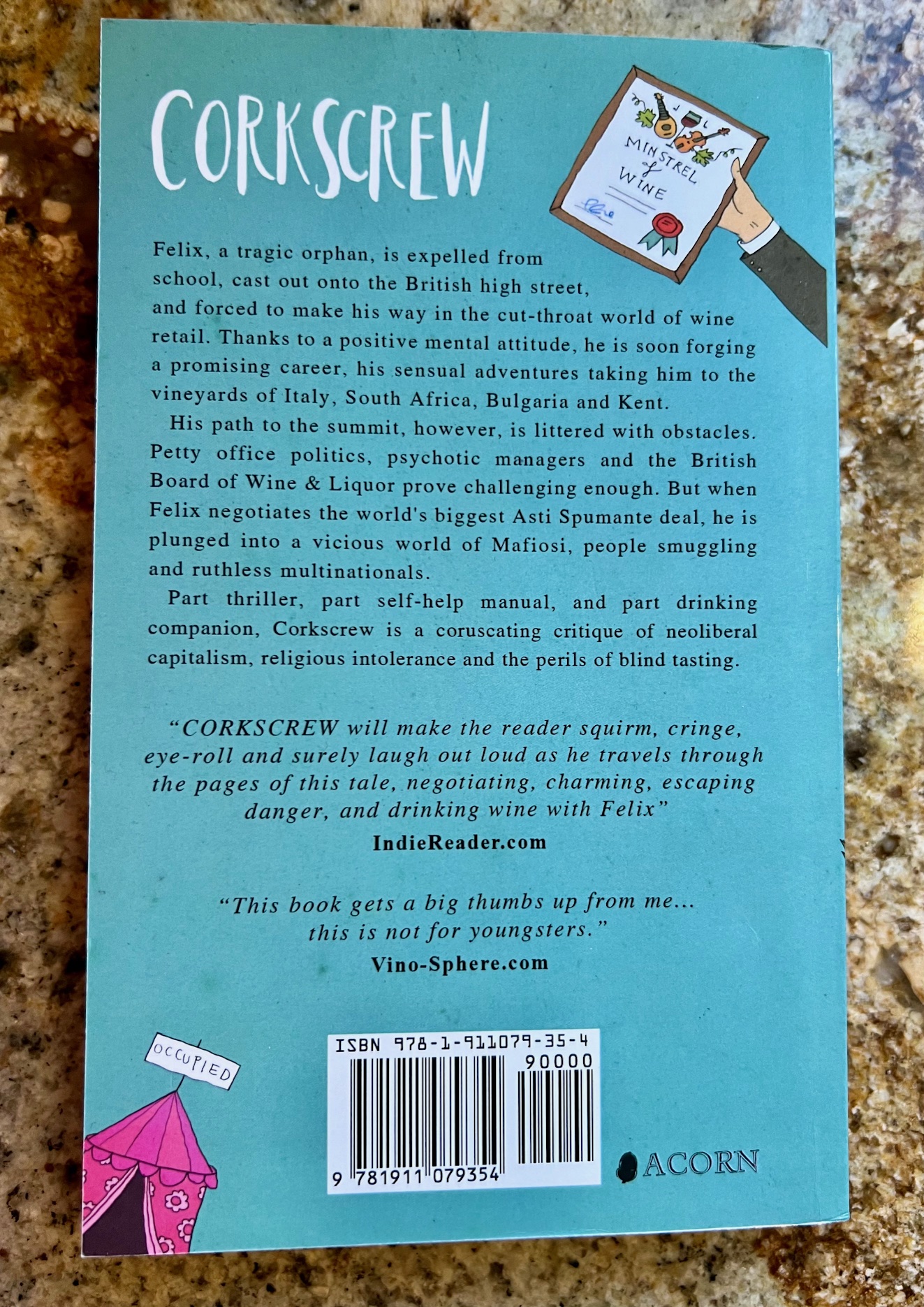
Book Review: Corkscrew by Peter Stratford-Bow

Corkscrew is the highly improbable but occasionally true, tale of a professional wine buyer by Peter Stratford-Bow

This humorous novel follows the exploits of a young English wine buyer as he navigates an unlikely journey around the world of wine while trying to advance his career by any means possible. The author claims there is some truth in his characters and their adventures but if it is even only a small grain of it he is lucky to have survived to pen this story. By reading between the lines you get a glimpse into how some of the wines you find on the shelves of your favorite wine shop get there. The absurd situations the ascending young wine buyer finds himself in are hilarious. The way he extricates himself from them for his benefit will have you shaking your head in disbelief and laughter. I also learned a lot of British slang by reading the book which would have taken me months to pick up working on the docks in the Port of Felixstowe. This book will make you howl and keep you interested from start to finish because there is nothing about the plot, if there is one, that is predictable. Buckle up and hold on because you are in for one wild ride. 


Winelikes App: A Free App With Something for Every Wine Lover

One thing wine lovers really enjoy doing is sharing a new wine they have discovered with friends and family or with anyone who will listen. One thing wine lovers really hate doing is trying new wines only to be disappointed and wasting money on a product that is a poor match for their tastes. After graduating college and obtaining his MBA Jeff Gillis had seen this problem many times during his years in the hospitality industry. Jeff honed his skills running some of the most prestigious hotels and restaurants in the country, including the Peninsula Beverly Hills, Koi Restaurant Group, and the Orange County fine dining restaurant Pinot Provence, continuing until he left his post as Food and Beverage Director at the Bardessono Hotel in Napa Valley and moved Los Angeles to pursue a career in biotech. 

Jeff’s love of wine only got stronger as he traveled a career path that closely paralleled and augmented his wine journey as he earned a WSET2 and Certified Sherry Wine Specialist certification. After leaving the industry Jeff relied on wine shops, supermarkets, and a few wine apps to purchase wine but soon realized there had to be a better way. With that goal in mind, Jeff enlisted the help of his sommelier friends and built a social media app suited for both wine enthusiasts and wine novices.

The Winelikes app has a lot to offer its users, so I asked Jeff to tell us more about Winelikes. 

Winelikes is a social media app for wine lovers and is available worldwide for mobile users. Download the free app and begin using it to connect with other wine enthusiasts. Winelikes uses a simple, modern, expansive interface that serves all; our target market is 25-45 years old, with features that ensure daily engagement. We want to make wine an everyday experience. Our tagline is Sip, socialize, share! 

Individuals can create a taste profile and be guided toward wines they are likely to love. Browse to interact with the community, find others to follow and connect with, see where to enjoy wine, post photos, write reviews, add wines to their “wine cellars/favorites,” learn more about wines with trivia, and find pairings for their meals.

Winelikes is a game-changer! With the food pairing feature community members can add their meals to the app in addition to the food choices that the Winelikes team is currently inputting daily. Other wine apps offer the user traditional pairings but the Winelikes app thinks outside the box when it comes to pairing wine with foods prepared in different ways and with unique flavor profiles. A restaurant can input all of their dishes and then pair them with their wine list and coming soon, the user can place an order using the app. Wineries can also submit their wines and be featured in the Winelikes app. Winelikes can then pair their wines specifically with the dishes that will allow them to shine. 

Sommeliers and influencers can use the platform to establish themselves, build a following, and promote classes/programs they’re involved in. 

To attract users who want to learn more about wine, Winelikes has a trivia feature where the Winelikes team posts a new quiz weekly. The quizzes cover a wide range of topics and skill levels ranging from beginner to advanced to challenge users while keeping them interested and engaged. To make the experience more entertaining and to reach out to a younger demographic, your quiz score is present on your feed allowing you to compete with friends and peers to post the highest score or post it for the community to see if you choose to. Businesses can also take advantage of this feature to do market research. 

Businesses have an optimal pathway to customers. When users create a profile, their dataset will include pertinent information. Companies can post in the app and create differently-styled ads to reach a target demographic (local, nationwide, worldwide). Winelikes offers convenience, accuracy, and personalization that help wineries build stronger customer relationships and increase their brand footprint. 

TikTok, one of the biggest social media apps, does not allow advertisements for wine or wine-related businesses. TikTok is also an all-age app and its algorithm will hide or delete posts associated with wine. Selling wine on Instagram or Facebook is technically illegal but there are workarounds. Winelikes has created an app rated 17 or older due to the different drinking rules around the world so wine-related businesses don’t need to waste their money trying to beat algorithms. Instead, they can now focus on marketing and selling products to prospective customers. 

For a more in-depth description of the features and thought process behind the Winelikes app you can listen to an interview with the Winelikes app creator, Jeff Gillis on The Wonder World of Wine podcast. Link below. 

iPhone:

https://apps.apple.com/us/app/winelikes/id1604508326

Android:

The Wonderful World of Wine podcast

https://soundcloud.com/user-492543397/episode-243-jeff-gillis-interview-wine-likes-app

Winelikes website

http://www.winelikes.com/

The Winelikes app looks like a promising tool for anyone looking to expand their knowledge of wine, market wine, interact with other like-minded wine lovers, build a social media following, or just immerse themselves in the wine community. Any app that helps me put better wine in my glass is worth exploring. 

How To Propagate Grapevines From Cuttings

The following article is a collaborative effort between myself and Stephen Casscles, a leading authority on the propagation and cultivation of cool climate and heritage grapevines. It is a detailed account of the procedures for propagating new grapevines from the cuttings of an existing vine. Thank you Steve for being so generous with your time and knowledge. All photos in this article are courtesy of Stephen Casscles. If you need more information about how to propagate vines, consult older books written by Philip Wagner, which are still available, or contact your local cooperative extension agent who can direct you to excellent brochures that have been produced by your local agricultural state university.

If you have or can obtain clippings from a grapevine that produces excellent fruit, it is easy to reproduce as many vines/clones of that vine as you want. Starting new vines from the clippings of a mother vine ensures you will grow an exact copy of the vine and it will crop the same quality grapes as the original vine. Be sure that the mother vine that you select for your cuttings is a strong vine, that exhibits no indications of viruses or diseases. Vines that have curled leaves, odd-looking clusters, or off-leaf colors could have been contaminated with a virus. Do not use these vines as you are simply propagating diseased and virus-laden vines and not the strong virus-free vines that you want.

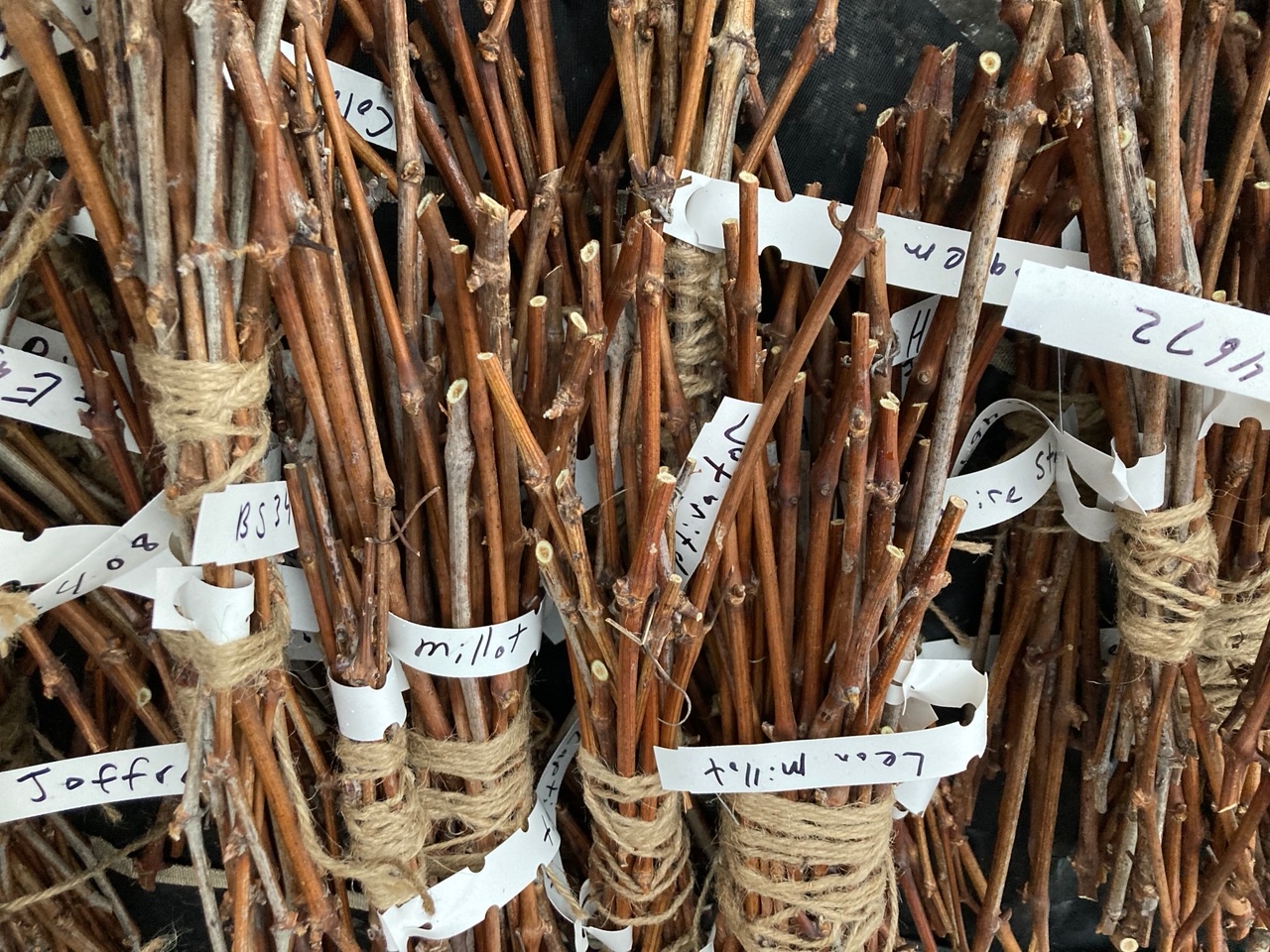
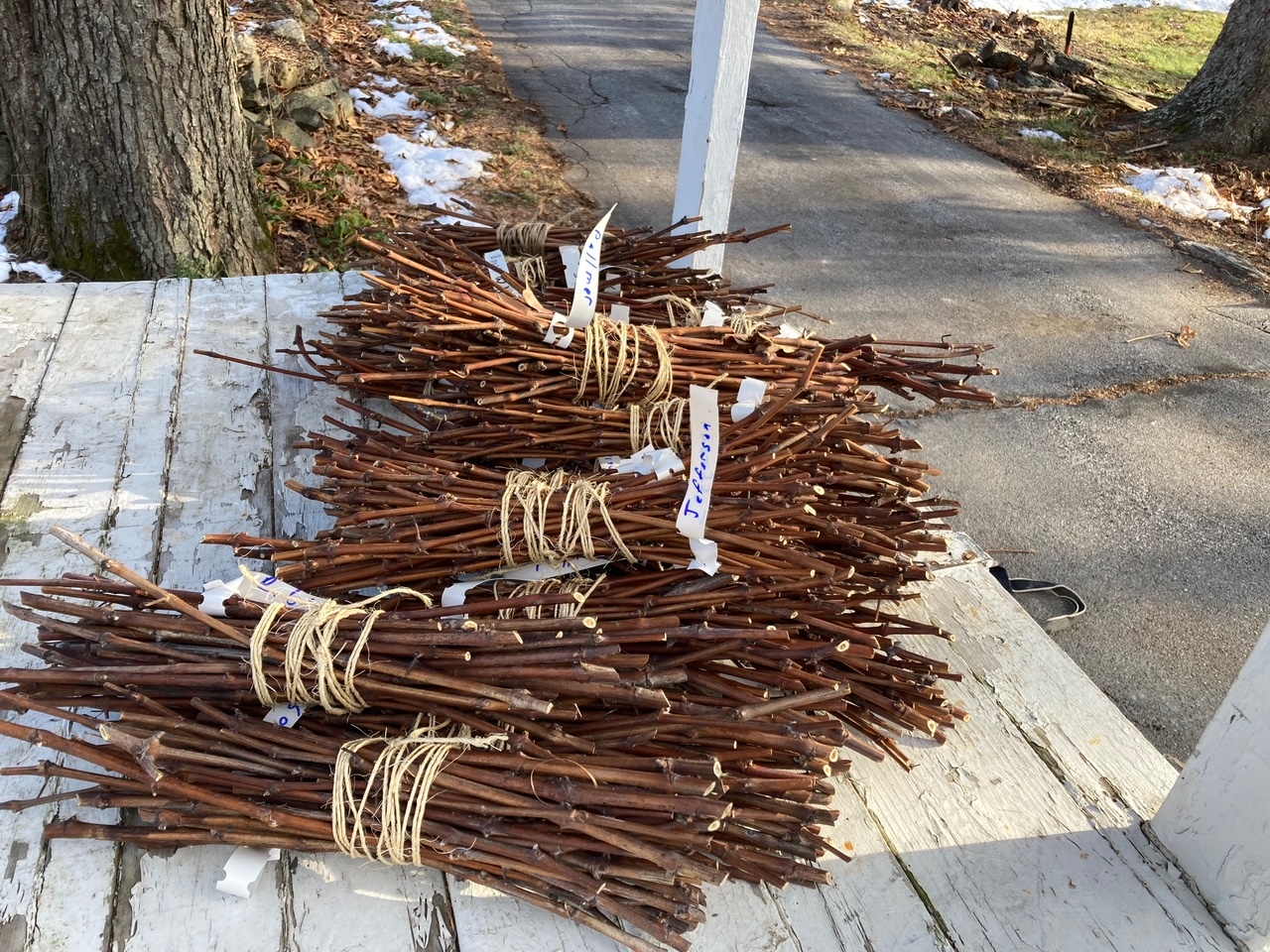
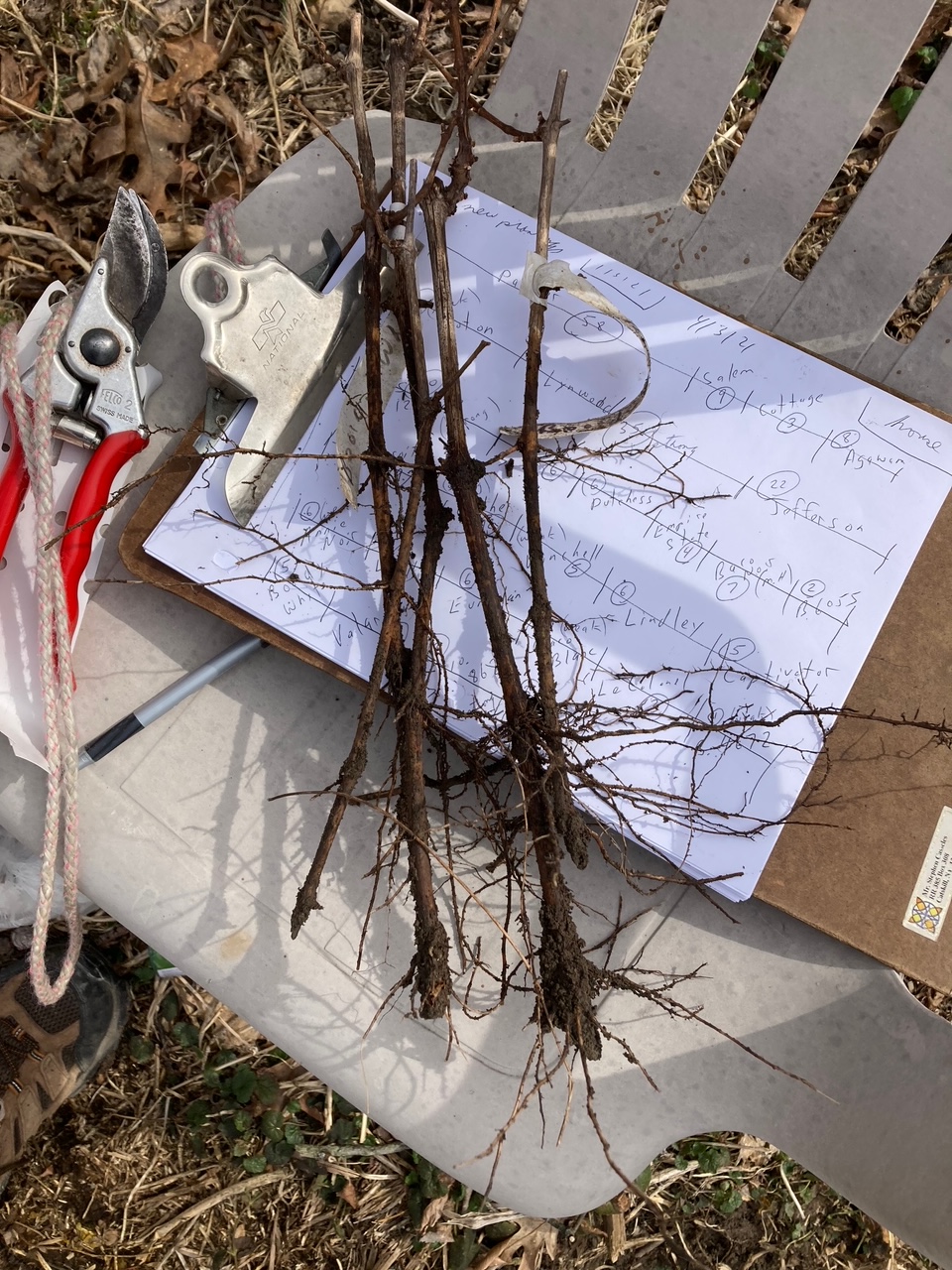
Propagating new grapevines from cuttings is an easy project. First, you must gather your propagating wood in early Spring while the vines remain dormant. Cut 12-18 inch sections from one-year-old wood that is about the thickness of a pencil and has a minimum of at least four leaf bud nodes on it. Ideally, having five or six bud nodes per cutting offers the best chance of success. A leaf bud node will look like a small bump on the stem.

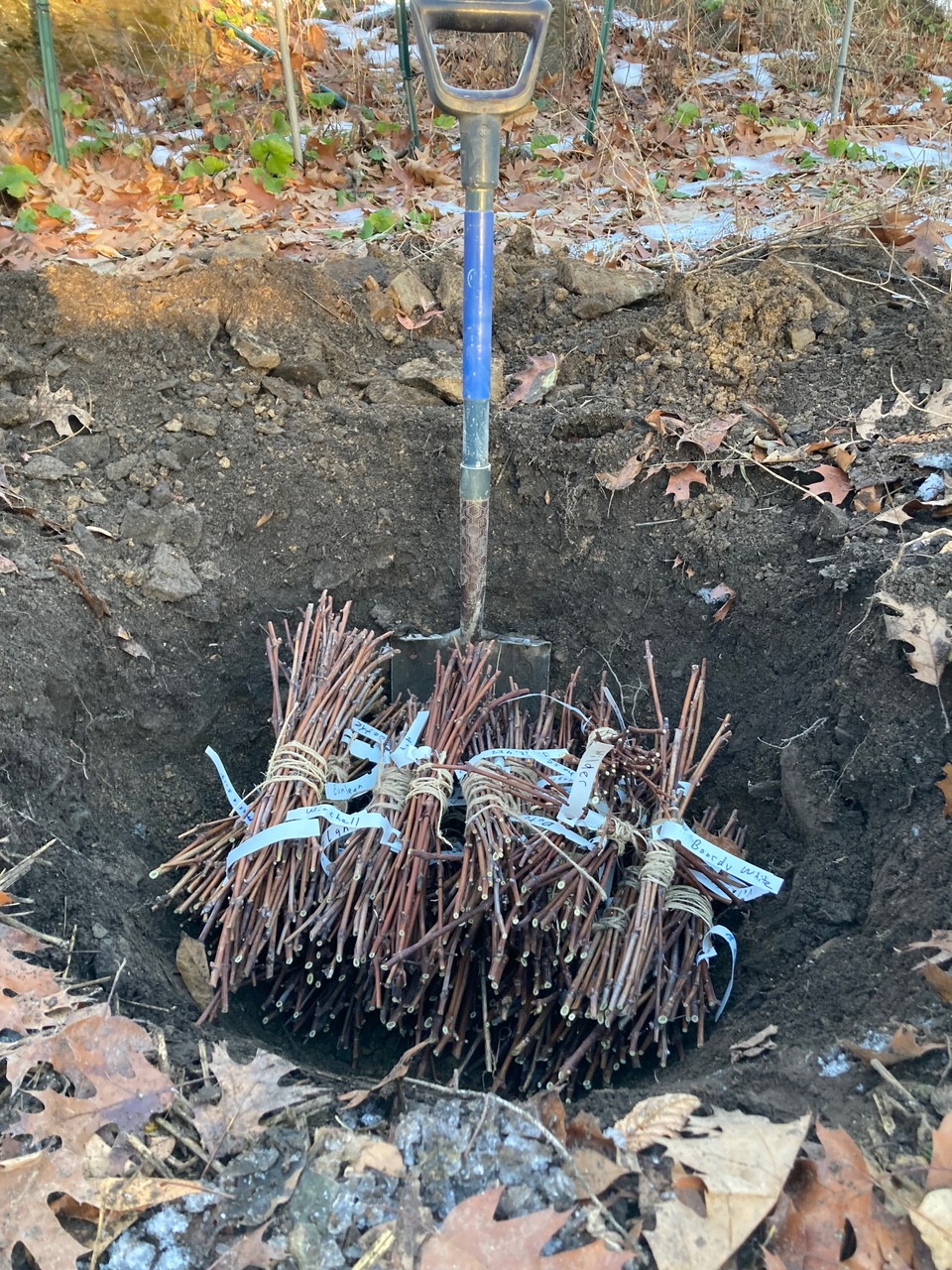
The next step is up to the propagator, but Steve said he was taught to nip off a straight cut one inch above the top bud and make an angled cut at the bottom of the cane just below the bud node. Making your angled cut at the bottom of the stem easily shows where the top of the cutting is from the bottom which makes it easier when setting out your nursery cuttings, it also allows the cutting to be easily planted in the soil. No matter how you cut your ends, make sure you are consistent so that you will always plant your cuttings correctly, bottom side down in the soil. Dipping the bottom end of the stem into rooting hormones is helpful in promoting root growth, but is not necessary. You can find rooting hormones at your local garden center or nursery. If you are only rooting a few cuttings, fill a potting container with your local soil, if it is good well-drained loam soil, if it isn’t mix it with potting soil to improve its drainage.  Make sure your container is deep enough to accommodate your clippings, but if you are propagating a lot of material consider digging a shallow trench and reserving enough loose soil to fill in around your stems.

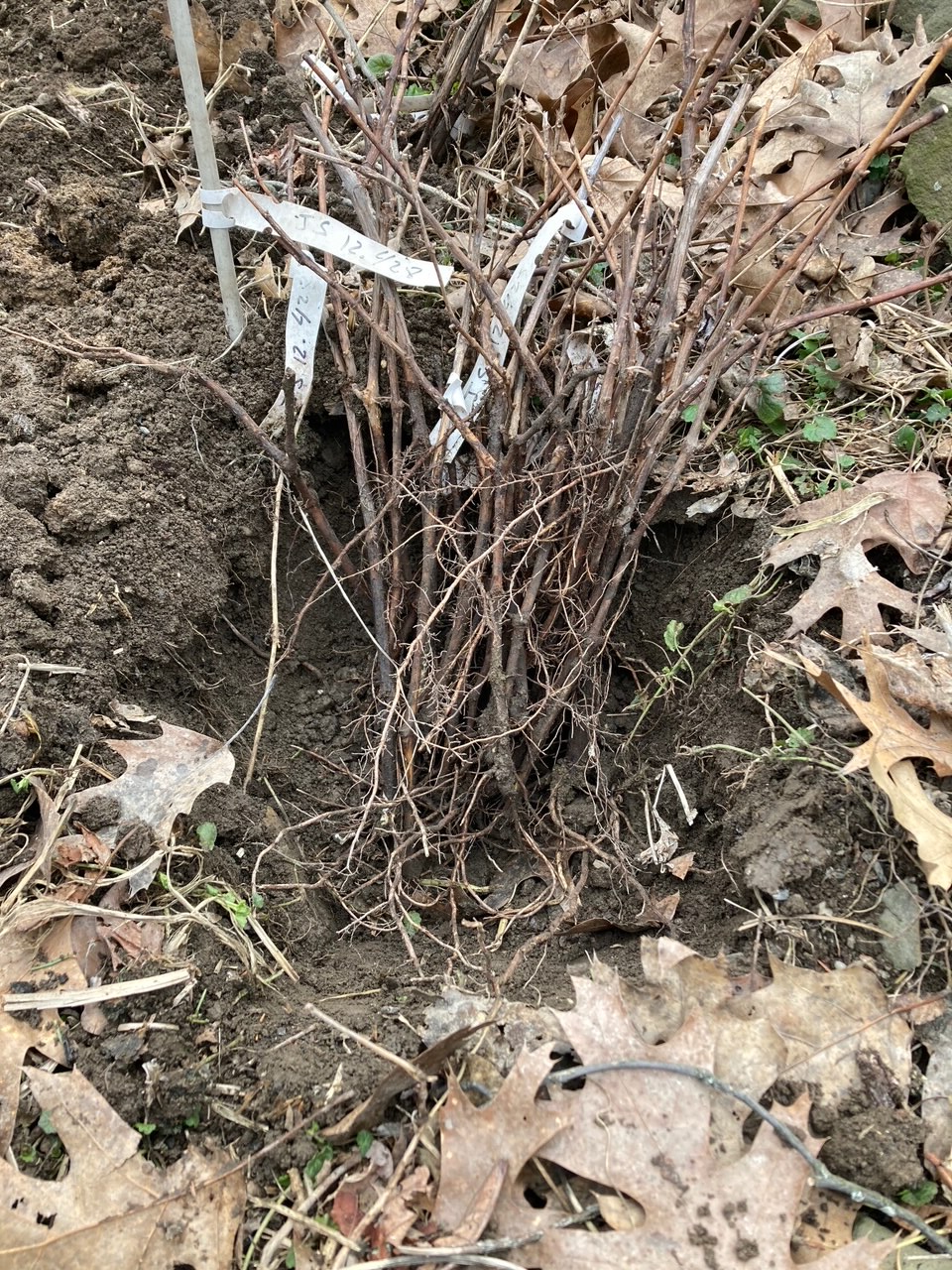
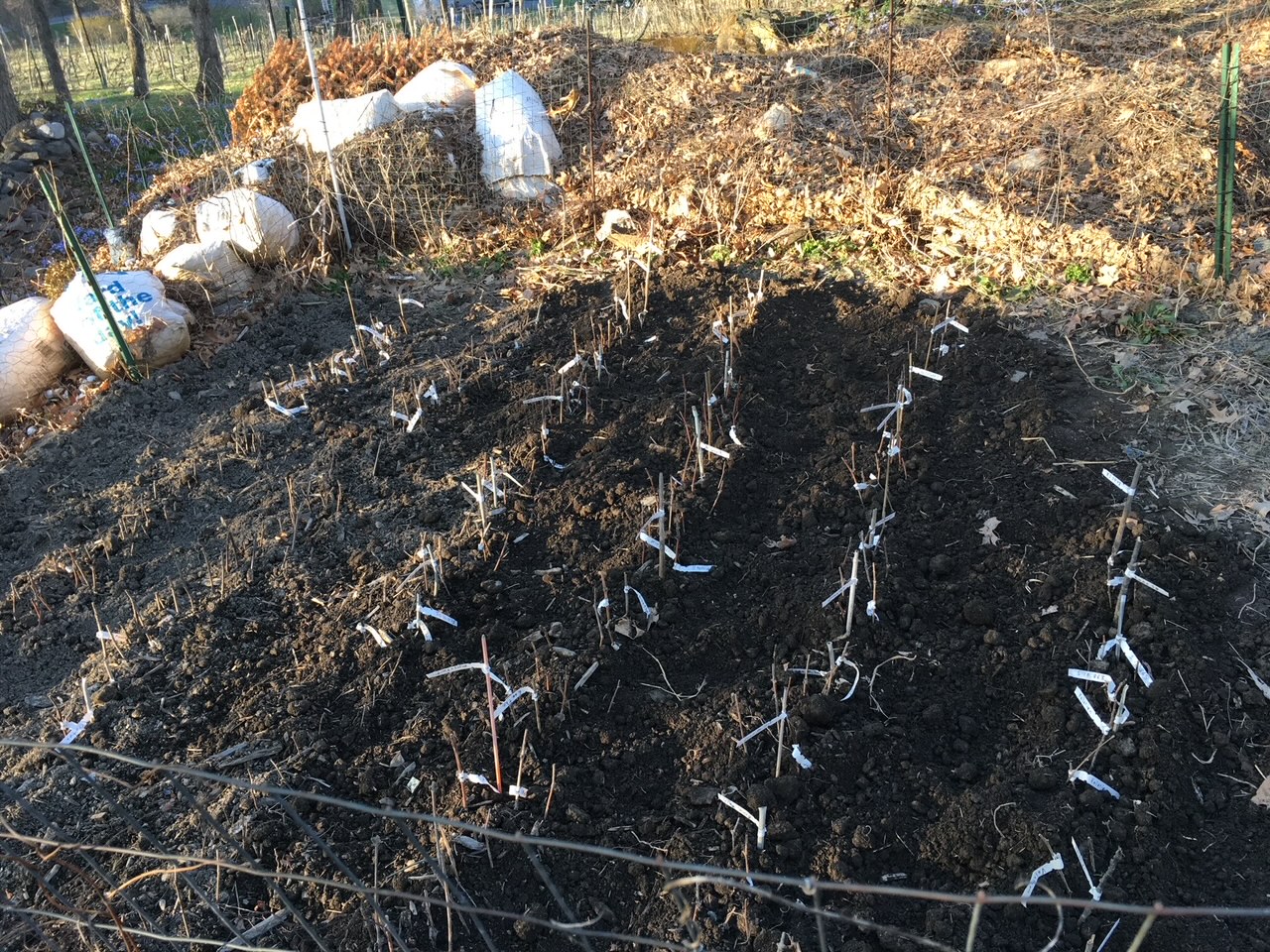
  These trenches can be located in your vegetable garden, since this soil has been worked up for many years, and often has a fence around it to keep out the wildlife that may like to browse on your newly installed cuttings. When planting your cuttings, bury them vertically three to four nodes deep with the bottom side down into the ground, leaving the remaining nodes exposed above the soil level. Remember to plant the bottom of the stem down with the straight-cut end above the ground.

    Keep the soil well watered, but not soggy throughout the first year when your cuttings are establishing themselves. For those in potted containers, the cuttings should be placed in a frost-free location with bright indirect sunlight. If you have more than one row of nursery cuttings in your nursery, it is recommended to mulch the cuttings with straw (not hay) to keep down the weeds and retain soil moisture.

Steve explained the difference between taking cuttings from your vine and propagating them as a single project and cloning in which you separate individual canes that have a certain desirable mutation to create an entirely new variety of the original grapevine. Steve gave me an excellent example that was easy to understand. “My understanding is that cloning would be finding an abnormal sport of a vine that is different and you cut that unique cane off to propagate it. For example, Frontenac Gris is only a regular Frontenac when it was noticed that a separate cane had bronze-colored grapes and not red.  So cloning would be separating and propagating that “clone”, but if you are propagating wood, you just collect your wood and go at it.”

    It is essential that you plant more cuttings than you need to compensate for some not surviving. As a dear departed friend of Steve’s, Joel Fry of the Bartrams Garden in Philadelphia used to say, “Plant two of everything, and one will die”.  How many to plant is the question? Steve offered his advice based on years of experience in this area of viticulture. “I find that different varieties propagate at different rates. For example, Baco Noir, which is a part Riparia variety tends to have a higher success rate because it is a Riparia. Even with Riparia, I would plan for a 20% non-success rate for varieties such as Delaware, which is a part Bourquinian species hybrid, do not take as readily, so I would expect a 40% death rate.”  I would recommend propagating as many cuttings as possible using only the strongest ones to satisfy your needs and giving the extras away. Vines can also be rooted in water, but you will need to change the water regularly to prevent disease. Once you see the stems/cuttings rooting, you must transplant them into the soil.

    Whether you set out a nursery in your home garden or place them in pots in the spring, you need to wait an entire year to ensure that your cuttings have sufficient roots before they are set out in the field the following spring. After your cuttings have developed a strong root system they can be transplanted to their permanent location. 

    You probably have heard vintners say the clone number for a specific variety of grapes planted in their vineyard. An example of this would be the Pinot Noir Dijon clones 114, 115, 667, and 777 which are the most widely planted Pinot Noir clones because of their reliability and productivity. When you drink any mass-produced Pinot Noir you are likely drinking wine made from these clones. It is easy to go down a “rabbit hole” when looking for clones of just about any grape variety when researching which clones to plant in your vineyard. Don’t let the sheer number of options overwhelm you. The answer to this question is a simple one, treat a clone like a different variety. Pick a clone you like and propagate that clone.

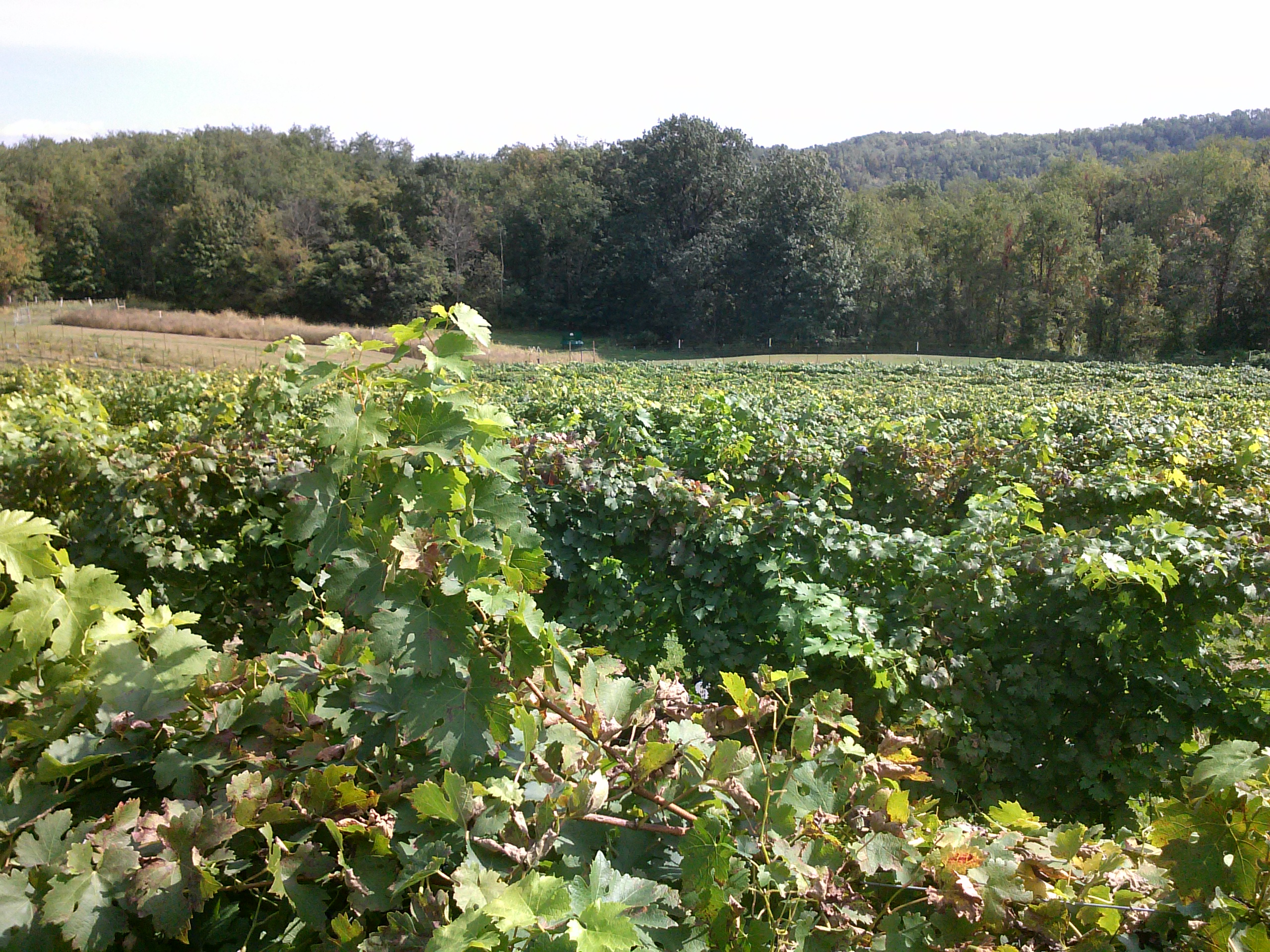
    Growing your own vines from cuttings is a rewarding venture both financially and from the sense of personal accomplishment you will feel when you harvest your first grapes. With the adverse effects of climate change being documented in vineyards around the world and the increased number of adverse weather events plaguing vintners, the answer to a  consistent and economically sustainable fruit crop may lie in the past with heritage grape varieties, older cool climate hybrids, and new hybrids that are being developed. Growing heritage and cool climate hybrid grape vines that have adapted to survive many weather-related challenges over time could be a critical puzzle piece in the future viability of our vineyards, for both hobby and commercial grape growers. In addition, these varieties tend to be more productive and can be grown more sustainably with fewer pesticide/fungicide applications. They are direct producers that do not need to be planted on a rootstock. This means that if we witness a very cold winter or late spring frost, which kills that part of the vine above the ground, canes will come up from the ground to produce a crop in the same growing season.

    With that objective in mind, Stephen Casscles continues to labor on his long-term project, the Cedar Cliff Vineyards Heritage Grape\Wine Project, aimed at preserving heritage and lesser-known cool climate grape varieties in Northern America. If you have any questions about his work at Cedar Cliff Vineyards please contact Stephen Casscles cassclesjs@yahoo.com  To further his work, Stephen has established a set of three cooperating nurseries in Marlboro, NY, Fonda, NY, and Ipswich, MA where you can purchase already rooted vines and/or grape cuttings. If you are interested in obtaining vines or cuttings of these unique varieties, please feel free to contact Stephen Casscles cassclesjs@yahoo.com.  Sadly, most of these cuttings or vines are not available at commercial nurseries, hence we need to propagate them on our own to increase the availability of these unique virus-free/ disease-free grape varieties. For additional information on these heritage and cool climate grape hybrids, the 2nd edition of Steve’s book “Grapes of the Hudson Valley and Other Cool Climate Regions of the US and Canada”  is available at http://www.flintminepress.com .  
Review: Meiomi Pinot Noir 2021

The following review in my series of widely distributed wines is one with a storied lineage and a place in a controversial 2019 New York Times article. Meiomi Pinot Noir rode a wave of changing public perception and tastes as they shifted from Merlot to Pinot Noir. Started in 2006 by Joe Wagner, the son of Chuck Wagner, the proprietor of the famous Napa Valley winery Caymus Vineyards. Meiomi means “coast” in the language of the local Wappo and Yuki tribes and is a nod to the coast of California where the grapes for the wine are sourced. Meiomi was sold to Constellation Brands in 2015 and production was ramped up to meet increasing demand. 
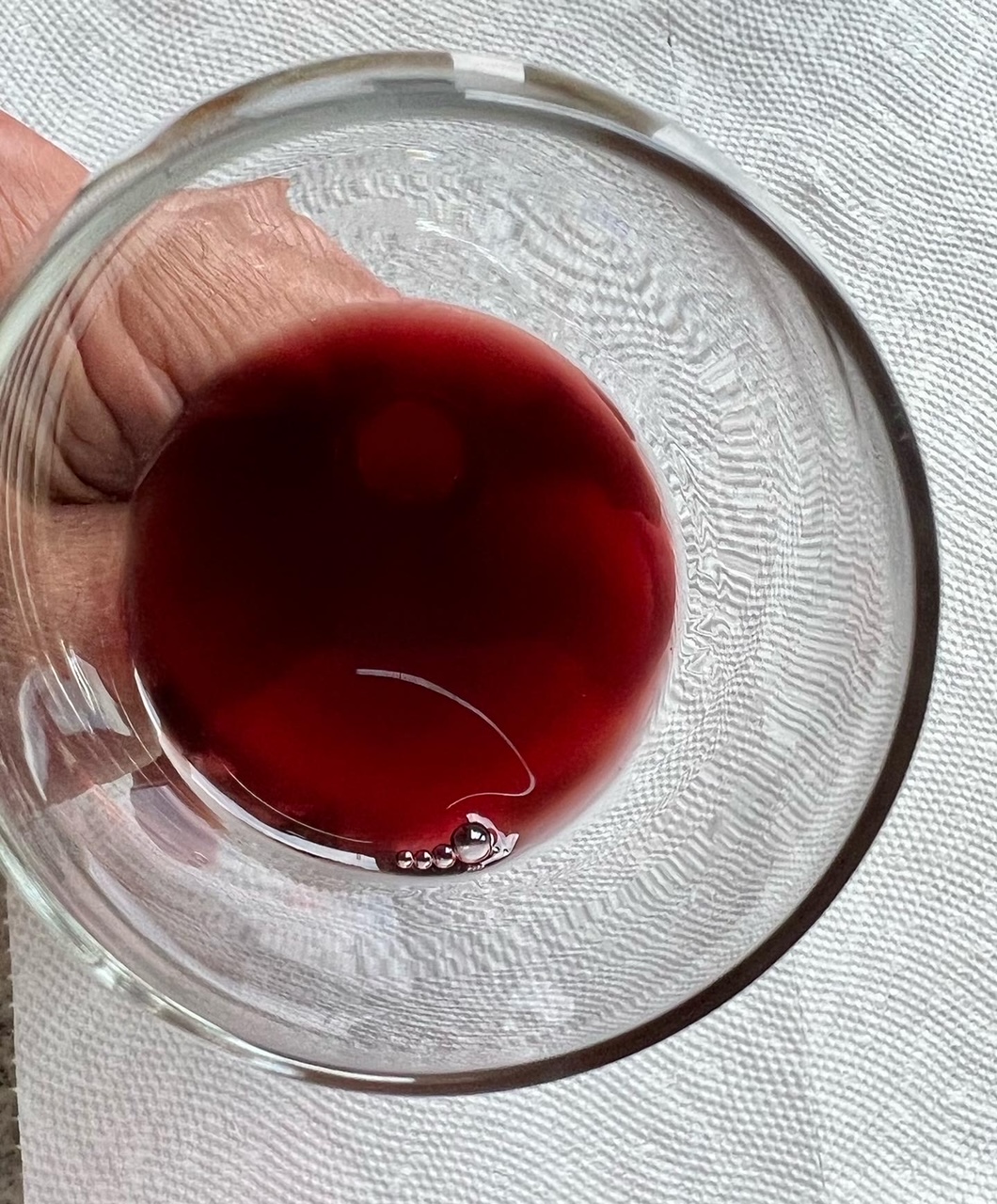
Meiomi remains a good choice when purchasing a quality crowd-pleasing Pinot Noir for under $25. Just remember, Meiomi Pinot Noir is more of a semi-dry wine than a typically dry Pinot Noir. Colors of ruby/garnet give way to scarlet around the rim. It opens with notes of black cherry leading into jammy flavors of dark fruit and blackberry on a medium body. There are no sharp edges to this wine, from its acidity, tannins, or finish they are all rounded off by its above-average residual sugar (R.S.) content. 

The controversial New York Times article I referred to earlier was written by the world-famous wine critic Eric Asimov and in it he found Meiomi Pinot Noir the only “supermarket” wine mentioned he thought was worth drinking. As baseball legend Reggie Jackson once said “Opinions are like noses, everybody has one” and that would include you and me. When it comes to deciding whether you like a wine or not your opinion should be the only one that matters to you.

The Long and Winding Road

Wine has become one of the most popular beverages in the world, and the wine industry continues to grow in complexity and diversity. As a result, there is an increasing demand for knowledgeable professionals in the field of winemaking. Earning a degree in winemaking can open up a multitude of opportunities for individuals looking to pursue a career path in this dynamic industry.

There are several educational opportunities available for individuals interested in earning a degree in winemaking.

Everyone has a different motivation for wanting to expand their knowledge of winemaking and there are plenty of options to achieve your goal, no matter what it is. Depending on what your goals are you may find that informal education through conventions, conferences, and online forums will provide the information and expertise you need. But sometimes, pursuing a formal education will provide the necessary resources to advance your ambitions in the wine industry. 

An online program is a good, low-cost alternative to starting your wine education at a college or university. A good starting point might be considering the entry-level VESTA (Viticulture Enology Science and Technology Alliance) program administered by the National Science Foundation http://vesta-USA.org You can earn a certificate that can help you move to the next level of your education, whether that is college or elsewhere. 

Those looking for a career outside of the production side may want to consider exploring the possibilities in the hospitality industry. The Wine & Spirit Educational Trust is a leader in the field of online courses and certifications. WSET certifications can be earned in relation to your increasing level of competency and ability. Someone seeking to acquire an in-depth understanding of wine and seeking job opportunities where they can share their passion for wine should seriously consider this option. 

Crafting a long and prosperous life in the wine industry involves as much hands-on experience and formal education as you can obtain. Enrolling in a college or university wine education program can provide you with the skills and guidance you will need to succeed by exposing you to the appropriate course work, as well as hands-on internships with industry professionals. I have listed a few links below to the better-known institutions in different regions of the United States. There are many more viable options out there that you should research and compare. 

Before you decide on a path to pursue your dreams make sure you have done your research as to all the ways to get there and don’t be afraid to reconsider your plans if other opportunities arise along the way. Earning a degree in winemaking can lead to a variety of career paths, such as winemaker, vineyard manager, wine marketer, or wine educator. Depending on your professional aspirations and interests, you can pursue advanced degrees or enroll in specialized programs such as wine tourism, wine retail, and wine journalism. I have never talked with a winemaker that said they traveled a straight line to get where they are today. Be open to change and embrace the journey.

Cornell University Ithaca, NY http://grapesandwine.cals.cornell.edu/undergraduate

The University of California Davis Davis, CA http://cpe.ucdavis.edu/winemakingcert

Michigan State University East Lansing, MI https://canr.msu.edu/iat/viticulture

Washington State University Pullman, WA http://wine.wsu.edu/education

Virginia Tech Blacksburg, VA http://www.vtwines.info/

Review: Chateau Ste. Michelle Columbia Valley Rosé 2021

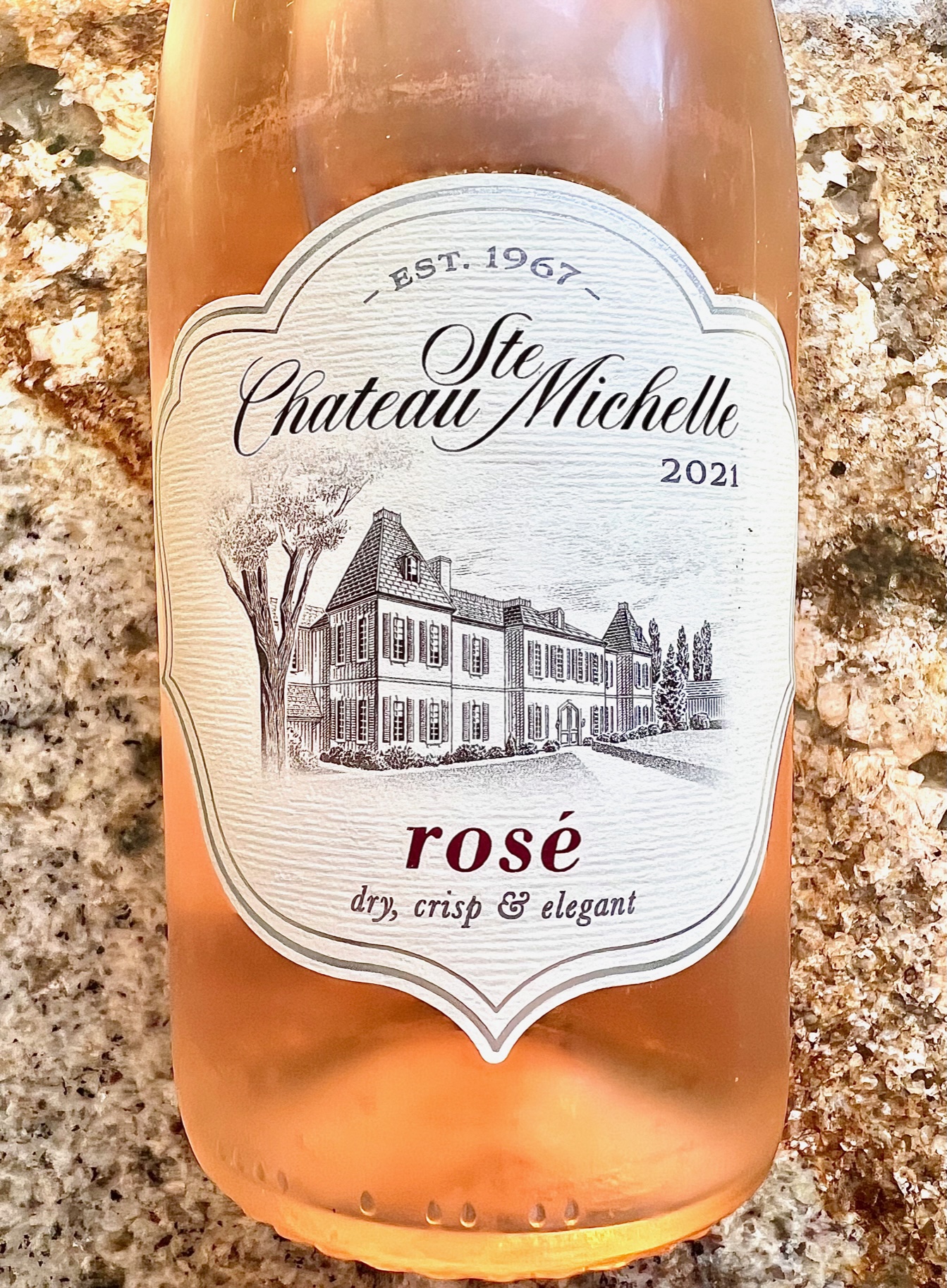
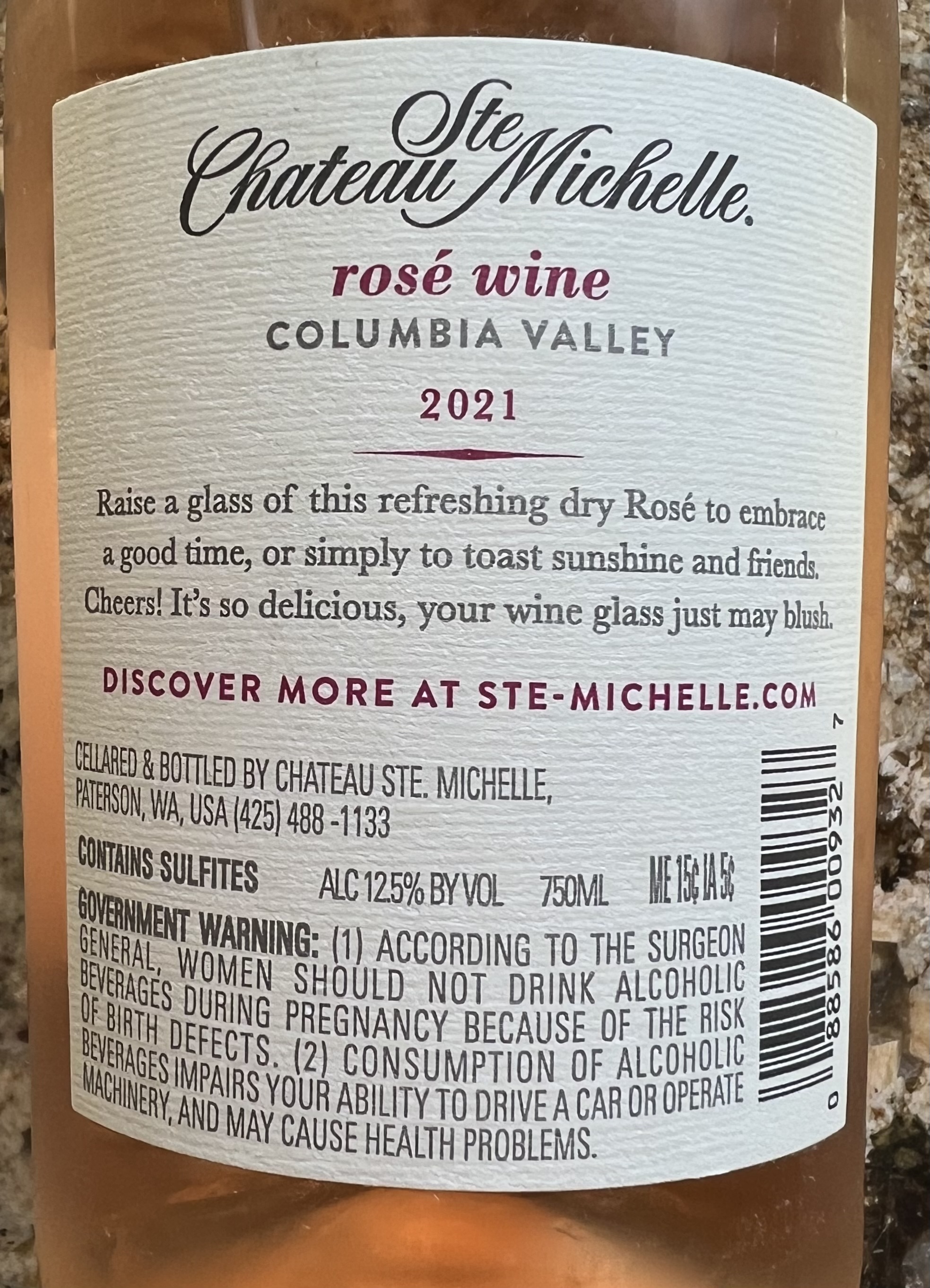
Next in my series featuring widely distributed wines that can be easily found in your area is one that doesn’t come to mind when you go looking for an inexpensive easy drinking wine for a relaxing evening on your deck or poolside. Chateau Ste. Michelle Columbia Valley Rosé 2021 is just one bottling in a long list of drinkable offerings that this Washington state winery group produces in large volume. This Rosé is 55% Syrah, 43% Cabernet Sauvignon, and 2% Grenache. Chateau Ste. Michelle Columbia Valley Rosé 2021 opens with notes of watermelon and strawberries followed by flavors of citrus on a light body. Priced at around $15 or less it is a good choice to pair with the lighter fare that is popular during the warmer weather. If you like to “Rosé all day” with your wine glass filled to the brim with ice then this Rosé is for you with its 12.5% ABV and crisp dry profile.

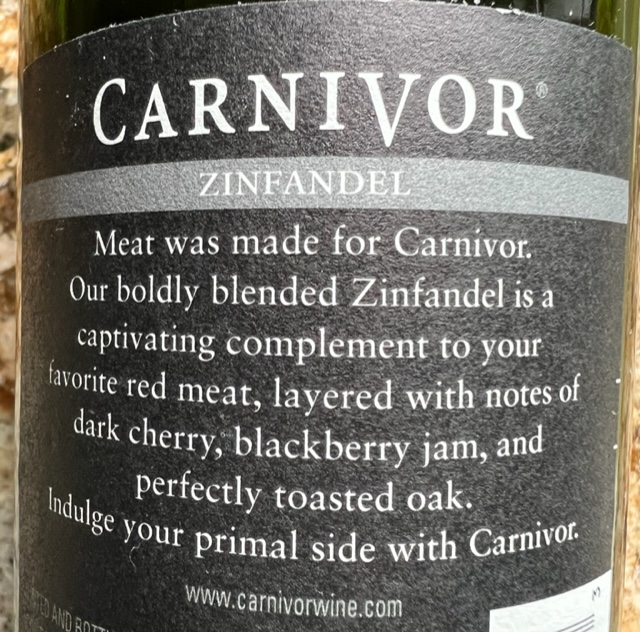
Review: Carnivor Zinfandel 2019

In my latest look at widely distributed wines that are moderately priced and worth your consideration, I review Carnivor Zinfandel 2019. Carnivor Wines is a Gallo Winery Inc. label produced in Modesto, California. Carnivor uses Zinfandel grapes sourced from warm-weather vineyards in Lodi, California. Their winemakers give these grapes a brief cold soak to coax extra color and tannins from them. The must is fermented at a warm 88-90F. The wine is aged in French and American oak to soften its tannins and balance its structure. Finally, the Zinfandel is blended with Cabernet Sauvignon, adding color and structure plus some Merlot to impart a softened character. 

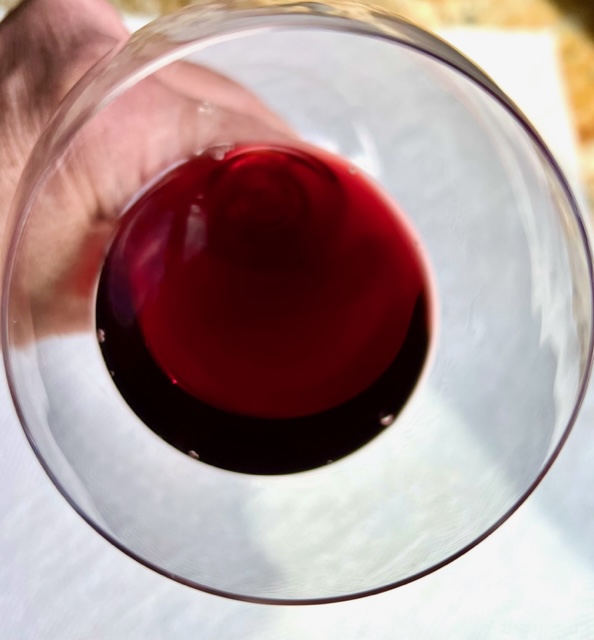
Carnivor Zinfandel 2019 is balanced on a medium body and a smooth finish. Nothing about this wine is overwhelming whether it be the aromas of toasted oak, the flavor of blackberries, tamed acidity, or a controlled finish. Everything about this wine is designed to be bold but not offend the mainstream red wine drinker. Priced at well below $13 a bottle this wine deserves serious attention when you are scanning the shelves for a dependable “everyday” wine that will please a wide range of palates. Carnivor Zinfandel 2019 pairs well with all red meat, after all, Carnivor’s tagline, is “Meat was made for Carnivor” but red meat isn’t the only thing it pairs well with. It is also a good wine to drink with your pizza or any dish that features a hearty dark red tomato sauce. The winemakers at Carnivor must be commended for producing a wine of this quality for a bargain price and doing it on such a large scale.

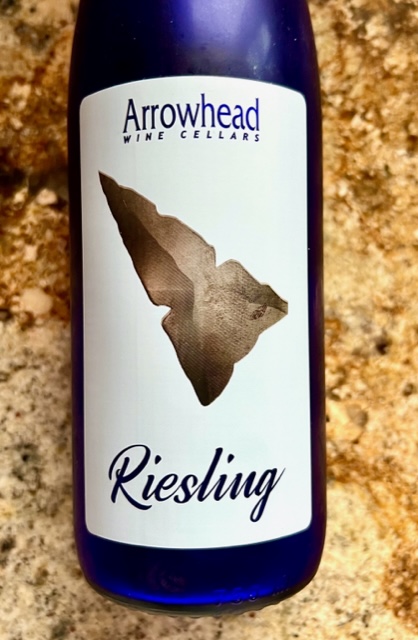
Review: Arrowhead Wine Cellars Riesling

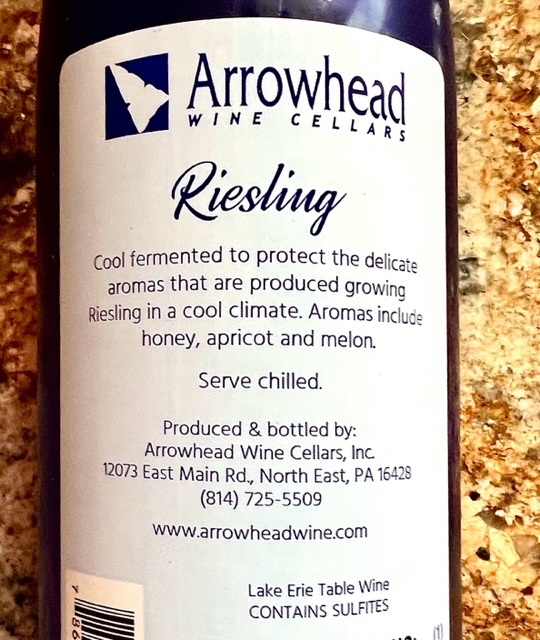
Arrowhead Wine Cellars is located in North East, Pennsylvania on the southern shore of Lake Erie. Nick and Kathy Mobilia are third-generation owners of Mobilia Fruit Farms. In 1998 they started making wine from their grapes that until then they had been pressing into juice for other wineries. Today, Arrowhead Wine Cellars produces 32 varieties ranging from Red, White, Blush, Sparkling, Ice, and Fruit wine.

 
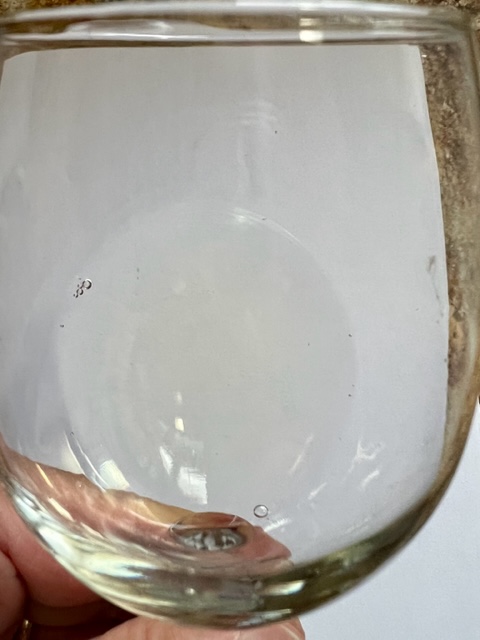
Arrowhead Wine Cellars Riesling is an off-dry, light-bodied, and very lightly colored Riesling. It is an easy-drinking wine with muted flavors of apricot and melon that would pair well with spicy Thai and Chinese dishes. $15.99   arrowheadwine.com