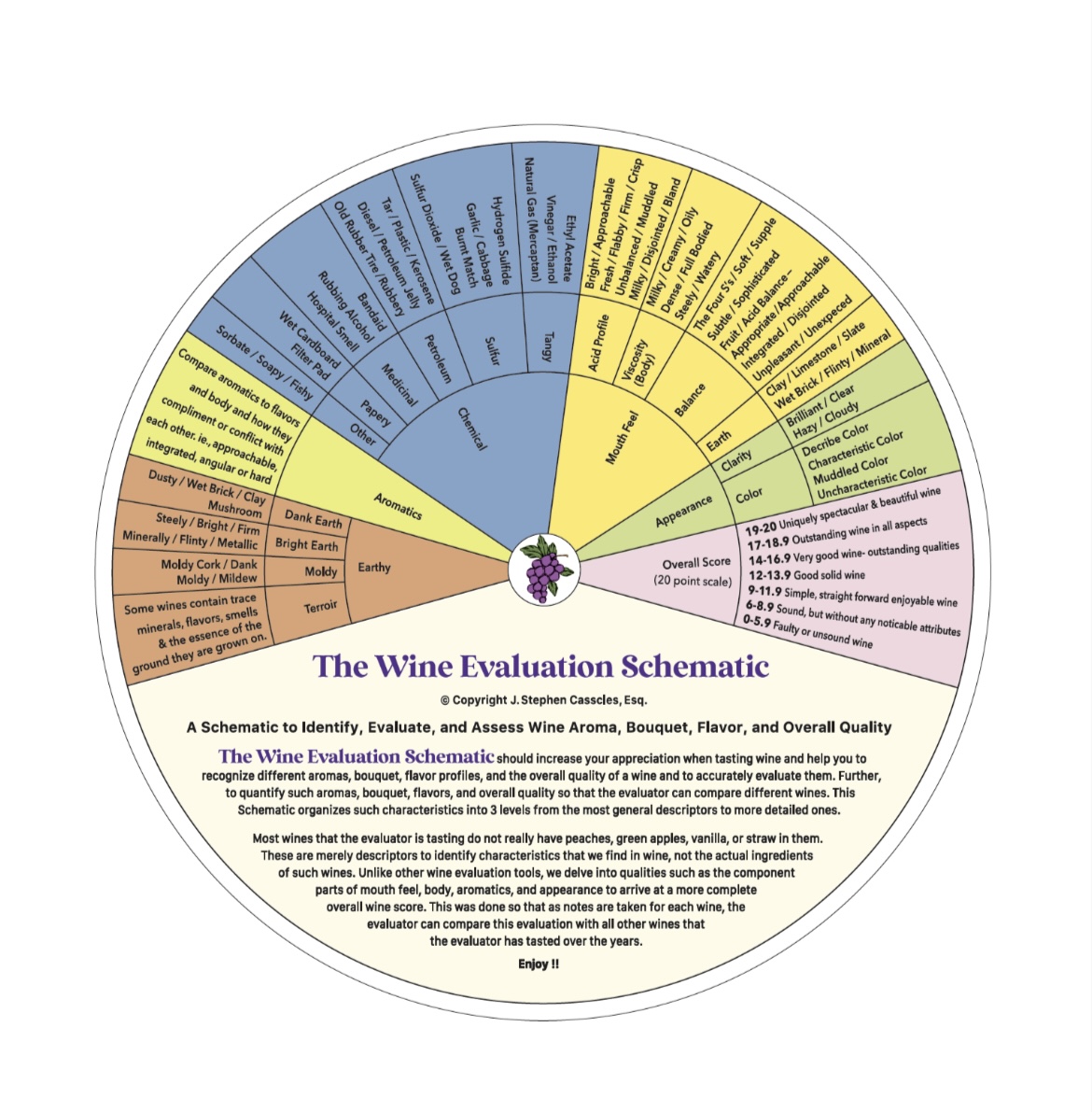
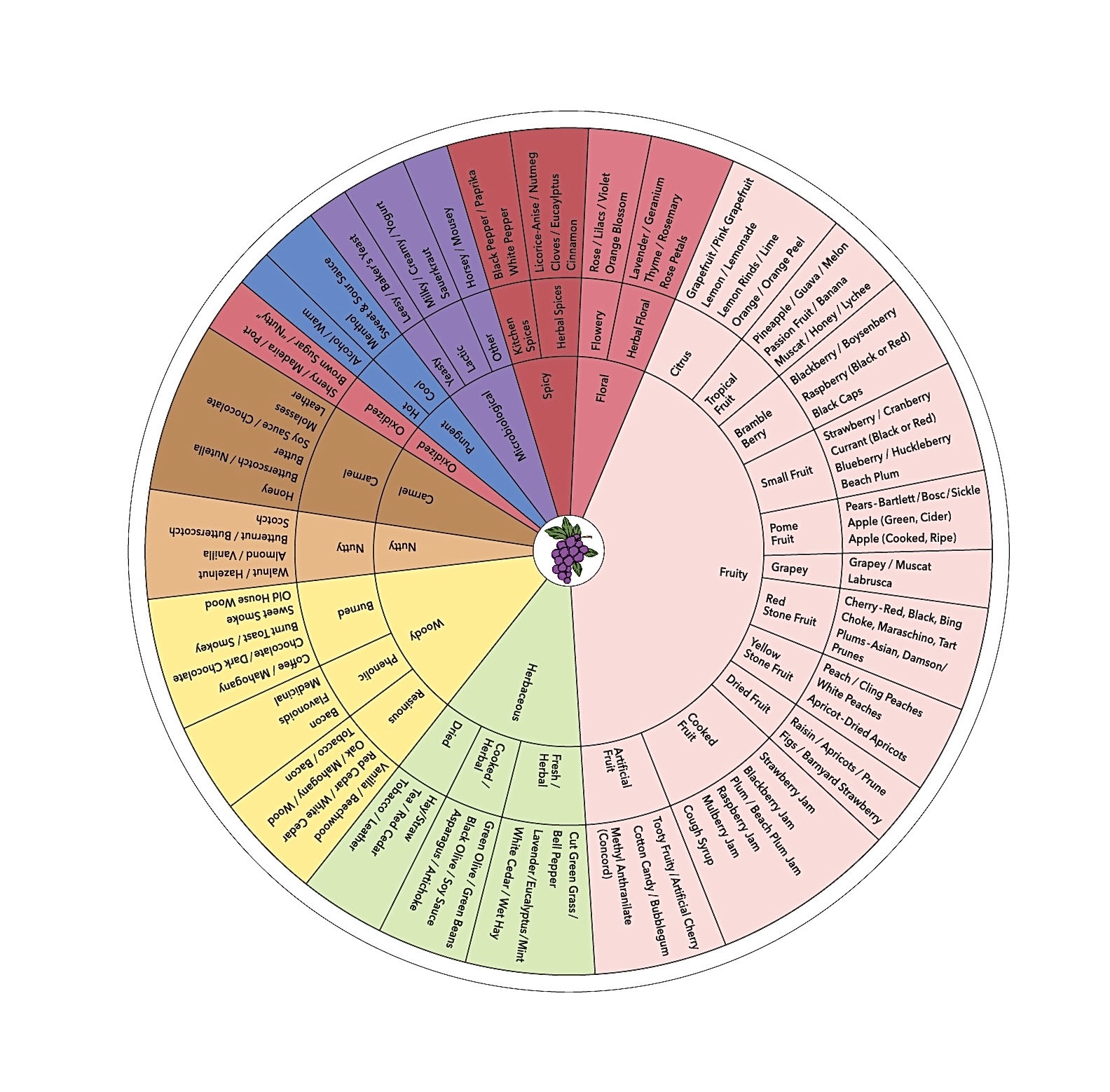
Internationally renowned Heritage grape authority, Steve Casscles, has released an innovative wine evaluation schematic. He has envisioned all the information you need to analyze characteristics of a wide range of wine grape varieties. The how and why Steve created this tool and how to best use it are fascinating. I asked Steve to share the story behind his creation. The following is my verbatim and unedited interview with J. Stephen Casscles.
“About 20 years ago, when I started to seriously evaluate wines to implement my idea for writing a Cool Climate/Heritage grape book, I was searching for a methodology to accurately evaluate wine and include descriptors that readers could use to understand these wines. There were several charts or aroma wheels that were a model for a good first step to evaluating wines. However, while good in that they set up a framework for me to evaluate and write down wine descriptors, I found that they were somewhat deficient in the descriptors to be used for wine. Further, they were not organized by the kinds of fruits that were being cited as being in the wine. So I greatly expanded the fruit descriptors. More importantly, most evaluators put too much concentration on aromas/flavors, and not enough on wine texture, and energy on the palate. This Wine Evaluation Schematic brings in considerations such as texture, body, mouth feel, appearance, body, finesse, and how the wine is integrated into one unified taste experience. Also, most charts did not give guidelines to give a wine an “overall score”, so that the evaluator could go back years later to rate that wine with other wines that the evaluator has scored.”
“It is my goal in releasing this Wine Evaluation Schematic that this Wine Evaluation Schematic is a starting point for each evaluator. Modify it as you like to fit your needs, and please add your own terms and descriptors. This Wine Evaluation Schematic can be used by individuals who want to appreciate wine, wine educators who want to convey a methodology or a conceptual framework to approach teaching their students about the concepts of how to approach this subject, and wine writers that want to more accurately convey to their readers the wines that they are writing about, and wine judges that evaluate wines for their wine competitions.”
“Right now, I have approached my wine colleagues in Korea, some of whom own wineries or wine schools, to translate this into the Korean language. Many of the grape varieties grown in New York State are also grown in Korea, so the flavor profiles of our wines are similar in many ways, especially regarding body, mouthfeel, and texture.”


 + 7) or use this link to go directly to the front cover of the magazine
  of an article that appears in the Spring 2020 issue of the American Wine Society Wine Journal.
 wpawinepirate