Winter 2026: “One Battle After Another”

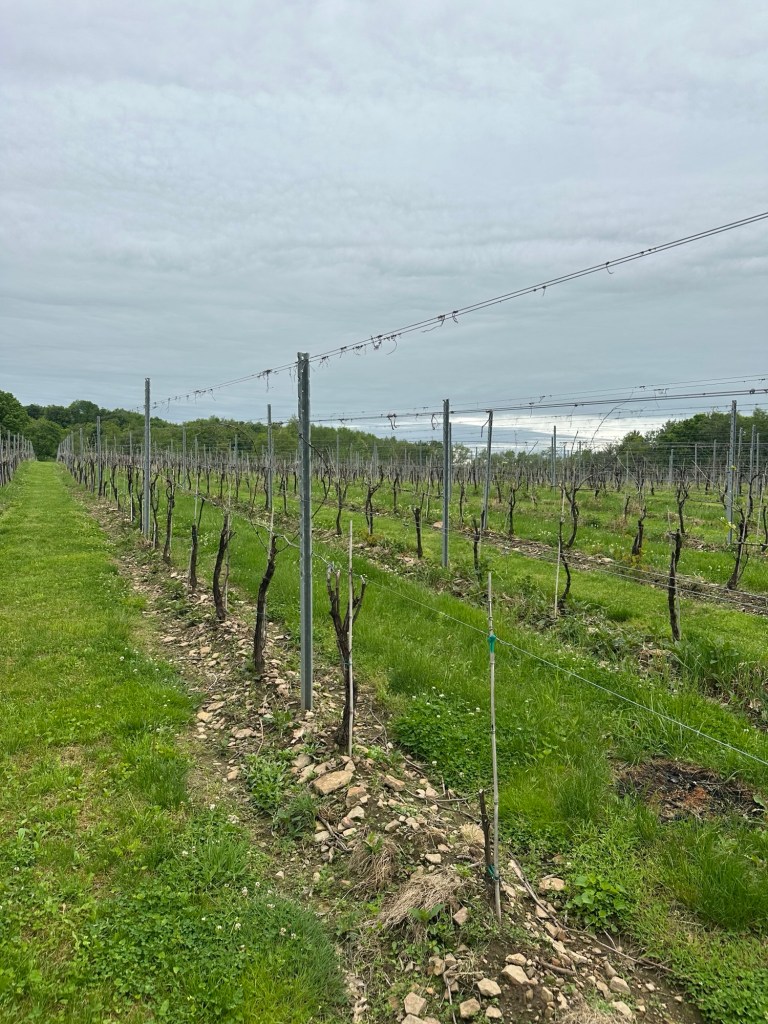
The Winter of 2026 was on for the record books, not in a good way. The weather from January through late May was dominated by extreme swings in both temperature and precipitation that culminated with a freeze on April 21st when the temperatures fell into the low 20’s. 

I was curious as to what extent these environmental factors had on the vineyards here in the northeastern United States. The only way I could collect honest and insightful information on this subject was to go directly to the people who had experienced it personally. The following are the firsthand accounts of vintners telling what they and their vineyards endured during the destructive Winter of 2026. The guests graciously provided supporting material that appears at the end of this article. Thank you. 

Dr. Chuck Zaleski is the owner/winemaker of Fero Vineyards & Winery in Lewisburg, Pennsylvania. Chuck makes wine from grapes grown on his 13.5-acre vineyard that features Riesling, Grüner Veltliner, Pinot Gris, Lemberger, Pinot Noir, and a favorite of mine, Saperavi. Like for many in the Northeast, this past winter was challenging. Here’s what Chuck told me. 

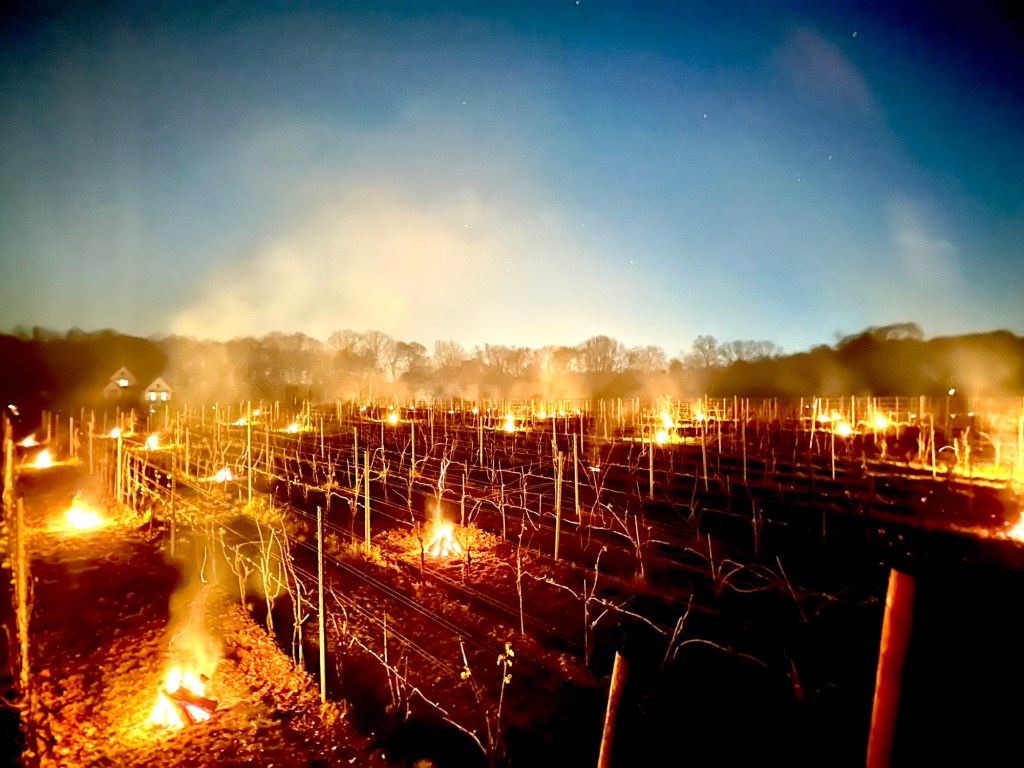
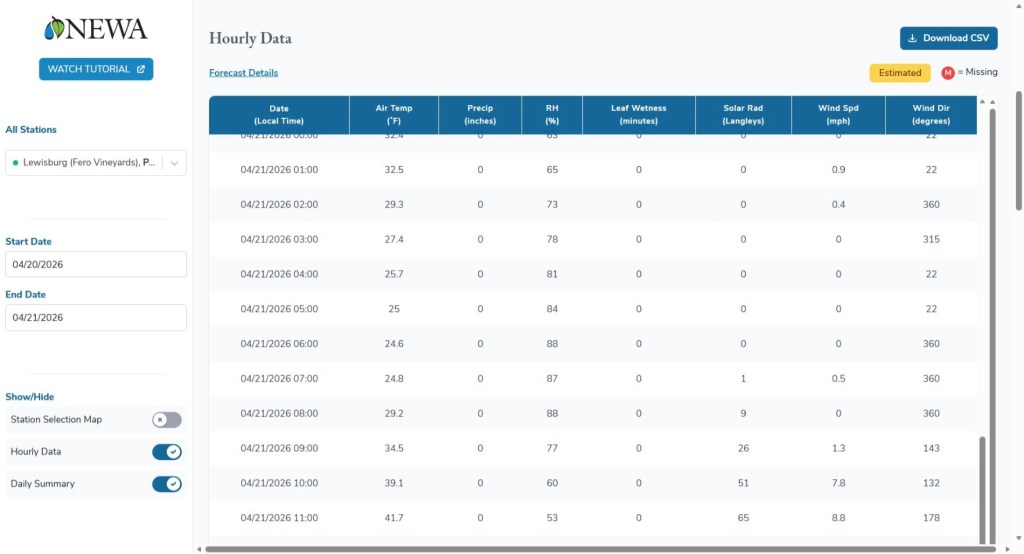
“Like most vineyards in the Mid-Atlantic region, we were impacted by the April 21, 2026, freeze. We have a NEWA weather station in the vineyard, and I attached a page recording the temperatures. The attempted mitigation effort of burning the prior year’s pruning in the vineyard was no match for the extreme cold. On that infamous day, we were still early in the growth season, at bud swell stage, with the exception of some of the smaller shoots and the row edges that had 1″ of green tissue. Our vineyard sustained significant damage to greater than 90% of the buds. Since the freeze, there has been some growth on vines, but only 30% of the normal shoot density. I expect to see some crop this year, but likely a fraction of normal yields. I also expect some vine loss, but it is too early to know the extent. This 2010 vineyard has weathered numerous frost events and deep winter cold to negative 12 degrees in its history, but this was the worst damage I’ve seen.  

The 2026 Freeze was a major disruptor to vineyards and orchards in the surrounding states. Economic losses will be significant. We will have to look at purchasing grapes for some of this year’s wine production. We will also need to replace damaged vines in the vineyard. The crop that we get will require more extensive hands-on management to get high-quality fruit. As bad as this weather event was, it came on the heels of one of the best vintages ever, 2025. Wines made from those grapes will be a real treat for wine lovers and are available now. We bottled our whites and rose wines this spring and will get the reds done next year. This summer is a great time to get out and support your local vineyards and wineries.”

J. Stephen Casscles is the leading authority on 19th-century Heritage grape varieties of the Hudson Valley and New England. He is a well-regarded author and writer, as well as a viticulturist, vintner, and winemaker. Steve resides in the Hudson Valley of New York, where he maintains a vineyard of rare grape varieties. Steve also provided me with a link to an article he recently published entitled “A Late Spring Freeze Slams Hudson Valley Fruit Farms” for us to gain a better understanding of the extent of the damage to the local economy. https://www.ediblehudsonvalley.com/a-late-frost-slams-hudson-valley-fruit-farms/

“My farm is near the banks of the Hudson River in Athens, NY. I grow 85 Cool Climate and Heritage grape varieties. What I have done for the past few weeks is record the bud break of my varieties and this year, the percentage of freeze damage. I think you will find that some buds/shoots were OK, and some got singed, but came out of this, some were damaged pretty well, and some were killed. I also noticed that some varieties have secondary buds, so there will still be a crop, but a reduced one. Observations: Some Heritage varieties, like the Hudson Valley Heritage varieties and Cape Ann Varieties, did OK because they tend to bud out late, so they did not have the length of green growth that got frozen out. Of the late-budding varieties that did OK were Jefferson, Empire State, Eumelan (Hudson Valley hybrids), and Agawam, Salem, and Lindley for the Cape Ann Rogers hybrids. I noticed that a Hudson Valley hybrid Bacchus, which is a Riparia variety, while it budded out early, still did OK. It must have some kind of antifreeze in it, as some spring plants do, like Glory of the Snow or tulips. So, my Bacchus (JH Ricketts hybrid) was good. My Seyval Blanc, Vidal, and Vignoles did OK, and they have a secondary crop. The Foch also got hit a bit and buds out early, but survived OK. It is in a higher place in the vineyard, so that helped.  My chance seedlings Palmer and Lynwood, both bud out late, so they managed well. Freeze damage was worse at the bottom of the vineyard hill than at the top.  Compared to other vineyards, we did OK, mostly because I do not grow vinifera.”

Jay Bell is the owner/winemaker of Bella Terra Vineyards in Hunker, Pennsylvania. He also grows grapes for his operation in his vineyards located in Westmoreland and Bedford counties. Jay gave me this comprehensive review of the damage his vines sustained. 

“We were also hit hard in both vineyard locations. Bedford County and Westmoreland County. Some vines are starting to rebound with suckers coming up from the vine base where we had them hilled up. (We cover up the graft unions with dirt in the winter to protect part of the trunk from freezing.) On the 21 of April, we made fire on just 3 acres of chardonel vines, and that really helped. We wish we had the resources to do more fires or other frost/freeze mitigation. Those 3 acres, along with our small block at the winery in Hunker, did well. The remaining 17 acres will have little to no crop this year. The varieties that took the hardest hit and will have to be a total replant or retrain from vine base were Gruner Veltliner (3 acres), Pinot Noir (2.5 acres), Malbec (.5 Acre) Merlot (1.5acre) Chardonnay (1 acre). Petite Verdot, on the other hand, was not quite out, so it did fairly well with only about 20% bud loss.”

Alfredo “Alfie” Alcántara is co-owner of dear native grapes Winery & Vineyard in the picturesque Catskill Mountains town of Walton, New York.  Alfie and dear native grapes are focused on propagating and producing wine from Heritage and seldom-used native grape varieties. Here’s what Alfie shared with me about the Winter and Spring of 2026 in the western Catskills. 

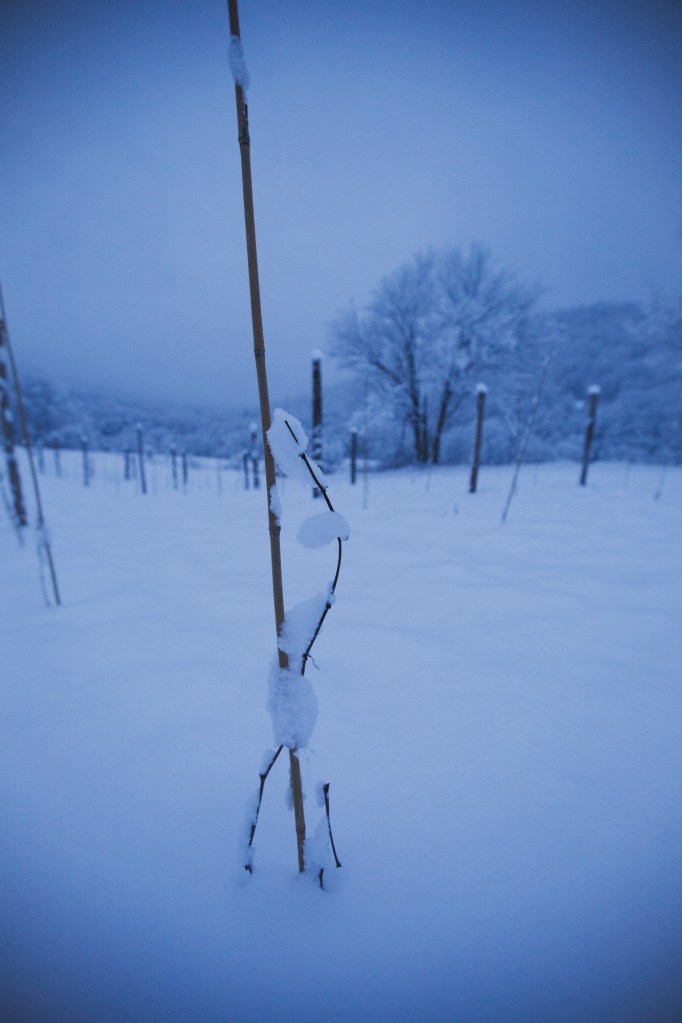
“We faced a severe winter in the western Catskills, with lows hitting-15°F and wind chills plunging to -30°F. Thankfully, steady snow cover insulated our vines and root systems. Local growers note that these extreme freezes can actually suppress overwintering bark diseases, and we’ve already seen a significant drop in vole damage this year. Our primary concern shifted to the late-spring frosts of April and May. A major freeze on April 21st devastated large portions of the Northeast, but because our bud break naturally occurs a few weeks later than in the Hudson Valley or Finger Lakes, our tight buds escaped the worst of it. After tracking the vineyard closely through a few additional early-May frosts, we are optimistic. We see some minor frost damage, but 70–80% of our vines look healthy and are actively pushing out shoots. Still, these close calls keep us thinking about the future, reinforcing our interest in late-budding varieties like Petite Pearl that can naturally escape these unpredictable spring frost events.”

At the end of the day, growing grapes for winemaking is no different than any other agricultural venture. It is a risky business where most of the factors determining your success or failure are beyond your control. I learned this at a very young age while growing up across the road from my grandparents’ western Pennsylvania farm, which my uncle, aunt, and cousins tirelessly worked. I greatly admire all who labor in this ancient profession where success is measured in small victories, and acknowledgement is very rarely received. 
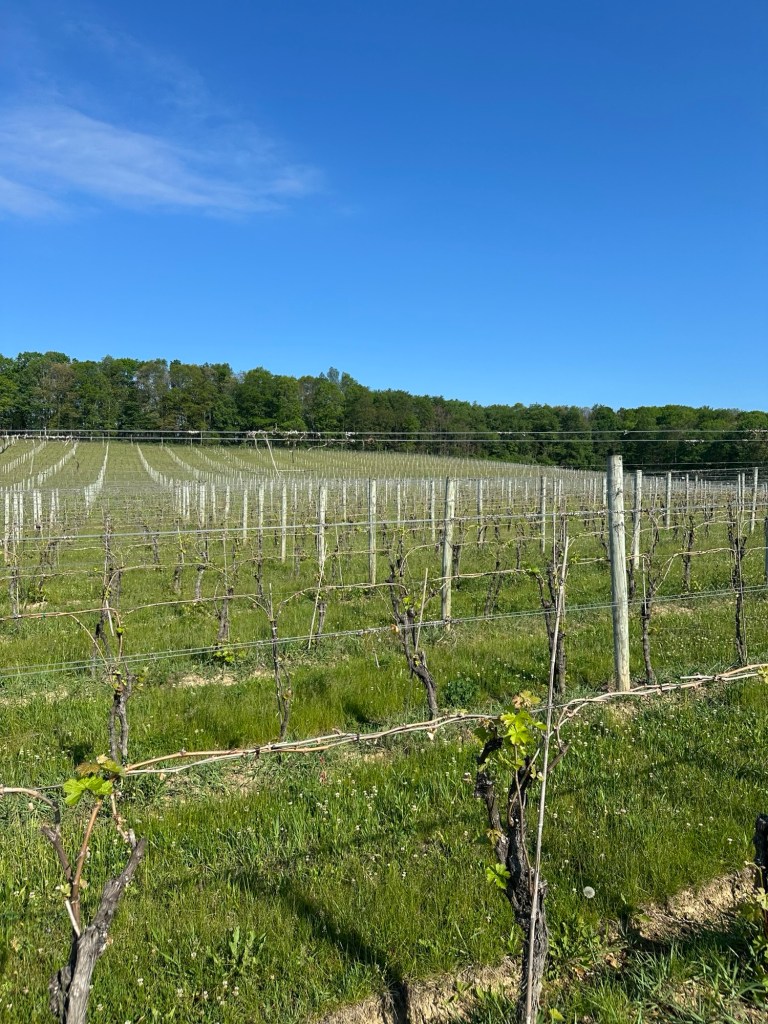
Grüner Veltliner Betta Terra Vineyard
Fires in Chardonel vineyard, Bella Terra, Hunker, PA
First Snow Winter 2026, dear native grapes Walton, New York
Weather Information from Fero Vineyard, Lewisburg, Pennsylvania
dear native grapes vineyard, Walton, New York

A Winelovers Guide to Lake Erie Wine Country

Along the southern shore of Lake Erie where it borders Pennsylvania you will find the vibrant and always evolving wineries of Lake Erie Wine Country. The Lake Erie AVA is the largest grape-growing region east of the Rockies and a treasure trove of activities but for this post, I’ll highlight six wineries that will provide visitors an itinerary upon which they can build as they become more familiar with the area. 

I’ll start with the winery I consider to have the most name recognition of the region’s producers. Mazza Vineyards and South Shore Wine Company are two destination wineries for first-time visitors or seasonal travelers. Both are a good starting point to explore the wines that these legacy wine companies offer. Mazza Vineyards 11815 E. Lake Rd (Rt5) North East 814-725-8695  South Shore Wine Company 1120 Freeport Rd (Rt89) North East 814-725-1585 http://enjoymazza.com

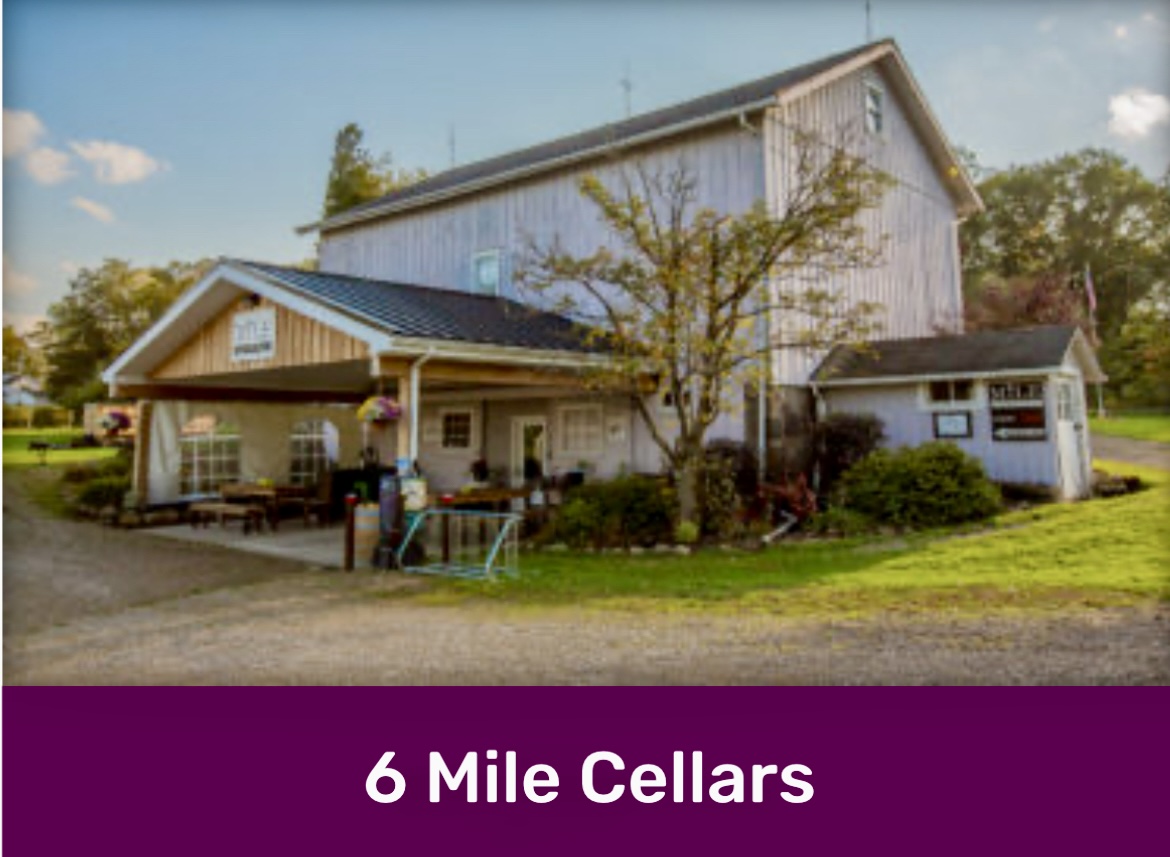
Our next stop is 6 Mile Cellars and as its name suggests it is located on 6 Mile Creek in Harborcreek. This is the closest winery to downtown Erie making it a convenient stop for visitors. This boutique winery’s tasting room is in a one hundred-year-old horse barn that has been repurposed into an inviting space to enjoy their diverse selection of wines. 5727 Firman Rd Erie 814-580-8375 http://6milecellars.com

Route 20 provides easy access to the popular Courtyard Winery in North East. No tasting at Courtyard’s beautiful tasting room is complete without trying their Chambourcin.  10021 West Main Rd North East 814-725-0236  http://courtyardwinery.com

Continuing on Route 20 we arrive at Arundel Cellars & Brewing Company 11727 East Main Rd North East. This winery is a landmark in the area and is well-known to travelers on Route 20. 814-725-1079 http://arundelcellars.com

If you want to try something different but still taste distinctive wines, consider Burch Farms Country Market & Winery. You can shop at their country market for farm fresh produce, and assorted baked goods from their bakery, and taste their wines. Located at 9210 Sidehill Rd North East

http://burchfarmscountrymarketandwinery.com 

Erie, Pennsylvania offers something for everyone and is an easy drive for many in Pennsylvania, New York, and Ohio. If you haven’t given this region much thought as a day trip or getaway option please take a minute to see if it’s right for you. 

Photo credit: http://lakeeriewinecountry.org

“Old World” or “New World” Why Not Both?

Wine is often divided into ones made in the “Old World” versus ones made in the “New World” but what does that mean? They are segregated along geographic lines. Old World wines are categorized as being made in Europe and the Middle East. New World wines are made anywhere else e.g. Australia, the Americas, Southern Africa, Asia, etc. The Old World relies mainly on traditional wine grape varieties (Vitis vinifera), time-honored wine-making methods, and labeling that emphasizes the location where the wine was made and, prioritizes a wine’s terroir. Old World wine regions tend to have cooler climates that yield wines with restrained tannins and are not as fruitful with less sugar. The lower sugar levels contribute to their lower alcohol content (ABV). 

New World wines also use traditional grape varieties but are heavily invested in non-traditional grape varieties and readily embrace modern wine-making techniques, ideas, and technology. Its wine bottles are labeled identifying the grape variety used to make the wine. The climates of New World wine regions tend to be warmer and that variable favors the production of wine with fuller fruit flavors, rounder tannins, and higher alcohol content. Lastly, New World wines display more oak which is achieved by using newer barrels that extract greater fruit flavors and tannins. 

It doesn’t matter whether a wine is an “Old World” or “New World” offering, the only thing that matters is that you enjoy drinking it. Snap a pic of the label just in case you can’t remember what to buy the next time you are wine shopping.

Savage Wines Release 2021

Savage Wines of Salt River, Cape Town South Africa has just announced the 2021 Release of their premium wines. South Africa has a diverse and intriguing offering of wine that cannot be duplicated anywhere else in the world. The legendary Duncan Savage is one of the elite winemakers that are writing a new chapter of winemaking in South Africa with bold and refreshing interpretations of classic South African grape varieties. I am truly appreciative and humbled by this personal note Duncan included as a foreword for me and my readers. Thank you, Duncan.🙏. 

“My path and that of Savage Wines has been shaped by all the incredible people I’ve met along the way. Richard Rocca is one of those people. Rich took an interest in what we were up to long before many others noticed and we’ve had contact every year since. Thanks for all the encouragement and feedback Rich!”

This year’s release is made up of wines from the 2020 vintage with one 2019 in the form of the Savage Red.

2020 offered a fairly moderate growing season with many of the vineyard parcels returning to almost normal crop levels with the exception of Savage White. We see a welcome return of ‘Never Been Asked To Dance’ and ‘Not Tonight Josephine’ to the range, two great examples of Chenin across a spectrum of styles.

The harvest ran pretty smoothly with good ferments and beautiful fruit-forward aromas, all was on track for a pretty normal end to the season. Covid unfortunately arrived and a lot of uncertainty lay ahead for all of us in the wine industry due to the lockdown restrictions. As a result, many of the 2020s spent more time on skins than usual.

The irony is that adversity often brings out the best. We have planned longer skin contact for years and it was Covid that forced our hand. The Reds offer all the perfume one expects from the varieties with a touch more grip and precision. Elegance and purity however remain the cornerstone of our wine philosophy and this year’s release is no exception. While accessible now, the range will deliver for many years to come, ‘Not Tonight Josephine’ in particular is in no hurry.

Thanks very much for your continued support, wherever you are in the world!

All releases are listed below. Please scroll down to view.

Scroll down to see all of this year’s releases

United States – Broadbent Selections broadbent.com United Kingdom- swig.co.uk Japan- raffinewine.com Australia- paramountliquor.com.au Canada- (Ontario) lcbo.com (Quebec) saq.com Hong Kong wineimpala.com

Winemaker Duncan Savage

All Photos Courtesy: Savage Wines

Dancing the Zweigelt Waltz

When a vintner is considering adding a new variety of wine grape to their vineyard the thought process involved in choosing which vines they eventually plant can be very tedious and time-consuming. The most important consideration when making that decision is the vine’s compatibility with their growing conditions but it’s not the only factor to study when making a selection. Of all the other variables probably the most important influence on a winemaker’s decision to grow a particular grape is their belief they can make a premium wine from it. Winemakers often begin their search for that “perfect” match in wine regions around the world that are similar to their own and are producing quality wines from the grape under consideration so they can use them as a guide.

Zweigelt (pronounced TSVYE-gelt) is beginning to attract attention from growers in the northeastern United States and a few Canadian vineyards in British Columbia and Ontario’s Niagara Peninsula. Zweigelt is a cool-climate Austrian hybrid red grape developed in 1922 by the hybridization of two Austrian grapes, Blaufrankisch (Lemberger) and St. Laurent. Zweigelt is the most extensively planted red wine grape in Austria. It is a very fertile grape that requires intensive leaf control and yield regulation because of its prolific yields. Zweigelt is a good choice for growers as an insurance grape because it’s bud break is later in the spring than many other varieties when the danger of a killing frost has passed and it ripens mid-season before most of the bad weather that damages the crop later in the harvest. These are some of the reasons why the acreage of this red grape has increased substantially in Austria between 1999-2015 but has now stabilized in recent years. Zweigelt displays characteristics from both of its parents. Blaufrankisch makes a bigger, bolder and deeper wine while St. Laurent is described as being fresh, agile, and akin to a Pinot Noir but with more muscle. Zweigelt is generally made into a dry, medium/light-bodied wine with low tannins and medium/high acidity but can also be made in a sweet style or ice wine. In the glass, it has a violet/reddish color and flavors of red cherry, raspberry, black pepper, and chocolate with a spicy floral aroma.

Zweigelt is a fresh light wine that pairs well with a wide range of food, making it a great picnic wine. It is common to find Zweigelt as a varietal but it is also widely used in blends with Cabernet Sauvignon and Merlot to yield an Austrian spin on the classic Bordeaux blend. It is frequently blended with Blaufrankisch to double down on its Austrian lineage.

The great thing about wine is that there are so many completely different wines to explore. With that in mind, I suggest when judging a new wine grape don’t base your impression on a single bottle because with these unusual wines every winemaker has their own vision for the wine. It is a good idea to try as many samples as possible before forming your opinion. If you would like to taste an American Zweigelt consider trying one made in the Finger Lakes Wine Region of New York by Rob and Kate Thomas at their Shalestone Vineyards. http://shalestonevineyards.com

Goodbye Yellow Brick Road

Tod & Jean Manspeaker


On May 22, 2020, Jay and Joanna Bell, owners of Bella Terra Vineyards Hunker, Pa became the new owners of Briar Valley Vineyards and Winery Bedford, Pa

When Jean Manspeaker’s great-grandparents immigrated from Germany and settled on a hilly farm west of Bedford, Pa nearly 200 years ago they had no idea what a wonderful future lay ahead for their descendants. They planted a small vineyard and 170 years later that vineyard is still going. The seeds that would grow into Jean’s unlikely career were sown in her childhood as she watched her grandfather tending to the vines he loved all summer and then seeing him sell his prized grapes to his friends and neighbors for their jams, jellies, grape juice and of course homemade wine. Jean grew up on her family’s dairy farm and while her father worked the farm he also had a job outside the farm but somehow had time for a vineyard and made wine at home. Little did Jean know at the time, Tod her future husband was growing up on his family’s show and quarter horse farm in nearby Everett, Pa. Tod and his family are avid horseman and had numerous champion quarter horses.

Like Jean, Tod had never planned on getting involved in the very demanding business of growing vinifera wine grapes and making them into premium wines. Serendipity intervened and that’s when Tod and Jean’s future took an unexpected turn down a different path after visiting wineries on the East Coast. They fell in love with the vineyards and their fates as winemakers were sealed. After a great deal of research, numerous classes, and endless hours of reading everything related to winemaking they could get their hands on they hired a consultant to find out as much about growing vinifera grapes in Pennsylvania as they could. The die was cast and there was no turning back when Jean did an internship at a winery and Tod worked the vineyard. Their mission has always been to grow the best grapes possible and make them into exceptional wines. That passion to excel is palpable when you talk wine with them. 

From its inception in 2005 Briar Valley Vineyards and Winery has chosen to grow all it’s own vinifera grapes and make only dry wines. The B.V. vineyards are planted on a southeastern facing slope at an elevation of 1200 feet above sea level and consist of Riesling, Merlot, Cabernet Franc, and Lemberger. This determination to stay true to their vision and not to give in to making lesser quality wines to enhance the profitability of the operation is to be admired and applauded in an industry that often puts profits before quality. By following their dreams Tod and Jean have been able to pursue careers that they felt passionate about and that afforded the opportunity to see the results of their hard work at the end of the day. 

A tribute to those labors could be seen on display in the Briar Valley tasting room on E. Pitt Street in downtown Bedford, Pa. It was quite an achievement when B.V. won a Double Gold Medal and Best of Show for one of their Rieslings in the Finger Lakes International Wine Competition, home to the best Rieslings in the United States. Briar Valley has also won the Pennsylvania Governor’s Cup, as well as gold medals in the prestigious San Francisco Chronicle Wine Competition. Briar Valley wines have received high scores from world-renown wine critic James Suckling and the International Wine Review. Their wines were  served at the State Department for the 75th Anniversary of the Blair House.

It is the intangible things that have given the Manspeakers the most joy and satisfaction over the years at the winery. They love their small

Briar Valley Case Club members share good times at the winery

town of Bedford and the community it supports. It is a town where the residents take great pride in their small town culture and the people that make it all possible. The Manspeakers and their Briar Valley Winery have added greatly to the “terroir” of the area and will continue to do so far into the future. Of all the experiences and memories that they will take with them from their time at Briar Valley Winery, the one thing they cherish the most is the friendships they have made over the years and that will continue as they embark on their next great adventure wherever that journey might take them.

In the end, success is not judged by financial gain alone but by the lives, you have touched and were made better because of it. Thank you Tod and Jean for letting us share in your dreams, all the great wine and the wonderful memories you have given us. Wishing you both all the best life has to offer.

Scroll down for more photos of Tod & Jean Manspeaker and Briar Valley Vineyards & Winery

Tod & Jean at the State Dept.

The B.V. tasting bar

Briar Valley tasting room in Bedford, PA

B.V. tasting room

B.V. Cab Franc

Saperavi Expands South & West

As this years’ harvest nears its end I thought it would be a good time to report on the new

Greendance Winery Saperavi vines grow out of tubes Photo Courtesy: Greendance Winery

Saperavi plantings that have come to my attention. The Spring of 2019 was undoubtedly the most prolific planting season for Saperavi in its relatively short history in North America. 

Saperavi’s first stop on its trek south from the Finger Lakes Wine Region of New York is at the Ripepi Winery & Vineyard in Monongahela, Pennsylvania. Rich Ripepi added one half-acre of Saperavi to his vineyard that is located approximately twenty miles south of Pittsburgh on the Monongahela River. Just east of Monongahela, Dr. Rick Lynn at Greendance Winery Mount Pleasant, Pennsylvania added one hundred Saperavi vines to his already diverse vineyard that includes the intriguing cold-hardy Petite Pearl grape and PA’s largest planting of Marquette.

Continuing south our next stop is the Shenandoah Valley of Virginia where Dr. Tim Jordan has planted an acre of Saperavi in his Fort Defiance vineyard. While to the east in nearby Ruckersville, Justin Falco has added two thousand Saperavi vines with plans for more at his Montifalco Vineyards. The four-year-old Saperavi vineyard at Whitebarrel Winery in Christiansburg will yield Virginia’s first substantial harvest of Saperavi grapes this fall (2019). Dr. Rik Obiso has been anticipating this day for years and has submitted two research grants for funding with the intent to bring Saperavi vines to his vineyards from Armenia and Georgia. In the same area of Virginia that these three growers call home, John Kiers III of Ox-Eye Vineyards in Staunton has planted “a couple of hundred vines” and is in the early stages of evaluating them.

You will probably be as surprised as I was when Rich Nunamaker at Grand Mesa Vineyards Cedaredge, Colorado contacted me to ask my opinion on the viability of planting Saperavi on his property in Spring 2020. Rich successfully grows Rkatsiteli in his vineyard on the western slope of the Rocky Mountains so he logically assumed Saperavi would also be a good fit for his conditions. I told him I believed he would be able to grow Saperavi in his environment and altitude based on his success with Rkatsiteli and referred him to Jim Baker, Chateau Niagara Winery, for the technical side of the project. It will be extremely interesting to watch the development of Rich’s vines as he writes a new chapter in the story of Saperavi.

After a long trip around America Saperavi always finds it’s way back home to New York. When Jeff Sawyer, owner/winemaker Wellsprings Vineyards Sterling, New York, ordered six hundred Saperavi vines and only received two hundred seventy-five he changed his plans and planted three hundred Dornfelder vines the next year. Now he has the enviable problem of deciding which one he likes the best in his vineyard on the southeastern shore of Lake Ontario.

In other Saperavi news of note, August Diemel, Keuka Springs Vineyard (Finger Lakes New York) made a 2018 Saperavi from grapes grown by Harry Humphrey on Seneca Lake. He made one hundred twenty cases that quickly sold out. Also on Keuka Lake, Weis Vineyards has recently released its 2017 Saperavi after twenty months in the barrel.

2019 has been a banner year for Saperavi in the U.S. It continues to expand its footprint and attract the attention of wine drinkers as more producers recognize the potential of this versatile grape. If you know of any growers or producers please contact me at wpawinepirate@gmail.com 

Down in Roccaland

     If you have ever had the good fortune to see your family name on the label of a wine bottle you can understand my interest when I saw mine attached to a premium Napa Valley winery. I started to wonder if there might be some family connection. I contacted Mary Rocca, owner of Rocca Family Vineyards to explore the possibility of us being related. I found Mary to be very kind and welcoming as we exchanged information about our ancestry. I learned a great deal about my own heritage and also about Mary’s. We found some amazing coincidences that would have never been discovered had we not reached out to each out. Mary generously sent a gift of her wine to be shared at my family reunion as an introduction between our families. I would like to say “Thank You” to Mary for all the time and effort she has taken from her busy schedule to assist me in this project. Although we haven’t identified any recent common threads we continue to search. Even if we can’t find any blood relatives uniting our families I will always consider Mary not only a friend but family. Mary has generously offered to discount the wine purchases of all of my readers when they enter either of these codes at checkout on http://roccawines.com  WPASHIP ($1 SHIPPING ON ANY ORDER) or WPA25 ($25 OFF ANY ORDER OF 2 BOTTLES OR MORE) These codes expire on 10/16/19 so don’t miss out on your chance to buy extraordinary wine from an outstanding Napa Valley winery with an insider’s deal.

Anyone that has ever dreamed of owning a vineyard and winery in Napa, California can only imagine the excitement that Mary Rocca and her husband Eric Grigsby felt when they

Mary Rocca at Rocca Family Vineyards Napa, California

decided to pursue that very dream. They began their search for the ideal Napa vineyard in 1996 while Mary juggled her dental practice, Eric his medical practice and not to mention their four young children at home. Their three-year search for the perfect vineyard came to fruition when they found a 21-acre vineyard deep in the heart of the Napa Valley. They renamed it the Grigsby vineyard and planted new rows of vines between the existing ones to essentially double their grape production. This vineyard is located between the warmer climate of the upvalley and the cooler maritime influences of the San Francisco Bay. The Grigsby vineyard is mainly Cabernet Sauvignon but also has 1 acre of Merlot and roughly 2.5 acres of Syrah. In 2000 Mary purchased the 11-acre Collinetta vineyard in the Coombsville appellation. The Collinetta vineyard is mostly Cabernet Sauvignon (Clone 4 & Clone 337) but also has an acre of Cabernet Franc and an acre of Petit Verdot. Now with all the pieces in place Mary could focus on making her vision for Rocca Family Vineyards a reality.

     Many decisions had to be made when it came to what pillars the winery and vineyard

The Grigsby Vineyard

would be established on. For many of those choices Mary drew upon the deeply seated beliefs she had built her life and career on. First and foremost, Rocca wines had to be the best they could possibly be and show not only the most natural expression of the vines but also the environment in which they were grown. With that in mind, the choice to farm both vineyards with organic and sustainable viticulture was the only acceptable path forward. As conscientious stewards of the environment, everyone at

The Collinetta Vineyard

Rocca is acutely aware of the long-lasting and far-reaching effects that pesticides and herbicide can cause in the delicate balance of the ecosystem both locally and globally. The Grigsby and Collinetta vineyards have proven themselves by producing some of Napa Valley’s finest wine grapes and because they are organically farmed are U.S.D.A. organic and C.C.O.F. certified.

     In 1999 Mary hired Celia Welch Masyczek of Scarecrow fame as Rocca’s first winemaker and together they produced a long line of award winning and critically acclaimed wines. In 2008 Paul Colantuoni assumed the role of master winemaker at Rocca wines from Celia. With vineyard manager Sergio Melgoza nurturing the grapes and Paul’s skillful hand now making Rocca Family Vineyards wine the winery has continued on its accending arc vintage after vintage.

     If you would like to know more about the Rocca Family Vineyards story or are interesting in purchasing their wine please visit http://roccawines.com  Don’t forget to use the codes to receive a discount on your wine purchases. WPASHIP for $1 DOLLAR SHIPPING ON ANY ORDER or WPA25 for $25 OFF 2 BOTTLES OR MORE.

     Follow them on Instagram, Facebook and Twitter            

Vineyard Manager Sergio Melgoza, Mary Rocca and Winemaker Paul Colantuoni (left to right)


Three Little “Pink” Birds

     To be honest, the reasoning behind making a single vineyard Rosé is completly lost on me. The beauty of making a Rosé is the artistic license winemakers can excercise in the way they meld the distinct characteristics of grapes to create a finely nuanced wine. Blending affords a winemaker the luxury to be able to “paint” their wines with fine strokes of flavor and delicate aromas not possible with a single vineyard Rosé. With the ever increasing popularity of Rosé around the world I understand the pressure producers feel to gain attention for their wine and themselves in a crowded market. 

The first wines ever made were probaly Rosé-type wines. It makes sense that when ancient civilations harvested their grapes they all were combined and crushed to render a mixture of every grape they could get their hands on. Have we really evolved so much over the millennia that we now feel the need to taste the terrior in our Rosé? The fact I am writing this post about single vineyard Rosé proves that it is an effective tool to get your wine noticed. 

Here are a few single vineyard Rosés that you might find interesting if you are curious and want to see for yourself if they have any merit or are just a marketing ploy. 

Single Vineyard 2017 Rose Languedoc Languedoc-Roussillon, France $11 Fruity with flavors of red berries and herbs but on the dry side.

2017 Jules Taylor OTQ Single Vineyard Rose Pinot Noir Branken Hill Vineyard Marlborough, Australia 92pts James Suckling 90pts Wine Advocate $20 Loads of raspberries and cherry flavors on fine tannins lead to a dry finish.

Aluvion 2017 Malbec Rose Single Vineyard $30 Medium-bodied with balanced ripe red fruit flavors and lively acidity.

Edge of Tomorrow

I recently visited with Jay Bell owner/winemaker at Bella Terra Vineyards in Hunker, Pennsylvania. Jay is one of the ambitious young winemakers making his mark on the

Wine rack in the Bella Terra Vineyards tastingroom

developing wine scene here in Western PA.

The first thing you notice when you arrive at Bella Terra is the ample parking that is usually in short supply at other wineries. Jay and his team make the comfort and convenience of their guests a priority. The description of the winery’s atmosphere seen the most on social media is “laid back”. Bella Terra took a huge step forward in their comfort factor when they opened the event center in May 2019. With room for nearly 200 people on the covered patio and the large roll-up doors that bring the outside feel into the air-conditioned bar area and meeting room guests can enjoy live entertainment while protected from the elements. Plans are already being made to expand the production area in the rear of the building to meet

growing demand. Jay has taken the first step to realize a life long dream of growing his

Local craft beers are available in the tastingroom

own grapes and is in the process of purchasing property near Bella Terra to plant a twenty acre vineyard.

Here are a couple things to look for the next time you visit the winery. Sweet Finley, Bella Terra’s most popular wine will soon be available in a two serving size can making it easier to transport, open and have a freshly opened wine in your glass. Jay has always been excited to offer his hard cider to customers but now he plans on adding a new twist by blending it with red wine to make a Rosê cider. If you are looking for a venue that is laid back and accessible check out Bella Terra Vineyards online for their hours of operation and event calendar.

http://bellaterravineyards.com         724-653-3658

A large calendar of events and food trucks can be found at Bella Terra Vineyards