How To Propagate New Grapevines From Cuttings

If you want to propagate new grapevines from cuttings of existing vines, now is the time to start planning. 

The following article is a collaborative effort between myself and Stephen Casscles, a leading authority on the propagation and cultivation of cool climate and heritage grapevines. It is a detailed account of the procedures for propagating new grapevines from the cuttings of an existing vine. Thank you Steve for being so generous with your time and knowledge. All photos in this article are courtesy of Stephen Casscles. If you need more information about how to propagate vines, consult older books written by Philip Wagner, which are still available, or contact your local cooperative extension agent who can direct you to excellent brochures produced by your local agricultural state university.

If you have or can obtain clippings from a grapevine that produces excellent fruit, it is easy to reproduce as many vines/clones of that vine as you want. Starting new vines from the clippings of a mother vine ensures you will grow an exact copy of the vine and it will crop the same quality grapes as the original vine. Be sure that the mother vine that you select for your cuttings is a strong vine, that exhibits no indications of viruses or diseases. Vines that have curled leaves, odd-looking clusters, or off-leaf colors could have been contaminated with a virus. Do not use these vines as you are simply propagating diseased and virus-laden vines and not the strong virus-free vines that you want.

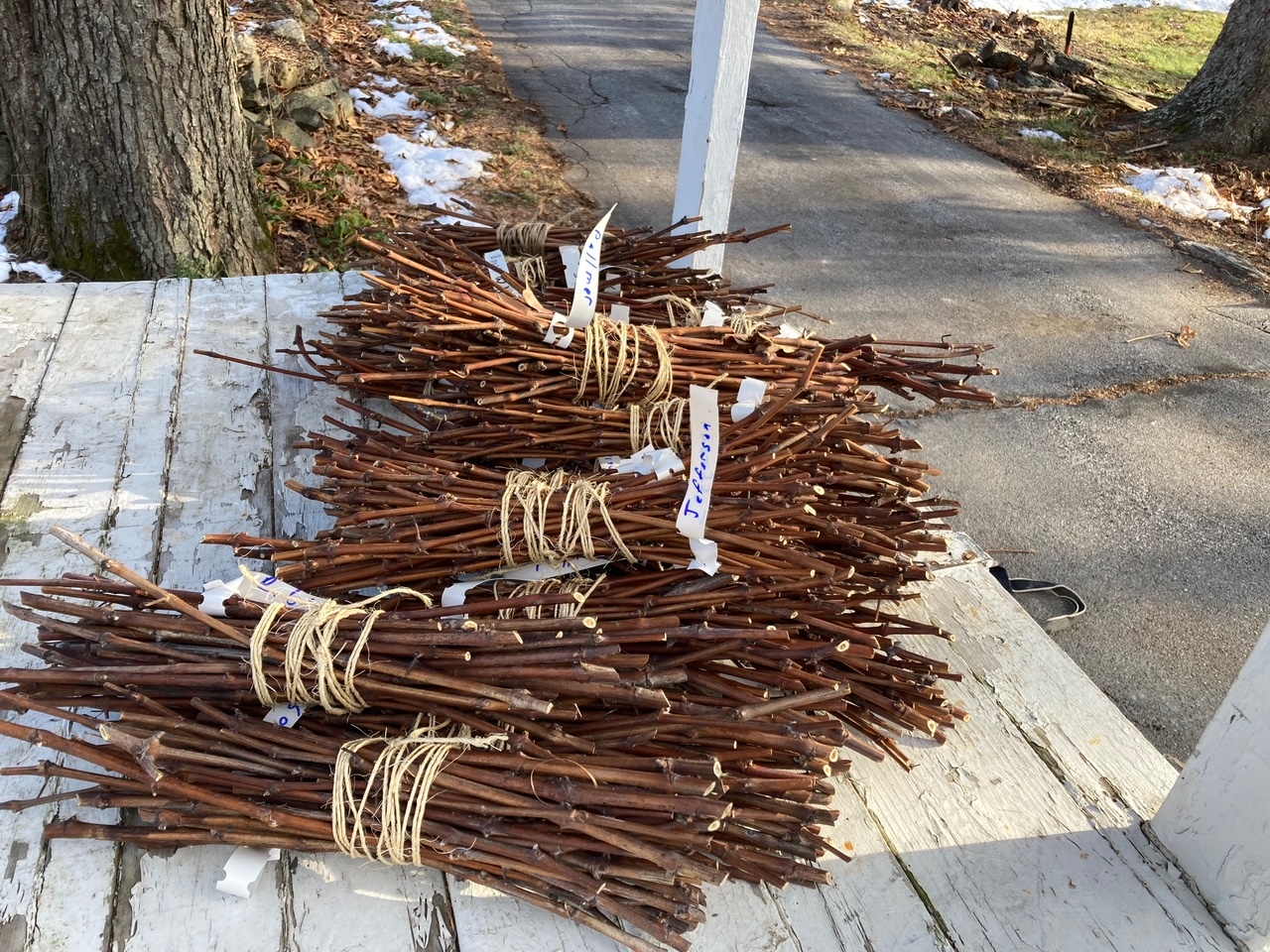
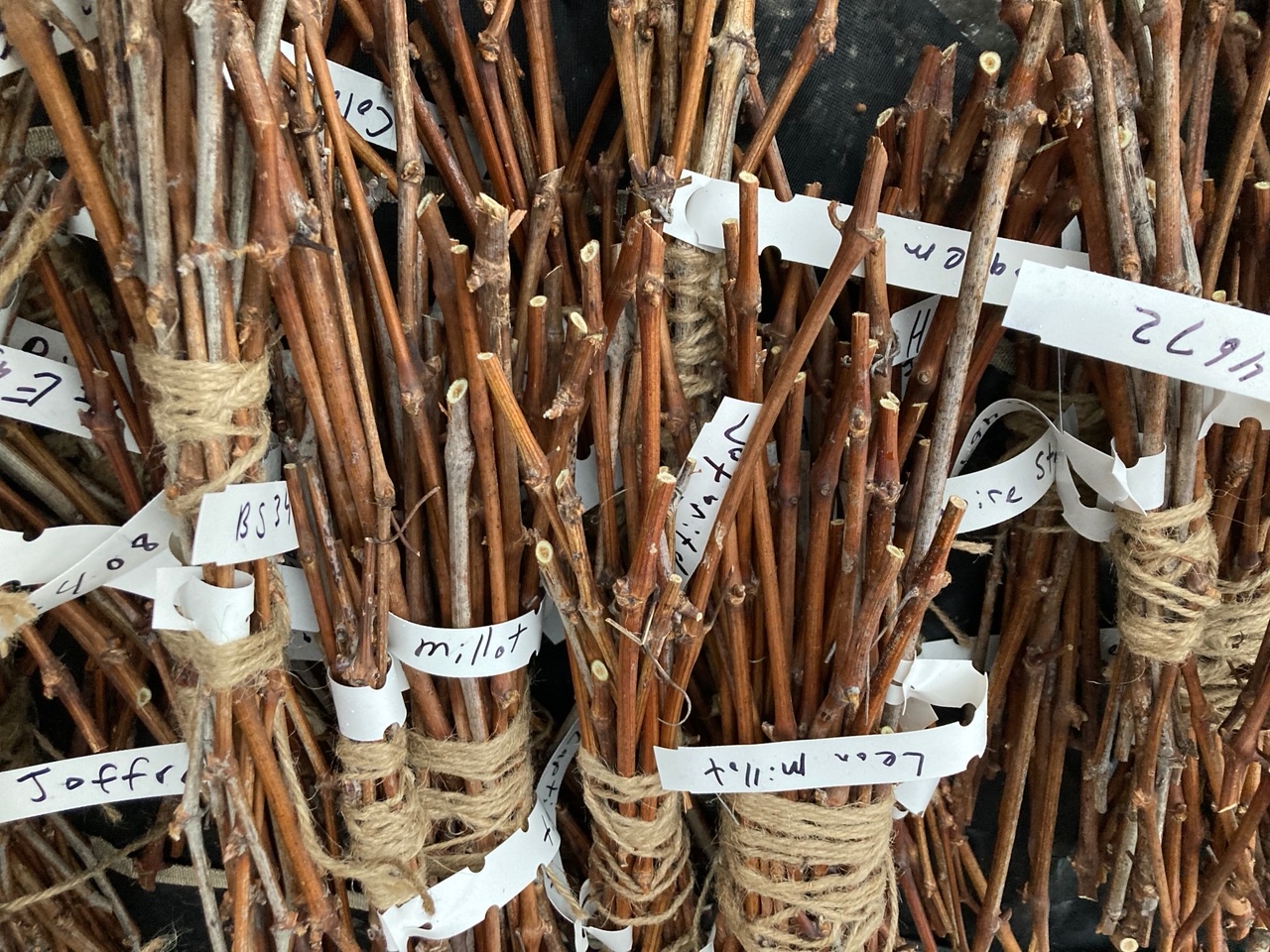
Propagating new grapevines from cuttings is an easy project. First, you must gather your propagating wood in early Spring while the vines remain dormant. Cut 12-18 inch sections from one-year-old wood that is about the thickness of a pencil and has a minimum of at least four leaf bud nodes on it. Ideally, having five or six bud nodes per cutting offers the best chance of success. A leaf bud node will look like a small bump on the stem.

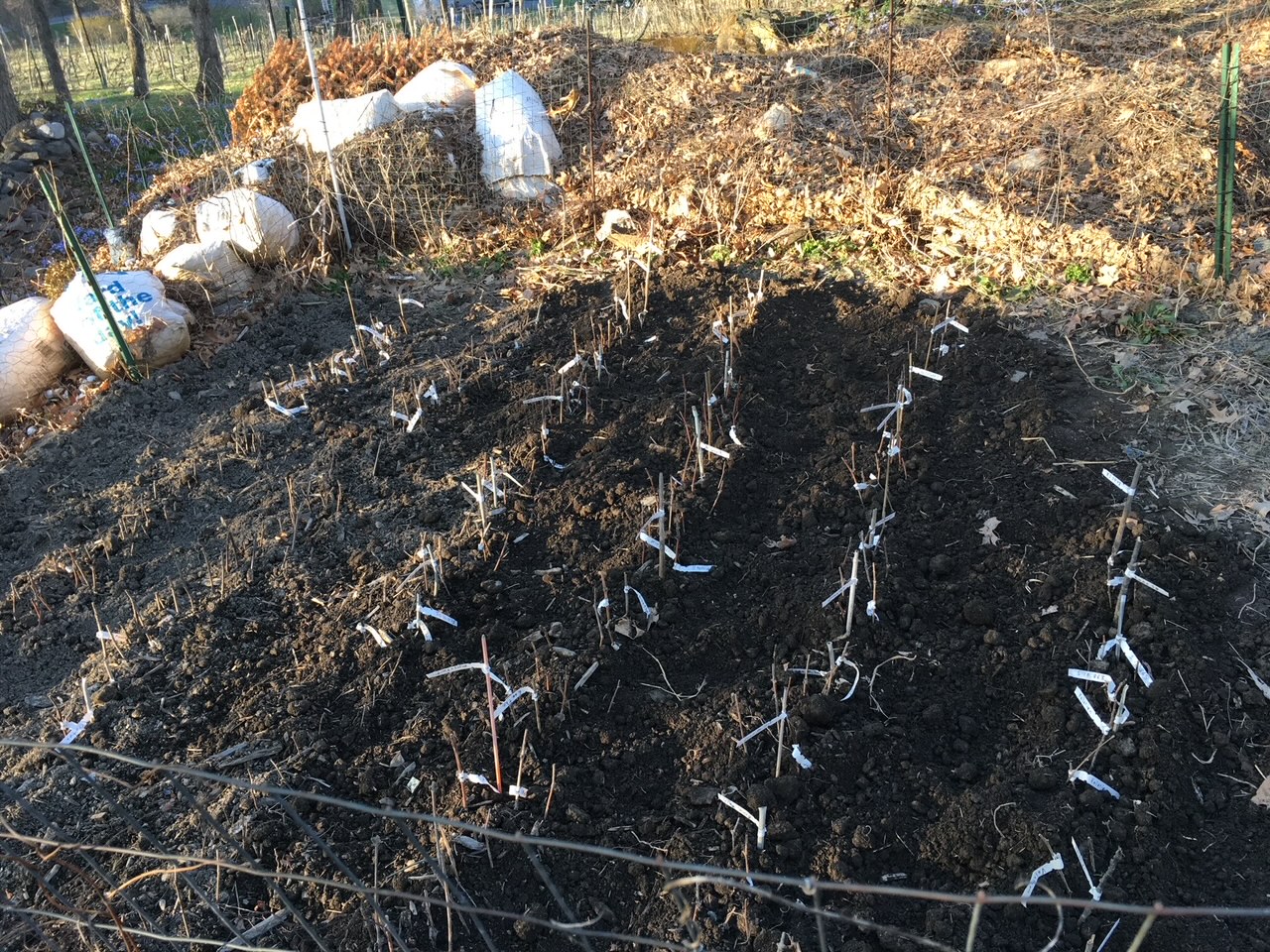
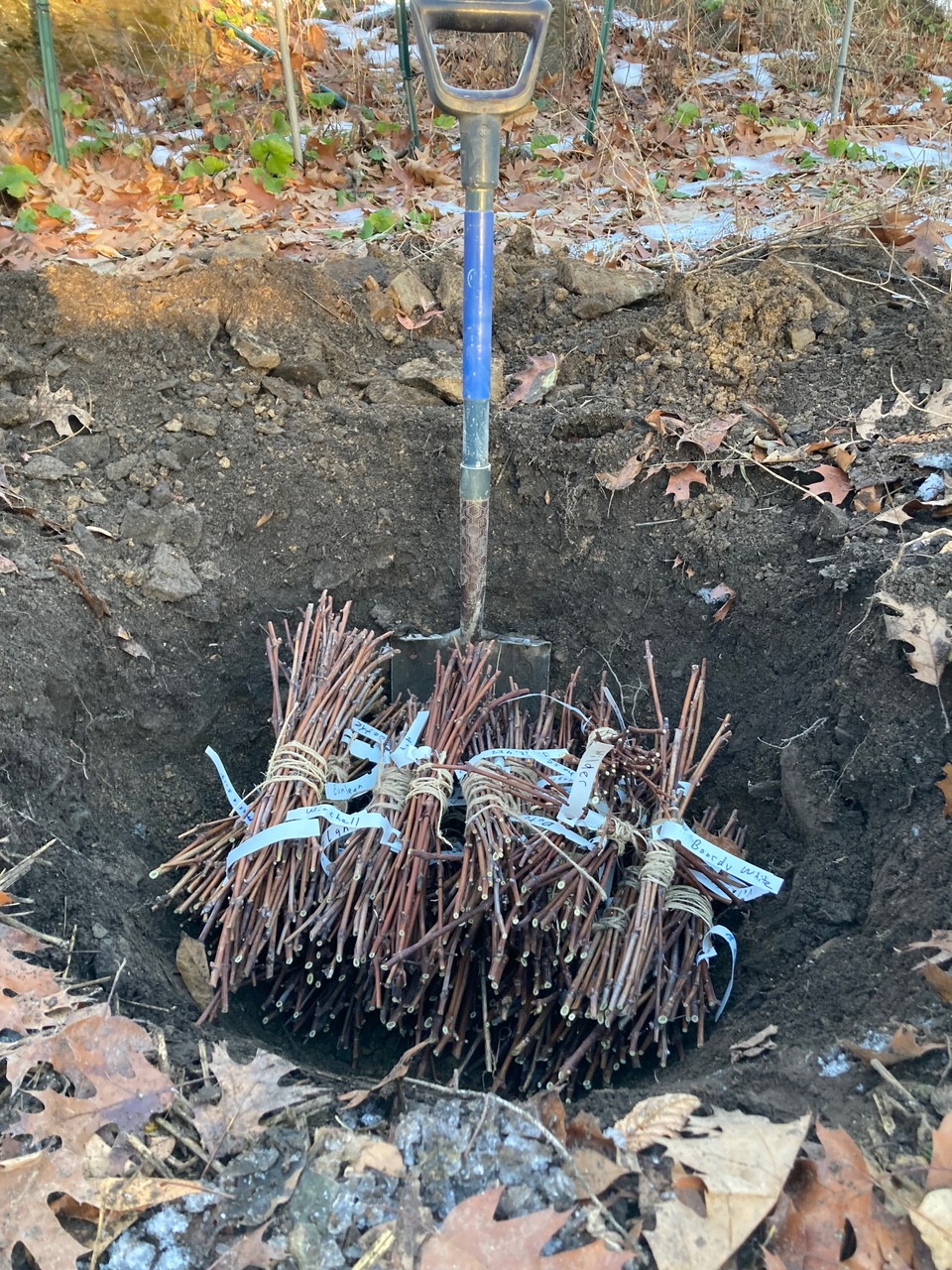
The next step is up to the propagator, but Steve said he was taught to nip off a straight cut one inch above the top bud and make an angled cut at the bottom of the cane just below the bud node. Making your angled cut at the bottom of the stem easily shows where the top of the cutting is from the bottom which makes it easier when setting out your nursery cuttings, it also allows the cutting to be easily planted in the soil. No matter how you cut your ends, make sure you are consistent so that you will always plant your cuttings correctly, bottom side down in the soil. Dipping the bottom end of the stem into rooting hormones is helpful in promoting root growth, but is not necessary. You can find rooting hormones at your local garden center or nursery. If you are only rooting a few cuttings, fill a potting container with your local soil, if it is good well-drained loam soil, if it isn’t mix it with potting soil to improve its drainage.  Make sure your container is deep enough to accommodate your clippings, but if you are propagating a lot of material consider digging a shallow trench and reserving enough loose soil to fill in around your stems.

  These trenches can be located in your vegetable garden, since this soil has been worked up for many years, and often has a fence around it to keep out the wildlife that may like to browse on your newly installed cuttings. When planting your cuttings, bury them vertically three to four nodes deep with the bottom side down into the ground, leaving the remaining nodes exposed above the soil level. Remember to plant the bottom of the stem down with the straight-cut end above the ground.

    Keep the soil well watered, but not soggy throughout the first year when your cuttings are establishing themselves. For those in potted containers, the cuttings should be placed in a frost-free location with bright indirect sunlight. If you have more than one row of nursery cuttings in your nursery, it is recommended to mulch the cuttings with straw (not hay) to keep down the weeds and retain soil moisture.

Steve explained the difference between taking cuttings from your vine and propagating them as a single project and cloning in which you separate individual canes that have a certain desirable mutation to create an entirely new variety of the original grapevine. Steve gave me an excellent example that was easy to understand. “My understanding is that cloning would be finding an abnormal sport of a vine that is different and you cut that unique cane off to propagate it. For example, Frontenac Gris is only a regular Frontenac when it was noticed that a separate cane had bronze-colored grapes and not red.  So cloning would be separating and propagating that “clone”, but if you are propagating wood, you just collect your wood and go at it.”

    It is essential that you plant more cuttings than you need to compensate for some not surviving. As a dear departed friend of Steve’s, Joel Fry of the Bartrams Garden in Philadelphia used to say, “Plant two of everything, and one will die”.  How many to plant is the question? Steve offered his advice based on years of experience in this area of viticulture. “I find that different varieties propagate at different rates. For example, Baco Noir, which is a part Riparia variety tends to have a higher success rate because it is a Riparia. Even with Riparia, I would plan for a 20% non-success rate for varieties such as Delaware, which is a part Bourquinian species hybrid, do not take as readily, so I would expect a 40% death rate.”  I would recommend propagating as many cuttings as possible using only the strongest ones to satisfy your needs and giving the extras away. Vines can also be rooted in water, but you will need to change the water regularly to prevent disease. Once you see the stems/cuttings rooting, you must transplant them into the soil.

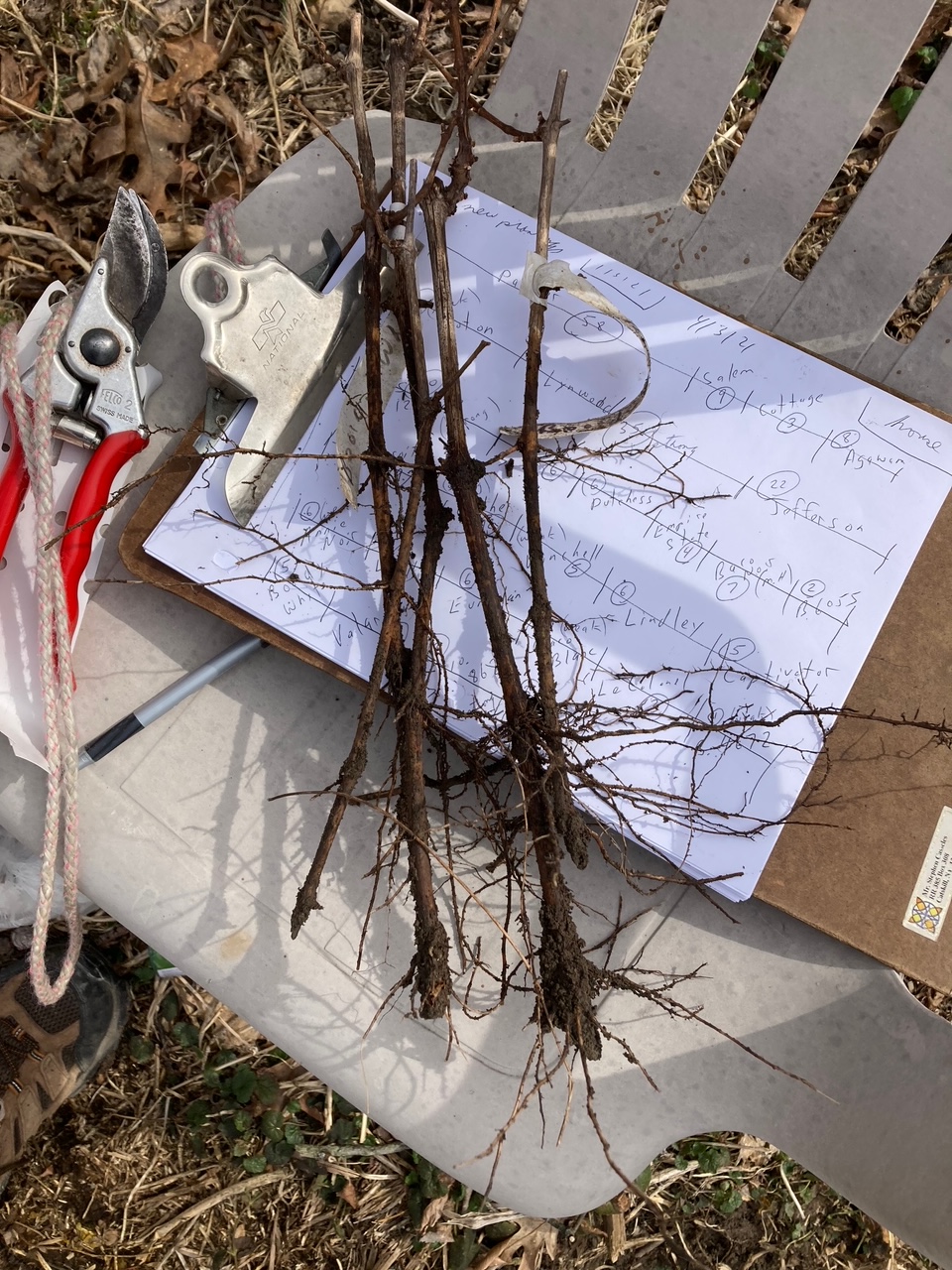
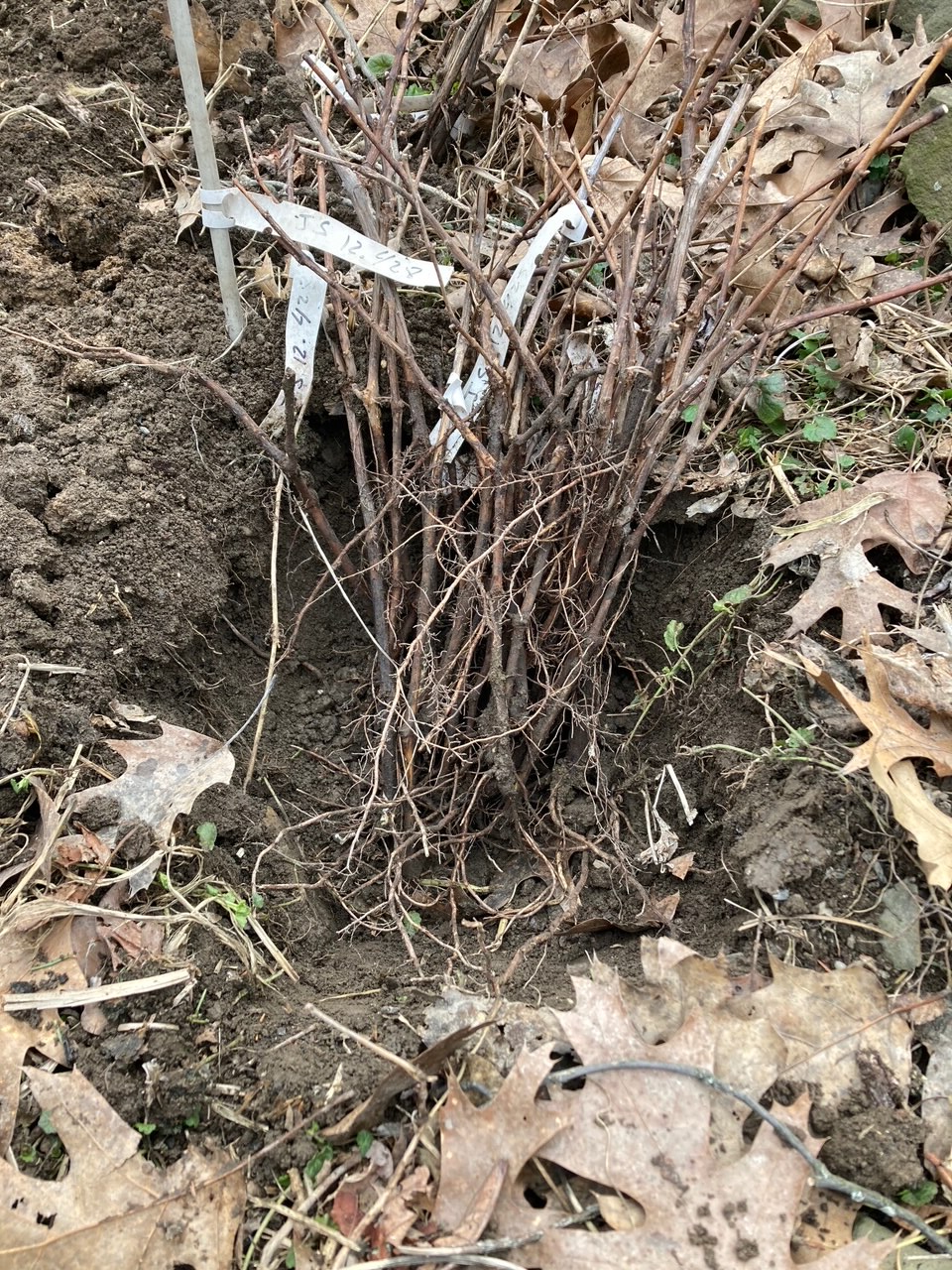
    Whether you set out a nursery in your home garden or place them in pots in the spring, you need to wait an entire year to ensure that your cuttings have sufficient roots before they are set out in the field the following spring. After your cuttings have developed a strong root system they can be transplanted to their permanent location. 

    You probably have heard vintners say the clone number for a specific variety of grapes planted in their vineyard. An example of this would be the Pinot Noir Dijon clones 114, 115, 667, and 777 which are the most widely planted Pinot Noir clones because of their reliability and productivity. When you drink any mass-produced Pinot Noir you are likely drinking wine made from these clones. It is easy to go down a “rabbit hole” when looking for clones of just about any grape variety when researching which clones to plant in your vineyard. Don’t let the sheer number of options overwhelm you. The answer to this question is a simple one, treat a clone like a different variety. Pick a clone you like and propagate that clone.

    Growing your own vines from cuttings is a rewarding venture both financially and from the sense of personal accomplishment you will feel when you harvest your first grapes. With the adverse effects of climate change being documented in vineyards around the world and the increased number of adverse weather events plaguing vintners, the answer to a consistent and economically sustainable fruit crop may lie in the past with heritage grape varieties, older cool climate hybrids, and new hybrids that are being developed. Growing heritage and cool climate hybrid grape vines that have adapted to survive many weather-related challenges over time could be a critical puzzle piece in the future viability of our vineyards, for both hobby and commercial grape growers. In addition, these varieties tend to be more productive and can be grown more sustainably with fewer pesticide/fungicide applications. They are direct producers that do not need to be planted on a rootstock. This means that if we witness a very cold winter or late spring frost, which kills that part of the vine above the ground, canes will come up from the ground to produce a crop in the same growing season.

    With that objective in mind, Stephen Casscles continues to labor on his long-term project, the Cedar Cliff Vineyards Heritage Grape\Wine Project, aimed at preserving heritage and lesser-known cool climate grape varieties in Northern America. If you have any questions about his work at Cedar Cliff Vineyards please contact Stephen Casscles cassclesjs@yahoo.com  To further his work, Stephen has established a set of three cooperating nurseries in Marlboro, NY, Fonda, NY, and Ipswich, MA where you can purchase already rooted vines and/or grape cuttings. If you are interested in obtaining vines or cuttings of these unique varieties, please feel free to contact Stephen Casscles cassclesjs@yahoo.com.  Sadly, most of these cuttings or vines are not available at commercial nurseries, hence we need to propagate them on our own to increase the availability of these unique virus-free/ disease-free grape varieties. For additional information on these heritage and cool climate grape hybrids, the 2nd edition of Steve’s book “Grapes of the Hudson Valley and Other Cool Climate Regions of the US and Canada”  is available at http://www.flintminepress.com

Harvest Report: Chateau Niagara Winery

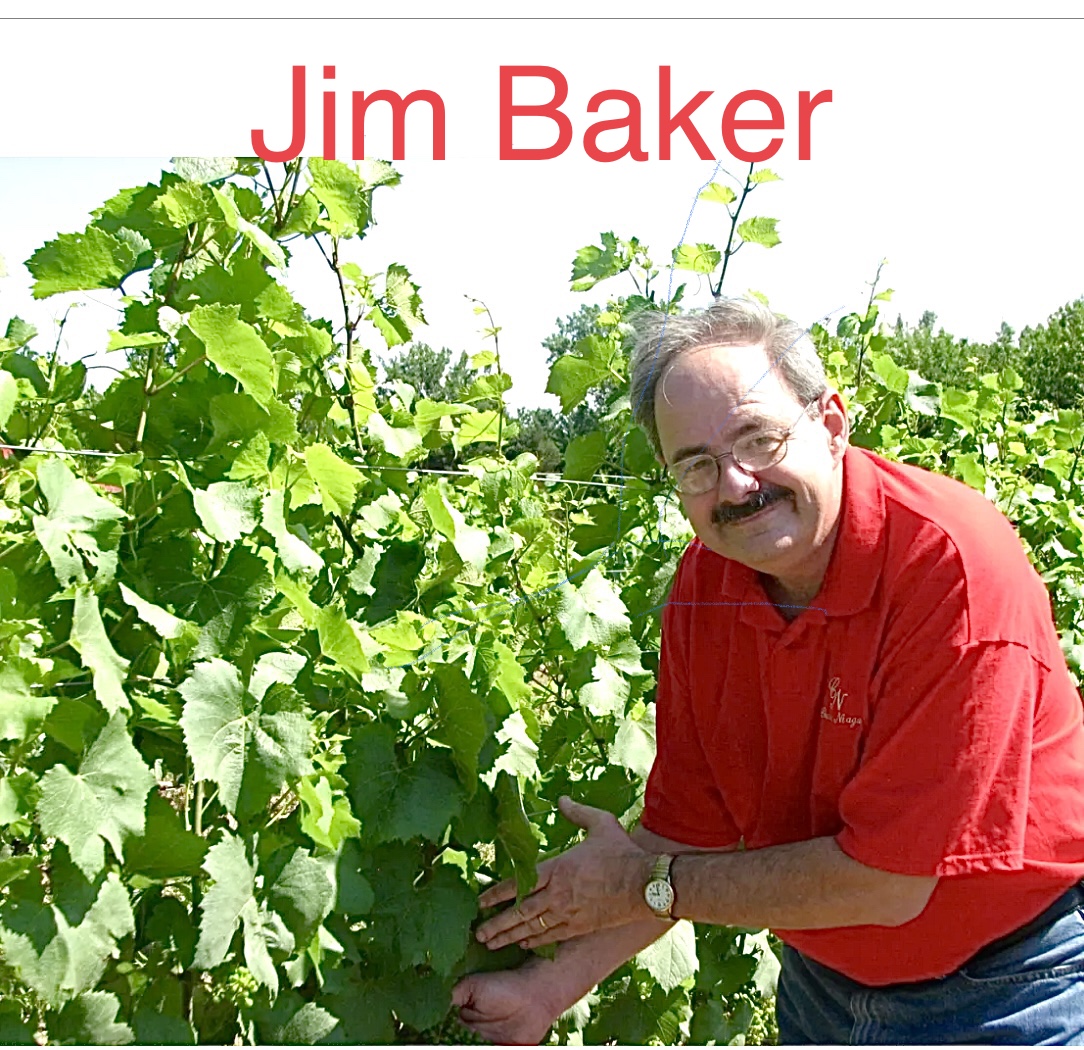
I checked in recently with my friend Jim Baker, owner, winemaker, and vigneron of Chateau Niagara Winery Newfane, New York. http://chateauniagarawinery.com Jim’s avant-garde approach toward winemaking and the grapes in his vineyard can only be described as fascinating. Here are his candid insights into the year that was 2024 at his award-winning Chateau Niagara Winery.

“In classic cool climate viticulture, the only constant is change. We never know what the year will bring us and it creates a kind of resiliency in the vineyard managers and winemakers from these regions. It also creates some fantastic wines with incredible diversity. This year is no different. We escaped the late spring frost which hurt our neighbors in the Lake Erie region and our hearts went out to them as we got hit last year with that late frost and we lost two-thirds of our crop. We also did not have the wildfires from Quebec this year to contend with. It was a very early bud break with a wet spring and summer. This resulted in heavy downy and powdery mildew pressure. The latter half of the growing season heading to harvest was warm and dry, absolutely perfect for high-quality wine grapes. Longer hang time and good growing season with about 2800  growing degree days, which is measured by the temperatures degrees above 50 F. (A 70-degree day would therefore accumulate 70-50 or 20 growing-degree days.)  This is a measure of the total heat accumulation for the season. Harvest levels were a little under prediction and the berries were small and compact. This results in more intense aromas in whites and deeper colors and flavors in reds. We are very excited about the potential for the vintage!

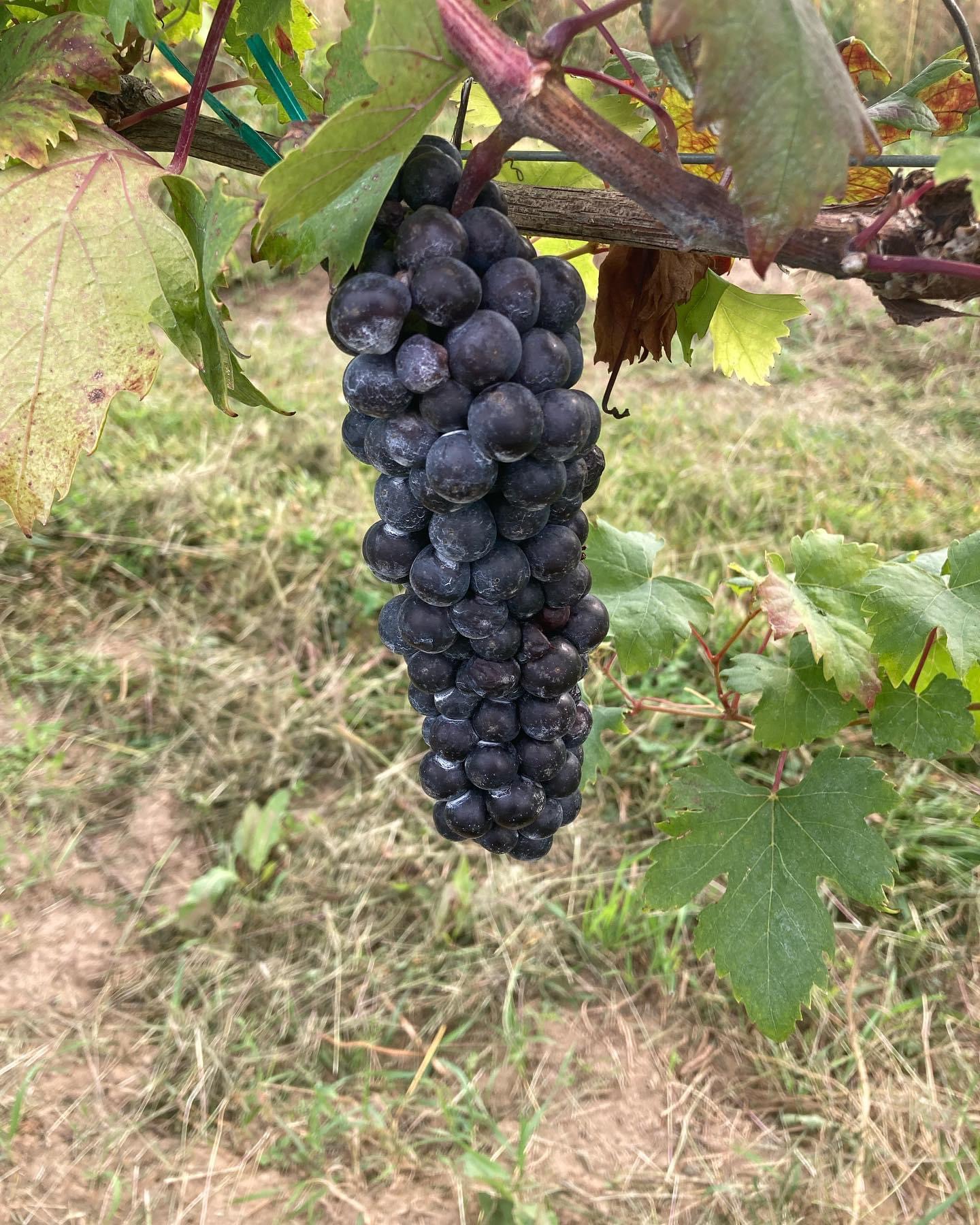
In the fall we harvested our first crop of Fetească neagrǎ. We had hoped for barrels worth of wine, but the raccoons, deer, and turkey got to it first. We did harvest what we could and will likely do a very small bottling of about four cases. The grape showed me just a peek at what it can do this year. My initial tasting indicates that it falls between a Blaufrankisch and a Saperavi, with cherry, spice, black pepper, and smoke.”

Thank you, Jim, for taking the time out of your busy schedule to share your thoughts and observations about the intricate factors that influenced your vineyard and winemaking this year. We all look forward to enjoying the fruits of your labor. 

Dancing In The Dark

If you ever have the opportunity to get out into the vineyard and pick wine grapes during harvest I urge you to participate. My wife and I did just that several years ago and it is an experience we will never forget. We picked on a beautiful sunny morning but in reality, most wine grapes are harvested at night to take advantage of the cooler air lowering the temperature of the grapes. Most of the well-known wine-producing regions of the world are located in areas that not only have a climate favorable to viticulture but a phenomenon known as diurnal shifts. Diurnal shifts are when there is a significant change in the ambient air temperature between the day and night. A good example of this would be if you have been outside all day wearing only shorts and a tee shirt but need to wear a sweatshirt and long pants after dark, then you have experienced a diurnal shift. 

Sunshine allows a grape to increase its sugar content until harvest but in contrast, a grape’s acidity level decreases as it nears harvest. It can be argued that when grapes are cooled nightly sugar and acid levels are kept in balance creating a more complex wine. The diurnal shift phenomenon can be the result of different factors. In Napa Valley, it is the Pacific Ocean, the Rhone Valley has the mistral winds, and Duncan Savage proudly told me that his Cape Town, South Africa vineyards are “clapped” by winds off the Atlantic Ocean. 

Now that we know how grapes arrive at their peak to be harvested the obvious question is “What are the advantages of picking them in the cool of the night?” 

The first and foremost reason winemakers pick at night is to capitalize on the lower temperatures that are advantageous to producing superior wine by preserving the quality of the grapes that will be processed immediately after being taken to the winery. Grapes that have been cooled by the night air have more stable sugar levels, firmer texture, and less oxidation. This is very important when making white, Rosé, and sparkling wine but is also desirable when making red wine. Picking at night also enhances the grape’s fruit flavors and aromatics while giving the winemaker better control of the fermentation. The grapes are cooler when they come into the winery and don’t need to be cooled down before starting the winemaking process. 

I have included these two links on YouTube that give us a glimpse of what harvesting wine grapes at night looks like. One video is of grapes being picked by hand and the other with a mechanical method.

https://youtu.be/ujn8N6iBRng?feature=shared Hand harvesting

https://youtu.be/we5XNeuvn1c?feature=shared Machine harvesting

 You can find more videos on YouTube by searching “harvesting wine grapes at night.”

Since it is late summer and harvest is upon us, now is the time to call your local vineyards and ask if they could use help picking their grapes. For a wine lover, it is an experience you will not soon forget. 

Book Review: Reflections of a Vintner by Tor Kenward

Reflections of a Vintner Stories and Seasonal Wisdom From a Lifetime in Napa Valley by Tor Kenward, Forewords by Robert M. Parker and Thomas Keller. Imagine relaxing in Adirondack chairs overlooking a lovely Napa Valley vineyard on a perfect summer evening with Tor Kenward while enjoying a glass of his award-winning wine as he recalls the people, places, and events that shaped, not only his wine journey but his life. If this sounds like an intriguing opportunity to hear the candid memories of a vintner who witnessed history, as well as making it, as an aspiring winemaker during the formative years of the current Napa Valley wine culture then this book is for you. The book is chaptered as months of the calendar year and touches upon what a vintner is thinking as each month unfolds but is predominantly the story of Tor Kenward’s life as a winemaker told in his own words.

How To Propagate Grapevines From Cuttings. Now Is The Time To Start!

The following article is a collaborative effort between myself and Stephen Casscles, a leading authority on the propagation and cultivation of cool climate and heritage grapevines. It is a detailed account of the procedures for propagating new grapevines from the cuttings of an existing vine. Thank you Steve for being so generous with your time and knowledge. All photos in this article are courtesy of Stephen Casscles. If you need more information about how to propagate vines, consult older books written by Philip Wagner, which are still available, or contact your local cooperative extension agent who can direct you to excellent brochures that have been produced by your local agricultural state university.

    If you have or can obtain clippings from a grapevine that produces excellent fruit, it is easy to reproduce as many vines/clones of that vine as you want. Starting new vines from the clippings of a mother vine ensures you will grow an exact copy of the vine and it will crop the same quality grapes as the original vine. Be sure that the mother vine that you select for your cuttings is strong, and exhibits no indications of viruses or diseases. Some vines, that have curled leaves, odd-looking clusters, or off-leaf colors have been contaminated with a virus. Do not use these vines as you are simply propagating diseased and virus-laden vines and not the strong virus-free vines that you want.

    The next step is up to the propagator, but Steve said he was taught to nip off a straight cut one inch above the top bud and make an angled cut at the bottom of the cane just below the bud node. Making your angled cut at the bottom of the stem easily shows where the top of the cutting is from the bottom which makes it easier when setting out your nursery cuttings, it also allows the cutting to be easily planted in the soil. No matter how you cut your ends, make sure you are consistent so that you will always plant your cuttings correctly, bottom side down in the soil. Dipping the bottom end of the stem into rooting hormones helps promote root growth, but is not necessary. You can find rooting hormones at your local garden center or nursery. If you are only rooting a few cuttings, fill a potting container with your local soil, if it is good well-drained loam soil, if it isn’t mix it with potting soil to improve its drainage.  Make sure your container is deep enough to accommodate your clippings, but if you are propagating a lot of material consider digging a shallow trench and reserving enough loose soil to fill in around your stems.

    These trenches can easily be located in your vegetable garden, since this soil has been worked up for many years, and often has a fence around it to keep out the wildlife that may like to browse on your newly installed cuttings. When planting your cuttings, bury them vertically three to four nodes deep with the bottom side down into the ground, leaving the remaining nodes exposed above the soil level. Remember to plant the bottom of the stem down with the straight-cut end above the ground.

    Keep the soil well watered, but not soggy throughout the first year when your cuttings are establishing themselves. For those in potted containers, the cuttings should be placed in a frost-free location with bright indirect sunlight. If you have more than one row of nursery cuttings in your nursery, it is recommended to mulch the cuttings with straw (not hay) to keep down the weeds and retain soil moisture.

    Steve explained the difference between taking cuttings from your vine and propagating them as a single project and cloning in which you separate individual canes that have a certain desirable mutation to create an entirely new variety of the original grapevine. Steve gave me an excellent example that was easy to understand. “My understanding is that cloning would be finding an abnormal sport of a vine that is different and you cut that unique cane off to propagate it. For example, Frontenac Gris is only a regular Frontenac when it was noticed that a separate cane had bronze-colored grapes and not red.  So cloning would be separating and propagating that “clone”, but if you are propagating wood, you just collect your wood and go at it.”

    You must plant more cuttings than you need to compensate for some not surviving. As a dear departed friend of Steve’s, Joel Fry of the Bartrams Garden in Philadelphia used to say, “Plant two of everything, and one will die”.  How many to plant is the question. Steve offered his advice based on years of experience in this area of viticulture. “I find that different varieties propagate at different rates. For example, Baco Noir, which is a part Riparia variety tends to have a higher success rate because it is a Riparia. Even with Riparia, I would plan for a 20% non-success rate for varieties such as Delaware, which is a part Bourquinian species hybrid, do not take as readily, so I would expect a 40% death rate.”  I would recommend propagating as many cuttings as possible using only the strongest ones to satisfy your needs and giving the extras away. Vines can also be rooted in water, but you will need to change the water regularly to prevent disease. Once you see the stems/cuttings rooting, you must transplant them into the soil.

    Whether you set out a nursery in your home garden or place them in pots in the spring, you need to wait an entire year to ensure that your cuttings have sufficient roots before they are set out in the field the following spring. After your cuttings have developed a strong root system they can be transplanted to their permanent location. 

    You probably have heard vintners say the clone number for a specific variety of grapes planted in their vineyard. An example of this would be the Pinot Noir Dijon clones 114, 115, 667, and 777 which are the most widely planted Pinot Noir clones because of their reliability and productivity. When you drink any mass-produced Pinot Noir you are likely drinking wine made from these clones. It is easy to go down a “rabbit hole” when looking for clones of just about any grape variety when researching which clones to plant in your vineyard. Don’t let the sheer number of options overwhelm you. The answer to this question is a simple one, treat a clone like a different variety. Pick a clone you like and propagate that clone.

    Growing your own vines from cuttings is a rewarding venture both financially and from the sense of personal accomplishment you will feel when you harvest your first grapes. With the adverse effects of climate change being documented in vineyards around the world and the increased number of adverse weather events plaguing vintners, the answer to a  consistent and economically sustainable fruit crop may lay in the past with heritage grape varieties, older cool climate hybrids, and new hybrids that are being developed. Growing heritage and cool climate hybrid grape vines that have adapted to survive many weather-related challenges over time could be a critical puzzle piece in the future viability of our vineyards, for both hobby and commercial grape growers. In addition, these varieties tend to be more productive and can be grown more sustainably with fewer pesticide/fungicide applications. They are direct producers that do not need to be planted on a rootstock. This means that if we witness a very cold winter or late spring frost, which kills that part of the vine above the ground, canes will come up from the ground to produce a crop in the same growing season.

    With that objective in mind, Stephen Casscles continues to labor on his long-term project, the Cedar Cliff Vineyards Heritage Grape\Wine Project, aimed at preserving heritage and lesser-known cool climate grape varieties in Northern America. If you have any questions about his work at Cedar Cliff Vineyards please contact Stephen Casscles cassclesjs@yahoo.com  To further his work, Stephen has established a set of three cooperating nurseries in Marlboro, NY, Fonda, NY, and Ipswich, MA where you can purchase already rooted vines and/or grape cuttings. If you are interested in obtaining cuttings of these unique vines, please feel free to contact Stephen Casscles cassclesjs@yahoo.com.  Sadly, most of these cuttings or vines are not available at commercial nurseries, hence we need to propagate them on our own to increase the availability of these unique virus-free/ disease-free grape varieties. For additional information on these heritage and cool climate grape hybrids, the 2nd edition of Steve’s book “Grapes of the Hudson Valley and Other Cool Climate Regions of the US and Canada”  is available at http://www.flintminepress.com .  

How To Propagate Grapevines From Cuttings

The following article is a collaborative effort between myself and Stephen Casscles, a leading authority on the propagation and cultivation of cool climate and heritage grapevines. It is a detailed account of the procedures for propagating new grapevines from the cuttings of an existing vine. Thank you Steve for being so generous with your time and knowledge. All photos in this article are courtesy of Stephen Casscles. If you need more information about how to propagate vines, consult older books written by Philip Wagner, which are still available, or contact your local cooperative extension agent who can direct you to excellent brochures that have been produced by your local agricultural state university.

If you have or can obtain clippings from a grapevine that produces excellent fruit, it is easy to reproduce as many vines/clones of that vine as you want. Starting new vines from the clippings of a mother vine ensures you will grow an exact copy of the vine and it will crop the same quality grapes as the original vine. Be sure that the mother vine that you select for your cuttings is a strong vine, that exhibits no indications of viruses or diseases. Vines that have curled leaves, odd-looking clusters, or off-leaf colors could have been contaminated with a virus. Do not use these vines as you are simply propagating diseased and virus-laden vines and not the strong virus-free vines that you want.

Propagating new grapevines from cuttings is an easy project. First, you must gather your propagating wood in early Spring while the vines remain dormant. Cut 12-18 inch sections from one-year-old wood that is about the thickness of a pencil and has a minimum of at least four leaf bud nodes on it. Ideally, having five or six bud nodes per cutting offers the best chance of success. A leaf bud node will look like a small bump on the stem.

The next step is up to the propagator, but Steve said he was taught to nip off a straight cut one inch above the top bud and make an angled cut at the bottom of the cane just below the bud node. Making your angled cut at the bottom of the stem easily shows where the top of the cutting is from the bottom which makes it easier when setting out your nursery cuttings, it also allows the cutting to be easily planted in the soil. No matter how you cut your ends, make sure you are consistent so that you will always plant your cuttings correctly, bottom side down in the soil. Dipping the bottom end of the stem into rooting hormones is helpful in promoting root growth, but is not necessary. You can find rooting hormones at your local garden center or nursery. If you are only rooting a few cuttings, fill a potting container with your local soil, if it is good well-drained loam soil, if it isn’t mix it with potting soil to improve its drainage.  Make sure your container is deep enough to accommodate your clippings, but if you are propagating a lot of material consider digging a shallow trench and reserving enough loose soil to fill in around your stems.

  These trenches can be located in your vegetable garden, since this soil has been worked up for many years, and often has a fence around it to keep out the wildlife that may like to browse on your newly installed cuttings. When planting your cuttings, bury them vertically three to four nodes deep with the bottom side down into the ground, leaving the remaining nodes exposed above the soil level. Remember to plant the bottom of the stem down with the straight-cut end above the ground.

    Keep the soil well watered, but not soggy throughout the first year when your cuttings are establishing themselves. For those in potted containers, the cuttings should be placed in a frost-free location with bright indirect sunlight. If you have more than one row of nursery cuttings in your nursery, it is recommended to mulch the cuttings with straw (not hay) to keep down the weeds and retain soil moisture.

Steve explained the difference between taking cuttings from your vine and propagating them as a single project and cloning in which you separate individual canes that have a certain desirable mutation to create an entirely new variety of the original grapevine. Steve gave me an excellent example that was easy to understand. “My understanding is that cloning would be finding an abnormal sport of a vine that is different and you cut that unique cane off to propagate it. For example, Frontenac Gris is only a regular Frontenac when it was noticed that a separate cane had bronze-colored grapes and not red.  So cloning would be separating and propagating that “clone”, but if you are propagating wood, you just collect your wood and go at it.”

    It is essential that you plant more cuttings than you need to compensate for some not surviving. As a dear departed friend of Steve’s, Joel Fry of the Bartrams Garden in Philadelphia used to say, “Plant two of everything, and one will die”.  How many to plant is the question? Steve offered his advice based on years of experience in this area of viticulture. “I find that different varieties propagate at different rates. For example, Baco Noir, which is a part Riparia variety tends to have a higher success rate because it is a Riparia. Even with Riparia, I would plan for a 20% non-success rate for varieties such as Delaware, which is a part Bourquinian species hybrid, do not take as readily, so I would expect a 40% death rate.”  I would recommend propagating as many cuttings as possible using only the strongest ones to satisfy your needs and giving the extras away. Vines can also be rooted in water, but you will need to change the water regularly to prevent disease. Once you see the stems/cuttings rooting, you must transplant them into the soil.

    Whether you set out a nursery in your home garden or place them in pots in the spring, you need to wait an entire year to ensure that your cuttings have sufficient roots before they are set out in the field the following spring. After your cuttings have developed a strong root system they can be transplanted to their permanent location. 

    You probably have heard vintners say the clone number for a specific variety of grapes planted in their vineyard. An example of this would be the Pinot Noir Dijon clones 114, 115, 667, and 777 which are the most widely planted Pinot Noir clones because of their reliability and productivity. When you drink any mass-produced Pinot Noir you are likely drinking wine made from these clones. It is easy to go down a “rabbit hole” when looking for clones of just about any grape variety when researching which clones to plant in your vineyard. Don’t let the sheer number of options overwhelm you. The answer to this question is a simple one, treat a clone like a different variety. Pick a clone you like and propagate that clone.

    Growing your own vines from cuttings is a rewarding venture both financially and from the sense of personal accomplishment you will feel when you harvest your first grapes. With the adverse effects of climate change being documented in vineyards around the world and the increased number of adverse weather events plaguing vintners, the answer to a  consistent and economically sustainable fruit crop may lie in the past with heritage grape varieties, older cool climate hybrids, and new hybrids that are being developed. Growing heritage and cool climate hybrid grape vines that have adapted to survive many weather-related challenges over time could be a critical puzzle piece in the future viability of our vineyards, for both hobby and commercial grape growers. In addition, these varieties tend to be more productive and can be grown more sustainably with fewer pesticide/fungicide applications. They are direct producers that do not need to be planted on a rootstock. This means that if we witness a very cold winter or late spring frost, which kills that part of the vine above the ground, canes will come up from the ground to produce a crop in the same growing season.

    With that objective in mind, Stephen Casscles continues to labor on his long-term project, the Cedar Cliff Vineyards Heritage Grape\Wine Project, aimed at preserving heritage and lesser-known cool climate grape varieties in Northern America. If you have any questions about his work at Cedar Cliff Vineyards please contact Stephen Casscles cassclesjs@yahoo.com  To further his work, Stephen has established a set of three cooperating nurseries in Marlboro, NY, Fonda, NY, and Ipswich, MA where you can purchase already rooted vines and/or grape cuttings. If you are interested in obtaining vines or cuttings of these unique varieties, please feel free to contact Stephen Casscles cassclesjs@yahoo.com.  Sadly, most of these cuttings or vines are not available at commercial nurseries, hence we need to propagate them on our own to increase the availability of these unique virus-free/ disease-free grape varieties. For additional information on these heritage and cool climate grape hybrids, the 2nd edition of Steve’s book “Grapes of the Hudson Valley and Other Cool Climate Regions of the US and Canada”  is available at http://www.flintminepress.com .  

The Long and Winding Road

Wine has become one of the most popular beverages in the world, and the wine industry continues to grow in complexity and diversity. As a result, there is an increasing demand for knowledgeable professionals in the field of winemaking. Earning a degree in winemaking can open up a multitude of opportunities for individuals looking to pursue a career path in this dynamic industry.

There are several educational opportunities available for individuals interested in earning a degree in winemaking.

Everyone has a different motivation for wanting to expand their knowledge of winemaking and there are plenty of options to achieve your goal, no matter what it is. Depending on what your goals are you may find that informal education through conventions, conferences, and online forums will provide the information and expertise you need. But sometimes, pursuing a formal education will provide the necessary resources to advance your ambitions in the wine industry. 

An online program is a good, low-cost alternative to starting your wine education at a college or university. A good starting point might be considering the entry-level VESTA (Viticulture Enology Science and Technology Alliance) program administered by the National Science Foundation http://vesta-USA.org You can earn a certificate that can help you move to the next level of your education, whether that is college or elsewhere. 

Those looking for a career outside of the production side may want to consider exploring the possibilities in the hospitality industry. The Wine & Spirit Educational Trust is a leader in the field of online courses and certifications. WSET certifications can be earned in relation to your increasing level of competency and ability. Someone seeking to acquire an in-depth understanding of wine and seeking job opportunities where they can share their passion for wine should seriously consider this option. 

Crafting a long and prosperous life in the wine industry involves as much hands-on experience and formal education as you can obtain. Enrolling in a college or university wine education program can provide you with the skills and guidance you will need to succeed by exposing you to the appropriate course work, as well as hands-on internships with industry professionals. I have listed a few links below to the better-known institutions in different regions of the United States. There are many more viable options out there that you should research and compare. 

Before you decide on a path to pursue your dreams make sure you have done your research as to all the ways to get there and don’t be afraid to reconsider your plans if other opportunities arise along the way. Earning a degree in winemaking can lead to a variety of career paths, such as winemaker, vineyard manager, wine marketer, or wine educator. Depending on your professional aspirations and interests, you can pursue advanced degrees or enroll in specialized programs such as wine tourism, wine retail, and wine journalism. I have never talked with a winemaker that said they traveled a straight line to get where they are today. Be open to change and embrace the journey.

Cornell University Ithaca, NY http://grapesandwine.cals.cornell.edu/undergraduate

The University of California Davis Davis, CA http://cpe.ucdavis.edu/winemakingcert

Michigan State University East Lansing, MI https://canr.msu.edu/iat/viticulture

Washington State University Pullman, WA http://wine.wsu.edu/education

Virginia Tech Blacksburg, VA http://www.vtwines.info/

Interview: Ulrike Platter, Director Castel Sallegg (Alto Adige, Italy)

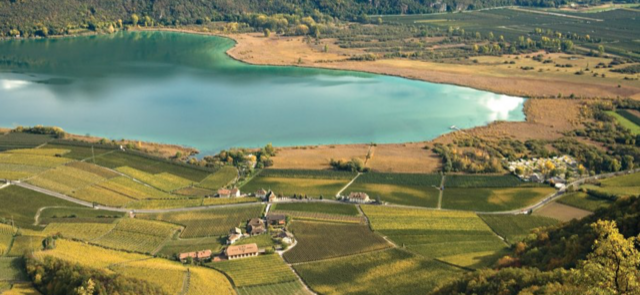
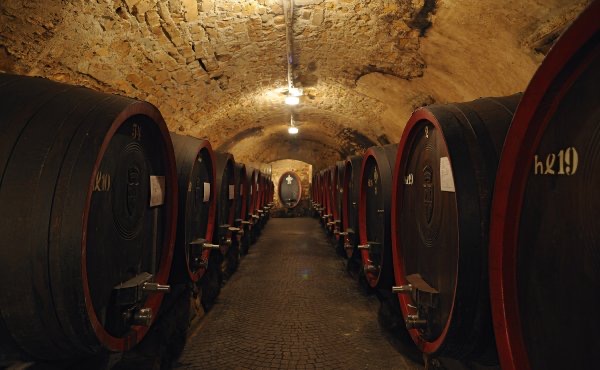
Castel Sallegg is a family-run firm of winegrowers located in Caldaro, Alto Adige (Italy) that is dedicated to maintaining and preserving the winemaking culture of the region. With a storied history and a tradition of commitment to excellence, the von Kuenburg family has ensured the production of quality wines from Castel Sallegg for over a century. While the winemaking team has great pride in its past they are focused on the future and the challenges that must be navigated to maintain its high standards in all phases of the operation. 

For answers about how they are addressing these problems and what we should know about Castel Sallegg, I asked its Director Ulrike Platter to share her thoughts with my readers and me.

1. The wines of Alto Adige are famous for being able to express their terroir. What methods and technologies does Castel Sallegg employ to ensure this “Sense of place” is preserved in your wines?

“Oltradige, the epitome of the wine-growing tradition in Alto Adige, lies at the foot of the Mendola Mountains in the hills of the western Adige Valley between Bolzano and Termeno. Vines have found ideal conditions in this delightful landscape for thousands of years. The winegrowing region of Alto Adige is one of the oldest in Central Europe and the entire German-speaking world.”Oltradige, the epitome of the wine-growing tradition in Alto Adige, lies at the foot of the Mendola Mountains in the hills of the western Adige Valley between Bolzano and Termeno. Vines have found ideal conditions in this delightful landscape for thousands of years. The winegrowing region of Alto Adige is one of the oldest in Central Europe and the entire German-speaking world.

The Alps form a protective barrier against cold winds from the north, while the southerly Ora wind from Lake Garda has a mild Mediterranean influence. Our wines benefit from the cool downslope winds coming off the Mendola Mountains. The vines flourish here thanks to an average of 1,800 hours of sunshine per year and average temperatures of almost 17 degrees Celsius during the vegetation period.

The family-owned vineyards are located in 3 historical vineyards in Caldaro:

✓ Preyhof / vineyard Prey: 550 m above sea level and situated in the Caldaro district of Paese di Mezzo.

✓ Leisenhof / vineyard Leisenpuiten: 500 m above sea level. Central location in the village of Caldaro.

✓ Seehof/vineyard VIGNA Bischofsleiten, vineyard Nussleiten: 230 – 280 m above sea level. San Giuseppe al Lago, Caldaro.

Due to the vineyards, which range from 230-550 m above sea level, Castel Sallegg identifies the best conditions for each grape variety and tries to make optimum use of this diversity.

Best practice: Our VIGNA Bischofsleiten Lago di Caldaro scelto classico superiore DOC: VIGNA (What is a Grand Cru for the French is a VIGNA for the Italians and for us South Tyroleans.) guarantees our customers that the grapes for this wine come 100% from this vineyard. In order to preserve these 50-year-old vines, the vines that fall out due to age, illness, etc., will be replanted with our own clones.

The goal is to produce top-quality wines in harmony with the terroir we have.”

2. With Alto Adige containing so many different microclimates and growing conditions in its vineyards, have the vineyard managers noticed any changes as a result of climate change? If they have, what can you tell us about them and how are you planning for your future vineyard management? 

“Our vineyard manager noticed the changes, especially this year, which was hot and dry. Since Castel Sallegg is more of a red wine winery (we produce 58% of red wines) and we often had difficulties in the past years, with the red grapes, such as Lagrein, Merlot, and Cabernet Sauvignon fully ripening, so 2022 was a great year for us.

In addition, 80% of our vines are 30-50 years old, which means that the roots are growing very deep to get enough water for themselves even in a very hot season. These vines are stable.

Problems can be seen in younger plants or new plants.

For this purpose, we invested in a project for the next few years, which will digitize needs-based irrigation. This means that the humidity of the soil is measured by soil sensors and the vines in different places were partially watered by a targeted system.

Since we have some vineyards on a slope and the vines get less water at the top by draining and the vines at the foot get more water we can irrigate more targeted and water-saving.

We have also noticed increased hail in recent years. For this reason, we will place our most important vineyards under hail nets in the next 2-3 years.”

Thank you to Ulrike for sharing her time and down-to-earth expertise in the mindset and operations at Castel Sallegg.

My review of the 2019 Castel Sallegg Lagrein will be posted soon.

All Images Photo Credit: Castel Sallegg

Watching V is for Vino Wine Show

Have you seen the wine and travel show V is for Vino? If you haven’t, I strongly recommend that you add it to your must see list. This show isn’t just about the wine and winemakers of a region but is an immersive experience into how the food, wine, and culture of a region are all intertwined. V is for Vino delivers it’s viewers several options to interact with the show. It offers the wines featured in each episode for sale so you can be drinking them along with the host as you watch. You can also become a member of the VINO VIP CLUB for exclusive perks, like early access to new episodes, virtual tastings with the host, and discounts on wine plus much more. V is for Vino has plenty of entertaining and informative content making it perfect for both the novice and seasoned wine lover. 

I recently had the opportunity to ask the show’s host/creator Vince Anter to tell my readers about his wine journey and the story of V is for Vino. I want to thank Vince for taking the time from his busy schedule to work with me on this project. 

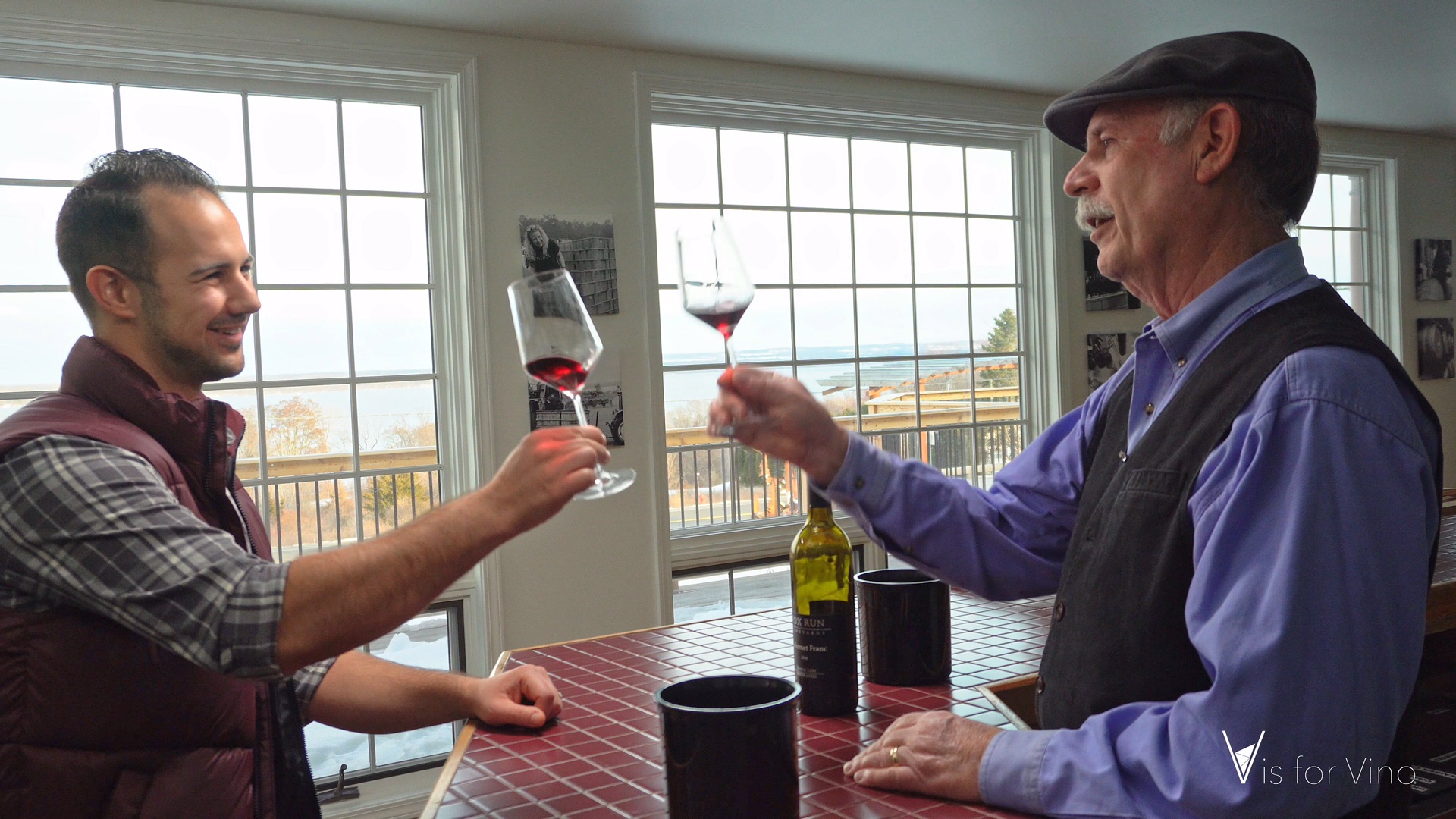
My name is Vince and I’m a certified sommelier and the producer and host of the wine and travel show V is for Vino. Each episode, I host the show in a new wine region, so wine lovers can really be transported to where their wine is made! You learn about the place, the grapes, meet a local winemaker, and learn how to cook dishes from a local chef that pair perfectly with the wine featured in the episode. We also always try to explore as much of the local culture as we can, and meet people who can really tell the story of the places we visit. For instance, in the Finger Lakes we went ice fishing , and in Mexico we went to the local seafood market in downtown Ensenada. Wine is as much about the place and people around it as it is the beverage itself, and the goal of the show was always to capture that. Then, you can actually buy the wine from the episode on our website. I tell people it’s like the Anthony Bourdain of wine: and you can actually drink the wine along with us! 

I started the show in 2016. I had come out to LA in 2010 to be a rock star, but as it turns out, a lot of other people had the same idea. During the 5 years spent pursuing music, I paid my way through gigs with bar and restaurant jobs and discovered a love for wine. I spent a year becoming a certified sommelier, which was one of the most challenging things I’d ever done; it involved many textbooks and flashcards. I decided I wanted to find a way for people to learn and understand more about the wine in their glass without having to pick up a book. And thus, V is for Vino was born. Video content is everywhere now, and I knew the timing was right for a video-based wine company. I’ve always been a fan of Alton Brown, Anthony Bourdain and Dinner’s, Drive-ins and Dives, so I decided to model my own show as a hybrid of the three. I knew I could host the show myself, as I was used to being in the spotlight from my days with my band, and I learned how to interact with all walks of life from my time bartending. Plus, I’ve always loved teaching, so this whole idea came very naturally to me.

So many people put their heart and soul into their wine and cooking, and it’s so awesome to be able to tell their stories. I think we’re unique in the sense that no one is getting as in-depth into the stories behind the wine as we are. And, we’re even turning non-wine lovers into fans: I try to break down topics plain and simple so that everyone can enjoy wine! Wine isn’t this mystical beverage that only snobs can understand and I think, I’m helping contribute to busting those perceptions! People often say that show helped them learn more about wine than years tasting in tasting rooms, and that’s always one of the best compliments I can receive; I want wine to be as accessible as any other beverage out there!  

We’re currently filming season 4 of the show, and most of our upcoming episodes are in Europe, which has been a blast. It should come out by May 2022. The best way to see the first 3 seasons is on https://visforvino.com/ for free! They can also be seen on Amazon Prime (paid), Roku, and YouTube. One of the best parts of the show is you can purchase the wines from the episodes at https://visforvino.com/buy-wine so you can order before you watch, and drink with us as we taste the wines on the show! We also have a virtual VINO VIP CLUB that has a TON of benefits, including behind the scenes content, full length interviews, raffles and giveaways, virtual tastings and events, and discounts on wine! It’s only $5 and really helps you get more out of the show; we work hard to over-deliver on value for our VIP members! https://visforvino.com/vino-vip-club/  Cheers, and I hope you enjoy the show! -Vince 

All photos courtesy: V is for Vino

Take Me To Church

Kagor is traditionally a fortified dessert wine made from Cabernet Sauvignon, Saperavi, and other varieties of red grapes in the coastal area surrounding the Black Sea. Kagor was originally made for the Russian Orthodox Church as a sacramental wine. Finding American-made Kagor can be very challenging and finding a well-made one is like finding the proverbial “Needle in a haystack”.

Jim Baker owner/winemaker at Chateau Niagara is making an award-winning Kagor from his estate-grown Saperavi. When I say award-winning, I mean that Jim brought home a medal for his Kagor from the prestigious Saperavi World Prize competition held in the Black Sea city of Tbilisi, Georgia plus numerous other awards. While Jim doesn’t fortify his Kagor, he does ferment it up to 15% ABV.

Opening the bottle is just the beginning of enjoying your Chateau Niagara Kagor, there is a method to tasting this unusual and extraordinary wine. I could attempt to explain it but I think there is no one better suited for the job than Jim Baker, so here is how to experience all that Chateau Niagara Kagor has to offer in Jim’s own words.

“Take a taste and swirl around once or twice in your mouth, coating all the taste buds and then stop. Let the wine take over. It will take you a journey, with flavors rising and falling. You want to go until they stop changing, and for most people it’s more than a minute. After that take a bite of a good chocolate truffle and when that is partially melted, taste the wine again, swallowing both together. They effect will be almost immediate with a burst of cherry cordial flavors.”

I asked Jim why he decided to grow grape varieties that are associated with Eastern Europe and make classic Eastern European wines from them. Here is what he said:

“We decided to make the Kagor as part of our Eastern European wine series. We discovered a number of little know Eastern European wines that we thought were pretty cool, and would allow us a little niche to specialize in. This includes a Hungarian Bulls Blood, our Saperavi, a Georgian style skin-fermented Riesling Chardonnay blend called Du Monde, and our Kagor. We planted a new Romanian grape last fall called Feteasca Neagra, but we will be calling it by the way cooler English translation of “Black Maiden”!”

Chateau Niagara will be doubling the size of their Saperavi vineyard to just over an acre of this versatile grape.

If you are interested in trying Jim’s Kagor or any of his other wines they can be found on his website http://chateauniagarawinery.com or by visiting the winery at 2466 West Creek Rood Newfane, NY. Please call before visiting. (716) 778-7888
Kagor 2017 Photo Credit: Chateau Niagara Winery
Saperavi Rose 2019 Photo Credit: Chateau Niagara Winery
Saperavi 2018 Photo Credit: Chateau Niagara Winery