From The Beginning

     I have been told great wine is made in the vineyard. I believe this to be true because no matter how good a winemaker is there is only so much they can do in the winery to improve a wine made from average grapes. There are a myriad of factors effecting grape quality in a vineyard but it all starts with the vine. Virtually all wine grapes in the U.S., with the exception of those grown in Washington state, are grown on grafted vines. Grafted vines have Phylloxera resistant rootstock with scions of a varietal wine grape grafted to it. Phylloxera is a tiny aphid-like insect that feeds on the roots of the Vitis vinifera grape.

In the not-so-distant past the world’s wine vineyards were devastated by this pest but it isn’t the only threat to the vines. There is a long list of disease, fungus, mold and pests of all shapes and sizes that can damage a vineyard. Dagger and Rootknot are caused by Nematodes (microscopic worms) and are a common problem in the eastern U.S. but their threat can be lessened by choosing the correct rootstock for your situation. Because there are so many factors to consider when choosing a vine for your site it is important to evaluate the characteristic of each rootstock to match it to the needs of your vineyard. The 3309c rootstock is the most widely used rootstock in the eastern U.S. and it can be said that eastern viticulture is built on it.

     In Washington they grow grapes on own rooted vines that makes them susceptible to Phylloxera, although Phylloxera has never been reported there.  The advantage of own rooted vines is that if they are damaged they can regrow from the roots while if a grafted vine is damaged below the graft it has to be replaced or regrafted. A study comparing grapes grown on own rooted vs. grafted vines showed for all practical purposes there was no difference in the quality of fruit produced.

     The Grafted Grapevine Nursery in Clifton Springs, NY was started in 1957 by Herman and Ute Amberg while Herman was working for Dr. N. Shaulis at Cornell University’s Geneva Experimental Station. They specialize primary in one year old bench-grafts but a few varieties are available as own rooted. While looking for Saperavi vines I had the pleasure to correspond with Herman and Ute’s son and Operations Manager Eric. The following is an excerpt from an email Eric sent me in response to my questions about the availability of grafted Saperavi vines and his opinion on a planting density plan for Saperavi.

     “We will be propagating extra Saperavi this year to compensate for its sudden surge in interest. Regarding the planting density for Saperavi. The number of vines is a factor of row spacing and vine density within the row. Row spacing is based more on your equipment than the vine’s need. The standard spacing in most of the eastern half of the country is 9 feet. Density within the row is based more on the vines vigor and training system. We have found that a 7 foot spacing works well. Therefore 691 vines/acre would be appropriate.”

     We sometimes forget just how much thought, effort, cash investment and yes, good luck goes into a great bottle of wine.  Contact info:  graftedgrapevines.com 

Grapevine Pricing Charting: Courtesy of Grafted Grapevine Nursery

Grapevine Pricing Charting: Courtesy of Grafted Grapevine Nursery

Ripepi Diamond is Forever


Diamond Grapes Photo Courtesy: Cornell University

Diamond Grapes Photo Courtesy: Cornell University

  The white grape Diamond is a cross between the Concord and Iona (Vitis Vinifera –labrusca hybrid) grape developed in Western New York during the mid 1880’s. This grape had a major influence on winemaking in the Eastern U.S. during most of the 20th century. The high sugar content of this grape also makes it a desirable table grape as well as an excellent source of grape juice. Despite being one of the few white American grapes varieties used to produce dry wine the recent plantings of Diamond have declined with the trend toward European varietals. Although Diamond can be found in many AVA’s in the U.S. and around the world it is most prominent in New York and Pennsylvania.

Diamond 1  Rich Ripepi at Ripepi Winery in Monongahela, Pa has taken this traditional American grape and updated it to suit the taste of today’s wine drinkers. Ripepi Diamond is a dry wine but not so dry that the fruity taste of the Diamond grape is lost in translation. It’s body comes across as being lighter and crisper because of it’s lower residual sugar, making it a wine that is easy to drink. Stylish and balanced are the two words I would use to describe Ripepi Diamond. I have tasted plenty of Diamond, most are too sweet, one even had a large red-hot pepper in the bottle, but I can honestly say that Ripepi Dry Diamond was the best Diamond that I have tasted. I think that if the Diamond grape is going to experience a revival it will have to be made in a non-traditional style. Rich Ripepi has told me many times that when it comes to winemaking “It’s all about the style.”

New York State of Mind

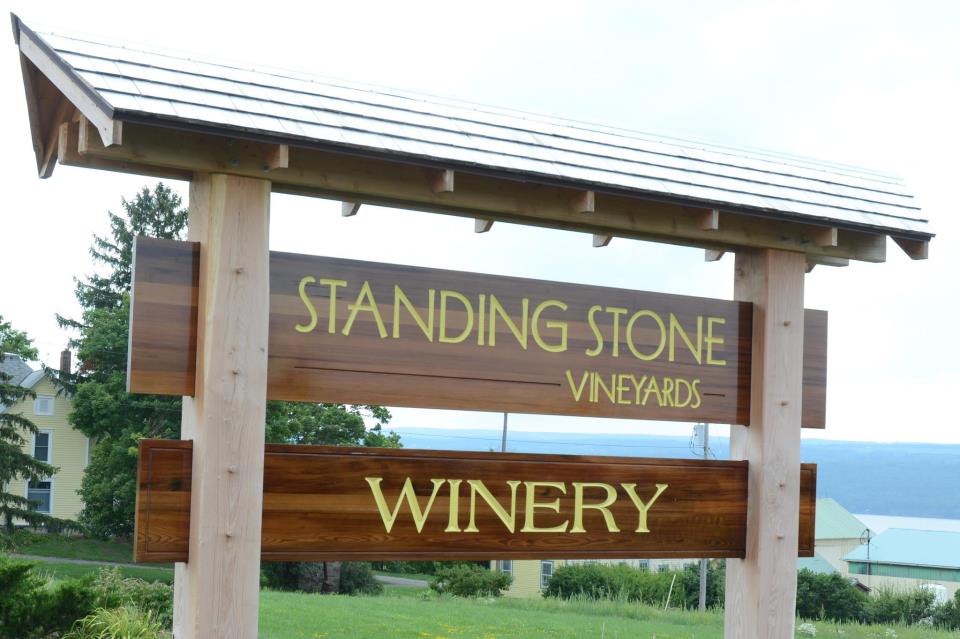
sign     The Finger Lakes Wine Region of New York (FLX) is only a 5 hour drive from my home in Southwestern Pennsylvania. Having a World-Class wine-producing region so close provides my wife and me the luxury of making a trip to the area when the mood strikes us. During our trip last week we visited old favorites Herman J. Herman Winery and Dr. Konstantin Frank Winery while adding a new favorite Standing Stone Winery. All three of these wineries produce excellent Riesling along with other notable wines. Cool-climate white wines have always been this region’s claim to fame but on this visit I was curious to see first-hand how the development of the Saperavi grape was progressing. In the following series of posts I will give you my personal take on the wine, grapevines, trends and scenic views I encountered around these glacial lakes. Come along with me and see what’s new in the FLX.

China Star Rising

Chateau Changyu, Beiyujia Vineyards, Shandong, China

Chateau Changyu, Beiyujia Vineyards, Shandong, China

I read an article recently about how China has now surpassed France for the amount of land dedicated to wine-making vineyards. China now boasts 1.9 million acres of vineyards, passing France for second place and behind the number one grower, Spain. China remains the 7th largest producer of grapes due to production inefficiencies. The increase in vineyards is in direct response to the need for more wine grapes to satisfy the explosive rise in demand for wine in China. China has experienced a cultural evolution toward drinking wine over the past 15 years that is directly tied to the increase in disposable income. Red wine is preferred by the majority of Chinese wine drinkers so it is no surprise that Cabernet Sauvignon is the most planted grape variety in the country.

China is a huge country with many sub-climates and even more micro-climates, not to mention the countless soil types and varying terrain. I believe when you have that many variables combined with an ancient culture that thrives on challenges and ingenuity the only logical outcome from Chinese wine makers will be superior and creative wines. The wine business in China will continue to focus on products and production to satisfy domestic demand. But as we have seen the Chinese do in so many other arenas, they will be constantly comparing their wine to the best in the world to judge their progress and making changes to excel.

Nectar of the Gods

     When Matt Falenski, owner/meadmaker, of the Laurel Highlands Meadery received state approval for his operation in 2011 his timing couldn’t have been better. Mead is the oldest beverage known to man dating back to approximately 7000 B.C.. It is now enjoying a resurgence in popularity fueled by the wave of craft micro-breweries and their adventurous patrons. Commonly known as “Honey wine” mead is made from honey, yeast, fruit or spices depending on the style of the meadmaker. Laurel Highlands produces a full menu of mead for you to select from including: Traditional, Bochet, Maple, Hopped, Blackberry and Chocolate. Their meads come in sweet or dry table wine and dessert wine. Matt has plans for a tasting room but for now his mead can be found at All Saints Brewing Greensburg, Beaver Brewing Beaver Falls, Four Seasons Brewing Latrobe, Piper’s Pub Shiveouthside, Pittsburgh and are always available to order on his website  Laurelhighlandsmeadery.com

Ripepi Winery & Vineyard

Ripepi logo

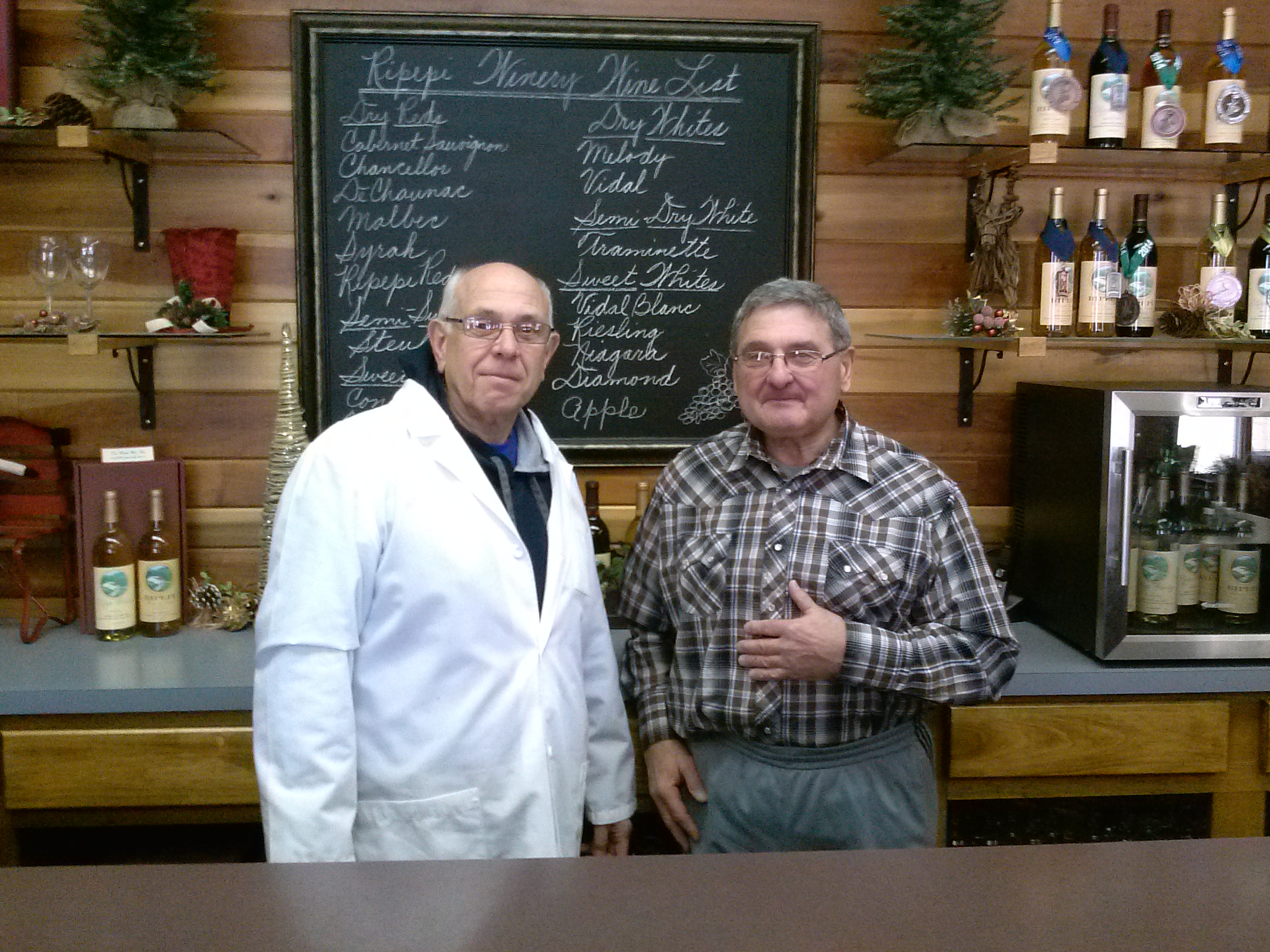
Winery Manager: Chuck Abvulovic (L) Owner&Winemaker: Rich Ripepi(R)

Winery Manager: Pete Abvulovic (L) Owner&Winemaker: Rich Ripepi(R)

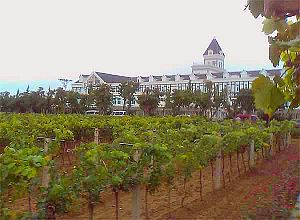
     When you think of leaders in the resurgence of winemaking in Western Pennsylvania one name that should immediately come to mind is Richard Ripepi and his Ripepi Winery & Vineyard in Monongahela.  Rich showed great foresight when he founded his vineyard in 1987.  Those initial rows of grapes have now grown into a 10 acre vineyard containing nearly 5000 vines made up of 21 different varieties of wine grapes. 

     The day I visited Rich I found him to be the same welcoming and gracious host that I have come to know over the years, the kind that always makes you feel like one of the family.  While sitting in his tasting room I took the opportunity to ask him how the 2014 season had played out.  He told me it started out in early March with him leaving on extra buds because that was the consensus last year due to the extreme winter we had just experienced and the excepted damage it had caused to the vines.  In reality his vines sustained little if any damage with the exception being his Cabernet Sauvignon that required some vines to be replaced because of winter damage.  The spring brought rain and extra growth that prepared the vines for a huge volume of fruit to be set.  After June 10th normally the grapes should on the vines signaling it is time for the nets to go up and the spraying program to end.  It rained hard all summer and because of that the spraying had to continue to protect the crop.  By late August the vines were so laden with fruit Rich had to decide whether to drop a portion of the fruit or roll the dice on perfect fall weather.  Rich went with rolling the dice and he won.  September had abundant sunshine and little rain making conditions favorable for all of his grape varieties to ripen within a 3 week picking window instead of the usual 6 week harvest season.  Rich was both surprised and delighted with the resulting harvest that was the most bountiful and high quality of any in the history of Ripepi Vineyard.  Vines that usually average 7 to 8 pounds of fruit each produced 10 to 12 pounds per plant in 2014. 

     Work at a winery may slow in the winter but it never stops.  During my visit they were moving 800 gallons of wine outside to cold stabilize while Winery Manager Pete Abvulovic was in the lab working to find the alcohol content of various wines.  Decisions were being made on which Ripepi wines would be sent to the Finger Lakes International Wine Competition (F.L.I.W.C.) and which would be entered into the Pennsylvania Wine Association (P.W.A.) competition. 

     Rich honed his wine making skills by attending conferences and workshops sponsored by various universities and wine industry organizations.  During the early days of his winery he was helped immensely by two people that he met at these gatherings.  Rich made a special point to acknowledge the invaluable help given to him by his friends and viticulture experts, the late Robert Pool of Cornell University and the late Dr. Garth Cahoon of Ohio State University. 

     No trip to Ripepi Winery & Vineyard would be complete without tasting wine.  I tasted his award-winning DeChaunac, an excellent Merlot-like Chancellor and the 2013 Cabernet Sauvignon.  The Cab was especially enjoyable because it contained grapes that my wife and I helped pick during the 2013 harvest that was featured in my post ” Harvest at Ripepi Winery “.  For more information go to www.ripepiwine.com or follow him on twitter at @RipepiWinery     Phone: 724-288-3738 

Standing Stone Vineyards Go Vertical

Saperavi Grapes Photo Courtesy Wikipedia

Saperavi Grapes Photo Courtesy Wikipedia

     Standing Stone Vineyards to host a vertical tasting of their popular Saperavi on Sunday November 16, 2014.  Tom & Marti Macinski become the first vintners in the nation to bottle the Saperavi grape under its newly recognized and rightful name.  The N.Y. Wine & Food Classic double gold medal-winning 2012 vintage will be part of the November 16th tasting.  This vintage is featured in the November 30th issue of Wine Spectator Magazine where it was awarded a 88 point rating.  Owner and winemaker Marti Macinski will be leading the two Saperavi vertical tasting sessions Sunday afternoon at 1:00 and again at 3:00.  This is a great opportunity for guests to learn from the leading expert on this up and coming wine grape.  Tickets are $20 and include food pairings from Dano’s. Reservations can be made by calling 607-582-6051 or by e-mail at ssny@standingstonewines.com.

Standing Stone Vineyards Releases 2012 Saperavi


Photo Courtesy: Standing Stone Winery

Photo Courtesy: Standing Stone Winery

Standing Stone Vineyards “Officially” releases 2012 Saperavi.  Standing Stone becomes the first winery in the U.S. to bottle and release the newly classified Saperavi grape under its newly recognized and rightful name.  In conjunction with the iconic Dr. Konstantin Frank Cellars, Standing Stone Winery filed a petition with the Federal Alcohol and Tobacco Tax and Trade Bureau in late December 2013 to have the Saperavi grape recognized as an approved wine grape variety.  The Saperavi grape is a cold weather grape that originated in Georgia, Russia.  Owner and winemaker Marti Macinski has always had a fondness for this grape said “We’ve been growing Saperavi for 20 years and we’ve been using it in blends and bottling it under different names.  But now that Saperavi is again an officially recognized grape, we are thrilled to be able to put it on our label.  And I’ve got to tell you this 2012 vintage is unbelievable.  The vines have really grown to maturity and we have 20 years experience of working with the grape and understanding how to bring out its characteristic in the bottle”.  This grape has grown well in the Finger Lakes “Banana Belt” and is believed to be able to grow anywhere Riesling thrives.  Saperavi grapes produce a deep red wine with good structure and texture that is rich but not overly tannic.  This could be the grape that elevates the reds of the Finger Lakes to a level that would provide a nice complement to the world-class whites of this region.