The Portuguese white wine grape Alvarinho is the same grape as Spanish Albarino but the terrior of Portugal’s Minho Region makes a profound difference in the wine that it producers.
Silver Coast Imports offers the 100% Alvarinho Quinta de Santiago 2016 in Pennsylvania by S.L.O. for $17.99 from the P.L.C.B. store or online at http://www.finewineandgoodspirits.com This Alvarinho varietal displays bright acidity and crisp mineralality with a taste profile of tropical fruit, like pineapple and lychee. It is stainless steel aged on its lees and is stirred to create complexity, aroma. enhanced flavor compounds, palate weight and texture. Portuguese cuisine is closely tied to the sea and this wine is a perfect match for any seafood.
When our good friends Alex and Emma Canoni returned from their recent trip to Portugal they brought back memories of a beautiful country of unforgettable scenic vistas and rustic villages filled with friendly locals. They also brought back the story of a man named Cristian Bento.
Cristian lives in Bucks County, just north of Philadelphia, PA but his family is from Portugal and he has been traveling there his entire life. When visiting Portugal he would always enjoy their amazing wine but was disappointed by the quality and selection of Portuguese wines he found for sale back home. The majority of Portuguese wine found on U.S. shelves come from the large-scale commercial producers and fall in the $6.99 – $9.99 range. This injustice to Portuguese wine did not sit well with Cristian so he started applying for one license or permit after another and before long he had founded Silver Coast Imports.
Silver Coast Imports is focusing its attention on smaller family run estates which means almost all of their vineyards are new to the U.S. market. The price of the Silver Coast wines are slightly higher than you are accustomed to when shopping for Portuguese wine but the increase in quality makes it well worth the little extra. Cristian knows his market and is concentrating on value with most of his wines selling for less than $20. Bento offers a selection of unique wines for more than $20 that are also excellent values. Cristian told me ” My mission is to show people that Portugal is making super high quality wine and at better prices than other wine-producing countries.”
You can find Silver Coast Imports wine in P.L.C.B. stores, online at www.finewineandgoodspirits.com and by the bottle or glass in many Philadelphia area restaurants. Cristian has partnered with Dreadnaught Wines to be his distributor in PA making it even easier to find his Portuguese wines anywhere in the state. Millennials and folks that are 50+ are showing a great response to these wines because many of them have visited Portugal in recent years and want to relive their wine memories after returning home.
Silver Coast has a nice menu of both white and red wine. Their whites are surprisingly complex and several have received 90 plus ratings from Robert Parker Wine Advocate. He recommends approaching Portuguese Reds as you would Reds from France or Italy. Most wines are named by region not by grape variety. If you are familiar with shopping for Bordeaux or Borolo then you would feel comfortable shopping for Douro, Alentejo, Dao or Lisboa. Most Portuguese wines are blends but that’s not to say that there aren’t some very good varietals to be found.
A good place to start when exploring Portuguese varietals is with the white grape: Alvarinho and the red grape: Touriga Nacional. Alvarinho is the same grape as Spanish Albarino but the terrior of Portugal makes all the difference. Silver Coast lists a Quinta de Santiago 2015 Alvarinho 91 pts that is dry with a tropical taste profile of pineapple and lychee for $17.99.
Their Arrepiado Velho 2015 ($17.83 SLO) is a rarely found Touriga Nacional varietal that is partly oak cask aged with flavors of plum, smashed blueberries, lavender, violets, spice and tobacco.
Port wine has always been closely associated with Portugal. Silver Coast offers two very different examples of Port for you to discover. They import a Twandy Port that was aged 10 years in oak casks and a White Port made by Rita Marques and Ricardo Freitas from Maderia Wine.
Chateau Niagara Winery will be hosting a wine pairing dinner that will feature some of their recently released wines paired with a menu prepared and presented by personal chef and owner of Fit N Fresh catering, Melissa Rakvica. Winemaker Jim Baker will be discussing his wines that will be poured and Chef Rakvica will describe the exciting dishes she has prepared to complement the wine. Jim and Melissa have an incredible dinner planned for you on Friday November 10th, 2017 from 6PM – 8:30 PM at the Chateau Niagara Winery 2466 West Creek Rd. New Fane, NY. Tickets are $60 each and with only 40 being sold they will sell out fast. To purchase tickets and view the menu visit: SOLD OUThttp://chateauniagarawinery.com
I recently received an interesting email from Inge Olsson at http://news.hvino.com, an online publication covering Georgia, Russia and promoting Georgian wines. Hvino News is in Tbilisl, Georgia and under the auspices of the publishing house Hvino News with the support of Georgia’s National Wine Agency is organizing the first “Saperavi World Prize“. Entry into the competition is free and open to all Saperavi producers in the world except the ones in Georgia. Inge told me the reasoning is that there are over 300 wineries in Georgia and nearly all of them use Saperavi. Since entry is free they would receive hundreds of Saperavi samples from the Georgian producers.. The few foreign entries would be out numbered, so their chances of winning would be very low. Georgia already has a national contest and the intent of the “Saperavi World Prize” was to create an international competition that would build communication with Georgia, not to position Georgia as a rival. They are currently exploring proposals to solve this.
The tasting will be in Georgia where the entries will be presented to an international panel of judges. When I posted this article I knew that 19 producers had submitted samples. All 13 Australian producers have entered but they will not have an easy road to victory because New Zealand, Russia, U.S.A. and 3 former Soviet states are also planning to take home the “Saperavi World Prize”.
If you want more information on entering a sample or to provide coverage of this event please contact Inge Olsson via email at I.Olsson@hvino.com Saperavi World Prize press http://sapprize.hvino.com
When I began following the Saperavi grape in North America it was viewed as a grape with great potential in the vineyard and winery but still unproven as to just how the public would receive it. It had the reputation of being a “cult” wine because its limited production caused demand to exceed supply. With the four major Saperavi producers increasing their
Saperavi Grapes
Saperavi vineyards plus new producers and growers beginning to enter the market Saperavi availability has improved. What’s driving this interest in Saperavi you may ask? There are plenty of reasons for wine makers to like Saperavi, not the least of which is the higher price this dark red wine commands.
One of the new producers that I learned of recently contacted me after reading my guest post about Saperavi on my friend Anatoli Levine’s wine blog http://talk-a-vino.com Jim and Kathy Baker own Chateau Niagara in Newfane, NY. They grow many of the well-known varieties of wine grapes on their 31 acre Niagara Lake Plain property along with several exotic plantings that include Saperavi, Turan and Feteasca Neagra. Jim uses Saperavi from his 5-year-old 1/2 acre vineyard to produce Kagor and his soon to be released first vintage of a dry Saperavi varietal. He got his first Saperavi clippings from a friend in Washington state but suspects that is Saperavi-Svernyi. The vines came through Nova Scotia then traveled to British Columbia and finally across the border into the U.S. He bought his Saperavi vines from the Amberg’s and their Grafted Grapevines Nursery Clifton Springs, N.Y. Jim told me he is tempted to plant another 4 1/2 acres of Saperavi but will wait to see how his varietal sells. Chateau Niagara is one of the few wineries in North America to make the traditional Hungarian wine “Bulls Blood” http://chateauniagarawinery.com
Shalestone Vineyards owners Rob & Kate Thomas offer a Saperavi for sale at their Lodi, N.Y. tasting room and online. Shalestone doesn’t currently grow Saperavi in their vineyard but expect to plant it in the Spring 2018. They currently source their Saperavi from grower John Beckhorn in Valois, N.Y. Before visiting always check their website for tasting room hours. http://shalestonevineyards.com
To my knowledge the White Barrel Winery Christiansburg, Virginia is the only Saperavi grower in Virginia. White Barrel’s Rik Obiso tells me that things are going well in their young Saperavi vineyard and they will be adding 200 new vines in the Spring of 2018 bringing their Saperavi planting to about 1/2 acre. White Barrel won’t be relying entirely on its own vineyard to produce Saperavi but instead building upon its excellent relationships with Georgian (Russia) vineyards to possibly begin importing bulk Saperavi wine to meet their needs. This story is just starting with more to come in 2018 and 2019. http://whitebarrel.com
The big news this year has been the sale of Standing Stone Vineyards Lodi, N.Y. (east side of Seneca Lake) to premier Riesling maker H.J. Wiemer Dundee, N.Y. (west side of Seneca Lake). Standing Stone is one of the original four producers that I began to follow when I took an interest in “New World” Saperavi. H.J. Wiemer will keep the Standing Stone line of wines and continue its Saperavi program/nursery operations.
At McGregor Vineyard John McGregor told me that the latest release of his iconic Black Russian Red, which is the only Saperavi – Sereksiya Charni blend in the world, was the best he had ever made. From his Dundee, N.Y. tasting room he pointed out the areas in his vineyards where he plans to plant more Saperavi in the very near future.
Chuck Zaleski owner/winemaker of Fero Vineyards & Winery Lewisburg, PA. remains committed to his Saperavi program. Chuck planted his first Saperavi vines in 2010 and has kept expanding his plantings and knowledge of this grape ever since. Fero is the only grower/producer in Pennsylvania and benefits greatly from its site in the heart of the Susquehanna River Valley. Due to high demand Fero Saperavi always sells out so it is wise to check online or call the winery about availability before you visit. http://ferovineyards.com
The first sentence on Dr. Konstantin Frank Wines home page says it all!!!! “Dr. Konstantin Frank ignited the “Vinifera Revolution”, a movement that forever changed the course of wine growing in the Finger Lakes and United States.” That same pioneering spirit is alive and well at Dr. Frank’s today thanks to the efforts of his grandson Fred Frank. It only made sense that Dr. Frank would favor grape varieties he knew well from Eastern Europe and Russia. He cultivated Saperavi, Rkatsiteli and vitis Amurensis in the Finger Lakes. Dr. Frank has two Saperavi vineyards, one the west side of Keuka Lake and the other on the east side of Seneca Lake. Once only available at their Kueka Lake tasting room in Hammondsport, Dr. Frank Saperavi can now also be purchased on their website. http://drfrankwines.com
The Saperavi story keeps getting more exciting as these producers and growers continue to push the development of “New World” Saperavi forward while always improving the quality of the wine. If you are a Saperavi grower or producer or if you know of a grower/producer please contact me at http://wpawinepirate@gmail.com
I attempted to contact Knapp Winery about their Saperavi vineyard but I did not receive a response before I posted this article.
During our recent visit to the Finger Lakes Wine Region of New York (FLX) we tasted some great wine and heard some interesting news. There is plenty happening around the lakes so let’s get right to it.
The sale of Standing Stone Vineyards by long-time owners Marti and Tom Macinski to Fred Merwarth and Oskar Bynke owners of H.J. Wiemer Vineyards was the big news that had everyone’s attention. With the addition of the Standing Stone vineyards H.J.Wiemer has sizable acreage on both sides of Seneca Lake not to mention a nursery on the Standing Stone property to continue its Saperavi program. H.J. Wiemer will be keeping the Standing Stone line of wine and Marti will stay on to help Jess in the winery. Marti and Tom will live in the house on the property as long as they want and with the view of the vineyard and lake who can blame them for wanting to retire there.
You can now find Weis Vineyards at the former Lime Berry Winery 10014 Day Road, Hammondsport. This new winery specializes in traditional German-style wines and why not since its winemaker Hans Peter Weis was born in Zell Mosel, Germany. Weis finds himself right at home in the FLX because the winemaking environment is very similar to his native Germany.
Just like pro athletes , wine makers often change teams to pursue their dreams. Winemaker Aaron Roisen left Hosmer Winery to join winemaker Justin Paolicelli at Three Brothers Wineries and Estates. Sheldrake Point’s assistant winemaker Julia Hoyle will now be the head winemaker at Hosmer Winery.
Las Vegas has landed in Waterloo in the form of the del Lago Resort & Casino. This newly opened Las Vegas-style casino offers everything from entertainment, dining, upscale lounges and of course gambling. Sign-up for a players card and spin for free play.
del Lago Casino & Resort Waterloo, NY
The winemaking community that has evolved around the lakes is dynamic and always changing. Without this unbridled energy the region would have stagnated after its rebirth with the passage of the Farm Winery Act in 1976 by the State of New York. If you are curious about what’s happening around the lakes just ask and I’m sure you will hear something interesting.
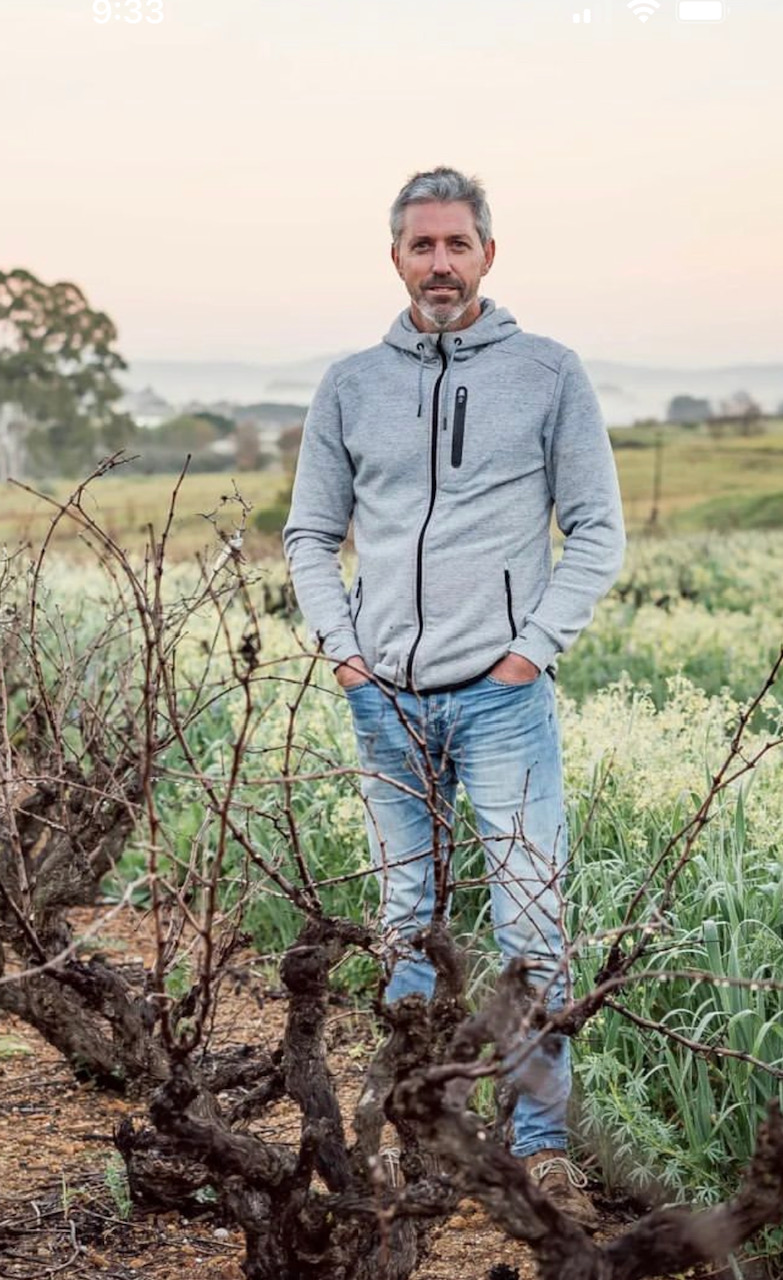
As a winemaker at Cape Point Vineyards Western Cape, South Africa Duncan Savage crafted Cape Point’s signature white, Isliedh. Isliedh was critically acclaimed not only in South Africa but globally. This recognition catapulted Duncan upon the world stage and onto the radar of wine critics far beyond his native South Africa. Duncan has left Cape Point to pursue his dream of owning his own winery, aptly named Savage Wines.
I have found Duncan to be genuinely friendly and eager to share his passion for his new venture. When I approached him with an interview request he graciously accepted and responded with candid insight into his journey as a winemaker past, present, and future. He confidently answered all the questions I posed to him. Covering the subjects of how he sources his grapes, what grape characteristics he seeks, and his favorite wine grapes plus a description of his winemaking style were seamlessly blended with his personal commentary. Duncan covered all these inquiries plus much more in his honest and straight – forward reply. I decided that I couldn’t tell Duncan’s story better than he had himself. The following is my interview with Duncan Savage of Savage Wines in its entirety and verbatim.
“Going on my own was the plan from day 1, I just did it a little later than intended. My initial plan was to do so at the age of 35 which to a certain extent I did as my brand was in the market.
I finally took the plunge last year at the age of 38. The time was essential to get the brand up and running. The reality is that if one starts from scratch without money in this industry it’s a very tough scenario. I would have been able to do so had I been single and prepared to rough it, but with kids that need to go to school, etc. I needed time. We have no investors involved which I’m really happy with as it’s our family name and is really important to us.
As a result, the plan was to lease cellar space, vineyards and purchase other fruit. We kicked off the 2017 vintage in a rented space with some mates with a 3-year plan to put together a home for the brand. A brand needs a home if it’s to be a serious player in the long term. I got a call from a mate in the end of Jan. who had decided to sell his place which was crazy as I’ve always loved his setup! It’s an urban winery in Salt River alongside Woodstock in Cape Town and absolutely epic! I grew up 10 minutes down the road from the place! My 3-year plan became a 1-week plan and a mad scramble to raise some cash…
The challenge with the whole thing is to commit. Is an urban winery what we want, isn’t there a farm option, trucking of grapes into the city, etc. The reality is that had we bought a farm we would have continued to buy grapes from the 13 different growers we source from and have done so from the beginning. We have an established style and vision and we don’t want to mess with it. Sourcing fruit is sustainable if one has the relationships in place and is prepared to pay for the good stuff. Farming is tough and growers need to be able to sustain these old parcels that crop next to nothing. Growers that have been on their land for generations also have a deep understanding of terroir, even if they don’t make wine themselves. It’s an understanding of the land that Joe wine guy can’t expect to develop in the short term.
I cut my teeth on maritime vineyards and always have liked the freshness one gets from such sites. We have always favoured the maritime or high-altitude options and 4 of the 6 Syrah sites I work with have a view of the ocean. Many of the others might not have the view but get klapped by the prevailing SE wind off the cold Atlantic due their proximity. These elements and farmers mould what we do, the rest is basically early picking and gentle handling in the winery. I’m in the business of selling wine, if my wines were 15+ alcohol I’m not selling 2 bottles in a restaurant or drinking it myself. I want people to finish the bottle and be thirsty for more wine, whether it’s one of mine or one of my mates.
In SA, we have a warm climate conducive to many different varieties. I’m a big fan of the likes of Syrah and Cinsault as there is not real green flavour pressure, one can pick nice and early which is awesome. We are going to see more of an influence from Portuguese varieties like Touriga Nacional going forward, some good things happening already. I’m a massive fan of Burgundy and the Northern Rhone, love the finesse and elegance in many of these wines!
Our philosophy is very much finesse and elegance, wines that are not trying to take center stage. Wine is a part of life and needs to fit in rather than dominate. We want Savage Wines to become a fixture on the SA and world wine scene and that’s why we are investing all we have back into the business and industry. This is a not job, it’s what we do whether we were loaded or not, it’s our life. We will continue style-wise as we have begun but will be introducing new wines into the range as we find awesome parcels where the results are what would drink and enjoy ourselves. The Savage story is just in the introduction, I’m not sure how it’s going to end but we are going to have a good time in between.”
I hope you enjoyed getting to know Duncan Savage the winemaker, the visionary, and the man. It isn’t often that we get to have a front-row seat as the curtain rises on a new winery. We usually arrive late and rely on the comments of those who were there before us. Here is a rare opportunity to watch and taste a brand evolve from it inception. As for me, I’m going to settle into my seat with my glass in hand to see and taste how this show plays out.
The second Friday of the month is a very special time at Ripepi Winery Monongahela, Pa. It’s special because that’s the monthly Happy Hour from 5 – 8 PM. If you would like to enjoy a good Pa. wine with friendly people in a festive winery setting mark your calendar for these events. You’ll get to meet Rich Ripepi and his stellar staff while tasting Ripepi’s large selection of wines.
When you visit be sure to talk with owner/winemaker Rich Ripepi. His warm and welcoming personality will make you feel right at home. Take advantage of the opportunity to discuss wine and wine grapes with him. He possesses an encyclopedic knowledge on the subject and is one of the very few Western Pennsylvania wine makers that grows his own wine grapes. Take a minute before you enter the tasting room to savor the view of his ten acre vineyard next to the winery.
During our conversation on that Friday evening Rich told me his vineyard had made it through this past winter in good shape but had experienced an unusual frost event after the flowers had emerged. Rich and I went out into the vineyard where he showed me how frost had covered the ground and coated the tops of the vines roughly five feet above the
Frost Damage
ground. The strange thing was that there was a zone between three and four feet off the ground that did not frost. The flowering tops of the vines in that zone remained frost-free and undamaged despite the lack of overstory growth to protect them. What caused this curious phenomenon is hard to say but while a frost is never welcome it didn’t damage enough of the flowers to have a negative effect on this years crop.
Rich pointed out the young Cabernet Sauvignon vines he had planted to replace the “Old” Cab vines he had lost to winter damage a couple of years ago. While his new Cab vines continue to mature Rich will buy Cabernet Sauvignon grapes from the Lanza Vineyard in California. The Lanza Vineyards are in the Suisun Valley just east of Napa Valley. Grapes from Lanza are used to produce the exceptional wines of the Wooden Valley Winery. Pete Abdulovic, winery manager at Ripepi told me an interesting side note on their grape purchase. During a recent visit to the Napa Valley he made a stop in the Suisun Valley and when he was tasting there he heard that the Caymus Winery had leased a considerable
Lanza Vineyards Suisun Valley, California Photo Courtesy : Pete Adbulovic
amount of vineyard acreage surrounding the Lanza Vineyards and throughout the Suisun Valley to supply grapes for their iconic Caymus wines. It will be very interesting to follow the transformation of these grapes from start to finish and taste what characteristics Rich can coax out of them.
At the end of the evening as we were saying our goodbyes Rich told me he had ordered Saperavi vines to plant in a one half acre section of his vineyard from Grafted Grapevine Nursery Clifton Springs, NY. He was hopeful that they would be able to fill his order because the demand for these vines has created a supply shortage. The increasing popularity of this grape is due in large part to the very good wine that the only four North American producers of Saperavi are offering to the public. When Rich gets his vines he will become the second vineyard in Pennsylvania to grow Saperavi commercially joining Fero Vineyards & Winery in Lewisburg. Chuck Zaleski, owner/winemaker of Fero planted his first Saperavi vines in 2010 and released his first vintage from the 2013 harvest.
My research into the Saperavi grape has allowed me to meet many interesting and informative people. Among this group that I can happily call my friends is Dan Traucki. Dan is a wine journalist from Morphett Vale, South Australia who writes for many publications while also publishing his own website and wine blog http://wineassist.com.au He explores the world of wine grapes with a special focus on the lesser known varieties. This shared curiosity led to us exchanging our thoughts on the Saperavi grape and its potential to yield a superior red wine in three widely separated wine regions around the globe. Dan began to collect samples from Georgia, Russia (the region where wine making is believed to have originated), Australia with it budding Saperavi producers and the Finger Lakes Region of New York, USA that is emerging as the standard for “New World” Saperavi. By February of this year Dan had gathered 33 samples from these three regions for his historic tasting which was probably the largest and most diverse ever conducted. This is the article he wrote for WBM Australia’s Wine Business Magazine. WBM_Saperavi-Sensational_Mar-Apr17 (This is a graphic-rich article and my take a few seconds to load as a .pdf file so please be patient. It will be worth the short wait!


 When our good friends Alex and Emma Canoni returned from their recent trip to Portugal they brought back memories of a beautiful country of unforgettable scenic vistas and rustic villages filled with friendly locals. They also brought back the story of a man named Cristian Bento.


 I recently received an interesting email from Inge Olsson at




 wpawinepirate