The Finger Lakes Wine Region of New York: The Inns of Aurora Getaway

Recently my wife and I visited one of our favorite wine destinations, The Finger Lakes Wine Region of New York. We decided to stay in and explore an area new to us. Aurora, New York is on the shore of Cayuga Lake, about halfway up the lake on the eastern side. This idyllic small town is home to the now-closed Wells College and MacKenzie-Childs studio. When I am asked to describe Aurora I tell people to imagine a real-life “Hallmark Movie Channel” town. 

We stayed at the Zabriskie House. It is one of the Inns of Aurora’s (http://innsofaurora.com) spectacularly restored mansions and is located in the center of town across Main Street from the lake. The eastern shore of Cayuga Lake has only a few wineries with the majority of the Cayuga Lake Wine Trail member wineries dotting the entire length of the western side of the lake. On this trip, I used the Waze app through my car’s Apple CarPlay to navigate flawlessly to and from the region. While there, we relied on it to travel between wineries and find gas, points of interest, and dining options. You can find casual tavern food in Aurora at the Fargo Bar & Grill on Main Street or go just across the street for more upscale fare at the award-winning 1833 Kitchen & Bar at the Aurora Inn. When around Ithaca, home to Cornell University, and looking for a quick breakfast or light lunch then you should consider the Ithaca Bakery (http://ithacabakery.com) at their 400 N. Meadow location. We also enjoyed a relaxing lunch while overlooking the vineyards and Seneca Lake from the deck of the Ginny Lee Cafe at Wagner Vineyards. 

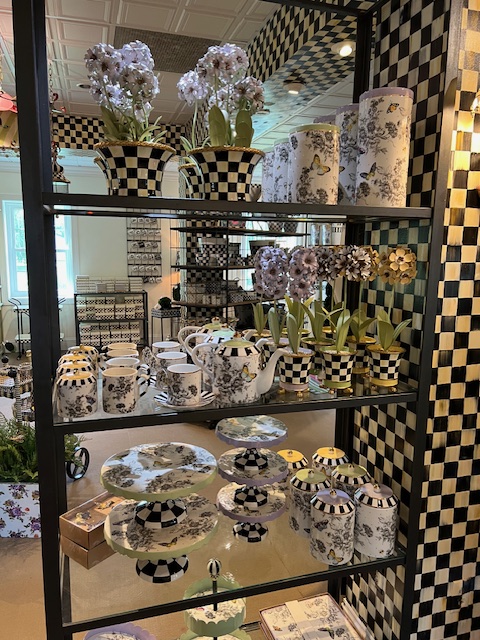
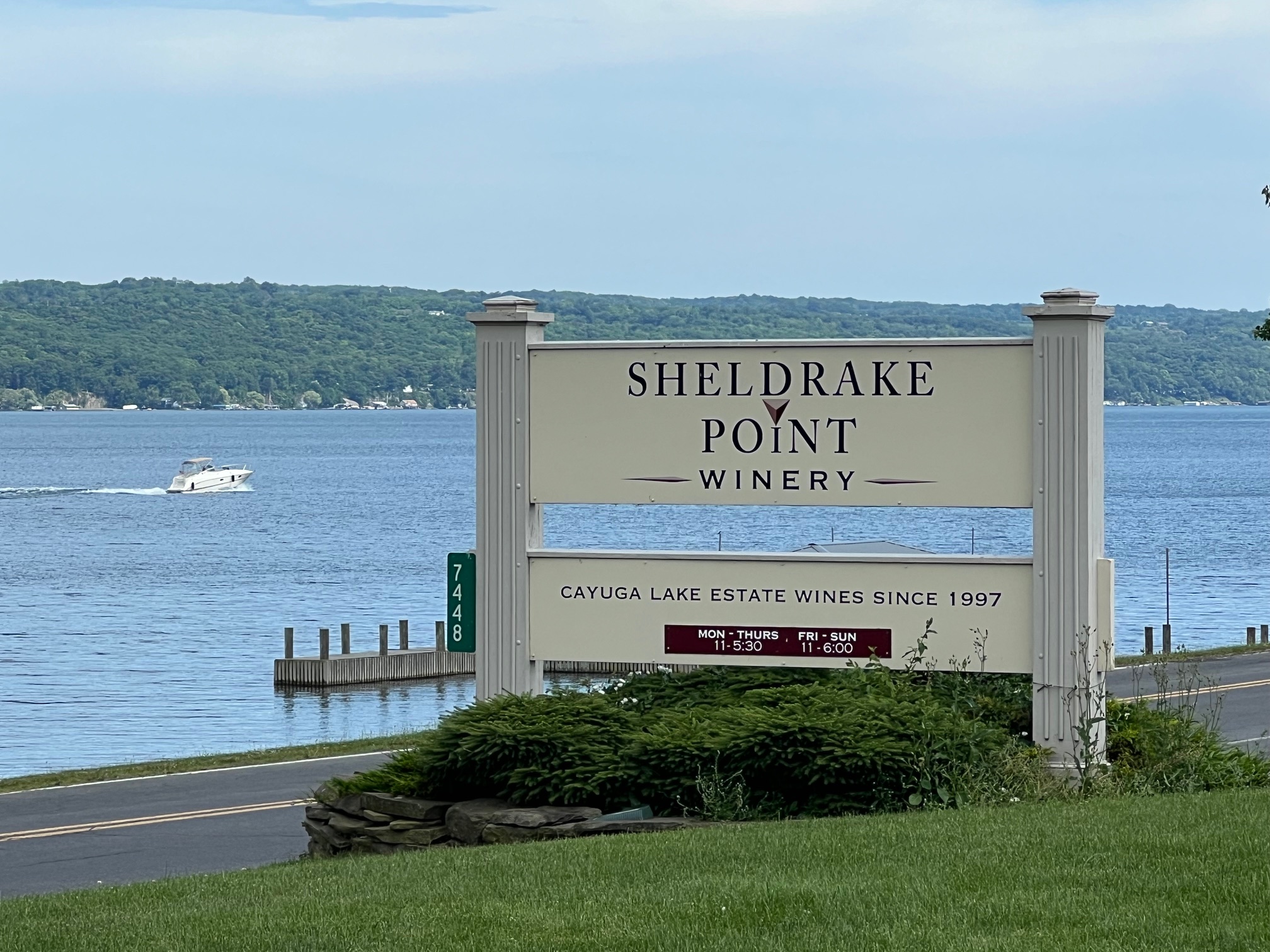
A stop at the studios and shop of world-famous designer MacKenzie-Childs is certain to be an unforgettable experience. During our three-night stay in the Finger Lakes, we stopped at several wineries that included Montezuma, Swedish Hill, Hosmer, Knapp, Buttonwood, Sheldrake Point, Standing Stone, Wagner, and Hermann J. Wiemer. 

Since we were there during the week we didn’t need to reserve a tasting time. Still, I would strongly recommend going to the website of the wineries you intend to taste at to see their protocol and make plans by booking your tasting itinerary first. This is an excellent idea on busy weekends, holidays, and during events.  

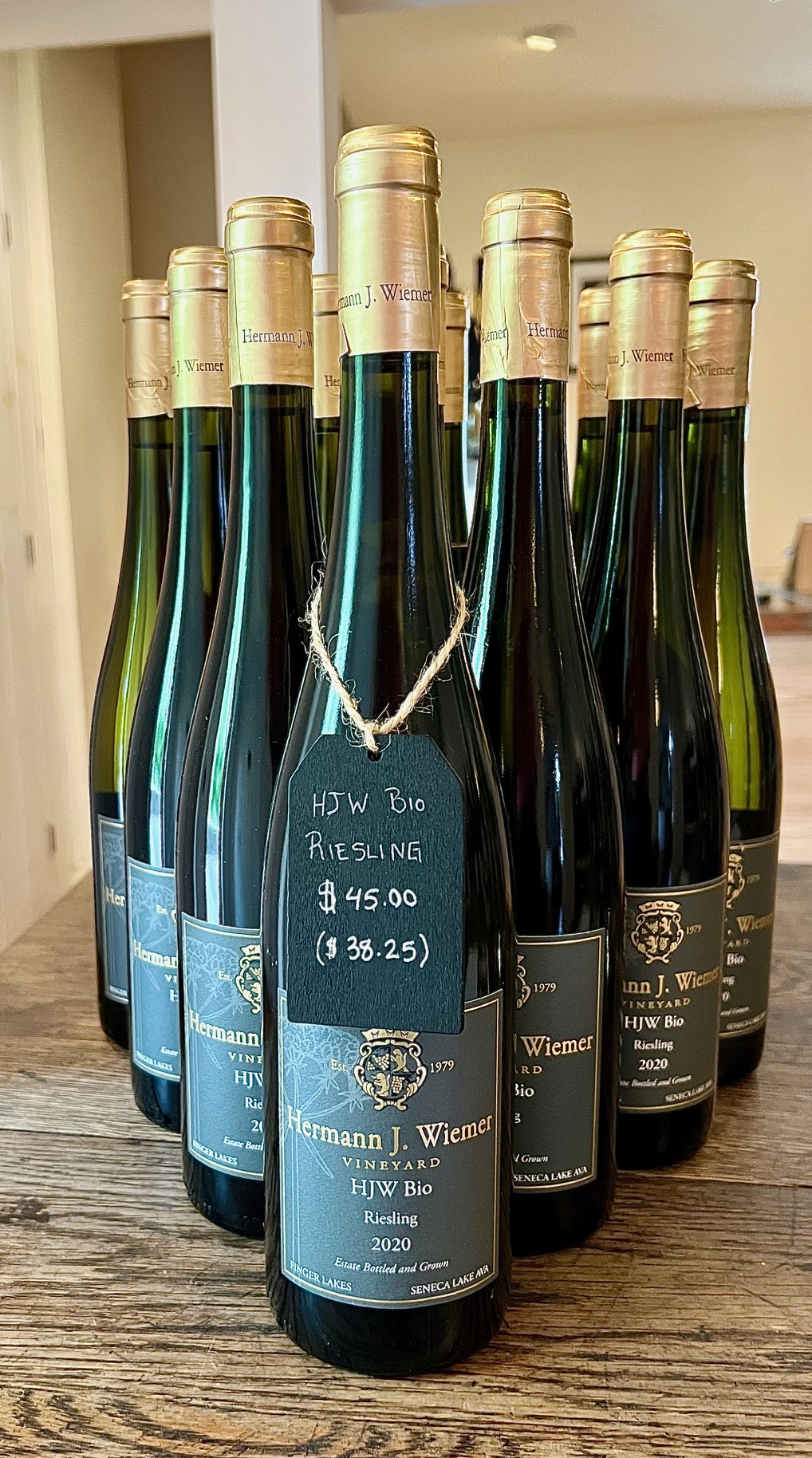
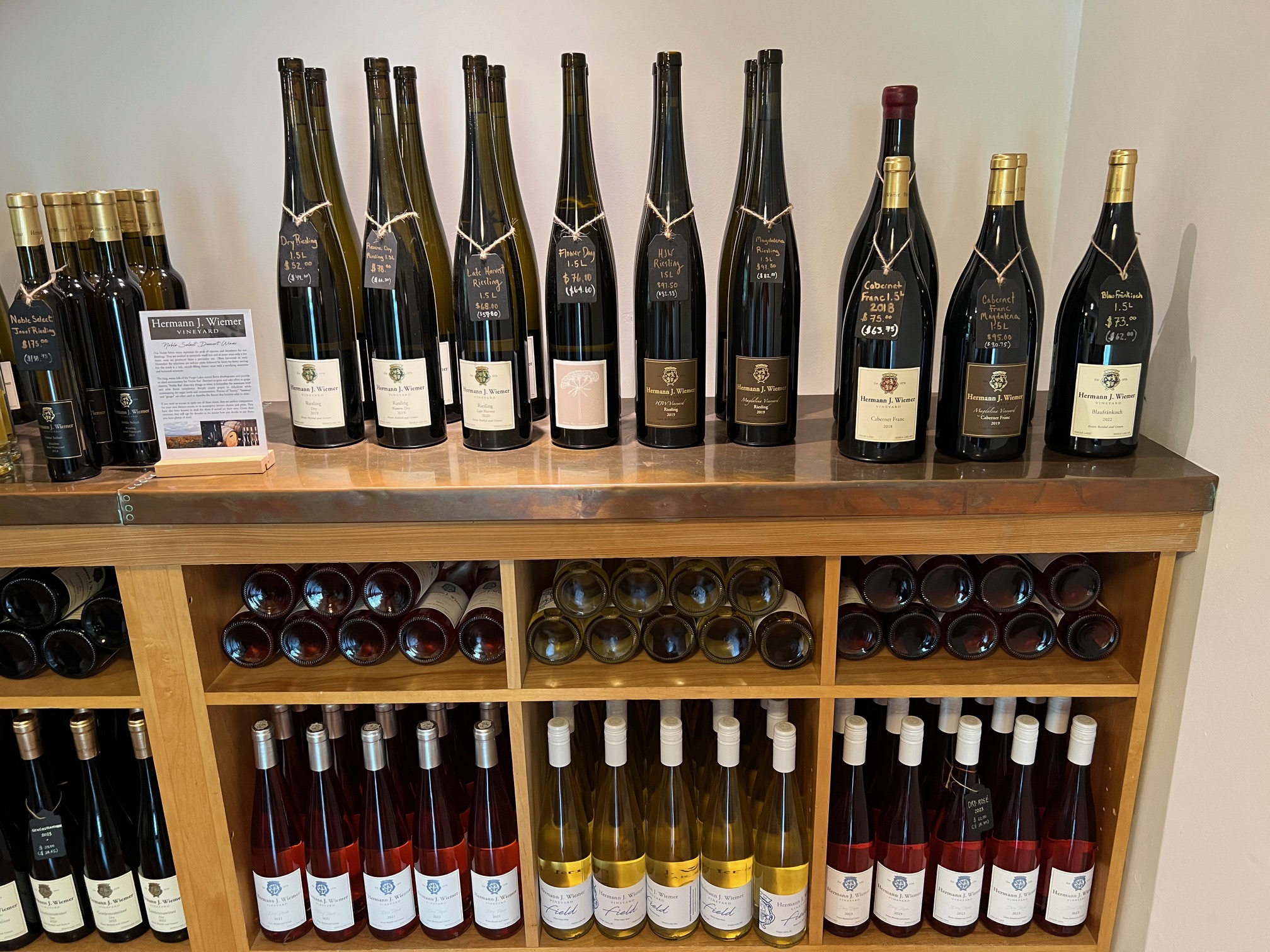
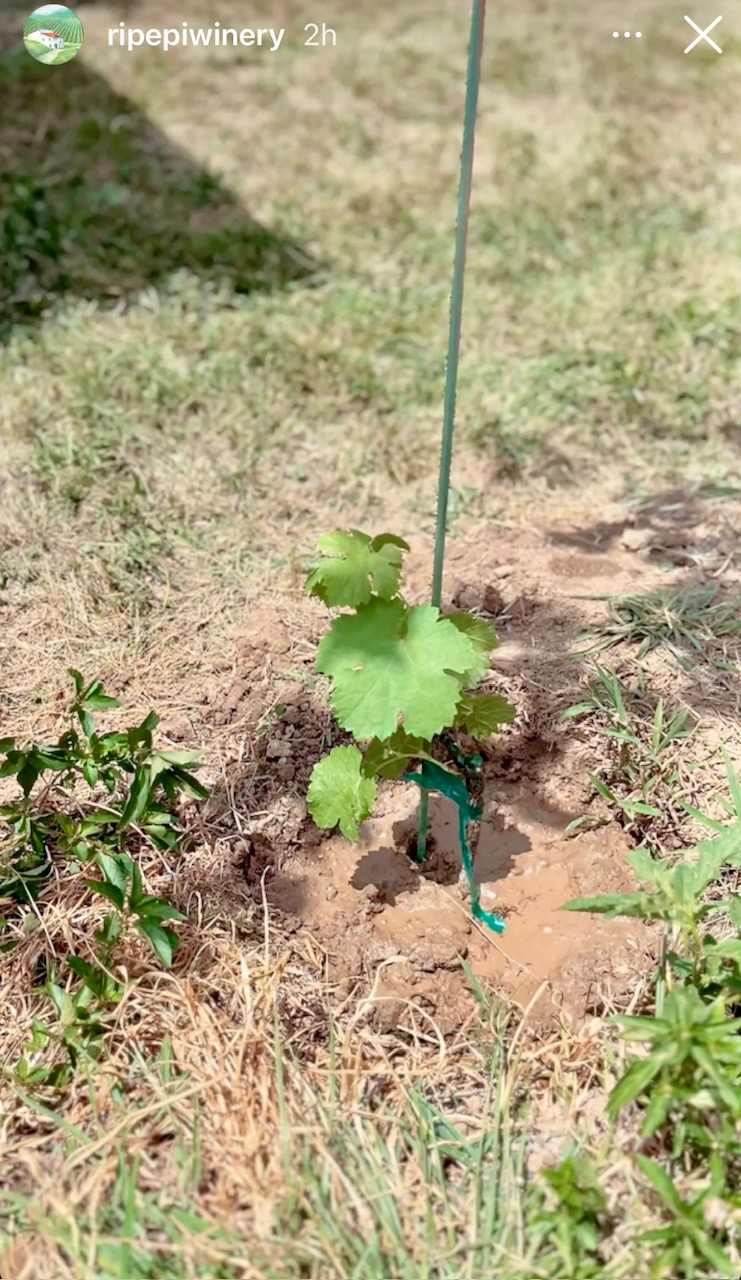
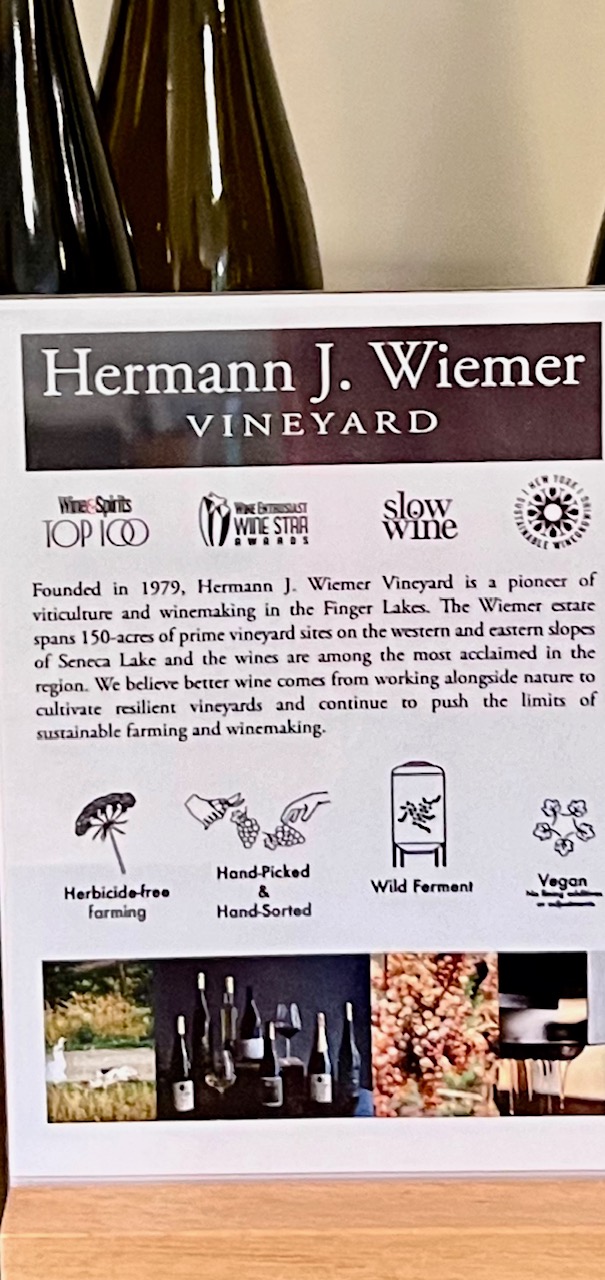
We enjoyed our tasting at Hermann J. Wiemer Vineyard. They have a well-deserved reputation for being a producer of world-class Riesling but their other wines are also very good. The tastings are à la carte and are served in small carafes that are enough for two. You choose the wines you want from a menu with each sample priced accordingly. You are seated at your own table, not standing at a tasting bar. Each table is assigned a knowledgeable attendant to provide guidance if needed and answer any questions you may have. We are big fans of Riesling and concentrated on those wines but we did sample a very well-made Blaufrankisch. Outside their tasting room, Wiemer offers their own nursery-grown grape vines for sale. As a gift for our winemaker friend, Rich Ripepi, we brought back a Riesling vine (clone 110(9) rootstock 3309) that has now found a new home in his vineyard at Ripepi Winery & Vineyard Monongahela, Pennsylvania. 

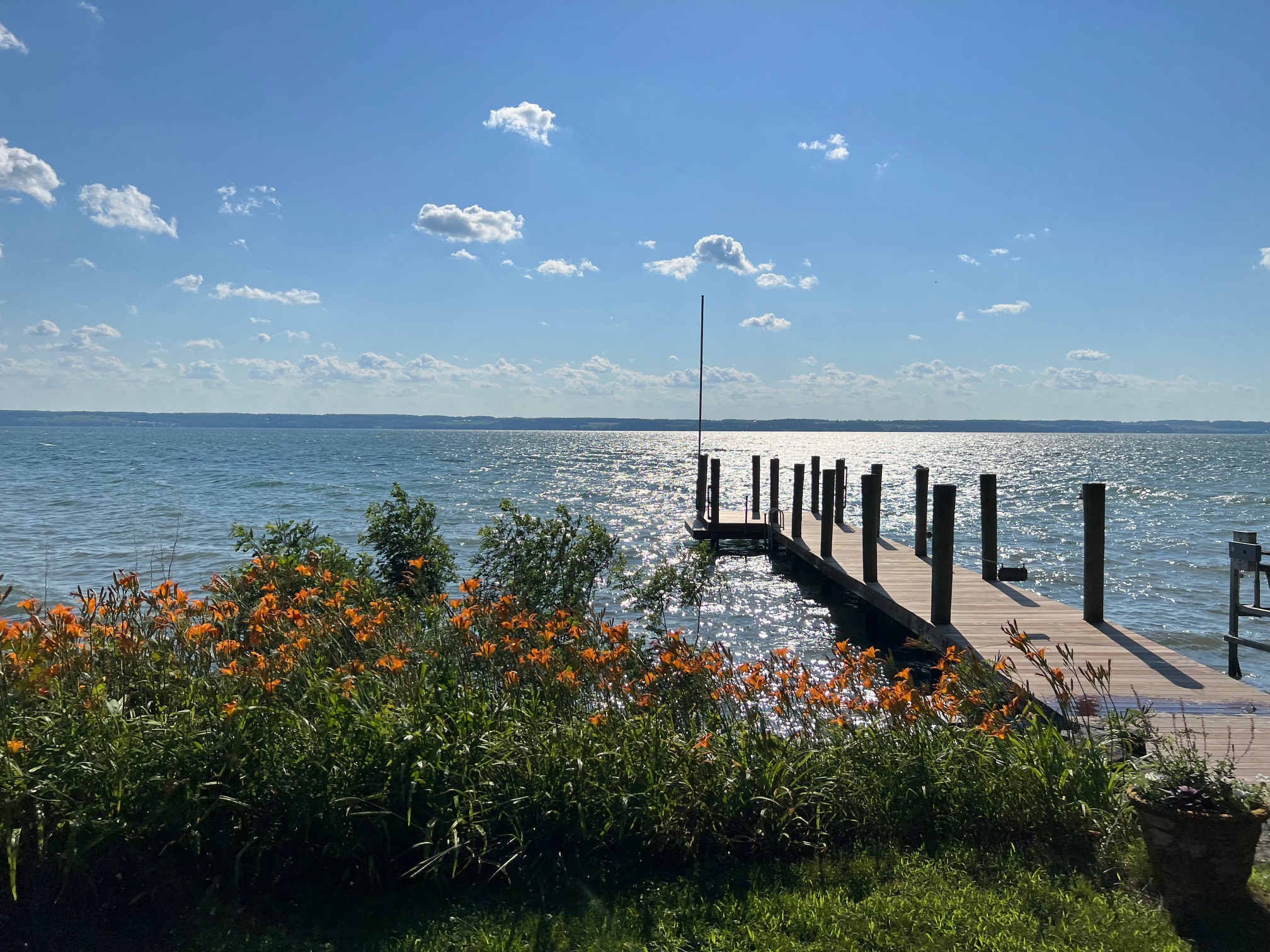
We had a wonderful time on our trip. The glacial lakes are spectacularly beautiful, the rural landscape is serene, and the residents are welcoming. If you want to take a short getaway that will leave you rested and refreshed, consider visiting The Finger Lakes Wine Region of New York. Photo Credit: wpawinepirate.com, Ripepi Winery & Vineyard, and Hermann J.Wiemer Vineyard

2nd Annual Saperavi Festival Trade & Media Event Finger Lakes Press Release

I wanted to share this press release I received from the co-founder of Saperica, Erika Frey. The 2nd Annual Saperavi Festival in the Finger Lakes will be held on May 12-13, 2023. For more details see the following press release.

March 23, 2023,

2nd Annual Saperavi Festival in the Finger Lakes Press Release

Saperica, Inc., Dr. Konstantin Frank Winery, Chama Mama Restaurant, and the National Wine Agency of Georgia presents the 2nd annual Saperavi Festival in the Finger Lakes region of New York.

Hammondsport, New York – Saperica, Inc., is pleased to announce that the 2nd annual Saperavi Festival will take place at Dr. Konstantin Frank Winery in Hammondsport, New York on Saturday, May 13, 2023. The festival will bring together producers of Saperavi and Rkatsiteli wines from the Finger Lakes region of New York along with their counterparts from the country of Georgia and throughout the USA. Authentic Georgian cuisine with a modern twist will be featured from New York City restaurant, Chama Mama. Sponsorship will be provided by the National Wine Agency of Georgia.

Saperavi Festival attendees will have the opportunity to taste a wide variety of wines crafted from the Saperavi and Rkatsiteli grape varieties which are native to the country of Georgia and have been grown in the Finger Lakes region for over 60 years. The wines will be paired with Georgian food specialties like Khachapuri, Khinkali, and Chakapuli. Cooking demonstrations will be presented throughout the afternoon.

The Saperavi Festival will take place on Saturday, May 13, 2023, from 12pm to 4pm, on the grounds of Dr. Konstantin Frank Winery located at 9683 Middle Rd, Hammondsport, NY 14840. More detail and tickets are available for purchase at Eventbrite via this link: http://eventbrite.com/e/2nd-annual-saperavi-festival-tickets-577274843597

The event can also be found on Eventbrite by using the search words “saperavi festival”.

Members of the trade and media are invited to participate in educational seminars and events which will occur on Friday, May 12, 2023, from 12pm to 4pm on the grounds of Dr. Konstantin Frank Winery located at 9683 Middle Rd, Hammondsport, NY 14840.  For more information about attending as a member of trade or media, please send an email to saperavi@saperica.org.

The 2nd annual Saperavi Festival is organized by Saperica Inc, a 501(c)(3) non-profit corporation. Saperica’s mission is to promote Saperavi and other Georgian grape varieties along with Georgian gastronomy and culture in the Finger Lakes, NY, and around the U.S., by organizing and facilitating educational seminars and exchange programs between the regions, for wine and culinary professionals and enthusiasts. Any proceeds from the festival will help to fund future Saperica programs.

For additional info, please visit www.saperica.org.

Email questions to http://saperavi@saperica.org.

We hope to see you at the festival!

Finger Lakes Saperavi Festival May 14, 2022

The wine made from Saperavi grapes being grown in the eastern United States has been a secret shared by a small but growing group of wine lovers. It isn’t a secret anymore as Saperavi plantings have aggressively expanded throughout the East Coast. As a varietal or in any of its unique blends Saperavi is gaining fans and increasing its vineyard acreage as forward-thinking winemakers join a movement to explore the possibilities this ancient grape from the “Far side of the world” has to offer.

I recently had the pleasure of talking with Lasha Tsatava the Georgian Gastronomy Ambassador, Director @ Boston Sommelier Society, and co-founder of the non-profit Saperica about its upcoming Saperavi Festival in the New York Finger Lakes on Saturday, May 14th, 2022 at the Dr. Konstantin Frank Winery 9683 Middle Rd Hammondsport, NY.

My first question to Lasha was concerning what activities and attractions would be available to festival guests? Lasha told me that the entertaining and educational slate of attractions focuses on the food, wine, and culture of Georgia including:

  • Walkaround tasting of Saperavi & Rkatsiteli wines from the country of Georgia, the Finger Lakes of New York and beyond
  • Authentic Georgian cuisine created by Chama Mama restaurant from New York City (food included in ticket price)
  • Cooking demonstrations and educational seminars
  • Saperavi festival swag

My next question was why he and Erika Frey decided to start their nonprofit SAPERICA and what their mission was? Their reason for starting: SAPERICA saperica.org

“Saperavi has been growing in Finger Lakes, NY for about 50 years now. 

It’s a traditional grape variety for the region but not many people know about it.

Since June 2021, Erika and I had several trips to FLX and we would visit Saperavi and Rkatsiteli producers to learn more about them and discover their stories and their future plans with these grape varieties. At the same time, we were introducing the idea that these grape varieties have tremendous history and culture behind them including Georgian gastronomy. Every time we discussed these ideas with producers, people’s eyes lit up with excitement and there was a feeling that we needed to take the next step. So we did!” Their reason for starting Saperica and their mission statement complement each other perfectly!

http://SAPERICA.org mission statement: To promote Saperavi and other Georgian grape varieties along with Georgian gastronomy and culture in the Finger Lakes, NY, and around the U.S., by organizing and facilitating educational seminars and exchange programs between the regions, for wine and culinary professionals, and enthusiasts.

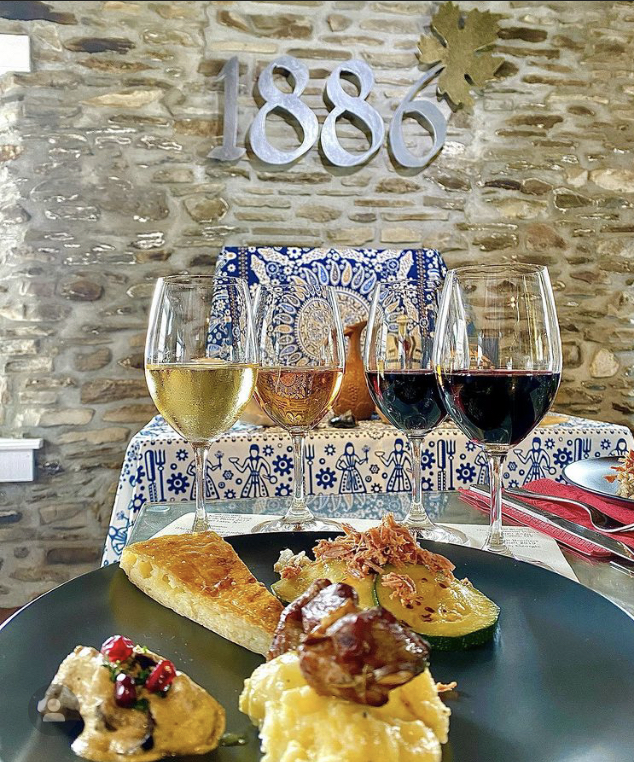
Lasha and Erika have worked closely with Meaghan Frank (Dr. Konstantin Frank’s great-granddaughter) of Dr. Konstantin Frank Winery and her team on this festival and prior events called “Finger Lakes Meet Georgia Experience”. These events were held conducted in a fully immersive environment where Erika, Lasha, and Meaghan educated, interacted, and guided their guests through the history and culture of Georgian wine before leading them back to the 1886 Reserve Tasting Room at the Frank Winery for a paired food and wine experience. One of the attendees told Lasha “This is why we fly to France and Italy to have experiences like this”

The first annual Saperavi Festival in the Finger Lakes will be held on Saturday, May 14th, 2022 from 2PM-5PM EDT at the Dr. Konstantin Frank Winery 9683 Middle Rd Hammondsport NY. Tickets can be purchased at http://eventbrite.com or click this link to go to the event page https://www.eventbrite.com/e/saperavi-festival-tickets-274172135237

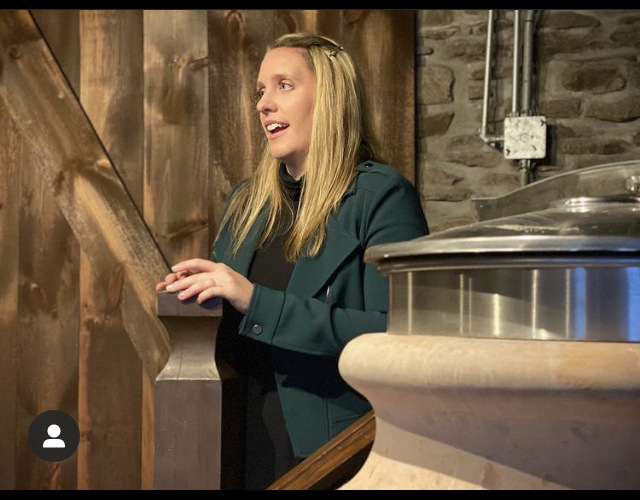
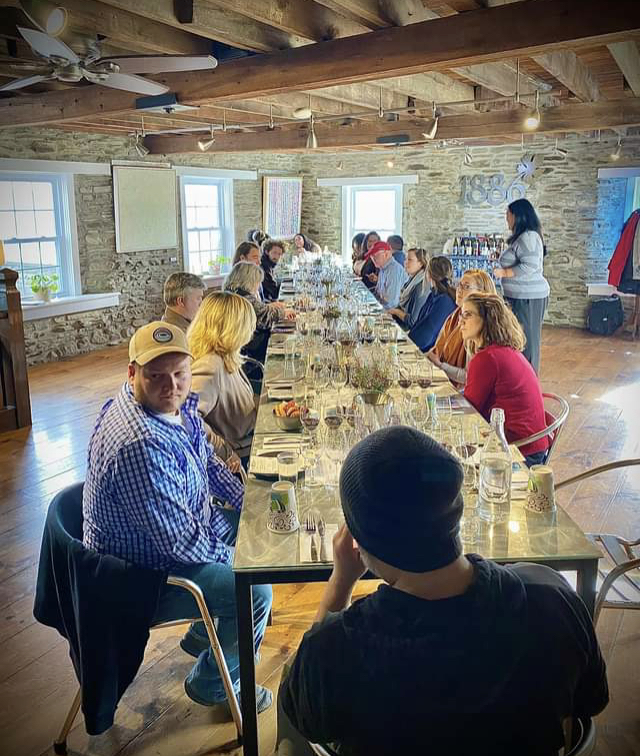
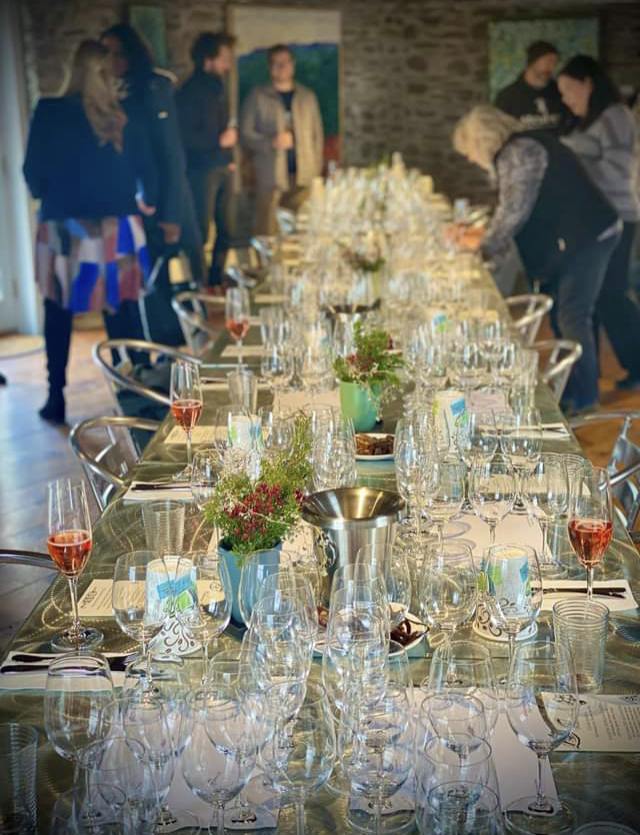
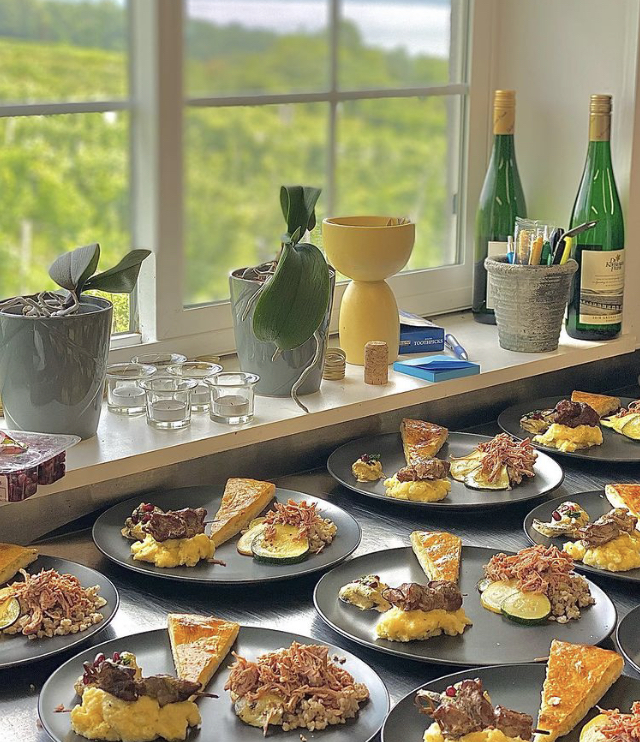
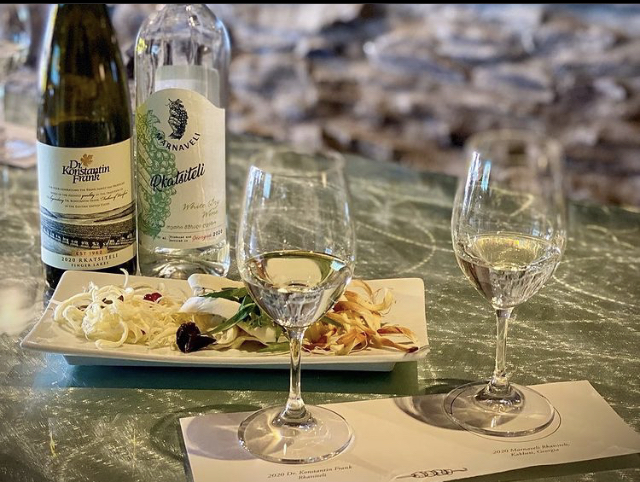
The following photos are of a previous “Finger Lakes Meet Georgia Experience” at the Dr. Konstantin Frank Winery when Lasha and Erika collaborated with Meaghan and her team to highlight and explore the food, wine, and culture of Georgia.

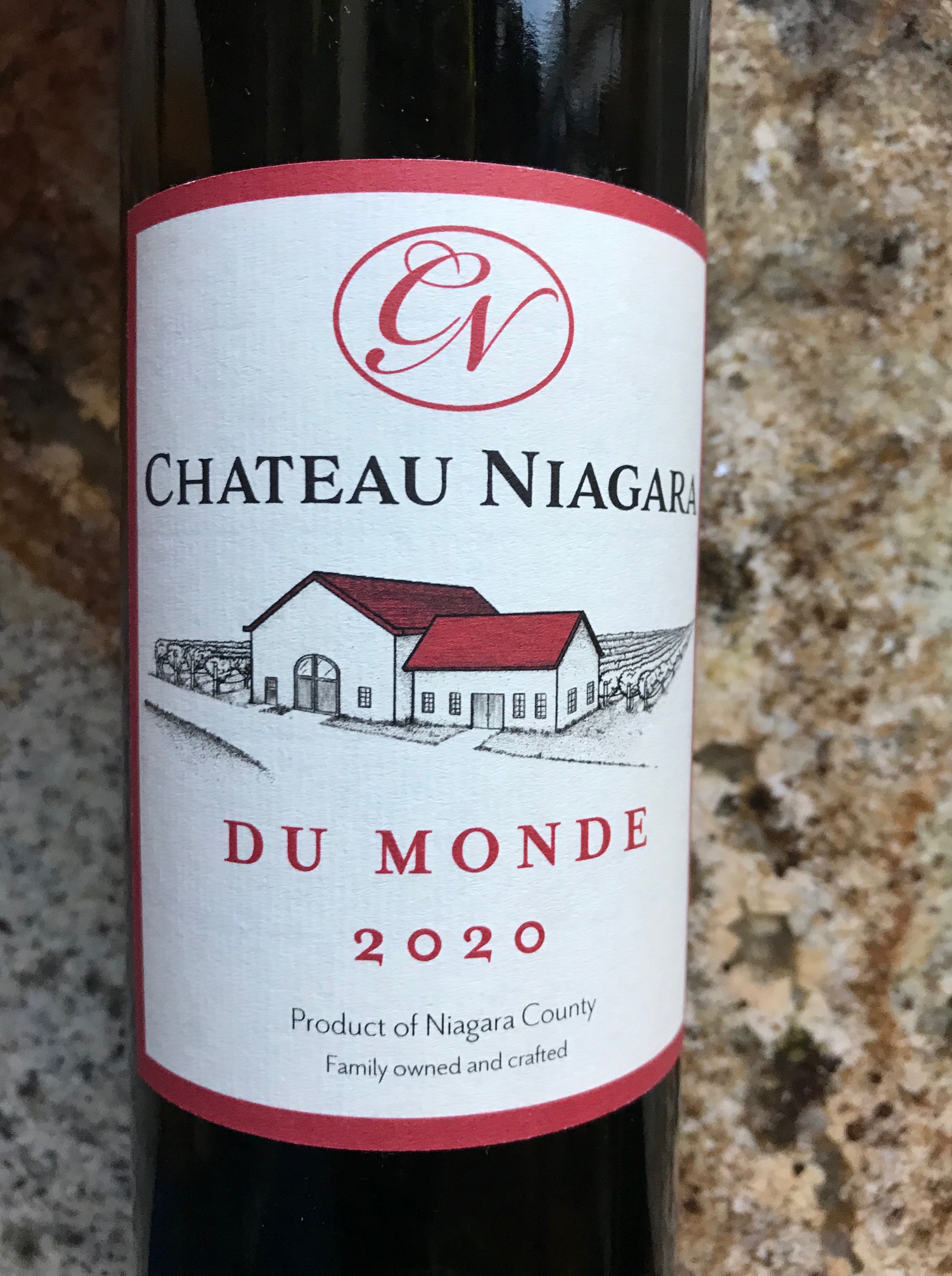
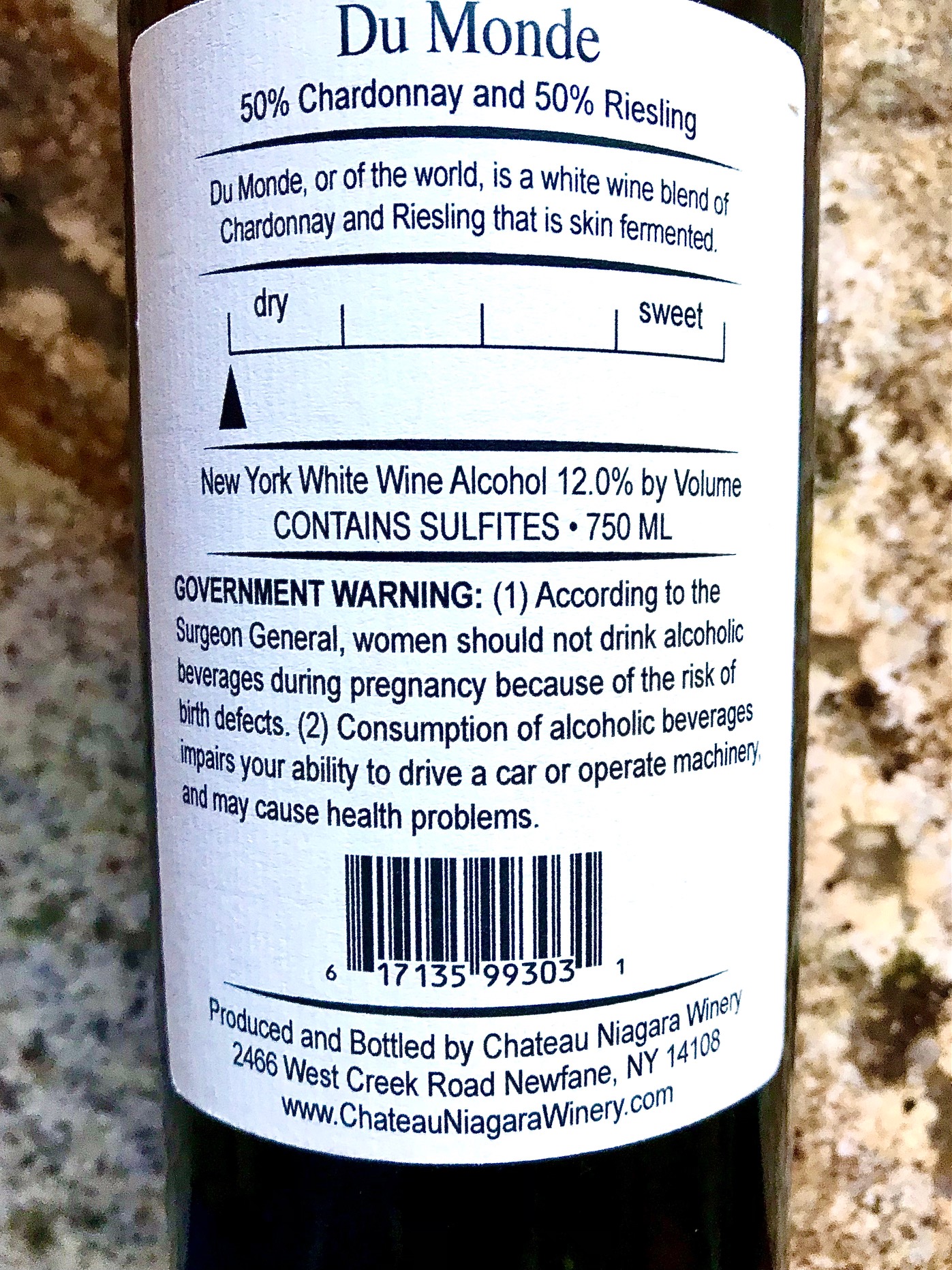
Chateau Niagara Du Monde 2020

Jim Baker is a visionary when it comes to the wine he makes at his Chateau Niagara Winery located on the Niagara Plain near Lake Ontario in Newfane New York. Jim isn’t afraid to think outside the box or even outside of North America when it comes to the grapes he grows, styles of wine he makes or even the techniques he uses in the cellar. Chateau Niagara Du Monde 2020 is a perfect example of a blend of two well-known white grape varieties that yield a surprising unique wine when they are made using centuries-old methods from the fabled cradle of wine making. 

Chateau Niagara Du Monde 2020 is a blend of 50% Chardonnay and 50% Riesling with a R.S. of nominally 0 and an A.B.V. of 12%. Everything from how this wine is made, to the fascinating character these two highly stylized grapes yield when blended together using a process almost exclusively reserved for red grapes is far from the common place. Du Monde 2020 must be tasted to be understood but don’t wait because only twenty three cases were made. I asked Jim to explain how he makes Du Monde so we can appreciate the nuances of his wine.

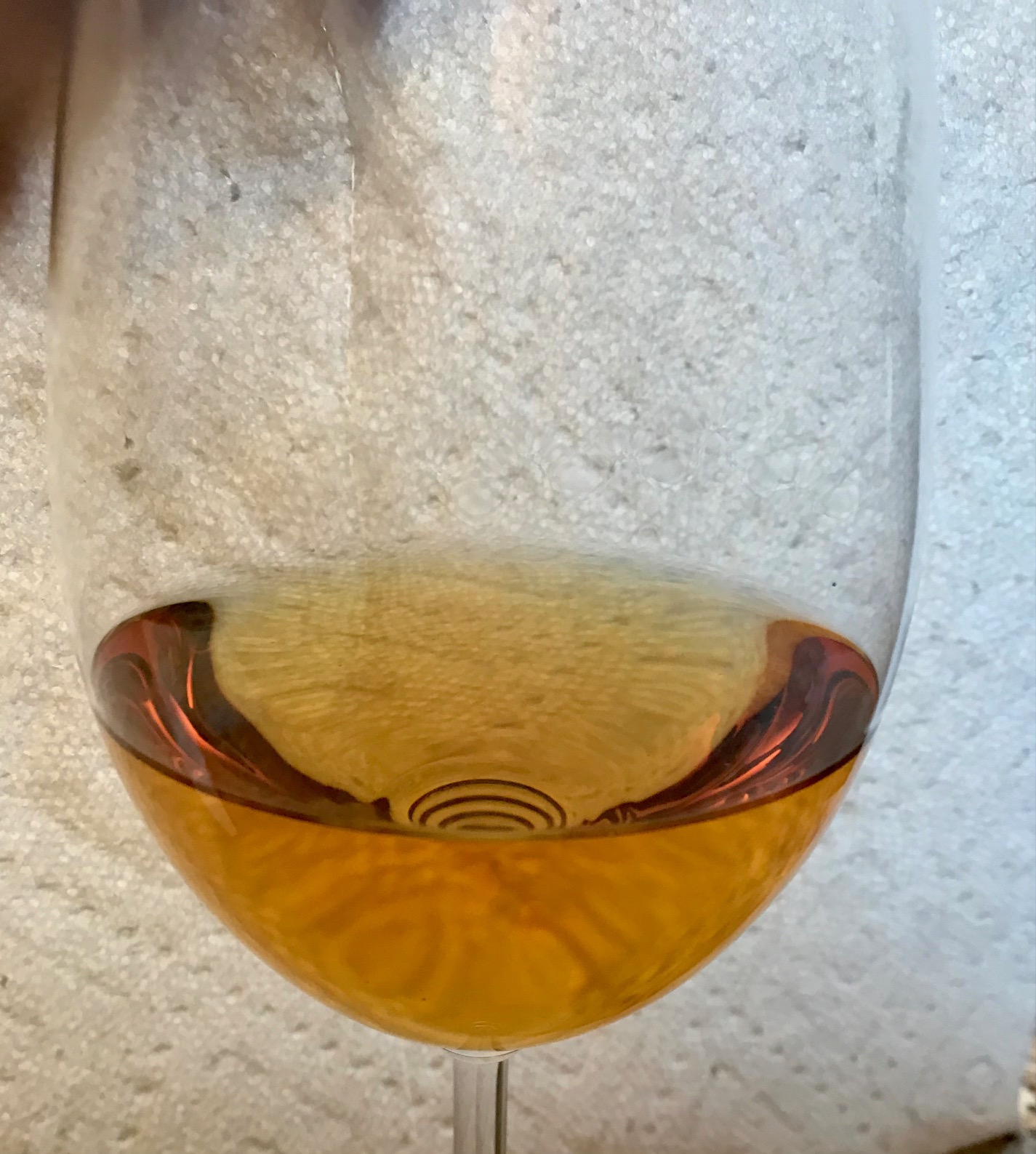
“Du Monde is a wine made as a Georgian style white. These wines are traditionally skin fermented in clay amphora called qvervi for long periods of time. We did not use a qvervi, but we did a long skin maceration of eight weeks. This is similar to red wine making technique and results in a wine with many red wine characteristics such as deep color of amber rather than red. The skin tannins and phenols that give a sense of drinking a red wine, with a white wine finish. Our Du Monde is a 50/50 blend of Riesling and Chardonnay making a unique and promising blend. The combination yields a certain spiciness that is not apparent in either grape variety. This results in Du Monde pairing fantastic with all sorts of Mexican food.”

It would be correct to say this wine is a simple 50/50 blend of Chardonnay and Riesling but that is a much too simple description. It would be better to use the analogy of two perfectly matched dance partners where neither one outshines the other so you can enjoy their performance in its entirety. Chateau Niagara Du Monde 2020 opens with notes of candied fruit leading into flavors of melon and tropical fruit followed by a medium finish with a tinge of lemon peel. This wine is perfectly balanced and displays a deep amber color in the glass. 

All of Jim Baker’s wines can be purchased online at http://chateauniagarawinery.com and by visiting or calling the winery at 2466 West Creek Road Newfane NY 716-778-7888

Organic, Natural, or Biodynamic?

Confused by what the difference is between natural, organic, and biodynamic wine? Well, you are not alone. The growing trend toward natural, organic, and biodynamic wines has created a marketplace in which an informed consumer stands a much better chance of buying a product that fulfills their desire to live a “greener lifestyle”.

In my opinion, the best way to feel confident that you are purchasing a natural, organic, or biodynamically produced wine is to buy it from a producer you trust. Before you decide on which production practices best suit your needs let’s look at an overview of each method. You must keep in mind that there is no clear-cut distinction between practices and there is often an overlap between terms describing them; the qualities are not interchangeable between methods. 

Organic wines are separated into two categories in the U.S. The first is wine certified organic by the United States Department of Agriculture using strict regulations. The U.S.D.A. guidelines require the grapes to be grown without the use of synthetic fertilizers and all ingredients added to the wines must be certified organic. No sulfites may be added to these wines. Only wines that meet these strict rules may display the U.S.D.A. certified organic seal. The second category contains wines made from grapes that were grown using organic farming methods. Wines in this category were made using organically grown grapes and may or may not have been made following organic winemaking methods. 

Biodynamic wine is made using the principles of Austrian philosopher Rudolf Steiner. I think of biodynamic practices as embracing a holistic approach toward viticulture. It observes farming methods based on a specific astronomic calendar. An example of this would be only harvesting grapes on days designated as “Fruit” days or only pruning on “Root” days. Biodynamic farming isn’t only dependent upon the calendar but is similar to organic in that it only allows for the use of organic fertilizers and bans the use of any type of pesticides, fungicides, herbicides, or any synthetic chemical intervention in the vineyard. Biodynamic wines are, however, permitted to contain sulfites. It is these small differences that can cause confusion when comparing whether a wine is organic, biodynamic or both. A wine designated as organic doesn’t mean it is also biodynamic or a biodynamic is always organic.

Natural wine or low-intervention wine, as it is often called, is fermented spontaneously by its native yeasts. As the name implies they are, for the most part, unmanipulated and never filtered or fined. By not filtering these wines they appear cloudy because of the solids left suspended in them. Due to the minimal amount of intervention by the winemaker these wines have limited stability and should be treated accordingly. If a winemaker doesn’t want to go through the regulatory process of having their wine certified as organic they can just skip the process and label it as “Natural”.

This is why I strongly suggest when you are looking for a wine to purchase in this segment of the market it is always a good idea to buy from a producer you know and trust.

Till We Meet Again

Isabella Grapes Photo Courtesy: Double-A Vineyards

In my last post, I explored the idea that you didn’t need to try wine from far away places to experience something new. There are plenty of grape varieties that were commonly found on kitchen tables and being made into everyday wines have fallen out of favor for a myriad of reasons can provide an interesting distraction from the predictable narrative of today’s offerings.

Isabella is a Vitis labrusca grape that was once prized for it’s ability to produce fruit that was marketable as table grapes, juice, and grapes for winemaking. Isabella is a large round grape with dark purple skin and a green-yellow flesh that is easily separated from its skin.

In many European countries, Isabella is still banned from being grown and it is illegal to make wine from its grapes. The importation of Isabella vines from North America was widely blamed for the phylloxera plague that ravaged vineyards across Europe in the mid-1800s. Despite it being outlawed in many European countries Isabella can still be found in vineyards and being made into various styles of wine, especially in Italy where the sweet dessert wine Fragolino is very popular. Isabella’s reputation as a desperado has necessitated it being known by more than fifty aliases. Those names range from Alexander and Fragola to Moschostaphylo and Kerkyraios but no matter what name you have known Isabella by it always displays that trademark “foxy” flavor that Vitis labrusca grapes are known for.

Invitation To My Latest Article

I would like to invite you to view my latest article that was just published on The Vintner Project website vintnerproject.com It is a candid look at the Saperavi being grown and made in the State of New York. It includes intimate and insightful commentary from four legendary N.Y. winemakers, Fred Frank, President of Dr. Frank’s Wine, son of Willy Frank and grandson of Dr. Konstantin Frank, John McGregor, Vice-President of McGregor Vineyard and son of the founder Bob McGregor, Martha (Marti) Macinski, the founder and former owner of Standing Stone Vineyards, and Jim Baker, the founder, owner, and winemaker of Chateau Niagara Winery. This piece offers a truly unique perspective into the mystique of American Saperavi like never before. A “must” read for anyone interested in the future of emerging winegrapes in North America. Photos Courtesy: Dr. Frank Winery, McGregor Vineyard, and Chateau Niagara Winery. If you like the article please share. Link to article: https://vintnerproject.com/wine/saperavi-the-next-cult-grape/

Please join my email list for this blog by clicking the “Follow” button above on the left side of this page then enter your email.

White Russian

If you have visited this blog you know I am a big fan of the Georgian wine grape Saperavi. I have written about it often here and in print publications, websites, and online magazines. There’s another ancient Georgian white grape that is extremely widespread in that region whose wine I have also become fascinated with and that is Rkatsiteli. Rkatsiteli is a pale-skinned cold-hardy Vitis vinifera wine grape that can trace its origins as far back as Saperavi and like Saperavi it is considered to be one of the oldest wine-producing grapes in the world. Rkatsiteli is widely planted in the Caucasus Region, the area that connects Europe and Asia. While its acreage is considerable it is far less than it occupied during the Soviet-era when quantity was valued for the mass production of wine. The main reasons for the popularity of Rkatsiteli in that part of the world are that it has a strong resistance to cold temperatures while retaining a good level of acidity in hot growing conditions and versatility in the cellar where it can be made into anything from table wine to sparkling wine and everything in between. Rkatsiteli can be found outside of the Caucasus in China and the United States. You can find it being grown as Rkatsiteli in the northeastern U.S., mainly in the Finger Lakes Region of New York and also in Virginia. In China, it is being grown and produced as Baiyu.

Rkatsiteli is made in many styles and types of wine but it usually displays a light body and high acidity. Since Rkatsiteli is made into such a wide variety of wine by a diverse community of winemakers and cultures I will focus on the Rkatsiteli wine made on the East Coast of the United States where it is taking on the characteristics of each unique terroir it encounters. 

Like Saperavi, Rkatsiteli was first planted in the Finger Lakes Wine Region of New York by the legendary Dr. Konstantin Frank where it continues to be grown and made into a classic style of Rkatsiteli by his family at the Dr. Frank Winery in Hammondsport on Keuka Lake. When you taste Dr. Frank Rkatsiteli 2019 the first thing you will notice is Rkatsiteli’s signature acidity and a lean body upfront but the flavors tropical fruit and pear come out on the finish. This wine is a nice light-bodied white wine now but will improve with time in the bottle.

McGregor Vineyard is one of the two vineyards that grow Rkatsiteli in the Finger Lakes. McGregor is most recognized for its iconic Saperavi blend Black Russian Red but their Rkatsiteli is one of their most popular and exclusive wines with only 41 cases produced in 2019. McGregor Rkatsiteli 2019 is a light wine perfect to drink at a festive gathering or on a picnic with friends because it has refreshing acidity and a long finish filled with fruit flavors.

Horton Vineyards in Gordonville, Virginia began growing Rkatsiteli after losing vines to the bitter Winter of 1996. Horton Vineyards Rkatsiteli 2017 displays aromas of nectarines and Meyer lemon that when combined with its prominent minerality and acidity renders a fresh-tasting wine that you can enjoy alone or pair with lighter fare. 

As fall gives way to winter and our tastes turn to more full-bodied reds don’t forget about Rkatsiteli. My suggestion to you is to buy a couple of bottles to save for next summer because it will be here before you can say Rkatsiteli.           

Times They are a Changing

Organic, biodynamic, natural, sustainable, and many other techniques of viticulture and winemaking are once again making their existence known in the wine world. Yes, I said again because these farming methods are being updated using current technology but the basic premise of all of them is nothing new. The idea behind all of these methods of producing wine using the least human intervention possible was once done by necessity rather than by a conscious choice. In the not too distant past, there were no chemical controls and spraying programs available to vintners. Winemakers had to rely on taste and experience to know how their grapes and wine were progressing without a lab to verify their assumptions. Even after chemical controls became available the poorer producers still had to rely on biological controls and manipulating the natural conditions to bring in a harvest.

Understanding the delicate interactions between nature and agriculture has always been a passion of mine. My preoccupation with keeping the ecosystem clean and free of dangerous residual chemical compounds is completely understandable once you know a little about me, my background, and my education. I grew up across the road from my mother’s family farm where I watched my uncle, aunt, and cousins farming and caring for the land. I would pursue my higher education at California University of Pennsylvania where I graduated cum laude with a Bachelor’s degree in Nature Conservation. I have since combined that education with my interest in writing and the love of wine into an exciting journey of discovery. My writing has allowed me to become friends with many winemakers and vintners, not only in the northeastern United States but around the world. I have leveraged my access to these remarkable men and women to further my understanding of the practicality of using less chemical intervention in the vineyard. After years of conversations with the people who know first hand which practices work and which don’t work for their particular circumstances, I have assembled a mosaic of the feasibility of organic viticulture across North America and the world. My findings are that success and failure is very location and climate-specific. Climatic factors have never been predictable but are in flux now more than ever before.

In my ongoing effort to gather opinions on growing grapes organically, I recently had the pleasure to discuss the subject with Greg Winslow, owner/winemaker/vintner of Winslow Winery concerning his efforts to keep his vineyard as organic as possible using the options available to him. The Winslow winery and vineyards are located in the picturesque southwestern Pennsylvania town of Perryopolis. Greg grows a diverse collection of wine grapes, including a recent planting of a favorite of mine, Saperavi. Greg quit using glyphosate in 2016 because of the uncertainty surrounding the effects it might have on the eco-balance of his vineyard. That same year he decided to take a chemical-free approach to weed control when be purchased a weed burner manufactured by Flame Engineering. A weed burner is basically a flame thrower that incinerates the vegetation in the vine rows. It’s easy to see how this method of weed control is environmentally friendly even if it can be visualized as a plot from a cartoon where the results can be

Greg Winslow’s weed burner Photo courtesy Winslow Winery

both hilarious and disastrous. Greg pointed out some nice positives of using his weed burner. On the positive side is that it’s organic, weeds can’t develop a resistance to it, all the weeds and grass in the target area are destroyed instantly, and it has the unexpected benefit of helping sterilize the ground under the vines of fungus and mold that might splash up onto the vines during a rain. He also noted on the negative side the extra cost when compared to chemical herbicides and it doesn’t have the duration of chemical controls. Greg included one unforeseen danger of using this device in the vineyard that I hadn’t thought of. “It is absolutely devastating to bird netting. We use side netting that we leave up all year round then roll it down to cover the fruit zone during version. Once you drop the nets, don’t even think about using this.” 

Not completely satisfied with the weed control the weed burner was providing Greg purchased an offset tiller, a Rineri EL170 to be exact, to complement his weed control program. In addition to using his offset tiller to work the floor of his vineyard, he added drainage tiles and annual ryegrass between his rows to improve the water flow out of the vineyard and lessen soil compaction. His efforts are proving to be effective but are labor-intensive and costly but sustainable by definition. I suggested

Rineri EL
170 offset tiller Photo courtesy: Winslow Winery

he consider the organic broad-spectrum herbicide Weed Slayer to enhance his other weed controls. I first heard of Weed Slayer from Mary Rocca at Rocca Vineyards in the Napa Valley of California. I saw photos of her vine rows completely clear of weeds after vineyard manager Sergio Melgoza had applied the product. Weed Slayer consists of two separate products that are mixed with water to produce an effective herbicide. Weed Slayer is the herbicide and Arg Gold is the biological adjuvant. These two products work together to kill weeds from the root up while leaving no toxicity in the soil. If you have used Weed Slayer in your vineyard or another agricultural application please let me know of your experience with this product.

Greg Winslow believes in the idea of growing organically in his vineyard and pursues it as best he can while having to battle the same problems all producers of agricultural products face in the northeastern United States. When asked about the viability of growing his grapes completely organic and chemical-free he answered honestly and realistically. “I think that growing organically is a noble cause and it would be nice to market wines that were grown that way”. “I think growing organically would be difficult at best, at least in the mid-Atlantic states”. ” I haven’t met anyone in southern Pa and points south that is doing totally organic”. I do however use some organic products in my spray program, I use copper, sulfur, and hydrogen peroxide in my spray rotation, especially as harvest nears”. “I am trying to use only what I need when I need it and not spray irresponsibly for everything”.

Greg Winslow’s candid answers are very similar to the sentiments expressed by all the growers that I have posed these questions to in the Northeast. They say going totally organic would be great but it isn’t feasible at this time. Growing grapes and making wine is no different than any other business in that you need a product to sell. Growers are challenged every year to produce a harvest whether it be organically or with the help of chemical controls or a combination of both. I am always amazed by the ingenuity of these tenacious individuals and their sheer will to succeed.  

Winslow vineyards Photo courtesy: Winslow Winery


Award-Winning Winery For Sale

If you have ever dreamed of owning a winery and leading the exciting life of a winemaker, well here’s your chance. Tod and Jean Manspeaker have made the decision to sell their Briar Valley Winery in Bedford, Pennsylvania and embark on the next great adventure of their lives.

Here’s a little background on the winery. The latest Suckling Review gave their Brair Valley Proprietor’s Red and Merlot 91pts and the new Chardonnay 90pts. The International Wine Review scored their Lemberger and Merlot 91pts and Chardonnay 90pts. Briar Valley continues to produce highly rated wines year after year fulfilling a legacy of excellence without fail.

COMMENTS: Rare and unique opportunity to own a family-owned and operated winery! This is an award-winning and turn-key business! Some of their prestigious awards include the Governor’s Cup, a gold medal in the San Francisco’s Chronicle for the Riesling, double gold and best of show in Riesling in the Finger Lakes International Wine Competition and many others. Included in this offering is 7,200 square foot building currently producing 1,000-2,000 cases of wine annually with space to easily produce 5,000-10,000 cases; all production equipment; all inventory; goodwill; and all licenses. The license allows the production of still and sparkling wines, distilled spirits, and hard cider. The tasting room is leased space located in the heart of downtown Bedford, beer sales are also permitted here.

MLS 51709    Click here:   Click here for link to listing

For more information please contact Sean Bardell at Howard Hanna Bardell Realty     814-623-8622  email: STBardell@yahoo.com