When Anatoli Levine invited me to write a guest post about Saperavi for his blog talk-a-vino.com I thought it would be a great opportunity to introduce this fascinating red grape to wine lovers that probably never have of it. With that in mind I happily accepted Anatoli’s generous offer and started organizing years of information that I had acquired from the winemakers and vintners that are the vanguard for this grapes accent in the wine community. The finished product was published two days ago and I have been very pleased on how well it has been received. I invite you to read the article and have included a link to the http://talk-a-vino.com/2016/11/02/desperately-seeking-saperavi blog where it is being featured. While you are on the site please take advantage of the opportunity to browse the other posts that you will find there. I think you will be glad you did. Thanks!
Tag FLX

Saperavi Vertical Tasting
Standing Stone Vineyards in Lodi, NY will be holding their annual Saperavi Vertical Tasting the weekend of October 29-30, 2016. This event is a rare opportunity to experience the evolution of a wine that is rare in the United States. Marti Macinski has developed her Saperavi vineyard and perfected her techniques for this wine over the years to the point where it has become a best seller among her excellent reds. When you see Marti make sure to tell her Rich wpawinepirate said “Hi”
Here is what Marti had to say about one her most popular events.
Saperavi and Standing Stone Vineyards are closely connected in the Finger Lakes. We planted this variety, not knowing much about how it grew, how it worked as a wine, and whether anyone would like it. Sometimes – you get lucky! Saperavi is now our most favored dry red variety – and we are just starting to learn enough about how it grows and works to shepherd it into wine. We will start with the current vintage in the barrel, and go backwards 5 vintages. Then we will pull out one of the oldest vintages from this farmstead. Do we agree with the Georgians that this wine can age for 50 years? Since this varietal did originate in the Republic of Georgia. Find out for yourself. Do not wait – this is always a sellout event. There are two Vertical Tastings scheduled for 12:30pm and 3:30pm on Saturday, October 29th and Sunday, October 30th with tickets $25 a person. Advanced reservations are required as space is limited. Please call the winery or head to our reservation page to book your seats.
http://standingstonewines.com/reservation/ Phone: 607-582-6051
email:ssvny@standingstonewines.com http://http://standingstonewines.com

Share this:

Golden B&W Memories

Eugenia Frank
Dr. Konstantin Frank Wine Cellars, Hammondsport NY, is releasing it’s new line of single vineyard wines named in honor of three of the most prominent Frank women and the contributions that they have made to the Frank winemaking legacy. These highly anticipated releases celebrate Eugenia (wife of Dr. Konstantin Frank), Hilda (daughter of Dr. Konstantin Frank) and Margrit (wife of Willy Frank).
“Eugenia” was released in December 2015 and is a Single Vineyard Riesling made from the oldest block of Riesling grown on the winery’s Keuka Lake estate. It was from these steep slopes and shale-rich acidic soil that Dr. Konstantin Frank produced his first Finger Lakes Riesling many years ago. The winery tasting notes describe this Riesling as “Bone dry, with brilliant acidity, elegant minerality and notes of Key lime, stone fruits, pineapple and lime zest.” Cellar through 2024.
On January 9th, 2016 Dr. Frank Wine Cellars released the second wine in the “Frank Women’s Series”. “Margrit” is a 2014 Riesling made from Dr. Frank’s Hector, NY vineyards. This vineyard is also on a steep slope and is known for being one of the warmest in the FLX. The property has a loamy soil profile that produces a ripe, fruit forward wine. The tasting notes say this Riesling has flavors that are “Tart, tangerine, Granny Smith apple and grassy with a balanced acidity.” Due to limited production these wines will only be available for purchase in their tasting room.
I think these great photos transcend time and place to express a certain elegance and class that is hard to find in present day society. All photos courtesy of Dr. Frank Wine Cellars. A special thank you to Erin Flynn at Dr. Frank’s for her excellent articles about the Frank women that were the source for this article.
DrFrankwines.com Twitter: @DrFrankwine

Margrit Frank
Share this:

From The Beginning
I have been told great wine is made in the vineyard. I believe this to be true because no matter how good a winemaker is there is only so much they can do in the winery to improve a wine made from average grapes. There are a myriad of factors effecting grape quality in a vineyard but it all starts with the vine. Virtually all wine grapes in the U.S., with the exception of those grown in Washington state, are grown on grafted vines. Grafted vines have Phylloxera resistant rootstock with scions of a varietal wine grape grafted to it. Phylloxera is a tiny aphid-like insect that feeds on the roots of the Vitis vinifera grape.
In the not-so-distant past the world’s wine vineyards were devastated by this pest but it isn’t the only threat to the vines. There is a long list of disease, fungus, mold and pests of all shapes and sizes that can damage a vineyard. Dagger and Rootknot are caused by Nematodes (microscopic worms) and are a common problem in the eastern U.S. but their threat can be lessened by choosing the correct rootstock for your situation. Because there are so many factors to consider when choosing a vine for your site it is important to evaluate the characteristic of each rootstock to match it to the needs of your vineyard. The 3309c rootstock is the most widely used rootstock in the eastern U.S. and it can be said that eastern viticulture is built on it.
In Washington they grow grapes on own rooted vines that makes them susceptible to Phylloxera, although Phylloxera has never been reported there. The advantage of own rooted vines is that if they are damaged they can regrow from the roots while if a grafted vine is damaged below the graft it has to be replaced or regrafted. A study comparing grapes grown on own rooted vs. grafted vines showed for all practical purposes there was no difference in the quality of fruit produced.
The Grafted Grapevine Nursery in Clifton Springs, NY was started in 1957 by Herman and Ute Amberg while Herman was working for Dr. N. Shaulis at Cornell University’s Geneva Experimental Station. They specialize primary in one year old bench-grafts but a few varieties are available as own rooted. While looking for Saperavi vines I had the pleasure to correspond with Herman and Ute’s son and Operations Manager Eric. The following is an excerpt from an email Eric sent me in response to my questions about the availability of grafted Saperavi vines and his opinion on a planting density plan for Saperavi.
“We will be propagating extra Saperavi this year to compensate for its sudden surge in interest. Regarding the planting density for Saperavi. The number of vines is a factor of row spacing and vine density within the row. Row spacing is based more on your equipment than the vine’s need. The standard spacing in most of the eastern half of the country is 9 feet. Density within the row is based more on the vines vigor and training system. We have found that a 7 foot spacing works well. Therefore 691 vines/acre would be appropriate.”
We sometimes forget just how much thought, effort, cash investment and yes, good luck goes into a great bottle of wine. Contact info: graftedgrapevines.com

Grapevine Pricing Charting: Courtesy of Grafted Grapevine Nursery
Share this:

Standing Stone Barrel Bonanza
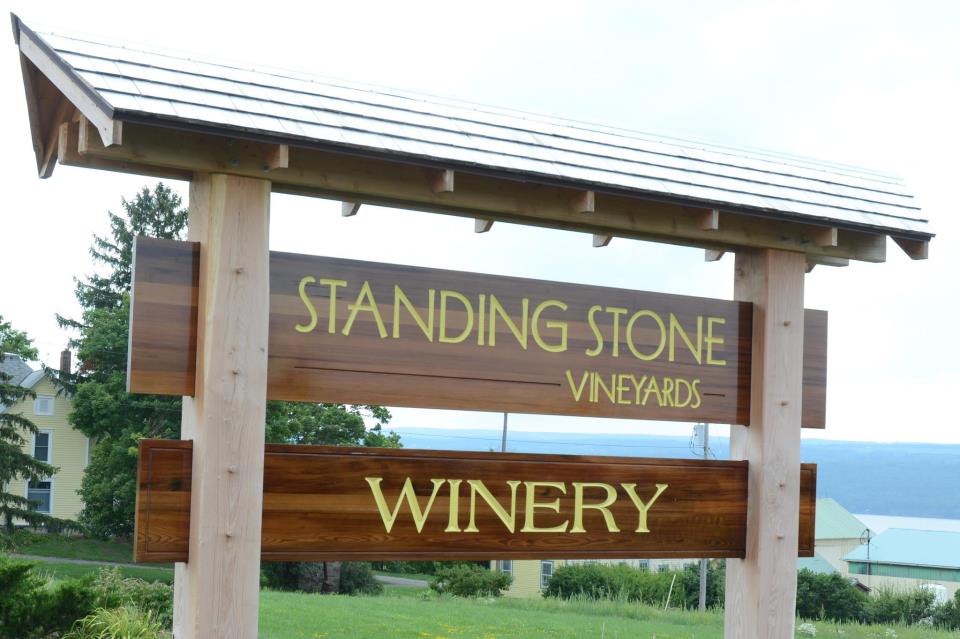
Photo Courtesy: Standing Stone Winery
This is the perfect event for any wine enthusiast that simply can’t get enough. What is Barrel Bonanza? Barrel Bonanza is an opportunity for you to tour the Barrel Cellar and taste finished and just finished fermented wines every hour on the hour. Learn what type of yeast you like and compare the difference in flavor that new oak verses older oak has on Chardonnay and Saperavi. Taste the 2014 Reserve Saperavi straight out of the barrel and if you like it you can buy futures at a 20% discount. You can also choose a mini Vertical Tasting of Saperavi, Cabernet Sauvignon or Petit Verdot. If you need to take a break there will be live music and delicious food for you to enjoy.
Barrel Tastings are noon, 1, 2, 3 and 4 – you pick one. Saperavi Vertical is @ 12:30, Cabernet Sauvignon @ 2:30 and the Petit Verdot is @ 3:30. The cost of this event is $20 per person and includes one Vertical Tasting. Extra Vertical Tastings are $10 each.
Date: Dec. 12, 2015 Time: 12:00 to 5:00 Place: Standing Stone Vineyards 9934 NY-414 Hector, NY. Call or e-mail for reservations. 607-582-6051 ssvny@standingstonewines.com

Entrance to Standing Stone Vineyard & Winery
Share this:

“New World Saperavi” Report
I have developed a fascination for the Saperavi grape. This may seem odd even if you have heard of Saperavi wine because it is nothing new to the wine world. The Saperavi that fascinates me isn’t from the Kakheti region of Georgia , Russia but “New World Saperavi” that is being produced here in the Northeastern U. S., namely the Finger Lakes Wine Region of New York and in Central Pennsylvania. Saperavi is a very deeply colored red wine made from the ancient Saperavi grape that originated in one of the oldest wine growing regions of the world. Saperavi grapes are a teinturier grape, meaning its skin and flesh both have pigment which leads to a very delicious dark wine. What follows is the current state of Saperavi in America as told to me by the producers themselves.
Dr. Konstantin Frank Vinifera Wine Cellar
When the Finger Lakes Wine Region is mentioned undoubtably the first name that comes  to mind is the iconic Dr. Konstantin Frank Winery in Hammondsport. The legendary Dr. Frank proved everyone wrong not only by growing vinifera grapes in the FLX but producing world-class award-winning wine from them. I would like to thank Frederick Frank for the time and attention he showed me while assisting me with this post. Dr. Konstantin Frank first planted Saperavi vines in his vineyard in 1958. Dr. Frank would use that fruit to produce his first vintage in 1962. Dr. Konstantin Frank Winery now has 1.5 acres planted in Saperavi vines and expects to produce 250 cases of Saperavi wine. That 1.5 acres of Saperavi vines is divided between their Keuka Lake vineyards in Hammondsport and their Seneca Lake vineyards (on the eastern side) in Hector. Dr. Frank’s Saperavi is only available at their winery tasting room in Hammondsport but they are planning to expand their plantings and hope to offer their Saperavi wine to their wholesalers in the future. Due to high demand and limited production they haven’t entered Dr. Frank Saperavi into wine competitions. drfrankwines.com
Standing Stone Vineyards
For years Marti Macinski owner/winemaker of Standing Stone Vineyards has extolled the virtues of Saperavi while methodically expanding her Saperavi vineyard and constantly improving her wine. Having appeared in many local, regional and national publications Standing Stone wine sales have ridden a steadily ascending arc but no member of Marti’s  solid menu of wine appears to have create a devoted following like her Saperavi has.
Standing Stone planted their first 80 vines in 1994 and they are the source of the fruit for their newly released 2013 Reserve Saperavi. Since 2006 a deliberate and steady expansion of the Saperavi program has led to a vineyard that is just over 5 acres. 2005 was a trial run that yielded 23.5 cases. 2010 was Standing Stone’s first commercial release with 200 cases produced that year. This year the 2015 vintage is anticipated to be about 500 cases but Marti adds the caveat ” if we manage to hold off the deer.” Those deer will have more fruit to choose from because Standing Stone continues to plant more Saperavi vines to increase supply and build inventory for market after the winery has enough grapes for their own wine production. That future production may include experimenting with longer aging, some sweeter versions of Saperavi or possibly a Rosé or Port. Standing Stone Saperavi is very round with delicious ripe flavors of tart cherry fruit when young that evolves into plum and pomegranate that are integrated into complex layers of aroma and flavors as it ages. Marti doesn’t enter her Saperavi into many competitions so when she does it comes as no surprise that Standing Stone Saperavi 2012 was awarded the Wine & Food Classic Gold Medal last year and the 2013 Saperavi won “Best Other Red Vinifera” at this year’s Classic. A special thanks to Marti Macinski for all the time and effort that you have taken to help me with this post and all the other projects you have assisted me on. standingstonewines.com
Fero Vineyards & Winery
 Fero Vineyards & Winery is the only winery in Pennsylvania that I am aware of that has Saperavi planted in it’s vineyard. Chuck Zaleski owner/winemaker of Fero planted his first 500 Saperavi vines on 1/2 acre of his Lewisburg, Pennsylvania vineyard in 2010. He conducted trials as his vines matured until he released his first vintage from the 2013 harvest which consisted of 50 cases. The first Saperavi I ever tasted was Chuck’s 2013 Saperavi from that first 50 cases he produced. After tasting that wine I was sold on the potential of this Georgian red grape here in the East. The 2014 harvest produced 125 cases and the 2015 harvest , expected to be in October, is estimated to yield similar volume. With the addition of 1/2 acre of Saperavi plantings the projected production will be 4-5 tons per acre. The final production number for Saperavi produced should be approximately 300 cases.
Chuck’s philosophy is to let the grape determine the style, so the style of his Saperavi really does remain “Fluid”. He let the 2013 vintage hang and made a ripe jammy style the both of us loved. He picked earlier in 2014 for added acidity and weather concerns plus because of some reading he had done. He said the 2014 may take a little longer to soften but may have more longevity. Chuck doesn’t use much oak at all because he wants to showcase the grape’s unique rich flavor. He tries to mimic traditional methods as much as possible by fermenting in tall containers at constant temperature, very similar to a Qveri and age it with minimal disturbing on the lees. Fero Saperavi 2013 won a Gold Medal at the Finger Lakes International Wine Competition this year. Enough said!
Chuck’s most intriquing observation about this varity is it’s ability to rival the full-bodied red wines of the warm climate regions. He doesn’t know where the ideal location to produce Saperavi in the U.S. is but is pretty sure it isn’t too far from Central Pa. Chuck’s only problem with Saperavi is that it is selling out too fast before he can satisfy demand. Looks like a great problem to have. Thanks to Chuck Zaleski for introducing me to Saperavi and all the help he has given me. ferovineyards.com
McGregor Vineyard
John McGregor and his McGregor Black Russian Red have always been an enigma in the FLX. In the Spring of 1980 he planted Saperavi, Sereksiya Charni, Rkatsiteli and Sereksiya Rosé in a limited area of his vineyard. From that first planting his Saperavi and Sereksiya Charni has expanded to 4 acres. In 1985 John made a small experimental batch from these grapes and bottled it in half bottles. McGregor Saperavi and Sereksiya are bottled together and produces over 300 cases per year. That number is certain to rise as more Saperavi vines are planted over the next 3-5 years.
If you are wondering what McGregor Black Russian Red Saperavi & Sereksiya blend taste like here is how John McGregor described it to me ” It’s a very rich, dark red wine that typically spends over two years in oak barrels. It has great structure and depth with flavors typically reminiscent of black currents, blackberries and elderberries entwined with a sweet oak character. It has plenty of tannic structure and generally high acidity, lending it well to long-term cellar aging.” 
McGregor Saperavi is entered into few , if any, annual competitions but earlier vintages have been awarded Double Gold and Gold Medals. The 2010 vintage received an 87 point rating in the May 2014 issue of Wine Enthusiast magazine. After decades of hard work Black Russian Red has grown into what John calls “The Cult red wine of the Finger Lakes.” No matter what you call it the one thing you can call it is “Successful.” The label to the right appeared on the McGregor 1985 Saperavi bottle. Thanks John McGregor for the invaluable help you gave me with this article. McGregorwinery.com
Will Saperavi develop into the signature Red wine of the East? The quality is certainly there and the vines are able to express the terroir of the vineyards in which they are planted to produce a wine on par or better than their Russian counterparts. The demand for Saperavi is increasing to the point where demand is out pacing supply while supply is also increasing but at a slower rate because of many factors. I believe Saperavi will find its place as the top varietal Red wine of the East but it will take time simply because there are so many obstacles to overcome and that things move slowly for new wine grape development in any region of the world. If you can’t find Saperavi from one of the producers mentioned in this post I recommend that you try a Saperavi from any of the regions where it’s made. Help me tell the secret of Saperavi wine to wine lovers everywhere. Please repost this article.
Share this:

FLX: Epilogue

Vineyards above Keuka Lake.
My latest trip to the FLX was enjoyable, informative, surprising, relaxing and like always too short. I learned many things from the people I met and the events I observed. Here are a few things that I learned by mingling with the locals. The latest fad in the vineyards is to plant Grüner Veltliner. The east side of Seneca Lake felt cooler in summer than the west because the wind blew across the cold waters of the lake. Marti Macinski, Standing Stone’s owner/winemaker was a lawyer before she followed her dream of becoming a winemaker. Saperavi is in demand and is selling out around the lakes, even at premium prices. Wine tourism is on the rise and wineries are competing more aggressively to attract customers. I just can’t get used to mini marts with craft beer taps and growlers at the cash register.
In the FLX there are some things that never change. Some of the best Riesling in the world can be found at great prices. Scenic views of beautiful glacial lakes surrounded by vineyards that you can’t find anywhere else in this country. Welcoming and hospitable people that are happy to see you and strive to put the region’s best foot forward to visitors.
It’s not Sonoma and it’s not Napa, it’s the Finger Lakes Region of New York, a truly unique place. My suggestion to you would be not to take my word for it but to go see it for yourself.
Share this:

Highlight of FLX Visit
Entrance to Standing Stone Vineyards & Winery
On every trip there is one experience that stamps its indelible mark on your memory. On this trip it was meeting Marti Macinski and the time we spent at her Standing Stone Vineyards & Winery. Upon our arrival she greeted us with a genuinely heart-felt welcome. Marti was accompanied by her personable and outgoing intern Griffin Lehman. She lead my wife and I through a tasting of all of her excellent wines. I was very impressed by how good all the wines were. If I were to use one word to describe all of the Standing Stone wines we tasted that day it would be balanced. Balance is very important to me when I taste wine because it allows me to taste all aspects of the wine without having certain overdone or underdeveloped characteristics create a biased wine. When you drink a wine made by Marti Macinski you can taste every nuance of the wine and the terroir of her vineyards.
Her Riesling were some of the best that I tasted in the FLX and I tasted the best Riesling that I have ever tasted there on this visit. I really liked her Saperavi and it confirmed my opinion that this grape has great potential in the Eastern U.S.. She convinced us to try her Ice wine even though we were never fans of Ice wine. We are glad we did because we loved all four of her offerings : Chardonnay, Vidal, Grwürztraminer and Riesling. The entire menu of wines offered by Standing Stone Winery are well crafted and certainly worth your attention when you visit. I can highly recommend a visit to this Seneca Lake winery in Hector N.Y. for anyone attending the 2015 Wine Bloggers Conference or someone visiting the area looking for superior wine. Standingstonewines.com 607-582-6051 9934 Rte 414 Hector, N Y 14841

View of Seneca Lake & Vineyards from Standing Stone
Share this:

Hobbs & Selbach Partner in FLX
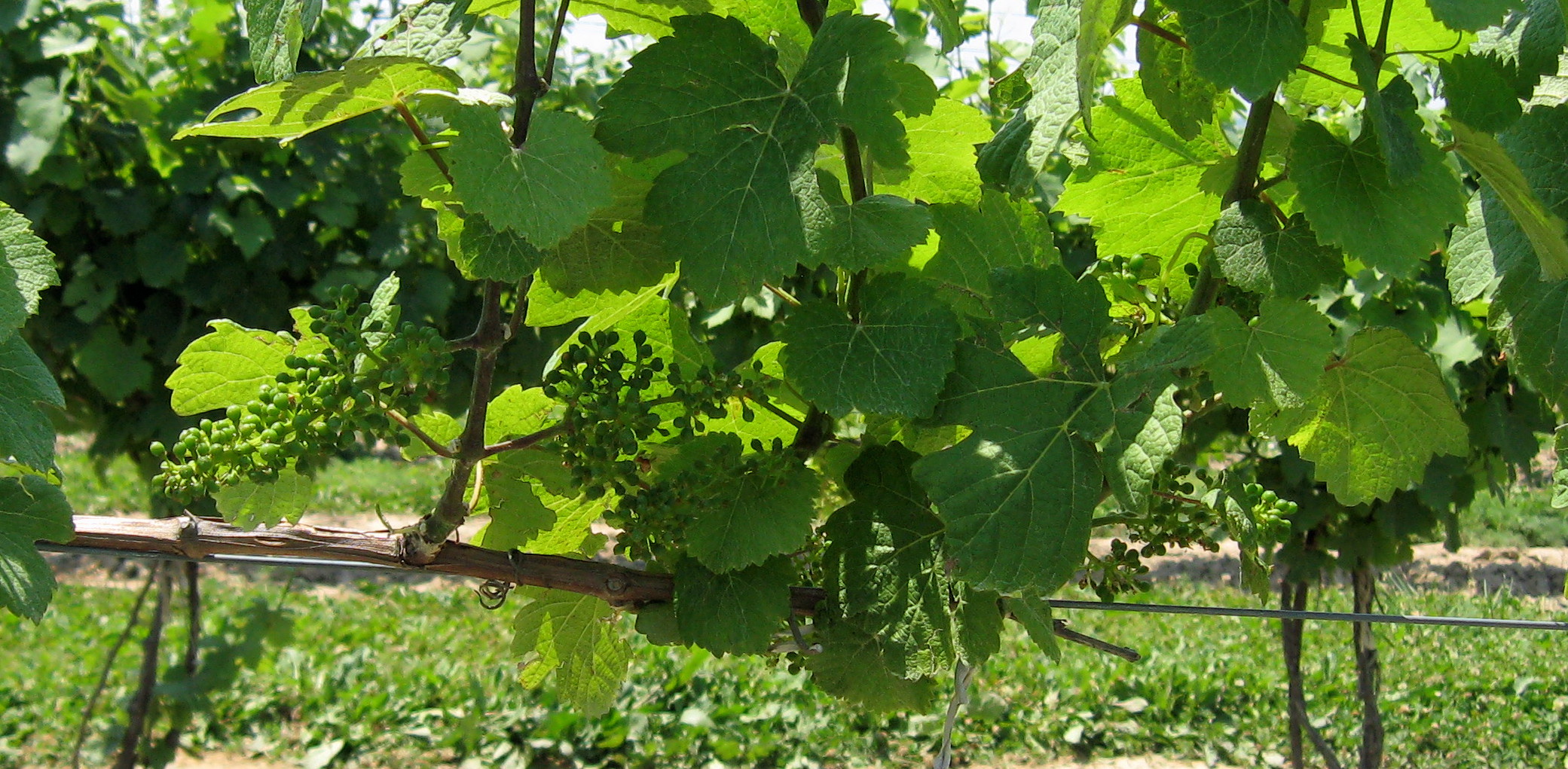
Finger Lakes Riesling
World-famous vintners Paul Hobbs of California and Johannes Selbach of the Mosel valley in Germany have recently announced their partnership in the acquisition of a 65-acre property in the Finger Lakes Wine Region of New York. The new vineyards will be on the southeastern slopes of Seneca Lake overlooking Watkins Glen and will be producing Riesling, the signature grape and wine of the region. The first vines are not expected to be planted until next year, which means that we will have to wait patiently to compare these winemakers style and quality to that of the established FLX producers. I envision this venture providing only positive benefits for the region by drawing curious visitors to the lakes. Once in the area the tourists will soon discover the abundance of world-class wineries that populate the shores of the Finger Lakes. Just like the music fan that goes to a festival to see a star headliner only to find that they like the lesser-known artists even more, I believe this will shine a bright spotlight on these talented winemakers and showcase their exceptional wines.

 wpawinepirate